01
Door and step manners
A dog that waits while the door opens and takes the steps at your pace rather than its own. The highest-value behavior in a rowhouse and one of the quickest to teach.


Six stone steps between your front door and the sidewalk. That is where most Baltimore dog problems start, and it is where I start too. This is the city I am based in.
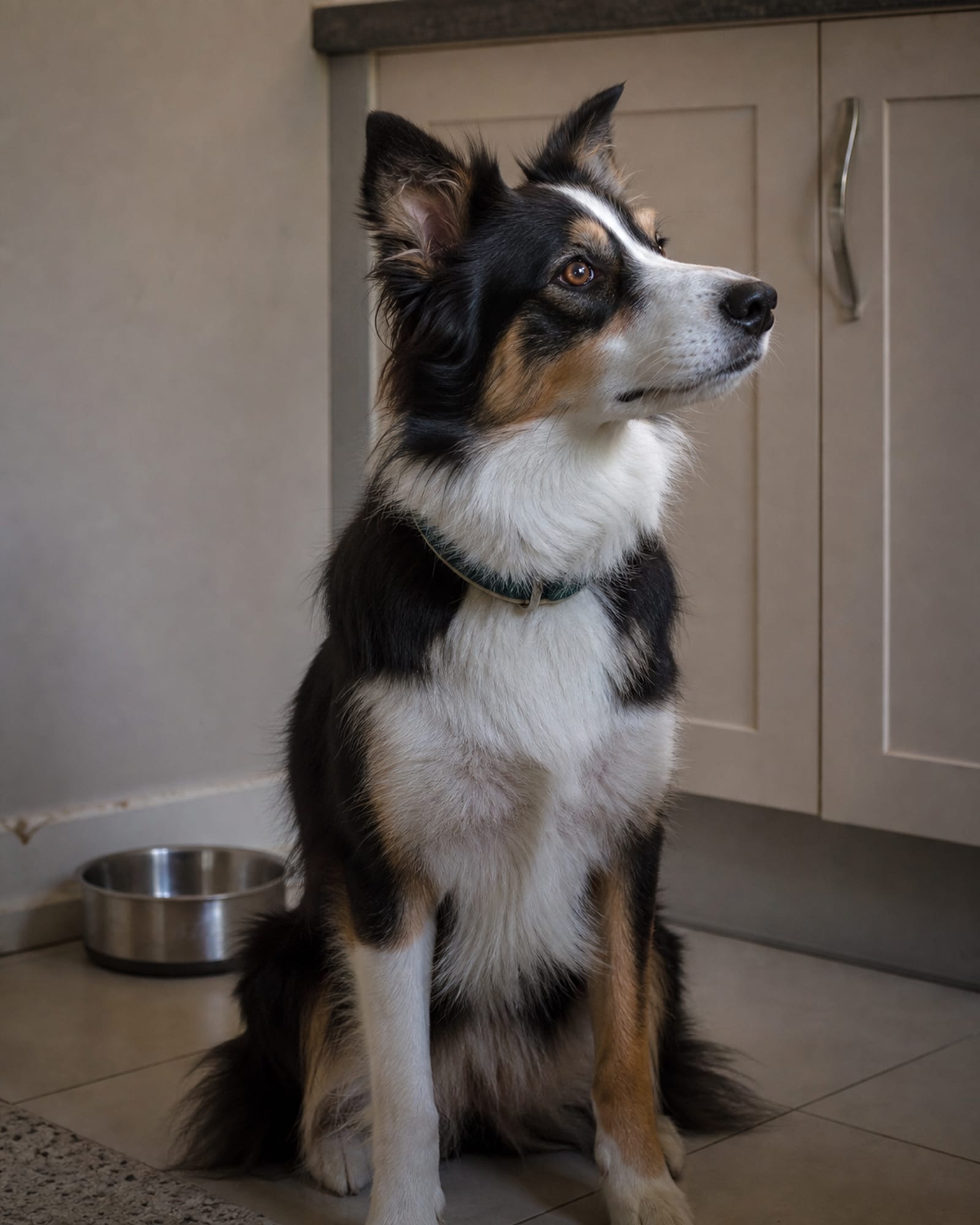
A dog sitting square on a kitchen floor, worktop rising behind it
The rowhouse stoop is the most demanding six feet in your dog's day, and almost nobody trains it deliberately.
It is a threshold, so the dog is keyed up before the door has opened. It is steep and often stone, so it is slick in rain and glazed in January. It puts your dog above head height for anyone walking past, which changes how the dog reads them and how they read the dog. There is no yard and no path between the door and the public. And you are usually holding a leash in one hand and a door in the other on the way out.
I am based here. Baltimore City is where I live and work from, so this is the housing I see more of than any other, and the front steps come up in more first conversations than any single behavior does.
In roughly the order they come up on this side of the city line.
01
A dog that waits while the door opens and takes the steps at your pace rather than its own. The highest-value behavior in a rowhouse and one of the quickest to teach.
02
Standing three steps up changes how a dog reads a stranger. Dogs that are fine at ground level often are not fine here, so it is worth working at the actual height.
03
A city block gives you a few feet and a parked car. The dog needs a behavior it can hold while someone passes close, which is a specific skill and not general obedience.
04
Small rear pads back onto alleys, so your dog meets people and other dogs at a fence line with no warning and no line of sight.
05
Bridges, storm grates and construction plates are everywhere here. A dog that plants its feet on metal is common, and it is very fixable.
06
Rail, port traffic and the constant volume of a city of nearly 570,000. Sound sensitivity surfaces faster in Baltimore than in any county town I work in.
The rowhouse is Baltimore's defining form and nowhere near its only one, which is why advice that worked for a friend two neighborhoods over often does not work for you.
City zoning describes the R-8 districts as continuous, block-long rowhouse development built at or barely back from the street. R-7 areas mix detached and semi-detached houses, rowhouses and larger multifamily buildings. A recent East Baltimore plan found more than 85% rowhouses in its study area against 58% in Fells Point, which is an enormous difference inside one city.
So the physical problem in front of me changes constantly. Steep stoops and narrow interior stairs on one block. An apartment corridor and an elevator on the next. Larger lawns in the northern detached-house districts, where the problem stops being thresholds and becomes recall and a boundary the dog cannot see. Just under half of occupied homes here are owner-occupied, so plenty of my clients are also working inside what a lease allows.
None of that makes a dog harder to train. It means the plan gets built at your address rather than from a description on the phone, and it is the main reason I want to see the place before I tell you what I think it takes.
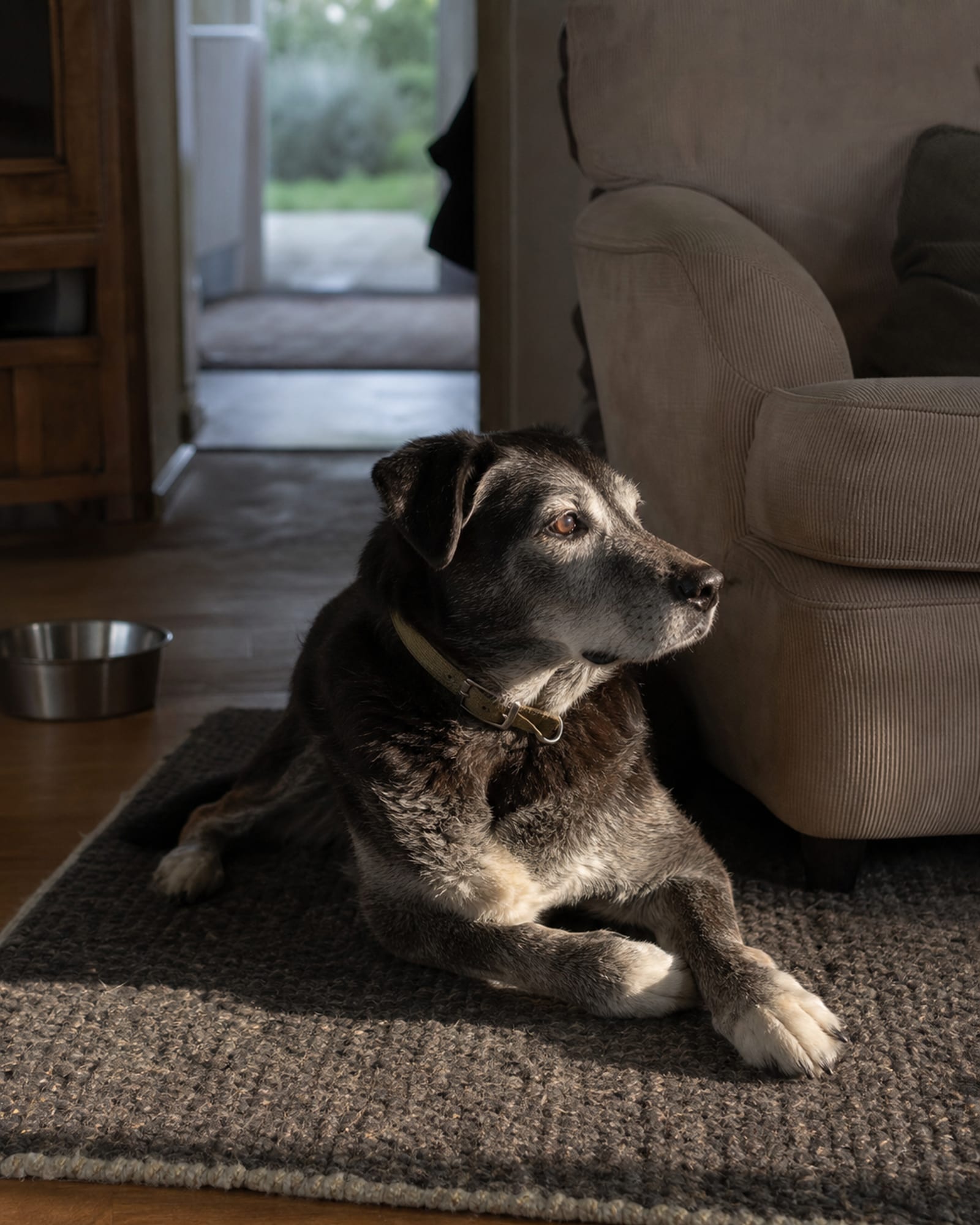
A dog lying on a mat beside a sofa, room quiet
Baltimore is not one kind of terrain, and the difference stops being academic the moment you are walking a dog on it.
The city sits on the Fall Line, where the hard rock and steeper stream valleys of the Piedmont meet the softer, lower ground of the Coastal Plain. The city's own park planning identifies steep slopes along Jones Falls and northern Herring Run, while South Baltimore is largely level. A dog that walks beautifully on a flat South Baltimore block can surge badly on a Jones Falls grade, and that is a handling problem rather than a disobedience one.
Then there is what the city puts underfoot: slick stone steps, grated bridges, retaining walls, tree pits, narrow walks. Add pigeons downtown and waterfowl near the Middle Branch and you have a set of distractions a suburban dog never meets. Summer heat is worse here because the pavement holds it, and flash flooding can close a route with no notice at all.
The practical consequence is that I want to work on the ground you actually use. A dog proofed on a wide flat park path has not been proofed for a Baltimore walk, and the day you need it is the wrong time to find that out.
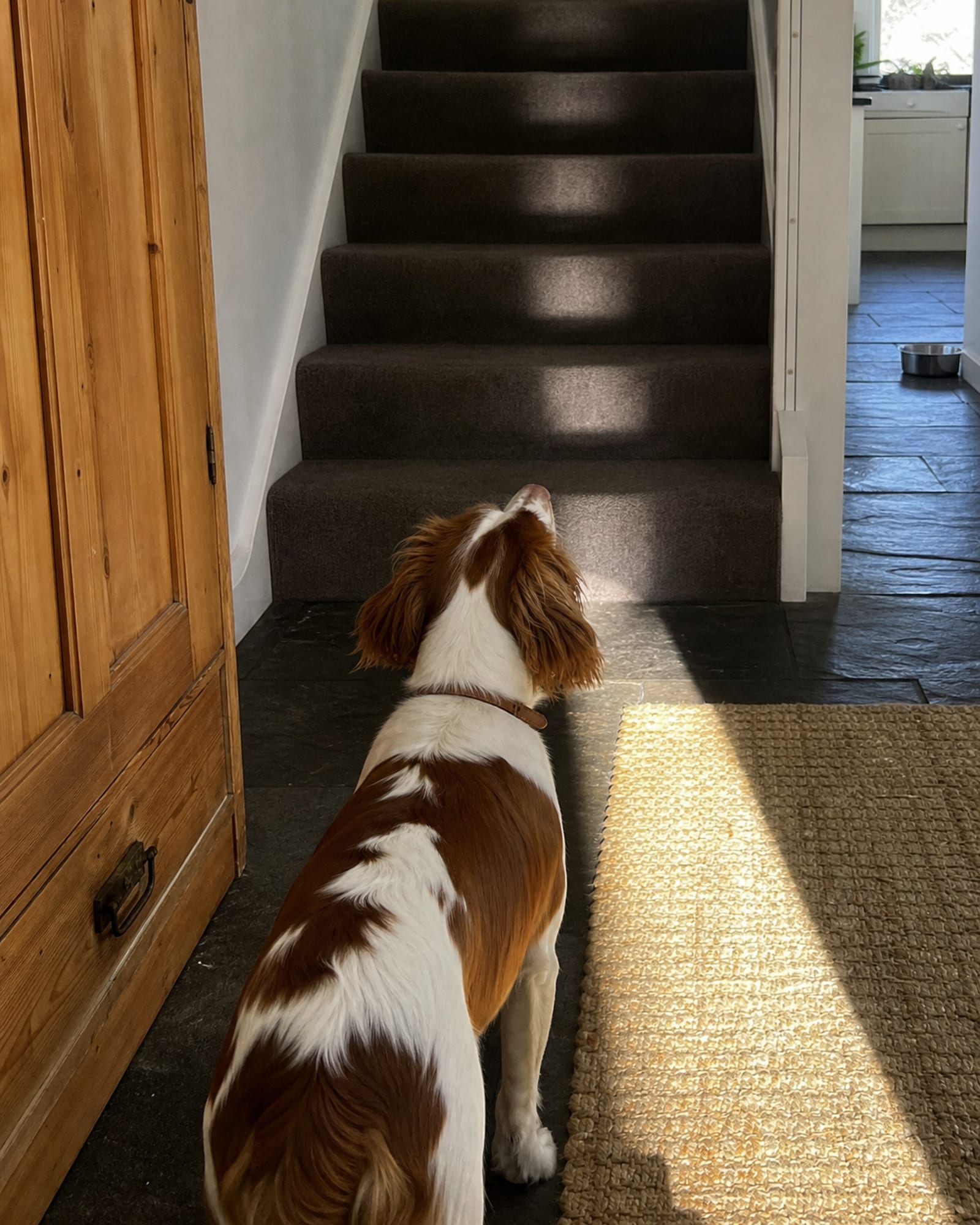
A dog standing at the bottom of a staircase looking up
What the dog does, where, and how often. I ask about bite history and who else is in the house. This is where I say honestly whether I think I can help.
At your address, and it comes off the training fee. I want to stand on your steps and walk your block, because that is the situation we are fixing.
Indoors, then a quiet hour on your own street. The behavior has to be solid before it meets a city block at five in the afternoon.
One difficulty at a time: distance, then movement, then another dog, then the busy street. If the dog comes apart we made the jump too big, and we go back one.
The handover on your own steps, then phone support for the life of the dog once the face to face work is finished.
Being in the city means every option is open and the logistics are simpler here than anywhere else I work.
In-home private lessons are $700 for an evaluation plus four one hour sessions across about two months, with lifetime phone support after the face to face work. Kick Start is $1,600 for five consecutive daily sessions in your home and your neighborhood, then a lesson for you and a two week follow up, with equipment included.
Board and train draws from a tighter circle than everything else, about a one hour drive, because your dog comes to stay and somebody makes that trip twice. Baltimore is the middle of that circle. Your dog stays in my home rather than a kennel run, and the two and three week programs are set out on the board and train page rather than repeated here.
One honest note on choosing. If the real problem is that nobody in the house has been shown what to do, four lessons will get you there and you should not spend more than that. If the behavior needs daily repetition your week cannot supply, the residential program earns its cost. I would rather tell you which one you are than sell you the larger number.
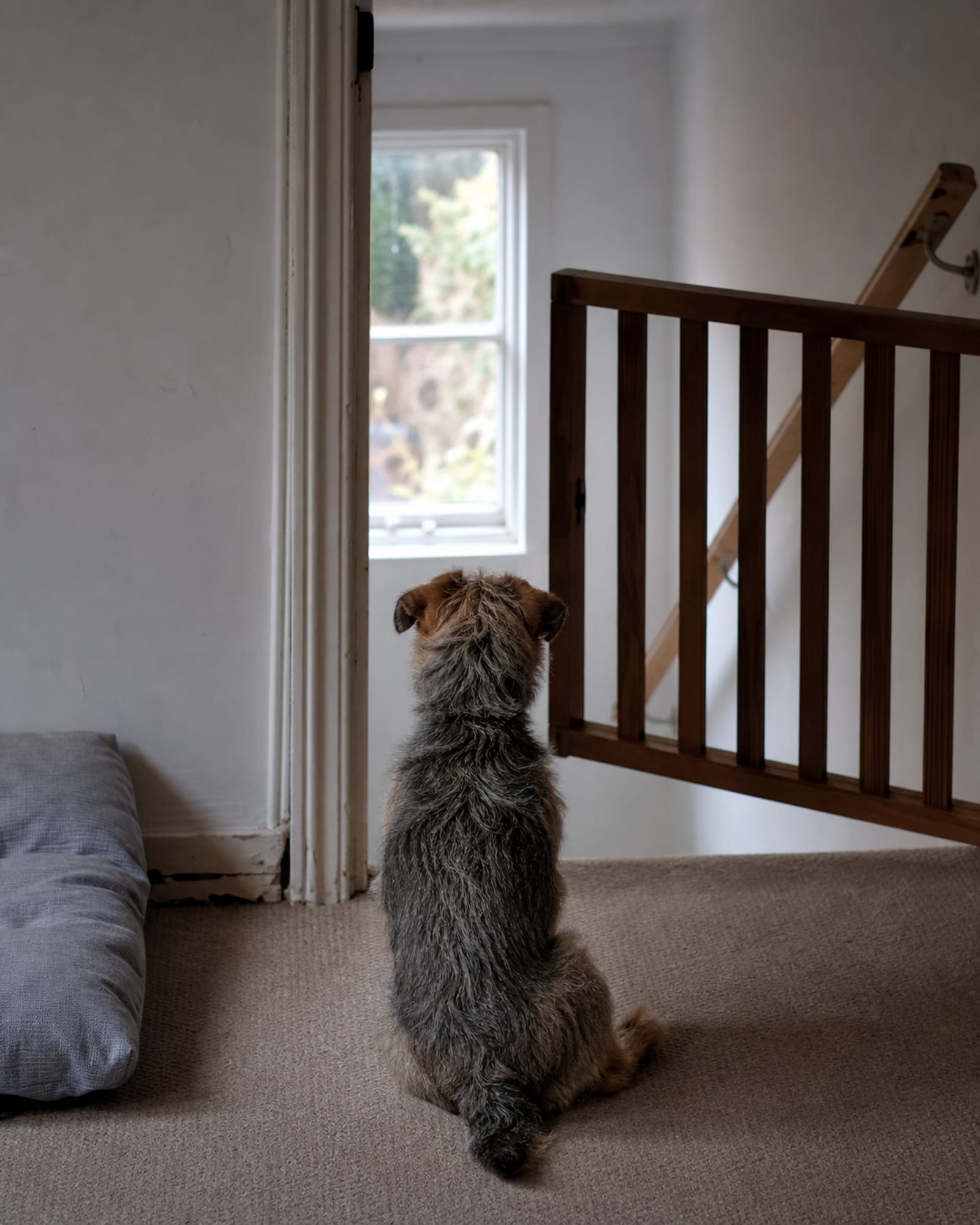
A dog waiting behind a half open stair gate, calm
Phone me on (443) 429-0445, 6 AM to 7 PM, any day of the week. Tell me the block, the behavior, and roughly how long it has been going on.