Baltimore, MD area6 AM - 7 PM · 7 days a weekDog Training since 2001
Hand signal: open hand, down

Resource Guarding Correction

The dog that freezes over a bowl, carries a sock away, or growls when someone walks past the couch. Guarding is a dog protecting something it thinks it is about to lose, and it is one of the most fixable things I work on, as long as nobody tries to win the argument.

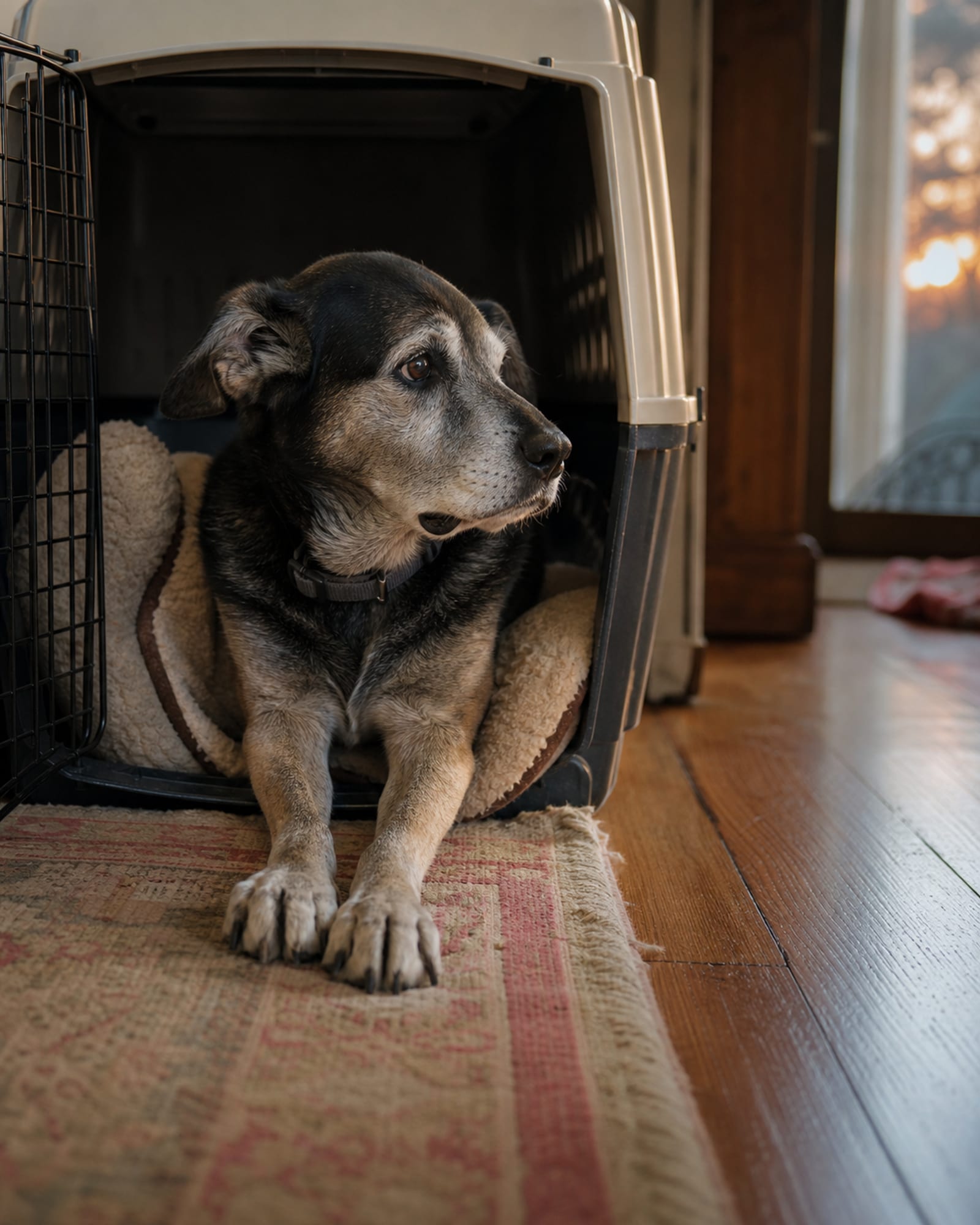
A dog settled in an open crate with bedding, half in and half out

A dog settled in an open crate with bedding, half in and half out

At a glance

What it is
A behavior specialty
Worked through one of my programs, never sold on its own.
Starts with
A $100 in-home evaluation
In the room where it happens, with the actual item.
Covers
Food, chews, stolen objects, furniture, people
First step
Safety tonight, training after

What is resource guarding?

Resource guarding is a dog using avoidance, threats, or aggression to keep something it values when a person or another dog comes near. That definition is wider than most people expect, and the width is the point: it starts long before a growl. A dog that eats faster when you walk past the bowl is guarding. So is the one that picks up a chew and carries it behind the sofa, or freezes and stares while you cross the room.

It is also not only about food. Dogs guard bones and chews, stolen socks and tissues, the bed, the couch, a doorway, a spot at the top of the stairs, and quite often a person. The dog that gets stiff when your partner sits next to you is doing the same thing as the dog over the bowl.

I work resource guarding as a behavior specialty. It is not a stand-alone service and I do not sell it as one, because guarding is not a trick to be untaught in an hour. It is delivered through one of my programs, and which program depends on how far it has gone and who is in the house.

The good news, and I mean this: guarding responds well when it is handled correctly and early. Most of the cases that become dangerous became dangerous because somebody kept trying to win.

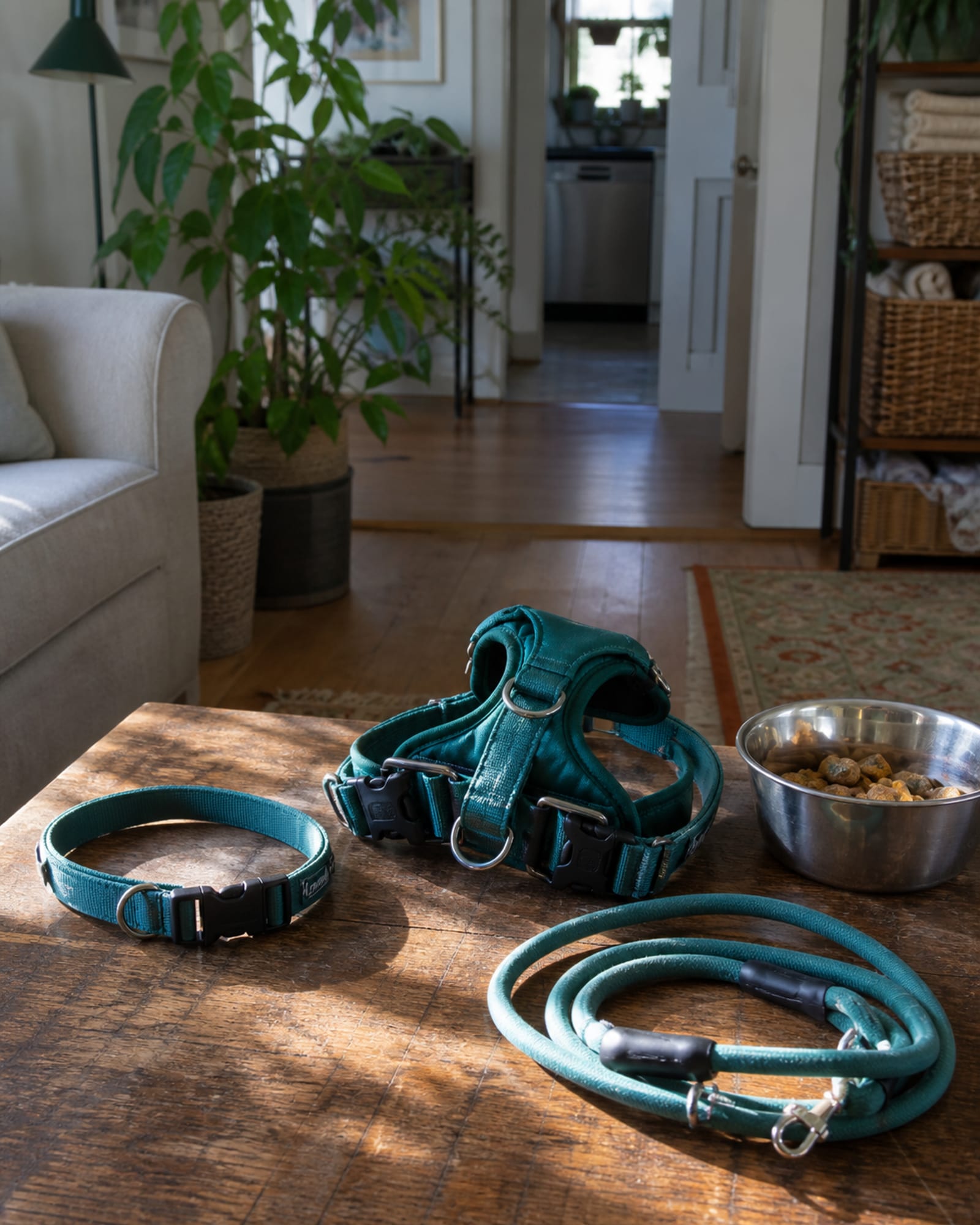
A still life of a flat collar, a harness and training treats on a wooden surface, no dog

A still life of a flat collar, a harness and training treats on a wooden surface, no dog

The growl is not the problem

If you take one thing from this page, take this. A growl is information. It is your dog telling you, in the only language available, that it is uncomfortable and would rather not escalate. That is a dog with brakes.

Punish the growl and you do not change how the dog feels. You teach it that growling gets it into trouble. The feeling stays, the warning goes, and the next dog you are living with is one that goes from still to teeth with nothing in between. Every trainer who works aggression has met that dog, and it was almost always made, not born.

The same applies to the advice a lot of people were given years ago: take the bowl away to show him who is boss, put your hand in his food, take the bone off him regularly so he learns to accept it. I meet the results of that advice constantly, and the owners feel terrible about it. You were told to do it by someone you trusted. It made sense. It also confirmed to your dog that people approaching the bowl means the food disappears, which is the exact belief we now have to undo.

So the first thing I do is stop the argument. Not because I am soft on the dog, but because every confrontation is a rehearsal, and the dog gets better at the thing you do not want.

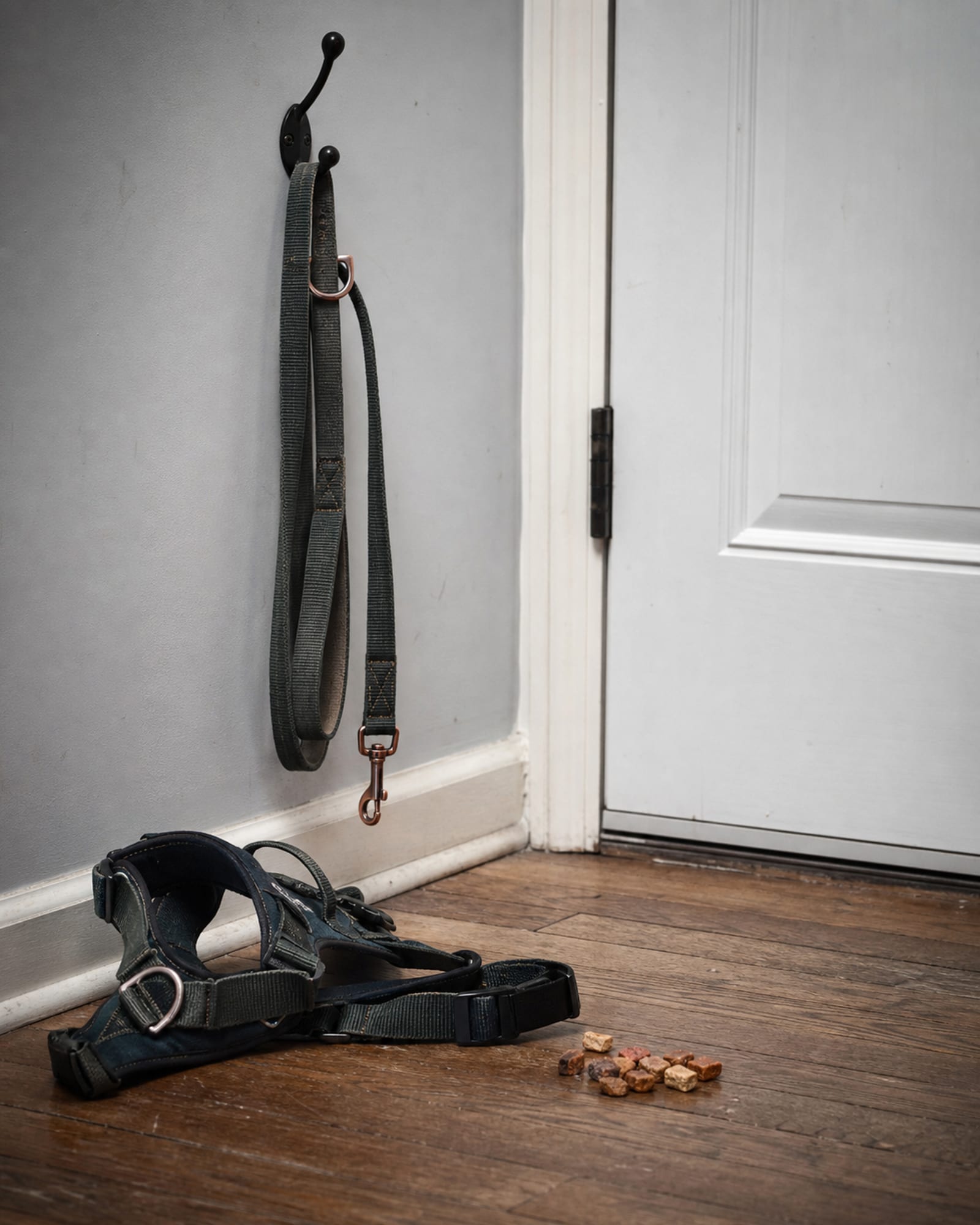
A lead coiled on a hook by a door, no dog in frame

A lead coiled on a hook by a door, no dog in frame

What dogs actually guard

The item matters, because the plan changes with it. These are the categories I see, and most households have more than one.

01

The food bowl

The classic, and often the mildest. Watch for eating faster as you approach, freezing mid-mouthful, a hard stare over the shoulder, or the body curling around the bowl. Bowl guarding is usually the easiest category to change because meals are predictable and we control every variable.

02

Bones and chews

Much higher value than kibble, and much more common as a first serious incident. A dog that is fine at dinner can be a different animal over a bully stick. This is also where most multi-dog fights start, because the item is worth fighting over and lasts long enough for a dispute to build.

03

Stolen objects

The sock, the tissue, the remote, the child's toy. The guarding is often created by the chase: the dog learns that grabbing something starts a game it wins, or that people take things by force. Teaching a real trade fixes more of these than any correction ever has.

04

Furniture and beds

Growling when someone approaches the couch, the bed, or a favorite chair. Space guarding is easy to miss because there is no object in the dog's mouth, and easy to walk into by accident at eleven at night. It usually needs a household rule as much as it needs training.

05

Doorways and thresholds

The top of the stairs, a hallway, the spot in front of the fridge. These are guarded because of what passes through them, and they are worth taking seriously in a small home where nobody can avoid the route.

06

A person

The dog that stiffens when your partner sits beside you, or puts itself between you and a visitor. Owners often read this as loyalty. It is the same behavior as the bowl, and it is the category most likely to put a bite on someone who lives in the house.

What to do tonight, before I get there

You may be reading this the same evening something happened, so here is the part that does not wait for an appointment.

Stop the rehearsals. If the fight is over chews, chews go away for now, or they happen behind a closed door. If it is the bowl, the dog eats somewhere nobody needs to walk past, and nobody walks past. If it is the couch, the couch is off limits for the moment, managed with a gate rather than a confrontation. You are not training yet. You are stopping the dog practising.

Do not test it. I know the urge: you want to see how bad it really is, so you walk up to the bowl and watch. Every test is a repetition, and if it goes wrong you have both a worse dog and possibly a bite. I will assess it, at a distance, with a plan, and it is my job to take that risk rather than yours.

If there are children in the house, separate rather than supervise. Supervision fails at the exact moment everyone is tired and someone walks through the kitchen carrying a plate. Gates, closed doors and separate rooms are not a permanent answer, but they are tonight's answer, and children are never part of the training.

Then write down what actually happened. What the item was, who approached, from where, how close, and what the dog did first. That first behavior is the one I care about most, and it is the one everybody forgets by the time I arrive.
How I work a guarding case

  1. 01

    The evaluation

    $100, in your home. I want the item, the room, the people, and the history, including any bite. I do not provoke the behavior to see it. What I need is the sequence, and you can usually tell me that better than a demonstration can show me.

  2. 02

    Management, immediately

    Before any training, the household gets a plan that stops the rehearsals: where the dog eats, what comes out and when, which gates go where, and what every adult does differently. Most of the immediate risk drops here, and it drops on day one.

  3. 03

    Changing the prediction

    The work itself is teaching your dog that a person approaching means something better arrives, not that the item disappears. We start further away than you would think and move closer only while the dog stays comfortable. Rushing this is what makes cases worse.

  4. 04

    Trades and a real drop

    Your dog learns to give things up because giving things up pays, taught away from the high-value items first. Often the traded item comes back, which is what teaches the dog that handing something over is not a loss. This is the skill that ends the sock chase permanently.

  5. 05

    Your household, not just your dog

    Every adult gets the same rules and the same handling, because a dog that gets one response from you and another from your partner stays uncertain. Then we generalize: other rooms, other items, visitors, and the second dog if there is one.

What I will not do, and what you should not either

I will not take things off your dog to prove a point. I will not put my hand in the bowl. I will not stage a confrontation so you can watch me win it, and if you have seen someone do that on the internet, please understand you are watching a dog being pushed to the edge of a bite by someone who will not be in your kitchen next Tuesday.

I will not use your children as training helpers. Not in any exercise, not as a distraction, not as the person who offers the treat. Where a dog guards from a child, the answer is separation and a proper assessment, and the child's involvement is limited to knowing which rooms are theirs and which are the dog's for now.

I will not tell you your dog is dominant, alpha, or trying to run the household. Those words describe a mood in the room rather than anything I can change. What I can change is a dog that freezes when a hand comes toward the bowl.

And I will not promise you that your dog will never guard anything again. What I will tell you honestly is how far I think this particular case can go, at the evaluation, before you pay for a program.

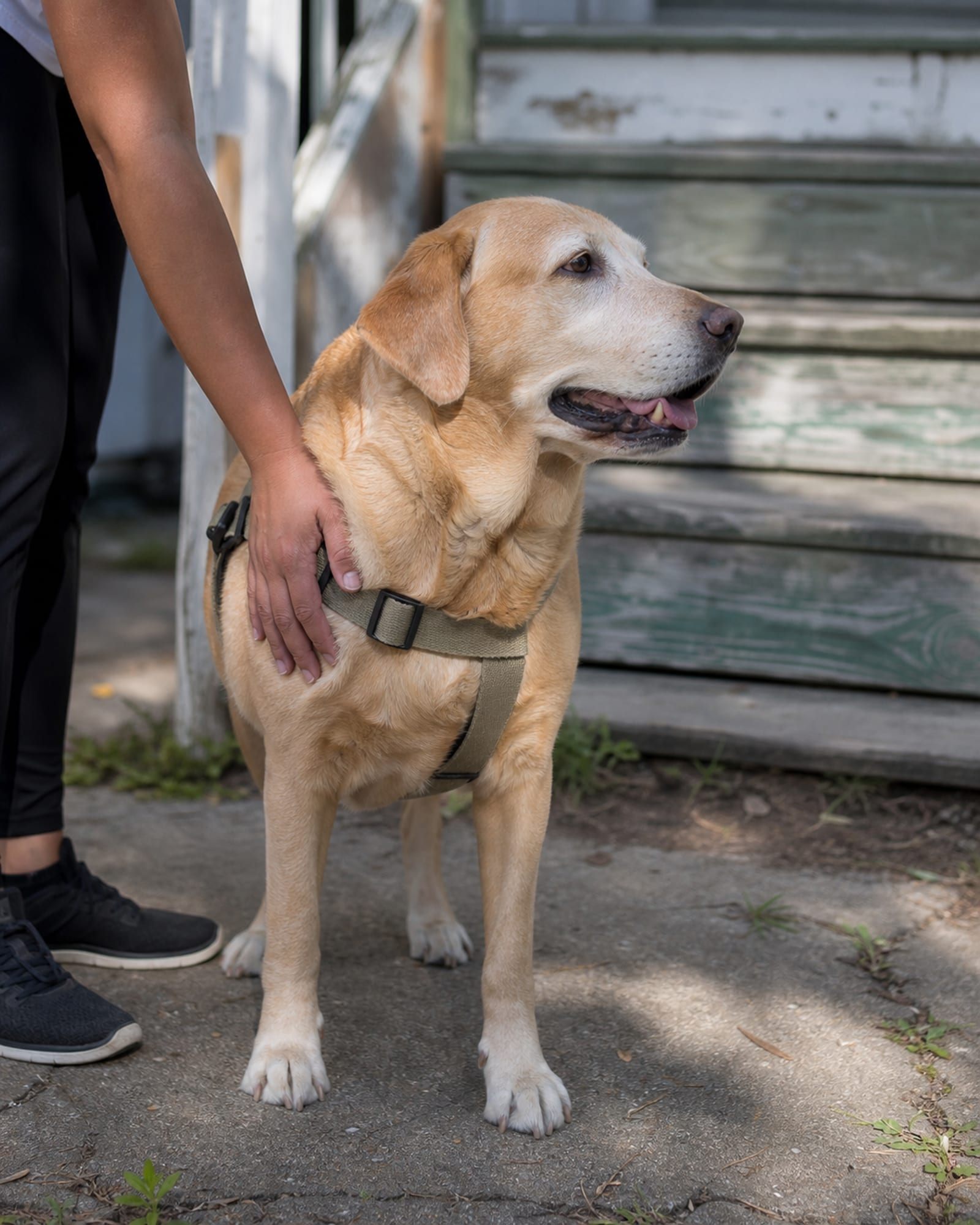
A dog standing with a handler's hand resting lightly on its shoulder, forearm only

A dog standing with a handler's hand resting lightly on its shoulder, forearm only

When this needs more than a trainer

There is a line, and I would rather you know where it is now than find out later.

If your dog has broken skin over a resource, if it guards from a child, if it guards so many everyday objects that ordinary life is a series of near misses, or if it cannot settle enough to learn anything, then training alone may not be the whole answer. Those cases can need a veterinary behaviorist working alongside the training, and sometimes medication to get the dog calm enough for any learning to happen at all.

That is not me passing you off. It is the difference between a trainer who knows the edge of their scope and one who takes your money regardless. I will tell you at the evaluation which one you are looking at.

The same goes for anything sudden. A dog that has never guarded and now guards, or a dog whose behavior changed over a few weeks, goes to your veterinarian first. Pain changes how a dog responds to being approached, and no amount of training fixes a dog that hurts.

Questions people ask

My dog growled at me over a bone. Is he aggressive?
He gave you a warning instead of a bite, which is the behavior you want to keep. Growling is communication, not a character flaw. Do not punish it; stop the situation repeating and get it assessed.
Should I take his food away to show him who is in charge?
No. That teaches your dog that people approaching the bowl means losing the food, which is the belief causing the guarding. It is the single most common piece of advice I have to undo.
He only does it with bones, not his dinner. Does that still count?
Yes, and it is very common. Value is the variable: a dog can be relaxed at mealtimes and serious over a chew. It is worth addressing while it is still limited to one category.
Can you fix this while I am away, through board and train?
Sometimes, and sometimes it is the wrong choice. Guarding is tied to your house, your items and your people, so a dog can do beautifully in my home and revert in yours. I will tell you honestly at the evaluation which program actually fits.
My dog guards me from my husband. Is that protectiveness?
It is the same behavior as guarding a bowl, with you as the resource. Owners often read it as devotion, which is why it tends to be tolerated until someone gets bitten. It is very workable, and worth starting on early.
We have two dogs who fight over chews. Can that be fixed?
Usually, and it starts with the chews going away or going behind closed doors so the fights stop being rehearsed. Multi-dog guarding is a management problem first and a training problem second.
How long does this take?
It depends on how long it has been practised, how many categories are involved, and how consistent the household is. What I can tell you is the direction and the likely shape after seeing it, rather than a number before.

Tell me what your dog is guarding

If your dog has growled, frozen, or snapped over food, a chew, a stolen sock or a spot on the couch, call me at (443) 429-0445. I answer 6 AM to 7 PM, seven days a week. Tell me what the item was and who was near it, and I will tell you honestly what I would do about it and what it would cost.

Call TodaySend a Message

6 AM - 7 PM, 7 days a week · Baltimore, MD area