Baltimore, MD area6 AM - 7 PM · 7 days a weekDog Training since 2001
Hand signal: palm down, low

Destructive Behavior

Chewed furniture, shredded cushions, scratched doors. The first thing worth knowing is whether it happens when you are home or only when you are out, because those are two different problems and only one of them is really about chewing.

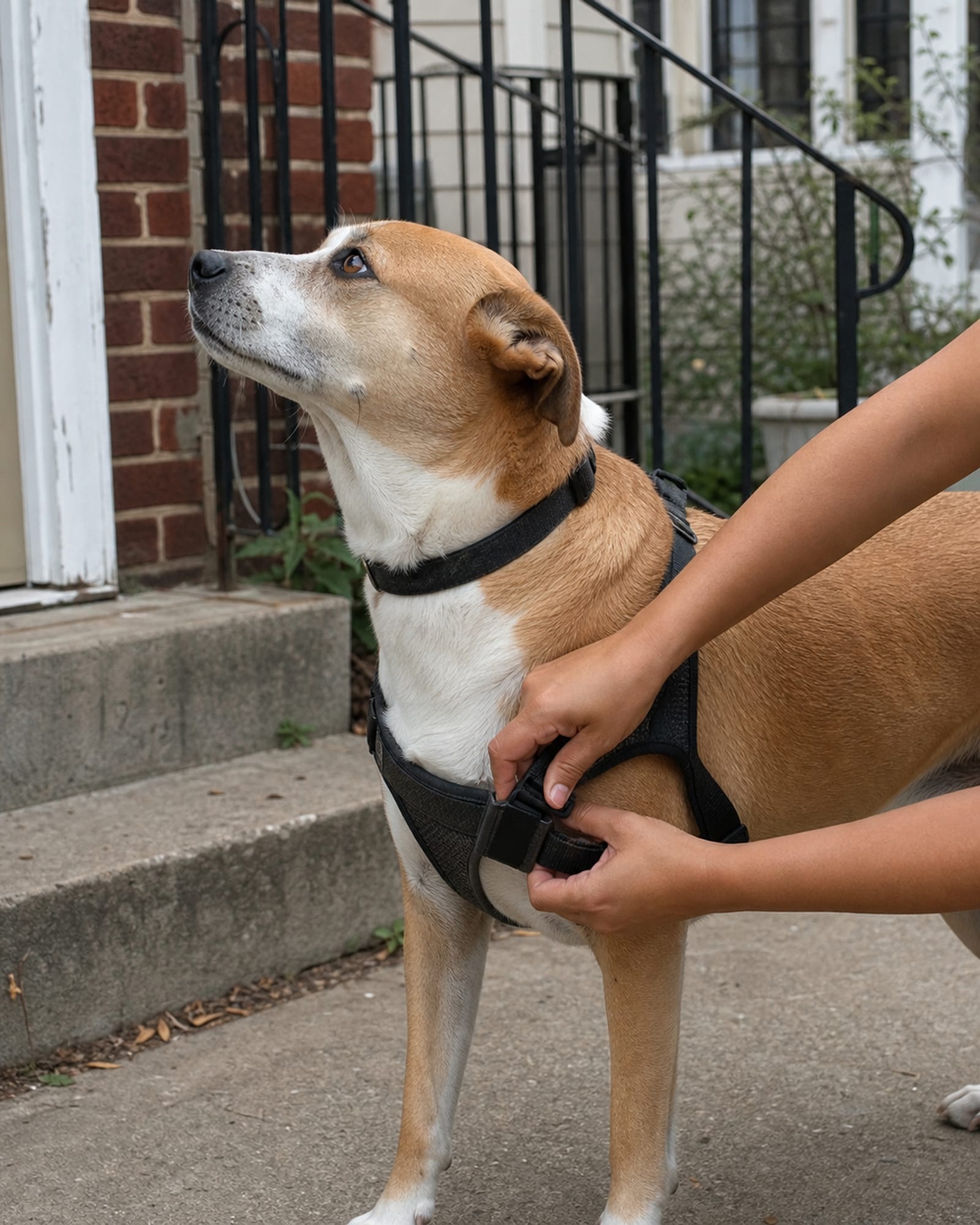
A hand fastening a harness on a calm standing dog, forearms only

A hand fastening a harness on a calm standing dog, forearms only

At a glance

First question
Home or alone?
It splits the whole diagnosis in two.
Damage at exits
Points to distress
Doors, windows, frames rather than furniture.
Never useful
Telling off damage found later
Evaluation
$100, in your home
Rolls into the training fee.

Home or alone? Everything follows from that

Before we discuss a single chew toy, work out when the damage happens. It is the question that splits this into two problems with almost nothing in common.

Damage while you are home is usually a dog that is under-occupied, teething, adolescent, or has simply never been taught what it may and may not have. It is a training and management problem with a good prognosis and a fairly quick timeline.

Damage that happens only when you are out, particularly at doors, windows, frames and carpets near an exit, is a different animal. That pattern points at distress rather than boredom, and giving that dog a better chew toy will not touch it. It belongs with anxiety and separation work, which has its own page and its own protocol.

The fastest way to tell is a camera. Prop a phone on a shelf for one afternoon. Most owners are genuinely surprised: either the dog settles after ten minutes and then chews the sofa out of boredom at hour three, or it never settles at all and the damage starts within minutes of the door closing. Those two need opposite plans, and ten minutes of footage saves weeks of guessing.

This is a specialty rather than a stand-alone service, so it comes through in-home private lessons, Kick Start, or board and train.

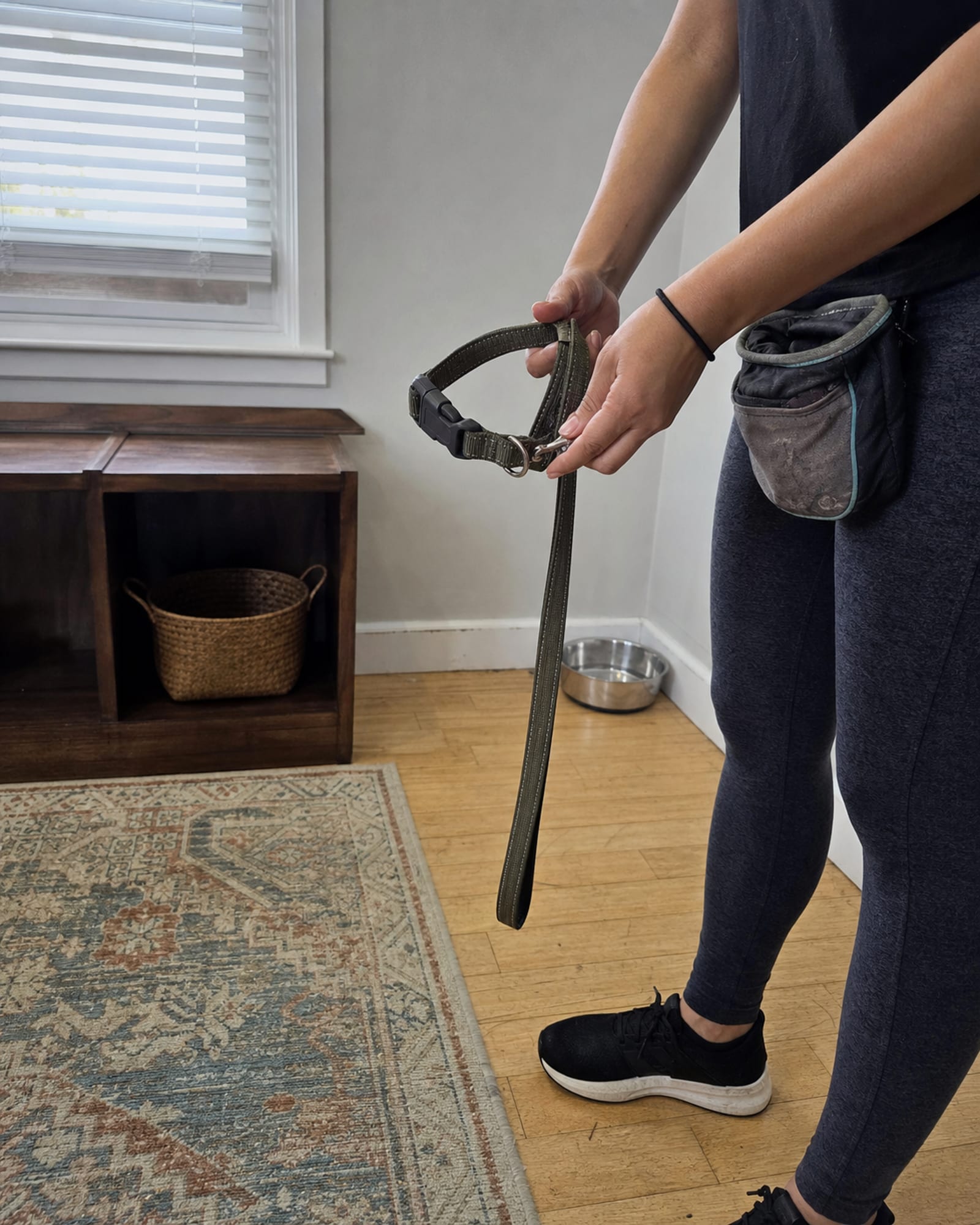
A hand clipping a lead to a flat collar, cropped at the wrist

A hand clipping a lead to a flat collar, cropped at the wrist

What the damage itself tells you

Where it is, and what it is, narrows the cause quickly.

01

Doors, frames and windows

Damage concentrated at the ways out of the house, especially with scratching at the base of a door, points at a dog trying to get out rather than one amusing itself. That is distress until proven otherwise, and it changes the plan entirely.

02

Furniture and shoes

Chewing things that smell of you or are simply available, spread through the house, usually points at boredom, adolescence or a dog that has never been taught the rules. This is the ordinary version and it responds well.

03

Everything, at eight months

Adolescence is real and it is temporary. Dogs between roughly six and eighteen months chew more, listen less, and appear to forget things they knew. Households that keep management tight through it come out the other side fine.

04

Teething

A young puppy with sore gums will chew for relief. It is normal, it passes, and the job is providing things worth chewing rather than expecting a teething animal to abstain.

Puppy training

05

One specific item, repeatedly

The same cushion, the same corner, the same shoe. Usually something that smells strongly of a particular person or has become a game because of the reaction it gets. Often the easiest of all of these to fix.

06

Digging at carpet or upholstery

Scraping and shredding rather than chewing, often near a door or in a favored spot. Worth distinguishing, because it can be a settling behavior, a cooling one, or another sign of a dog trying to get out.

The ordinary kind, and what fixes it

For a dog that chews when you are home, or chews out of boredom rather than panic, the work is straightforward and it has three parts.

First, management, because every successful chew makes the next one likelier. A dog that has learned that sofa cushions are excellent will keep testing that theory, so the dog does not have unsupervised access to the things it destroys while we change the habit. A pen, a closed door, or a dog that is simply in the room with you.

Second, something better to chew, available and obvious. Dogs need to chew; it is not optional and it is not naughty. The job is making the legal options genuinely more interesting than the furniture, which usually means food-stuffed toys rather than a dry plastic bone that has been on the floor untouched for a week.

Third, an honest look at the day. A young working-breed dog that gets a twenty-minute walk and eight hours alone is not misbehaving, it is under-occupied, and no amount of training substitutes for something to do. Scent games, training sessions, chew work and food puzzles all do more for this than extra running, which often produces a fitter dog with the same problem.

And do not tell a dog off for damage you find later. It cannot connect the two, so what it learns is that you are sometimes angry when you come home, which for a dog already worried about being left makes the real problem worse.


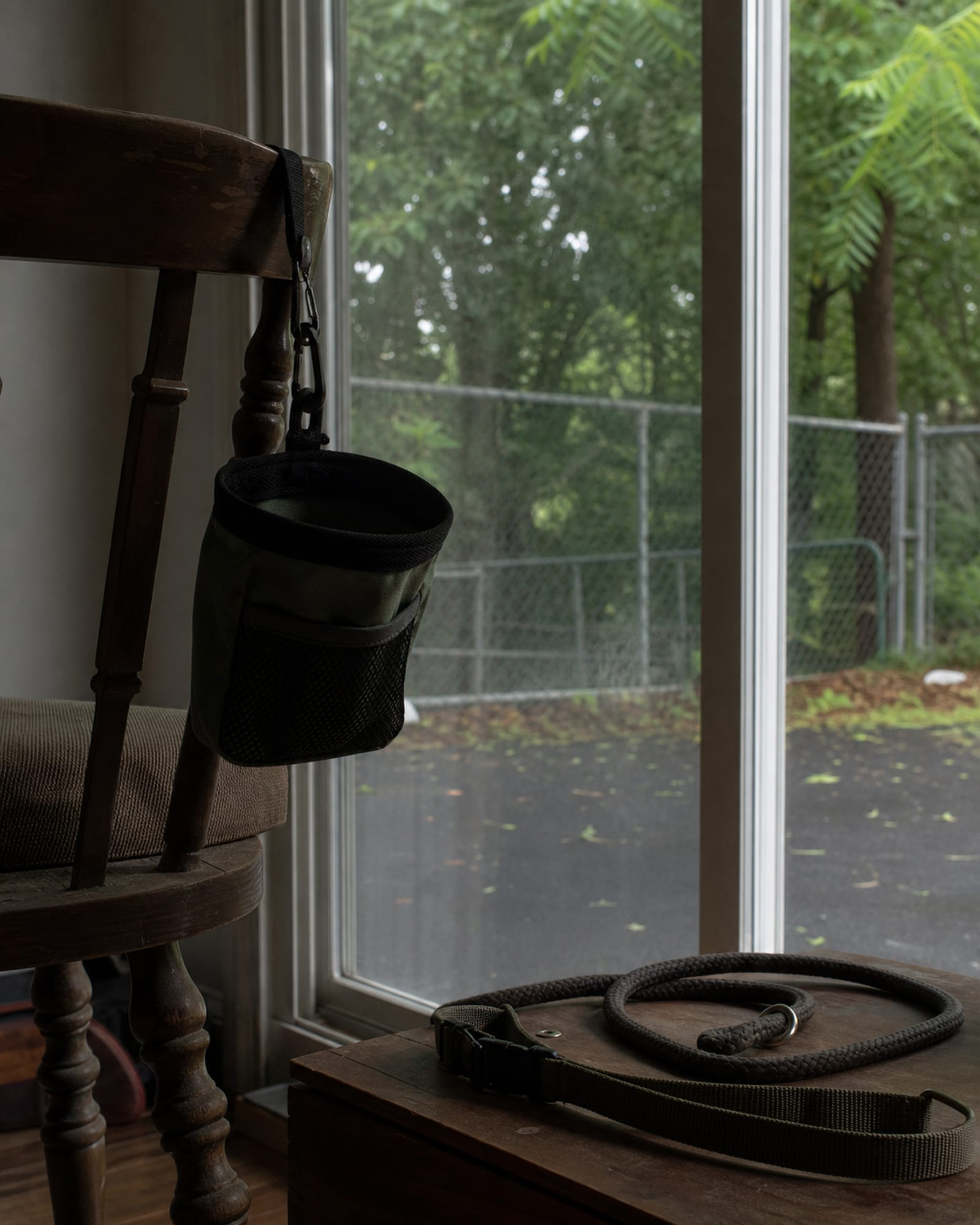
A treat pouch worn at the seams hanging on a chair back, no dog

A treat pouch worn at the seams hanging on a chair back, no dog

When it is distress rather than boredom

If the camera shows a dog that never settles, that starts within minutes, that damages exits, drools, paces or howls, then this page is not really where you should be.

That is separation distress, and it is worth being clear that it is a panic response rather than a behavior problem. The dog is not making a point about being left and it is not bored. It is frightened, and the damage is a by-product of trying to get out or of the state it is in.

It matters because the fixes here will not help. A better chew toy does not reduce panic. More exercise does not either, though people try it for months. And crating a dog that panics can be actively dangerous, because a dog trying to escape a crate can injure itself badly.

The protocol for that is on the anxiety page: management so the dog is not left longer than it can cope with, then very small absences built up slowly, and often a conversation with your veterinarian about whether the dog is calm enough to learn anything at all.

So the camera is worth ten minutes of your time before you spend money on either. Two dogs doing identical damage can need completely opposite plans, and the only way to tell from the outside is to watch.

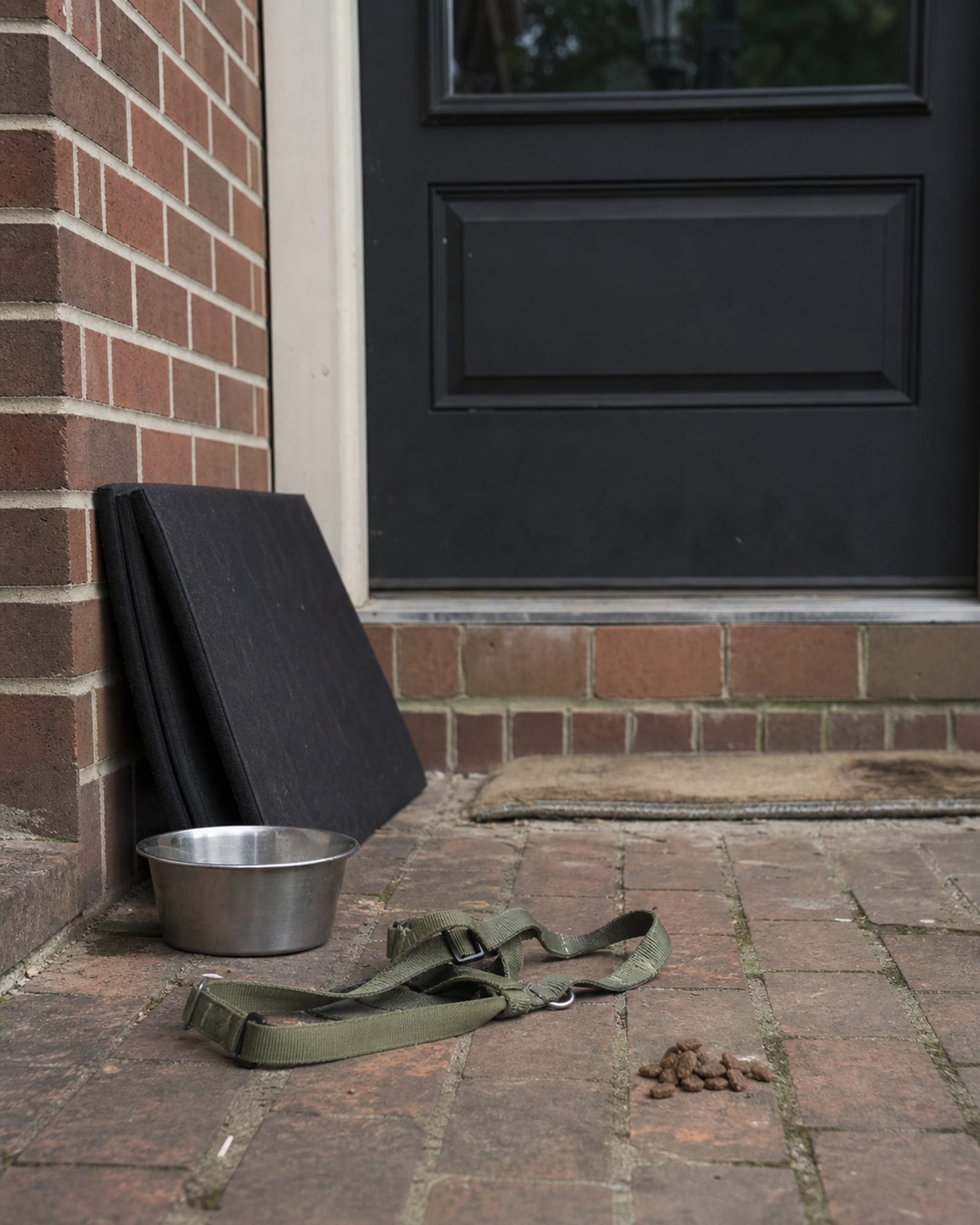
A folded training mat and a water bowl by a back door, no dog

A folded training mat and a water bowl by a back door, no dog

What is worth chewing, and what is not safe

Since the whole plan rests on giving a dog something better to chew, it is worth being specific about what that means, because the aisle in the pet shop is not much help.

What works is usually food-based and takes effort. A rubber toy stuffed with something and frozen will occupy most dogs far longer than anything dry, because the dog is working rather than gnawing. Rotating a small set in and out keeps them interesting; leaving fifteen toys on the floor permanently makes all of them furniture.

What to be careful with is the very hard end of the range. Antlers, hooves, bones and hard nylon can and do fracture teeth, and a slab fracture on a back tooth is an expensive, painful thing that usually needs extraction. The rough guide I use is that if you would not want it swinging into your kneecap, it is too hard for a dog to chew. Your veterinarian is the right person to ask about any specific chew, particularly for a heavy chewer.

Supervision matters for anything that gets small. Rawhide, chunks off a soft toy, and the last third of most chews are swallowing risks rather than chewing ones, and an obstruction is a far worse afternoon than a chewed cushion.

And match the chew to the dog. A determined adult with strong jaws goes through what a small dog would take a week over, so a chew that is safe for one household is a hazard in another.

Questions people ask

My dog only destroys things when I am out. Is he punishing me?
No. Dogs do not damage things out of spite or revenge. Damage confined to your absence, especially at doors and windows, usually indicates distress rather than protest, and it needs the anxiety approach.
He looks guilty when I come home, so he knows.
That expression is a response to your body language, not evidence of guilt about something earlier. It appears just as reliably when the dog did nothing and you happen to be cross, which is why it is such a misleading signal.
Would more exercise fix it?
It helps a bored dog and does very little for a distressed one. Mental work, chewing and training tire most dogs more effectively than extra running, which can just produce a fitter dog with the same habit.
He is eight months old and has started wrecking things again.
Adolescence, and it is temporary. Keep management tight rather than concluding the training failed. Most of these dogs come back to themselves over the following months.
Should I crate him while I am at work?
For a bored dog a crate or pen can be sensible management. For a dog that panics when alone it can be dangerous, because dogs trying to escape crates can injure themselves. Which one you have decides the answer.
He has plenty of toys and ignores them.
Most dogs ignore a static toy on the floor. Things that hold food, that get rotated, and that are worked for are a different proposition from a plastic bone that has been there a week.
How do I know which type I have?
Put a camera on the dog for one afternoon. Settles then chews later means boredom. Never settles, starts fast, damages exits means distress. It is the single most useful thing you can do before calling anyone.

Tell me when the damage happens

If your dog is destroying the house, call me at (443) 429-0445. I answer 6 AM to 7 PM, seven days a week. Tell me whether it happens while you are home or only while you are out, and where in the house it is, and I can usually tell you which problem you have on the phone.

Call TodaySend a Message

6 AM - 7 PM, 7 days a week · Baltimore, MD area