01
A habit with eight years behind it
Barking at the window, guarding a chair, mugging visitors. Perfectly fixable and slower than the same problem in a two year old, because there is more to undo.


92.7% of Edgewater households were in the same home a year earlier and one resident in five is over 65. This is a settled place, and settled places have older dogs with habits that have had eight years to bed in.
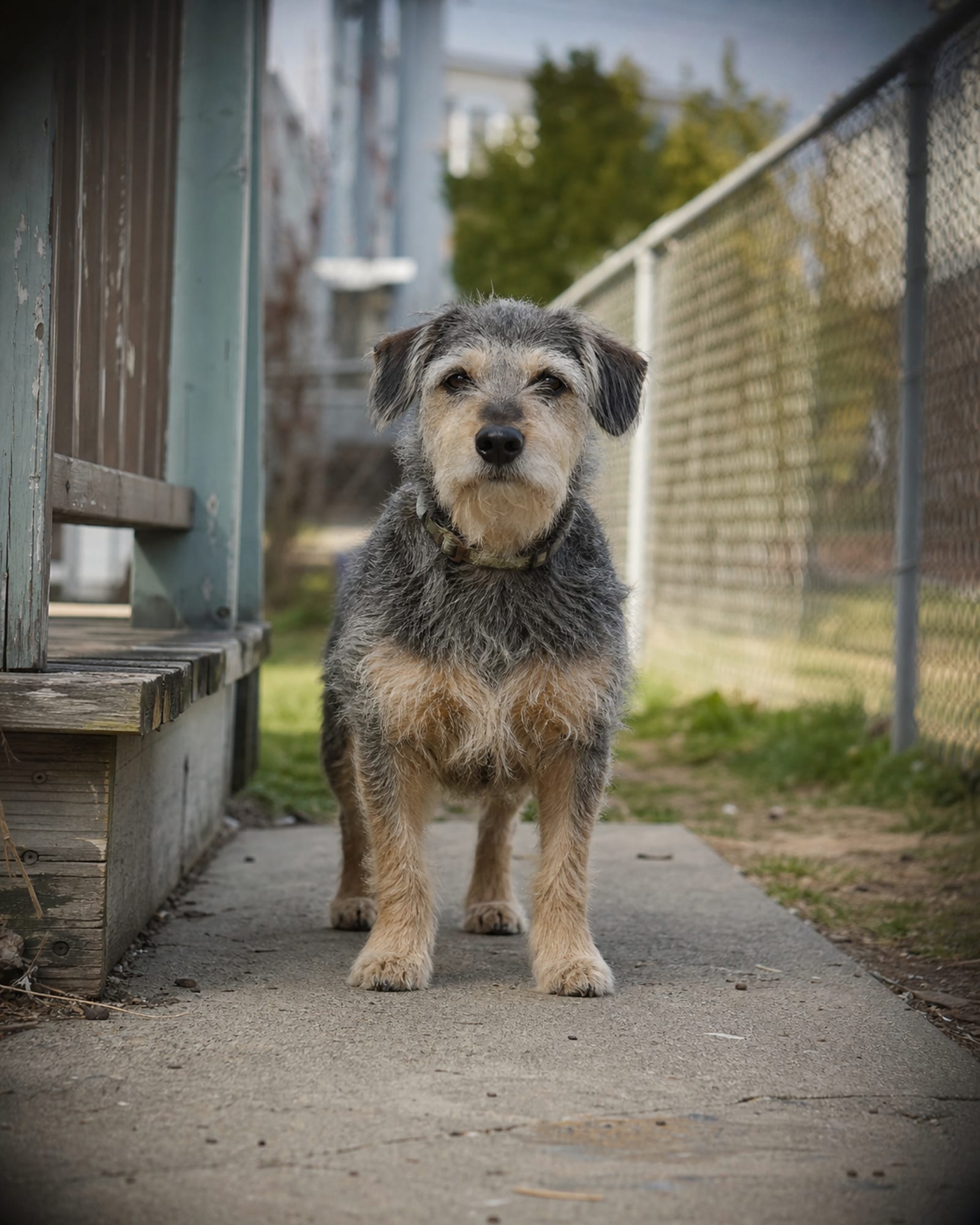
A dog standing square and settled, seen full body from the front, head up
Nine, and he has started doing something new. Or he has started doing something old more often. Or he has stopped doing something he did reliably for years, and the household has quietly decided he is being difficult about it.
Edgewater is one of the most stable communities I work in. Nine households in ten were in the same house a year earlier, 83.4% own their homes, and 20.7% of residents are 65 or older against 21.0% under 18. The housing goes back a long way too, with 11.3% built in the 1940s and 7.0% before 1940, in the older cottages and ranches around Woodland Beach, London Towne and Selby-on-the-Bay. Long tenure in a house, long tenure with a dog.
That produces two jobs that barely appear anywhere else on my list. One is the habit with years behind it. The other is the dog whose behavior is changing because the dog is changing, and telling those apart is the whole of the first conversation.
I will say this before anything else because getting the order wrong wastes months and occasionally does harm.
When a dog over about eight starts doing something genuinely new, the first stop is a veterinarian, not a trainer. A dog that has begun snapping when touched may be sore. A dog ignoring a recall he has known for years may not be hearing it. A dog toileting indoors after seven clean years is telling you something about his body far more often than about his manners. A dog that seems anxious at night, or gets stuck in corners, or stares at a wall, needs a proper examination.
None of those respond to training, and training them anyway teaches an old dog that the person he trusts most now makes unpredictable demands he physically cannot meet. That is the harm. It is quiet and it is real and I would rather send you to a vet and be wrong than train through it.
Once that is cleared, a great deal is still trainable, and older dogs are frequently better students than people expect. They are calm, they concentrate, they have decades of learning history to build on and no adolescent chaos. What they do not have is the puppy's blank slate, so what I am usually doing is replacing a behavior rather than installing one.
The other adjustment is physical. Sessions get shorter, the surfaces matter more, and I stop asking for positions that are uncomfortable to hold. That last point matters here specifically, because a stiff dog on the wet dirt and rock of the Beverly Triton trails, or on a dock, is a fall waiting to happen, and a fall in an older dog changes his confidence for months.
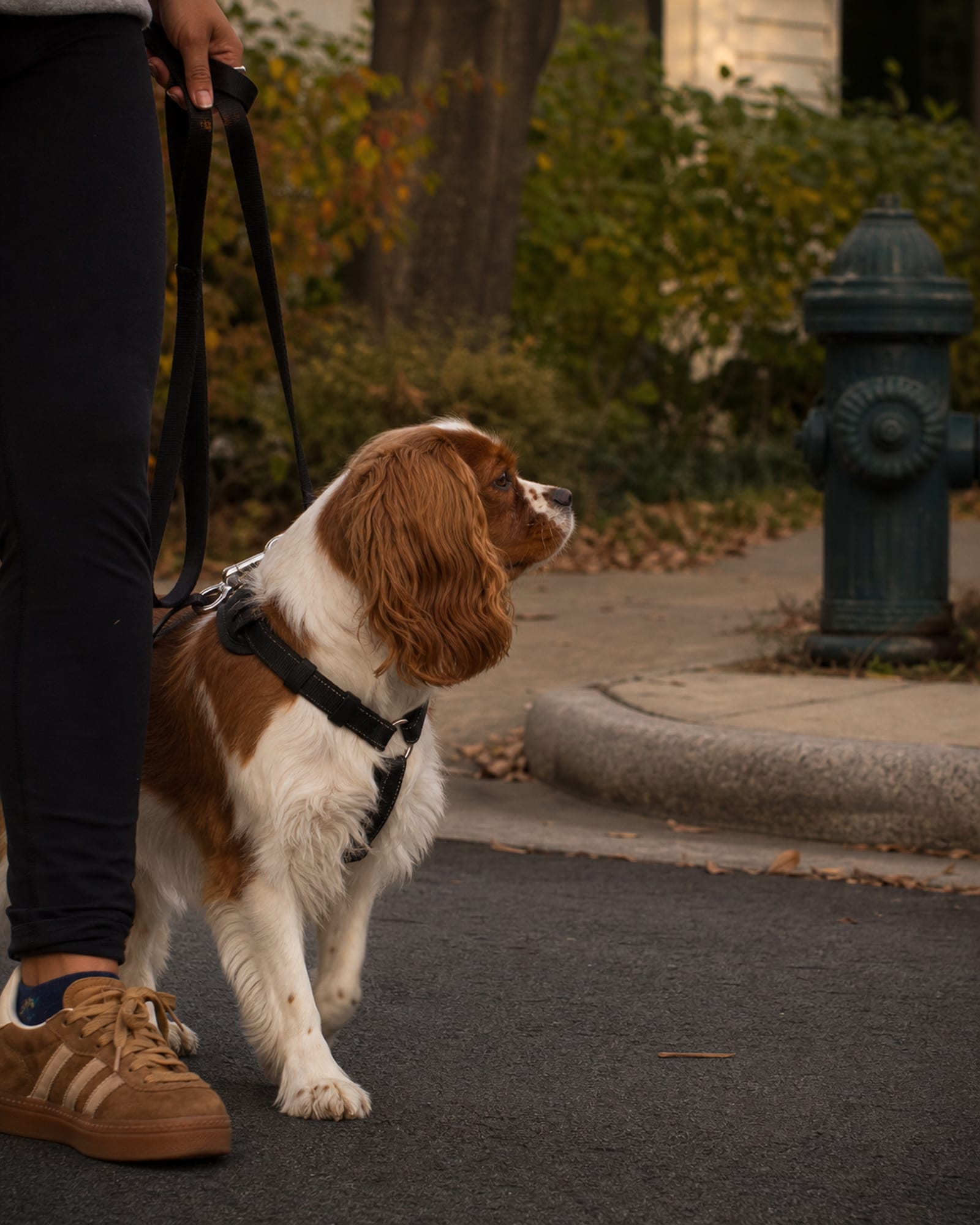
A dog walking at heel beside a handler's lower legs, both cropped at the knee
Long tenure, older dogs, and a peninsula full of ground that used to be easy for them.
01
Barking at the window, guarding a chair, mugging visitors. Perfectly fixable and slower than the same problem in a two year old, because there is more to undo.
02
Often read as stubbornness for a year before anyone tests it. Once it is confirmed, hand signals and a vibration cue give you a working recall again.
03
The housing here is heavy on split levels and waterfront rebuilds, and an older dog that has started refusing stairs is usually telling you about a joint.
04
A puppy brought in to keep an older dog company is a common plan and it frequently makes the older dog's life worse. Worth talking about before, not after.
05
Beverly Triton runs about five miles of dirt, rock and slope along a mile of shoreline, with brackish ponds. Good ground, and hard on a dog whose balance has changed.
06
Heavy traffic on limited shoulders, minutes from very quiet streets. A dog with reduced hearing near that road needs a different management plan, not a braver one.
Joints, hearing, sight, teeth, thyroid. This is not a formality and it changes the plan more often than any other single step.
An older dog with a long list gets one item at a time. Picking the one that most affects daily life, and finishing it, beats making partial progress on four.
A habit survives because it still works. Find what it produces, remove that, and give him a different way to get the same thing. This is the actual work.
Level ground, decent grip, short sessions of five minutes. A dog who is bracing himself is not learning, he is coping.
Worth doing before you need it. A dog who learns hand signals at nine still has them at twelve when his hearing has gone, and the transition costs nothing now.
Older dogs do better with predictability than with novelty. This is one of the few cases where a settled household is the training resource rather than the obstacle.
There is a version of this conversation that treats an older dog as a set of problems to be managed, and I do not agree with it.
A dog of nine or ten can learn a new behavior in the same handful of sessions a young adult would take. The old line about old dogs is simply not what I see. What changes is stamina and comfort, not capacity, and both are handled by making sessions shorter rather than by lowering the expectation.
Recall in particular is worth rebuilding rather than abandoning. Owners of older dogs often stop asking, because he never goes far anyway, and then one day he does. On a peninsula where properties run down to the South River, the Rhode River, Glebe Bay and Selby Bay, and where the shoreline flooding and drainage vary sharply from one street to the next, a dog that does not come back is a serious afternoon. A long line and a fortnight will give most older dogs a usable recall.
The community here supports it well. Loch Haven Park has fields, trails and a playground, South River Farm Park and Homeport Farm Park give you open ground, and the county's new community center on Solomons Island Road is bringing more organized activity into the area. All of that is useful for the same reason it is useful for a young dog, which is that a behavior taught in your kitchen is a kitchen behavior until you take it somewhere else.
One practical note. If you are thinking about the residential program for an older dog, that conversation starts with his health rather than with the schedule. Edgewater is inside the range for it, and whether it is the right choice for a particular ten year old is a judgment I would rather make in person.
A dog's head turned back over its shoulder toward camera
Phone (443) 429-0445, seven days a week from 6 AM to 7 PM. Tell me his age, what changed, and roughly when, and I will tell you whether the first call should be to me or to your vet.