Baltimore, MD area6 AM - 7 PM · 7 days a weekDog Training since 2001
Hand signal: eyes on me

Service Dog Training

A service dog is a dog individually trained to do work or tasks directly related to a person's disability. That is the actual definition, and almost everything else you have read online about vests, registries and certificates is somebody selling something.

A dog holding a steady down-stay beside its handler's chair in a public building.

A dog holding a steady down-stay beside its handler's chair in a public building.

At a glance

What defines one
Trained tasks, not paperwork
Not required
Registration, certificates, vests
None of it is federally required, and none of it confers status.
Starts with
Screening the dog honestly
What it is
A behavior specialty
Delivered through a program, never sold on its own.

What legally makes a dog a service dog

Under the Americans with Disabilities Act, a service animal is generally a dog that has been individually trained to do work or perform tasks directly related to a person's disability. The training and the task are what create the status. Nothing else does.

That means professional training is not federally required. Neither is certification, registration, an ID card, or a vest. You can train your own dog, and many people do. There is no federal registry, and every website that sells you a place on one is selling you a piece of paper with no legal weight. If a business challenges your dog, that certificate does not help you, because it never meant anything in the first place.

A vest is not proof of anything either. It is useful in practice, because it tells the public to leave your dog alone and it signals to staff what the dog is doing, and I usually recommend one for exactly those reasons. It just is not what makes a dog a service dog.

State and local rules still apply on top of all of that: licensing, vaccination, and the ordinary responsibilities of owning a dog. And to be clear, this is general information rather than legal advice. If you need a determination about your particular situation, that is a question for someone qualified to answer it.

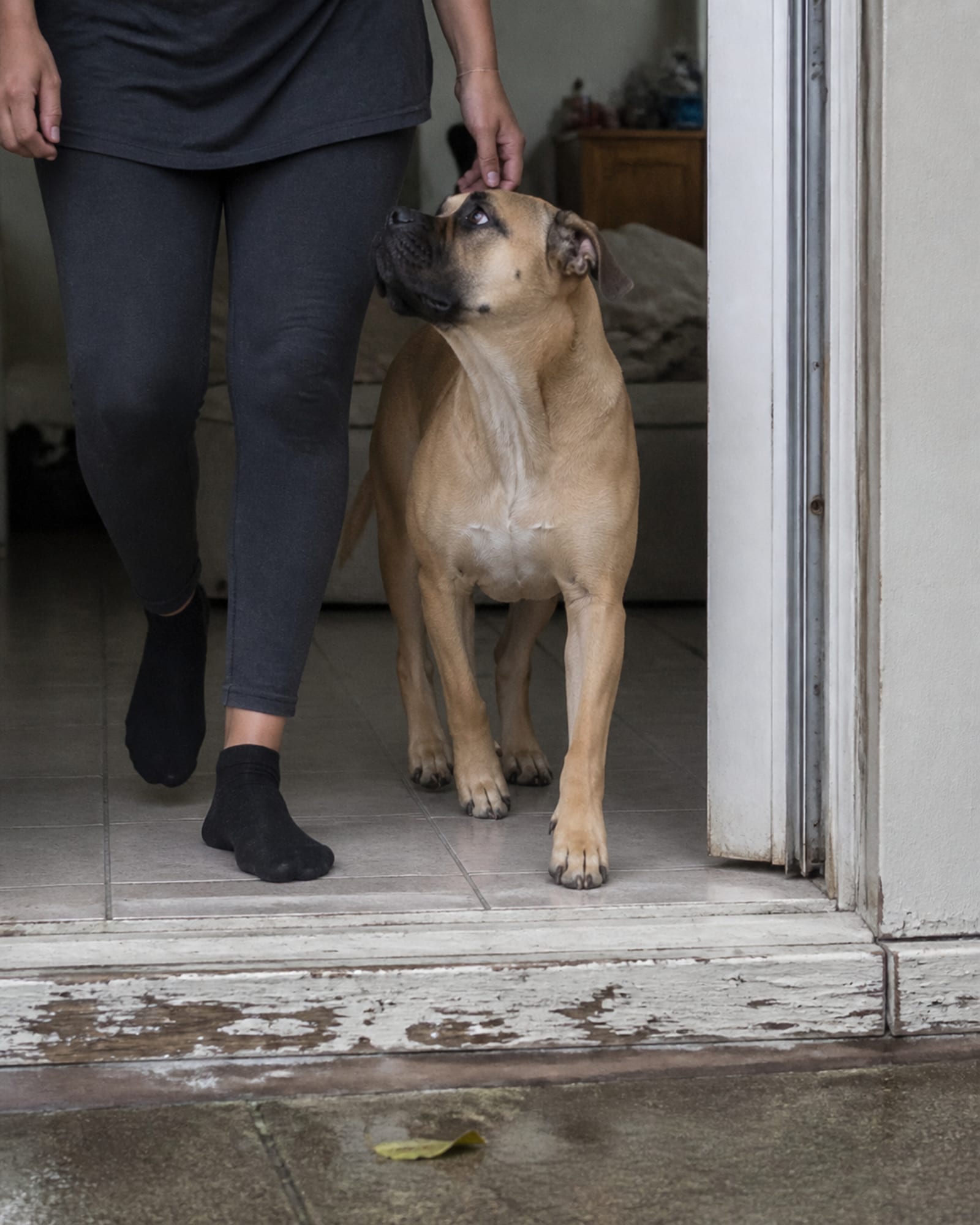
A dog walking in close position beside a handler through an automatic doorway.

A dog walking in close position beside a handler through an automatic doorway.

Service dog, emotional support animal, therapy dog

These three get used interchangeably and they are genuinely different things, which matters because the access rights attached to them are not the same.

A service dog is task-trained for one person's disability, and public access follows from that. An emotional support animal provides comfort by its presence, which is real and matters, but comfort is not a trained task and an emotional support animal does not carry the same public-access rights. A therapy dog visits other people, in hospitals or schools or care homes, by invitation, and has no general public access at all.

I say this without judgement, because the confusion is not the fault of the people living with it. The internet is full of sites that deliberately blur the three in order to sell registrations, and people arrive at me having spent money in good faith on something that was never going to work.

What matters for our purposes is the task. If your dog does something specific, trained, and connected to your disability, we are talking about service dog work. If what you need is a calmer, better behaved companion who helps by being there, that is a completely legitimate goal and it is what my other programs are for.

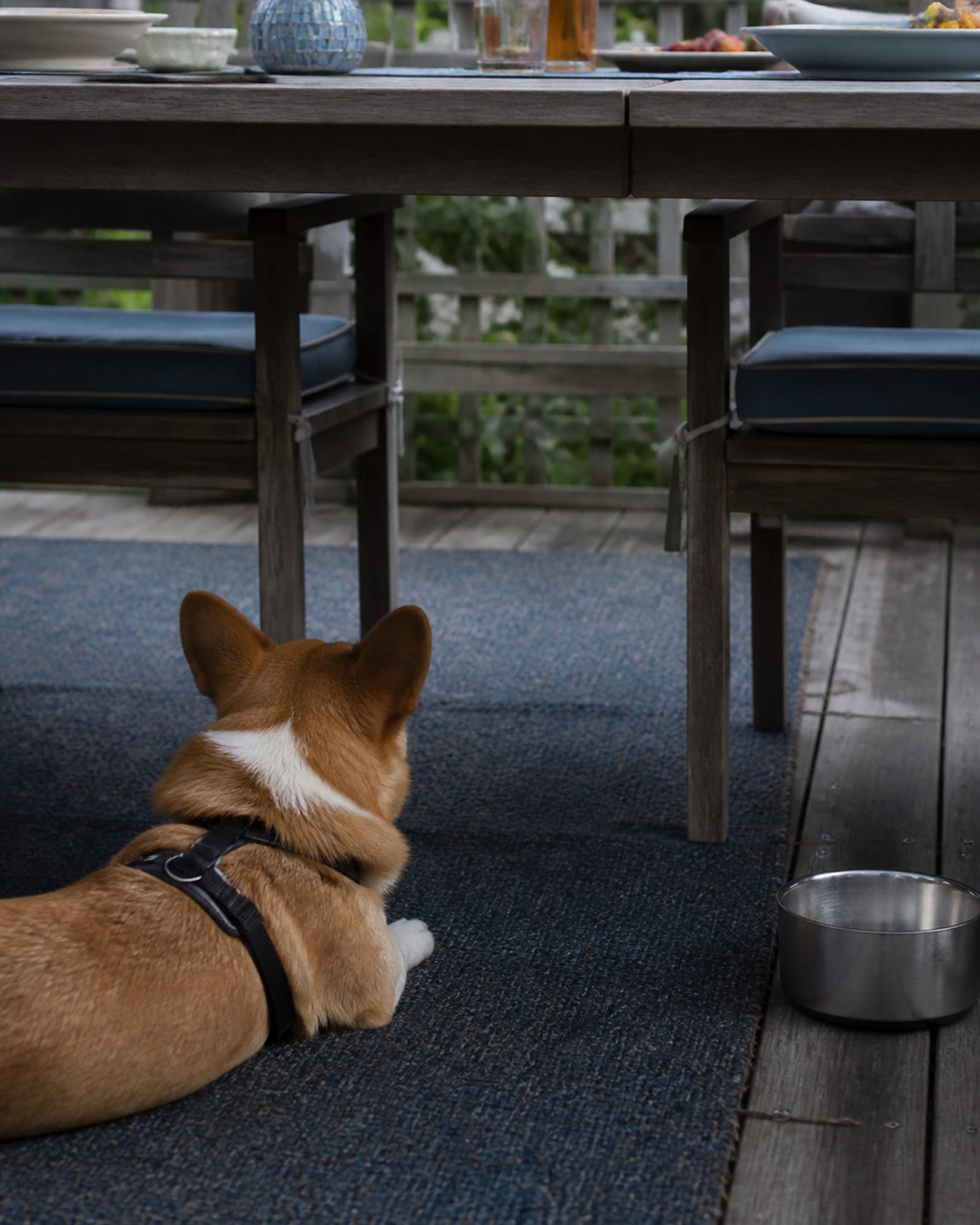
A dog settled under a table, out of the walkway, while people eat above it.

A dog settled under a table, out of the walkway, while people eat above it.

What the work involves

Two halves, and most people underestimate the second one.

01

Honest screening first

Not every dog can do this, and starting a dog that cannot is unkind to the dog and expensive for you. Temperament, confidence, health, sound sensitivity and recovery from surprise all get assessed before anyone talks about tasks.

02

The task itself

The trained behavior that connects to your disability: retrieving, bracing, interrupting, alerting to something the dog can genuinely perceive, guiding to an exit. It has to be specific and it has to be trained, because that is what the definition rests on.

03

Foundation obedience

Underneath any task is a dog with genuinely reliable obedience: position, recall, duration, and the ability to hold a behavior while the world happens. Task work built on shaky foundations falls apart in the first busy room.

Obedience training

04

Public access behavior

The larger half of the job. Settling under a table for an hour, ignoring dropped food, ignoring other dogs, riding elevators, tolerating crowds and children, and doing all of it without needing anything from you.

05

Neutrality to everything

A service dog that greets people is a service dog that stops working. The goal here is the same as socialization generally, held to a higher standard: the world is interesting and none of it is the dog's business.

06

You, handling

You are half of the team and the half that has to work every day. Handler coaching is not an add-on to service dog training, it is most of it, because the dog has to work for you in situations I will never see.

Choosing a dog for this work

If you have not got the dog yet, this is the most important conversation we can have, and it is the one people skip.

The washout rate for service work is high even among dogs bred for it by organizations that have been doing this for decades. That is not pessimism, it is the reality of asking an animal to work calmly in environments it has no natural reason to tolerate. Starting with the wrong dog is the single most expensive mistake available in this whole subject, because you find out eighteen months and a great deal of money later.

What I am looking for is a dog that recovers. Something startling happens, a tray drops in a cafe, and the dog resets within a few seconds and carries on. That recovery is worth more than any other trait, and it shows up early. Alongside it: genuine indifference to strangers and other dogs, tolerance for handling, soundness, and enough willingness to work that the job is not a burden.

What I am not looking for is the friendliest puppy in the litter. Social enthusiasm is charming and it is a liability in a dog whose job is to ignore everybody. Nor am I looking for a nervous dog that is sweet with you and worried about the world; that dog will suffer in the job, and no amount of training makes that fair.

If you already have the dog and it is not a candidate, I will tell you that early rather than take a year of your money finding out.

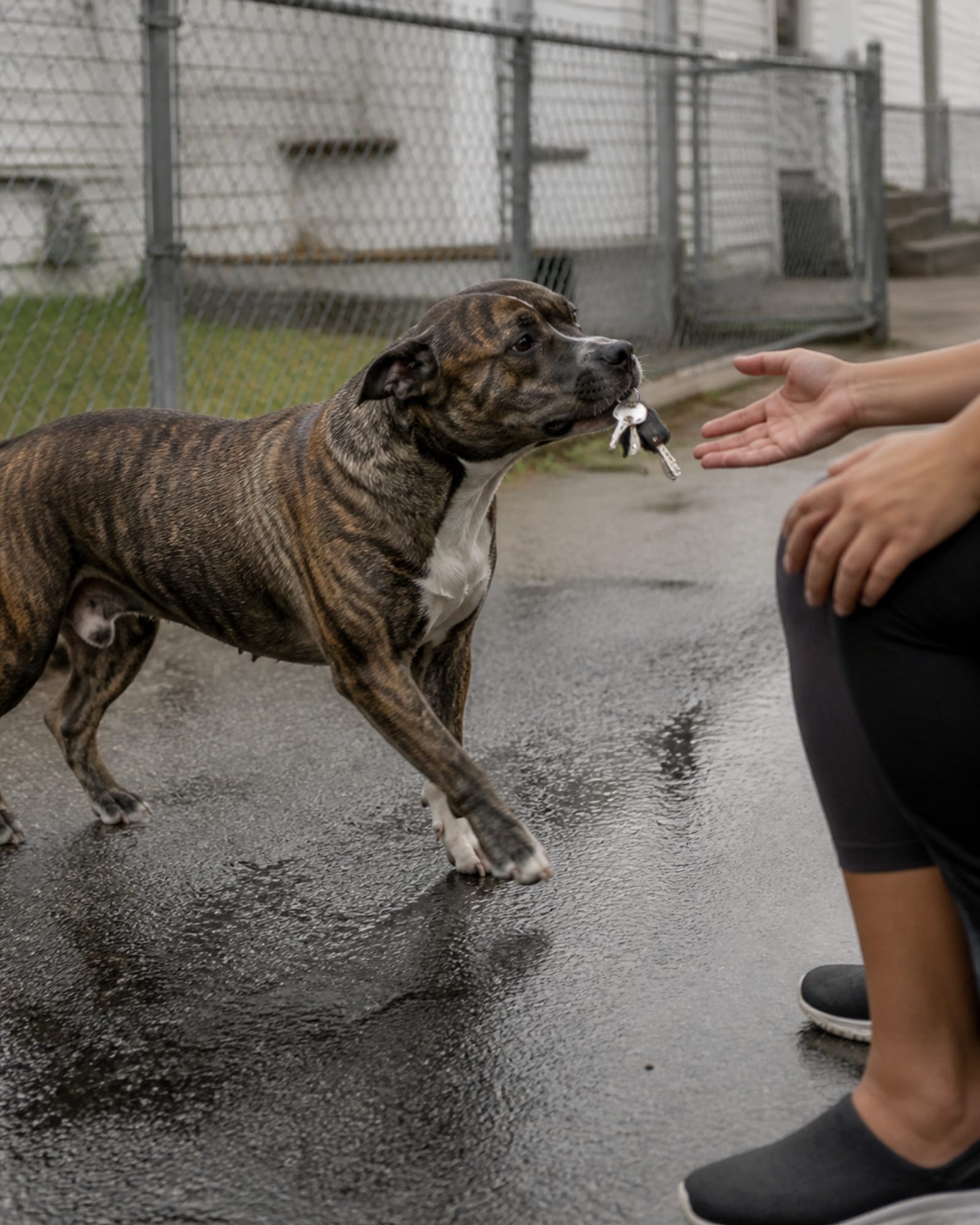
A dog retrieving a dropped set of keys and offering them to a seated handler.

A dog retrieving a dropped set of keys and offering them to a seated handler.

What I will not claim

I will not promise you a medical outcome. Some dogs alert to things people cannot perceive, and where that is genuine it is remarkable. What I will not do is sell you a dog trained to detect a medical event on a schedule, because that is a claim about your health that no trainer is in a position to guarantee, and the people who make it are trading on how much you need it to be true.

I will not tell you every dog can be a service dog. The screening exists because washing out a dog eighteen months in, after real money and real hope, is a bad outcome I would rather avoid at the start. Some dogs are wonderful companions and unsuited to working in public, and that is not a failure of the dog.

I will not sell you a certificate or point you at a registry, because neither confers anything. If you have already bought one, you have not ruined anything; you have just spent money on something that was never load-bearing.

And I will not give you legal advice about access disputes. I can tell you what the ADA definition says and what businesses are generally permitted to ask, because that is public information. Anything specific to your circumstances needs someone qualified.

Questions people ask

Does my dog need to be certified or registered?
No. There is no federal certification or registry, and sites selling them are selling paperwork with no legal weight. What creates the status is training the dog to do work or tasks related to your disability.
Can I train my own service dog?
Yes. The law does not require a professional trainer. Most owner-trainers do better with coaching, because public access work is difficult to build alone and easy to get subtly wrong.
Does my dog need to wear a vest?
Not legally. In practice I usually recommend one, because it tells the public to leave the dog alone and helps staff understand what they are looking at. It just is not what gives your dog its status.
Is an emotional support animal a service dog?
No. Comfort provided by an animal's presence is real, but it is not a trained task, and emotional support animals do not carry the same public-access rights. Plenty of sites deliberately blur this to sell registrations.
Can any breed do this work?
Temperament matters far more than breed. What decides it is confidence, recovery from surprise, low reactivity, sound tolerance, health, and genuine willingness to work. That is what the screening looks at.
How long does it take?
Longer than most other training, usually measured in many months to a couple of years depending on the dog, the tasks and how much you can practice. Anyone quoting you a short fixed timeline has not assessed your dog.
What can a business ask me?
Generally, whether the dog is a service animal required because of a disability, and what work or task it has been trained to perform. They are not entitled to your diagnosis or to a demonstration. That is general information, not legal advice.


Tell me what you need the dog to do

If you are considering service dog work, whether with a dog you already have or one you are about to choose, call me at (443) 429-0445. I answer 6 AM to 7 PM, seven days a week. Tell me what task you need and something about your dog, and I will tell you honestly whether it is a realistic candidate and what the work would involve.

Call TodaySend a Message

6 AM - 7 PM, 7 days a week · Baltimore, MD area