01
Noise sensitivity
Roadwork, night operations, air brakes and steel plates in the road. Graded exposure at a distance the dog can handle, never repetition at full volume.


Liberty Road is being rebuilt through 2026. Lane shifts, night work and closed crossings change your dog's walk every few weeks, and some dogs handle that badly.
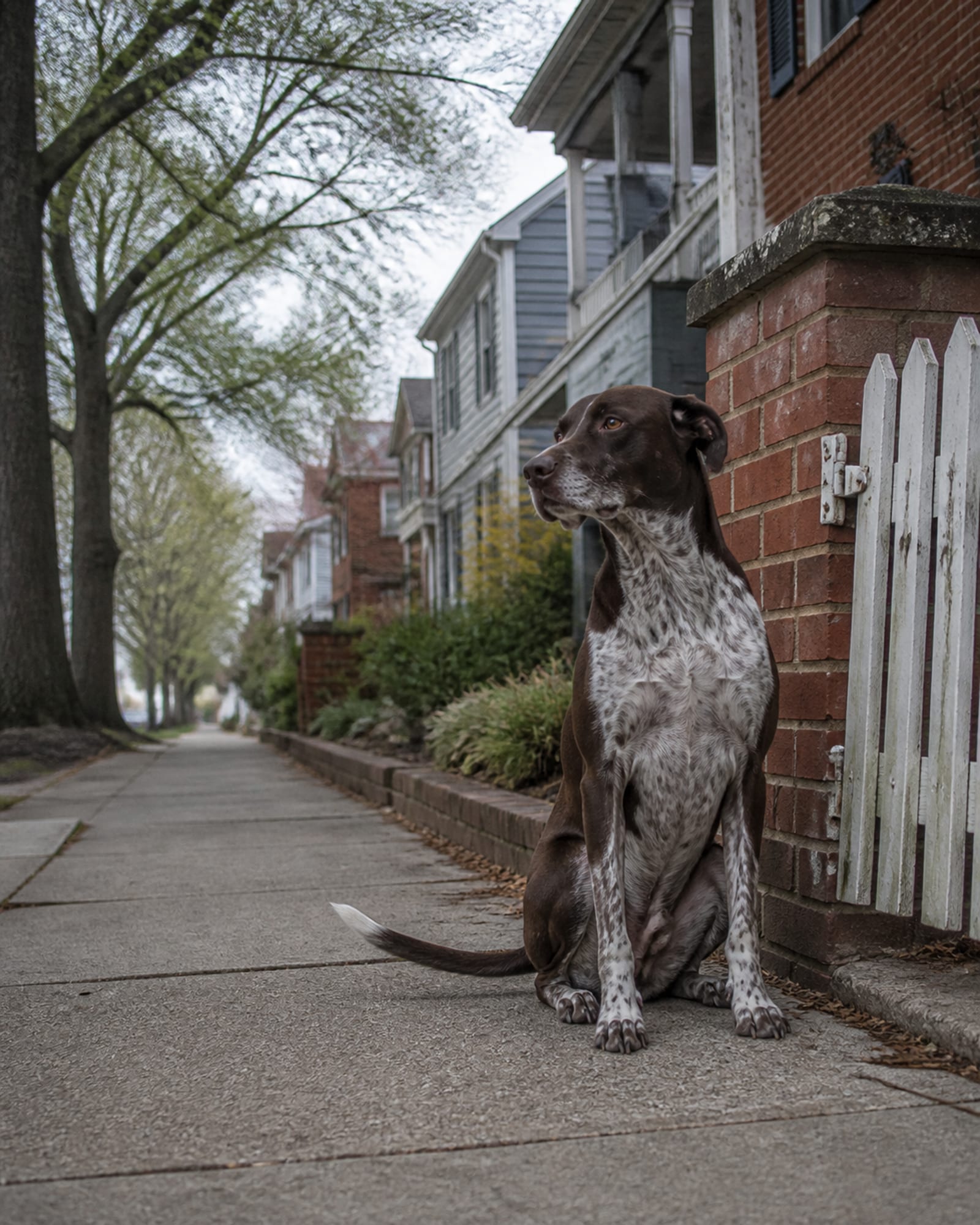
A dog sitting beside a gatepost, upright and calm, in Randallstown, MD
Dogs run on pattern more than people realize. The same route at the same hour, the same corners, the same gap in the same hedge. It is one of the reasons a settled dog looks so effortless: most of what it meets, it has met before.
MDOT's 2026 work on Liberty Road touches the intersections at Milford Mill, Rolling and Old Court roads, with temporary lane changes and overnight operations. For a lot of Randallstown households that means the walk has cones in it this month that were not there last month, the crossing has moved, there is a plate in the road that booms when a car goes over it, and the quiet stretch is now where the machinery is parked. A confident dog shrugs. A sound-sensitive or anxious one starts refusing to leave the block, or starts reacting to things it used to walk past.
Owners often describe this as the dog being dramatic. It is worth taking more seriously than that, because it responds well to the right approach and gets steadily worse under the wrong one.
The wrong approach is repetition at full intensity. Walking a frightened dog past the jackhammer every day so it gets used to it does not usually work. It teaches the dog that the walk contains something it cannot escape, and a fair number of dogs generalize from that to the whole street. This is why some dogs get worse over a construction season rather than better.
The approach that works is graded and boring. Find the distance at which the dog notices the noise and can still take food, think and respond. Work there. Pay well. Close the distance slowly across sessions, and back off the moment the dog stops coping. You are teaching the dog that the noise predicts something good and that you will not march it into anything, which are both new pieces of information.
The other half is a handler who is not adding to it. Tightening the leash the instant you see the machinery tells the dog that you have also spotted the threat. A lot of the improvement in these cases comes from changing what the person does at the moment of the trigger, which is quicker to fix than the dog and is one of the things the handover lesson is for.
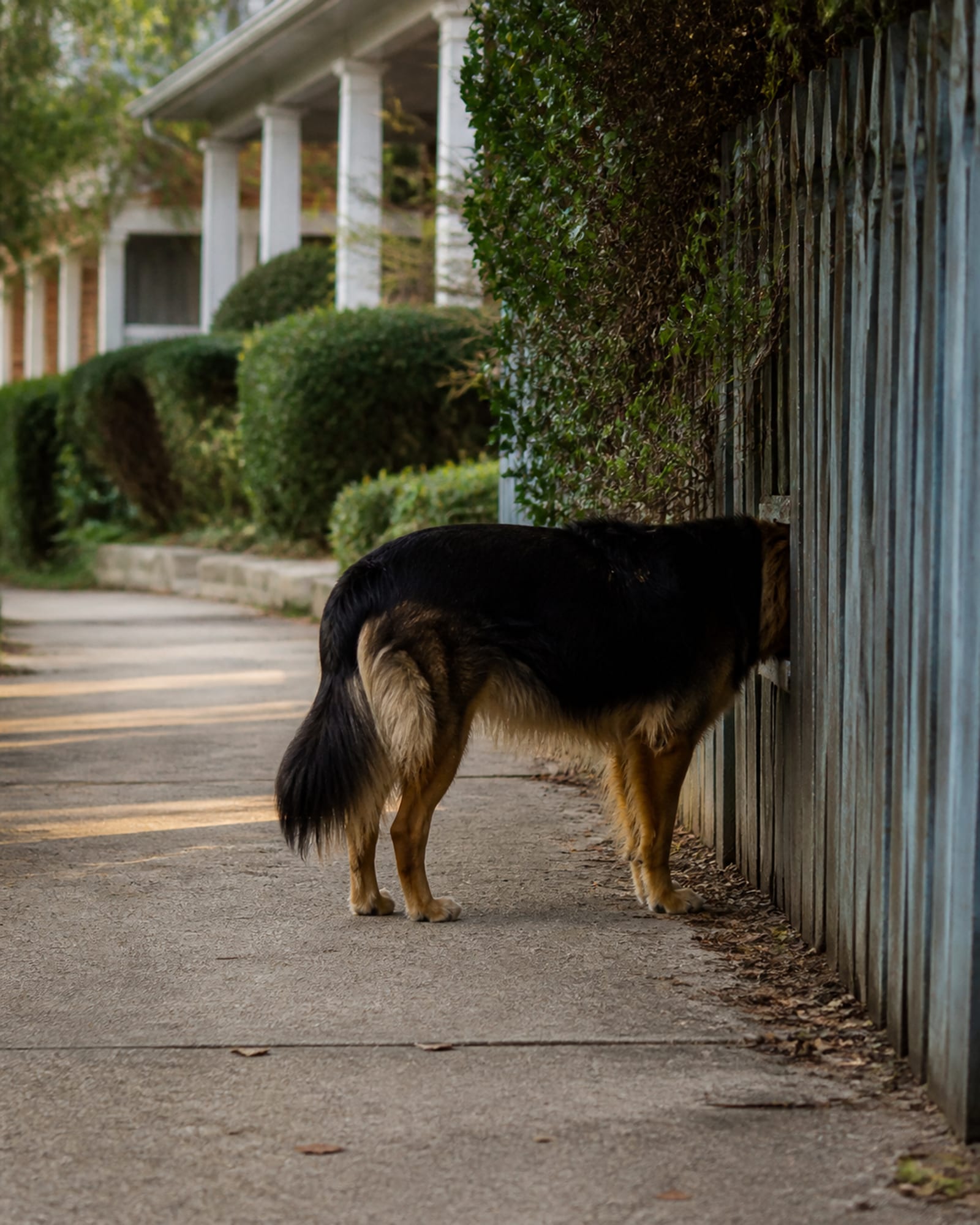
A dog standing beside a fence line, nose to a gap, in Randallstown, MD
The local mix, shaped by a fast commercial road and a lot of settled residential streets behind it.
01
Roadwork, night operations, air brakes and steel plates in the road. Graded exposure at a distance the dog can handle, never repetition at full volume.
02
Fast moving, multilane, with changing crossings. A dog that sits automatically at a curb is worth more here than a dog with a long list of tricks.
03
Randallstown runs 54.8% detached with generous yards and mature landscaping. Big open ground with wildlife in it is where a shaky recall gets found out.
04
A dog with a big yard, a routine and a boundary to run tends to invent a job. Redirecting that is easier than most owners expect.
05
Around a quarter of homes are attached and 16.5% sit in buildings of ten or more units, where shared entrances put dogs and people together at close range.
06
The median age here is 46.9 and 21.9% of residents are 65 or over, so a lot of my calls are about making an established dog easier to live with, not about starting from nothing.
What sets the dog off, at what distance, and whether it has got worse over the last few months. If the answer to the last one is yes, that usually points at repeated exposure rather than at the dog.
In your home, and it comes off the training fee. I want to walk the route with you and see the dog meet the thing, rather than have it described.
For a few weeks we may deliberately avoid the worst of it. That is not giving in, it is stopping the daily rehearsal while we build the skills that will let you go back.
The noise at a level the dog can think through, paid well, closed gradually. Some weeks we go backwards because the site got louder, and that is expected.
With a handler who knows what to do with the leash at the moment it matters. Then my number, for the life of the dog.
Randallstown is inside both of the ranges I work to, so every option is genuinely open here.
The distances are the opposite way round from what people assume. Board and train draws from a tighter circle, about a one hour drive, because your dog comes to stay with me and somebody drives that road twice. Everything else reaches further, out to about two hours, because for those I am the one doing the driving. Randallstown sits comfortably inside the tighter of the two, so nothing is off the table.
For a noise problem specifically, I usually prefer to come to you, because the noise is at your address and the work has to happen where it lives. In-home private lessons run $700 for an evaluation plus four one hour sessions, with lifetime phone support once the face to face work is done. Kick Start at $1,600 does five consecutive days in your home and neighborhood plus an owner lesson and a two week follow up, and it suits a dog that needs a run of consecutive days rather than a session every two weeks.
Board and train earns its place where the underlying obedience is missing entirely, because it is difficult to work on a fear problem with a dog that has no reliable settle, no reliable position and no history of listening under pressure. Building that with me daily and then bringing it home is often faster than building it in your spare half hours. The programs are set out on the board and train page.
Whichever program you pick, the useful thing about Randallstown is that quiet ground is never far away. Behind the Liberty Road corridor sit long residential streets, mature landscaping and wooded stream edges, and the community center on Resource Drive and the branch library anchor an area that is calm most of the day. So the staging is easy to arrange here: a genuinely quiet street for the early work, a moderate one for the middle, and the corridor itself as the exam. Towns where every route is equally loud are much harder to plan around than this one.
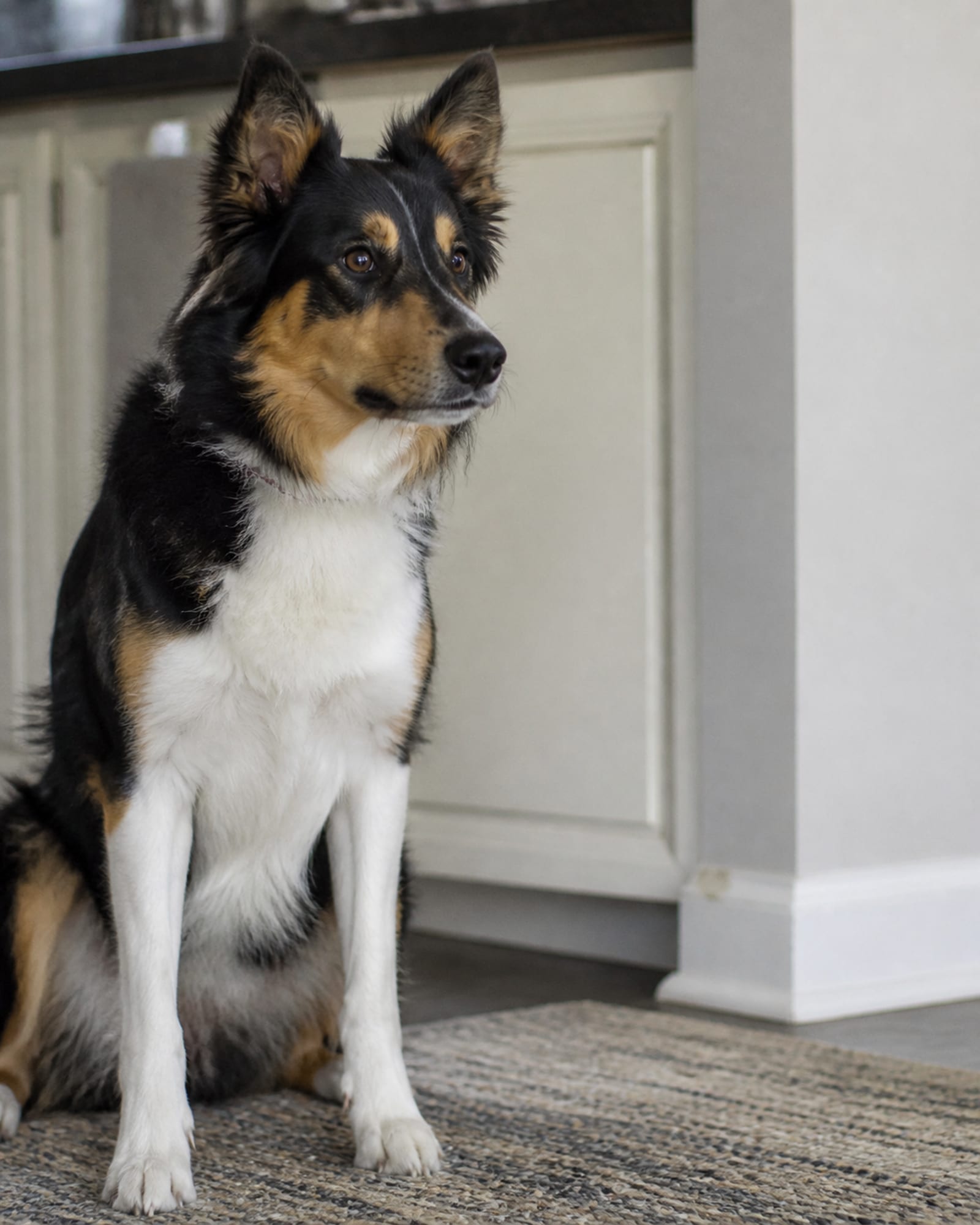
A tight vertical of a dog sitting, front legs straight, chest square, in Randallstown, MD
Phone (443) 429-0445, any day between 6 AM and 7 PM. If you do not know the distance yet, that is fine, it is one of the first things we work out together.