01
A second barrier
A gate across the hallway, a closed inner door, or a porch that has to be crossed. It buys you a mistake without a consequence, and it goes in on day one while the training happens behind it.

The dog that shoots past you the second the door opens, or clears the yard, or hears you calling and keeps going. This is the problem on the site with the highest cost of getting it wrong, because between here and Washington DC the outcome is roads.
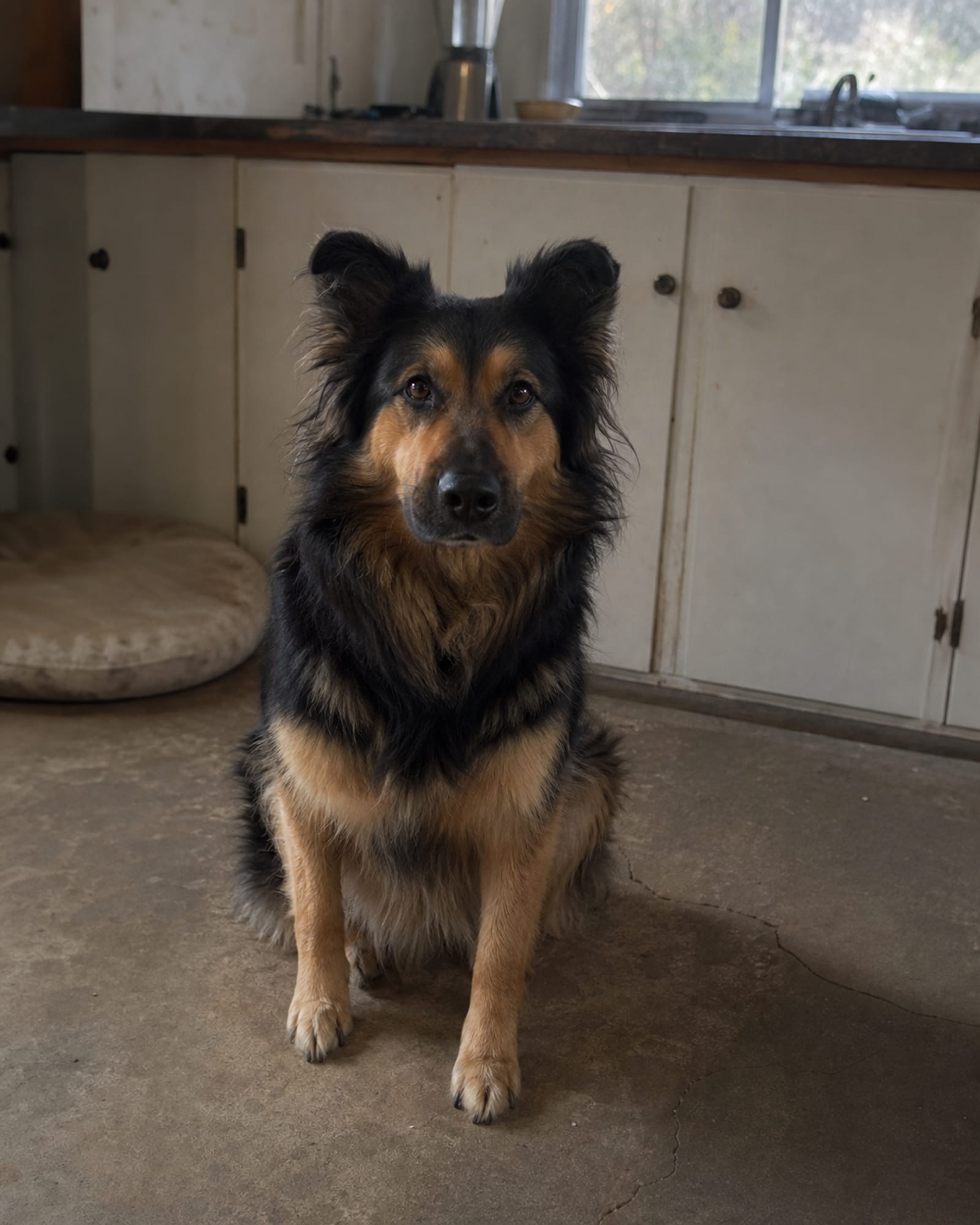
A dog sitting square on a kitchen floor, worktop rising behind it
Getting out and not coming back are different failures and they need separate work, though most households have both.
Getting out is about thresholds and containment: the front door, the car door, the gate, the fence. It is a management and impulse-control problem, and it is the more urgent of the two because it is what puts a dog in a road.
Not coming back is recall, and it is a training problem with a long history behind it. Most dogs that ignore a recall are not being defiant. They have learned, over years, that coming back reliably ends something good, and they are making a perfectly sensible decision based on the evidence available.
Until both are addressed, the honest answer is management: a long line, a second barrier at the door, a check of the fence. That is not defeat. A dog that cannot be recalled off a squirrel near a busy road should not be off leash near a busy road, and no amount of optimism substitutes for that.
This is a specialty rather than a stand-alone service, delivered through in-home private lessons, Kick Start, or board and train.
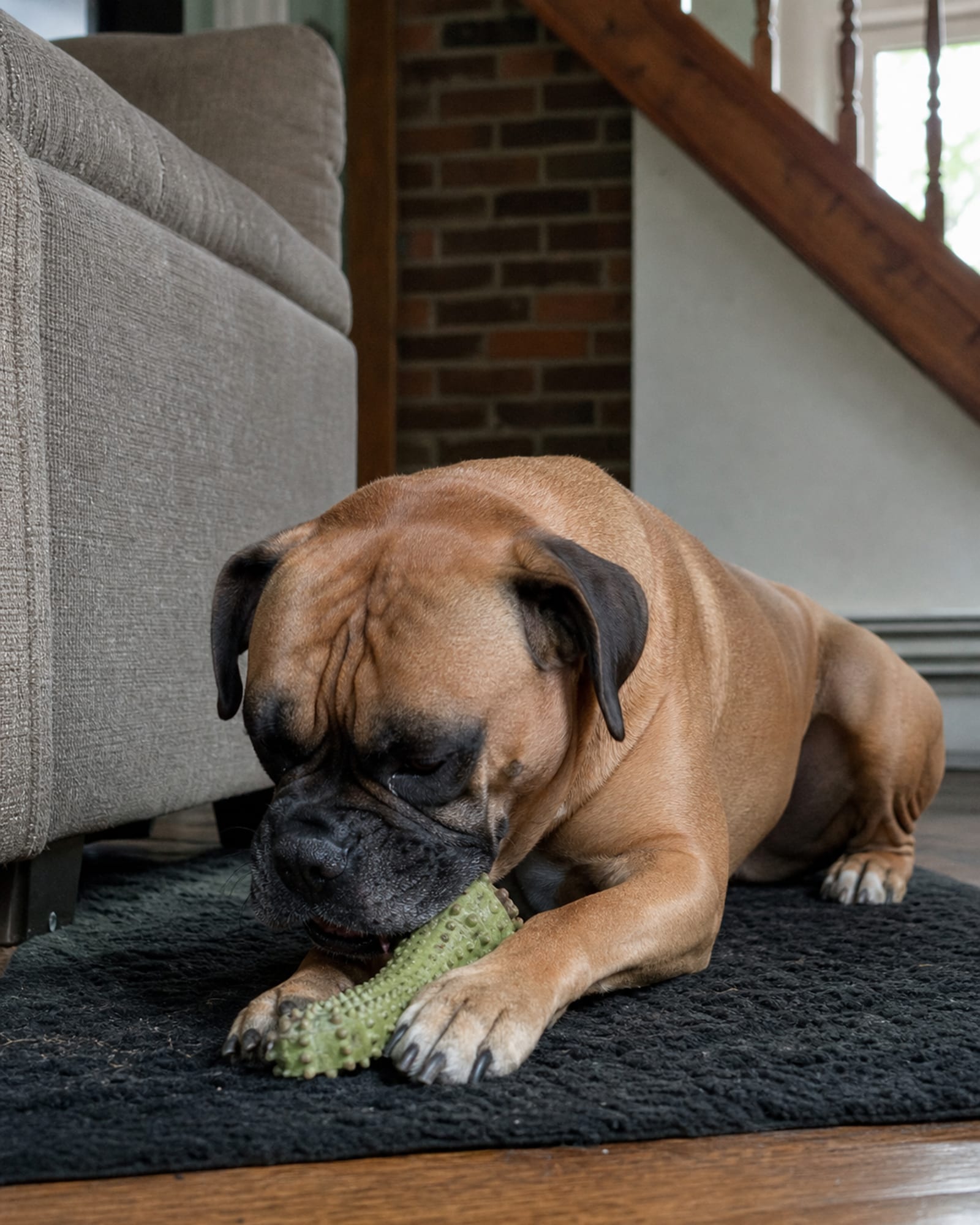
A dog lying on a mat beside a sofa, room quiet
Almost every broken recall I meet was broken the same way, and none of it was deliberate.
Think about what has usually followed the word come, across your dog's whole life. Leaving the park. Having the leash clipped on. Being put in the car. Getting a bath. Being told off for not coming quickly enough the last three times. From the dog's side, the word has become a reliable predictor that the fun is over, and it has quietly stopped meaning what you think it means.
Then there is the gamble. A dog off leash, sniffing something excellent, hears its name. Coming back is worth a piece of cheese. Staying is worth the rabbit. If the dog has ever been allowed to make that choice and win, it now knows the choice exists, and it will take that bet again.
And the one that does the most damage: telling off a dog that finally came back. It is a completely human reaction after twenty minutes of panic, and to the dog you have just punished the act of returning. Whatever it did before, the last thing it did was come to you, and that is what it learns from.
So rebuilding a recall means the word predicts something better than what the dog was already doing, and it means never letting the dog practise ignoring it while we build.
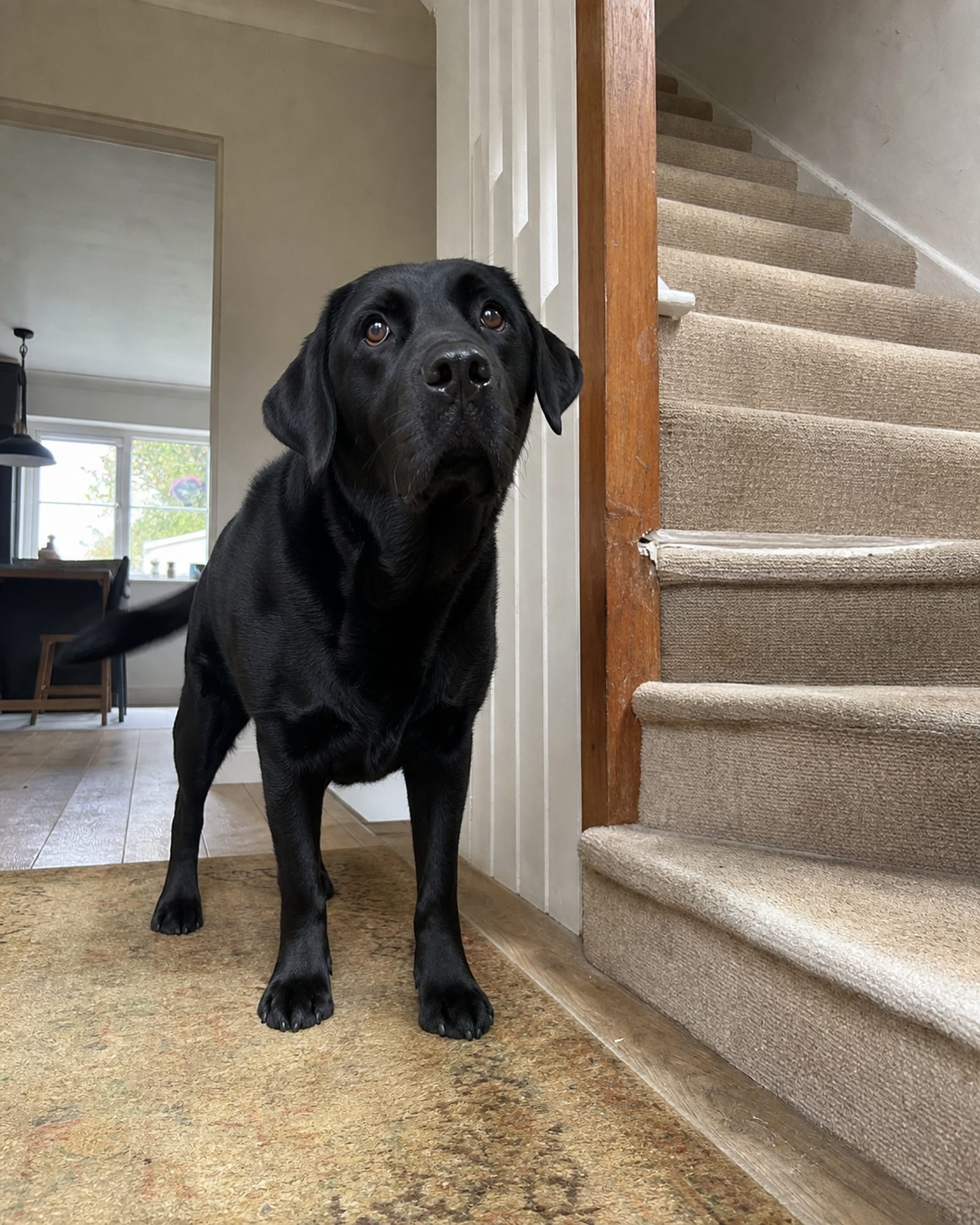
A dog standing at the bottom of a staircase looking up
Doors are trainable and predictable, which makes this the faster half of the job.
01
A gate across the hallway, a closed inner door, or a porch that has to be crossed. It buys you a mistake without a consequence, and it goes in on day one while the training happens behind it.
02
An open door comes to mean stop and look at me rather than go. This is genuinely teachable, in short sessions, several times a day, using a door you control rather than the one the visitors use.
03
The highest-risk moment in most households, because the door opens while everyone is distracted. It needs a routine that runs automatically: the dog goes somewhere specific before the door opens, every time.
04
The same behavior in a more dangerous place, usually a parking lot. A dog that waits for a release before leaving a vehicle is doing exactly the same job as at the front door.
05
Gaps, weak corners, gates that do not self-latch, and anything a determined dog can dig under. Where digging out is the route, that has its own page and the ground gets fixed before anything else.
06
Unglamorous and worth saying: a current tag and a microchip registered to a phone number you still use. Most dogs that get out are returned by a stranger, and how fast depends entirely on this.
If come has been shouted, ignored and told off around, it carries all of that history. Often the cleanest start is a new word with no baggage, kept for this purpose and never used to end anything good.
The response to returning has to genuinely beat what the dog left, particularly early on. That means real payment rather than a pat and a routine biscuit, and it means the dog is sometimes released straight back to what it was doing.
While we build, the dog is on a long line so it cannot practise ignoring the word. Every ignored recall makes the word weaker. This stage is what people skip, and skipping it is why recalls plateau.
Proof it deliberately: further away, with more going on, after longer. A recall that works in your kitchen has told you nothing about a field with a jogger in it.
Some dogs get there. Some manage it in some places and not others, and some are safer on a long line for life, which is a legitimate outcome rather than a failure. Where a remote collar is the route to real off-leash freedom, that is a separate conversation with its own page.
Practical, because people find pages like this at exactly the wrong moment.
Do not chase. A dog being chased runs, and a dog that thinks it is a game runs further and faster. It is the strongest instinct in the situation and it is the wrong one.
Run the other way instead, or crouch down, or lie on the ground. Dogs that will not come to an upright person striding toward them will often come to somebody moving away or doing something odd. Open a car door if the car is nearby, since a great many dogs will load themselves into a vehicle out of habit.
Use a happy voice even if you are terrified. Anything urgent or angry in your tone tells your dog that coming back is a bad idea, and it is the moment when that matters most.
And when the dog does come back, be pleased. Whatever it just did, the thing you are responding to is the return. Every trainer has met the dog that will not come back because of what happened the last time it did.
Afterwards, tell me what happened and where it went, because the route and the trigger tell us most of what the plan needs to be.
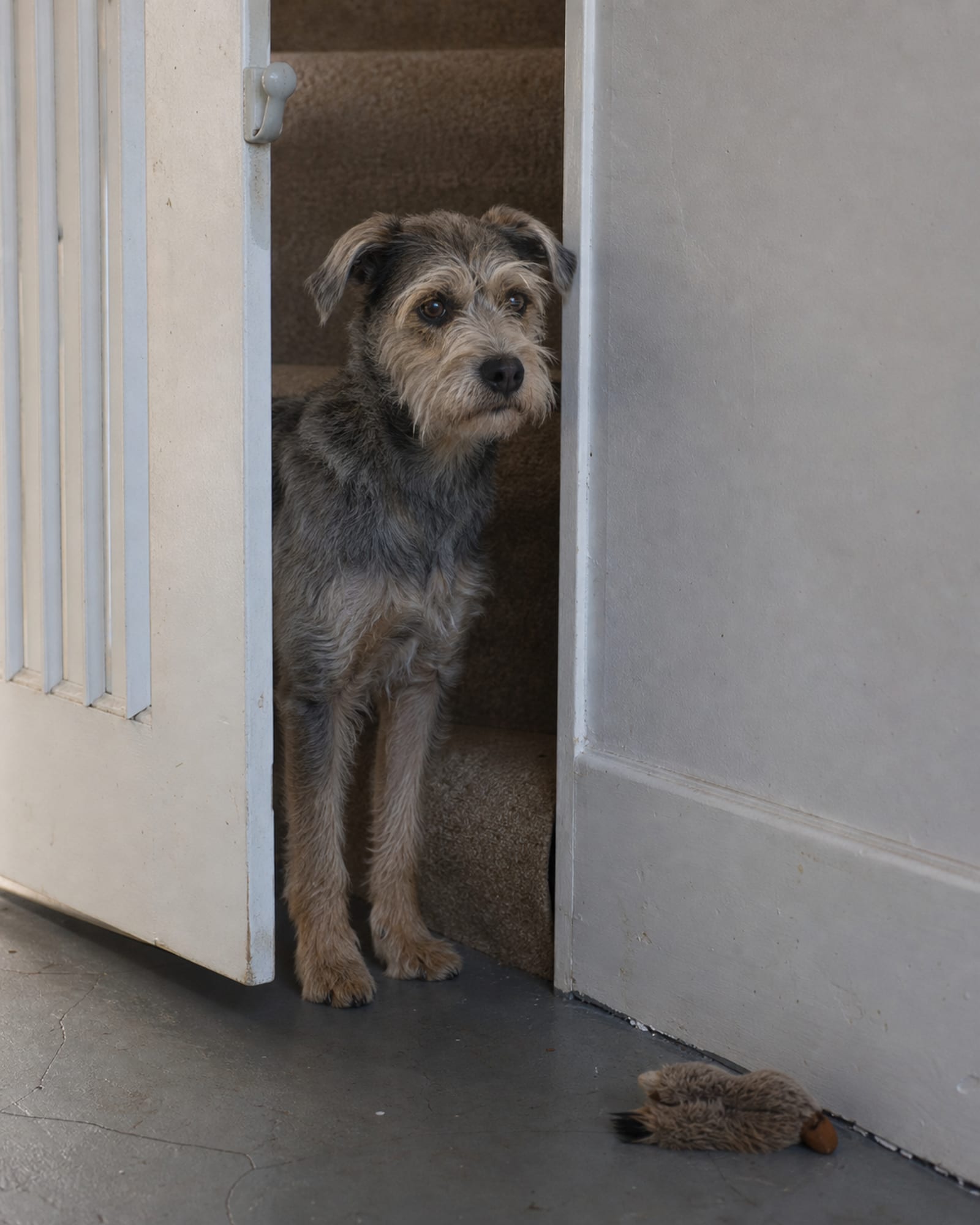
A dog waiting behind a half open stair gate, calm
If your dog bolts through doors, clears the yard, or will not come back, call me at (443) 429-0445. I answer 6 AM to 7 PM, seven days a week. Tell me how it gets out and what it does once it is loose, and I will tell you what I would fix first and what it would cost.