01
The front door
The doorbell, the delivery driver, the guest who gets jumped on before they are through the frame. We rehearse the actual sequence at your actual door, with your actual leash setup, until it has a routine instead of a scramble.


I come to your house and teach you to train your own dog, in the rooms and on the streets where the trouble actually happens. An evaluation plus four one-hour sessions, from $700. Your dog never leaves home.
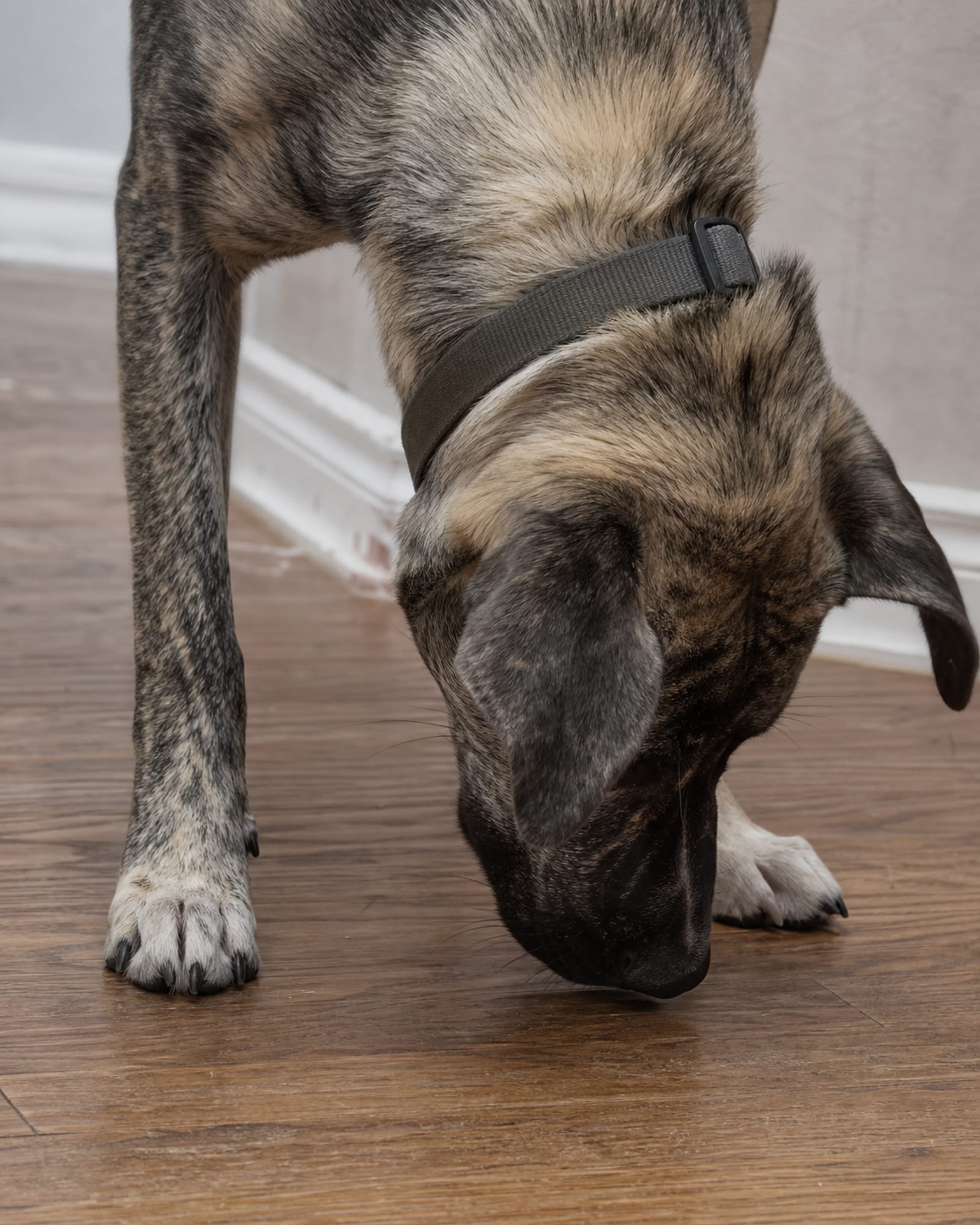
A close vertical of a dog's front paws and lowered head on a floor
In-home private lessons are one-on-one sessions where I come to your house and coach you to work with your own dog, in your home, your neighborhood and wherever the problem actually happens. It is a $100 evaluation followed by four one-hour sessions, from $700, spaced across weeks so your household has time to practice in between. Your dog stays home the whole time.
That last part matters more than it sounds. This is not a drop-off service and your dog is not going anywhere. If you want a dog that goes away and comes back trained, that is board and train, and it is a different page. This program is for the person who wants to be able to handle their own dog.
Most of what people call me about does not happen in a training hall. It happens at the front door when the bell goes. It happens at the living room window at three in the afternoon. It happens forty feet down your own street, at the same spot, every single day. A class cannot see any of that. I can, because I am standing in it.
I have been training dogs in the Baltimore, MD area since 2001.
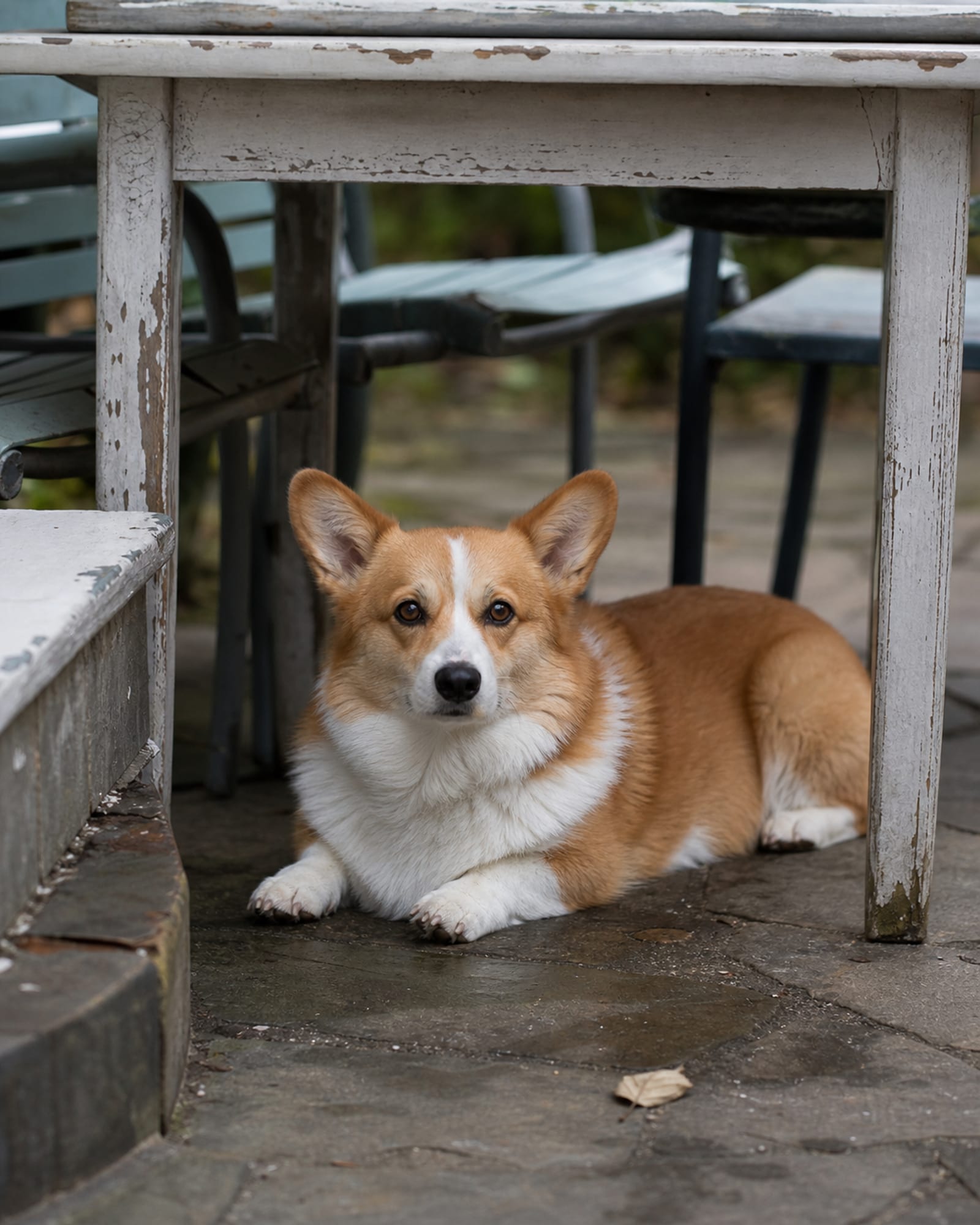
A dog lying under a table with chair legs framing it
The evaluation is $100. I come to your home, watch your dog in the place it actually lives, and tell you what I would do about it. It comes off the training fee if you go ahead, and you are under no obligation to go ahead.
The program is from $700. That is the four one-hour sessions and the plan your household works from. When the face-to-face work is finished you keep trainer support, because dogs change, houses change, and a question six months later is still a question worth answering.
Payment plans are available. Ask when you book so the schedule is set up alongside the program rather than renegotiated halfway through.
The number is on the page because you should not have to book a call to find out what something costs. The first phone call is free and I will happily talk through your dog on it. The evaluation is an hour of real work in your home, which is why it is priced, and why it comes off the fee rather than sitting on top of it.
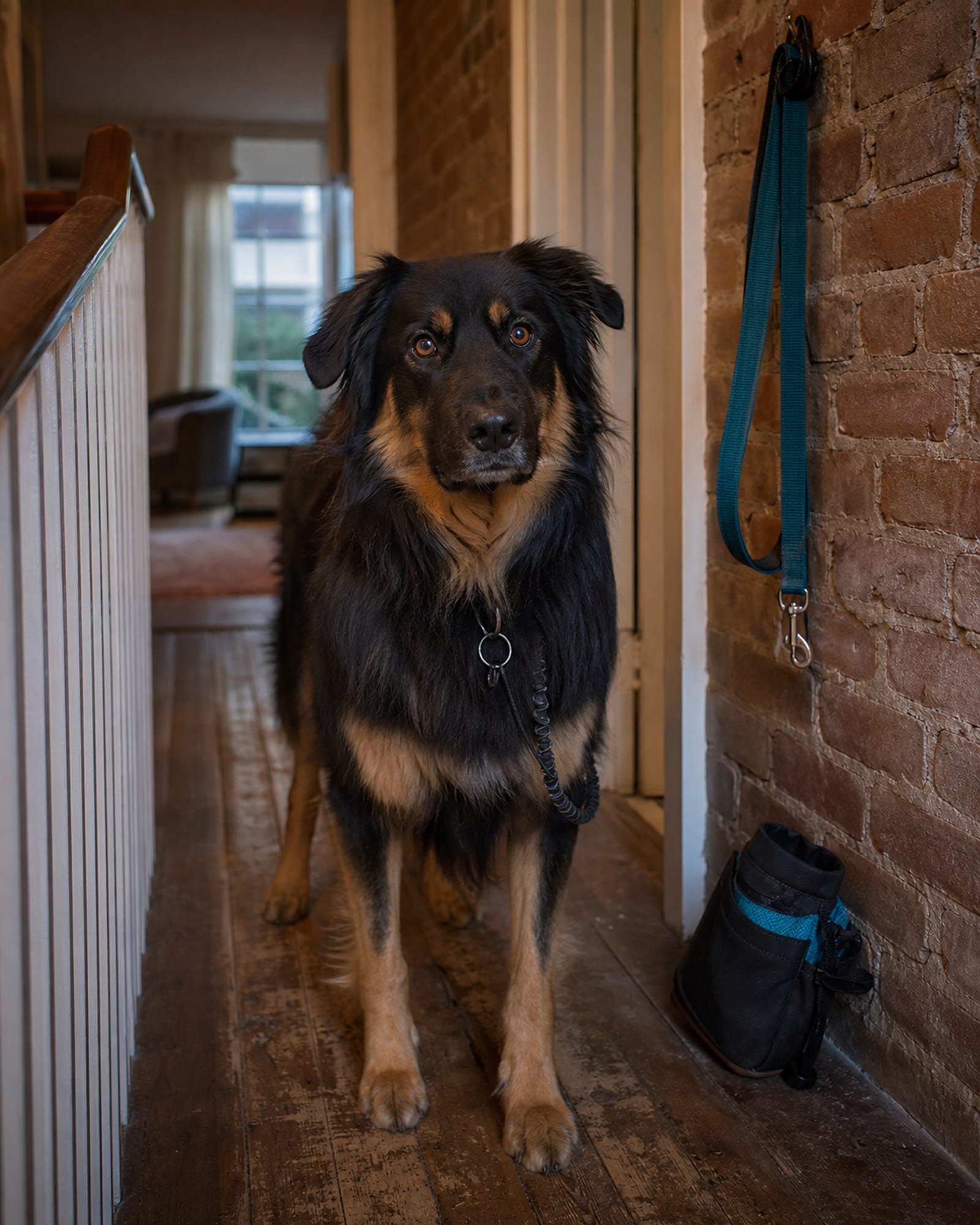
A dog standing in a hallway with a lead hanging on the wall behind, unclipped
Every household is a different set of problems in a different building. These are the ones that come up most.
01
The doorbell, the delivery driver, the guest who gets jumped on before they are through the frame. We rehearse the actual sequence at your actual door, with your actual leash setup, until it has a routine instead of a scramble.
02
Dogs that have spent a year rehearsing a bark at every passer-by are not being naughty; they have a job they gave themselves. We change what the window means, adjust what the dog can see, and give you something to do besides shouting from the next room.
03
Pulling, lunging, or the dog that walks beautifully everywhere except the one block near home. We work your real route, at your real times, because a dog that heels in an empty parking lot has told you nothing about Tuesday evening.
04
What happens when family arrives, when the kids bring friends, when someone is nervous around dogs. We set it up deliberately rather than waiting for it to go wrong, so the dog gets practice at being calm instead of practice at being wound up.
05
The dog that cannot switch off, follows everyone room to room, or paces while you are trying to eat. Settling is a trained skill, not a personality trait, and a dog that can do it is easier to live with than one that only knows how to sit.
06
One adult allows the sofa, another does not. One lets the dog out of the crate when it whines. The dog is not confused, it is reading the room correctly. Part of every program is getting the household onto one set of rules, which is often the whole fix.
This is the part that separates private lessons from everything else I offer, so I want to be blunt about it. I am not there to make your dog behave for an hour while you watch. I could, and it would be a waste of your money, because I go home and you do not.
What happens instead is that I show you the exercise once, then you do it while I watch and correct your timing. Your hands, your voice, your leash. Most of what I fix in a session is not the dog, it is a half second of timing, or a leash held so tight the dog has nothing to be right about. You cannot learn that from watching somebody else do it well.
That is also why this program is four sessions spread across weeks rather than one long one. You do almost all of the work in this arrangement, and you do it when I am not there. The gap between visits is not filler. It is where the training actually happens, and the session afterwards exists to fix whatever went sideways while you were doing it.
So yes, there is homework, and it is small on purpose. A few minutes several times a day, built into things you already do, beats an hour on Sunday that nobody keeps up.
The other thing I try not to do is label your dog. Stubborn, spiteful, dominant, and jealous are words that describe a mood in the room, not a behavior I can work with. What I can work with is that he barks when someone passes the window on the left, that he pulls hardest in the first hundred yards, or that he jumps on the person who makes the most noise about it. Describe what you can see and we can change it. Describe a personality and there is nothing to get hold of.
People are nervous about this one, so here is the whole hour.
I arrive and mostly I watch. What the dog does when a stranger comes to the door is the first piece of information I get, and it is usually the exact behavior you called me about, delivered free of charge in the first ten seconds. I want to see it happen rather than hear it described.
Then I ask questions. How old, how long have you had him, what did the previous home look like if there was one, who feeds him, who walks him, what time, what route. Where does he sleep. What have you already tried, and what happened when you tried it. That last question matters most and almost nobody gets asked it. If a piece of advice failed in your house, I need to know why before I hand you another one.
After that we go and look. The doorway, the window he barks at, the yard, the stairs, the crate if there is one, the place on the walk where it always goes wrong. I want the real layout, not a description of it. Furniture, sight lines and where the leash gets clipped on change what is possible.
Then I tell you what I think, plainly, including if I think you need a different program or no program at all. You get that read whether or not you book anything. That is what the $100 buys: an honest opinion from someone standing in your house, rather than a quote over the phone from someone who has never met your dog.
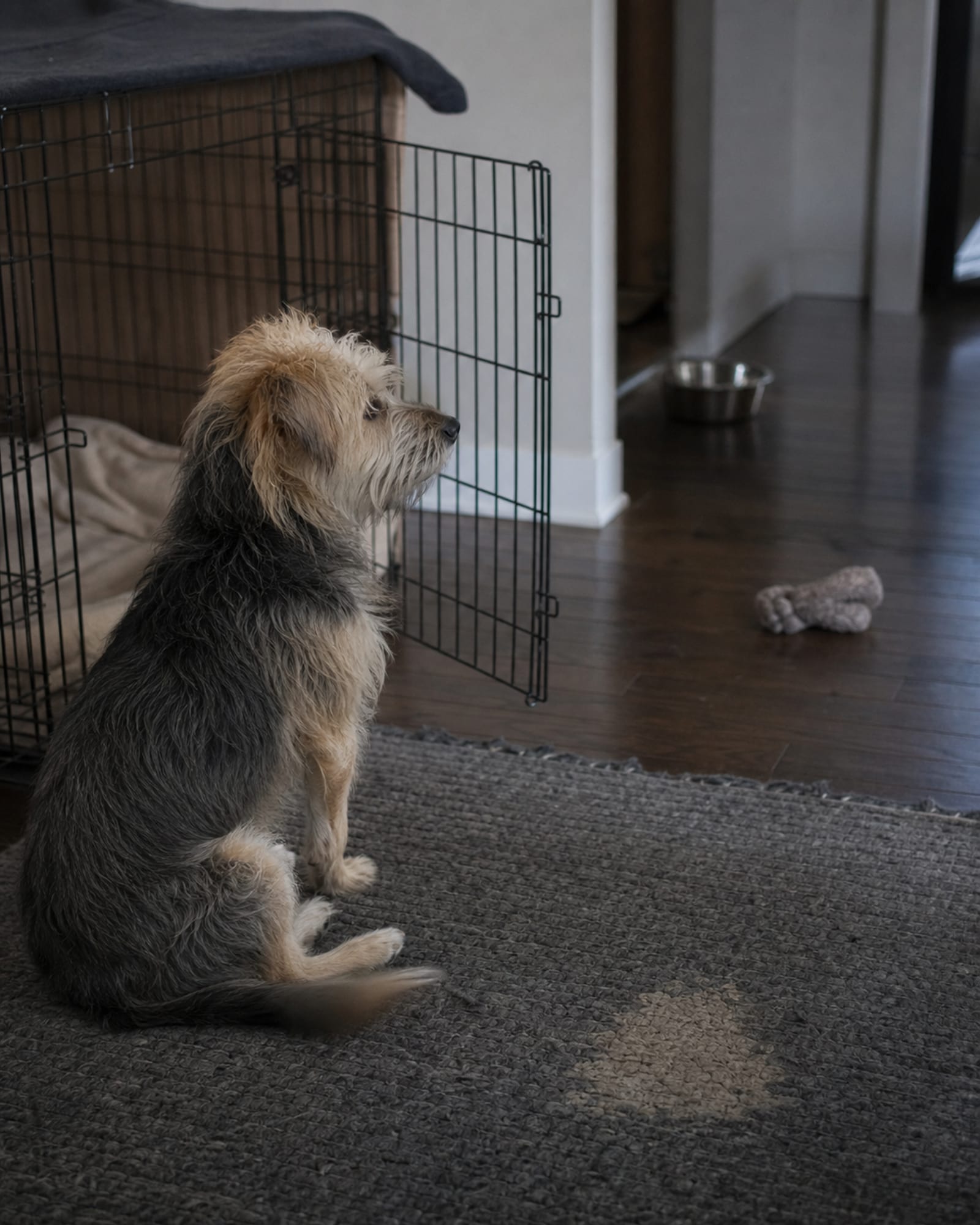
A dog sitting upright beside an open crate door
You tell me what your dog is doing and where. I tell you whether private lessons are the right program, or whether something else fits better. There is no charge for this and no pressure attached to it.
In your home. I meet the dog, watch the routine, look at the doorway, the window, the yard and the walk, and ask what your household can realistically keep up. You get my honest read at the end of it whether or not you book anything.
In your house and your neighborhood, spaced across weeks. You handle the dog while I coach. Each session ends with what your family works on next, and starts with what actually happened when you tried.
Short and frequent, fitted around real life. If something is not working, tell me at the next session rather than quietly abandoning it. A plan that does not fit your week is my problem to fix, not your failure.
Once the face-to-face work is done you still have me. Adolescence, a house move, a new baby, a new dog: these change things, and a five-minute conversation then is worth more than starting over with someone new.
I would rather say this here than have you find it out after paying. Private lessons are a format, not a guarantee. Booking one does not train your dog, and I have watched enough households prove that to be careful about how I sell it.
What you are buying is context and coaching: someone who can see your actual doorway and correct your actual timing. What produces the change is you, repeating it. The families who get the most out of these four sessions are not the ones with the easiest dogs, they are the ones who do five minutes on a Wednesday. Any trainer who promises you a fixed outcome by a fixed date is selling something they cannot deliver.
Some problems also want a different program. If your dog needs concentrated daily work, Kick Start Training runs five days in a row instead of four sessions across weeks. If the household genuinely cannot get consistent practice in, board and train may be the more honest answer. Serious aggression, resource guarding and real separation distress each have their own page, because they need assessment before they need a package.
And there is a line I do not cross. If your dog's behavior has changed suddenly, if something looks painful, or if you ask me a medical question, you are going to your veterinarian first. Training on top of an undiagnosed physical problem punishes a dog for hurting.
If it is the door, the window, the walk, or just a dog nobody in the house can agree on, call me at (443) 429-0445. I answer 6 AM to 7 PM, seven days a week. Tell me what happens and where it happens, and I will tell you honestly what I would do about it and what it would cost.