01
Recall against wildlife
Waterfowl, herons and the occasional deer along the neck. A dog that has caught something once is a different training problem from one that has only watched.


A flock of geese lifting off Back River will undo a recall that worked perfectly in your yard. Water changes what a dog needs to be able to do, and Essex is surrounded by it.
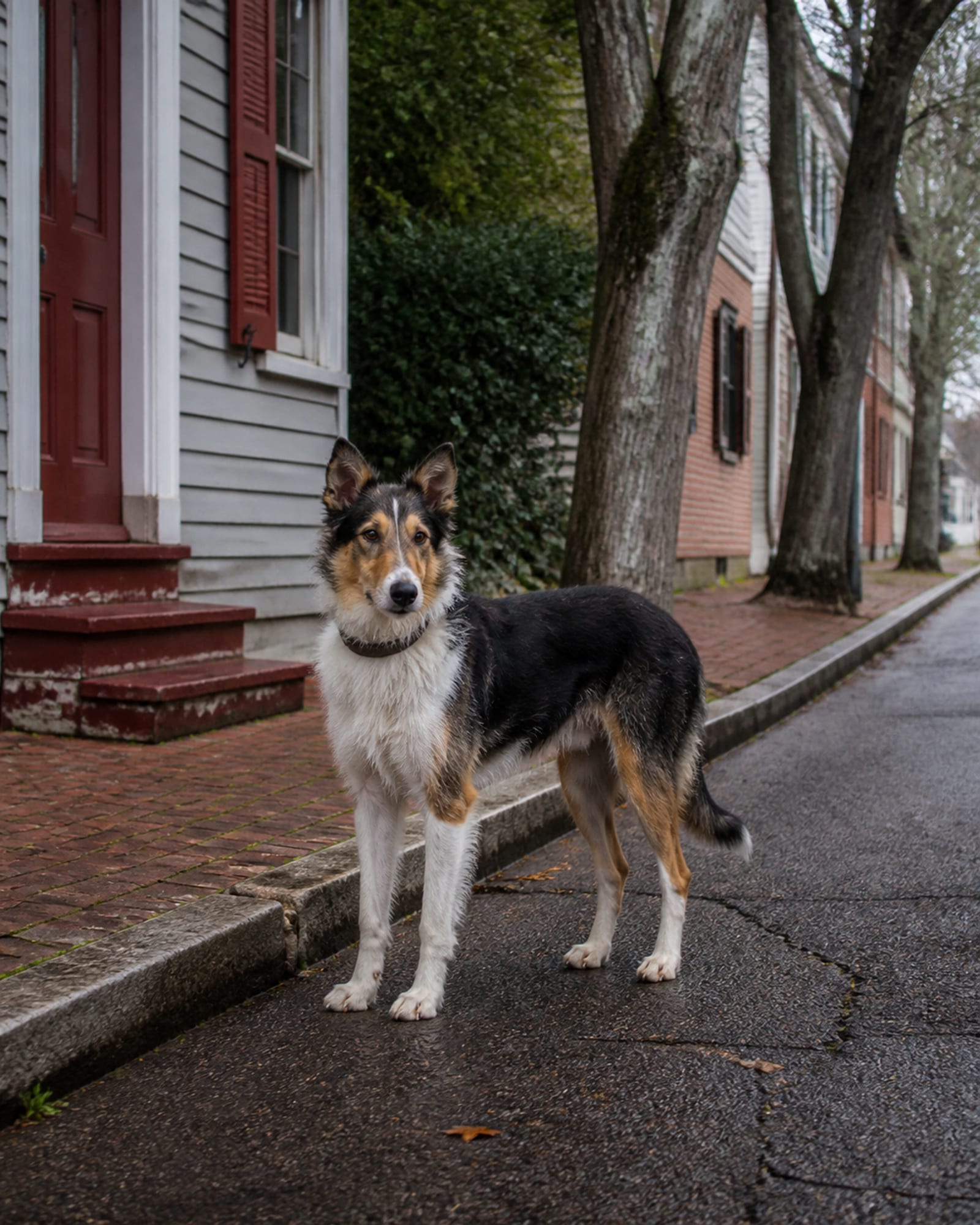
A dog standing alert with its weight even, tail neutral, in Essex, MD
Ask an Essex owner where their dog stops listening and you will usually get the same answer twice: at the water, and at the sight of something with wings. Back River and Middle River wrap this community, the shoreline is public in a lot of places, and waterfowl come off it suddenly, loudly and in numbers. That is about as strong a trigger as an ordinary dog will ever meet.
A recall that has only been tested in a fenced yard is not a recall. It is a habit that holds until something more interesting happens. Out here the more interesting thing arrives without warning, near open water, often with a road behind you. That is why the recall work I do with Essex dogs is built the hard way from the start, and why I am fussy about proofing it before anyone trusts it off leash.
Essex is built along Eastern Boulevard and Back River Neck Road, and everything else hangs off those two.
The housing is genuinely mixed: 38.9% detached, 35.9% attached, and 16.0% in buildings of ten units or more, with more than half the stock built before 1960. County planning identifies waterfront single-family homes and condominiums at places such as Hopewell Point, and detached-home areas such as Waterview. Down the wider Back River Neck sit Turkey Point, Cape May and Holly Neck, some of which use an Essex mailing address without lying inside the Census place.
For training that variety matters because the physical setting is never the same twice. One client has a fenced quarter acre. The next has an apartment corridor and a parking court. The third has an unfenced lot that runs down to the water with nothing between the dog and the edge. The behavior goals are different in each, and a trainer who arrives with one plan for the whole town is not paying attention.
Essex also runs older on average than most of the county, with a median age of 41.8, and a good number of my calls here come from people who want a manageable dog rather than a competitive one. That is a completely reasonable goal and it is most of my work.
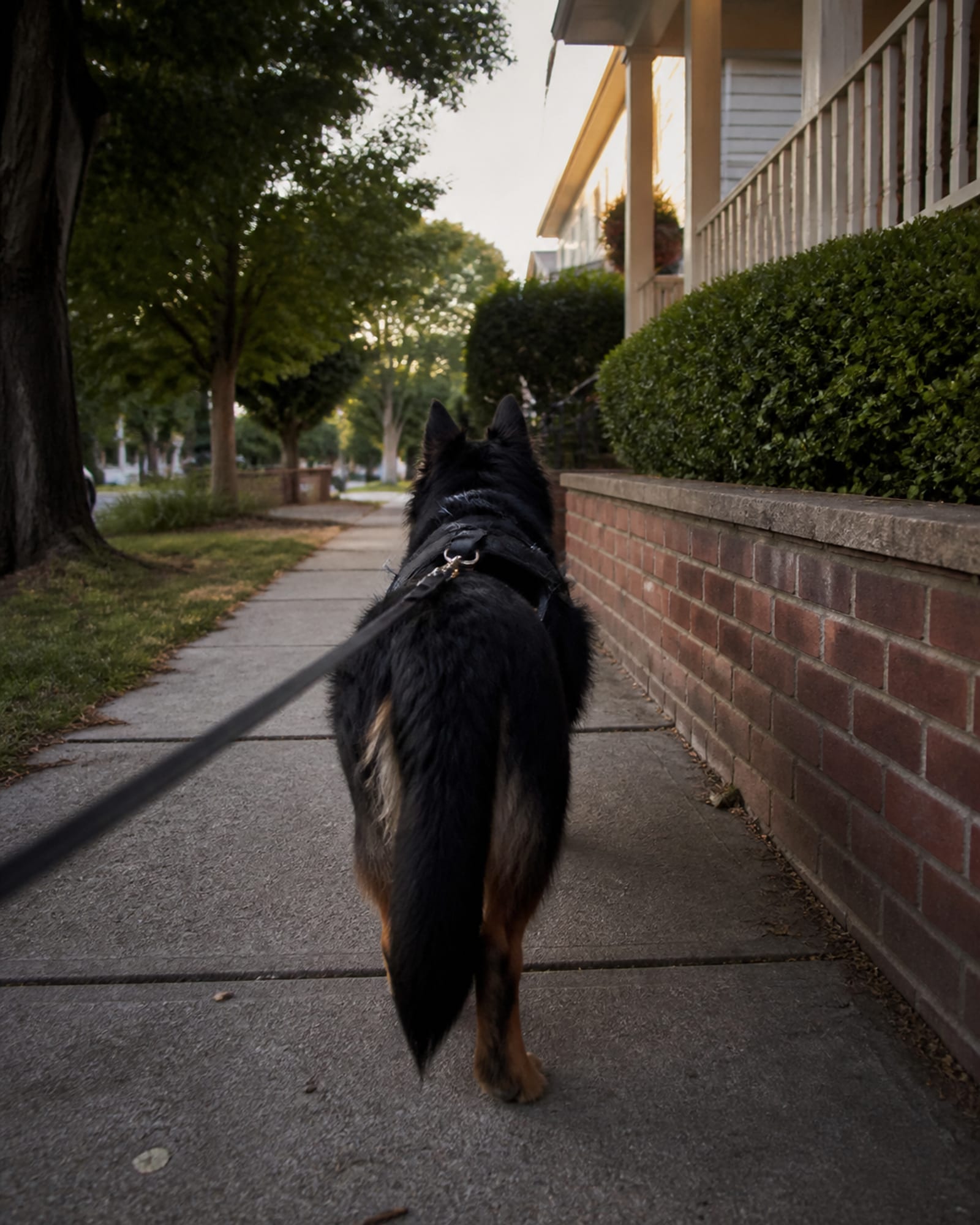
A dog walking away from camera down a pavement, seen from behind, in Essex, MD
The word means something before anything else happens. If the dog will not turn on cue in your kitchen with nothing going on, it will not turn at a boat ramp.
Every repetition succeeds because the line makes it succeed. The dog never gets to learn that ignoring the cue is an option, which is the mistake most owners make by accident.
Now we add the things that actually compete: birds, other dogs, people on the path, the smell of the shoreline. Same cue, same success rate, longer line.
We deliberately find the level of distraction where it breaks, because knowing your dog's limit is more useful than pretending it does not have one.
And only after the previous stage stops failing. Some dogs get there in weeks. Some never should, and I will tell you if yours is one of them.
The marina end of Essex life brings a set of risks that a general dog training plan does not cover.
A dog that has never been on a floating dock will find that the ground moves, which is genuinely alarming the first time. Boat ramps are slick well below the waterline. Piers have gaps that a small dog can go through and a big dog can get a leg into. None of that is a reason to keep a dog away from the water, and all of it is a reason to introduce it deliberately rather than on the day you happen to take the boat out.
Then there is the swimming question. Plenty of dogs love it, some sink, and breed is a poor predictor of which. A dog wearing a well fitted flotation vest for its first few sessions is not being coddled, it is being sensible, and it means the first experience does not become the reason it never goes near water again.
County planning describes this area as vulnerable to periodic coastal flood hazards, with water-quality effects from both the Back River and Middle River watersheds. After heavy weather you get standing water, debris and changed routes, and a dog on a long line in that is a tangle risk. On those days the session moves indoors or onto pavement, and that is a normal part of the plan rather than a cancellation.

A dog sitting beside an armchair in an ordinary living room, in Essex, MD
The local pattern, in rough order of how often it comes up.
01
Waterfowl, herons and the occasional deer along the neck. A dog that has caught something once is a different training problem from one that has only watched.
02
Moving surfaces, slick ramps, gaps in piers, and a first swim that does not frighten the dog off water for life.
03
The commercial spine puts traffic, parked cars and close passes together. Dogs that are fine on a quiet street often are not fine here.
04
For the sixth of Essex housing in larger buildings, the shared hallway is where behavior becomes everyone's business.
05
Engines, halyards, air tools and gulls. Sound sensitivity shows up here more than in inland parts of the county.
06
The best time to make water ordinary is early. My puppy training page covers what the first months should include and what they should not.
Essex is inside the one hour range, so a residential stay is genuinely on the table here rather than a stretch.
For most water-related work I would rather come to you. Recall proofing needs to happen where the birds actually are, and in-home private lessons at $700 cover an evaluation plus four one hour sessions with lifetime phone support afterward. Kick Start, at $1,600, gives you five consecutive daily sessions in your home and neighborhood plus a lesson for the owner, which suits a dog that needs momentum rather than a slow build.
Board and train earns its place when the behavior is serious, or when nobody at home can put in daily repetitions for the next month. Your dog stays with me and works every day, and the program detail sits on the board and train page rather than being repeated here. What I will say is that a boarded dog still has to come home to Essex and perform for you, which is what the transfer lesson is for.
One honest caveat about off-leash reliability near water. I can build a dog a genuinely strong recall. I cannot make any dog immune to a flock going up ten feet away, and a trainer who tells you otherwise is selling you something. What good training buys you is a dog that comes back the overwhelming majority of the time and a handler who knows when not to gamble.
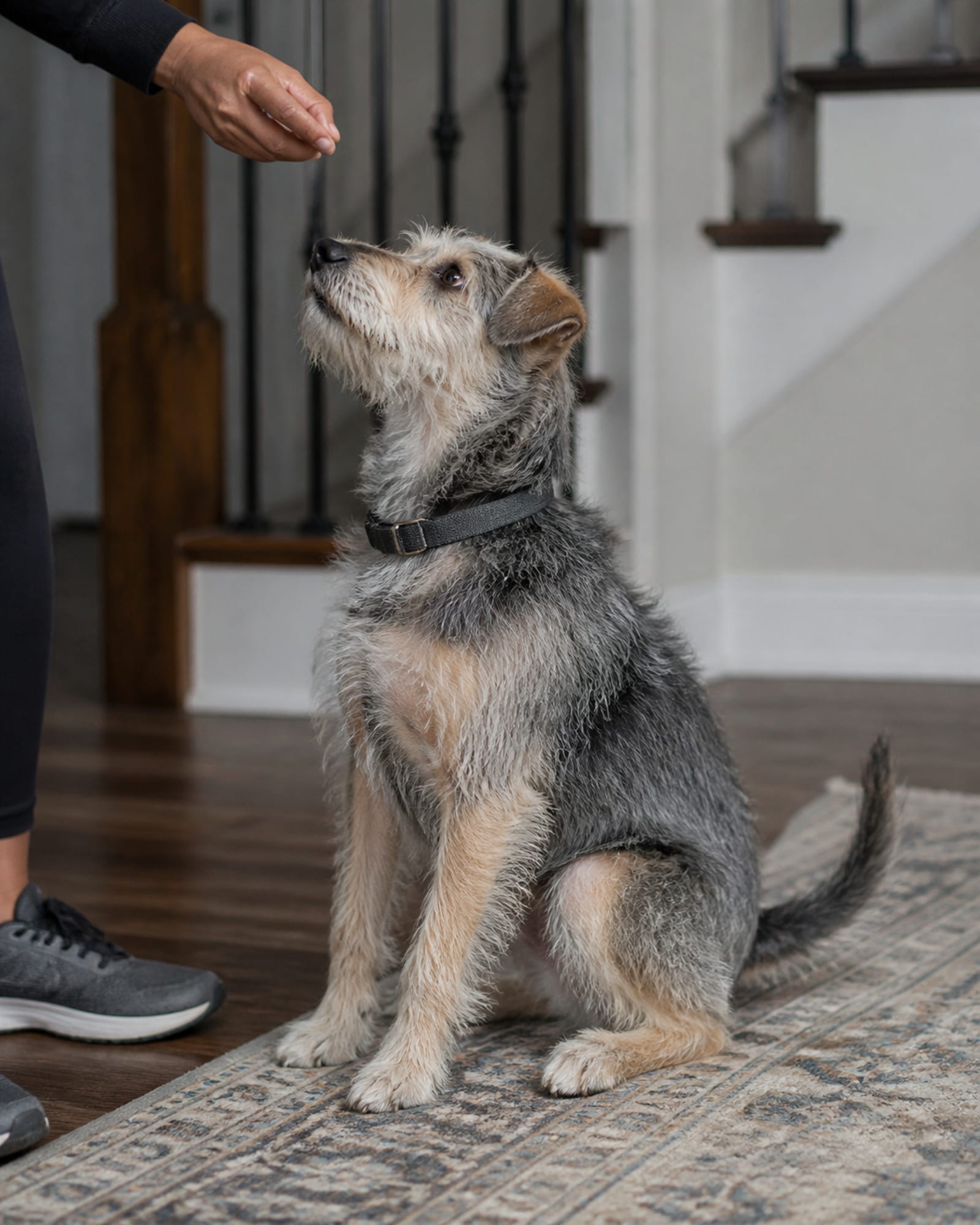
A dog holding a sit while a hand offers a treat at nose height, cropped at the wrist, in Essex, MD
Phone (443) 429-0445 between 6 AM and 7 PM, any day. Tell me what the dog chases and how often it has got away with it, and I will tell you what the work looks like.