01
The SoccerPlex on a weekend
Whistles, balls in the air, children running, packed parking. For a ball-obsessed dog that is not a walk, it is a shop window he cannot get into.


Some dogs like a ball. Some dogs cannot see one without losing access to the rest of themselves. Germantown, with the SoccerPlex, Black Hill and a lake in most of its villages, is a place where the difference between those two shows up early and often.
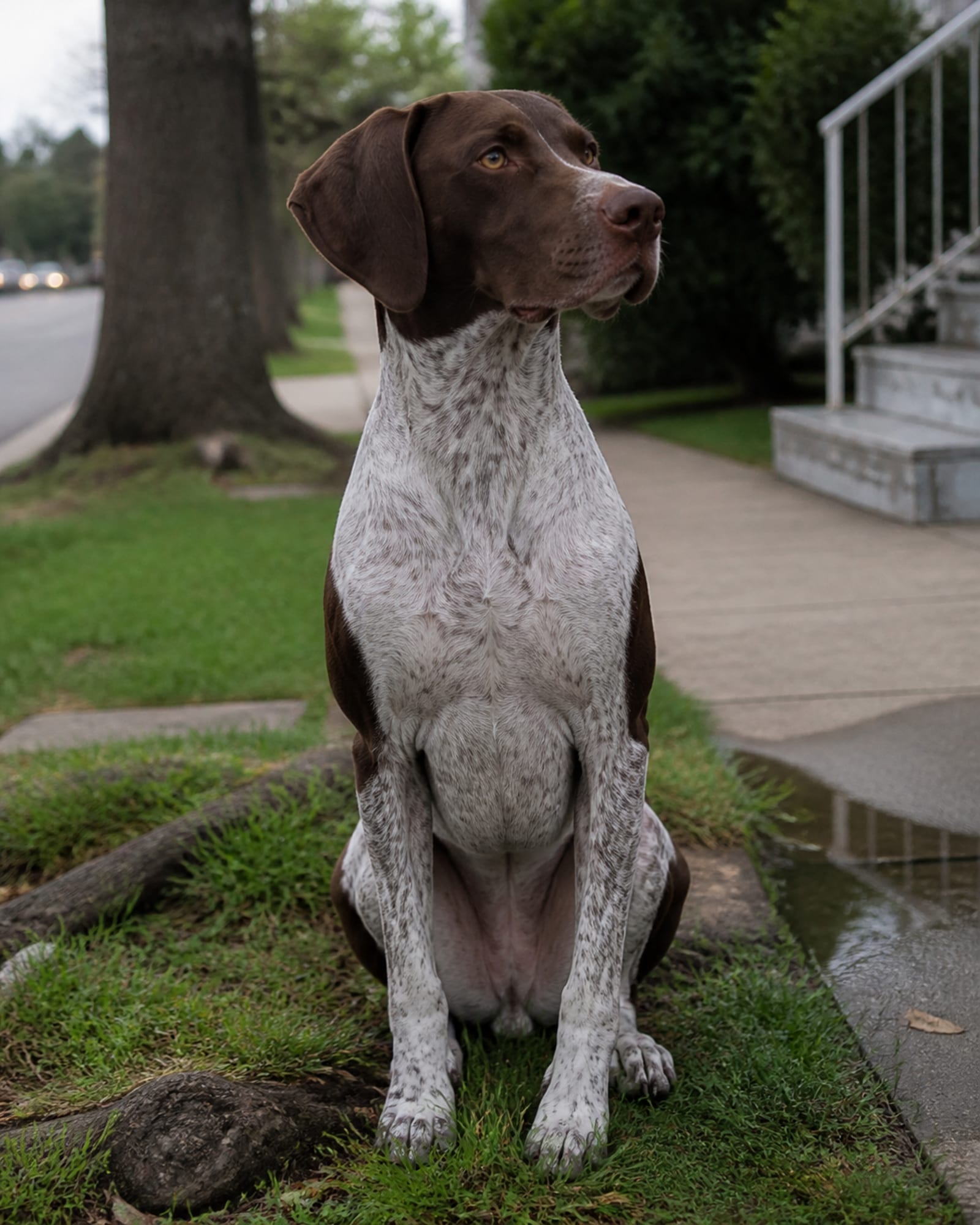
A dog sitting upright and attentive, shoulders square to camera, in Germantown, MD
Watch what happens between the throw and the catch, and then watch what happens after.
A dog who likes a ball brings it back, drops it, and can be called off to do something else. A dog with a genuine problem does not really see you at all: he is stiff before the throw, screams if you hesitate, will not release, cannot be recalled while the ball is in play, and when you finally stop he paces and stares at the pocket it went into. Some of them will run themselves lame rather than quit.
That second dog is not badly behaved and he is not spoiled. He is doing something his breeding is very good at, in a loop that has no natural end, and every repetition makes the loop stronger. It is one of the few things where the standard advice, which is to exercise him more, actively makes it worse.
Germantown is a large place, 91,249 residents in 31,828 households, grown as planned villages rather than around one old downtown. Churchill, Gunners Lake, Clopper, Kingsview, Middlebrook and Neelsville each bring lakes, mature trees and shared open space. Add Black Hill Regional Park and Little Seneca Lake, South Germantown Recreational Park and the Maryland SoccerPlex, and there is a great deal of open ground and a great many thrown objects.
Six situations that reliably produce the problem or reveal it.
01
Whistles, balls in the air, children running, packed parking. For a ball-obsessed dog that is not a walk, it is a shop window he cannot get into.
02
Trails with bicycles and horses, and enough space that a fixated dog can build real speed before anybody has decided anything.
03
Churchill Lake, Gunners Lake and Little Seneca add water and waterfowl, so the chase instinct gets a second outlet with a worse safety profile.
04
Churchill Village was planned over roughly 1,500 acres with lakes, mature trees and common ground, so somebody else's ball is usually within sight.
05
An enclosed village path can open onto six lanes of Germantown Road or Great Seneca Highway. A dog running on instinct does not check.
06
Numerous ponds draw geese and deer, which is the same fixation with feathers on it and no ball to blame.
This is the piece of advice I most often have to undo, and it is given with the best intentions.
The reasoning sounds solid: he has energy, so tire him out. What actually happens is that a hard fetch session leaves a dog physically tired and chemically wound up, and the two are not the same thing. He comes home exhausted and cannot settle, which reads as needing even more exercise, so the next day is longer, and the loop tightens.
The second problem is that fetch is self-rewarding on a schedule almost nothing can compete with. Throw, chase, catch, repeat, every time, no variation. A behavior reinforced that reliably becomes enormously strong, and everything else in the dog's life gets quieter by comparison, including you.
The third is physical and it is worth stating plainly. Repeated hard acceleration, skidding stops and twisting catches on grass are hard on joints, and a dog who will not self-limit does not stop when he should. Plenty of dogs are running themselves into trouble on a field while their owners believe they are doing the right thing.
None of which means never throw a ball. It means the ball becomes something with a beginning, a middle and an end that you decide, rather than an activity the dog runs. Ten throws with a clear finish is a good game. Forty minutes of it is a training problem being installed.
The replacement is not less activity, it is different activity. Scentwork, a long line and a field to search, a chew after the walk, and short bursts of obedience are all tiring in the way that actually produces a settled dog. Owners are usually surprised how quickly a dog who does twenty minutes of nose work sleeps better than one who did an hour of fetch.
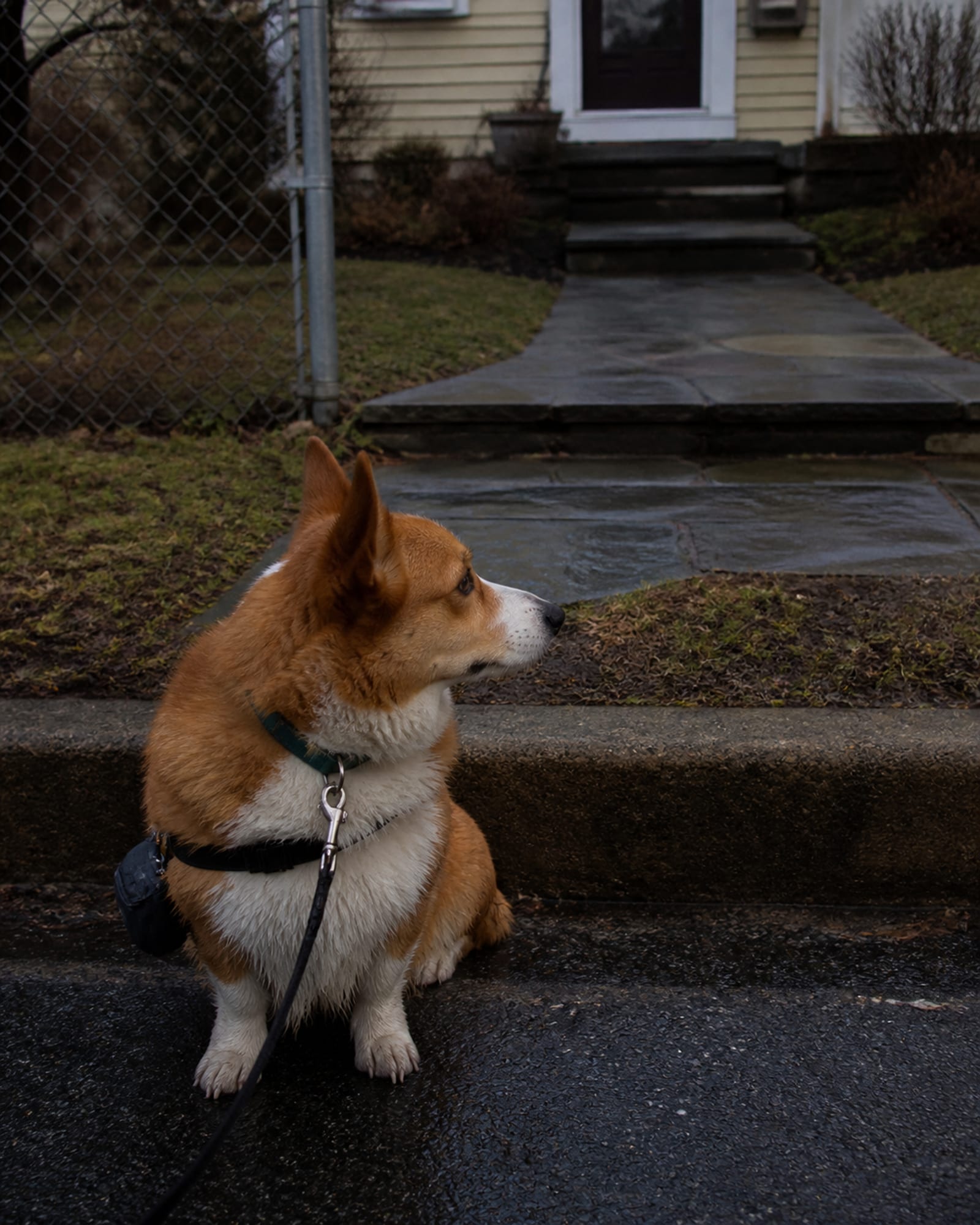
A dog sitting at a curb edge waiting to cross, in Germantown, MD
The ball lives in a cupboard, not in the dog's basket. A toy available all day is being rehearsed all day, even when nobody is throwing it.
A clean out on cue, traded for something better, practiced indoors with no chase attached. If you cannot get it back calmly, do not throw it outdoors.
A word to begin, a word to end, and the ball goes away on the end word every time. The finish is the part that matters and the part everyone skips.
Ball on the ground, dog called away from it, paid well, then released back to it. Being called away has to predict getting it back or he will learn to ignore you.
Ten throws, then done, while he still wants more. Ending on his terms rather than yours is how the loop stays open.
Scatter feeding, a long line and a field to search at Black Hill or South Germantown. Tiring in the way that produces sleep rather than adrenaline.
Worth saying clearly, because owners of these dogs get told a lot of unhelpful things.
A dog with this much drive has been bred for it, deliberately, over a very long time. It is the same quality that makes a working dog outstanding at a real job, and I have spent a career around dogs bred exactly for that. The trait is not a defect and the dog is not broken.
What he is missing is an off switch and a job that has an end to it. Give him both and that same intensity becomes the best thing about him: these dogs learn fast, work hard and are enormously satisfying to train. Leave him without them and the intensity has only one outlet and finds it forty times a day.
The households who struggle most are usually the ones who were told the dog needed more exercise, followed that advice conscientiously for a year, and built an athlete with no brakes. That is a fixable situation and it usually takes six weeks rather than six months, but it does mean doing something quite different from what has been tried.
It also means being honest about what the dog is for. If you wanted a companion who potters, and you have a dog bred to work all day, the answer is structure and mental work rather than resignation. Plenty of high-drive dogs live perfectly contented suburban lives; almost none of them do it on exercise alone.
Where the fixation has gone beyond a toy, into shadows, lights, reflections or compulsive spinning, that is a different conversation and it belongs with a veterinary behaviorist rather than with me alone. I will say so if I think that is what I am looking at.
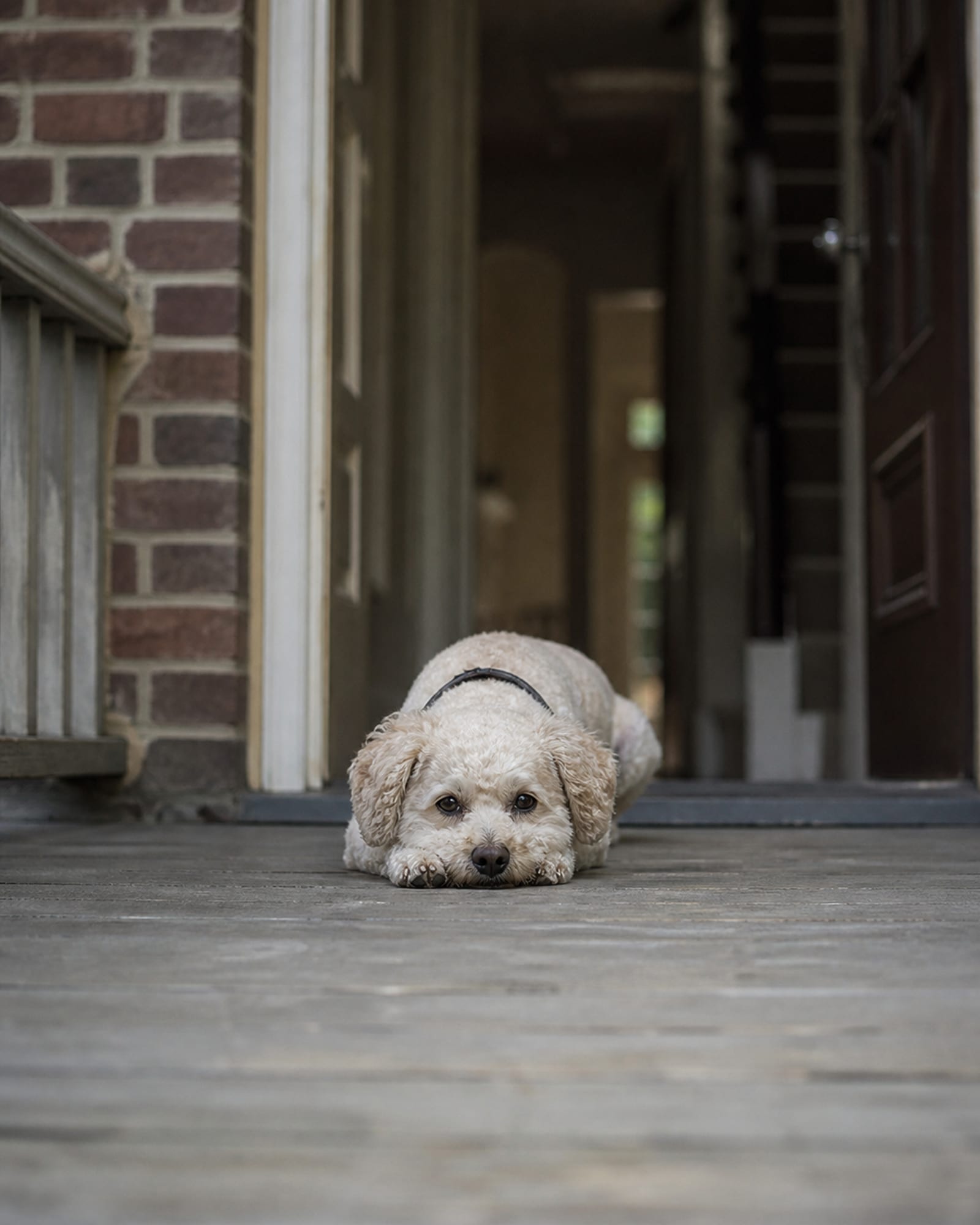
A dog in a down with its chin resting on its paws, shot from the front, in Germantown, MD
Phone (443) 429-0445, seven days a week from 6 AM to 7 PM. Tell me what he does when you stop throwing it, and whether you can call him off it.