Baltimore, MD area6 AM - 7 PM · 7 days a weekDog Training since 2001
Hand signal: sweep away

Digging

Dogs dig for at least five different reasons and the reason decides whether anything works. Filling the hole in is not a plan, and a dog digging under the fence is a containment problem before it is a training one.

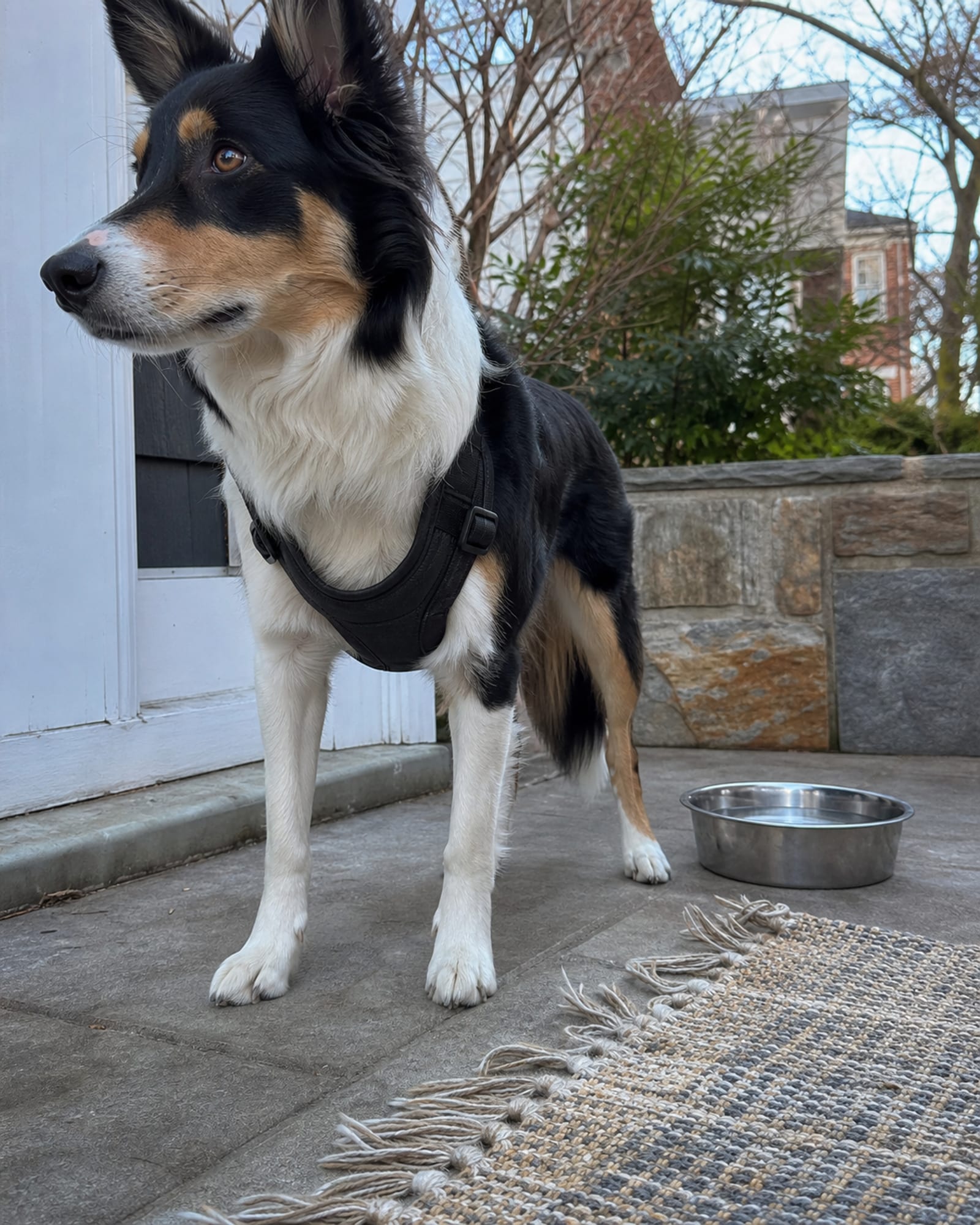
A dog standing beside a low garden wall, weight settled

A dog standing beside a low garden wall, weight settled

At a glance

First question
Where, and when?
The location and the timing name the cause.
Digging at the fence
Is a safety problem
Physical security before training, always.
Never useful
Telling off a hole you found later
Evaluation
$100, in your home
Rolls into the training fee.

Where the holes are tells you why

Before anything else, go and look at where your dog is digging, because the location narrows the cause faster than any other information.

Holes along the fence line, especially at a corner or by a gate, are escape attempts, and that is a different conversation from the rest of this page. Shallow scrapes in the shade on a hot day are a dog making itself somewhere cool to lie. Holes in one particular flower bed, returned to repeatedly, usually mean something lives under it or something smells interesting there. Holes appearing all over the yard in an adolescent dog with a long empty day are boredom. And digging that happens only while you are out, alongside chewing or destruction at doors, is often not about digging at all.

The reason this matters is that the remedies are unrelated. Shade fixes one. Fencing fixes another. Neither touches a bored teenager, and none of them helps a dog that is anxious about being left.

This is a specialty rather than a stand-alone service, so it comes through in-home private lessons, Kick Start, or board and train.

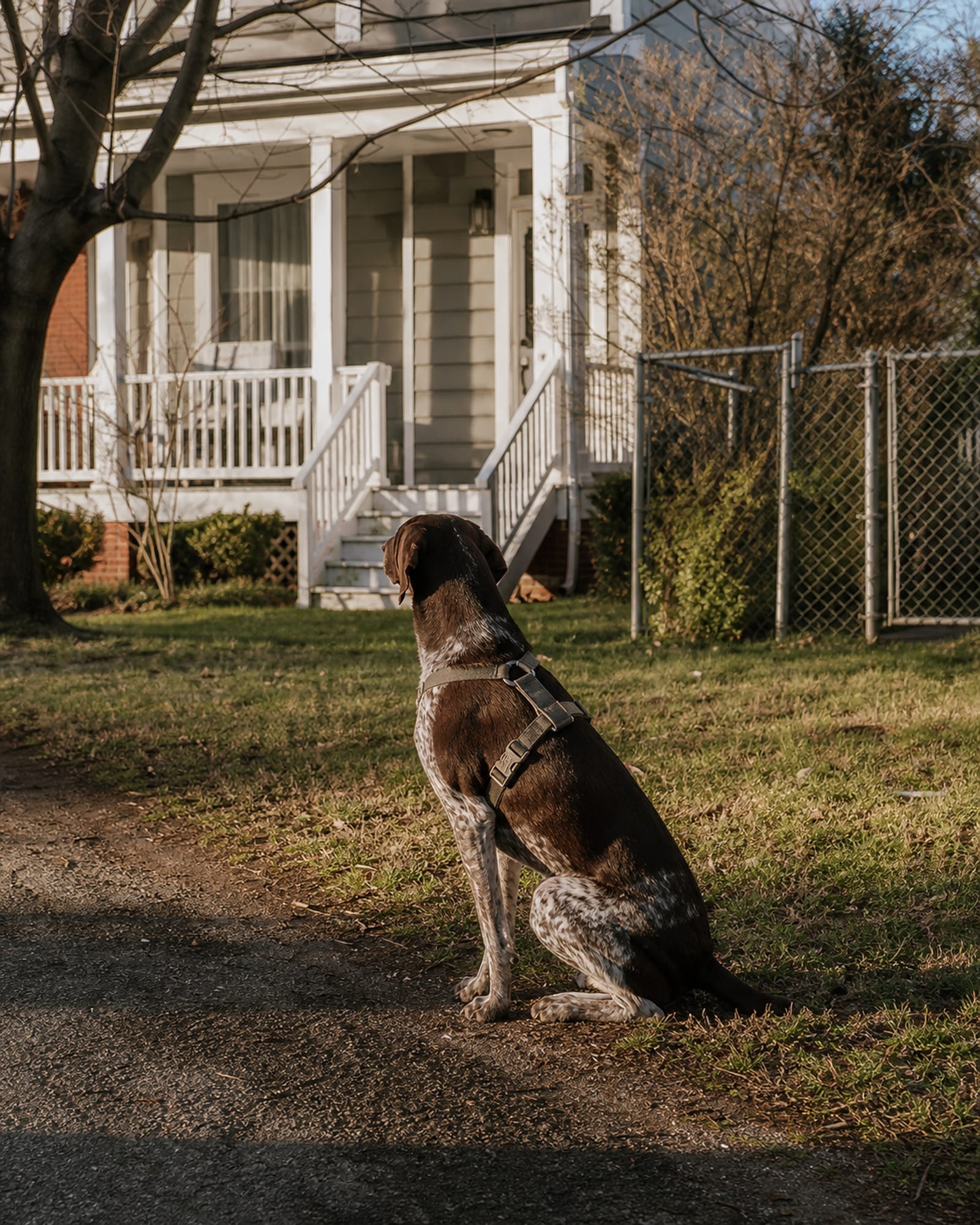
A dog sitting at the edge of a lawn facing the house

A dog sitting at the edge of a lawn facing the house

The five reasons, and what each one needs

Most dogs have one main reason and occasionally two.

01

Escaping

Under the fence, at the gate, at the weak corner. Fix the ground before you train anything: mesh pinned flat along the inside base, or a buried barrier, or a change of where the dog is unsupervised. Training cannot make a gap safe, and a loose dog is the worst outcome on this page.

02

Prey and scent

Moles, voles, chipmunks, or something interesting buried. Returned-to holes in the same place, often with real determination. Terriers and hounds are doing the job they were built for here. Deal with what is under the ground and the digging usually stops on its own.

03

Getting cool

Shallow, wide scrapes in shade, on warm days, with the dog then lying in them. This is a dog solving a problem sensibly. Give it real shade, water, and somewhere cool to lie, and the behavior tends to disappear without any training at all.

04

Boredom

Holes everywhere, no pattern, usually a young dog with too much day and not enough to do. Digging is genuinely enjoyable to dogs, so an unoccupied dog in a yard will often invent it. This one needs the day changing, not just the yard.

05

Breed and instinct

Some dogs dig because digging is what their line has done for centuries. You will not train that out of a terrier and it is unkind to try. The realistic goal is a legal place to do it rather than an absence of it.

06

Only when alone

Digging that happens exclusively in your absence, particularly at doors or the base of the fence nearest the house, is worth looking at as separation distress rather than as a yard problem. A camera for one afternoon settles it.

Give it somewhere legal to dig

For dogs that dig because digging is enjoyable, the practical answer is not stopping it. It is moving it.

A digging pit works well and it is the single most underused solution I recommend. A corner of the yard, loose soil or sand, and things buried in it worth finding. You show the dog what is in there, you dig with it the first few times, and you make finding buried things at that spot far more rewarding than anywhere else. Dogs take to this quickly because it is what they wanted to do anyway.

At the same time, the places you care about become uninteresting or unavailable. That means supervising yard time for a while rather than opening a door and hoping, and physically blocking the flower bed while the new habit forms. It is a few weeks of attention, not a permanent job.

One thing not to do: telling a dog off for a hole you found later. A dog cannot connect that to something it did an hour ago, so it learns only that you are unpredictable near the yard. If you catch it in the act you can interrupt and redirect to the pit, which is useful. Finding it afterwards is information about your management, not an opportunity to correct.

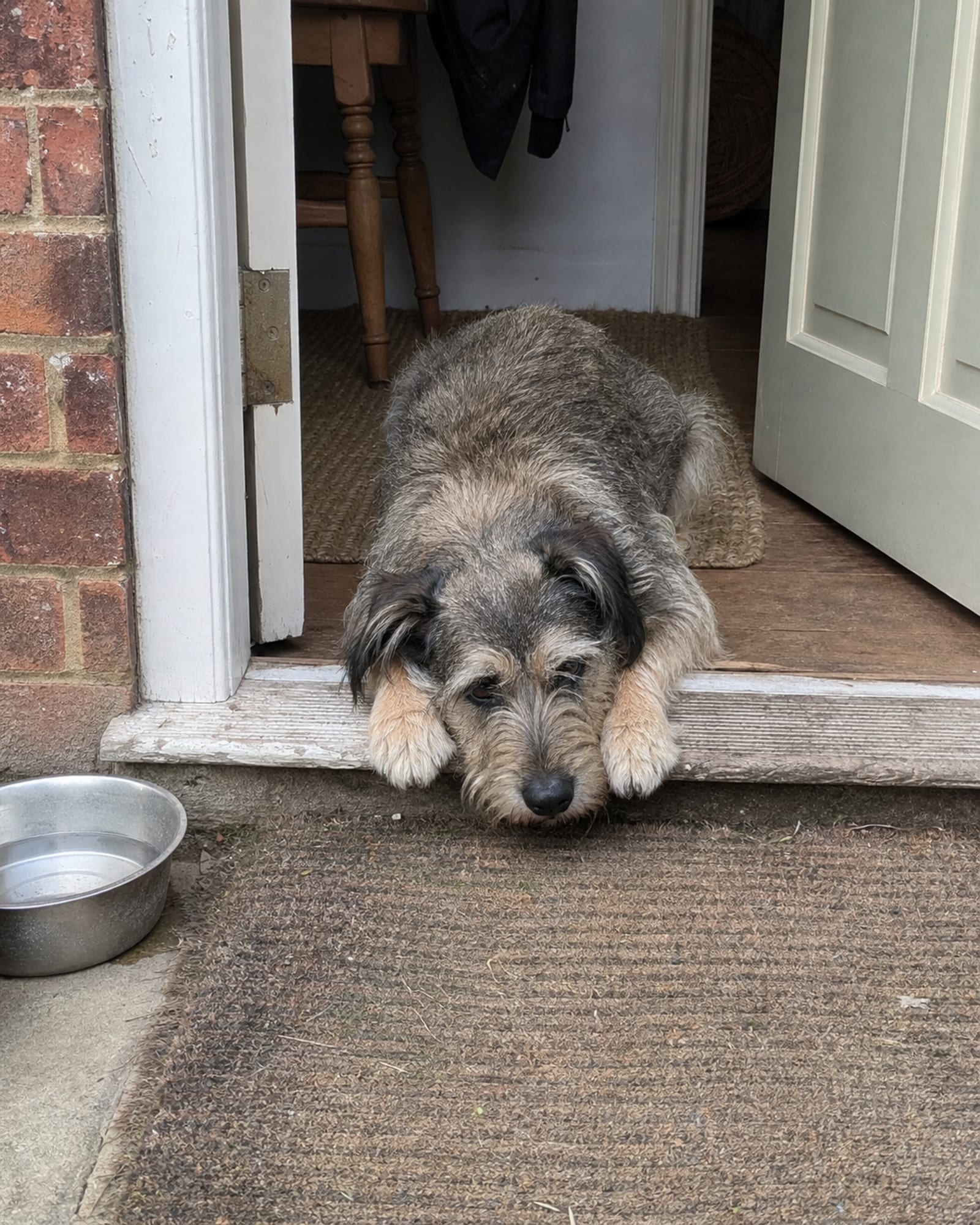
A dog lying across a doorway threshold, head on paws

A dog lying across a doorway threshold, head on paws

When the fence is the problem

Escape digging gets treated as a safety issue and it comes before everything else on this page.

A dog that has got out once has learned that getting out is possible, and the second attempt is usually faster and more determined than the first. Between here and Washington DC that means roads, and I have taken enough of those phone calls to be blunt about it.

So the ground gets fixed first: mesh pinned flat along the inside base of the fence so digging hits wire, or a buried barrier, or paving the run at the weak points. Until that is done, the dog is not in the yard unsupervised, however inconvenient that is.

Then the reason gets addressed, because a dog is escaping toward something or away from something. Toward is usually an intact dog following a scent, wildlife on the other side, or a neighbor's dog worth arguing with. Away is a dog that is frightened of something in the yard, which happens more than people expect with noise-sensitive dogs and construction or fireworks.

If your dog is getting out and not coming back, the recall side of that sits with running away and door dashing, which is its own page.

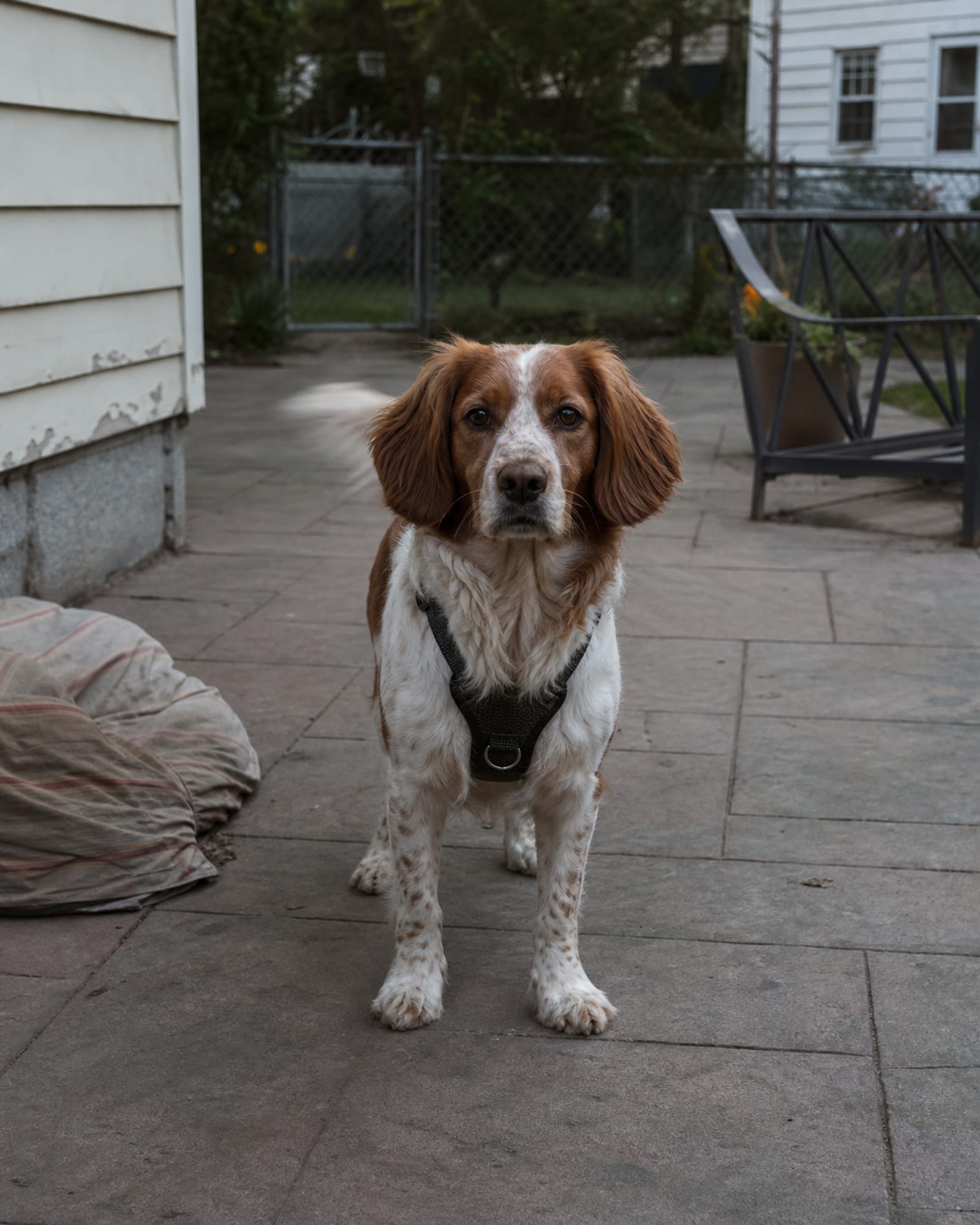
A dog standing square on a patio, ears forward

A dog standing square on a patio, ears forward

The Maryland ground, and the seasons

Two local things change how this behaves through the year, and they explain a fair amount of what owners describe as sudden digging.

In summer, a dog with a yard and not enough shade will dig itself somewhere cool. Bare earth a few inches down is markedly cooler than the surface, and a dog lying in a fresh scrape on a July afternoon has solved a problem rather than created one. If the holes are shallow, in shade, and your dog is lying in them, add real shade and cool water before you train anything. Very often that is the whole intervention.

In spring and autumn, the ground is soft and everything underneath it is active. Moles and voles are moving, the earth gives easily, and a dog that ignored the lawn all winter suddenly finds it interesting. Repeated holes in the same few spots almost always mean something is under there, and dealing with what is under there does more than any training will.

The fence line has its own seasonal pattern: soft ground makes escaping easier, so a barrier that held all winter can fail in March. It is worth walking the boundary after a wet spell rather than waiting to find out.

None of this makes digging harmless. It just means the plan should match the season, and a dog cooling itself does not need the same answer as a dog leaving.


Questions people ask

How do I stop my dog digging up the garden?
Work out why first. Shade-seeking, hunting something, boredom and escaping all look similar as holes and need completely different answers. Where the digging is simply enjoyable, giving it a legal place to dig works better than trying to eliminate it.
Will filling the holes in stop him?
Rarely, and for some dogs freshly turned earth is an invitation. It is worth doing for the state of the yard but it is not a plan on its own.
He digs under the fence and gets out.
Treat that as a containment emergency rather than a training problem. Secure the ground before anything else and keep the dog out of the yard unsupervised until it is done. A loose dog near roads is not a risk worth taking while you train.
Is it because he is bored?
Often, especially in an adolescent dog with a long empty day and holes appearing all over rather than in one place. That one needs the day changing as well as the yard.
My terrier will not stop no matter what I do.
Some breeds were built to do exactly this and you are unlikely to remove it entirely. A designated digging pit is a realistic and much kinder goal than an absence of digging.
Should I put something unpleasant in the holes?
I would not. It teaches a dog that the yard is occasionally nasty rather than teaching it where to dig, and for a dog that is digging out of anxiety it makes things worse.
He only digs when we are out.
That is worth investigating as separation distress rather than as a digging problem, particularly if there is also chewing at doors or barking. A camera on the dog for one afternoon will tell you.

Tell me where the holes are

If your dog is destroying the yard or getting out under the fence, call me at (443) 429-0445. I answer 6 AM to 7 PM, seven days a week. Tell me where the holes are and when they appear, and I can usually tell you the reason on the phone.

Call TodaySend a Message

6 AM - 7 PM, 7 days a week · Baltimore, MD area