01
Settling into a new building
The work above. It is the most common first call I get from this city and it is nearly always a four to six week job rather than a long one.


Only 80.2% of Laurel residents were in the same home a year earlier, the most movement of any town I cover, and 56.1% of households rent. A lot of dogs here are living somewhere they have not lived long, and almost everything that goes wrong in the first month after a move is predictable.
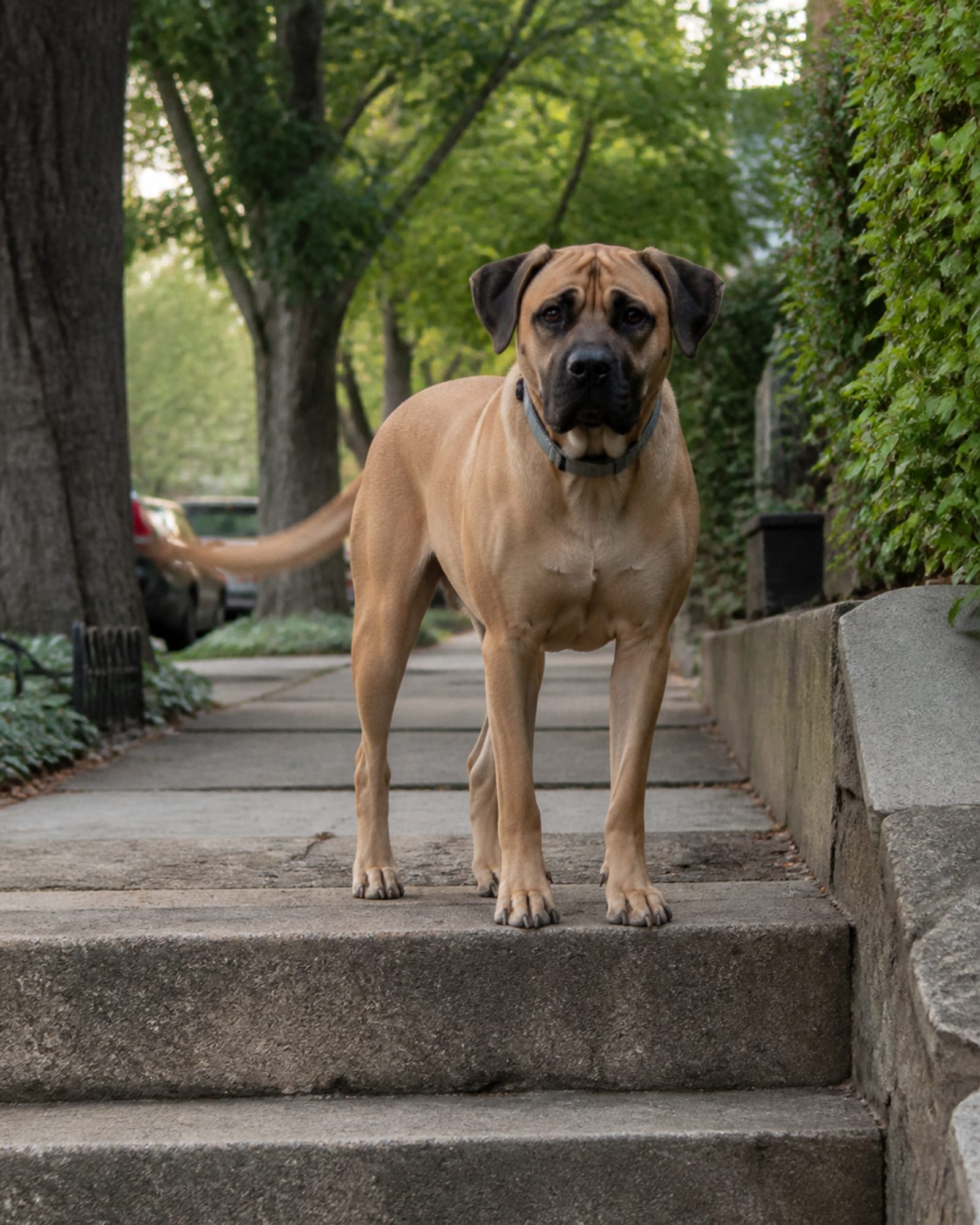
A dog standing at the top of a short flight of steps, in Laurel, MD
He is not worried about the move. He does not know there is a move. He knows that the furniture is in the wrong place, that people are coming in and out of the door all day, and that the room he sleeps in smells like cardboard.
Laurel is a mobile city. Around one household in five was somewhere else a year ago, more than half of the 11,844 households rent, and the zoning here runs the full range from detached houses through townhouses to high rises. So a dog can go from a fenced yard in Cherry Woods to a fourth floor apartment near Laurel Lakes, or from a rowhouse block near the historic district to a townhouse at Villages of Wellington, and be expected to behave the same in both.
He will not, at first. That is normal, and knowing which parts of it are normal is the difference between a rough three weeks and a problem that lasts a year.
Crate or bed, water, his own blanket unwashed, in the room he will actually sleep in. A dog with one correct place from hour one settles far faster than one who gets assigned a spot on day four.
Out every couple of hours, praise outside, no free access to unfamiliar rooms. Even a dog who has been clean for years will make mistakes in a new building, and treating those as a lapse rather than a relapse keeps it short.
The first absence in a new home should be short, planned, and after he has slept there a couple of nights. Going straight back to a full working day is how alone time problems start.
The same two hundred yards, several times, rather than a tour of the neighborhood. He is building a map, and a small accurate map beats a large confusing one.
Hallway, then stairs or elevator, then lobby, then the door to the street. Each is its own step, and each one done calmly saves a month of hallway barking.
Two or three planned, calm introductions in the first week are worth more than any number of accidental ones in the corridor.
Owners are usually alarmed by the wrong things and relaxed about the ones that matter.
Housetraining regressing is normal and short lived, provided you respond by tightening the routine rather than by telling the dog off. He is not being spiteful about the move. He is in a building with unfamiliar smells and no established habit, and the habit is what you are rebuilding.
Barking at sounds through a wall or a floor is normal for the first two or three weeks and is the one people leave too long. A dog who barks at every corridor footstep for a month is not settling in, he is practicing, and by week five that is a trained behavior with a neighbor complaint attached. This is the one to act on early.
Alone time is the serious one. A dog who was fine on his own in the old house has no history in the new one, and a household that moves and immediately returns to a full working day is asking a lot. Rebuild it deliberately: a few minutes, then twenty, then an hour, over the first fortnight. If it has already gone wrong, my anxiety and nervousness page covers the longer route back.
What does not break, generally, is his relationship with you and the behaviors he genuinely knew. A recall or a settle that was solid before is still in there. It may need re asking for in the new environment, because a behavior is attached to the place it was learned until it is taught somewhere else, but you are relearning rather than starting over, and relearning is fast.
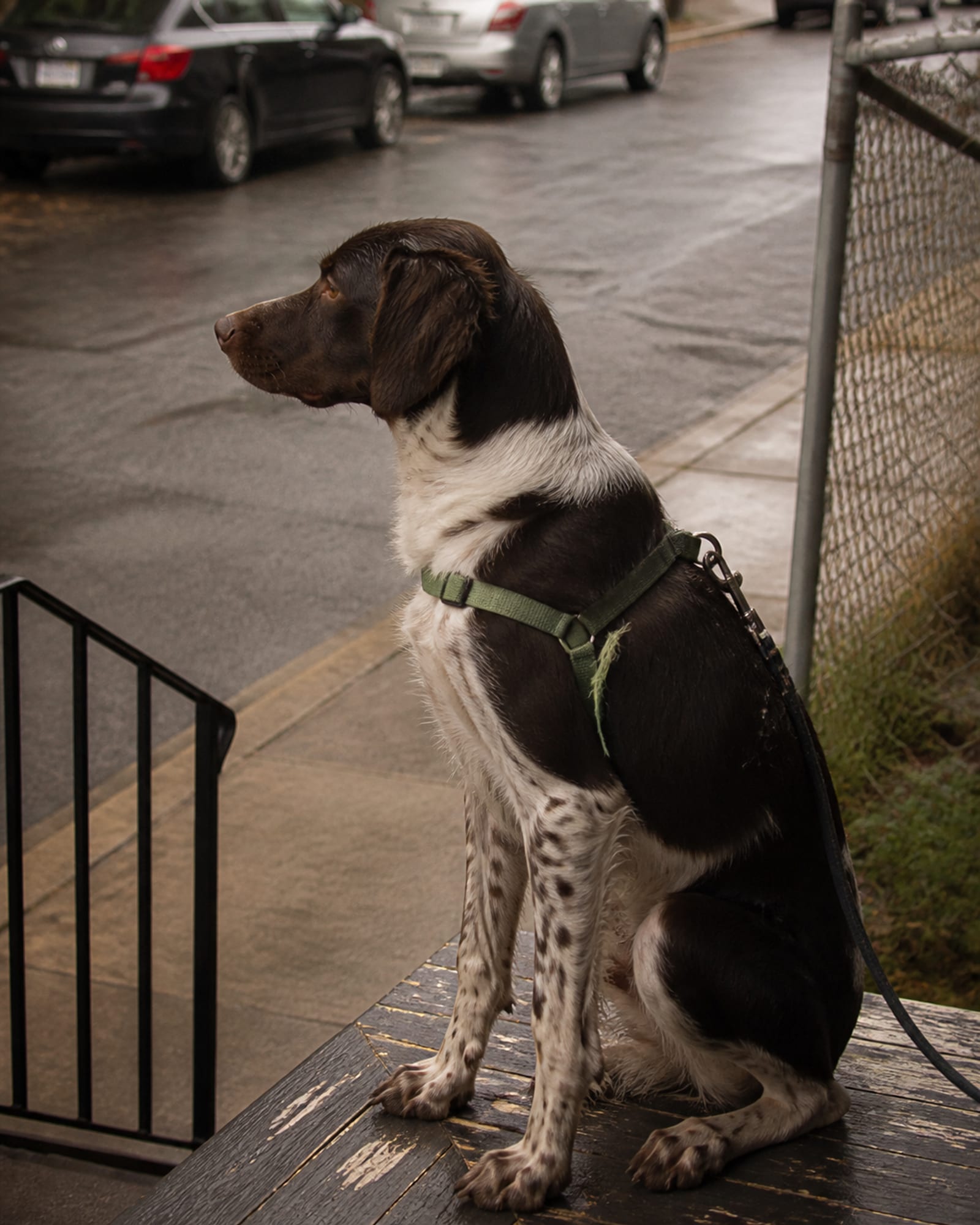
A dog sitting on a stoop watching the street, in Laurel, MD
With 56.1% of households renting, the lease is a third party in most of the training decisions here.
The lease usually says more about your dog than the county does. Numbers, sizes, where he may be on common land, what counts as a nuisance and what happens after a complaint. That is worth reading properly before a problem arises, because a barking complaint on a written record is a different conversation from a neighbor mentioning it.
On the public side, Prince George's County handles pet licensing and the city's own animal control enforces restraint and nuisance rules inside Laurel. The practical version is simple: license and rabies current, dog under real control the moment he leaves your unit, and noise treated as a real obligation rather than an inconvenience.
The building itself changes what you should train first. In a shared entry the order is corridor, then elevator or stairs, then lobby, then street. In a townhouse row it is the party wall and the front door. In a detached house with a yard it is the fence line. None of these is harder than the others, they are just different first steps, and picking the wrong one wastes the first month.
One more thing worth saying to renters specifically. People put off training because they may move again, and that is precisely backwards. The behaviors that travel, a settle on a mat, a recall, calm in a crate, a dog who is comfortable in a car, are the ones that make the next move easy. Train the portable things and the next apartment costs you nothing.

A dog's head framed in a doorway, body out of focus behind, in Laurel, MD
Four and a half square miles holding a river, a rail line, two highways and every housing type there is.
01
The work above. It is the most common first call I get from this city and it is nearly always a four to six week job rather than a long one.
02
The first stranger of the day is met before the sidewalk. Threshold work is the single highest value skill for a dog in a multifamily building.
03
Neighbors above, beside and below. Worth interrupting in week two rather than accepting as the dog's personality by week six.
04
Heavy turning traffic on both, with I-95 and the MARC Camden line adding noise and movement. One crossing, trained properly, covers most of it.
05
Wetlands, dam ruins, narrow paved paths, deer, waterfowl and blind vegetation, all within the city. Excellent ground and a poor place for an untested recall.
06
The Main Street Festival, the weekly farmers market, Lakefest and the concerts at Granville Gude Park. Useful at the perimeter, not a first outing.
Phone (443) 429-0445, seven days a week from 6 AM to 7 PM. Tell me when you moved, what kind of building you are in, and what he has started doing since.