01
Corridor and stairwell encounters
Close-range meetings with no room to make distance, in a building where every incident is somebody else's business too.


The straight answer first: your dog cannot come and stay with me. Silver Spring is outside the drive I take boarded dogs from. Everything else I do, I do here.
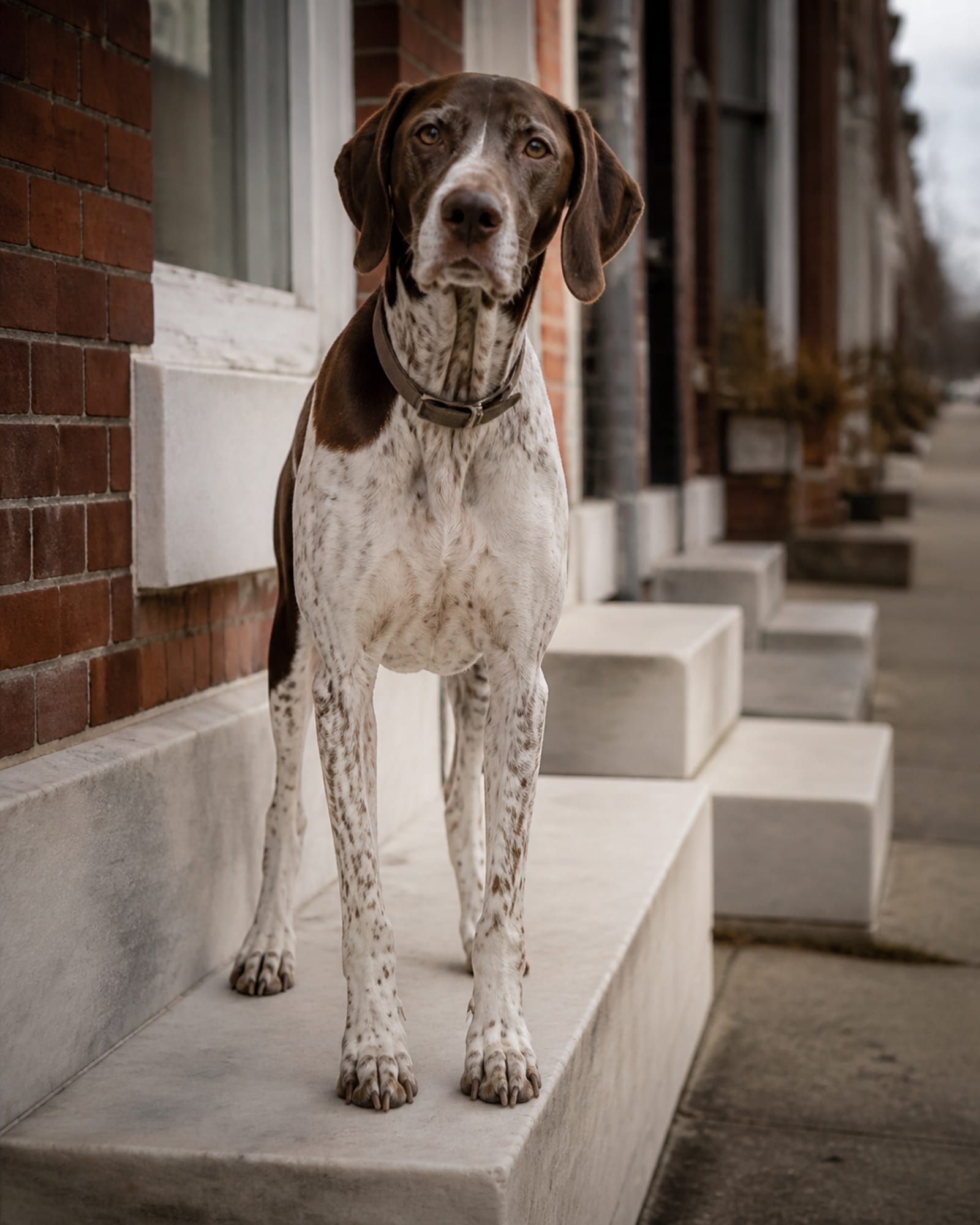
A dog standing on a low step so it fills the height of the frame, in Silver Spring, MD
Most pages leave the limitation until the end, if they mention it at all. I would rather you knew in the first ten seconds.
I work to two distances, and they are the opposite way round from what people expect. Board and train draws from a tighter circle, roughly a one hour drive, because your dog comes to live in my home for two or three weeks and somebody drives that road twice. Everything else reaches further, out to about two hours, because for those I am the one doing the driving.
Silver Spring is inside the second circle and outside the first. So the residential program is not available to you, and I am not going to stretch the definition to get the booking. What is available is the in-home work, and for a lot of what this town actually calls me about, that is the better tool anyway.
This is not a consolation prize. There is a real argument that the in-home programs fit the problems here better than a residential stay would.
Silver Spring is the densest place I work: 81,015 people across 7.88 square miles, more than 10,000 per square mile. Only 38.3% of homes are owner-occupied, and 43.1% of units sit in buildings of twenty or more. Nearly 59% of the housing was built before 1970. That means most of my clients here have a specific building, a specific corridor, a specific shared entrance and a specific set of neighbors.
Those are not portable problems. A dog can learn a perfect settle in my house and still come apart at your building's back door, because the thing it struggles with is your building's back door. Work done at your address, on your floor, at the hours your hallway is actually busy, goes straight into the situation instead of having to be transferred into it.
The other half is that in a shared building the handler matters as much as the dog. Half of what changes an encounter in a narrow corridor is what the person does with the leash in the two seconds beforehand. That is taught face to face, with your dog, in your hallway, and it does not travel back from a residential program nearly as well.
There is a practical scheduling argument as well. Because I am the one driving, sessions here can be set for the hours that actually matter in your building rather than the hours that suit a training facility. If your corridor is impossible at six in the evening, that is when we work on it. If your dog only struggles on the morning walk, we do mornings. A dog boarded somewhere else comes home having practiced at whatever time was convenient for the trainer, which is rarely the time the problem happens.
One more thing that only shows up in a dense place. Silver Spring's constraints come from development laid across stream valleys rather than from any one feature: Sligo Creek, Long Branch, Rock Creek and Northwest Branch cut wooded slopes, bridges and wet low points through the middle of the neighborhoods, and the county's flood model identifies higher-risk parts of the Sligo Creek watershed. Heavily paved areas shed rain fast. So a route that is fine in July can be closed or unpleasant in a wet October, and a dog that only knows one walk copes badly with that. Building two or three usable routes is part of the plan here rather than an afterthought.
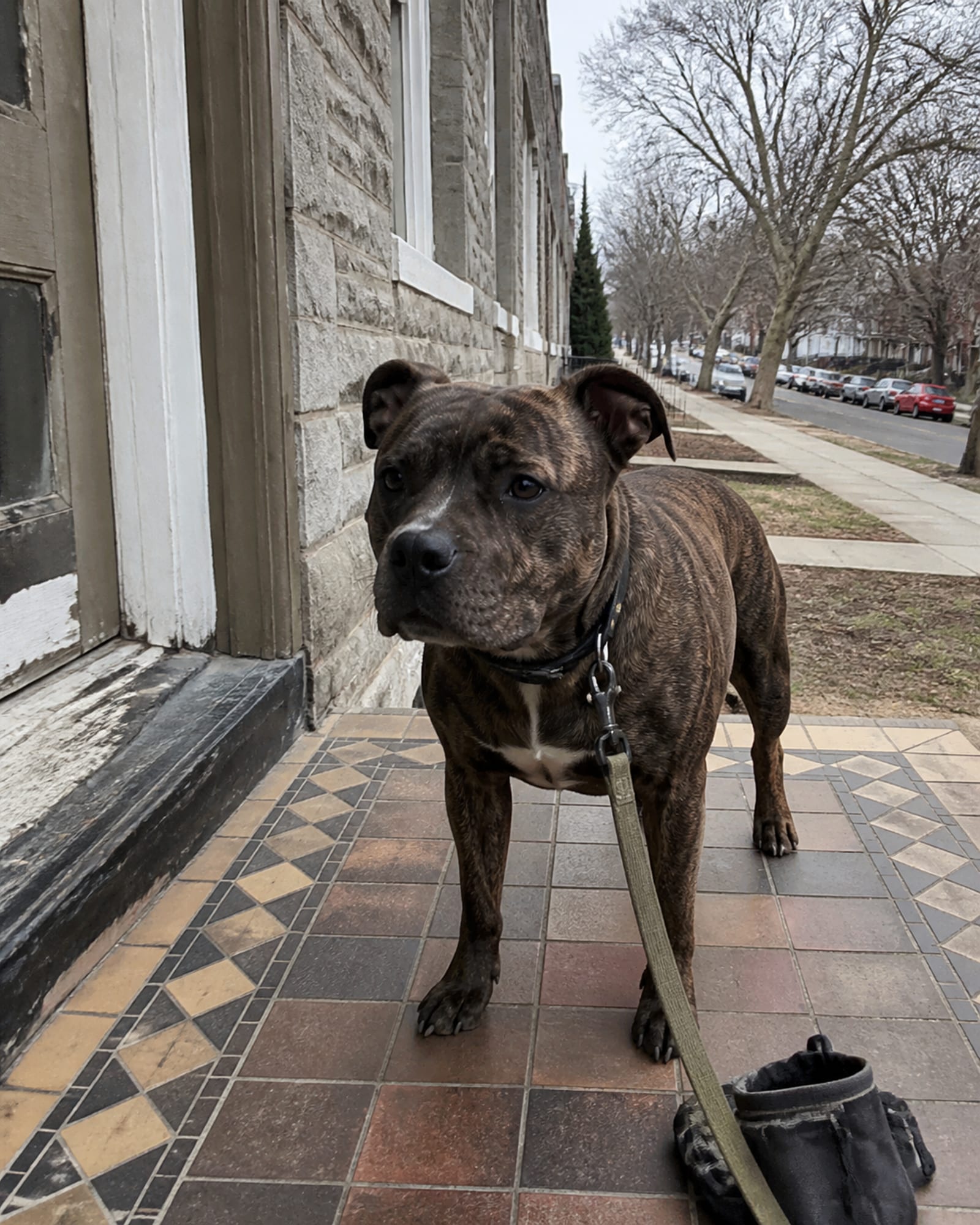
A dog standing on a sidewalk with the street receding behind it, in Silver Spring, MD
Weighted heavily toward buildings, shared space and stream valleys.
01
Close-range meetings with no room to make distance, in a building where every incident is somebody else's business too.
02
In a building of twenty or more units, a dog that vocalizes when left becomes a formal complaint quickly rather than slowly.
03
With most of the stock built before 1970, expect narrow entries, basement stairs, small yards and shared walks rather than a large fenced lot.
04
Sligo Creek, Long Branch, Rock Creek and Northwest Branch bring wooded slopes, bridges, wildlife scent and trail bottlenecks into ordinary walks.
05
Construction, loading activity, buses and reflective pavement heat. A dog that is settled on a quiet block can lose the plot at a crowded crossing.
06
The Jazz Festival, Pride in the Plaza, Ethiopian Day, Caribbean Heritage, the Thanksgiving Parade. Advanced proofing and never a first exposure.
07
Downtown adds loading activity, reflective heat off the pavement and crowded crossings. A dog that works well on a quiet block can lose focus entirely at a bus stop.
In your home, face to face, rolling into the training fee if you go ahead. If you are in a building I want to see the actual corridor, the actual entrance and the actual walk to the street.
The evaluation plus four one hour sessions spread across about two months, with lifetime phone support once the face to face work is done. The spacing is deliberate: the two weeks between sessions is when the learning actually happens.
Five consecutive daily one hour sessions in your home, your building and your neighborhood, then a lesson for you and a two week follow up. Equipment included. It suits a dog that needs momentum rather than a slow build.
Ten to fifteen minutes a day beats an hour at the weekend. In a dense neighborhood most of it happens on walks you were taking anyway.
Behavior drifts. You are meant to call me when it does, and that does not run out.
Phone (443) 429-0445, 6 AM to 7 PM, seven days a week. I will tell you straight whether I am the right person for your situation.