01
A baby on the way
The work above. The earlier the call, the less of it there is to do and the better it holds.


Mount Airy has the highest homeownership of any town I cover, at 94.4%, with 2.96 people in the average household and 27.6% of residents under 18. It is a town of growing families, and the call I get most often here starts with a date rather than a behavior.
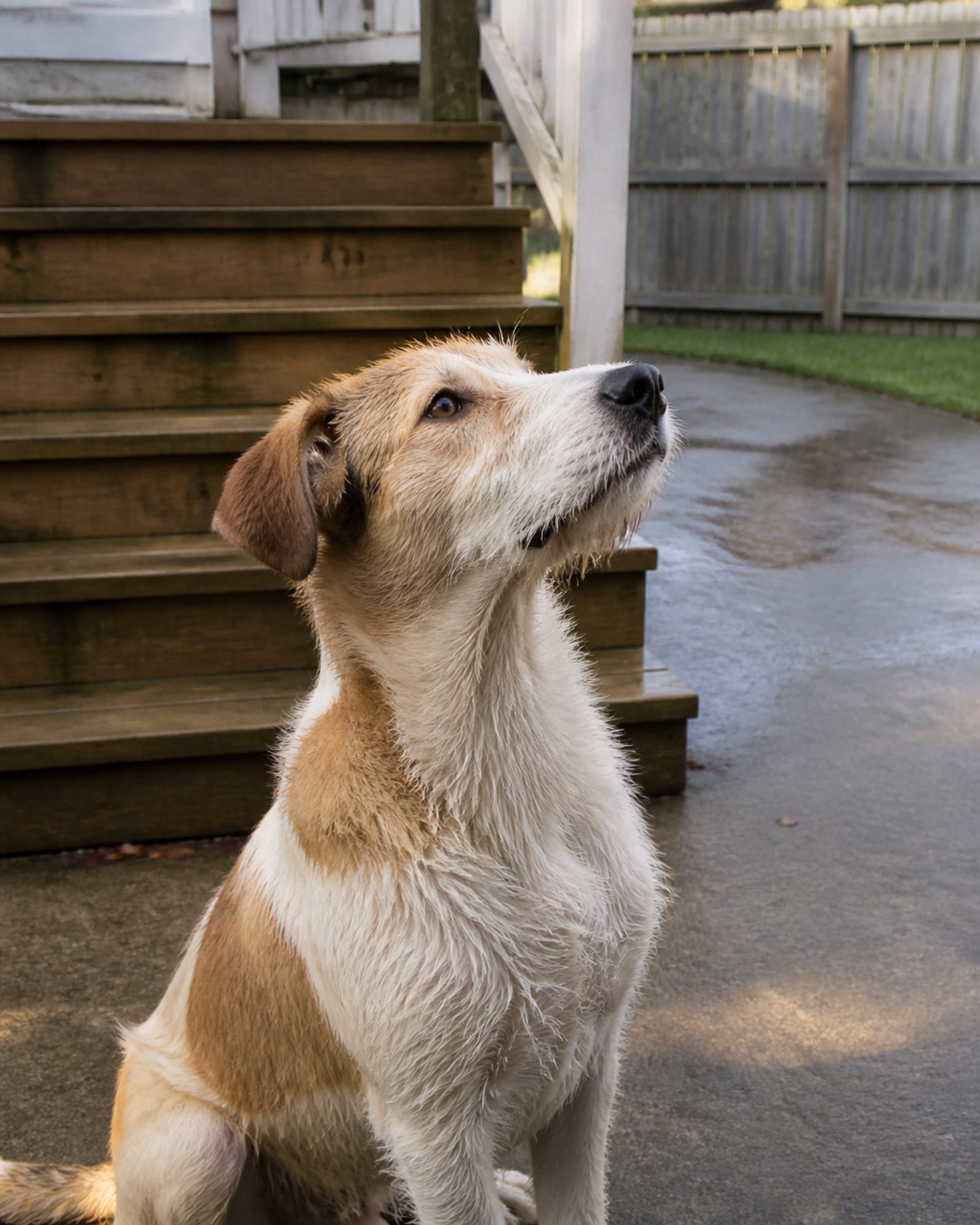
A dog sitting at the foot of steps, looking up out of frame, in Mount Airy, MD
"We are due in March."
That is the whole of the problem statement, and it is the best possible time to get a call. Not because the dog is going to be a problem, but because almost everything that goes wrong between a dog and a new baby is preventable with three or four months of unhurried, unremarkable work, and almost none of it is fixable in the fortnight after the baby comes home.
Mount Airy is a town of 9,654 people where 3,300 households average nearly three people each, more than a quarter of residents are under 18, and the mean commute is 33 minutes. It sits on Parrs Ridge with steep streets, cul-de-sac subdivisions at Summit Ridge, Twin Ridge, Nottingham and Brittany Manor, an older Main Street core, and rural parcels at the edge. What it mostly is, though, is a place where households grow, and where the dog arrived first.
If the dog will lose the sofa, the bedroom or a particular corner, change it months ahead. A dog who loses a privilege the week a baby arrives draws the obvious conclusion, and it is the wrong one.
Whatever the realistic new schedule is, start it early. The routine should already be the new routine before there is a baby to blame for it.
This is the single most valuable behavior in the house. On a mat, at a distance, held for twenty minutes, cued once. Everything else is negotiable.
Usually the nursery. Not because the dog is a danger, but because you need one room where you never have to think about where he is.
The pram, the crib, the bouncer, the bin. Let him investigate them in an empty house weeks ahead so they are old news rather than new arrivals.
Recorded crying, at a volume he barely notices, while good things happen. Raised gradually. This one is dull, it takes ten minutes a week, and it does a lot of work.
The worry is almost always aggression. The reality is almost always something duller and more fixable.
The common failures are attention and access. A dog who has had the run of the house and a great deal of company suddenly has neither, and what he does about it is jump, mouth, bark, steal things and get underfoot at exactly the moments nobody has a spare hand. None of that is aggression. It is a dog asking, in the only ways he knows, for something that used to be freely available.
The second common failure is the doorway. Not because a dog will do something dreadful, but because a household with a newborn cannot supervise a dog every second, and a dog who does not have a reliable boundary means somebody is monitoring him instead of resting. Exhaustion is what turns a manageable dog into a resented one, and that is the thing I am actually trying to prevent.
The third is resource guarding, and this is the one to take seriously rather than wait out. A dog who stiffens over a chew, a bed or a person is telling you something clearly, and a crawling child will not read it. If any of that exists it gets addressed before the birth, not after, and my resource guarding page sets out what that work involves.
Where a dog has a genuine history of snapping or biting, that is a different conversation and it needs an evaluation rather than a checklist. I will say plainly if I think a case needs veterinary behavior input as well, and with a baby coming I would rather say it early than be diplomatic about it.
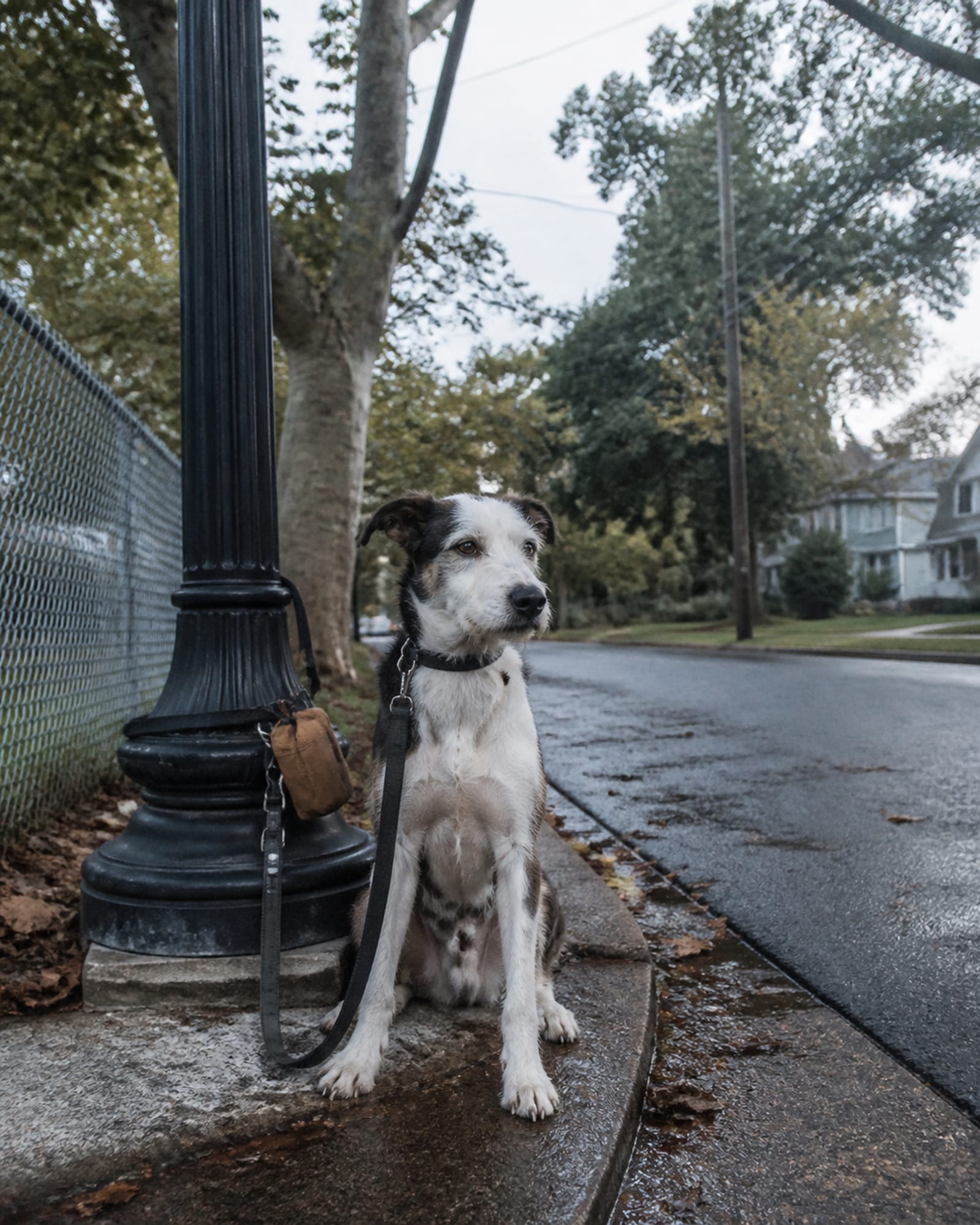
A dog sitting square beside a lamp post, in Mount Airy, MD
Lower the bar, keep the structure, and stop trying to be fair.
The dog's life is going to shrink for a while and that is survivable. What is not survivable is inconsistency: rules that hold on a good day and dissolve on a bad one teach him to keep trying, which is the opposite of restful. Fewer rules, kept absolutely, beat a full set kept half the time.
Five minutes of training a day is worth more than an hour of guilty walking. A short session where he is asked to do something he knows and paid for it gives him the interaction he is missing, uses his brain, and costs a household that has no time almost nothing. A long walk with a distracted handler on the end of the leash gives him exercise and no contact at all.
Include him rather than exclude him where you can. If he settles on his mat while the baby is fed, and that is where good things happen, he learns that the baby's presence predicts something worth having. If he is shut out every time, he learns the reverse, and that is a much harder position to recover from six months later.
One local note, because the geography matters here more than in a flat town. Mount Airy sits on the ridge, the streets are steep, and the winter footing is genuinely poor: rocky Piedmont soil, exposed ridge winds, stormwater ponds and wooded drainage easements. Pushing a pram and holding a leash on a steep, salted, icy street is a real handling problem, not a theoretical one. A dog who walks properly beside you is worth building before the ice arrives and before your hands are full.
Watkins Park, Prospect Park, East West Park and the Summit Ridge and Twin Ridge fields give you somewhere to do the short daily sessions without turning them into an expedition, which matters when the household has very little spare time. Five minutes on the way back from a school run counts. It is the frequency that does the work here, not the length of any one session.
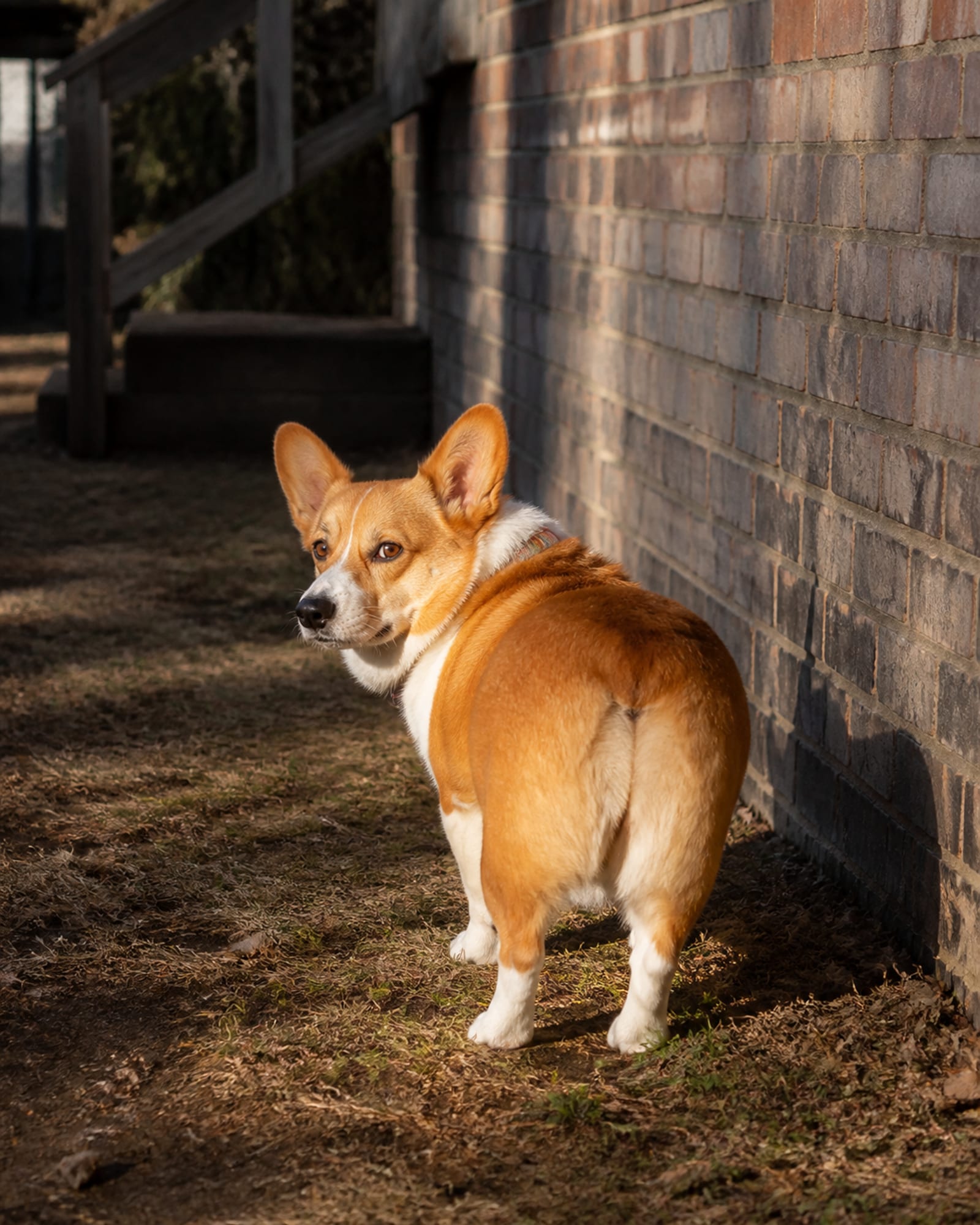
A dog's head turned back over its shoulder toward camera, in Mount Airy, MD
A small, settled, family town on a ridge, with the countryside starting at the edge of it.
01
The work above. The earlier the call, the less of it there is to do and the better it holds.
02
A different job from the newborn one. Now the child moves, and the training shifts to the child's behavior as much as the dog's.
03
Parrs Ridge gives real gradient, and rock, ice and salt make a pulling dog a genuine hazard rather than an annoyance.
04
Livestock, farm machinery and horses appear just beyond the town, alongside deer and foxes on the wooded drainage easements.
05
Summit Ridge, Twin Ridge, Nottingham and Brittany Manor bring common paths, stormwater ponds and neighbors' dogs at close quarters.
06
Older houses close to narrow streets with pedestrians at the door, plus the historic rail corridor, construction and the shared paths.
Phone (443) 429-0445, seven days a week from 6 AM to 7 PM. Tell me when you are due and what your dog is currently allowed to do that he will not be.