Baltimore, MD area6 AM - 7 PM · 7 days a weekDog Training since 2001
Cue · Hand signal: hand to chest

Dog Training in Catonsville, MD

Frederick Road is the best training ground in Catonsville and the hardest one. I work with dogs that cannot yet handle it, and with the owners who have stopped trying.

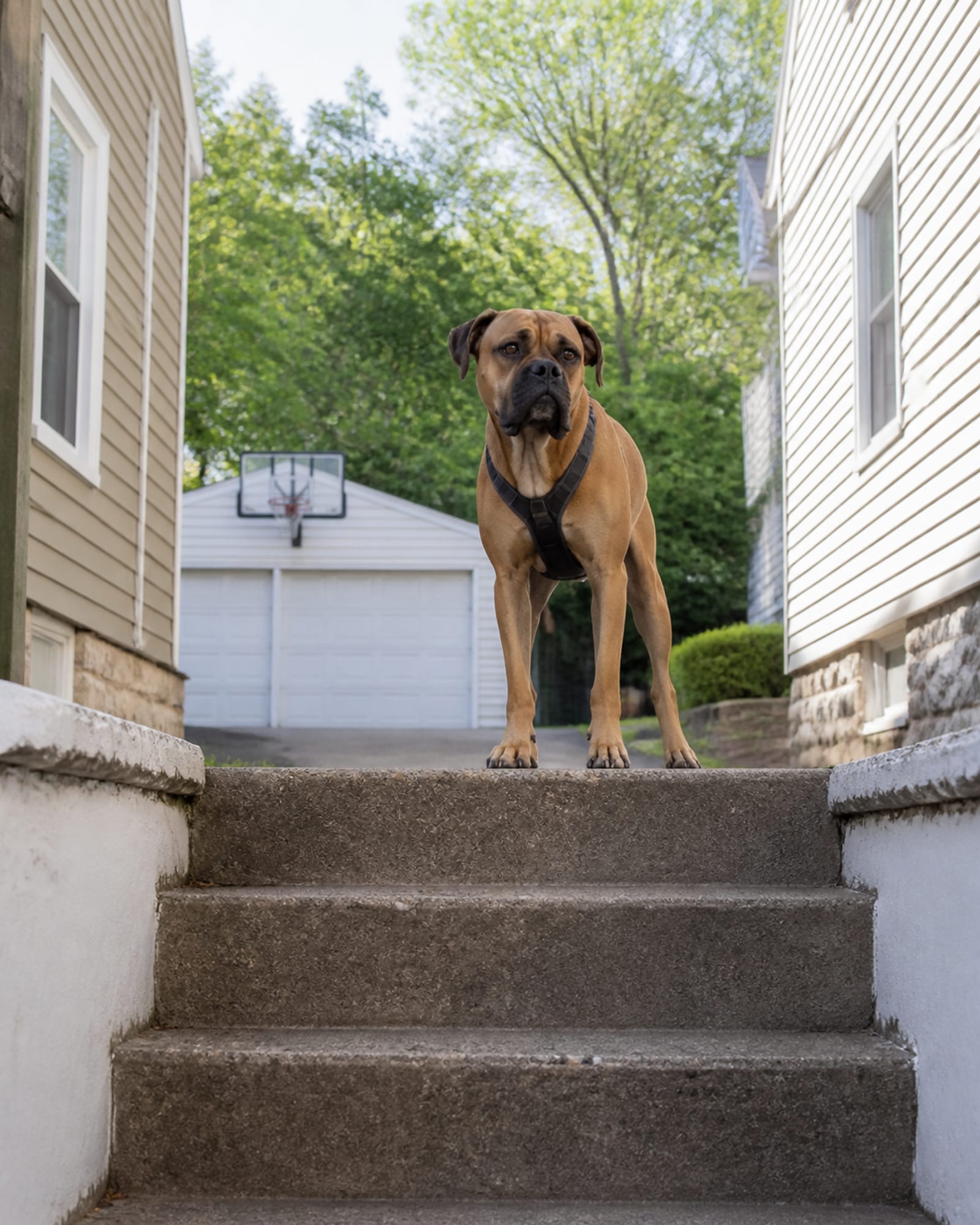
A dog standing at the top of a short flight of steps, in Catonsville, MD

A dog standing at the top of a short flight of steps, in Catonsville, MD

The walk down Frederick Road tells you everything

Take a dog down Frederick Road on a Friday evening in summer and you will learn more about it in ten minutes than in a month of back garden practice. There is music. There are strollers, bicycles, dropped food, patio tables with people eating at dog height, and other dogs passing close on a sidewalk that is not wide enough for two of them to give each other room. Plenty of Catonsville dogs manage that beautifully. The ones I get called about lock up, or lunge, or start screaming at the third dog they see, and their owner quietly decides to stop going.

That is the decision I try to reverse. Not by telling you to push through it, which usually makes it worse, but by rebuilding the dog's behavior somewhere quiet first and then bringing it back to the street it actually failed on.

A village center, three campuses, and a state park in the same square mile

Catonsville packs an unusual amount of variety into a small space, and the variety is the training problem.

Frederick Road carries the Arts and Entertainment District, the branch library, the Armory, Frederick Road Fridays, the Sunday farmers market and the Fall Festival. A few minutes away sit UMBC's 500 acre campus, CCBC Catonsville and Spring Grove Hospital Center, which between them put a large, shifting population of people on foot into the area on a schedule your dog never learns. Then the Patapsco Valley State Park Hilton Area drops you into woods with steep grades and stream crossings.

A dog can be perfectly reliable in one of those settings and useless in the next. That is not disobedience and it is not stubbornness. Dogs do not generalize the way people assume they do. A sit that holds in your kitchen is a different behavior, to the dog, than a sit that holds outside the library with a skateboard going past.

So the work is deliberately staged. We build the behavior where the dog can actually think, then add one difficulty at a time, and the last step is the place you originally wanted it to work. I would rather spend three sessions getting there properly than one session proving your dog cannot cope on Frederick Road, which you already know.

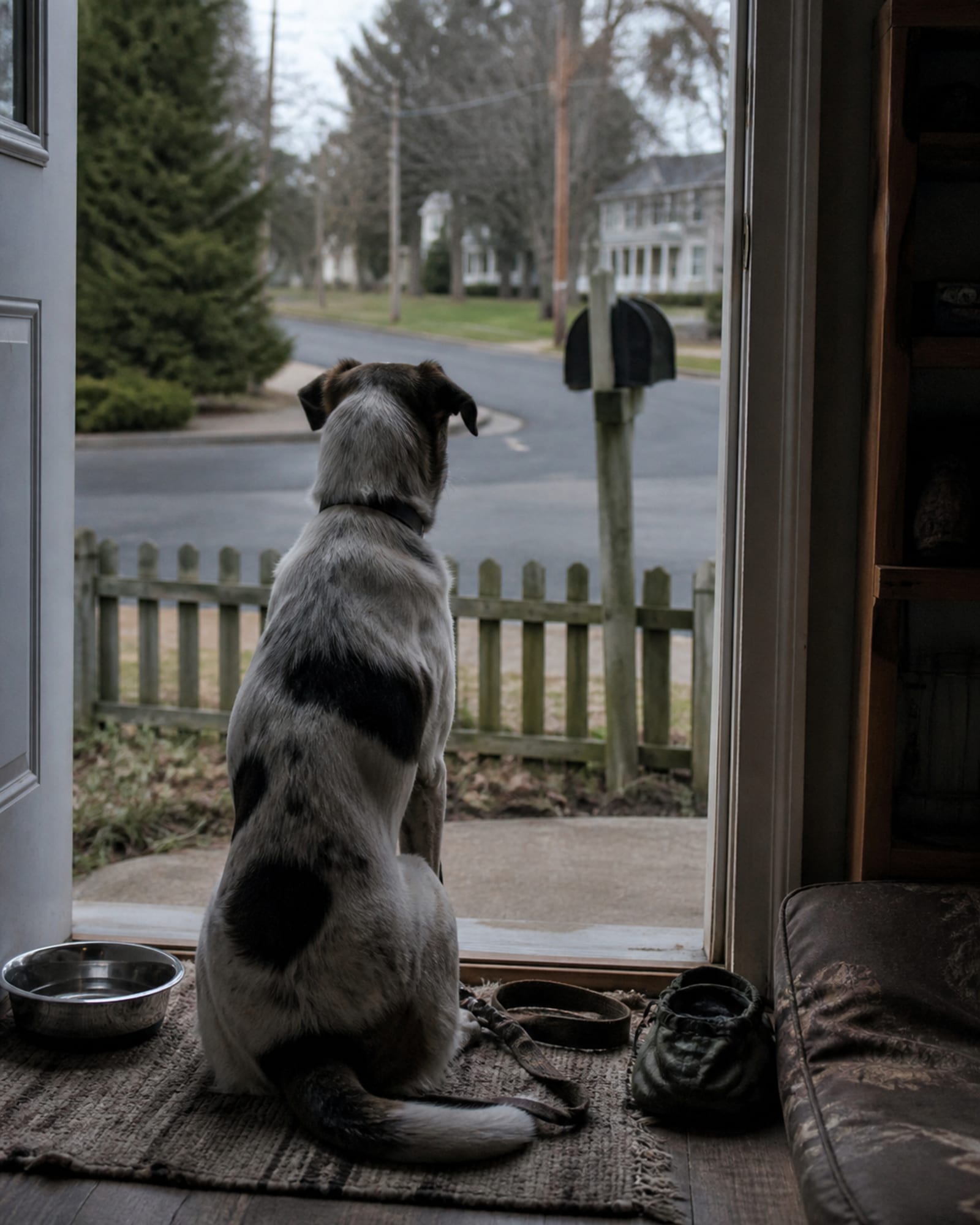
A dog sitting on a stoop watching the street, in Catonsville, MD

A dog sitting on a stoop watching the street, in Catonsville, MD

Academy Heights, Winters Lane, and the older streets

Half of Catonsville is detached houses, but that half is not where most of my calls come from.

Academy Heights alone holds 462 neo-Colonial brick rowhouses with porches, small yards, rear alleys and slate roofs. Winters Lane is a documented historic district with its own tight street pattern. Across the wider area, 18.5% of homes are attached and another 18.5% were built in 1939 or earlier, alongside Victorians, Cape Cods, ranchers, postwar subdivisions and apartments.

Older, closer housing changes which behaviors matter. A porch that opens straight onto the sidewalk means the front door is a trigger several times an hour, not twice a day. A rear alley means your dog is meeting people at a fence line without warning. A small yard means the fence is close enough to the neighbor's that two dogs can rehearse a fight through it every afternoon until it becomes the highlight of their day.

None of that is fixed by a longer walk. It is fixed by changing what the dog does at the specific place it is going wrong, which is why I want to see your actual porch, your actual alley and your actual fence line rather than describe a general method to you over the phone.

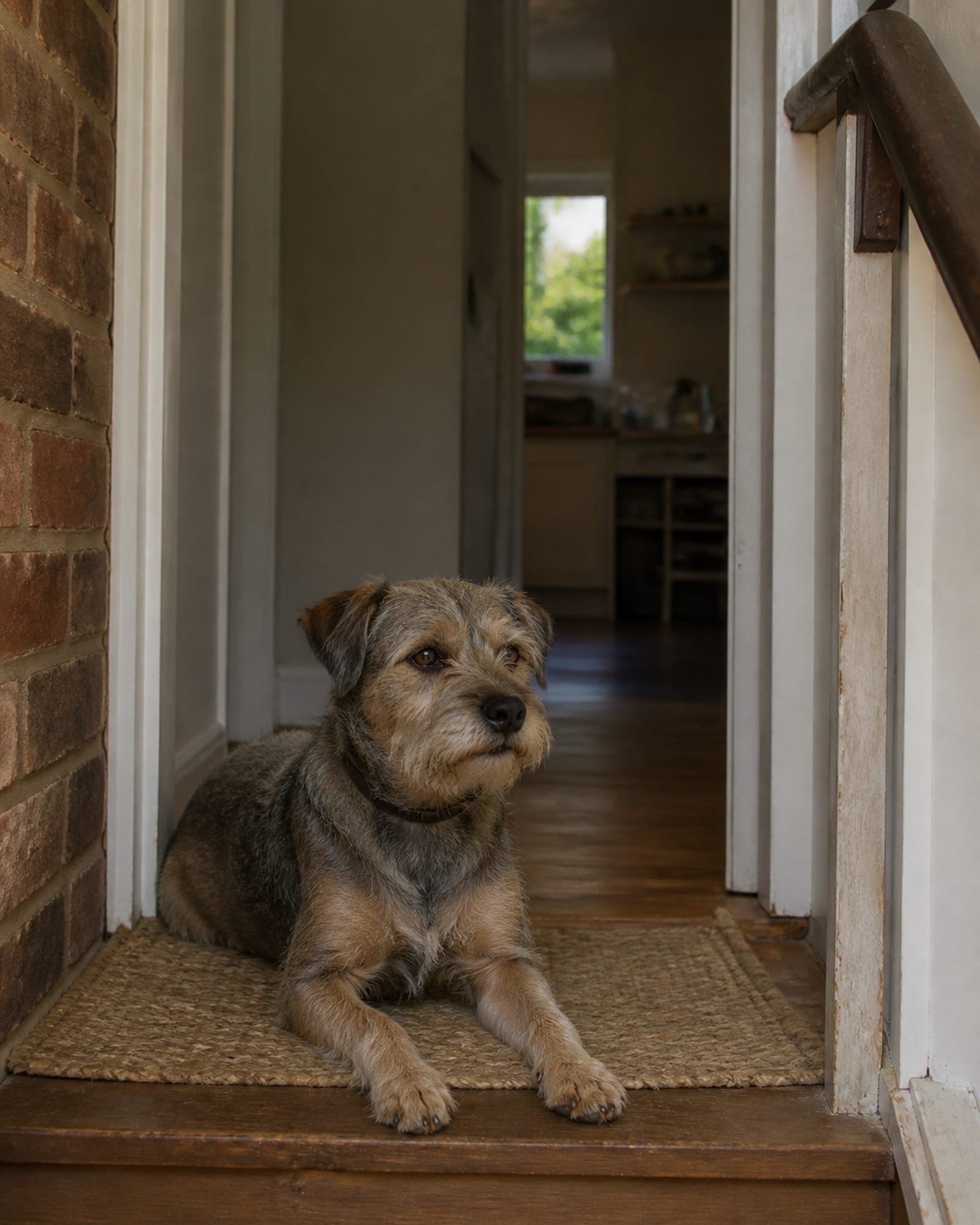
A dog settled on a mat in a doorway, room beyond, in Catonsville, MD

A dog settled on a mat in a doorway, room beyond, in Catonsville, MD

What Catonsville owners call me about

These are the problems that come up here most, and each one links to the page that explains how I work on it.

01

Leash reactivity on a narrow sidewalk

The village core gives you no room to create distance, so a dog that needs twenty feet to stay calm gets six. The fix is a dog that can hold position and look away on cue, built somewhere with room first. See my leash reactivity page for the method.

Leash reactivity training

02

Front door and porch behavior

Porch-front houses put your door on the public sidewalk. Every passing dog, delivery and jogger is a rehearsal. We change what happens at the door rather than trying to stop the world going past it.

03

Recall in Patapsco

Dogs are required to stay leashed where pets are permitted in Patapsco, and the Hilton trails run steep with stream crossings. A recall that only works in a flat open field is not the recall you need here.

04

Wildlife and prey drive

Wooded edges bring deer, foxes and groundhogs into ordinary walks. A dog that has successfully chased something once will try again, and the practice makes it worse each time.

05

Puppies raised near a busy street

Catonsville puppies get a lot of early exposure whether you plan it or not. Exposure without structure produces a nervous adult just as reliably as no exposure at all. My puppy training page covers what the first months should look like.

Puppy training

06

Older dogs and older owners

21.3% of Catonsville residents are 65 or over. A dog that pulls is a genuine safety problem on a brick sidewalk, and it is solvable at any age of dog.

Coming to stay with me

Catonsville sits well inside the drive time for board and train, so it is an option here rather than something you have to arrange around.

Board and train suits a specific situation: the behavior needs daily repetition, and daily repetition is exactly what a working household cannot produce. Your dog stays with me, works every day, and comes back with the behavior built. The full detail, including what the two week and three week programs cover, is on the board and train page rather than repeated here.

The part that matters and gets skipped is the handover. A dog that performs for me and not for you is a failed job, so the transfer lesson is not optional and it is not a formality. You learn the timing, the cues and the corrections, in your own house, on your own street.

If a residential stay is not right for you, in-home private lessons start at $700 for an evaluation plus four one hour sessions, and Kick Start runs five consecutive daily sessions in your home and neighborhood for $1,600. Which one fits depends on the dog and on how much you can practice, and that is a conversation, not a form.

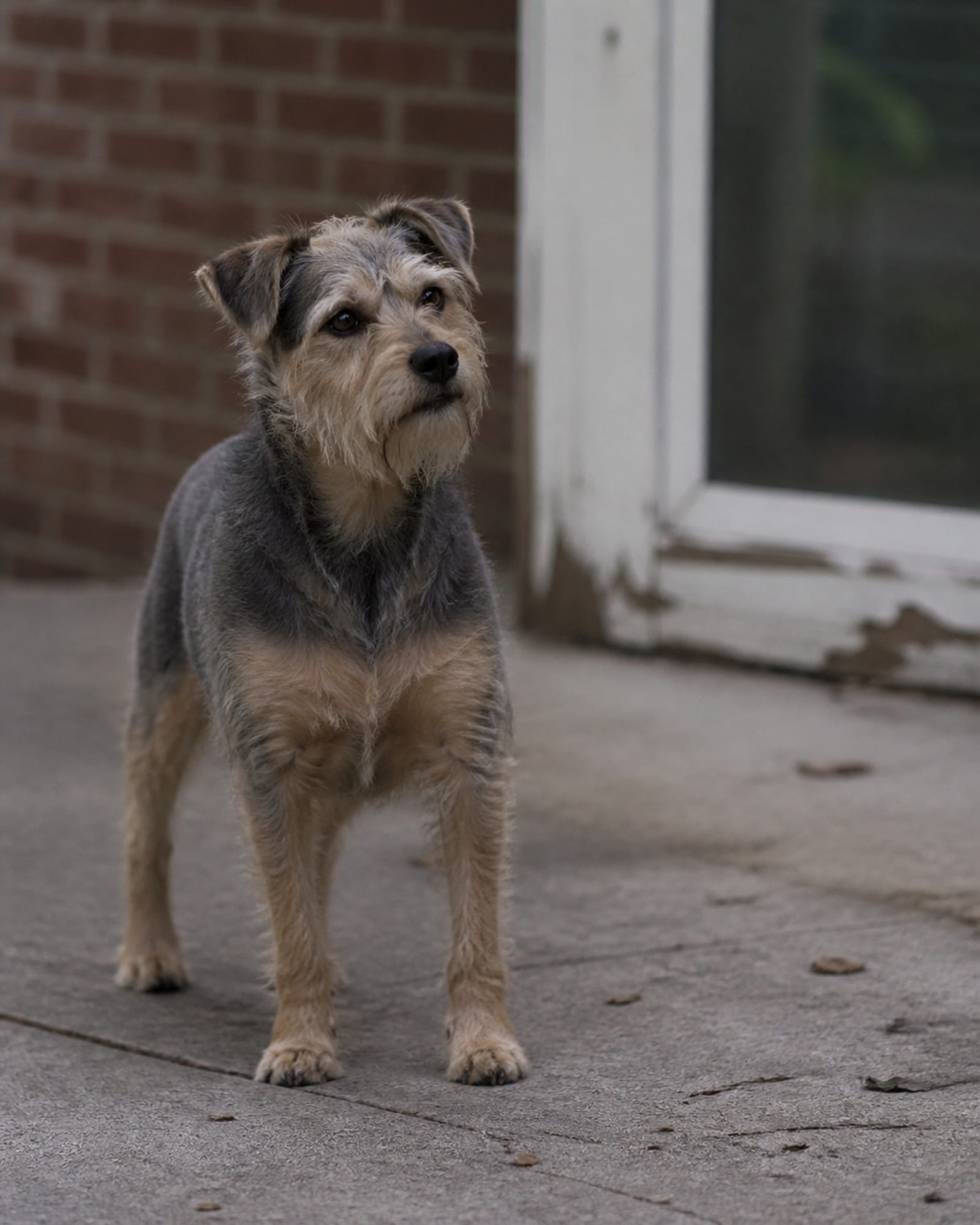
A dog watching intently off camera, head tilted a fraction, in Catonsville, MD

A dog watching intently off camera, head tilted a fraction, in Catonsville, MD

How a Catonsville job actually runs

  1. 01

    The phone call

    You tell me what the dog is doing, where, and how often. I ask about bite history, about who else lives in the house, and about what you have already tried. This is where I say plainly whether I think I can help.

  2. 02

    The evaluation, $100

    In your home, face to face, and it rolls into the training fee if you go ahead. I need to see the dog in the place the behavior happens, not in a training hall where it will look like a different animal.

  3. 03

    The plan

    Which program, how long, and what we are working on first. I will tell you if I think a Frederick Road walk is three months away rather than three weeks, because a plan you believe is worth more than one that flatters you.

  4. 04

    The training

    Quiet ground first, then controlled distraction, then the real setting. If we skip a stage the dog tells us by falling apart, and we go back a stage.

  5. 05

    Your turn

    The handover, then lifetime support by phone after the face to face work is done. Behavior drifts. You are meant to call me when it does.

Questions Catonsville owners ask

Can you get my dog to the point of walking through Frederick Road Fridays?
Often yes, but not as the first outing and sometimes not this season. A street festival is close quarters, music, food on the ground and dogs passing within a few feet. It is the last exam, not the classroom. We build to it, and I will tell you honestly if your dog is not going to enjoy that setting even when trained, because some do not and forcing it helps nobody.
My dog is fine at home and impossible outside. Why?
Because those are different situations to the dog, and a behavior learned in one place does not automatically move to another. It is the single most common thing I see here. The answer is to train in the harder place rather than assume the easy place will transfer.
We live in Academy Heights with a small yard and an alley. Is that a problem?
It is a factor, not a problem. Alleys and close fence lines create daily rehearsal of the exact behavior you want to stop. Once we know where the rehearsal happens we can change it, which is usually faster than owners expect.
Do you train at UMBC or in the parks?
I use public places for practice only where the rules allow it and only when the dog is ready. Nothing I do implies permission to train on campus or park property, and in Patapsco dogs stay leashed where pets are allowed at all. Most of the real work happens at your house and on your own streets anyway, because that is where you live.
How long before I see a change?
Usually within the first session you will see the dog respond differently, and that is not the same as fixed. Real change is measured in weeks of consistent handling. Anyone offering you a guaranteed timeline has not met your dog.
Is my dog too old for this?
No. I have trained a lot of dogs whose owners had been told to give up. Older dogs often learn faster than puppies because they can concentrate for longer. What changes with age is the physical side, and we plan around that.


Tell me what your dog is doing

Phone me on (443) 429-0445, any day between 6 AM and 7 PM. Tell me the dog, the behavior and the street it happens on, and I will tell you what I think it takes.

(443) 429-0445Send a Message

6 AM - 7 PM, 7 days a week · Baltimore, MD area