01
Loose leash on hard surfaces
Historic streets, brick and paved walks. A pulling dog on those is a fall risk before it is an inconvenience.

28.2% of Easton's residents are 65 or older, against 21.5% under 18. A good number of the dogs I am asked about here arrived because somebody finally had the time, and that is a genuinely different starting point from a dog acquired in the middle of a working life.
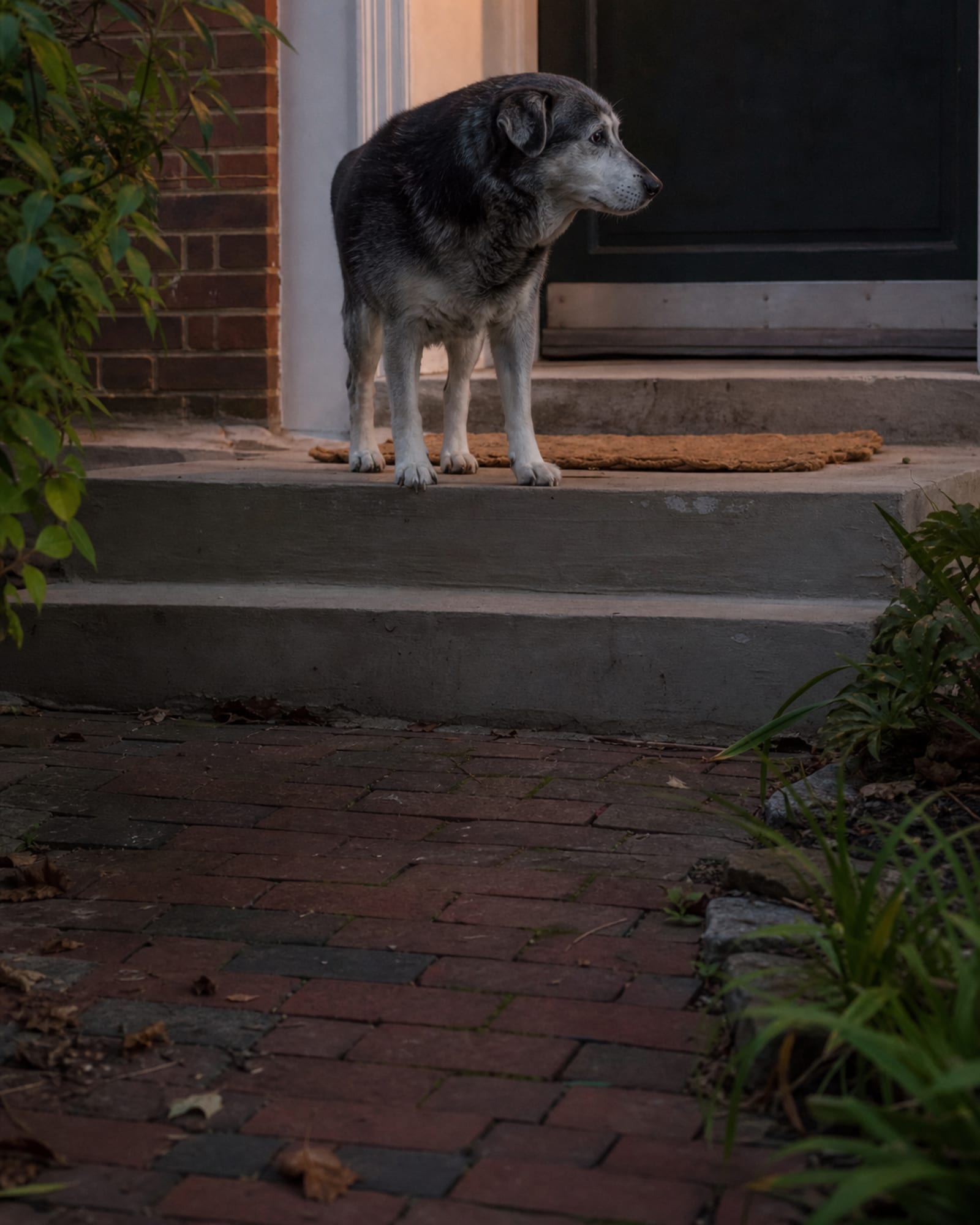
A dog standing at the top of a short flight of steps
People put it almost apologetically. "We always wanted one and there was never the time."
There is nothing to apologize for. A household with time is the best thing that can happen to a dog, and dogs that arrive into one usually do very well. But the situation has its own shape, and pretending it is the same as a family with school-age children and two jobs does nobody any favors.
Easton is a town of 17,101 people in 7,360 households averaging 2.30 residents, with 64.4% owning their homes and more than a quarter of residents over 65. The housing runs from closely spaced historic dwellings in Old Easton and the Meeting House District through mid-century neighborhoods, townhouses, apartments and retirement communities to newer planned development near Easton Village and the bypass. Ground is nearly level, the rail trail is flat and paved, and the town is compact enough to walk.
All of which is a good set of conditions. What changes is which things matter most and which are worth ignoring.
The list is shorter than the internet suggests, and the order is different.
The four that matter are a loose leash, a settle, a recall, and being handled. Everything else is optional. A dog who walks without pulling, lies down when asked and stays there, comes back reliably, and stands to have his feet and ears dealt with is an easy dog to live with for the next decade. Tricks, off-leash freedom and advanced obedience are all fine and none of them changes daily life the way those four do.
The loose leash is first and it is not close. On level ground with brick and paved surfaces, a dog who pulls is a fall risk, and a fall at seventy is a different event from a fall at forty. This is the one I would fix before anything else, and it is usually a matter of equipment and mechanics rather than a long behavioral project.
The settle is second because it buys the household its evenings. A dog who cannot switch off keeps a room busy, and a household that has waited years for a dog deserves to enjoy having one rather than manage it.
Handling is third for the same reasons it leads the Chestertown page, and I will not repeat the argument here beyond saying that it gets easier the earlier it starts.
The recall is fourth, which surprises people, because it is the one everybody asks about first. On a rail trail and in a town this walkable, a dog on a well-fitted leash is safe without it. It is worth building properly and it is not the emergency.
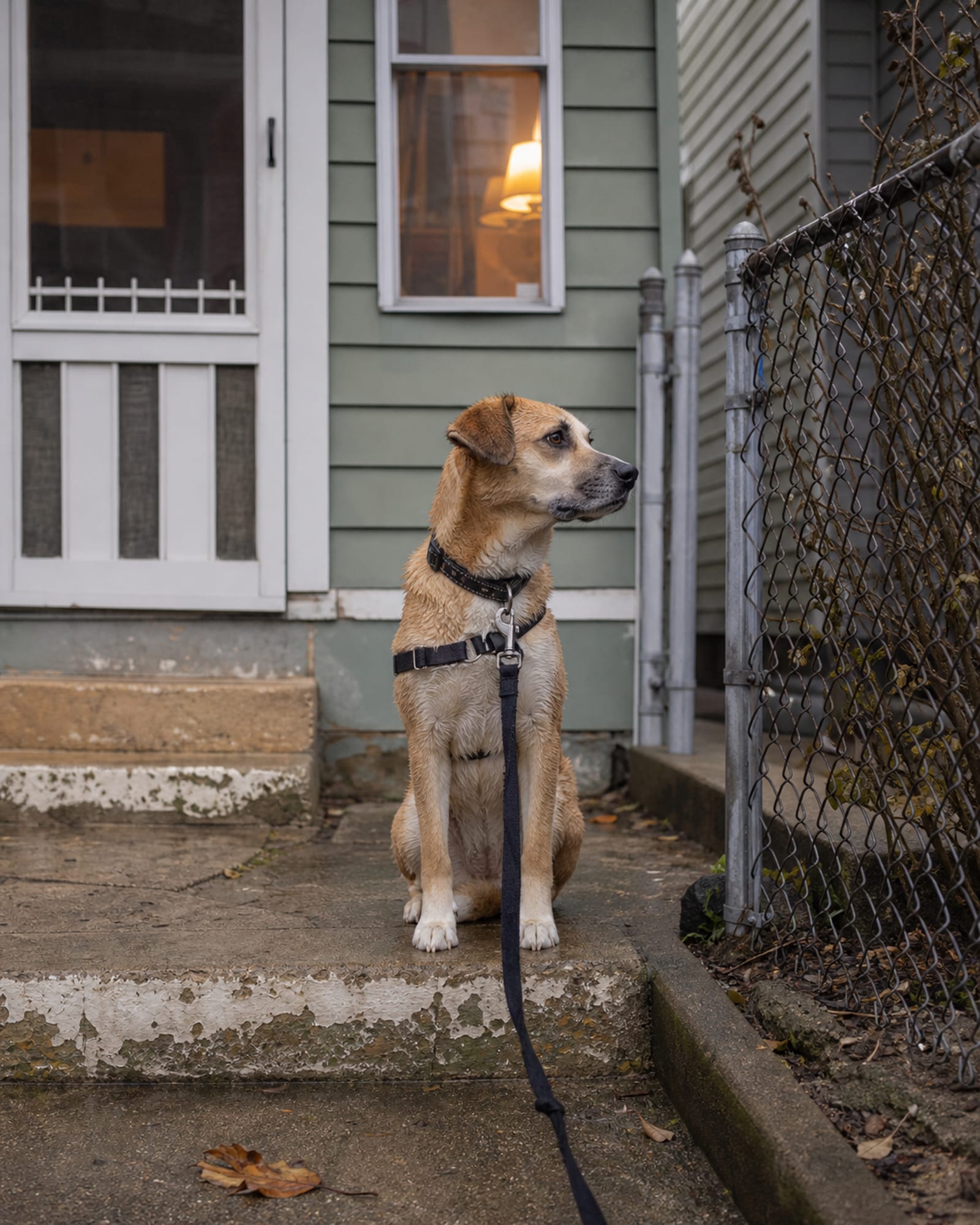
A dog sitting on a stoop watching the street
A well fitted collar or harness and a fixed-length leash. Not a retractable one. Most pulling problems in a new household are half equipment and the fix takes ten minutes.
Furniture, bedroom, kitchen while you cook. A household with time is inclined to allow everything and reconsider later, and reconsidering later is the hard version.
A mat, in the room you actually sit in, worked up to twenty minutes. Do it in the first month while the dog is still forming an opinion of what evenings look like.
The Easton Rail Trail and the parks give you level, predictable surfaces for leash work. Build the walking there before taking it to Washington Street.
One second at a time, paid, stopping early. It is far easier to install in a dog who has no history of being wrestled than to repair afterwards.
Idlewild, Moton, North Easton and Thompson Park give you space. Long line stays on until it is genuinely proofed, and there is no hurry about that.
This is the part I would rather raise plainly than leave for somebody else to raise badly.
A dog acquired at sixty-five may well outlive the household's ability to walk him twice a day. That is not a reason to avoid getting a dog and I would never suggest it. It is a reason to build the specific behaviors that keep him easy for somebody else to manage, and to have named that somebody while it is a calm conversation rather than an urgent one.
The behaviors that make a dog easy to hand over are the same four above, which is convenient. A dog who walks on a loose leash, settles, comes back and tolerates handling can be walked by a neighbor, boarded, taken to a family member, or rehomed without difficulty. A dog who has none of those is hard to help, and that is the situation worth avoiding.
The practical version is dull and it takes an afternoon. Write down what he eats and when, what he is like with other dogs, what he is afraid of, which vet holds his records, and who has agreed to take him. Put it somewhere findable. Households do this for their own affairs as a matter of course and almost never for the dog.
There is also a matching question about size and energy at the point of choosing, and it is worth asking honestly before rather than after. A dog whose exercise needs exceed what the household can sustain in five years is a decision, not an accident, and there are plenty of dogs whose needs will fit comfortably.
None of this is gloomy in practice. The households here who have thought about it are noticeably more relaxed about their dogs than the ones who have carefully not thought about it, because the thing they were quietly worried about has an answer.
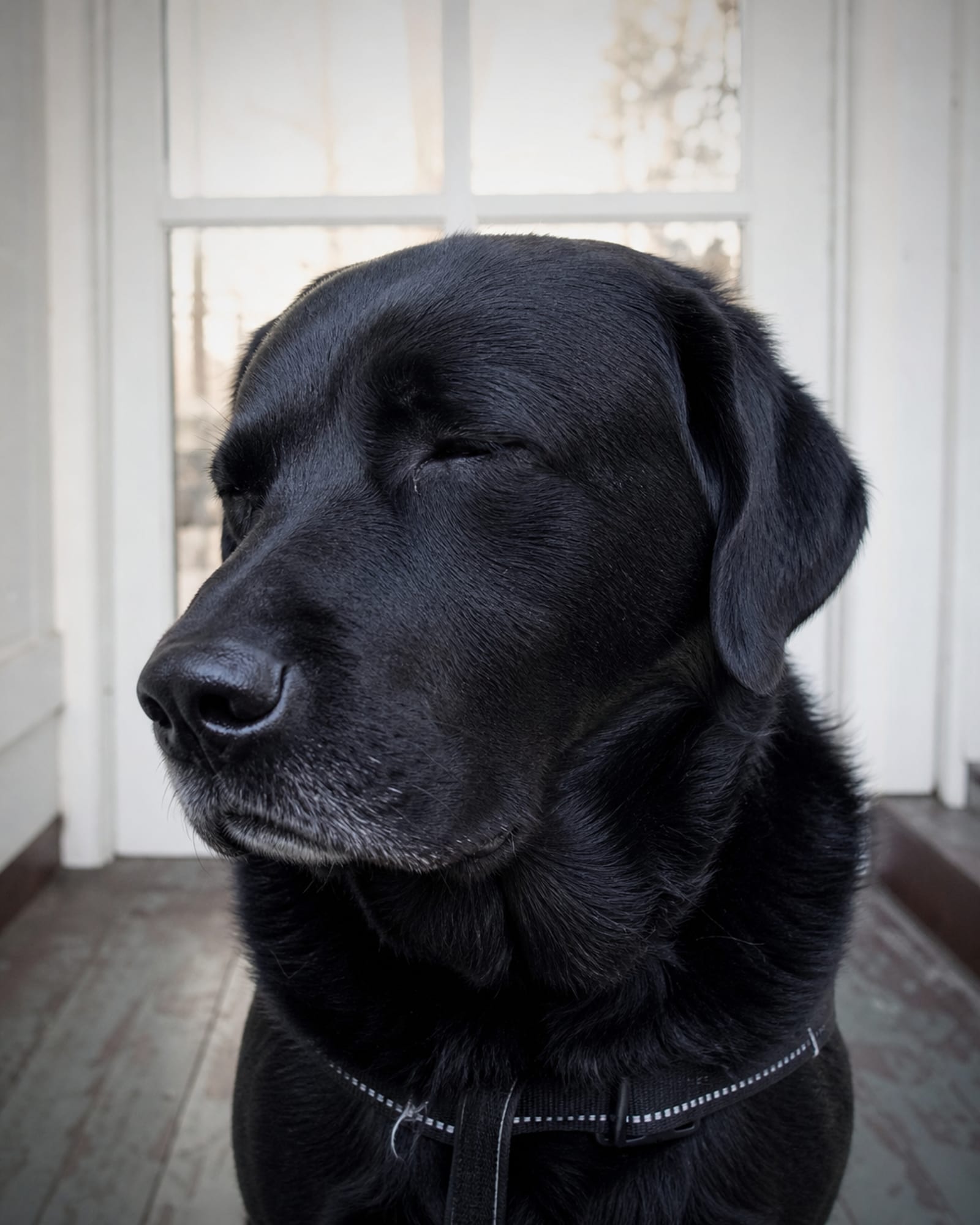
A close vertical of a dog blinking slowly, relaxed
A flat, walkable Eastern Shore town with a historic core and an airport at the edge.
01
Historic streets, brick and paved walks. A pulling dog on those is a fall risk before it is an inconvenience.
02
Old Easton and the Meeting House District put doors close to the public way, and plenty of lots have no fence, so a long line does the work instead.
03
Townhouses and apartments make noise a shared matter, which moves alone-time work up the list rather than down it.
04
Level terrain drained by Tanyard Branch and Windmill Branch means wet turf, drainage ditches, mosquitoes and slippery leaf cover after rain.
05
Low aircraft near the field. Most dogs stop noticing within a fortnight; a sound-sensitive one needs it worked at distance rather than endured.
06
US 50 construction and beach-bound traffic change the roads at predictable times of year, which makes them plannable rather than surprising.
Phone (443) 429-0445, seven days a week from 6 AM to 7 PM. Tell me how long you have had him and which of those four is furthest from where you want it.