01
A dog with no single handler
The work above. It is a household job before it is a dog job, and the household half is free.


College Park runs on shared houses, rotating tenants and rented rooms around a university of 34,740 residents' worth of coming and going. The first question I ask in a house like that is not about the dog. It is who is actually responsible for him.
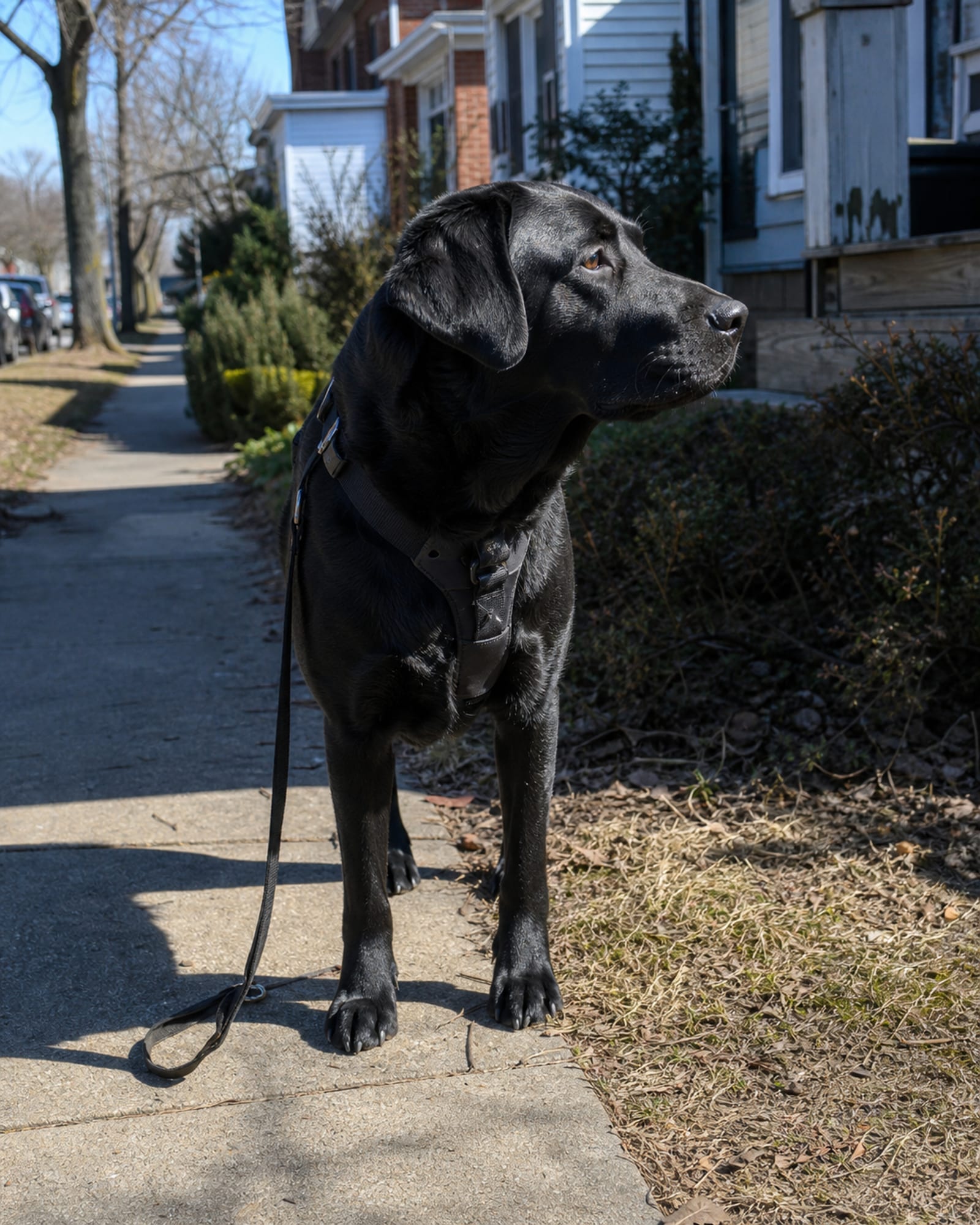
A dog in a stand stay with its lead slack on the ground beside it
I have asked that in a College Park living room and watched four people look at each other.
Nobody was being evasive. He genuinely was everybody's. One person had brought him home, two others walked him depending on the day, a fourth fed him when she was in first, and all four had different views on whether he was allowed on the bed. He was not badly treated for a second. He was simply being raised by a committee that had never met to agree anything.
College Park is built for this. 9,007 households across 5.6 square miles, a housing stock that runs from residence halls and high-rise student apartments through fraternity and sorority houses to rented detached homes, duplexes and postwar bungalows, alongside owner occupied streets that have been settled for decades. The city inspects rentals of every one of those types. Tenancies turn over, roommates change, and a dog can pass through three or four sets of hands without ever leaving the same address.
One person whose dog he is, who decides, and who carries the vet bill. Everyone else is helping. Shared ownership sounds fair and it produces a dog nobody has trained.
Double feeding is the single most common thing I find in a shared house, and most households find it while writing this list rather than hearing it from me.
Furniture, doors and food from the table. Not twenty rules. Three, written on the fridge, that everyone can say without looking.
Two or three cues each, and no others. A housemate with a short authorized list is genuinely useful. One improvising from the full list undoes your week.
Uncomfortable and necessary. A dog acquired by a household that dissolves in June needs somebody to have thought about July before June arrives.
With current details. In a house that turns over, a chip registered to somebody who moved out two years ago is the same as no chip at all.
The behavior people describe as confused, stubborn or manipulative is almost always none of those.
A dog learns from evidence, and in a shared house the evidence genuinely conflicts. Getting on the sofa works with two people and not with the others. Barking at the door produces attention from one and nothing from another. He has not decided to test anyone. He has correctly concluded that the answer depends on who is in the room, which is a perfectly sensible reading of the facts.
What that produces is a dog who checks the room before he acts. People read it as sneakiness. It is just accurate.
The fix is not one person doing everything, which is unrealistic in a house of students and rarely what anyone wants. It is a small number of things being identical regardless of who is present, and everything else being allowed to vary. Dogs cope perfectly well with variation as long as the important few things do not move.
There is one more thing worth saying plainly about this town. A dog living with people in their twenties who are around at unpredictable hours often gets a great deal of company and very little structure, and that combination produces a friendly, sociable, completely unmanageable adolescent. He is not spoiled. He has just never been asked for anything.
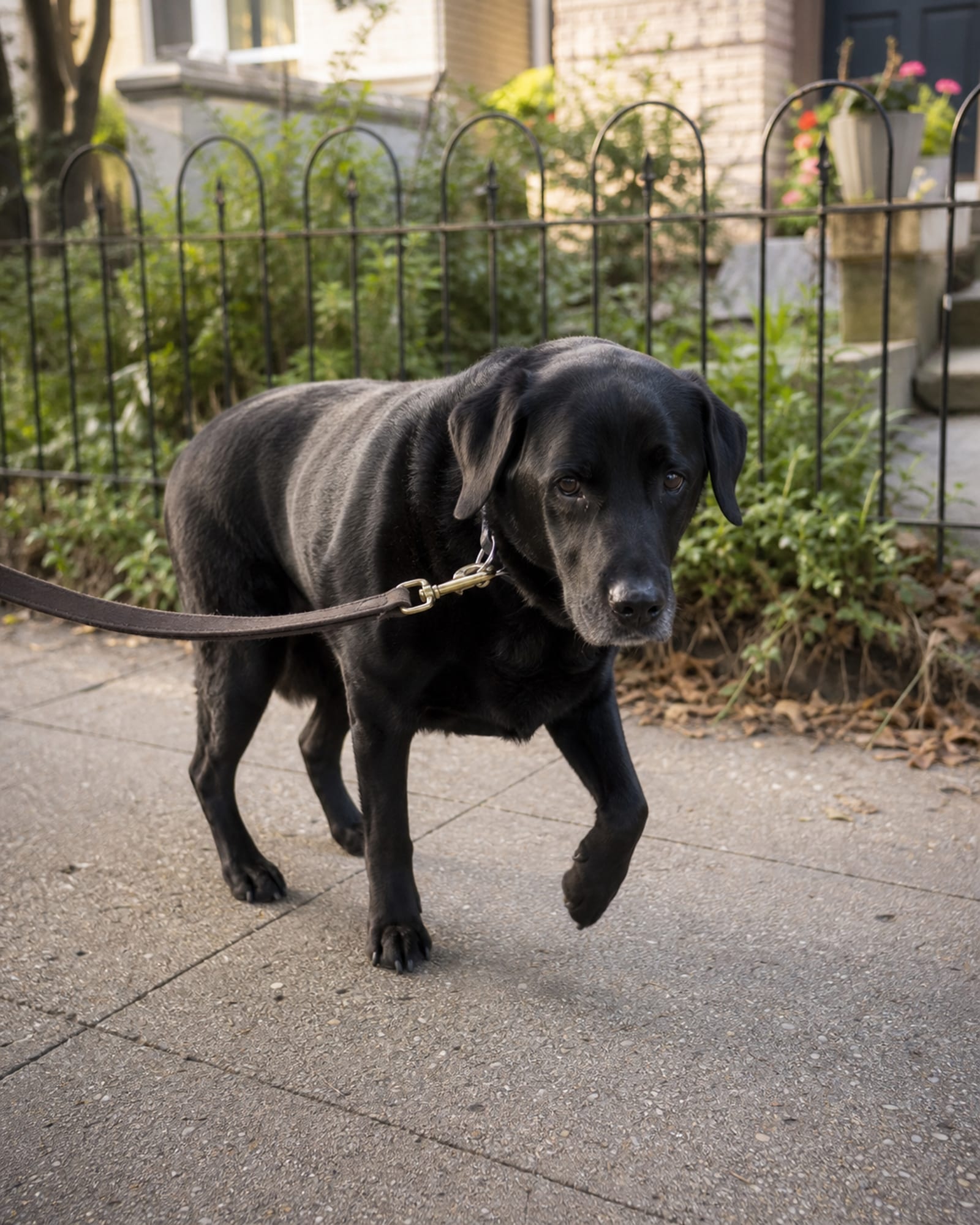
A dog pausing mid stride on a pavement, one paw lifted
A young, dense, high turnover city with a campus at the middle of it.
01
The work above. It is a household job before it is a dog job, and the household half is free.
02
High-rise apartments, rooming houses and converted homes mean the first stranger of the day is met indoors, before the sidewalk.
03
Erratic company rather than erratic absence. It sounds better than being alone all day and it makes settling harder, not easier.
04
SECU Stadium and Xfinity Center move large numbers of people at once, and Baltimore Avenue gives a dog nowhere to step aside when they do.
05
Fast, quiet and close, on the Paint Branch and Trolley trails and on every campus path. The quietness is the part dogs find hardest.
06
Geese and waterfowl concentrated in one place, with Paint Branch and Indian Creek adding flood-prone ground and mud after rain.
This is the part nobody writes about, and in a university city it is the honest conversation.
Some of the dogs I meet here will move house two or three times in the next four years, and a few will change owners. That is not a reason to train less. It is a reason to train the things that travel, and to be deliberate about which ones those are.
The portable set is short. A dog who settles on a mat, walks on a loose leash, comes when called, is comfortable in a crate and can be handled by a stranger will be welcome in the next house, easy for a sitter, and straightforward to rehome if it ever comes to that. Those five make a dog's life better whoever he ends up with.
The set that does not travel is anything that depends on this specific building: a dog who is only settled in that room, only quiet because of that particular routine, only reliable in that yard. Time spent there is not wasted exactly, but it is spent on the household rather than on the dog.
I would rather say this than not. A dog who has been given five solid behaviors by four students in a rented house is in a better position than a dog given none by one owner who meant to get around to it, and the students very often do a better job than they expect once somebody has told them which five things to pick.
There is a practical reason those five in particular pay off here, and it is the geography rather than the housing. The campus and the streets around it hand a dog an unusually demanding week: McKeldin Mall and the Stamp Student Union move crowds on a timetable, Baltimore Avenue and Knox Road are narrow and busy, the Metro and the MARC line add sound, aircraft come and go from College Park Airport, and the Paint Branch and Trolley trails deliver bicycles from behind at speed. A dog who can settle on cue and walk on a loose leash gets through all of that. A dog who can only manage a quiet street is going to find this a difficult place to live, whoever he lives with.
A dog's head framed in a doorway, body out of focus behind
Phone (443) 429-0445, seven days a week from 6 AM to 7 PM. Tell me how many people live with him and which of them he actually listens to.