01
Alone-time behavior
The most common call from this community, and the one with a deadline attached when it arrives via a property manager. Bored and panicking need opposite treatment.


64.2% of Cockeysville rents, and most of those homes are one or two bedrooms. Your lease and the person on the other side of the ceiling both have opinions about your dog, and that changes what you need first.
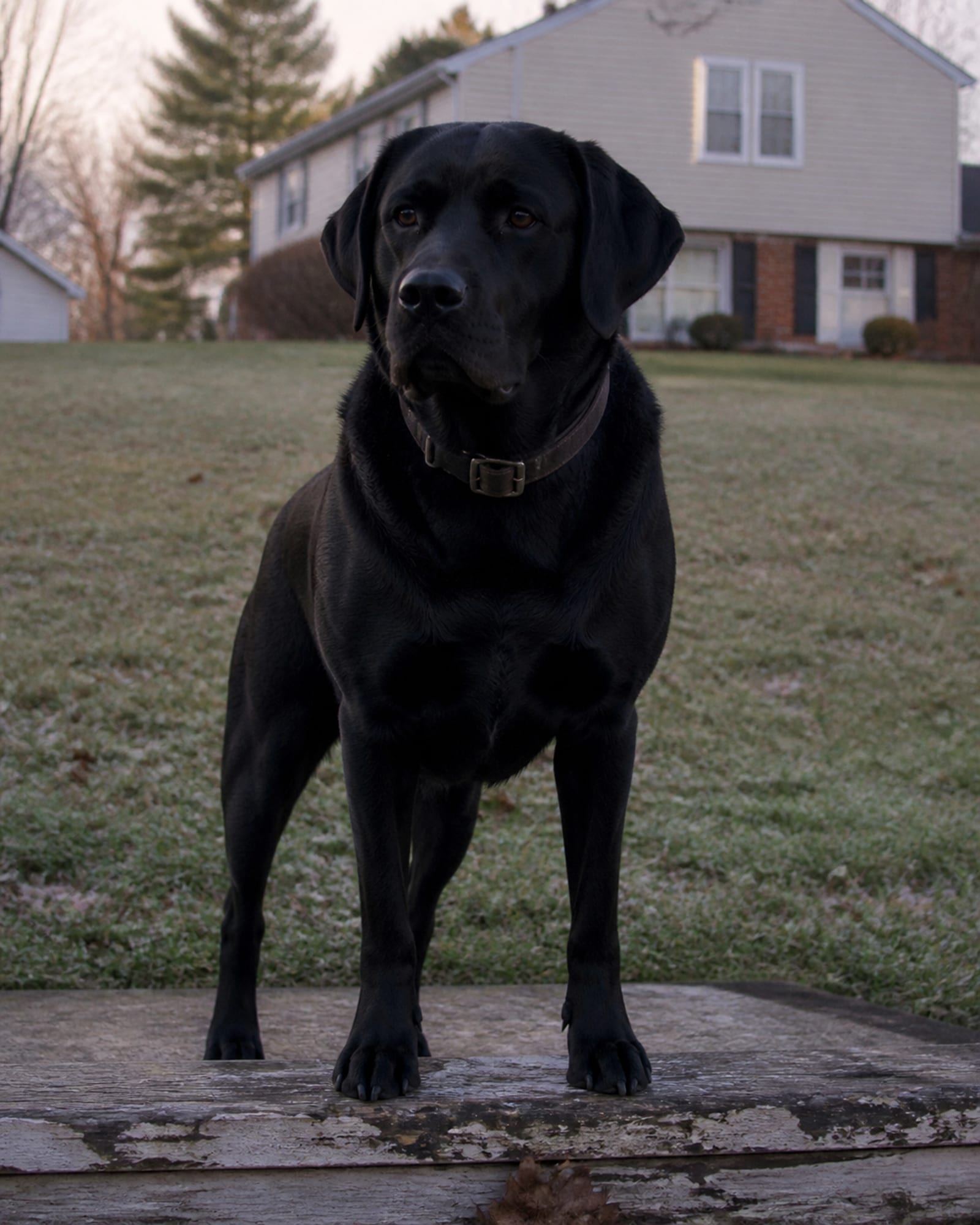
A dog standing on a low step so it fills the height of the frame, in Cockeysville, MD
Cockeysville is the most renter-heavy community in this part of the county. Only 35.8% of homes are owner-occupied, 35% of the housing sits in buildings of ten to nineteen units, and 59.4% of all units are one or two bedrooms. The median age is 34.9, the youngest in the band.
That adds up to a specific situation. A lot of first dogs, in small homes, held on leases, with neighbors close enough to hear everything. When a dog barks in a detached house the owner decides whether it matters. Here, the property manager and the person upstairs decide, and they usually decide before anyone tells you there was a problem. So the behaviors that get worked on first are not the impressive ones. They are the ones that keep you housed.
I have been training dogs since 2001, and from a building like these it is nearly always one of three problems, each with a different fix.
Noise while you are out. This is the one that arrives as a letter rather than a conversation, because the neighbor has been listening to it for weeks. What matters is whether the dog is bored or genuinely distressed, and the two look identical from outside the door. An hour of phone footage settles it and changes the whole plan, so film it before you do anything else.
Behavior in shared space. Hallways, stairwells, laundry rooms, the strip of grass everyone uses. A dog that lunges at another dog in a stairwell becomes a formal incident far faster than the same dog doing the same thing on a street. What you need is not perfect obedience, it is a dog that can hold a position beside you while something walks past at close range.
Damage. Door frames, blinds, carpet at the threshold. In a rental this is money as well as behavior, and it is usually the same root cause as the noise. Fixing the emotional problem fixes the damage; replacing the carpet does not fix anything.
What all three have in common is that they are invisible to you. You are not there for the barking, you do not see the stairwell from inside your unit, and the damage has already happened by the time you walk in. That is the real difficulty of training a dog in a rented building: the behavior that matters most is the behavior you never witness. So the first job is usually to find out what is actually happening rather than to start correcting something, and owners who skip that step tend to spend money on the wrong problem.
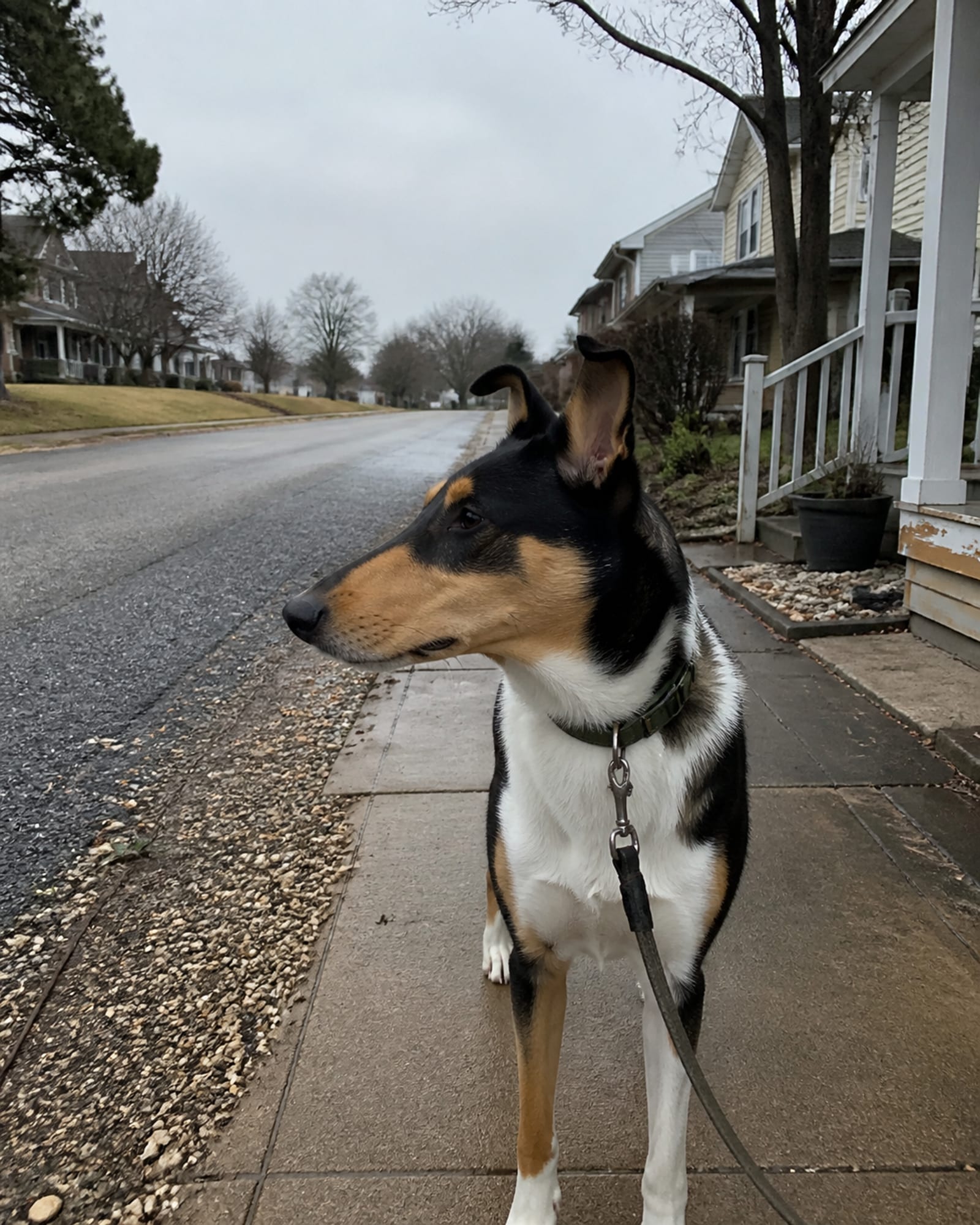
A dog standing on a sidewalk with the street receding behind it, in Cockeysville, MD
Weighted toward small homes, shared buildings and younger households.
01
The most common call from this community, and the one with a deadline attached when it arrives via a property manager. Bored and panicking need opposite treatment.
02
Close-range meetings with no room to create distance. My leash reactivity page has the method; here it runs at tighter distances than the method assumes.
03
A settle on a bed is worth more in a one bedroom than any trick. A dog that can switch off indoors is a dog that fits in 700 square feet.
04
Adolescence hits at around eight to eighteen months and it surprises people. Nothing has gone wrong, and it is the best possible time to get help.
05
More than 950 forested acres with streams, a quarry and slopes the county records at 25% to 65% in one zone. That is not where an untested recall should be tried.
06
Traffic, freight and rail noise along the old village corridor. Sound-sensitive dogs find this side of Cockeysville harder than the Hunt Valley end.
Renters tend to ask sharper questions about where a dog would actually stay, which is fair and worth answering plainly.
Baltimore County treats commercial kennels as holding facilities, requires the operator to confirm that the specific property sits in a zoning classification where the use is permitted, and its guidance says a home with more than three dogs needs a holding-facility or kennel license. Dog licensing and current rabies vaccination rules apply on top of that. Any trainer you speak to, including me, should be able to tell you where dogs are housed and under what permission.
Ask that question of everyone you call. It is a reasonable thing to want to know before you hand over a dog for two or three weeks, and a trainer who is vague about it has told you something. My board and train program houses dogs in my own home rather than a kennel run, and the full detail of the two and three week programs sits on the board and train page.
For your side of it, your lease is the other half of the same question. Some Cockeysville buildings cap the number of dogs, some restrict where they can be in common areas, and some require notice for anything that looks like a business visit. None of that stops training, and all of it is easier known in week one than week three.
Worth knowing too: renting does not mean you have to accept a worse result. The single biggest advantage a renter has is that nobody in a shared building lets a problem run for three years unnoticed, so these dogs tend to reach me while the habit is still young. The dogs I find hardest to help are the ones in detached houses on large lots, where a barking problem or a broken recall can go unremarked for most of the dog's life because there is nobody close enough to mind.

A close vertical of a dog's profile, muzzle to chest, in Cockeysville, MD
If the problem happens while you are out, that footage answers in ten minutes what a conversation cannot answer at all. Phone propped on a shelf is fine.
At your address, rolling into the training fee. I want to see the actual unit, the actual hallway and where the dog is left.
Stop the daily rehearsal first: where the dog waits, what it can hear, how long it is alone. This buys you time with the neighbors while the real work starts.
A dog that can genuinely relax on a bed with you in the room is the foundation for everything else in a small home. Almost nothing works before this does.
Hallway, stairs, shared grass, at quiet hours first and busy ones later. Then handover, then my number for the life of the dog.
Reach me on (443) 429-0445, seven days a week between 6 AM and 7 PM. Bring the hour of footage if you have it.