01
Training that faded
The work above. Usually an unfinished behavior rather than a failed one, and usually recoverable faster than starting over.


A fair number of the dogs I am called about have already had training. Somebody paid for a course, it went well for a fortnight, and then it faded. If that is your dog, the useful question is not what is wrong with him. It is which part did not stick, and why.
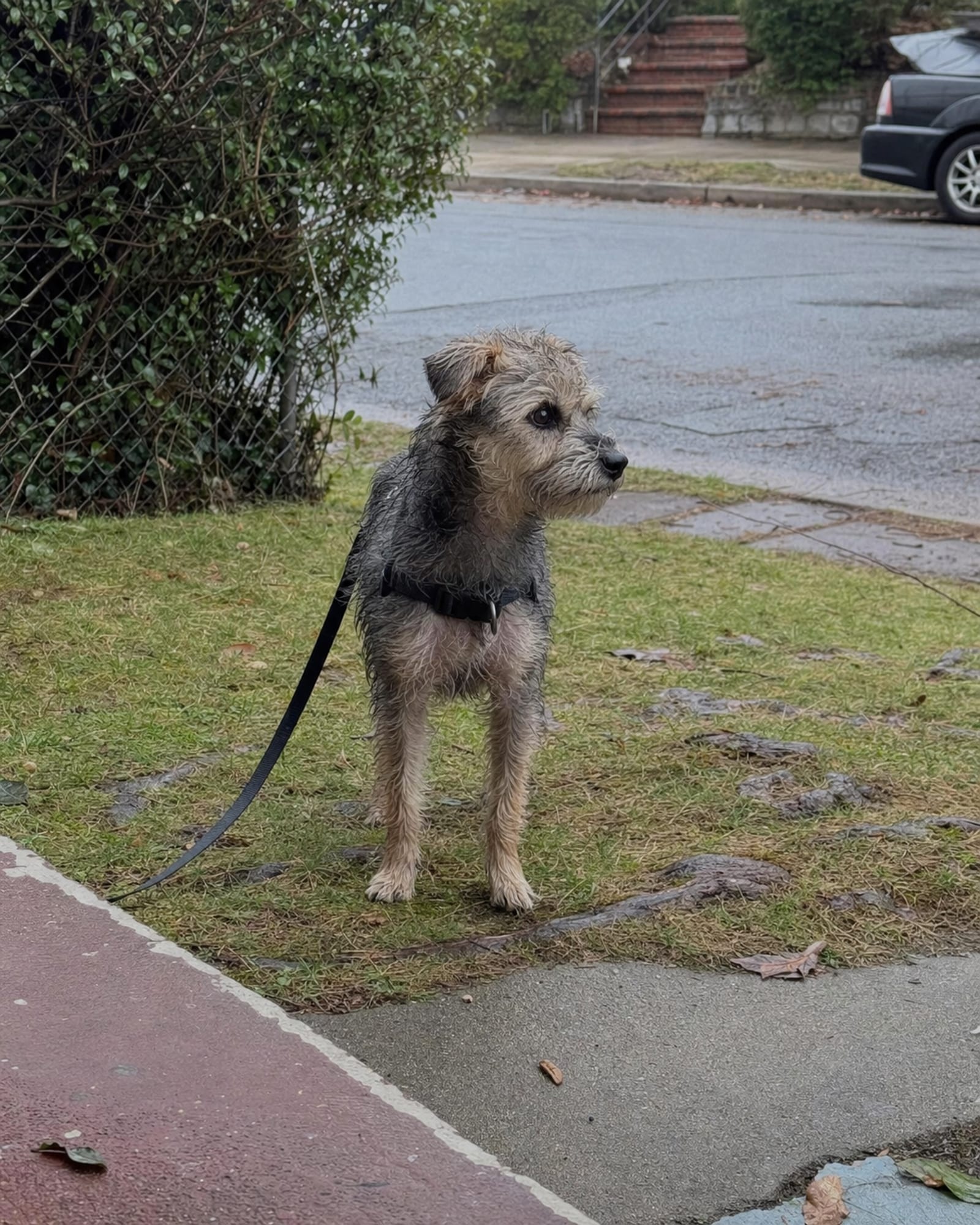
A dog in a stand stay with its lead slack on the ground beside it
People say it apologetically, as though it counts against them.
It does not. It is useful information and it narrows the problem considerably, because a household that has been through training once has already told me a great deal: what they were taught, what they could actually keep up, and where it fell over. That is a much better starting point than a household that has never tried anything.
Elkton is a county seat of 15,807 people at the top of the state, half owner occupied and half rented, with 6,035 households and 2.49 people in each. It is the sort of town where people have generally tried the sensible thing first. So a good share of my calls here are second attempts, and I would rather talk about that openly than pretend every dog arrives untouched.
It is almost never that the method was wrong. It is usually one of these, and they need different answers.
The behavior was never actually finished. A dog who sits in a quiet room for a treat has a party trick, not a behavior, and it disappears the first time something interesting happens. This is by far the most common one. Training that stops at the point where the dog can do it, rather than continuing until he can do it under pressure, has done about a third of the job and it feels like it has done all of it.
It was taught in one place. A recall built in a hall is a hall recall until it has been taken somewhere else on purpose. Owners conclude the dog has forgotten. He has not; he was never told the word applied out here.
The household could not keep it up. This is the honest one and there is no blame in it. A plan that needs three sessions a day from a working household with children is a plan that will be abandoned by week two, and then everyone feels they failed. A plan built around ten minutes twice a day survives. Fitting the plan to the actual house is most of what I do at an evaluation.
Or the problem underneath was never the one being trained. A dog worked on for pulling who is actually anxious about other dogs will pull forever, because the pulling is a symptom. That one needs the real problem named before anything else is attempted, and it is the reason I want to see the dog in your house rather than take a description over the phone.
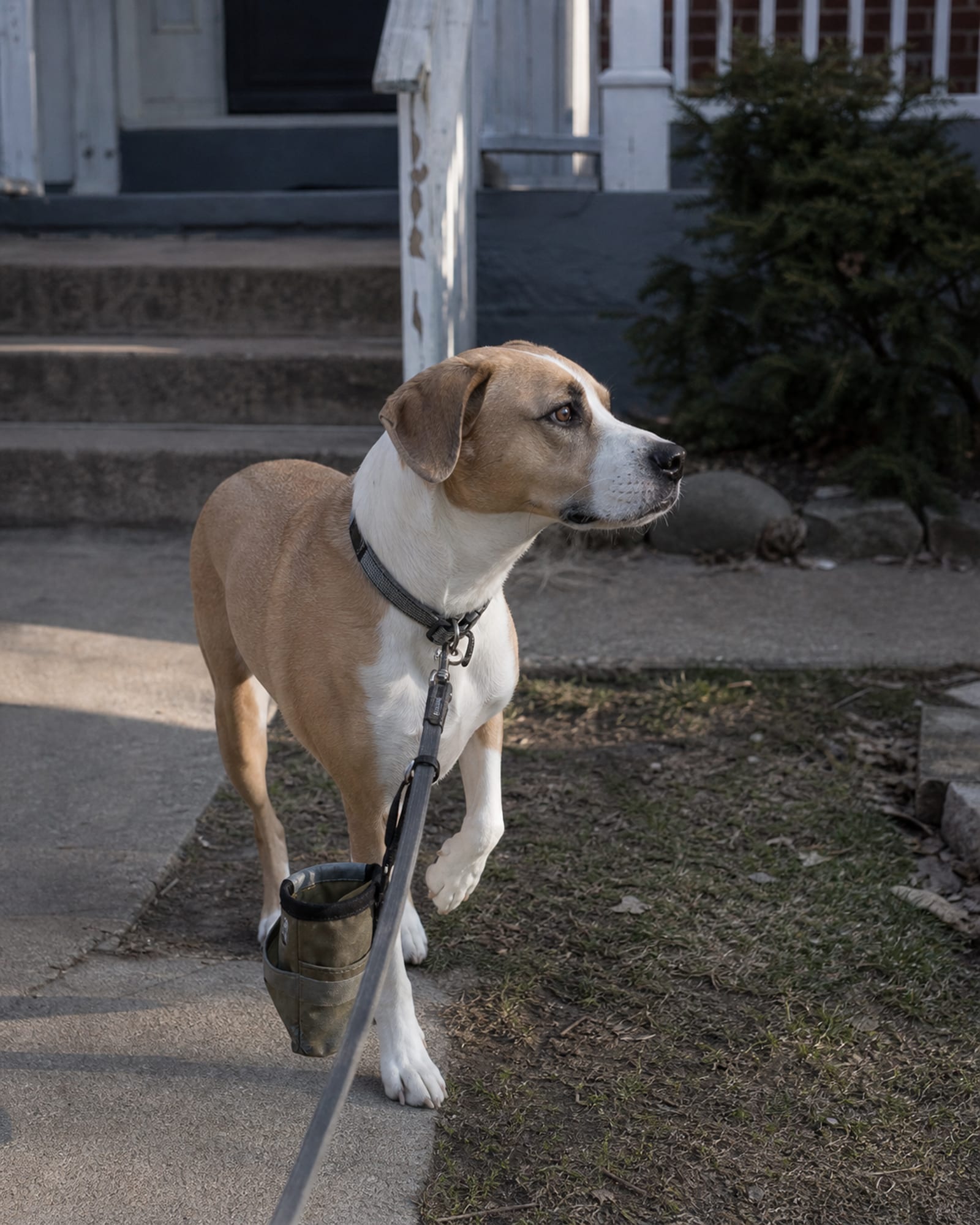
A dog pausing mid stride on a pavement, one paw lifted
Not more of the same, louder. The starting point moves.
First, I find out what the dog already knows, properly, under a bit of pressure rather than in the kitchen. Very often there is more in there than the household believes, and it needs proofing rather than teaching. That is quicker and cheaper than starting again, and it is worth establishing before anybody pays for anything.
Second, I ask what the previous cues were and whether we keep them. Usually we do. Changing the words because they are somebody else's is self-indulgent and it costs the dog a fortnight. If the old cue is poisoned, meaning the dog has learned that hearing it leads to being nagged, then it gets replaced deliberately and I will say so.
Third, I fit the plan to what this household can genuinely sustain, and I would rather be told the truth than a polite version. Two short sessions a day that actually happen beat an ambitious plan that does not.
Fourth, I am specific about what will change and roughly when. A household that has been disappointed once deserves to know what the first fortnight should look like, so they can tell early whether this is working rather than finding out in month three.
The one thing I will not do is tell you the previous trainer was wrong, because I was not there and it is rarely true. Most training that fades was perfectly sound advice given to a household in a room, without anybody seeing the street it had to survive. That is the argument for doing this at your address rather than in a hall: your dog's actual problems happen on Main Street, at the Meadow Park gates, on the walk where the US 40 traffic starts, and in your own doorway. A plan written for those is a different plan from one written for a training room, even when the technique inside it is identical.
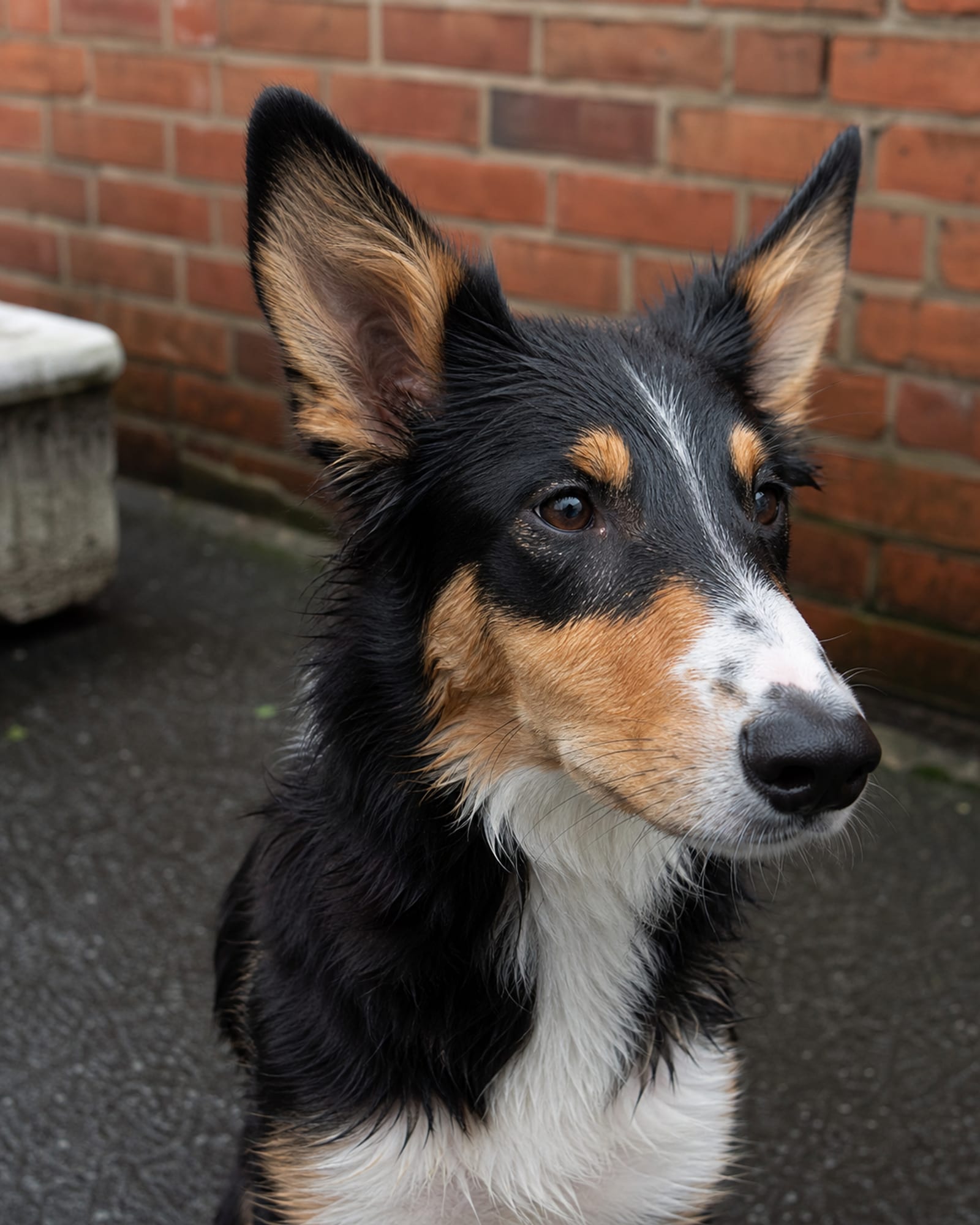
A young dog's head and oversized ears, close and vertical
A mixed county seat between two interstates, with old buildings downtown and new subdivisions at the edge.
01
The work above. Usually an unfinished behavior rather than a failed one, and usually recoverable faster than starting over.
02
I-95, US 40, MD 213 and MD 279 put tractor trailers and interchange traffic minutes from quiet streets. Sound work is its own exercise, not something to walk past.
03
The downtown stock includes Georgian, Federal, Greek Revival and Gothic Revival buildings, so some front doors open almost onto the walk with no room to manage a dog.
04
Southfields and the Summit at Walnut Hill add detached lots, attached townhouses, shared open space and stormwater ponds. A different set of thresholds entirely.
05
Big Elk Creek and Little Elk Creek divide parts of town and the county documents recurring flooding, so familiar routes close and footing changes.
06
Meadow Park stacks ball fields, fishing, a marina, a walking track and a dog park together, so a single visit can pile four distractions onto an unready dog.
Be generous. Sit, down, a settle, a recall, walking beside you. This is the inventory of what was successfully installed and it is usually longer than people expect.
Same cue, front yard, nothing else going on. Whatever survives is a real behavior. Whatever does not is an unfinished one, and that distinction decides the whole plan.
And honestly, how many days you managed it. Not to feel bad about it. To make sure the next plan is one this house can actually run.
If it is still the problem, it was probably never the thing being trained. That is the one to lead with rather than the obedience list.
Collar fit, leash length, whether the harness is the type that makes pulling easier. Kit that fights the training is a surprisingly common reason good work fades.
Not on the phone. Most of what I need to see is the room, the door and the route, and none of that survives a description.
Phone (443) 429-0445, seven days a week from 6 AM to 7 PM. Tell me what you were taught, what you managed to keep up, and which bit stopped working.