01
The first dog's training gets tested
Whatever was solid stays solid. Whatever was ninety percent falls apart, because there is now something more interesting than you in the room.

91.9% of Severna Park homes are detached, 46.5% have four bedrooms and another 16.9% have five or more. There is room here for a second dog, which is why so many households get one, and why so many of my calls from this community arrive about three months afterward.
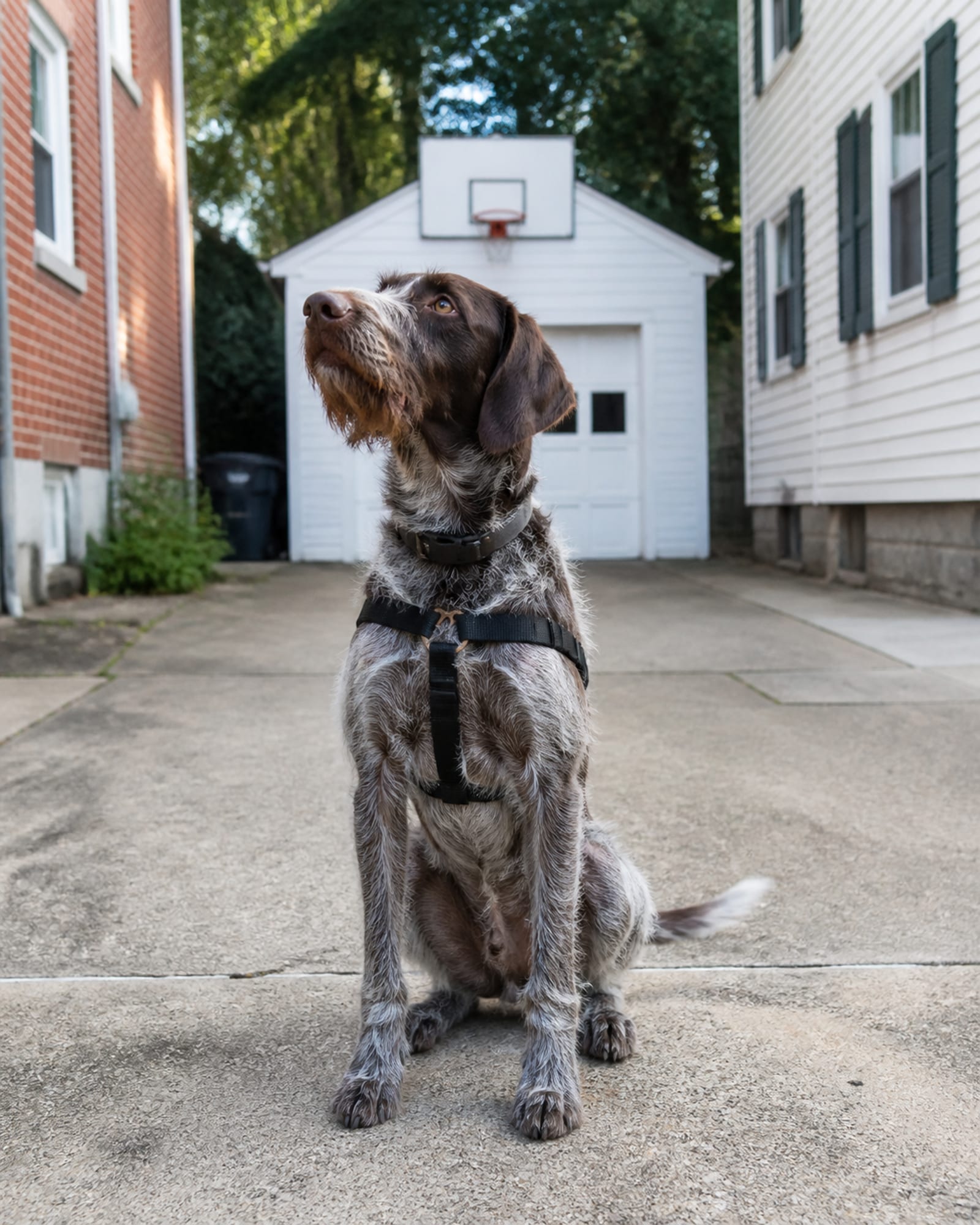
A dog sitting upright and attentive, shoulders square to camera, in Severna Park, MD
You are not asking me whether to get a second dog. You have seen him, the deposit is paid, and he arrives in five weeks. Fine. Then this is about the five weeks.
Severna Park is built for it. 40,228 residents in 13,649 households, nine homes in ten owner occupied, nearly all detached, with more than sixty percent having four bedrooms or more. Old Severna Park, Round Bay, Linstead, Chartwell, Shipley's Choice, Berrywood, plenty of ground and 27.3% of residents under 18, so a lot of family houses with space in them.
The part that catches people out is the arithmetic. Two dogs are not twice one dog. They are one dog, plus a second dog, plus the relationship between them, and that third thing is where all the difficulty lives. It is also entirely manageable if it is planned for, and almost never manageable if it is not.
Six things, and only two of them are what people expect.
01
Whatever was solid stays solid. Whatever was ninety percent falls apart, because there is now something more interesting than you in the room.
02
The new dog copies the old one, including the barking at the window and the door charging. Nobody plans for the bad habits to be the transferable ones.
03
Two dogs make decisions as a pair, and the pair follows whichever one is less inclined to come back. This shows up first and it shows up outdoors.
04
Food, beds, doorways, the person on the sofa. Most of it is ordinary negotiation. Some of it is not, and my resource guarding page covers where the line sits.
05
Each dog needs training on his own, and then they need training together, which is a third job.
06
Two dogs together at a fence line, at a gate or on an unfenced waterfront lot behave differently from either of them alone, and usually worse.
Recall, settle, door manners. Anything unfinished now becomes unfinishable for a while, and it becomes the curriculum the puppy learns from.
Sounds odd, and it is the step that prevents the most trouble. A dog who can only cope when the other one is present is a problem you have created rather than solved.
Beds, feeding spots, crates. Feeding in the same room because it seems friendly is where a great many guarding problems begin.
A walk together at a distance, then closer, then home. Not in the hallway, not with the resident dog watching a stranger come through his own front door.
Ten minutes each, alone, out of sight of the other. This is the habit households abandon first and it is the one that makes everything else possible.
Nobody wants to hear it. Two dogs on one walk means neither is learning much, and on the B&A Trail with bicycles coming past it means neither is really under control.
I get four, and they are not equally sound.
Company for the first dog. This one is the least reliable, and it is the most common. A dog who is distressed when his people leave is distressed about his people, and another dog rarely substitutes. Sometimes it helps a bored dog, which is a different condition, and sometimes you end up with two dogs who are both unsettled. If alone time is the actual problem, that is worth working on directly before anything else. My anxiety and nervousness page sets out what that involves.
The children want one. Perfectly reasonable, and worth being clear eyed about who will do the work, which is not going to be the children. In a house with a quarter of the household under 18 the dog gets four or five handlers, and agreement between them matters more than anything I can teach the dog.
The first one is getting older and we do not want a gap. This is a sound reason and the timing needs thought. A young dog can be hard on an older one who no longer wants to be jumped on, and giving the older dog somewhere the puppy cannot follow is not optional.
We just wanted another. Honestly the best reason of the four, because it comes with realistic expectations. People who get a second dog because they want a second dog tend to plan for the work. People who get one to fix something tend to be disappointed twice.
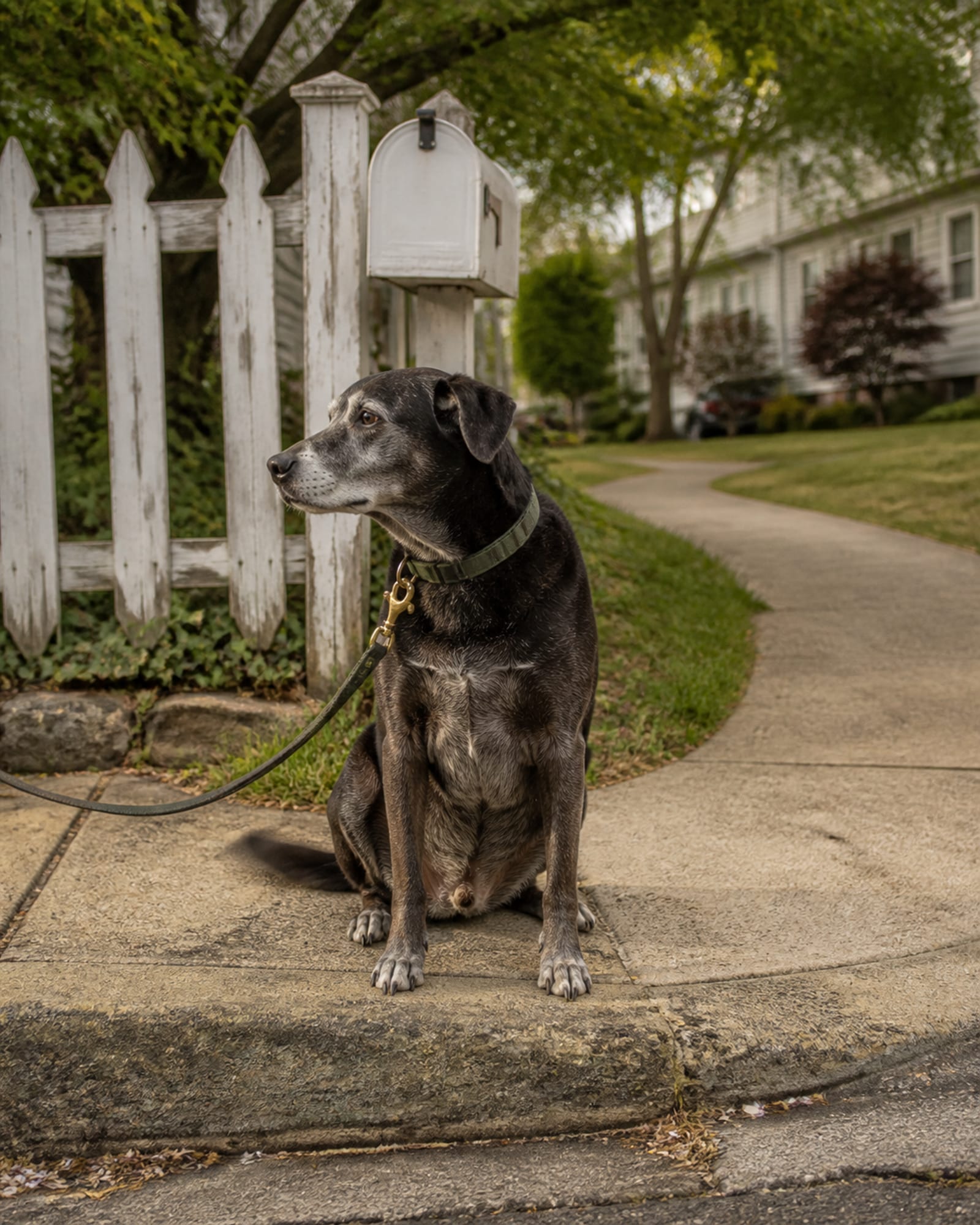
A dog sitting at a curb edge waiting to cross, in Severna Park, MD
The local geography interacts with all of this more than it would in a town of small fenced yards.
A great many properties here run toward water, with community piers, association beaches and unfenced ground along Round Bay, Cypress Creek and Cattail Creek. One dog with a partly built recall on that ground is a risk you can manage by keeping him on a long line. Two dogs egging each other on is a different proposition, because the pair moves faster than either would alone and the calmer one goes along with it.
The B&A Trail is the other one. It is a genuinely good place to work, with bicycles, runners, children and other dogs arriving at a predictable rate, and it is a poor place to be holding two leashes for the first time. Get each dog reliable there separately, then bring them together, and not the other way around.
The housing helps in one respect. With that much detached space, giving the two dogs separate areas is actually possible here in a way it is not in a townhouse, and separation is the single most useful management tool in a two dog house. Separate crates, separate feeding, separate rest, and time together that is supervised rather than constant.
One more Severna Park detail. The stock runs from older waterfront cottages and mid century ranches through Colonials and split levels to larger renovated properties, so stairs, steep driveways and garages vary a lot. Two dogs coming down a set of stairs or out of a garage together is a moment worth training on purpose, because it is where the pair behavior first becomes physical.
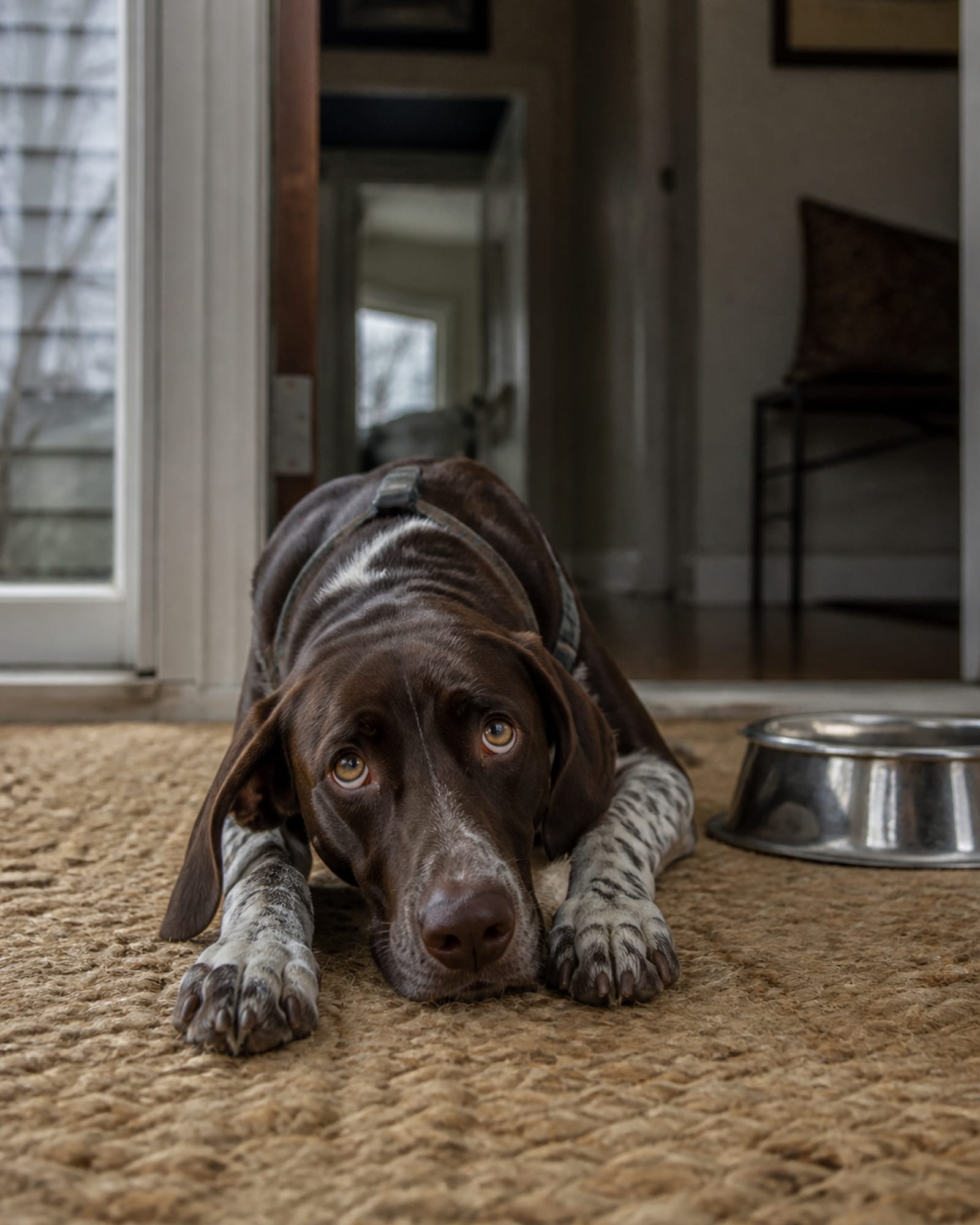
A dog looking up from a down, chin low, eyes raised, in Severna Park, MD
Phone (443) 429-0445, seven days a week from 6 AM to 7 PM. Tell me what the first dog can already do reliably and what he cannot, and that decides the plan.