01
An adult dog with no known start
The most common call I take from here. Housetraining that is nearly there, a recall that has never existed, and a set of reactions nobody can account for.


Plenty of Aberdeen dogs arrived already grown, from a shelter, from a family that got orders, or from a relative who ran out of options. Training a dog whose first two years you were not present for is a different job, and most advice quietly assumes you were there.
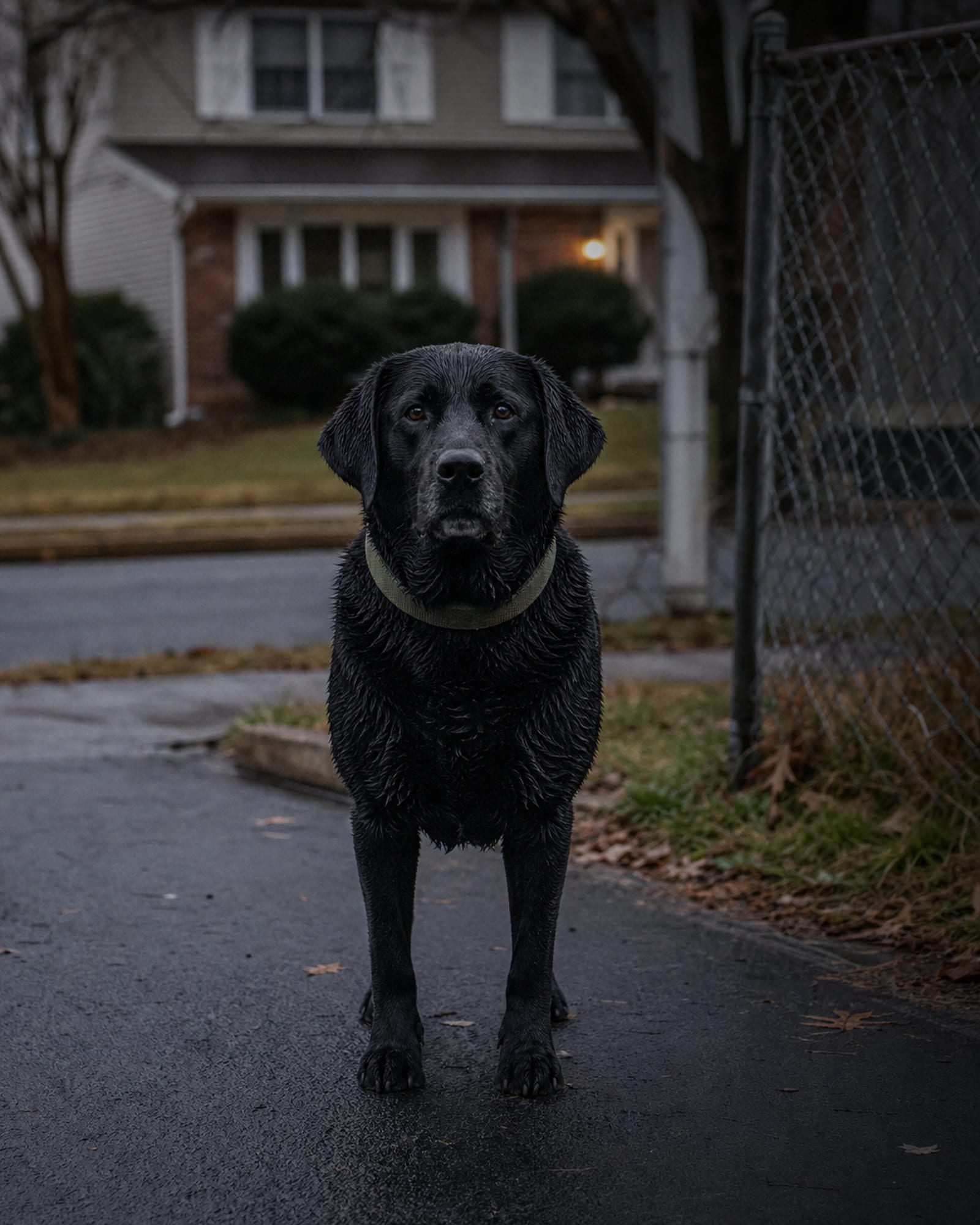
A dog standing square and settled, seen full body from the front, head up
"Do you think something happened to him?"
I hear that in Aberdeen more than in most places I work, and the honest answer is that I do not know and neither does anyone else. A dog cannot tell you, a shelter record usually cannot either, and the family who had him before you may have been perfectly kind and simply had to leave in six weeks.
Aberdeen is built around institutions that move people. Aberdeen Proving Ground sets the rhythm for a large part of the town, the MARC and Amtrak station puts Baltimore and points north within a commute, and the city grew from 16,254 residents in the 2020 count to an estimated 18,451 by 2024, a 13.3% rise in four years. There are 1,591 veterans here. In a town where households arrive and leave on somebody else's schedule, more dogs than usual change hands as adults. If yours is one of them, you are working without a record, and that changes where I start.
Owners spend a lot of energy trying to reconstruct a dog's past. Almost none of that energy changes the plan.
Here is the uncomfortable part. Knowing what happened to a dog would satisfy you, and it would rarely change what I do next. If a dog will not walk through a doorway, the plan is the same whether he was frightened in one once or simply never learned that doorways are ordinary. If he guards a bed, the plan is the same whether he had to compete for one or has just decided this one is his. I treat what the dog does now, in front of me, because that is the only thing I can actually work on.
So I do not ask you to guess. I ask you what he does, when he does it, what happens immediately before, and what you do in response. Those four answers tell me more than a full history would. The behavior is the evidence, and it is available in your kitchen this evening.
The one place history genuinely matters is safety. If a dog has bitten, I need to know that, and I need to know the real version rather than the softened one, because it changes how the first session runs and who is in the room. Nobody is judging you for it. A bite in an adult dog's file is a fact I plan around, not a verdict on your household.
The second place it matters is expectation. A dog that spent its first year in a yard with almost no human contact will take longer to become comfortable indoors than a dog that spent it on somebody's sofa. Not forever, and not by an amount anyone can predict from the paperwork, but longer. Knowing that keeps you from concluding at week three that it is not working.
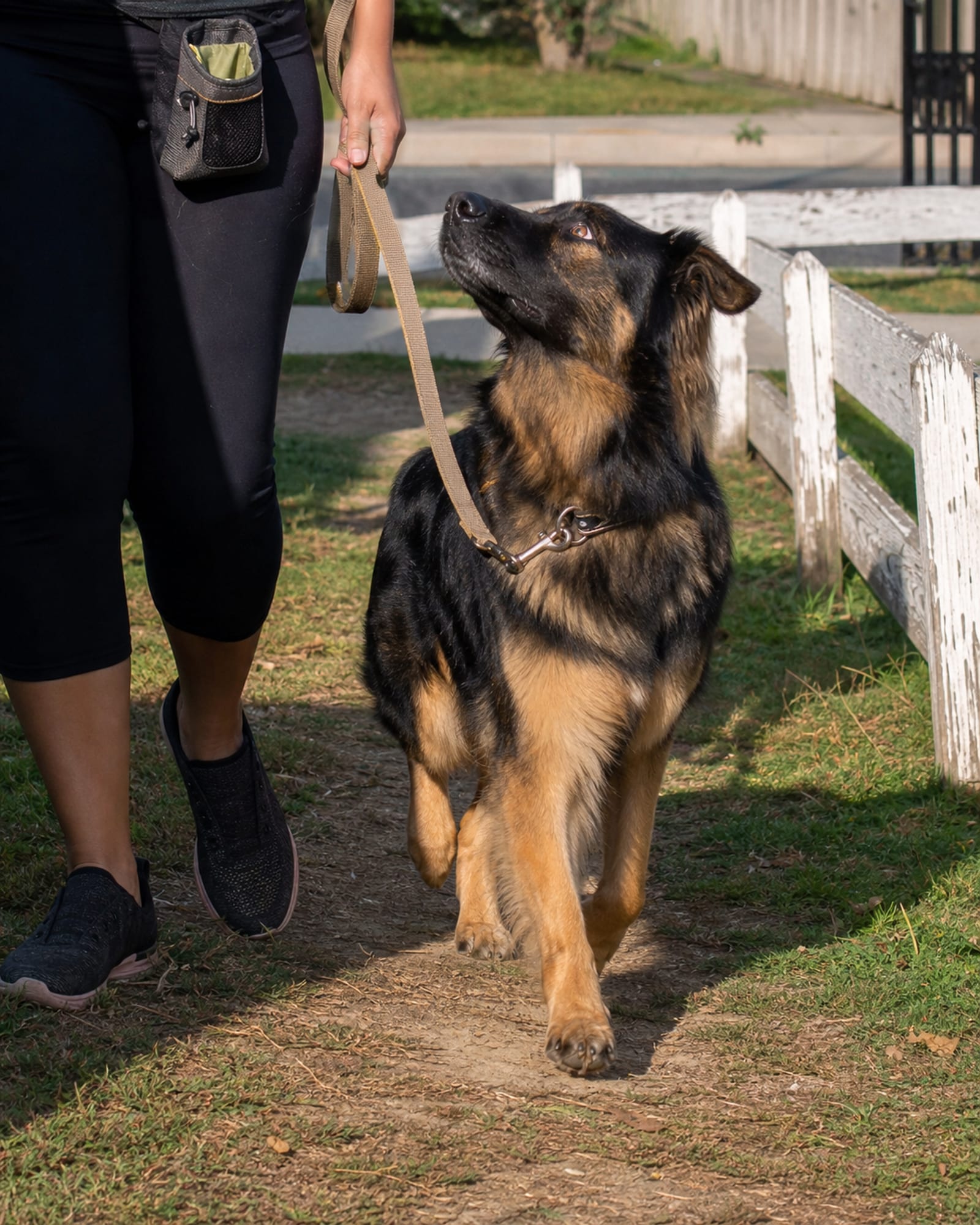
A dog walking at heel beside a handler's lower legs, both cropped at the knee
Weighted toward adult dogs, and toward homes where the routine has to survive a change.
01
The most common call I take from here. Housetraining that is nearly there, a recall that has never existed, and a set of reactions nobody can account for.
02
Often a well raised dog with one or two specific gaps, because the previous family did the work and then ran out of time. These move fast once the gaps are found.
03
CSX, Norfolk Southern, MARC and Amtrak all run through here, and I-95 and US 40 cut the town into sections. Most dogs file it as background inside a week. Some do not.
04
Ripken tournaments bring buses, children and packed parking to Leidos Field, and Festival Park fills for Armed Forces Day and Oktoberfest. Quiet street, then a stadium, in ten minutes.
05
64.3% ownership leaves a real rental market. A dog may go from a detached house in Locksley Manor to an apartment, or the other way, in the same year.
06
Carsins Run, Swan Creek and Cranberry Run bring deer, waterfowl and heavy cover close to the newer housing. Good ground for work, poor ground for an untested recall.
An adult dog is not a large puppy and treating him as one wastes the advantage he actually has.
A grown dog has a nervous system that is finished, an attention span a puppy cannot touch, and enough physical control to hold a position for a useful length of time. He learns individual skills faster than a fourteen week old puppy does. What he does not have is the puppy's blank slate, and that is the trade.
The practical result is that I spend the first sessions on structure rather than on obedience. Where he sleeps, what happens at the door, whether he is free in the house or on a lead indoors to begin with, who feeds him and when. Structure is what tells an adult dog which household he is now in, and it settles far more behavior than a sit does.
Then I build one reliable thing and use it as the anchor. Usually that is a position he can hold on cue, because it is the behavior you can reach for in every situation you did not plan. A dog with a genuinely solid place command has an answer to the doorbell, to a visitor, to a meal, and to a moment where you need both hands.
Recall comes last with these dogs, and I say that plainly because people are usually most anxious about it. A dog that has not yet decided this is home has no reason to come back to you. Once the relationship is real the recall becomes trainable, and until then an off leash test is a way to lose a dog. I work recall on a long line here for longer than most trainers would, and the e-collar work I do is about giving that recall a reliable signal at distance rather than about correction.
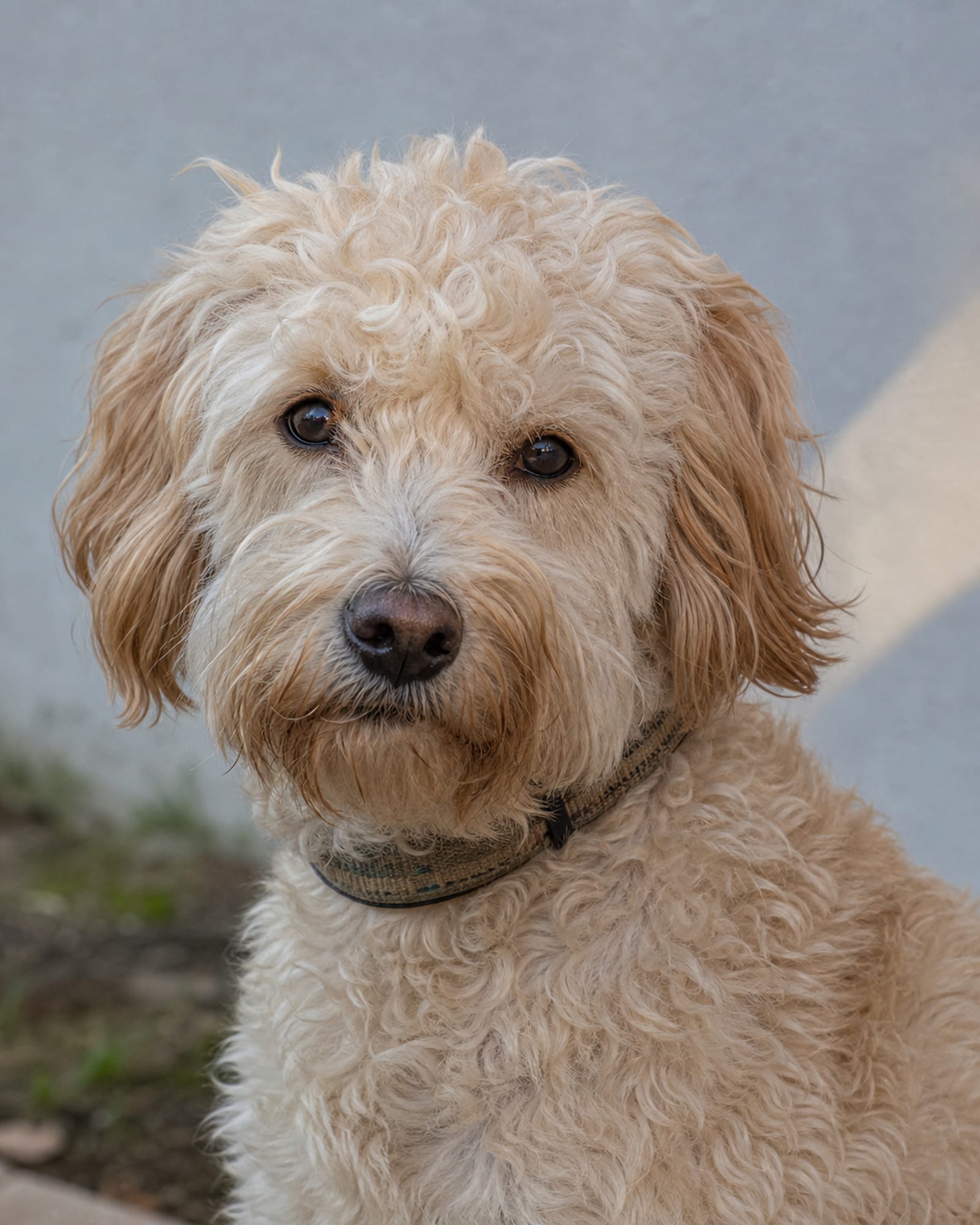
A tight portrait of a dog's head and shoulders, eyes soft and attentive
Two rooms, one route, one feeding spot, one crate or bed. A new dog given the run of a whole house makes more decisions in a day than he can get right, and every wrong one is a habit forming.
Time, place, what you did, what he did. Three days of that is worth a month of theorizing about his past, and it usually shows a pattern the household had not noticed.
Harford County licensing and current rabies vaccination, and a full check by a veterinarian who knows nothing about him either. Pain and thyroid problems both look like behavior problems, and an adult dog with no records deserves that ruled out first.
Trains, I-95, the MD 22 traffic that surges around the APG gates. Start at a distance where he notices and still eats, and close the gap over days rather than in one walk.
A dog that can settle on a mat while you cook has already solved half of what you called me about, and it works in a rental as well as in a house.
Victory Street Dog Park exists and it is not a training tool. A dog whose social history is unknown does not belong in a fenced space with strangers' dogs in the first months.
Phone (443) 429-0445, seven days a week from 6 AM to 7 PM. Tell me what he does and when, not what you think happened to him, and I will tell you what the first month should look like.