01
Finding the real distance
The range where your dog notices the other dog but can still eat, look at you, and think. Almost everyone is working far too close. That number is the foundation for everything else, and it moves as the dog improves.


The dog that barks, lunges and screams at the end of the leash, and is often perfectly fine with the same dog off leash. Reactivity is usually an emotion with nowhere to go, not aggression, and the walk is the thing we get back.
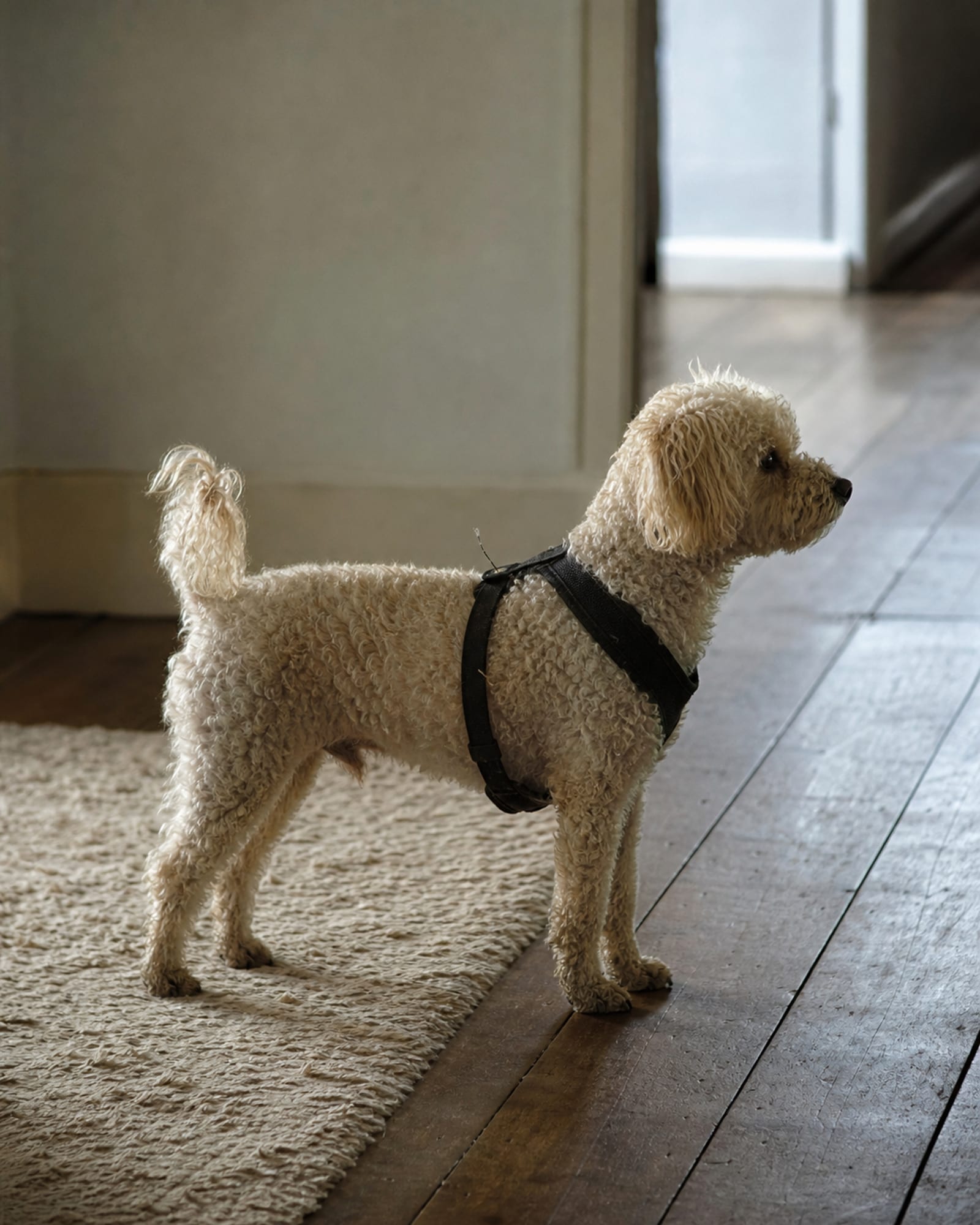
A dog standing square and settled in a plain interior, full body
Leash reactivity is an over-the-top response to something your dog sees on a walk: another dog, a person, a cyclist, a car. Barking, lunging, spinning, screaming, sometimes redirecting onto the leash or onto you. It is one of the most common things I am called about and one of the most misunderstood.
The detail that gives it away is that most of these dogs are different off the leash. The same dog that loses its mind at forty feet will often greet politely in a yard. That tells you the leash itself is part of the problem, and it is: it removes the dog's ability to move away, to arc around, to do any of the things dogs normally do to manage an approach. Take away every option a dog has and it will use the loud one.
So this is usually not aggression. It is most often frustration, a dog that badly wants to get to the other dog and cannot, or fear, a dog that wants distance and cannot get it. Both look identical from where you are standing, holding the leash and apologizing. They need different plans, which is what the evaluation is for.
Leash reactivity is a specialty rather than a stand-alone service. It is delivered through in-home private lessons, Kick Start, or board and train.
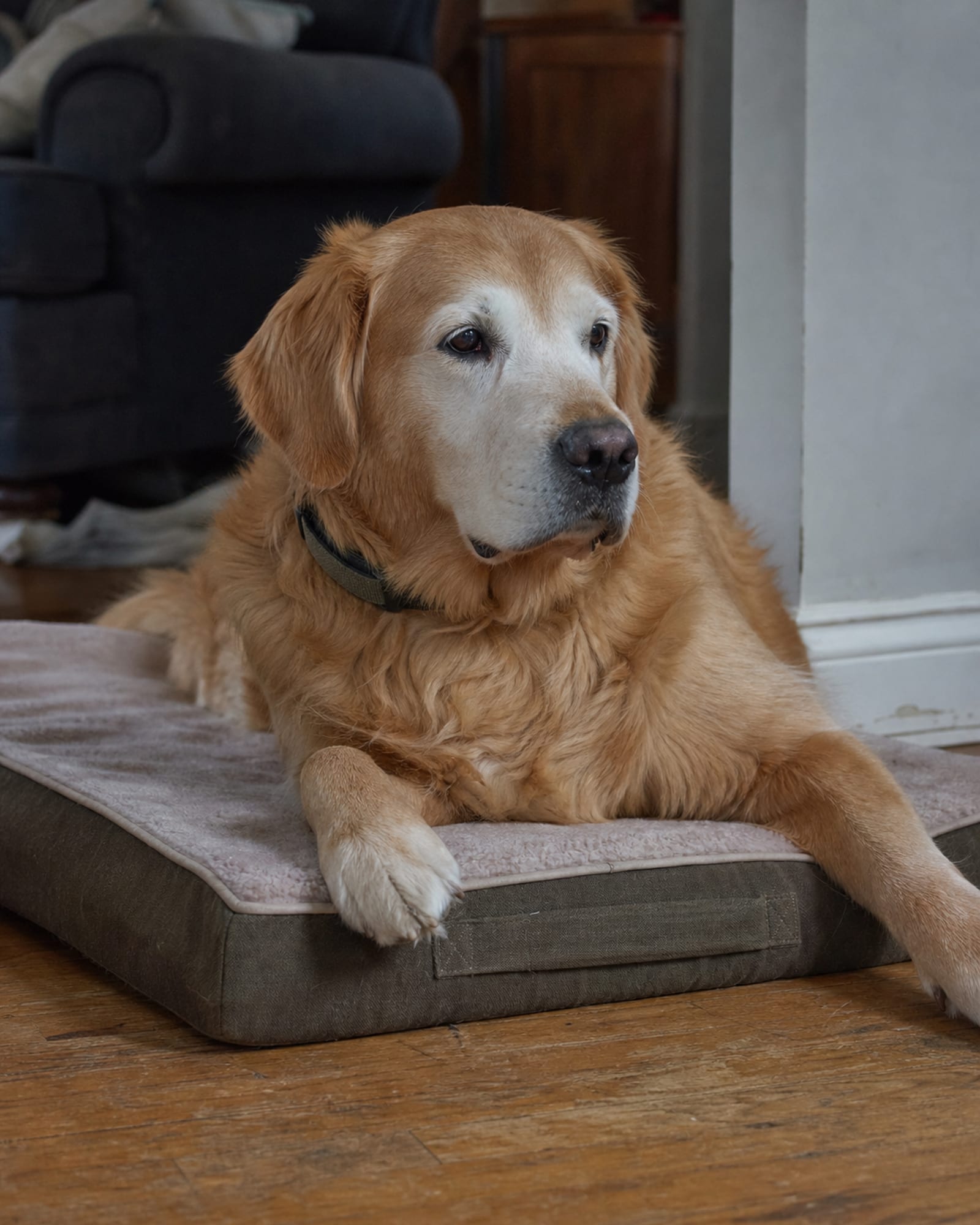
A dog lying calm on a bed in a family living room
Three things happen on a leash that do not happen anywhere else, and understanding them changes how you walk tomorrow.
First, your dog cannot leave. A dog that meets another dog loose will usually curve, sniff, and disengage. On a six-foot leash walking straight down a sidewalk, two dogs are forced into a head-on approach at close range with no exit, which is rude in dog terms before anyone has done anything wrong.
Second, you are attached. Dogs read tension through the leash with startling accuracy, and by the time your dog has reacted twice you are also scanning for dogs, and your grip tightens the moment you spot one. Your dog notices that before it notices the other dog. Plenty of the reactions I watch are triggered by the handler, not the trigger, and that is not a criticism, it is an automatic response to being dragged down the street.
Third, it works. Every time your dog barks and the other dog goes past and away, the barking got the result. Nothing about that requires the dog to be planning anything; it just gets more reliable each time.
Which is why the first thing we change is not your dog. It is the geometry of the walk.
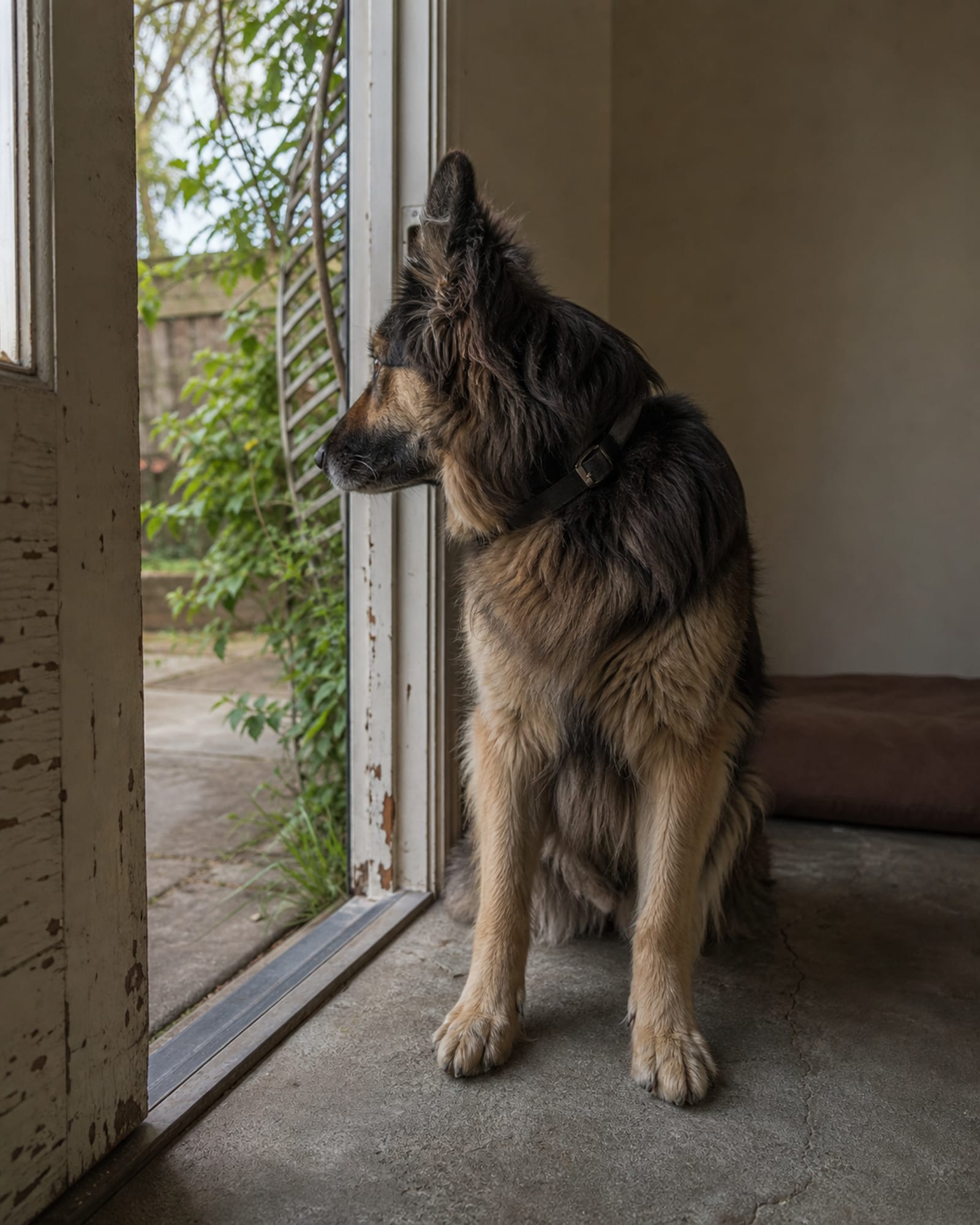
A dog sitting at a threshold waiting to be released
The plan is built at the evaluation, on your actual route. These are the pieces it comes from.
01
The range where your dog notices the other dog but can still eat, look at you, and think. Almost everyone is working far too close. That number is the foundation for everything else, and it moves as the dog improves.
02
Which streets, what time, which side. This is the least glamorous intervention I offer and often the most immediately effective, because a two weeks of walks where nothing goes wrong lets a dog come down from a state most owners do not realize it is living in.
03
A dog needs a response that works better than barking: turning back to you, moving away with you, or holding position while something passes. Suppressing the reaction without giving a replacement leaves the dog with the same feeling and no outlet.
04
Leash handling, where your hands are, what happens to your body when you see a dog coming. A tight leash and a held breath tell your dog something is about to happen. Much of the first session is this, and it feels strange to be coached on how to hold a leash until you see it work.
05
The right harness, collar or head halter for your dog and your strength, fitted properly. Equipment does not train anything, but the wrong setup can make a dog harder to hold and a walk more dangerous than it needs to be.
06
Over time, another dog appearing comes to mean something good rather than something to see off. That is the actual behavior change underneath all the management, and it is why the distance can close later.
Managed walks work until the day a dog comes round a corner at ten feet, or somebody lets theirs off in an on-leash park, and there is nowhere to go. It will happen, so it is worth having a plan rather than improvising while your dog is already up.
The move is to leave, early and without ceremony. Turn and walk the other way the moment you see the dog, before yours has locked on. Owners hesitate because they feel rude, or because they want to see whether it will be fine this time. It is not rude, and finding out costs you a rehearsal you did not need.
If you are already too close, get your body between your dog and the other one, keep moving rather than stopping, and do not haul back on the leash. Pulling straight back adds tension to a dog that is already tight and often makes the reaction bigger. Moving away is the release.
And if it goes badly, it goes badly. One bad encounter does not undo weeks of work, and the dogs I see set back are the ones whose owners then stopped walking them at all. Give it a quiet day or two and carry on.
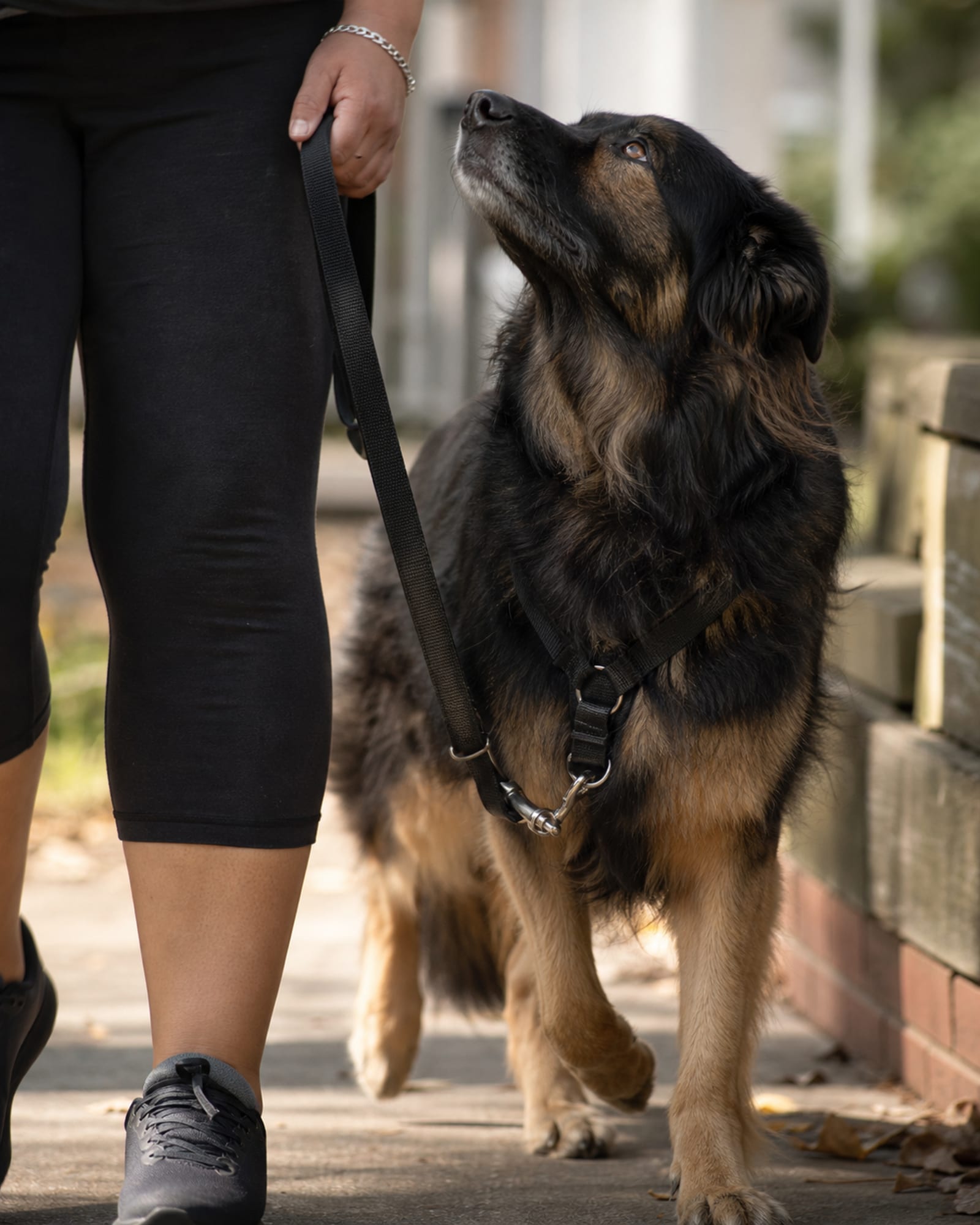
A dog walking at heel beside a handler's lower legs, cropped at the knee
People use these words interchangeably and they are not the same thing, though they do overlap and one can lead to the other.
A reactive dog is having an outsized emotional response. It is loud, it looks alarming, and it usually resolves the instant distance is restored. Most reactive dogs do not want contact at all; the display is the point, because the display works.
Aggression involves intent to do damage, and it behaves differently: quieter, often, and it does not stop when the trigger backs off. The dogs I worry about most on a walk are not the ones making the noise.
The reason it matters is that the plans differ and so does the honest prognosis. Leash reactivity, worked properly, often improves a great deal, and plenty of these dogs end up genuinely fine on a walk. Where I find aggression underneath, we are into different territory and I will say so at the evaluation rather than sell you a package built for the wrong problem.
The other thing worth saying: a reactive dog can become aggressive if it is repeatedly forced into situations it cannot cope with, or if its warnings get punished out. That is the main reason not to wait this one out, and not to let anyone talk you into walking straight past the thing your dog cannot handle to prove a point.
If you are crossing the street to avoid other dogs, or walking at six in the morning to avoid everyone, call me at (443) 429-0445. I answer 6 AM to 7 PM, seven days a week. Tell me what your dog reacts to and how close it has to be, and I will tell you honestly what I would do about it and what it would cost.