01
Truck noise and air brakes
The Maryland Food Center and the warehouse corridors put heavy vehicles into the daily soundtrack. Most dogs settle to it. The ones that do not need graded work rather than repetition.

Jessup sits across two counties. Anne Arundel on one side of the line, Howard on the other, one postmark for both. Which set of animal rules applies to you is decided by your address, not by your mail, and a surprising number of households here have never checked.
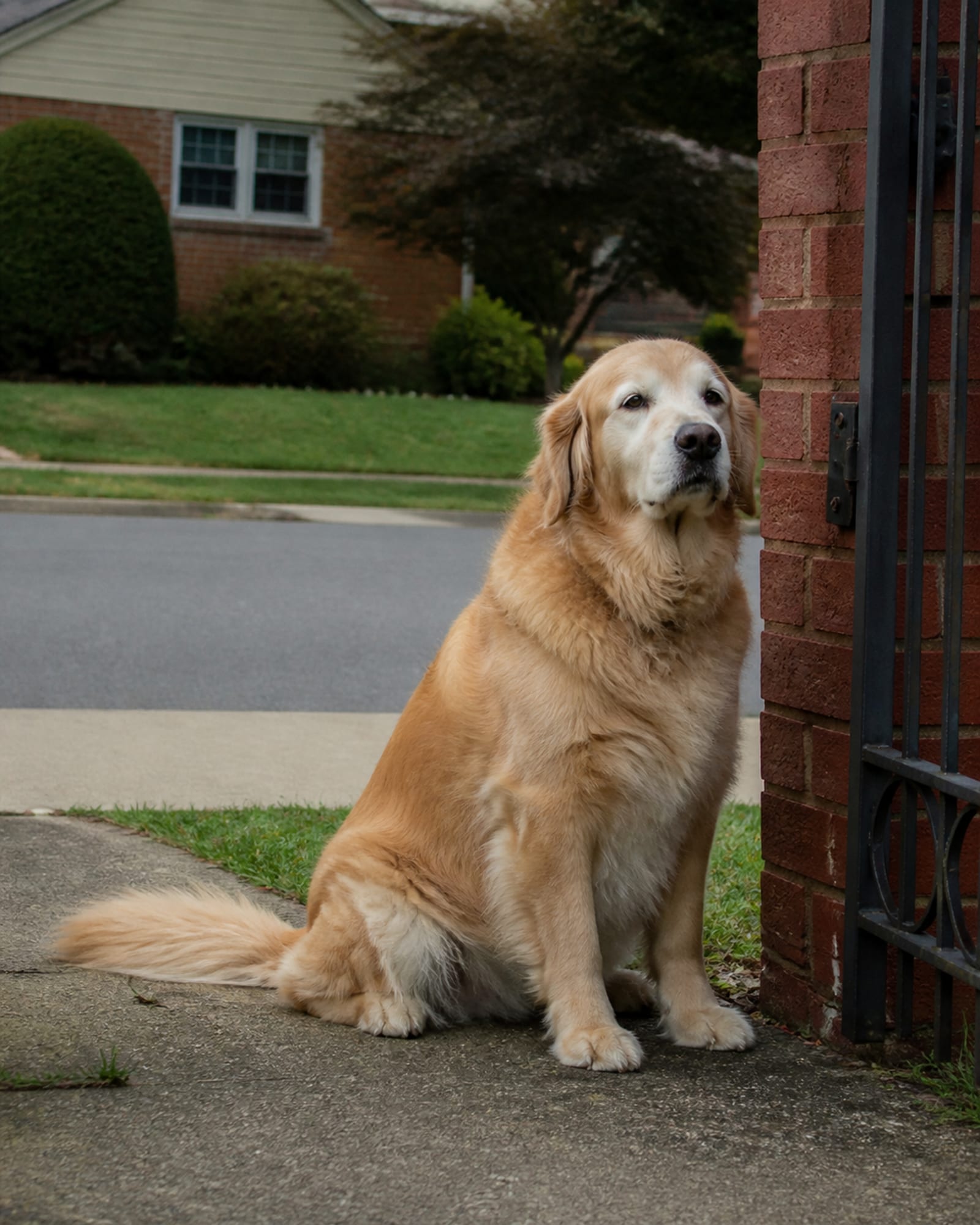
A dog sitting beside a gatepost, upright and calm, in Jessup, MD
Most places I work sit in one county and that is the end of it. Jessup does not.
The boundary between Anne Arundel and Howard runs through the area, so two houses a few streets apart can answer to different animal control offices, different licensing arrangements and different zoning rules. Some addresses that carry a Jessup postmark sit closer to Hanover or Savage than to anything most people would call Jessup at all. The residential pockets are scattered between corridors rather than gathered around a center: the Mission Road and Guilford Road sections, the Jessup Road and Race Road area, the edge along US 1 and Waterloo Road.
None of that changes what your dog needs. It changes who you call, whose rules bind you, and which office answers the question when a neighbor complains. That is worth knowing before you need it rather than during.
Four things, and all of them are ordinary until the day they are not.
Licensing and rabies records. Both counties license dogs and both require current rabies vaccination, and the process and the office differ. If you moved across the line inside Jessup, which people do without thinking of it as moving counties, that paperwork follows the address rather than the town name.
Control off your own property. Both counties expect a dog to be leashed and under real control once it leaves your land, and both take nuisance noise seriously. The definitions and the enforcement route are the county's. When somebody makes a complaint about barking, it goes to whichever county you are actually in.
Anything commercial. If you were considering boarding or training other people's dogs at your own property, that is a zoning and licensing question with a different answer on each side of the line. Anne Arundel licenses commercial kennels and can treat pet training as part of a pet care use; Howard regulates kennel related land uses separately. Neither answer can be assumed from a large lot, and both belong with the county rather than with a trainer.
For the sake of clarity on my own side of it: a client sending their dog to my residential program is not opening a kennel at their Jessup house. The dogs stay with me, in my home, as part of the household rather than in a kennel run. What continues to apply to you is the ordinary ownership side, licensing, leash and noise, once the dog comes back.
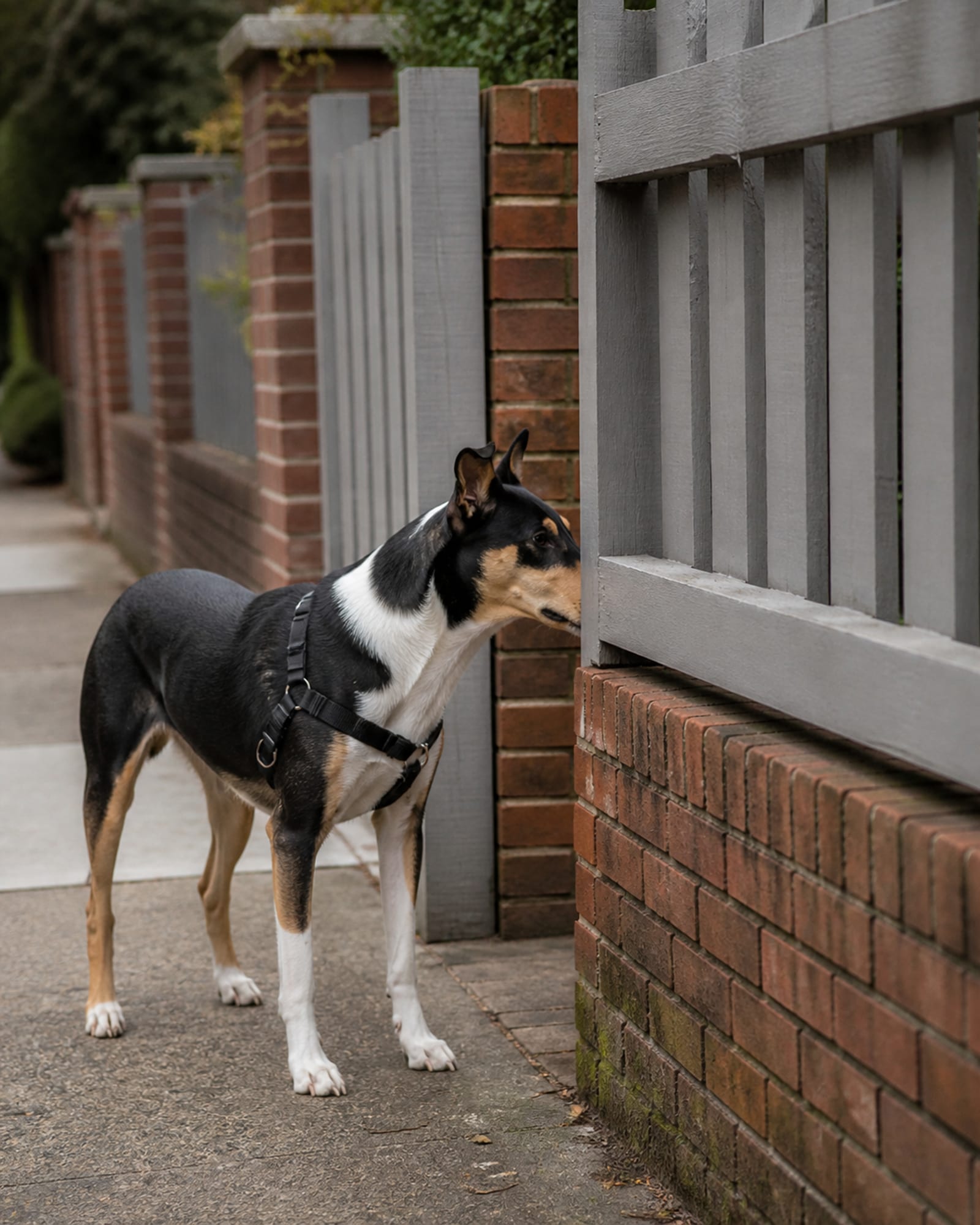
A dog standing beside a fence line, nose to a gap, in Jessup, MD
Residential pockets sitting inside one of the busiest freight and employment landscapes in the region.
01
The Maryland Food Center and the warehouse corridors put heavy vehicles into the daily soundtrack. Most dogs settle to it. The ones that do not need graded work rather than repetition.
02
Older roadside neighborhoods often have a yard and nowhere to walk. That makes roadside position and a hard stop more useful here than any obedience routine.
03
Detached homes, townhouses, newer subdivisions, apartments and manufactured home communities all sit within the same area, so no two households have the same starting point.
04
The MARC station brings trains, buses and commuters into a small footprint. Predictable timing, which makes it something you can work with rather than around.
05
Clay and compacted soil hold water, the Dorsey Run and Little Patuxent drainage stays soft after storms, and large paved surfaces get genuinely hot in summer.
06
Jessup Dorsey Park is going through an improvement process and Jessup Park on Montevideo Road is the other local option. Worth checking what is open before planning a session.
Not which one you assume. The county property or mapping tool answers it in a minute and it is the answer everything else hangs from.
Dog license and rabies certificate, in the right county, in the right name. If you have moved within Jessup, check that it followed you.
In practice these are stricter than the county and they are the ones that generate letters. Numbers of dogs, fencing, and where a dog may be off leash on common land.
The honest answer in most of Jessup is nowhere except your own enclosed property. Plan the recall training around a long line accordingly.
If a neighbor's dog is the problem, or yours is the subject, knowing which county's animal control covers you saves a fortnight.
Once that is settled it never has to be thought about again, and the rest of the work is the same as anywhere else.
One statistical point, because Jessup is the one place on my list where the published figures mislead.
The 2020 count put 10,535 people in Jessup, but only 4,835 of them were living in households, about 46% of the total. The rest are the group quarters population produced by the correctional institutions in the area. That is a neutral fact about how the count is compiled, and it matters here for one reason only: figures such as the share of residents under 18 or over 65 do not describe Jessup's pet owning households at all, because more than half the population they are drawn from is not living in a house.
So I do not plan anything off those. The household level figures, roughly 1,586 of them, are the useful set, and beyond that I go by what a specific street actually looks like. Two Jessup addresses can be completely different training environments, one with a yard and no sidewalk on a quiet road, the other in a townhouse row with shared entries and a warehouse route a hundred yards away.
That is why the evaluation matters more here than in a uniform suburb. I would rather stand on your street and see what your dog is dealing with than build a plan from a description, because the description of Jessup that would fit your neighbor may not fit you.
There is a practical consequence for where the training happens. Anne Arundel's own planning material describes Jessup as largely residential in zoning while commercial and industrial uses hold the main corridors, and that is exactly what it feels like on foot. A dog can be on a quiet street with nothing moving, and two turns later be beside a loading yard with reversing alarms and a hundred yards of open asphalt. Neither of those is a bad training environment. What does not work is treating them as one walk and expecting the dog to hold the same behavior across both without having been taught each separately.
On distance, since Jessup sits between the two places most of my clients are. I work to two ranges. The service area overall is about a two hour drive, and board and train draws from a tighter ring of roughly one hour, because a boarded dog needs me to be able to reach the household. Jessup is comfortably inside both, so every program is available here.
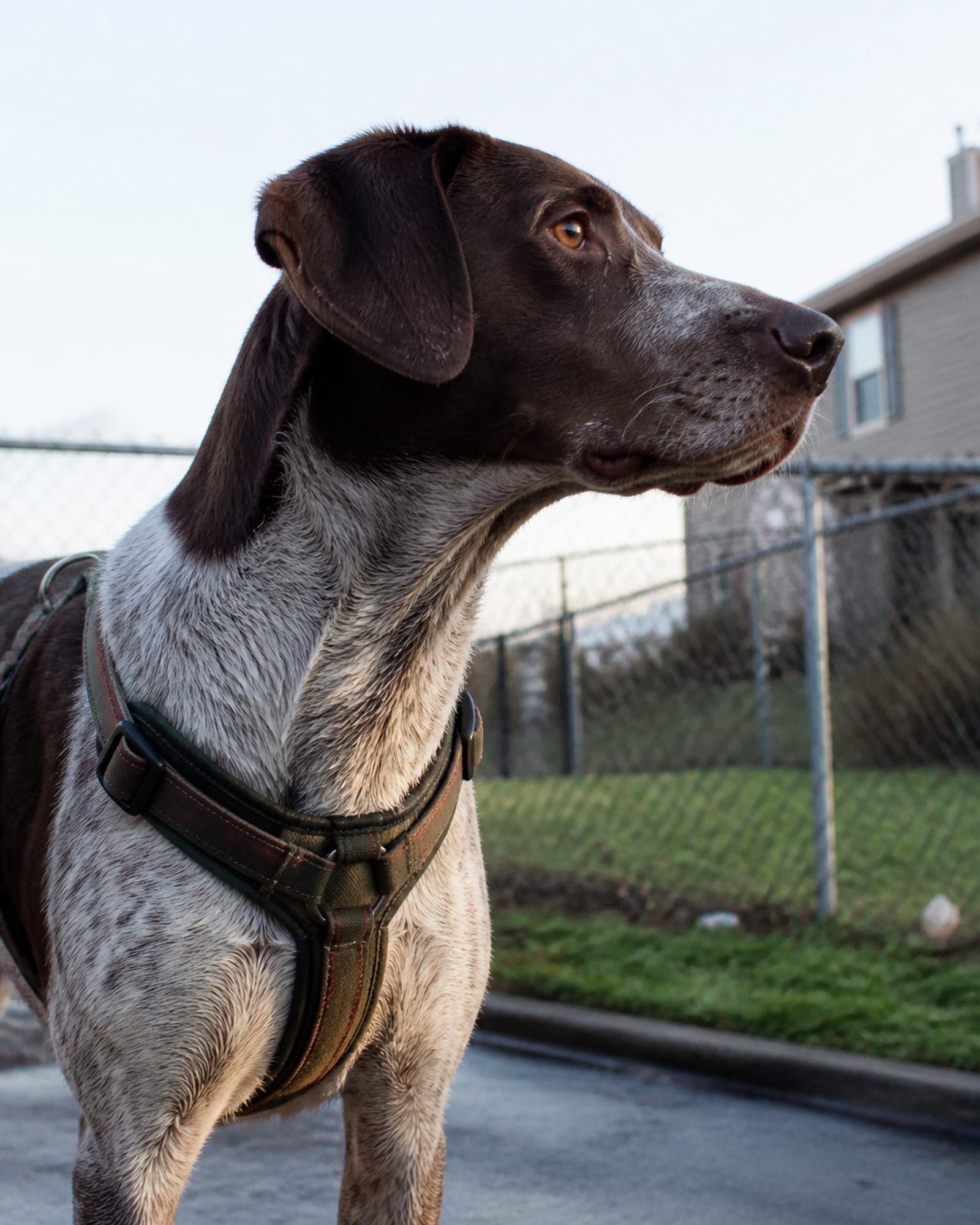
A close vertical of a dog's profile, muzzle to chest, in Jessup, MD
Phone (443) 429-0445, seven days a week from 6 AM to 7 PM. Tell me your street and what the walk from your door looks like, and we will work from there.