01
Barking at the window
The work above. The most common single call I take from this city, and one of the faster ones to change once the room is set up properly.


Bowie is thousands of 1960s Levitt houses in alphabetically named sections, and a great many of them are single storey with a wide front window at eye level. Your dog spends his day at that window, and what he practices there he gets very good at.
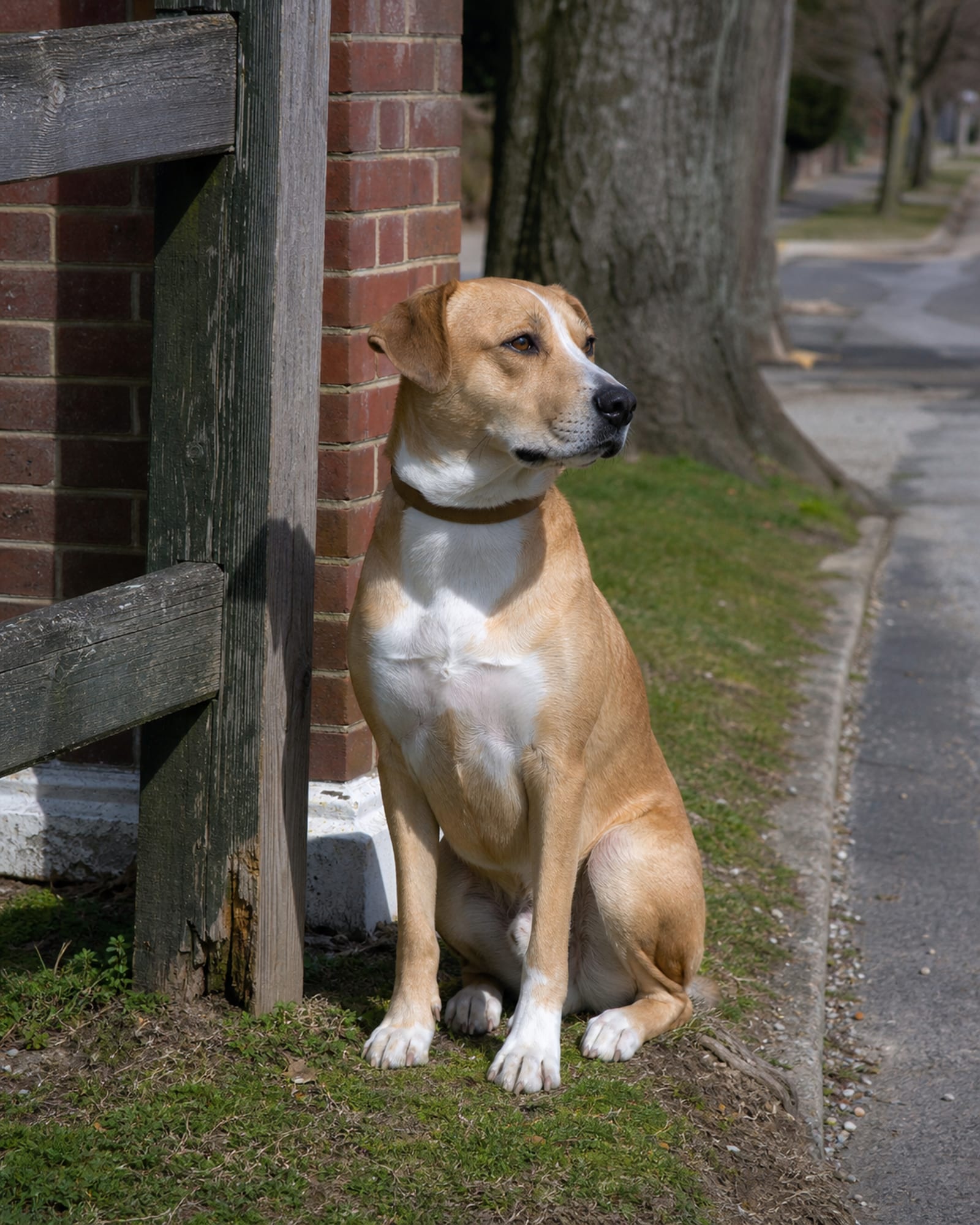
A dog sitting beside a gatepost, upright and calm
He is on the back of the sofa, or on the sill, and he has been there most of the afternoon.
A person goes past. He barks. The person keeps walking and disappears. From his point of view, that worked. It works again forty minutes later when the mail arrives, and again when the dog from three doors down goes by, and it has worked several thousand times by the time anybody thinks of it as a problem.
Bowie makes this unusually easy to build. The city holds 58,329 people across 19.8 square miles, and its defining housing stock is the Levitt and Sons ramblers, Cape Cods, colonials and split levels that went up through the 1960s in the alphabetical sections. Ramblers put the living room window at standing height, the sections are flat and open, and the sidewalk is close. The dog has a wide, uninterrupted view of everything that moves, all day, with nobody supervising what he concludes about it.
They look like the same behavior and they are not, and treating them the same is why the window one usually survives training.
Door barking has a beginning and an end. Somebody arrives, the dog reacts, you deal with it, the visitor comes in or goes away. It is an event, and events are relatively easy to train because you can set them up and rehearse them.
Window barking has no event. It is a shift the dog works, unsupervised, for hours, and every single repetition ends in success because whatever he barked at was leaving anyway. That is the cruellest part of it. He is being rewarded on a near-perfect schedule by a world that has no idea he exists, and he is getting more practice at it in a week than you could give him at anything else in a month.
It also gets worse rather than levelling off. A dog who has been doing this for a year is not bored of it, he is fluent, and the threshold drops: it starts with people, then it is cars, then it is a leaf. Owners often tell me their dog has become more reactive with age. Frequently he has just had more practice.
The last thing worth knowing is that it does not stay at the window. A dog rehearsing frustration at something he can see and cannot reach is building the exact emotional pattern that shows up on the leash later. That is why I treat it as an important job rather than a nuisance, and it is why the fix is mostly about the room rather than about the dog.
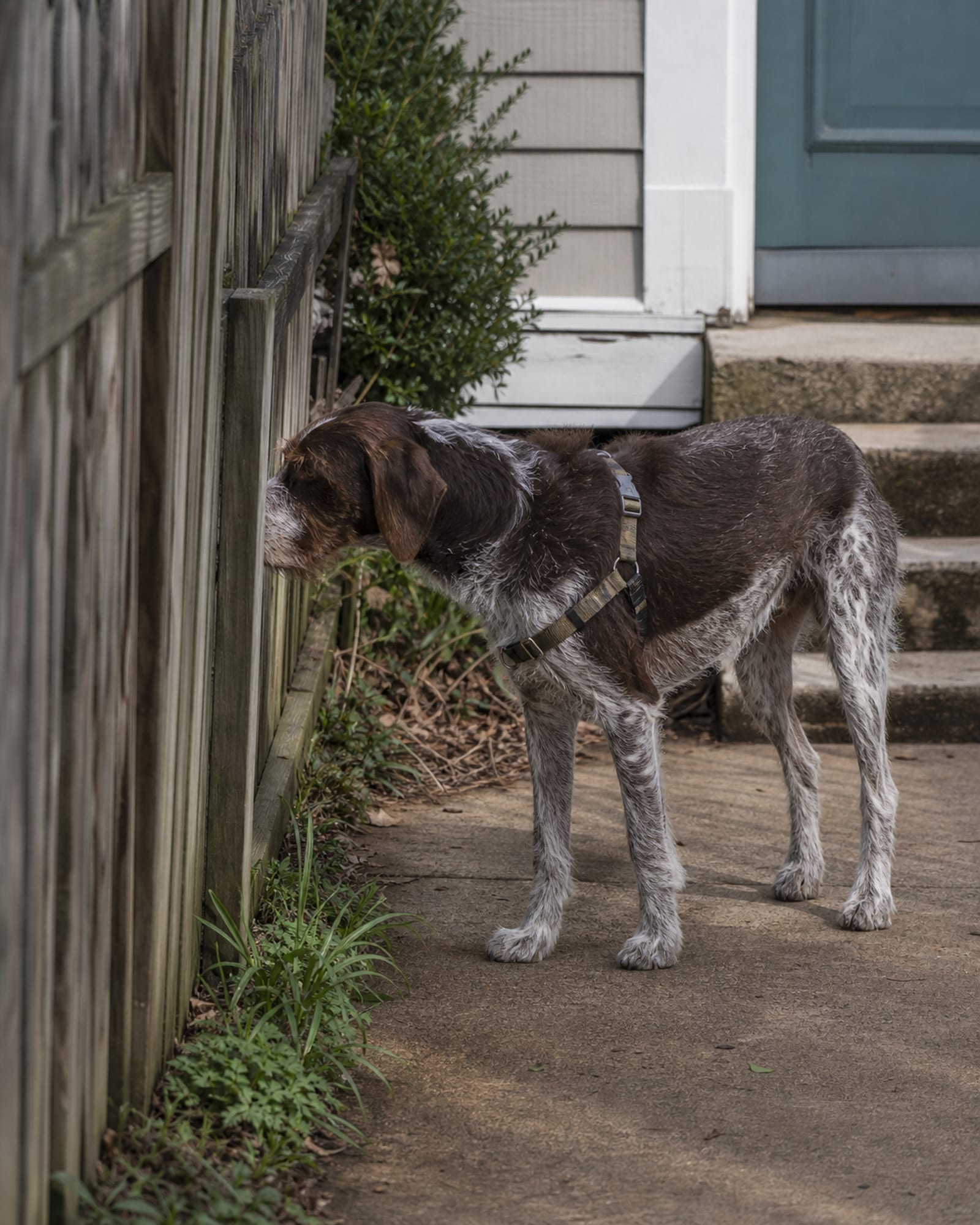
A dog standing beside a fence line, nose to a gap
A big, established, family weighted city with a very consistent housing stock.
01
The work above. The most common single call I take from this city, and one of the faster ones to change once the room is set up properly.
02
The Levitt sections put a lot of houses on open corners with no fence and two street frontages. That is two sides of exposure rather than one.
03
Many of these houses are entered from the side rather than the front. The real threshold is not the one visitors use, and it is usually the untrained one.
04
Collington Branch, Horsepen Branch and the neighborhood storm channels bring geese, deer and foxes right up to back gardens across the Patuxent watershed.
05
US 50, US 301 and MD 197 carry real volume, the MARC line runs through, and Prince George's Stadium adds crowds and parking on a schedule.
06
Fairwood, Woodmore and the town center communities add townhouses, condominiums and apartments, so a Bowie address says much less about the layout than people assume.
You cannot train a dog out of a behavior he is practicing all day while you are at work. The first move is to stop the rehearsal.
That means changing what he can see, for a few weeks, and it is not permanent. Move the furniture he climbs on. Close that room while you are out. Put a film on the lower half of the glass so he keeps the light and loses the view of the sidewalk. None of that trains anything by itself, and it is not meant to. It buys you a dog who is no longer getting better at the thing you are trying to remove.
People resist this step because it feels like avoiding the problem. It is the opposite. Every day he spends barking at that window undoes a session, so the management is what makes the training possible rather than a substitute for it.
Then you teach him what to do instead, and it has to be something he can actually do while you are not there. A place he settles on, away from the glass, with something worth chewing, is the whole answer for most dogs. A dog who has learned that the arrival of a person outside predicts going to his bed rather than going to the window has a job, and dogs are much happier with a job than with a rule.
The last piece is what happens when you ARE there. If he barks and you shout, you have joined in, and from his side of it that is confirmation. Going to him quietly, blocking the view with your body, and sending him to his place is dull and it is what changes his mind about the whole business.
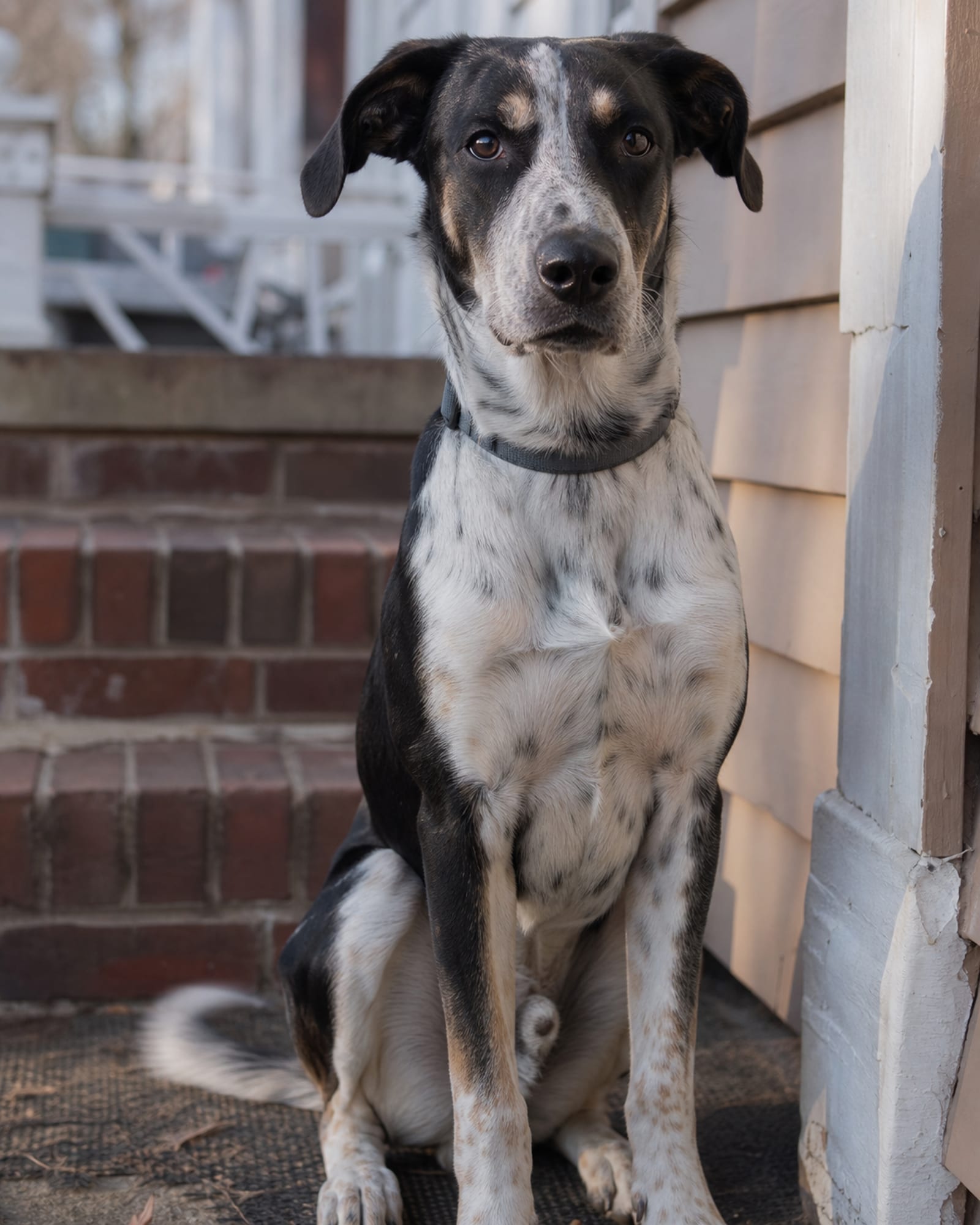
A tight vertical of a dog sitting, front legs straight, chest square
Get down to his height at his usual spot and look. It is almost never what the household assumes, and it decides which window matters.
For two weeks he does not have access to that view unsupervised. Room shut, furniture moved, or film on the lower glass. The rehearsal stops before anything else starts.
A bed or mat, out of the sight line, taught properly on cue with real duration. This is the behavior that has to be strong enough to compete with a person walking past.
With you there, at a distance he can handle, when something goes past. He looks, he looks at you, he gets paid. That sequence is what you are installing.
Supervised first, for short periods, with you in the room. If the barking returns you have gone too fast, and going back a step costs you days rather than weeks.
If he only does it when the house is empty, that is a different question and it may not be about the window at all. My anxiety and nervousness page covers where that line is.
Phone (443) 429-0445, seven days a week from 6 AM to 7 PM. Tell me which window, roughly how many hours a day, and what he does when you come home.