01
Destruction while you are out
Door frames, blinds, drywall near an exit. Where the damage is matters more than how much there is, and it is the first thing I ask about.


Security Boulevard empties out at 7 AM and fills again after 5. What your dog does with the nine hours in between is the reason most Woodlawn owners call me.
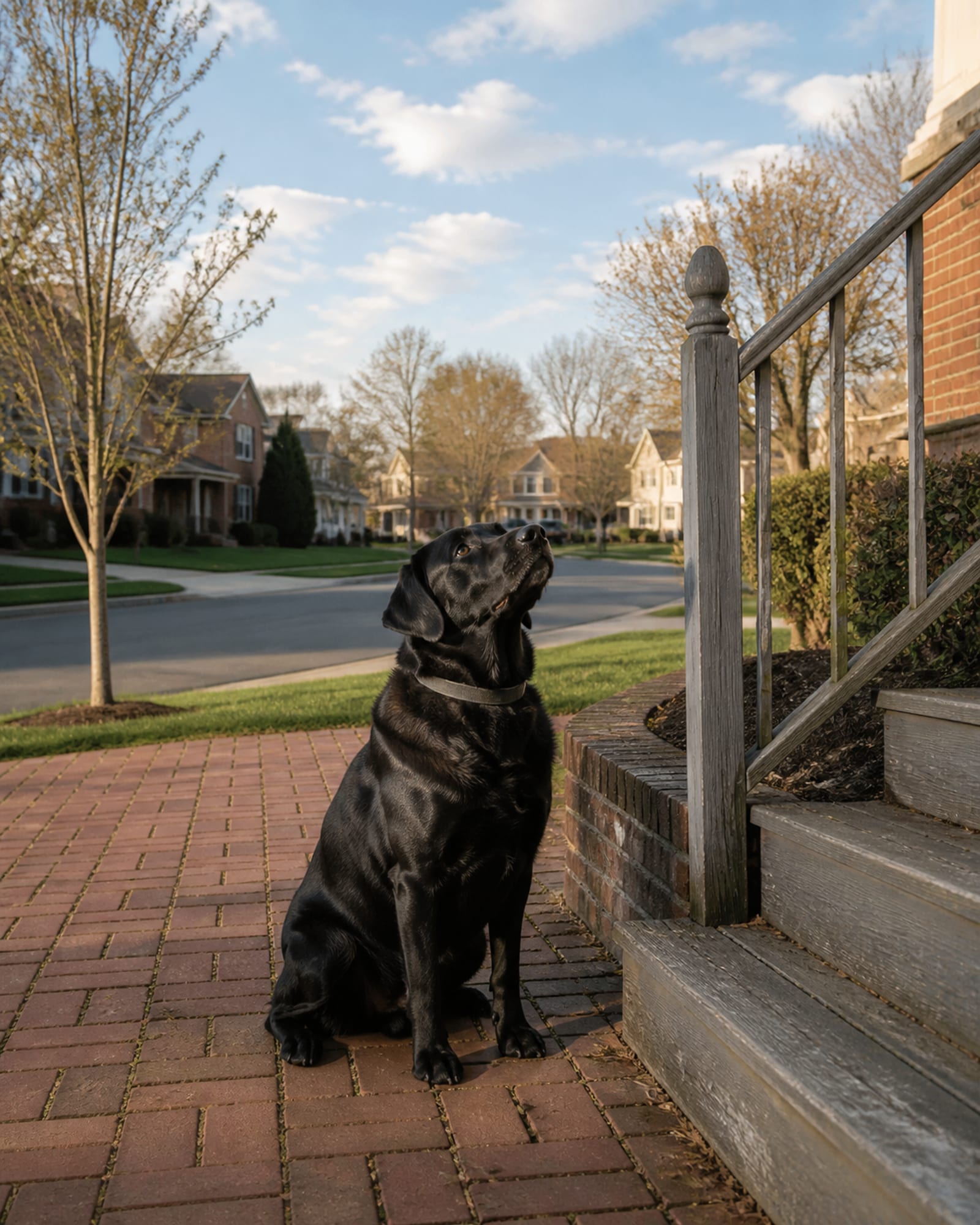
A dog sitting at the foot of steps, looking up out of frame, in Woodlawn, MD
Woodlawn is a commuter community built around a federal campus. The Social Security Administration headquarters on Security Boulevard anchors an office corridor that pulls a large share of this neighborhood out of the house early and holds it there until the evening. Add a commute at each end and a lot of dogs here are alone for the better part of the working day.
Most of them are completely fine with that. The ones I am called about are not, and the call almost always comes after something physical: a chewed door frame, a complaint from the neighbor about howling, a crate the dog has bent, or scratch marks on the inside of the front door at exactly the height a panicking dog reaches. That last one tells me something specific, and it changes the whole plan.
This is the single most useful distinction I can give a Woodlawn owner, because the two problems need opposite treatment.
A bored dog does damage across the day, wherever the interesting things are: the bin, the shoes, the sofa cushion, the middle of the room. It settles once it has entertained itself. It eats a meal you left. It is relaxed when you get home, in the way a dog is relaxed after a good afternoon.
A panicking dog does damage at exits. The front door, the window, the crate door, the frame it can see daylight through. It does most of it in the first thirty minutes and then it stops, exhausted. It usually will not eat while you are gone. It may drool, pant or empty itself. It is often frantic rather than pleased when you come back, and it may have been vocalizing the whole time, which is what the neighbor hears.
If you treat the second dog like the first, you give it more exercise and more toys and it does not improve, because the dog was never bored. It was frightened. That work is a gradual, structured change in how the dog feels about being left, and it is on my anxiety and nervousness page rather than here, because it deserves the space. What I will say is that it is one of the most fixable serious problems I deal with, and that owners routinely tell me they wish they had called a year earlier.
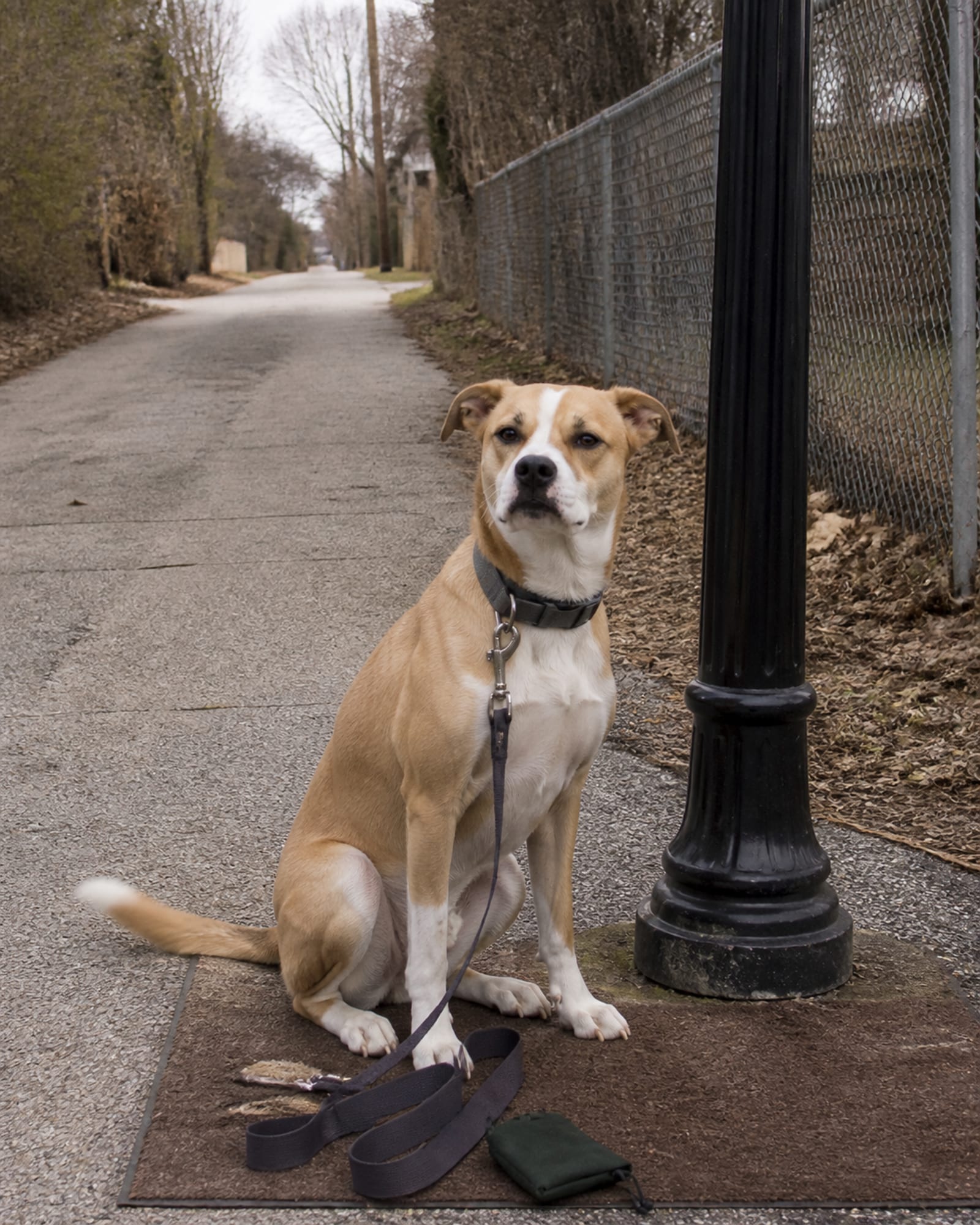
A dog sitting square beside a lamp post, in Woodlawn, MD
Woodlawn's housing and roads shape which version of the problem you get.
The housing is genuinely mixed: 45.2% detached, 30.8% attached and 22.3% in buildings of five or more units, with most of it built in the 1950s, 1960s and 1970s. Brick ranches, split-levels, townhouses, garden apartments, basements, porches and modest yards. In an attached house or an apartment, a dog that vocalizes when alone becomes a neighbor problem within days rather than months, which is why so many of these calls arrive with a deadline attached.
Then there is what the dog can hear. Security Boulevard is a commercial and federal-office corridor, the I-70 and I-695 interchanges sit right here, and the shopping centers bring delivery traffic through the day. A dog alone in a quiet house hears every one of those. For a settled dog that is background noise. For an anxious one it is nine hours of things arriving.
Gwynn Oak Park, Woodlawn Memorial Park and the Gwynns Falls stream valley give you genuinely useful practice ground on the other side of the day, with slopes, water and wildlife to work against once the basics hold. County listings put Gwynn Oak Park at 69 acres on Gwynn Oak Avenue and the community center nearby, which is more space than most owners here realize they have.
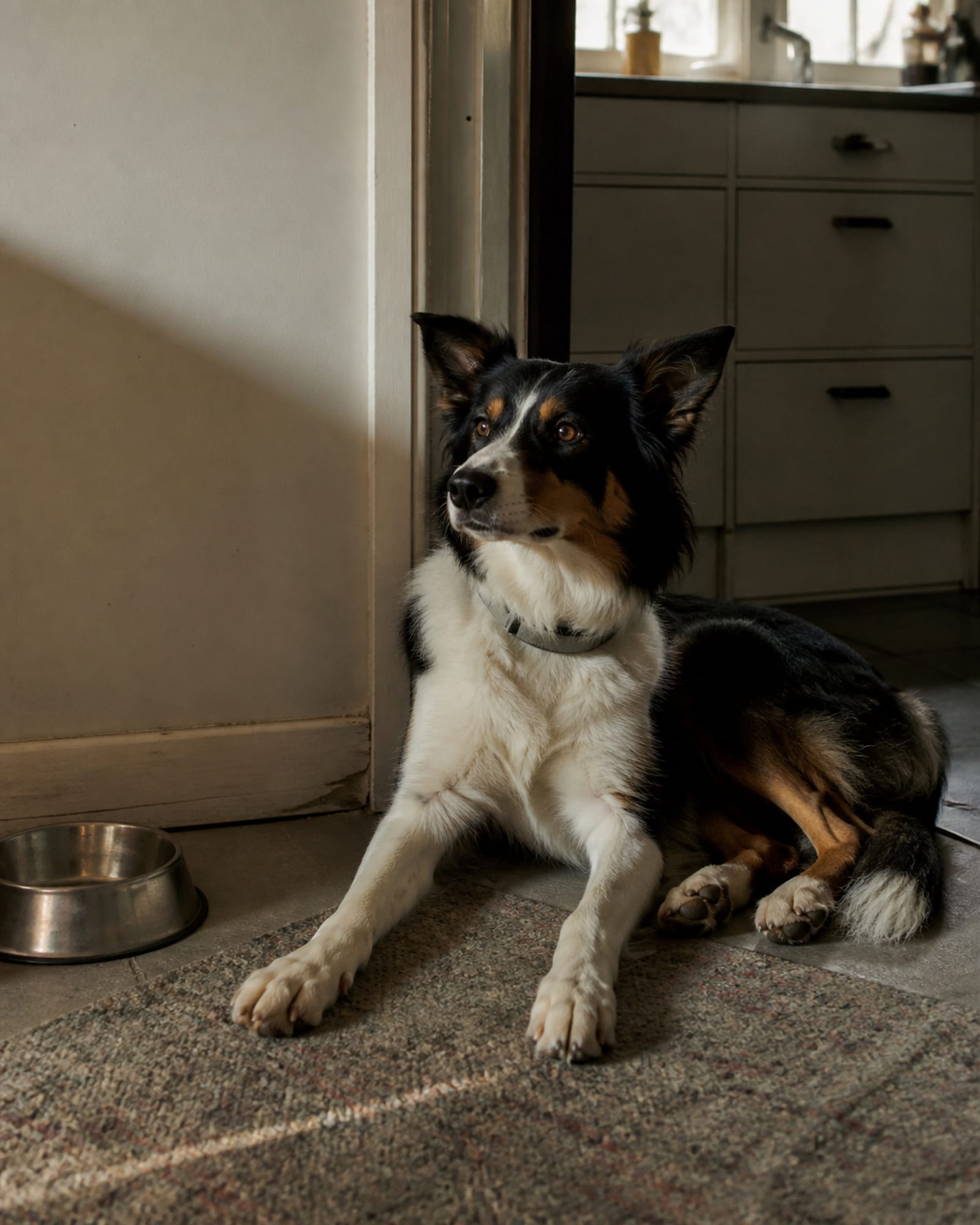
A dog settled beside a kitchen doorway, worktop above, in Woodlawn, MD
Usually from a camera. An hour of footage from a phone propped on a shelf answers in ten minutes what a conversation cannot answer at all, and I will ask you to get it before I guess.
Management first: change where the dog is left, what it can see, and how long it is alone, so the panic is not being practiced daily while we work. This is not the fix, it is what stops it getting worse.
A dog that can genuinely relax on a bed while you are in the room is the prerequisite. Almost nobody skips straight to being left, and the ones who try end up back here.
Behind a door, then out of the house, then out of the car park, then longer. If the dog panics we went too far too fast, which is information rather than failure.
Your actual departure routine, your actual hours. The goal is a dog that is bored on a Tuesday, which is the best possible outcome and sounds unambitious only until you have lived with the alternative.
Alone-time work is the headline here. These come up alongside it.
01
Door frames, blinds, drywall near an exit. Where the damage is matters more than how much there is, and it is the first thing I ask about.
02
In attached housing and apartments this is what turns a private problem into a formal one. Often the same root cause as the destruction.
03
A dog with nine hours of stored energy meeting a tired owner at 6 PM. Structure at that hour is worth more than a longer walk.
04
Multilane traffic, ramps and large parking areas. A dog that is fine on a residential street can come apart here, and that is normal rather than a setback.
05
Gwynn Oak and the Gwynns Falls corridor bring wildlife, water and slopes. A recall that has only been tested in a yard will not hold there.
06
The hardest schedule to raise a puppy on, and very doable with a plan made in advance. My puppy training page covers the first months.
For this particular problem the in-home evaluation earns its place more than usual, and it is $100 that comes off the training fee.
I need to see the house the dog is left in. Where the crate sits, what the dog can see from it, which door you leave by, what happens in the ten minutes before you go. Owners describe all of that accurately and still leave out the one detail that turns out to matter, because it is too ordinary to mention.
I will also ask you to be honest about your day, including the bits that are not ideal. I am not going to tell you to change jobs. I am going to build something that works with the day you actually have, in Woodlawn, with the commute you actually make, because a plan that requires a different life is not a plan.
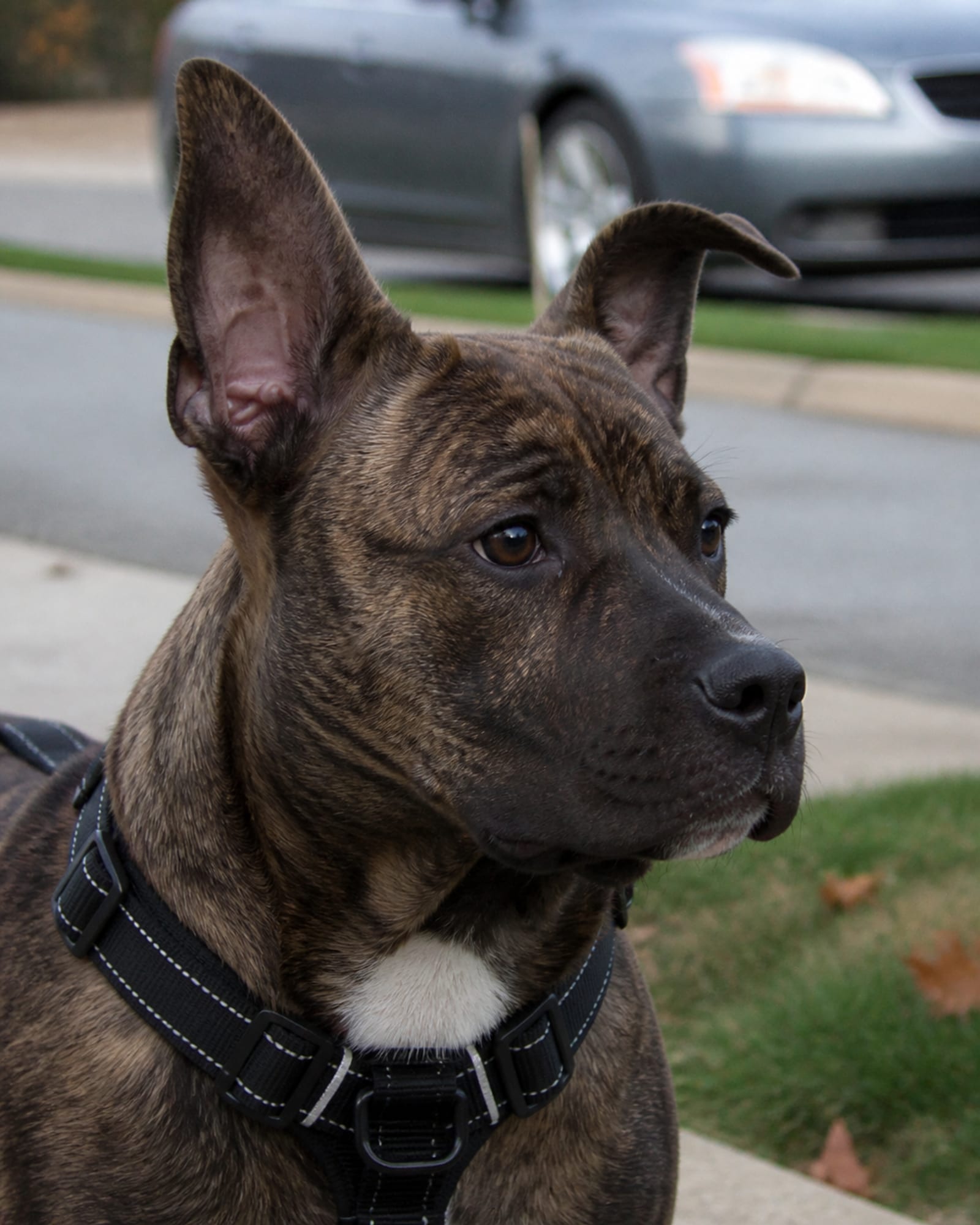
A young dog's head and oversized ears, close and vertical, in Woodlawn, MD
Then phone (443) 429-0445, 6 AM to 7 PM, seven days a week. Tell me what the dog does in the first thirty minutes and where the damage is, and I can usually tell you which problem you have.