01
A dog steady enough to take out
The work above. The most common ambition I hear from this community and a realistic one for most dogs.


16.7% of Westminster's noninstitutionalized residents report a disability, and the downtown is built for walking, with a Main Street calendar that runs most of the year. So this is a place where the real question is often not whether a dog behaves at home. It is whether he can come with you.
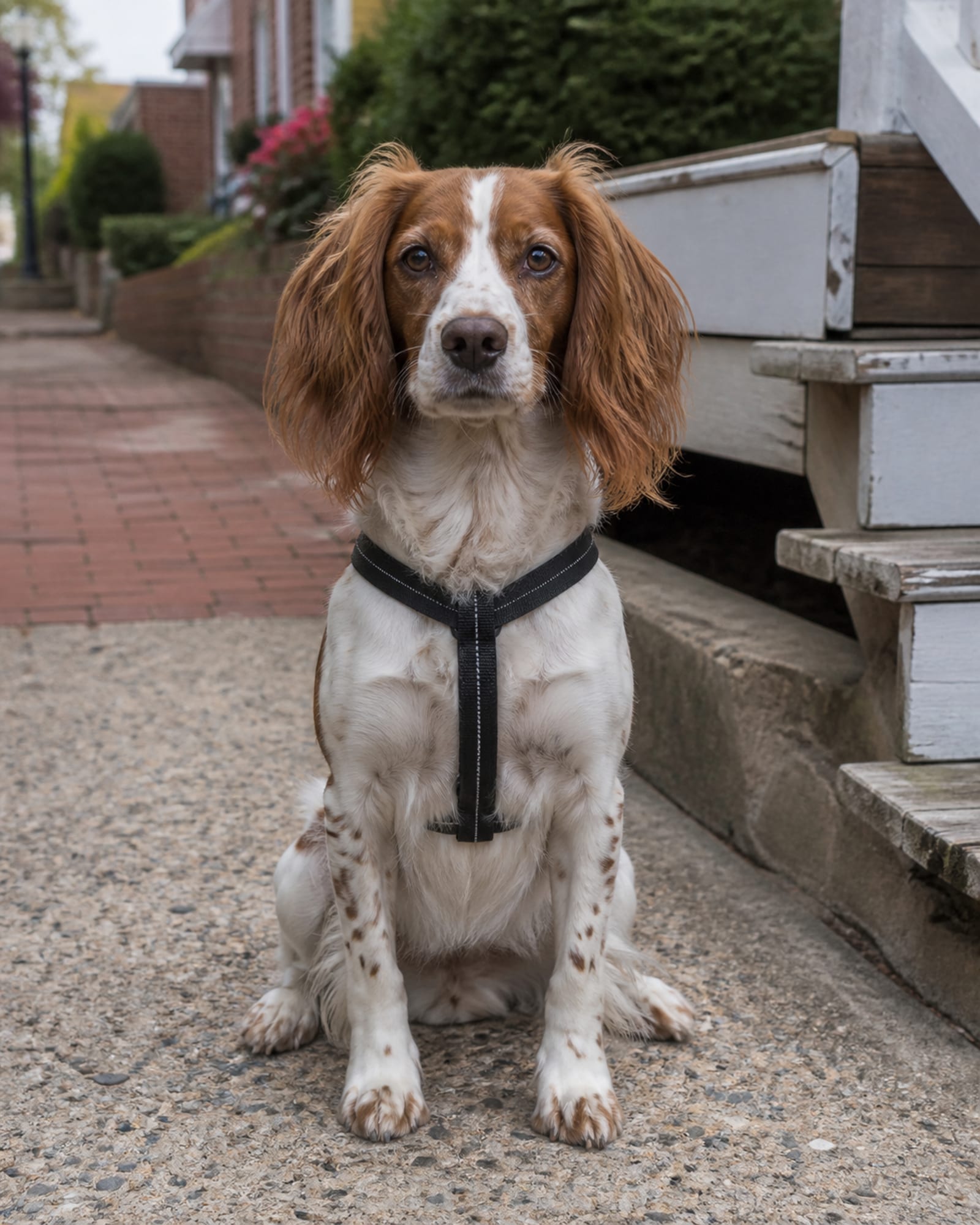
A dog sitting upright and attentive, shoulders square to camera, in Westminster, MD
That is the threshold that decides it. Not the front door of your house, the one on Main Street with a bell on it and eighteen inches of clearance between a display and a counter.
Westminster runs to 20,445 residents in 7,949 households, with 43.5% renting, a downtown of rowhouses, Victorian forms, commercial and residential buildings and alleys, and 17.6% of the housing stock built before 1940. McDaniel College and Carroll Community College put students into the same streets, county government sits downtown, and the Main Street program runs the Celtic Canter, the Wine Stroll, the Flower and Jazz Festival, FallFest, the farmers market and Miracle on Main Street through the year.
It is a town people go into on foot, and a lot of them would like to take the dog. That is a higher standard than most household training aims at, and it is a completely different standard again from what a service dog has to meet. Those two things get confused constantly, and the confusion causes real trouble for the people who most need it not to.
Worth setting out plainly, because the terms get used interchangeably and they are not interchangeable.
A well behaved pet dog is one you can take where dogs are welcome. Outdoor seating, a pet friendly shop, a market on a Saturday, the park. He walks on a loose leash, settles under a table, ignores food on the ground and does not solicit attention from strangers. That is an achievable standard for most dogs and it takes a few months of deliberate work.
An emotional support animal, in the plain legal sense, is not a service animal and does not have general public access rights. That is a straightforward statement of how the rules work rather than a judgment about the animal or the person, and I mention it only because people are frequently told otherwise and then put in an awkward position in a shop.
A service dog under the Americans with Disabilities Act is a dog individually trained to do work or perform tasks for a person with a disability. The tasks are the definition. The public access behavior, being invisible in a restaurant, unbothered by a crowd, steady on a slick floor, is the part everybody sees, and it is only half the training. My service dog training page goes into what that work actually involves and how long it takes, and it is honest about the fact that not every dog is a candidate.
The reason this matters in a town like this one is that the middle category is where most disappointment happens. Somebody has a dog they genuinely rely on, they are told a vest solves it, and then they are asked to leave somewhere. The way out of that is real training and a realistic assessment of the dog, and it starts with the same evaluation as everything else.
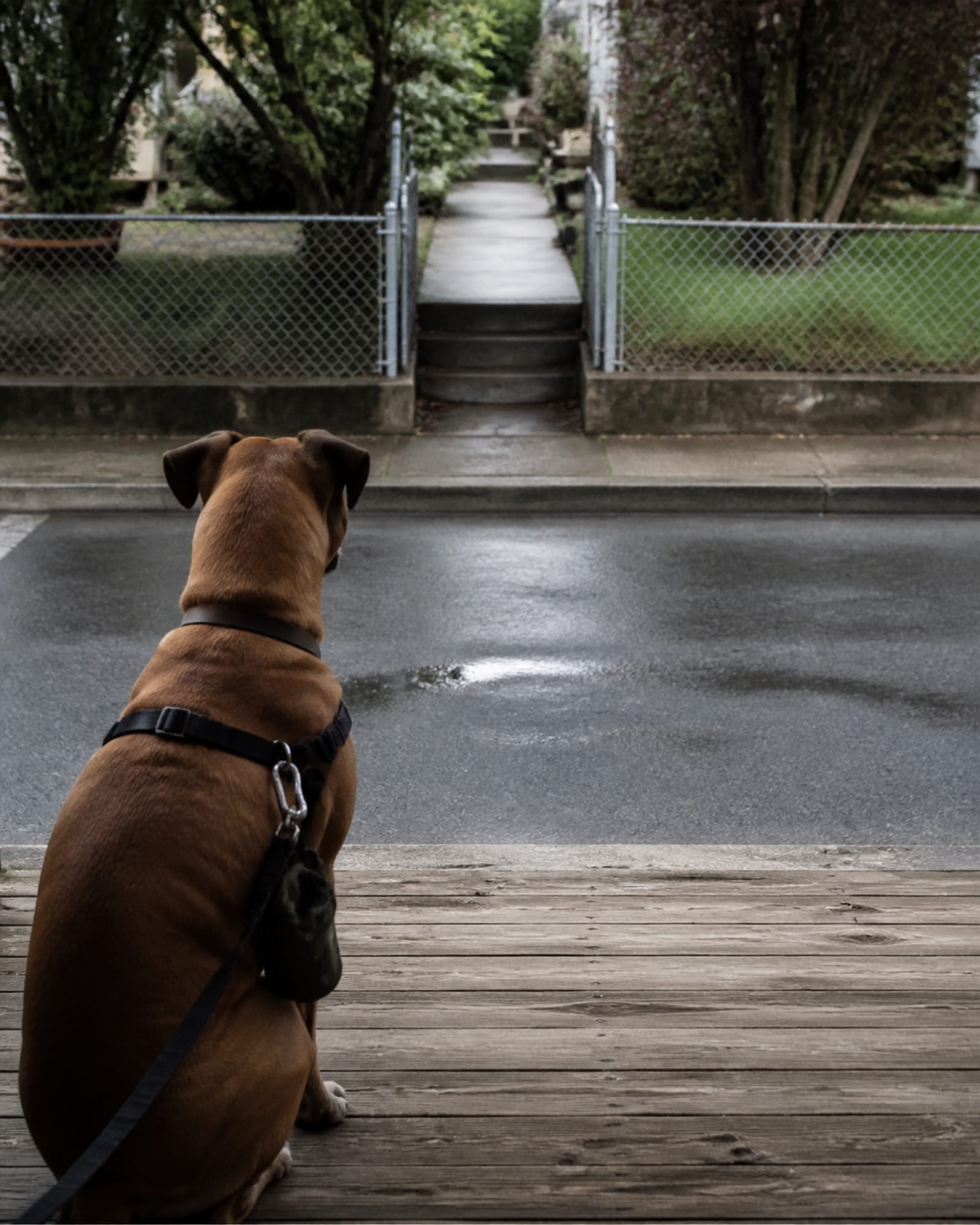
A dog sitting at a curb edge waiting to cross, in Westminster, MD
On a mat, at your feet, while life continues around him. This is the single behavior that decides whether a dog is welcome anywhere, and it is trained at home long before it is used out.
Not heelwork. Just a leash with slack in it while somebody squeezes past you outside a storefront. Downtown gives you the exact conditions.
A festival street is covered in it. This is a specific trained behavior and it is one of the more reliable ones once the household stops feeding from hands at random.
Not friendliness. He does not need to greet anybody. A dog who can be near people without needing something to happen is welcome in far more places than a friendly one.
Tile, polished wood, metal strips, a door that opens toward him. Practice these deliberately, because a dog who has only ever walked on grass finds them genuinely difficult.
Five good minutes and out. A dog who has never been pushed past his limit in public builds confidence. One bad afternoon undoes a month.
A varied town: a dense historic core, a college population, suburban edges and farmland beyond.
01
The work above. The most common ambition I hear from this community and a realistic one for most dogs.
02
Where a dog needs to do a job rather than just behave. That is a longer conversation and it starts with an evaluation of the dog rather than with equipment.
03
Narrow entries, shared walls, stairs, small yards and rear alleys. A completely different training environment from Avondale Ridge or Fenby Farm.
04
With 43.5% of households renting, leases and shared entries shape what has to be trained first, usually alone time and hallway behavior.
05
Bands, food, strollers and blocked roads several times a year. Excellent proofing from a distance and a poor first outing.
06
The old golf course slopes and pond edges turn muddy after rain, and downtown brick and painted crossings get slick. Worth choosing your surface deliberately.
This page reaches further into somebody's daily life than most, so it deserves a clear boundary.
I train dogs. I do not assess people, I do not issue documentation, and there is no certificate anybody can buy that creates a right of access. Where a dog is being trained for genuine task work, that is a partnership between the handler, their own medical people and the training, and it takes far longer than a pet program. Anyone who tells you otherwise in a fortnight is selling you something.
I am equally straight about the dog. Not every dog can do this work, and the honest assessment is a kindness to both ends of the leash. A dog who is worried in crowds, sound sensitive or reactive to other dogs is not a candidate for public access work, and pushing him into it is unfair to him and unsafe for everybody else. That assessment happens early rather than after months of expense.
For the ordinary version, the one most households actually want, the outlook is good. A settle, a loose leash, food neutrality and calm around strangers will make a dog welcome in most of the places anybody wants to take him, and those four behaviors are within reach of the great majority of dogs with a couple of months of real work.
One local note, since people ask about the training itself. Carroll County requires licensing and effective control, and the county's trail guidance asks for leashes and for wildlife to be left alone, which is a reasonable standard for outdoor work anywhere. Inside the city, zoning governs businesses rather than dog owners: an indoor training facility here needed special exception and site plan review, which tells you nothing about your own dog and everything about why I come to your house instead.
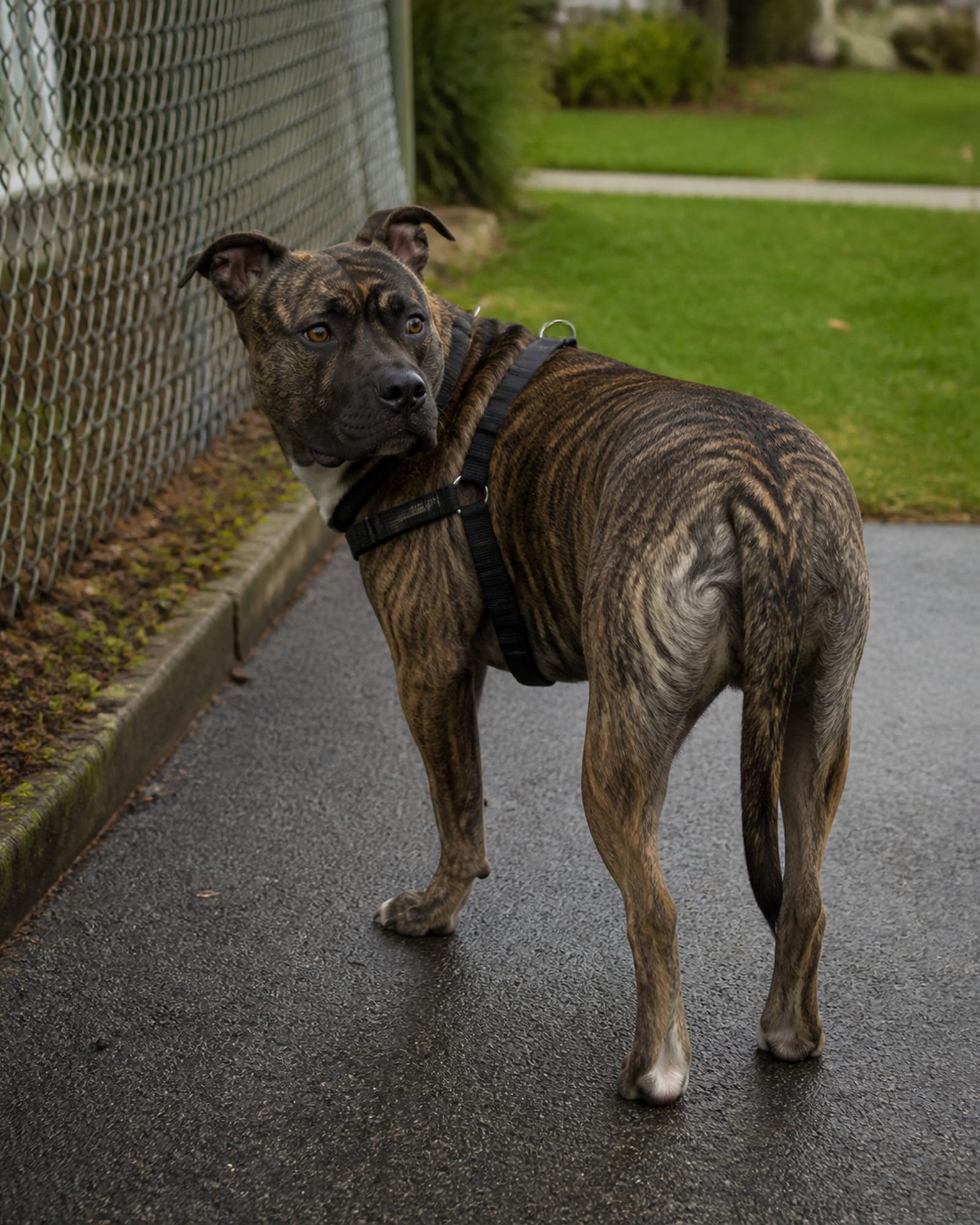
A dog's head turned back over its shoulder toward camera, in Westminster, MD
Phone (443) 429-0445, seven days a week from 6 AM to 7 PM. Tell me where you would like to be able to take him and what stops you at the moment.