01
The parking lot exit
The work above. The most useful ten minutes of training available to a household that drives its dog anywhere.

Odenton is a park and ride town built around a MARC station, and most dogs here get in and out of a car more often than they walk out of a front gate. The ten feet between a car door and a sidewalk is where more dogs get loose than anywhere else, and almost nobody trains it.
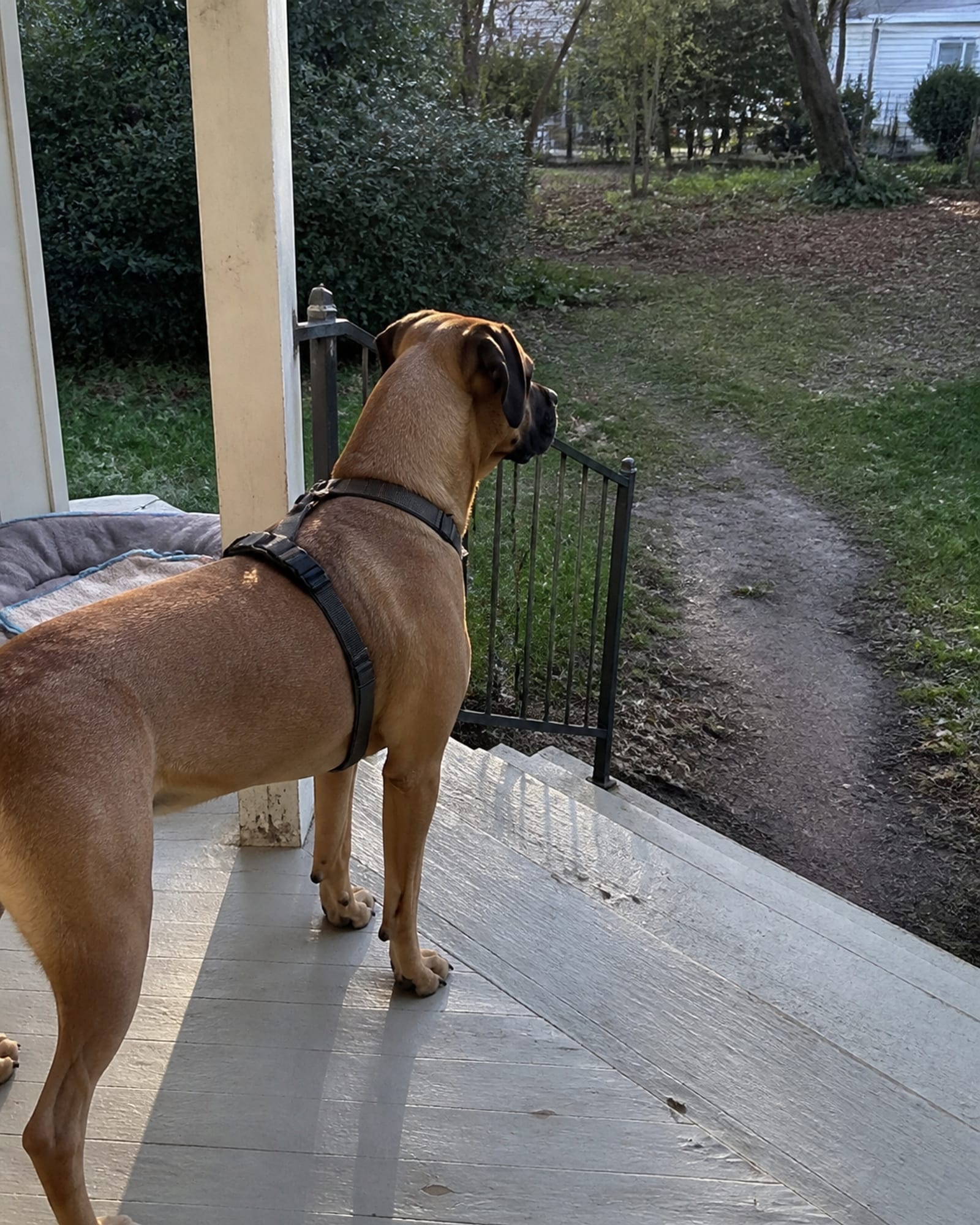
A dog standing alert with its weight even, tail neutral, in Odenton, MD
The tailgate goes up. The dog is already standing. He comes out before the leash is properly on, there is a car reversing two spaces down, and for about two seconds nobody is holding anything.
That sequence happens thousands of times a day across this community and it is the single most dangerous routine most dogs have. Odenton runs to 45,002 residents in 18,010 households, and the housing is weighted to townhouses and apartments: 35.4% attached, 16.2% in buildings of ten to nineteen units and another 13.2% in buildings of twenty or more, against just 29.5% detached. A great many dogs here begin every outing in a shared parking area rather than in a private yard.
Add the Town Center Core around the MARC station and the library, a community park still under construction, the WB&A Trail, and Fort Meade next to Seven Oaks, and you have a place where the car is the front door. So the car is where the training has to start.
Door closed, dog sitting or lying in the car, and it stays closed until he is. The first time you do this it takes four minutes. By day five it takes four seconds.
Reach in, clip on, then open. Never the other way around. This one change removes most of the risk on its own and it costs nothing.
The door opening is not permission. A word is. Otherwise you have taught him that a rising tailgate means go, which is precisely the habit you do not want in a lot.
Out, then sit at your left, then move off together. Three seconds of structure at the moment when everything else is chaos.
Sit, cue, in, leash off, then door. The return trip is where people get sloppy because they are tired, and it is where the dog learns whether the rule is real.
Two fingers, no more. A collar that slips over the ears in a parking lot is not a training failure, it is an equipment failure, and it is entirely preventable.
A young, fast growing, transit oriented community with a lot of shared ground.
01
The work above. The most useful ten minutes of training available to a household that drives its dog anywhere.
02
Barking, whining and pacing the whole way. It is trainable and it usually needs the car to stop predicting something exciting at the other end.
03
For nearly a third of households the walk starts inside a building. Threshold work comes before anything you would call obedience.
04
In Town Center apartments and the Piney Orchard style townhouse rows, the toilet spot belongs to everybody. Where and when needs deciding rather than assuming.
05
The station puts sudden movement and sound into a small area on a schedule. Predictable timing makes it something to train against on purpose.
06
The community park beside the library is being built out, and the Town Center keeps changing. Machinery worked at distance is far easier than machinery walked past daily.
It is not really about the car. It is about what happens at every threshold, and the car is the one people rehearse most.
Every doorway in a dog's life is a place where he decides whether the rules still apply. The front door, the crate, the gate, the elevator, the tailgate. A dog who has learned that thresholds are always the same, always require a moment of stillness, and always release on a word, has a general skill rather than a car trick. It transfers.
The car is the best place to teach it because the setup is identical every time. A front door varies with who is on the other side. A tailgate does not. So you get clean, repeatable practice several times a day, which is exactly what a habit needs, and the household gets it without setting aside training time.
It is also the place where the consequences of getting it wrong are highest. A dog who barges through a doorway inside your house is annoying. A dog who barges out of a car in a parking lot is between two rows of moving vehicles with nothing attached to him. I would rather build that habit in a driveway on a Tuesday than talk about it afterward.
One more reason, specific to a community shaped like this one. With Fort Meade adjacent and 12.8% of adults here veterans, plus a median age of 35.8 and nearly a quarter of residents under 18, this is a place with a lot of young households, a lot of movement and a lot of dogs on the road with their people. A dog who is easy to load, quiet on the way and controlled getting out is not a luxury here. It is what makes taking him at all worth doing.
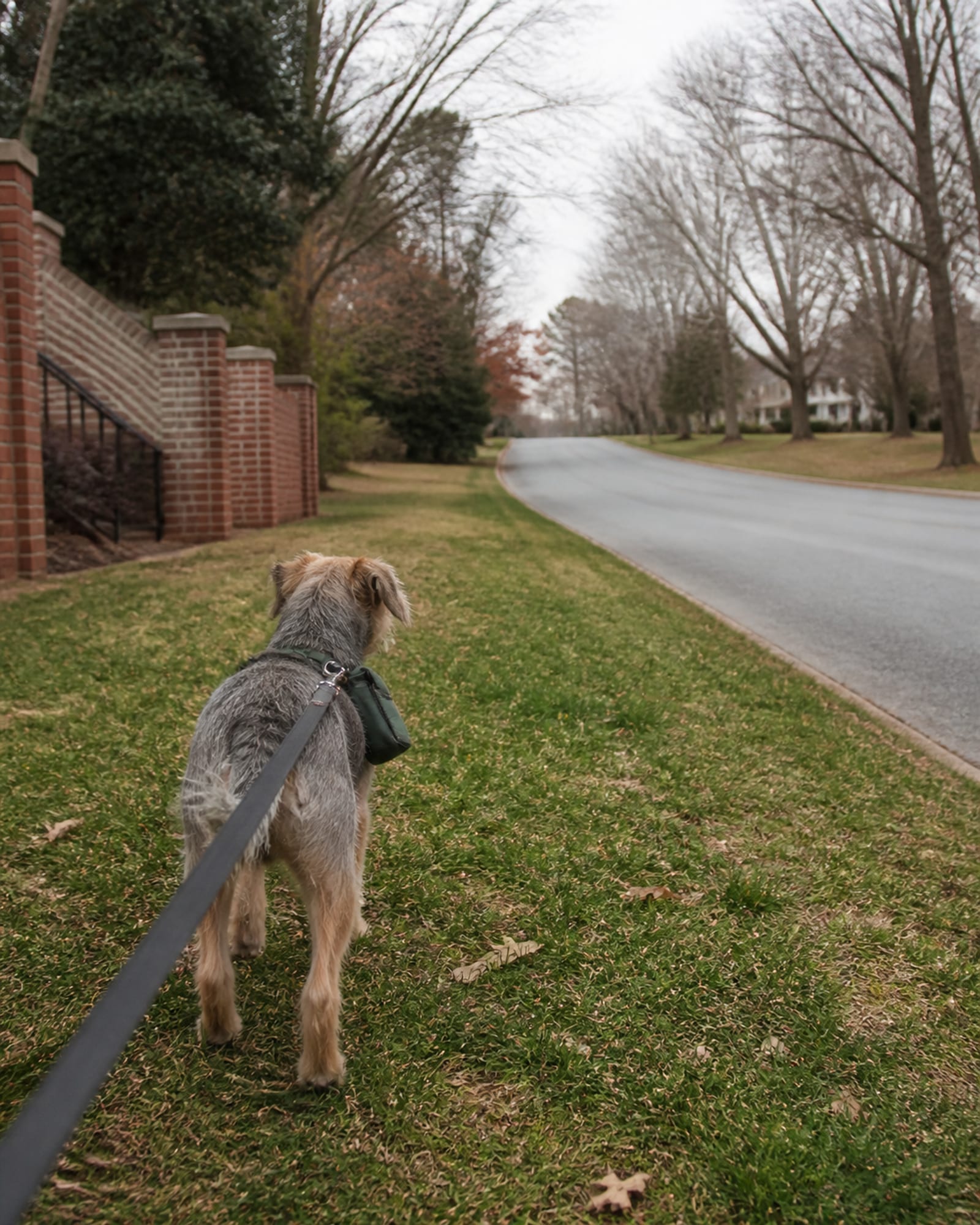
A dog walking away from camera down a pavement, seen from behind, in Odenton, MD
Not in the busiest lot on a Saturday, which is what most people try first and last.
Start in your own driveway or your own parking space, with the engine off and nowhere to go. The dog does the entire sequence, gets paid, and gets put back. Fifteen repetitions like that are worth more than fifty done while actually trying to get somewhere, because when you are trying to get somewhere you will let the standard slip and he will notice.
Then move to a quiet lot with the same routine. Odenton Park at Strawberry Lake Way and the ground around the library on Annapolis Road are usable at off hours. Then a busier one, then one with other dogs about. The environment gets harder, the sequence never changes.
The WB&A Trail is the natural place to take it once the sequence holds, because you arrive by car, unload in a lot, and then immediately meet bicycles and other dogs on a shared path. That is a genuine test of whether the routine survives real excitement, and it is worth doing deliberately rather than on a day when you are in a hurry.
If your dog is already the sort who screams the whole way there, treat that as a separate piece of work rather than something the sequence will fix. Usually the car has come to predict something enormous at the other end, and the answer involves a lot of short drives that end in nothing at all. It is dull and it works.
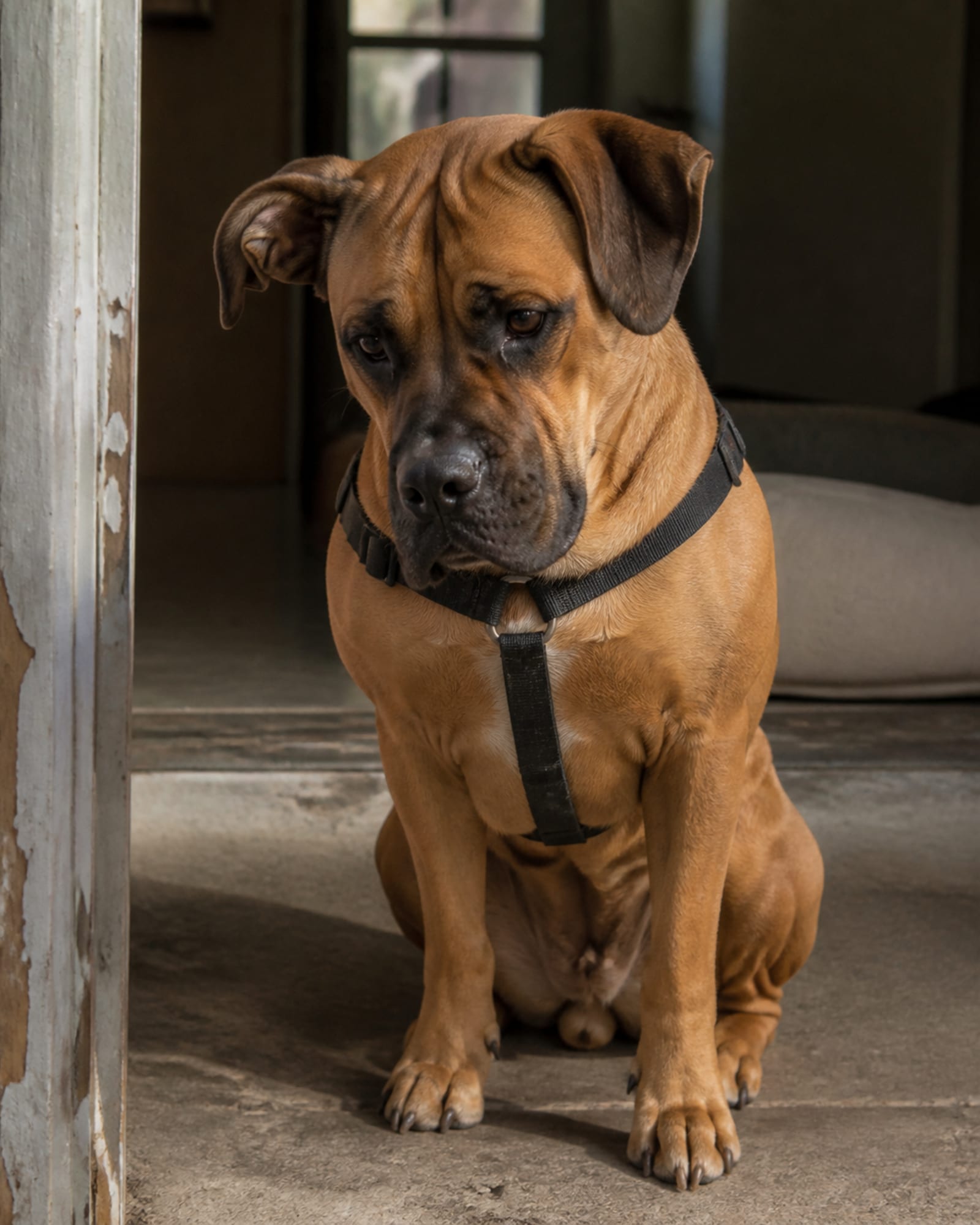
A dog sitting with its head lowered a fraction, watching hands out of frame, in Odenton, MD
Phone (443) 429-0445, seven days a week from 6 AM to 7 PM. Tell me what happens when you open the tailgate and how much of it you are actually in control of.