01
Rail on nearly every side
CSX and Norfolk Southern lines close to central neighborhoods, plus I-70, I-81 and the Dual Highway. Sudden, large sound with little warning.


Hagerstown is the furthest town I serve and the one with the tightest household budgets: 43.3% owner occupancy, and a poverty rate of 21.9%. So this page starts with what you can do for nothing, and it is more than most trainers will tell you.
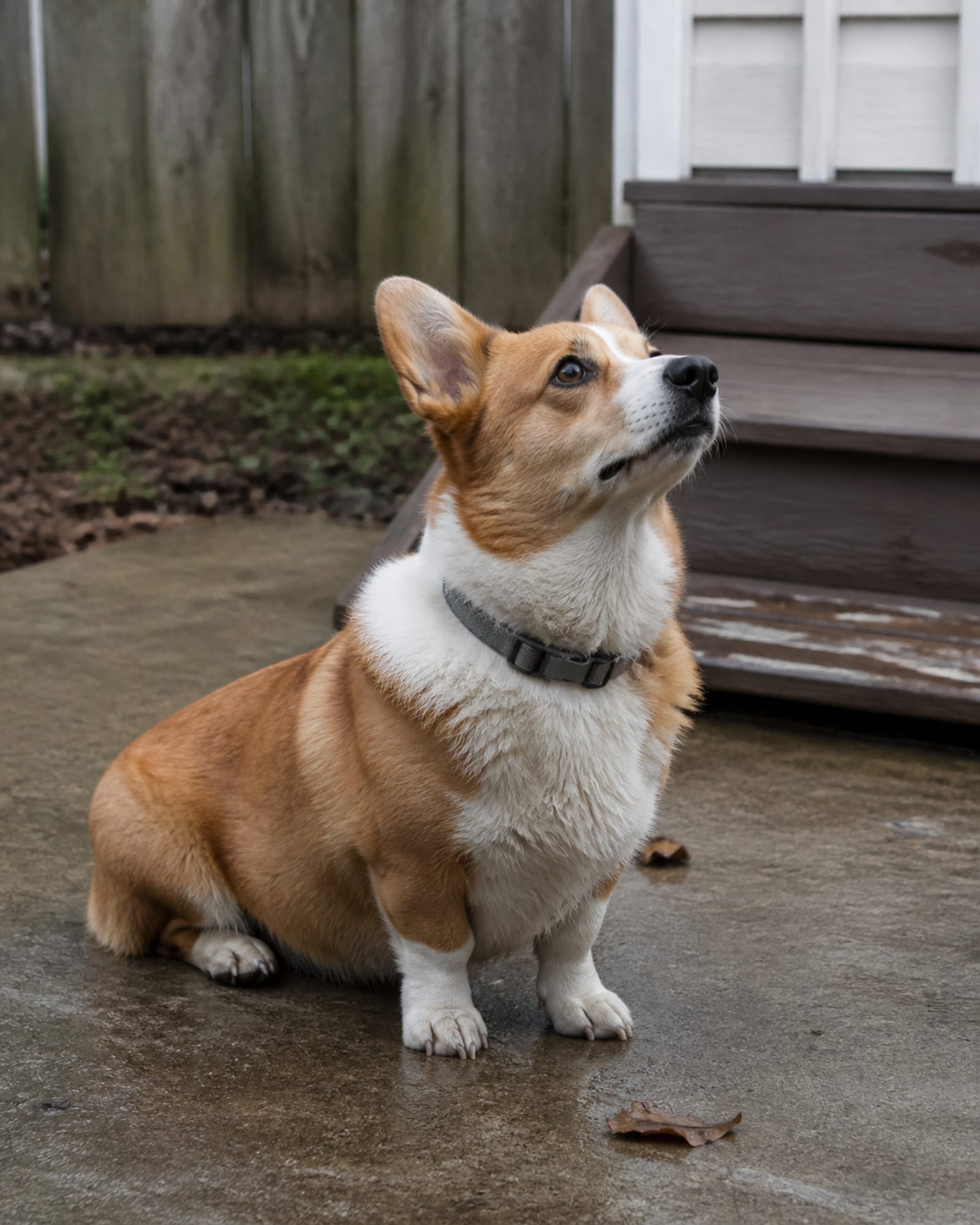
A dog sitting at the foot of steps, looking up out of frame, in Hagerstown, MD
Most people looking for a dog trainer want to know the price and do not want to ask.
Mine are published on the site and they are not small: the in-home evaluation is $100 and it rolls into the training fee, and the programs run from $700. For a good number of households in this city that is a real decision rather than a small one, and pretending otherwise would be insulting.
Hagerstown has 43,527 residents across 18,144 households averaging 2.36 people, with fewer than half of homes owner occupied and better than a fifth of residents below the poverty line. It also has more genuine architecture than most places twice its size: Victorian and Beaux Arts commercial buildings downtown, worker rowhouses, pre-Civil War dwellings, and Colonial, Georgian, Tudor, Foursquare, Queen Anne and Arts and Crafts houses on the curving streets of Oak Hill.
So here is the honest version. A large share of what makes a dog easier to live with costs nothing, needs no equipment and does not need me. Do those first. If you still need help afterwards, you will need less of it.
None of this requires money, a trainer, or anything you do not already own.
Stop the rehearsal. Whatever the dog does that you dislike, he is practicing it, usually several times a day, and every repetition makes it stronger. Barking at the window, pulling toward the same corner, mugging visitors at the door. Change the room, change the route, change the hour you walk, and the practice stops. That single move does more in a fortnight than most first sessions, and it costs nothing at all.
Say it once. A cue repeated four times teaches the dog that the first three mean nothing, and it is the most common thing I correct in any house at any income level. Say the word once, wait, then help him do it. Free, immediate, and it changes how a dog listens within days.
Feed him for the behavior you want instead of only noticing the behavior you do not. Most dogs get attention for being a nuisance and silence for lying quietly, which is exactly backwards. Use his own dinner, handed out a piece at a time for settling, and you have paid nothing extra.
Get the equipment right rather than expensive. A plain fixed-length leash and a properly fitted collar or harness. A retractable leash makes pulling worse and costs more than the thing that works. Check the fit: two fingers, no more, and for a narrow-headed dog make sure it cannot come over the ears.
And ask your vet before you assume it is behavior. A dog who has become snappy, restless, or suddenly unclean in the house may be telling you about pain, hearing loss or something else physical. That visit is not free but it is cheaper than months of training aimed at the wrong thing, and it is the single most common thing worth spending money on before you spend it on me.
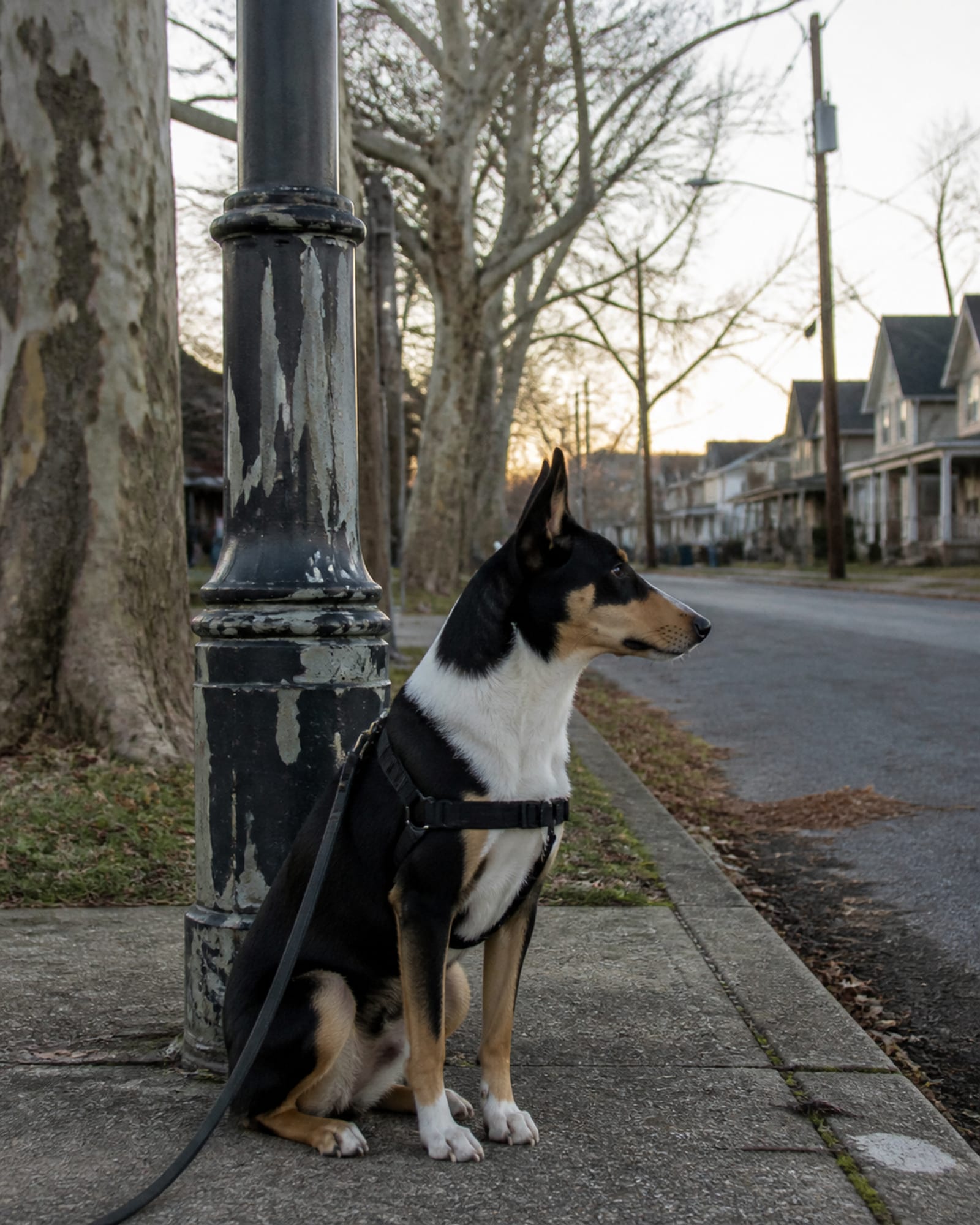
A dog sitting square beside a lamp post, in Hagerstown, MD
The one that most affects daily life. Households that try to fix everything at once fix nothing, and that is true whether or not a trainer is involved.
Time, place, what came before, what you did. The pattern is almost always visible by day three, and seeing it is most of the work.
Shut the room, change the route, walk at a different hour. You are not solving it yet, you are stopping it getting stronger while you build the alternative.
Usually a settle on a mat. Ten minutes twice a day, using his dinner as the payment. This is the single most useful behavior a dog can own.
Every time, by everyone in the house. Free, and it is the difference between a dog who listens and a dog who waits to see if you mean it.
At a distance he can handle, on a day when he is fresh. If it falls apart, you went too fast; back off and try again in a few days.
A real city with a karst valley underneath it and freight rail almost all the way round.
01
CSX and Norfolk Southern lines close to central neighborhoods, plus I-70, I-81 and the Dual Highway. Sudden, large sound with little warning.
02
Worker rowhouses, converted large homes and apartment buildings mean barking and alone-time behavior are a neighbor's business as well as yours.
03
With 43.3% owner occupancy, most households here answer to a lease, and the lease usually has more to say about the dog than the county does.
04
Limestone and dolomite karst, with mapped sinkholes, springs and closed depressions, and city runoff into the confined Hamilton Run channel.
05
Door spacing, basement entries and long front approaches vary enormously between districts, so a plan built on one street may not fit the next.
06
Swans and lakes at City Park, and sports and a dog run at Fairgrounds Park. Two very different environments a mile apart.
Having said all of that, here is where a trainer genuinely earns the money.
Anything with teeth in it. A dog who has bitten, snapped, or is guarding hard enough to worry you is not a do-it-yourself project, and the free advice above is not what that situation needs. That is an evaluation, in person, and it is worth finding the money for because the alternative outcomes are worse and more expensive.
A problem you have already worked on for months without moving it. If three months of consistent effort has produced nothing, the diagnosis is usually wrong rather than the effort, and an hour of somebody looking at the actual dog in the actual room is the cheapest way to find that out.
And the pulling, if it is a physical safety issue rather than an annoyance. On brick, on a slope, in ice, a dog you cannot hold is a fall waiting to happen, and half of that is usually equipment and mechanics that change inside one session.
What you are buying, honestly, is diagnosis and sequence rather than secret techniques. The techniques are mostly public. What is hard is working out which problem you actually have, which one to fix first, and what to do when it stalls in week three, and that is what I do in the house rather than over the phone.
One thing about distance, since Hagerstown is the furthest point I reach. It is inside the two hour service area, so in-home lessons and Kick Start come out here, but it is well outside the ring I take boarding dogs from, so a residential stay is not available. That also means my visit is a longer round trip, so it is worth planning what we cover rather than using it to sort out something you could have handled from this page.
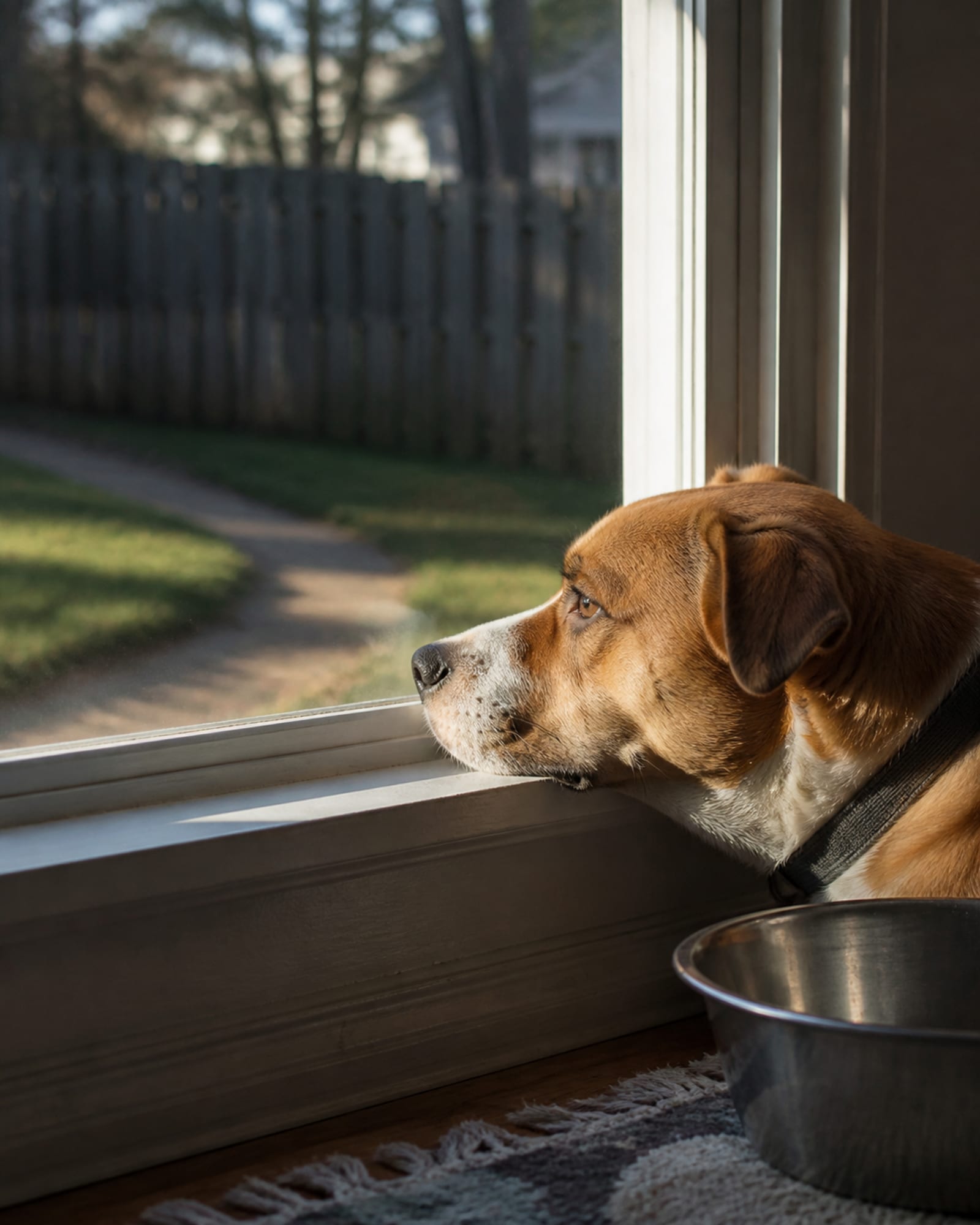
A dog's head resting on a windowsill, light from the side, in Hagerstown, MD
Phone (443) 429-0445, seven days a week from 6 AM to 7 PM. Tell me what you have already tried and for how long, and I will tell you honestly whether you need me.