01
A dog who will not be handled
Nails, ears, paws, being lifted. The work above, and usually the most useful thing I can leave a household with.

Chestertown averages 1.91 people per household, the smallest figure anywhere I work, and 26.1% of residents are 65 or older against 15.8% under 18. That combination puts an unglamorous skill near the top of the list: being handled without a fight.
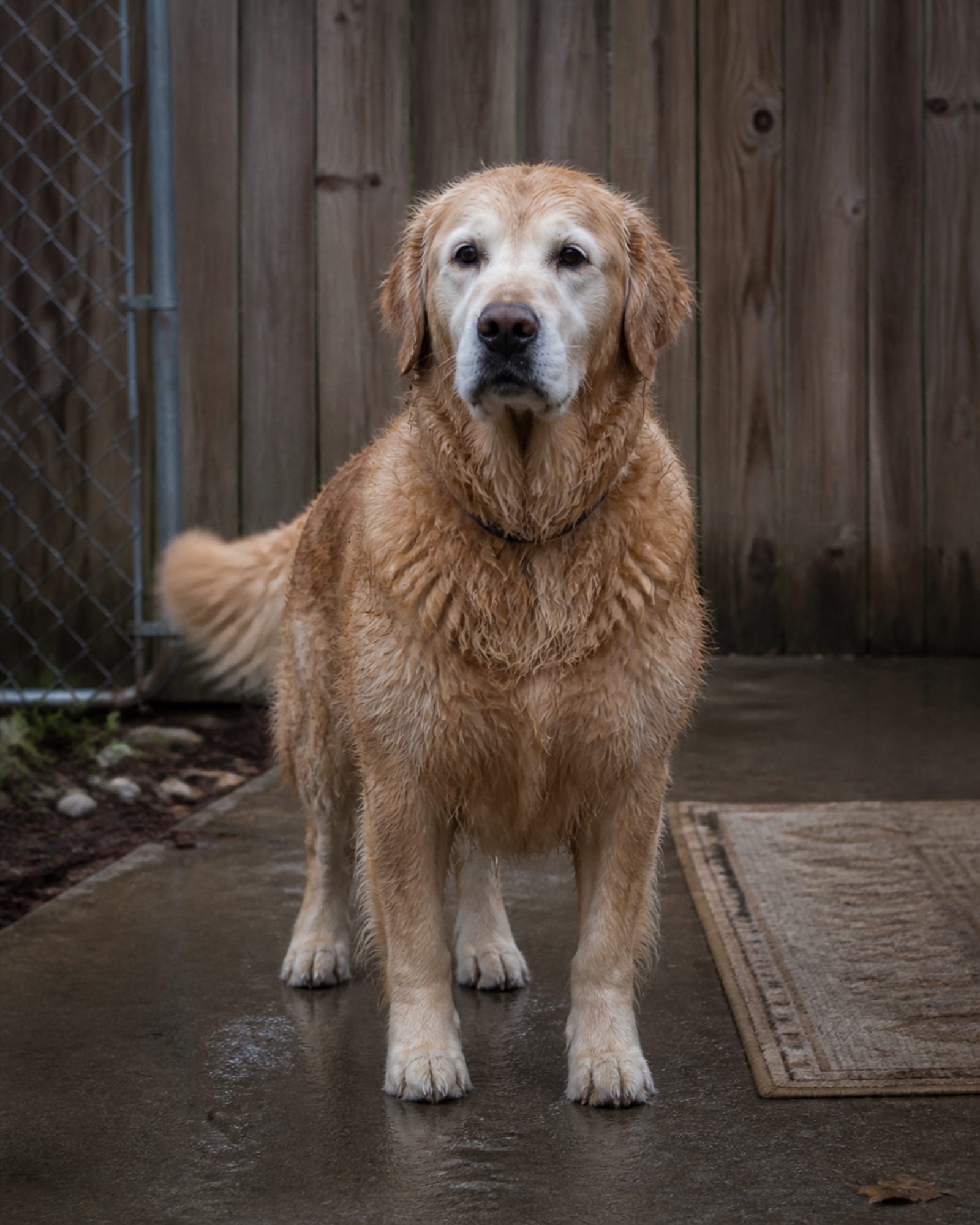
A dog standing square and settled, seen full body from the front, head up
Nails, ears, teeth, a lump somebody wants to feel, a paw held while a thorn comes out. A vet listening to a heart. A groomer working near an eye.
None of that is training in the way people mean the word, and all of it decides how the next ten years go. A dog who tolerates handling gets routine care without drama. A dog who does not gets sedated for a nail trim, avoids the vet until something is properly wrong, and eventually gets a note on his file that changes how everyone treats him.
Chestertown is a town of 5,532 people in 2,195 households across 2.92 square miles, with a college, a hospital, and an older resident profile than almost anywhere on my list. Small households mean one person is usually doing the holding. An older handler cannot out-muscle a struggling dog and should not have to. And in a town this size you will use the same veterinary practice and the same groomer for years, so a dog with a reputation carries it.
This work is called cooperative care, and it is the least fashionable and most useful thing I teach.
It is not only unpleasant on the day. It compounds.
Every bad handling experience teaches the dog that being held leads to something he cannot escape. The next time he starts objecting earlier, because he has learned to predict it, and the time after that he objects at the car park. That is not stubbornness developing, it is a perfectly sensible forecast being refined.
Meanwhile the humans adapt in the direction that makes it worse. Nails get left because it is a fight, so they get longer, so the trim hurts more, so the fight gets bigger. Ears get checked less often, so a problem is found later. The dog is not seen for a small thing, so he is seen for a large one, at which point he is in pain and being handled by strangers.
The reason this is more urgent in a small household is that there is often nobody to help. Two people can manage a struggling dog badly but safely. One person cannot, and one person is the norm here at 1.91 residents per household. So the dog has to cooperate rather than be overpowered, because overpowering is not on the table.
And the reason it is more urgent with an older handler is the same, plus the consequences of a wrench or a fall. Pikesville and the handling-strength conversation belong to another page; the point here is narrower. A dog who stands still to be examined is not a luxury for somebody in their seventies, it is what makes keeping a dog sustainable.
The good news is that this is one of the more reliable pieces of training there is, because the dog gets a genuine say in it, and dogs who are given a say generally stop needing to argue.
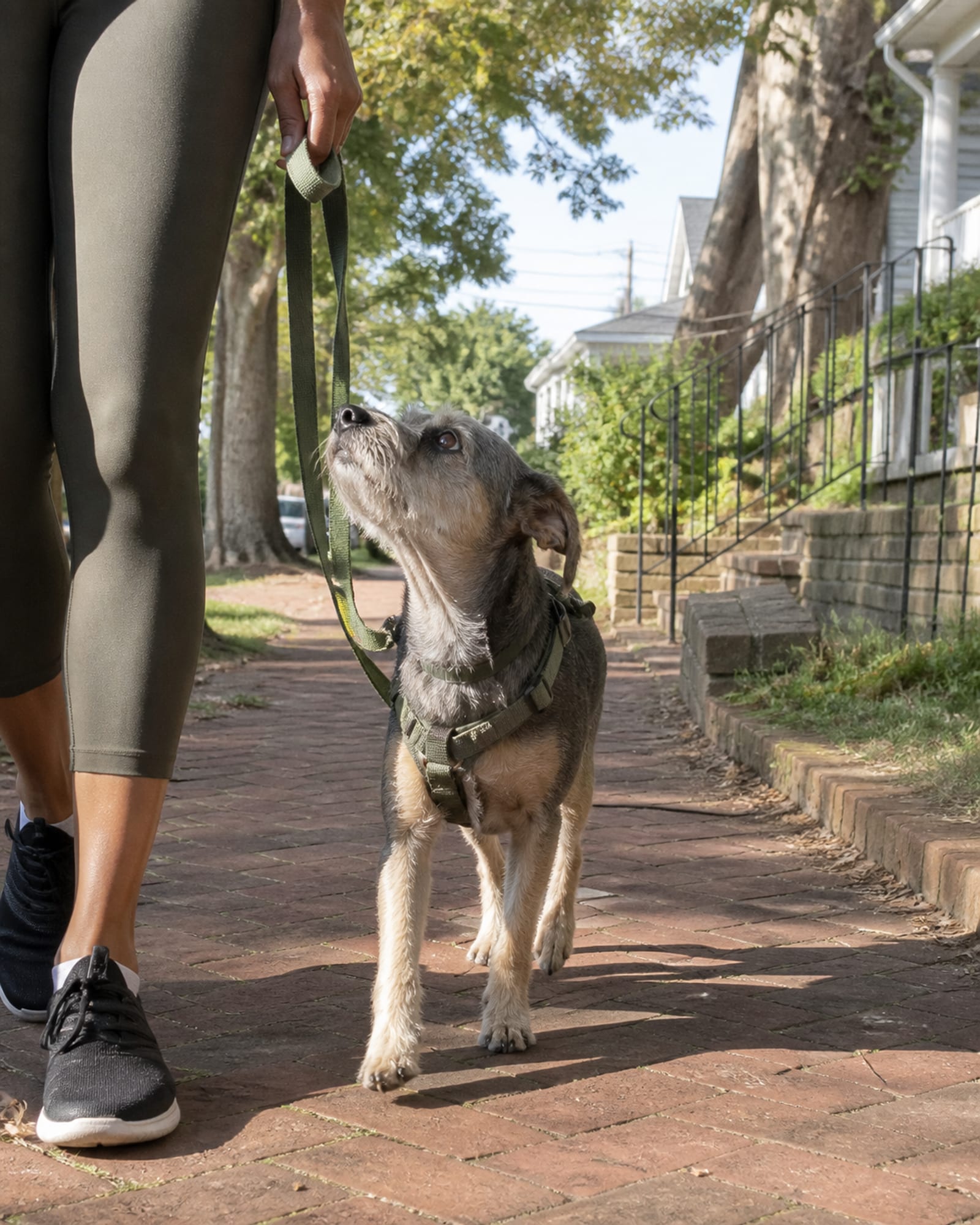
A dog walking at heel beside a handler's lower legs, both cropped at the knee
A small, historic, waterfront county seat with an older profile and a college in the middle of it.
01
Nails, ears, paws, being lifted. The work above, and usually the most useful thing I can leave a household with.
02
At 1.91 people per household most dogs here have a single handler, so any technique that needs a second pair of hands is not a technique that will get used.
03
The historic district has narrow setbacks and brick walks, so a door can open almost onto the public footway with no buffer at all.
04
Old brick walks move and tilt. That matters for a dog with stiff hips and for a handler who cannot afford to be pulled off balance.
05
Tidal water, geese, boats, marina lines, mud and open wind along the Chester River, none of which appear in an inland subdivision.
06
Agricultural equipment and trucks come into town on MD 20, MD 213 and MD 291, which is a very different sound and size from ordinary road traffic.
Standing or lying on a mat, chosen by him, paid well. That position becomes the way he says yes, and having a way to say yes is the whole foundation.
Shoulder first, nowhere difficult. One second, food, hands off. Stopping before he wants you to is what builds the trust that everything later depends on.
Shoulder, leg, paw, then between the toes. Ears and mouth last. Each new area starts back at one second regardless of how well the previous one went.
Clippers touched to a paw with no cutting, for a week. The sound of them running, across the room. The tool has to become boring before it is ever used.
He stands up, or leaves the mat, and you stop immediately. Counterintuitive and essential: a dog who knows he can end it stops needing to escalate to be heard.
A table, a stranger's hands, a drive there and back with nothing happening. The vet's floor should not be the first unfamiliar surface he is asked to stand on.
Handling is the specialty here. A few other things shape what a walk looks like.
The housing splits sharply. The historic district gives tree-lined streets, narrow setbacks, brick sidewalks and exterior-review rules, with front doors close to the public walk. Outside it there are cul-de-sacs and larger lawns toward the northern edge, plus college rentals, apartments, manufactured housing, retirement living at Heron Point and newer subdivisions such as Coventry and Foxley Manor. A plan built for one of those does not transfer to the other.
Water is the other constant. Radcliffe Creek threads through developing land north of downtown, wetlands constrain routes, and along the waterfront you get tidal water, geese, boats, marina lines, mud and open wind. Wilmer Park and the marina are pleasant and they are advanced environments for a dog who is not ready.
There is one genuinely charming local detail worth knowing about, because it is a surface transition dogs notice: Stetson Dog Park deliberately uses decomposed granite near its gate to cut the mud that grass produces. A dog who is uncertain about changing underfoot textures will tell you about it right there, which makes it a useful place to find out.
For quiet work, Margo G. Bailey Park, Gateway Park, Ajax Park and the Wayne Gilchrest Rail Trail give you flat, predictable ground. Fountain Park and the High Street end are the busier proving grounds, with students, markets and bicycles depending on the day and the term.
One practical point about a small town that people underestimate: everybody knows everybody's dog. That is mostly a pleasure. It also means a dog with a reputation for lunging at the Fountain Park corner has that reputation with the people you will keep meeting, which is a reason to fix it early rather than manage it indefinitely.
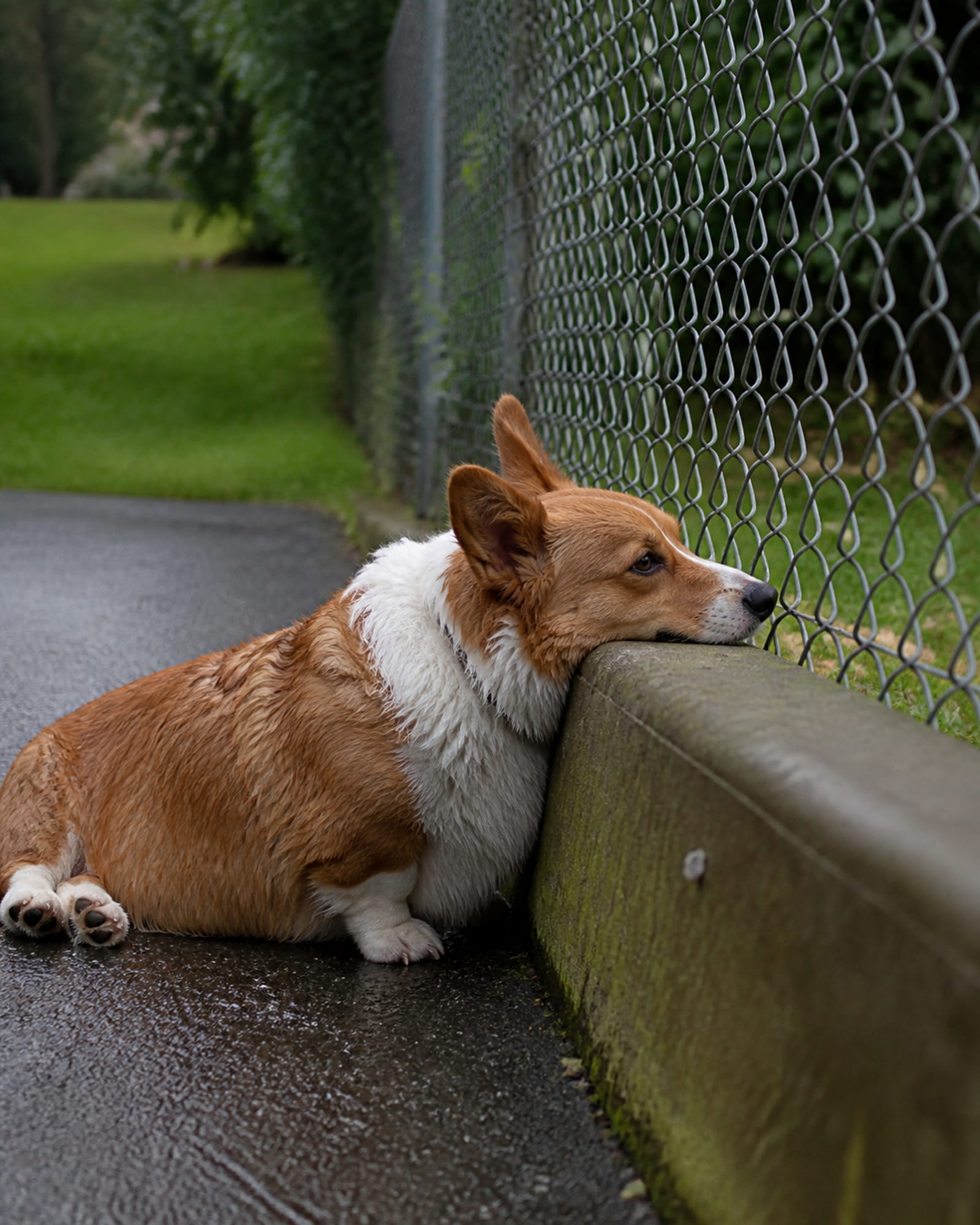
A dog's head resting on a windowsill, light from the side
Phone (443) 429-0445, seven days a week from 6 AM to 7 PM. Tell me which part of him you cannot touch, and whether anybody helps you hold him.