01
Recall that holds under pressure
Not a party trick. The behavior that lets you move a dog away from water, a horse or a road, on the first ask.


Granite steps, a valley where four streams meet, and weather that has twice put water through Main Street. Here I care most about whether you can move your dog when you need to.
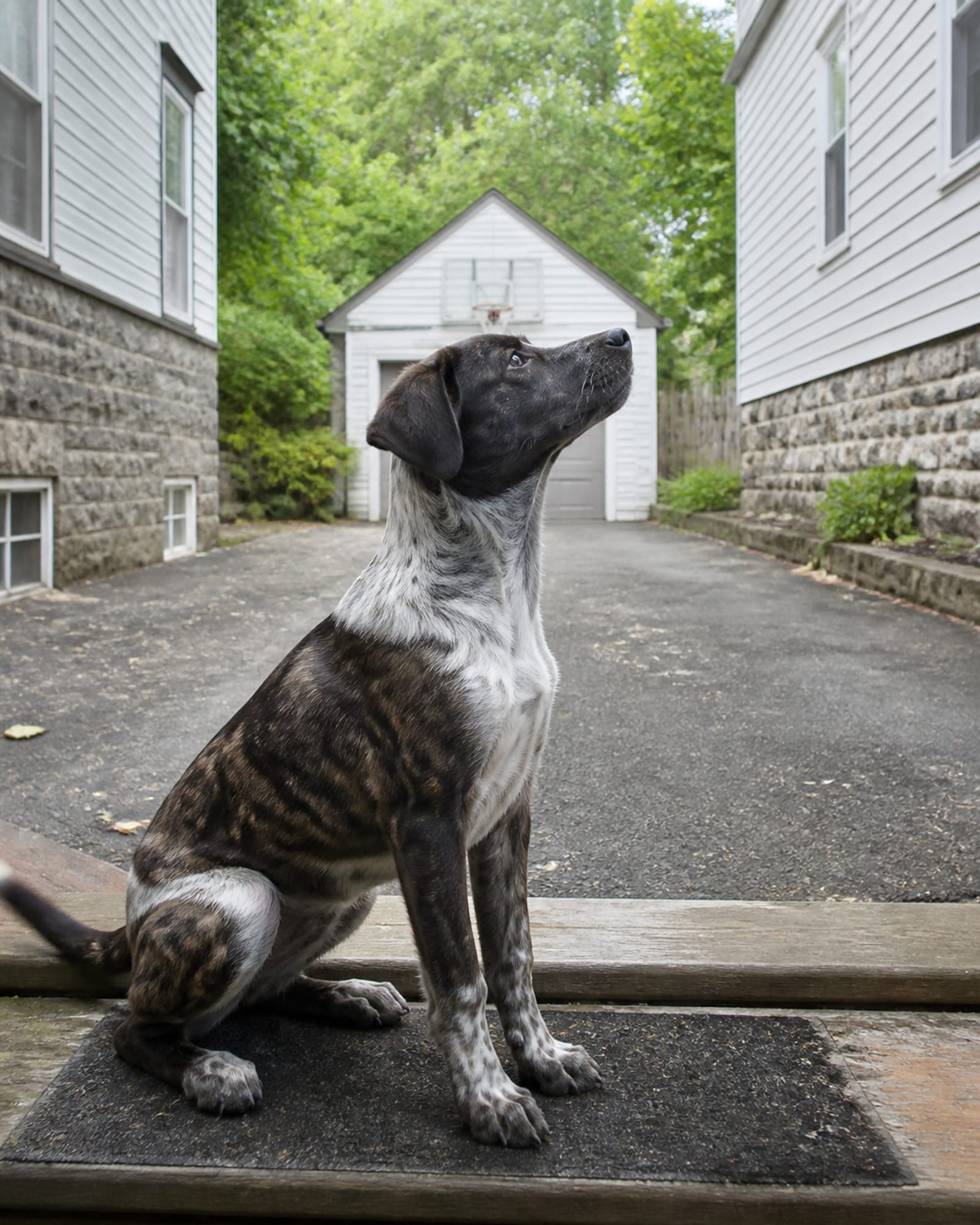
A dog sitting at the foot of steps, looking up out of frame, in Ellicott City, MD
Most people ask me for a recall because they want to let the dog off the leash in a field. In Ellicott City I think about it differently.
Historic Ellicott City sits in a narrow, steep-sided valley where the Tiber, the Hudson, New Cut and other drainage areas converge toward the Patapsco. The 2016 and 2018 floods showed how fast water can leave those channels and move through the streets. That is a matter of record here, and people lost their lives.
I am not going to use that to sell you anything. What I will say is the practical part: on a street of granite steps and narrow sidewalks, on a day when you need to move quickly and uphill, a dog that will come the first time and walk close on slick stone is worth more than a dog that knows a dozen tricks. That is not an emergency plan. It is ordinary good training that happens to matter more here than it does in a flat subdivision.
The historic core and the wider township are two different training environments, and most of my clients live in the second while walking in the first.
Main Street is granite, brick and steep exterior steps, with county design guidance identifying granite as the defining material in buildings from 1800 to 1840. The sidewalks are narrow, the grades are real, and stone that is perfectly grippy in August is not in February. A dog that pulls downhill on that surface is a genuine hazard to the person holding it.
Above the core it changes completely. The wider Ellicott City place holds nearly 76,000 people across roughly 30 square miles: postwar ranches and split-levels around Dunloggin, Colonials and contemporary detached homes, townhouses, garden apartments, and newer development around Turf Valley. Homeownership runs about 72%, and the community is highly educated and international, with 27.7% foreign-born and about a third of residents speaking another language at home.
So the honest version is that your dog's daily life is probably suburban and its hardest half hour is not. That gap is the thing to train for, and it is why I want to walk the actual route with you rather than work only in your yard.
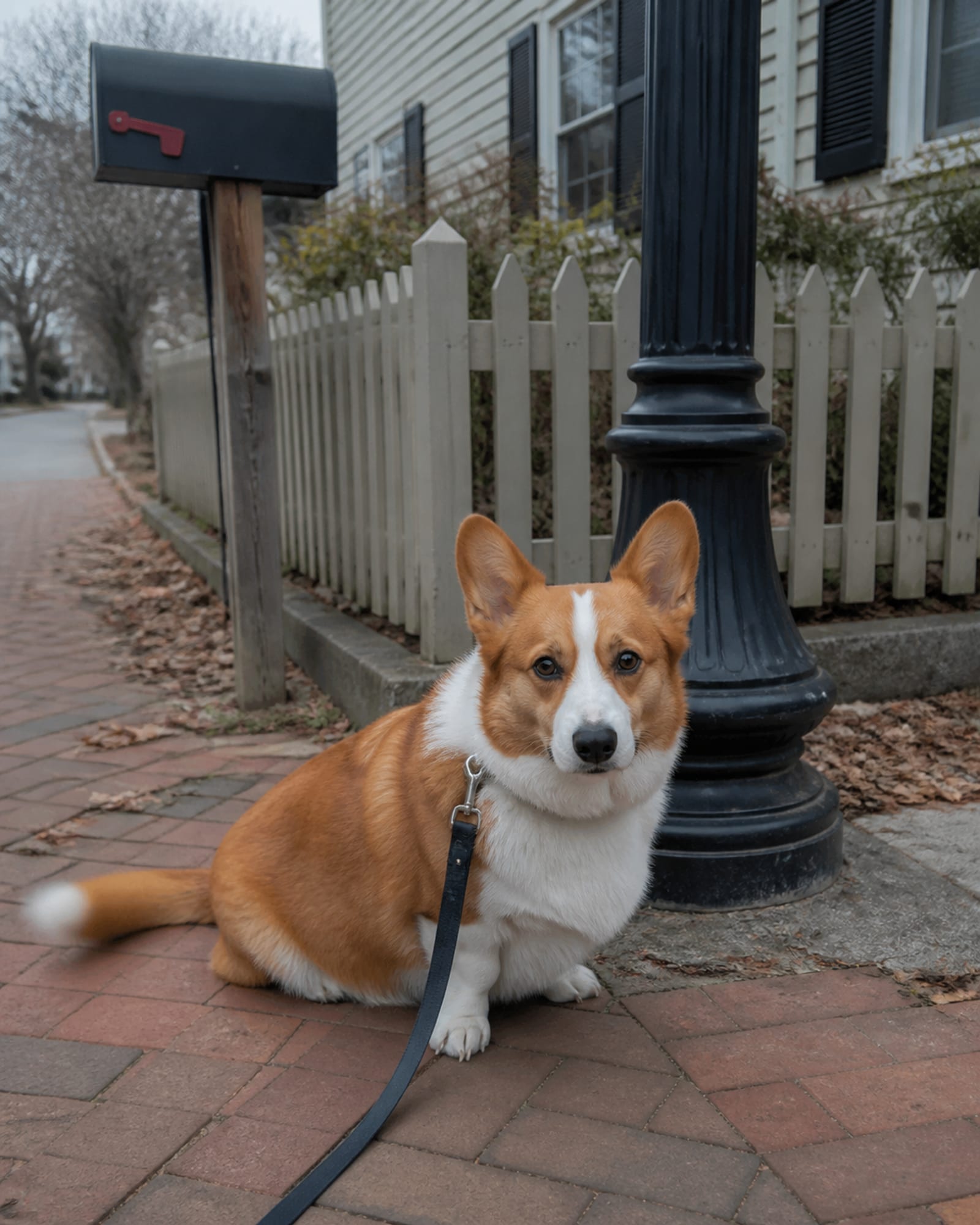
A dog sitting square beside a lamp post, in Ellicott City, MD
The state park is the reason a lot of people move here, and it is a demanding place to have an unproofed dog.
Patapsco trails put cyclists, horses, boulders, stepping-stone crossings and narrow passages together, often on a slope, sometimes with a drop on one side. Rolling Piedmont uplands above the valley add weathered rock, retaining walls, wooded slopes and stream crossings that concentrate runoff. Footing changes from packed dirt to wet rock within a few strides.
Horses are the one people underestimate. A dog that has never met one at close quarters on a narrow trail is not going to make a good decision the first time, and the consequence involves a large animal and a rider. That introduction is worth doing deliberately, at distance, before it happens by accident.
Dogs stay leashed where pets are permitted in Patapsco, which is the rule and also, frankly, the sensible approach on that terrain regardless. What I work on for the park is confidence on bridges and stone steps, controlled downhill movement, and a turn away from water or wildlife that holds on a narrow path where you have nowhere to go.
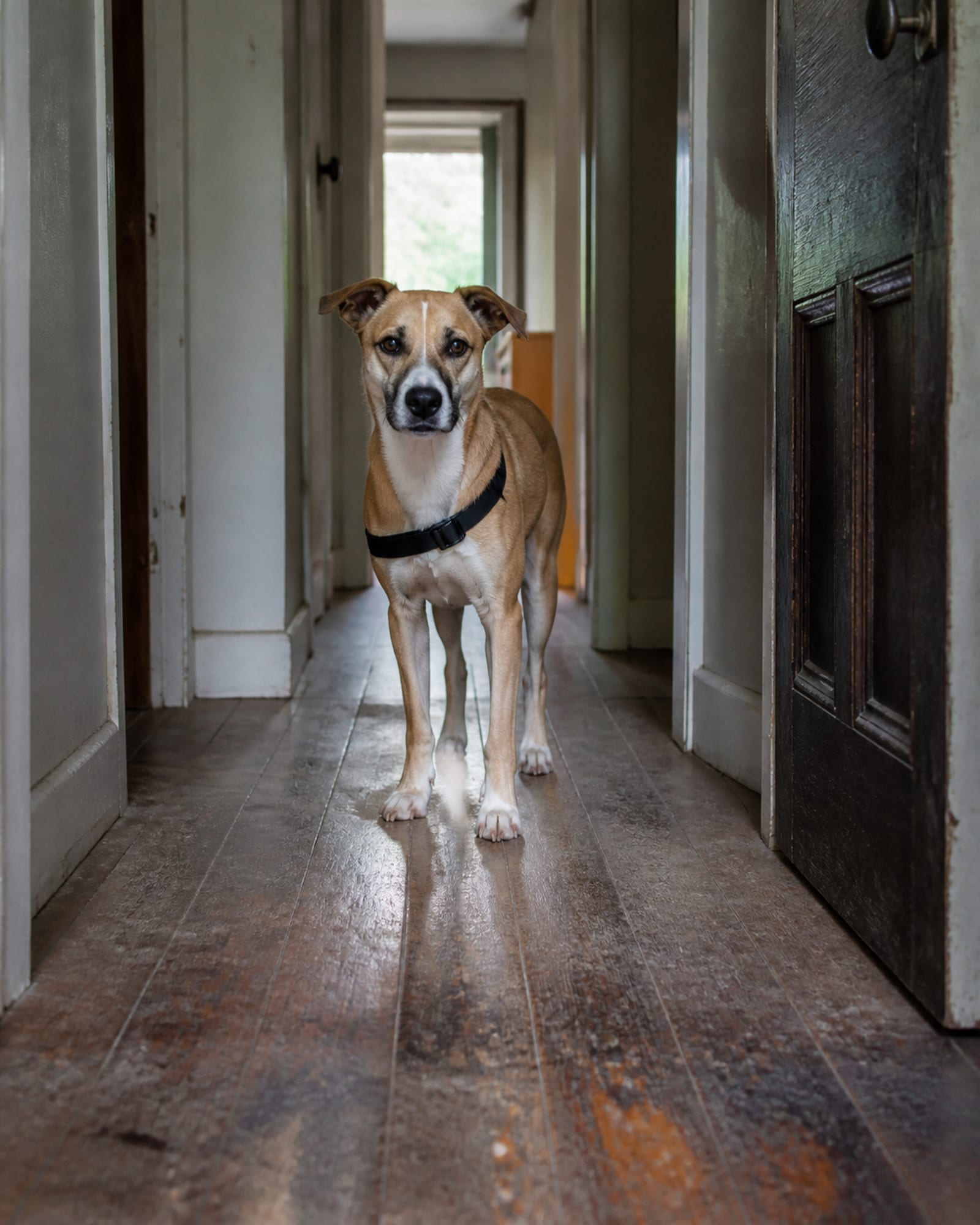
A dog standing in a hallway looking toward the camera, doors either side, in Ellicott City, MD
At your home, rolling into the training fee. I want to see the dog on your own steps and your own street before I say anything about a plan.
Indoors, then a long line in the open, every repetition succeeding because the line makes it succeed. A dog that learns ignoring the cue is an option is very hard to un-teach.
Stone, wet stone, wooden bridges, steps with a rise the dog has to think about. Confidence on footing is trained, not hoped for.
Cyclists, other dogs, then horses at whatever distance your dog can actually think at. Closing that distance is a matter of weeks, not one session.
Narrow walks, tourists, food, stairs. Then you run it while I watch, and you have my number afterwards for the life of the dog.
The local pattern.
01
Not a party trick. The behavior that lets you move a dog away from water, a horse or a road, on the first ask.
02
Granite and brick in the wet, with a grade. The most physically consequential handling problem in the historic district.
03
Steep exterior stairs and stepping-stone crossings. A dog that balks or bolts on either is worth fixing before it happens somewhere narrow.
04
Fast or large, arriving with little warning on a path with no room. Worth introducing deliberately rather than by accident.
05
Ellicott City Partnership events, Paint It, seasonal celebrations and outdoor music funnel people into a narrow corridor with stairs and limited escape space.
06
A dog that only walks one route copes badly when that route is closed. Variety is worth building in before you need it.
Ellicott City is inside every range I work to, so all three programs are genuinely available here.
In-home private lessons are $700 for an evaluation plus four one hour sessions across about two months. Kick Start is $1,600 for five consecutive daily sessions in your home and neighborhood, then an owner lesson and a two week follow up, with equipment included. Board and train means your dog lives in my home rather than a kennel run, and the two and three week programs are on the board and train page.
For a recall and footing problem I usually prefer to come to you, because the steps, the stone and the trail head are all at your address and none of them can be reproduced at mine. Board and train is the better answer when the underlying obedience is missing entirely, because it is difficult to proof a recall on a dog that has never reliably listened anywhere.
The thing I will not do is take a dog onto Main Street during a flood watch to make a point about proofing. That is an evacuation environment, not a training opportunity, and any trainer who treats it as one is telling you something about their judgment. If the weather is wrong on the day, we move the session indoors or onto higher ground, and that is a normal part of the plan rather than a cancellation.
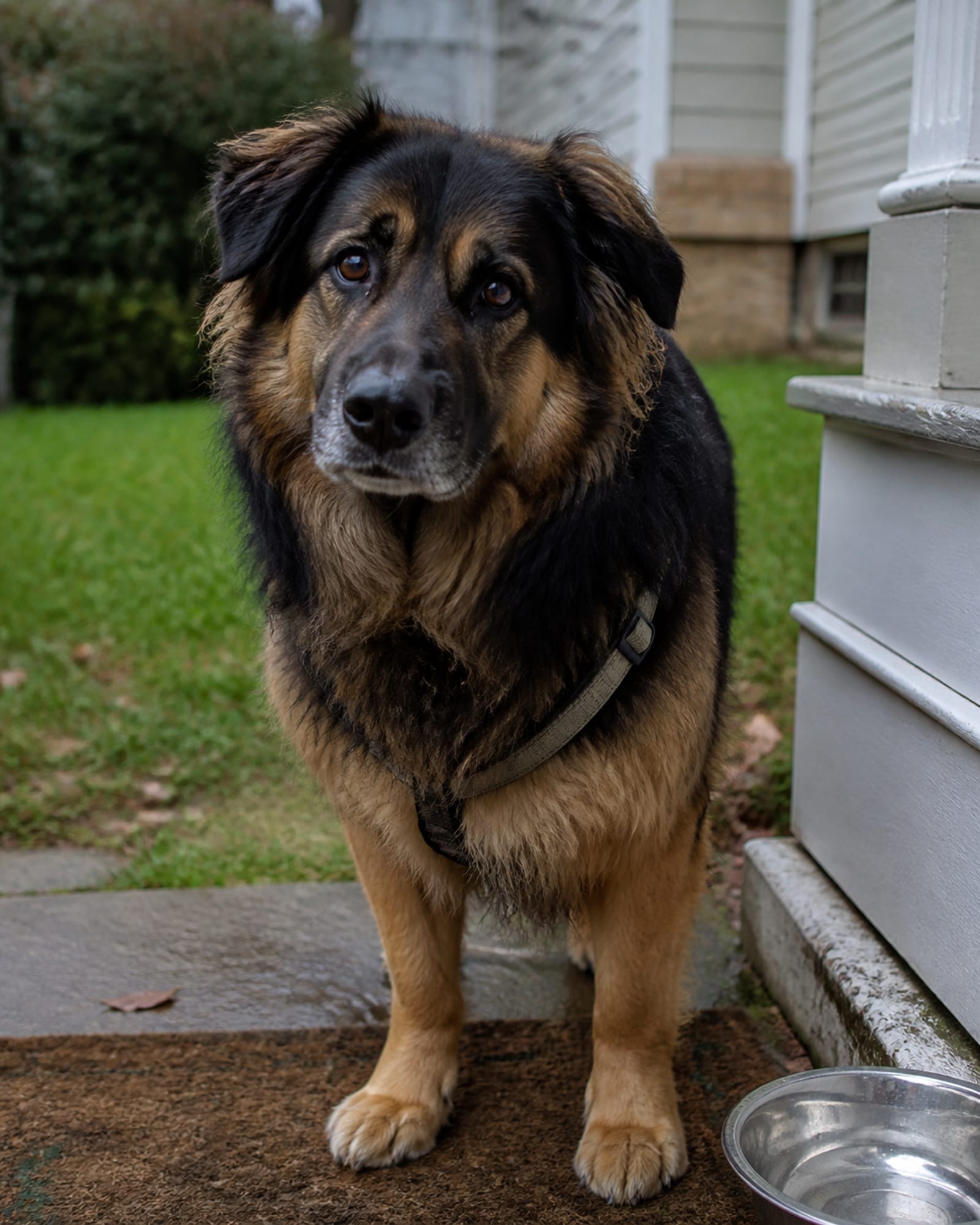
A tight portrait of a dog's head and shoulders, eyes soft and attentive, in Ellicott City, MD
Phone (443) 429-0445, 6 AM to 7 PM, seven days a week. If there is a stretch you have stopped walking, that is the useful thing to lead with.