01
A turn you can rely on
Not a sit, not a heel. The ability to change direction with you the moment something appears, before the dog has committed to a reaction. This is the single most useful behavior in Columbia.
Columbia gave everyone paths instead of sidewalks. They curve, they duck under roads, and a cyclist can be on you before you hear anything. That is the local training problem.
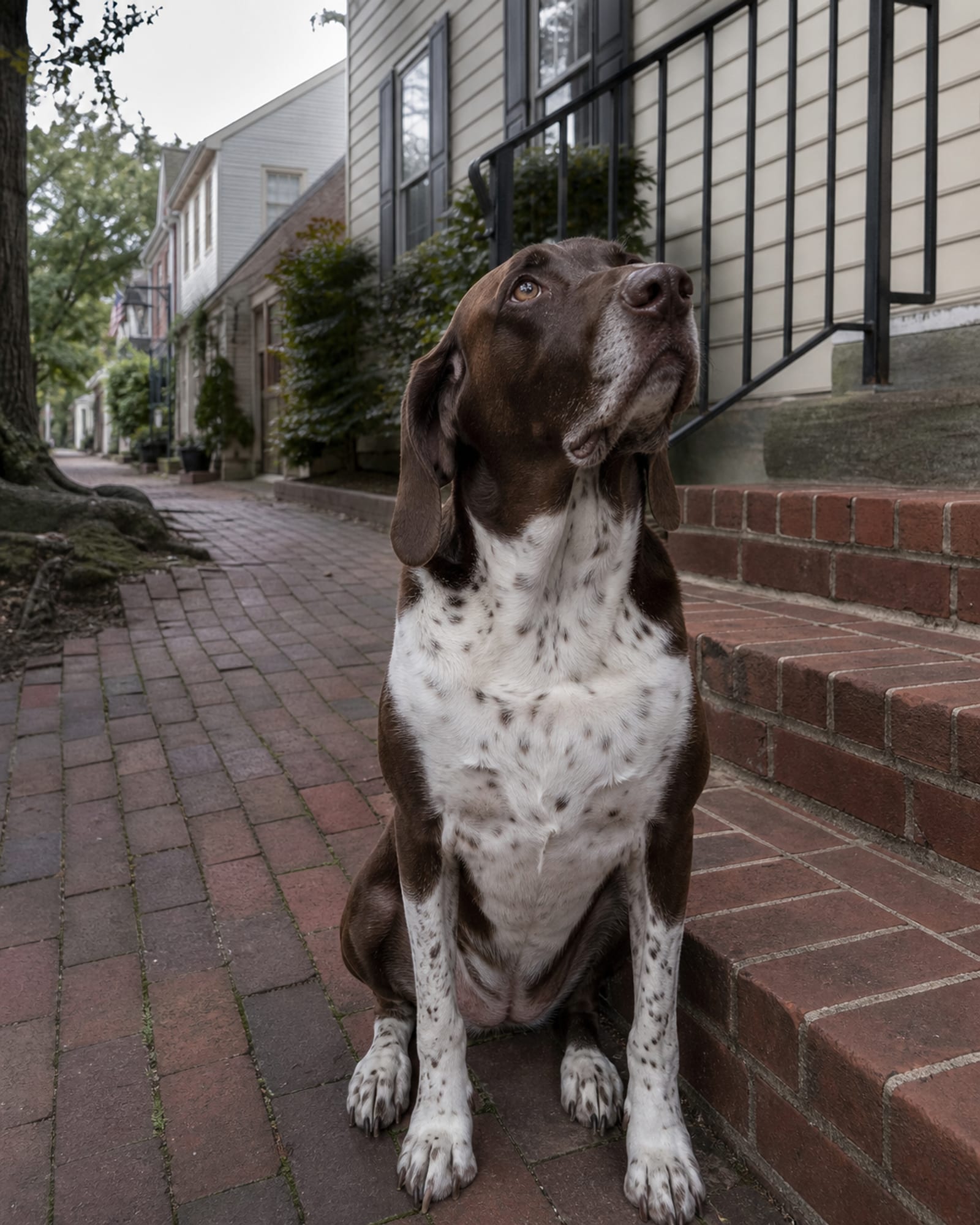
A dog sitting at the foot of steps, looking up out of frame, in Columbia, MD
A sidewalk has a road beside it. When something is coming that your dog cannot handle, you step off, cross over, or put a parked car between you. There is always an out.
Columbia's pathways have none of that. They run through wooded curves and stream valleys, they duck under roads at underpasses with almost no sight distance, and they are eight feet wide with trees on both sides. When a bicycle comes around the bend, or a dog appears at the far end of an underpass, you have no room to give. You cannot cross the road because there is no road. That is a fundamentally different problem from a reactive dog in a normal suburb, and it needs a different answer.
The answer is not more distance, because distance is the one thing this town will not give you. It is a dog that will turn away from something on your cue, quickly, in the space you actually have.
Every one of these comes from how Columbia was built rather than from anything about your dog.
01
Not a sit, not a heel. The ability to change direction with you the moment something appears, before the dog has committed to a reaction. This is the single most useful behavior in Columbia.
02
Limited sight distance means the dog gets no build-up. It goes from nothing to something at close range, which is the hardest version of the encounter.
03
Fast, quiet, and often past you before either of you reacts. Dogs that are fine with a bicycle they can see are frequently not fine with one they cannot.
04
Three lakes and 41 ponds. Lake Elkhorn alone is 37 acres taking a roughly 2,500-acre watershed. Waterfowl lifting off is about as strong a trigger as a dog will meet.
05
Wooden bridges, algae-prone edges, wet leaves on a slope. A dog that has never been asked to cross a bridge calmly will not do it first time under pressure.
06
Ten village associations, each enforcing its own covenants. Worth knowing what yours says about dogs and common space before we plan where sessions happen.
Columbia was master-planned from Wilde Lake in 1967 outward, and the shape of it still decides what your dog's daily life looks like.
There is no traditional grid. Housing is organized into villages and neighborhoods: late-sixties and seventies contemporary detached homes, split-levels and Colonials, clustered townhouses, garden apartments and condominiums, with newer mid-rise and high-rise buildings downtown. Wooded lots and cul-de-sacs are common in the villages, while the Merriweather and Lakefront districts add elevators, garages, lobbies and busy sidewalks.
So the training need genuinely differs by village. On a leafy cul-de-sac lot it is fence work and recall, because the dog has room and cover and neither of those helps you. In a townhouse cluster it is close-passage manners, because your front door is one of six. Downtown it is thresholds and quiet in shared space. Roughly 65% of homes are owner-occupied, and the population is unusually international, with 20.8% foreign-born and about a quarter of residents speaking another language at home.
Columbia Association and the ten independent village associations make an unusually strong civic structure, and their calendars are full: Lakefront Live, concerts at Merriweather, the Chrysalis in Symphony Woods, Color Burst Park, village fairs and pool programs. Every one of those is a genuinely good final exam and a genuinely bad first lesson.
One more thing the plan has to respect. Columbia's terrain is rolling Piedmont cut by Little Patuxent tributaries, with 34 miles of managed stream valleys running through the middle of where people walk. That means changing grades, wet leaves, algae at the water's edge and runoff that muddies the low paths after rain. A dog that walks politely on dry level ground has not been tested until it has done the same thing on a slick downhill approach to a footbridge, and that is a normal Tuesday here rather than an unusual condition.
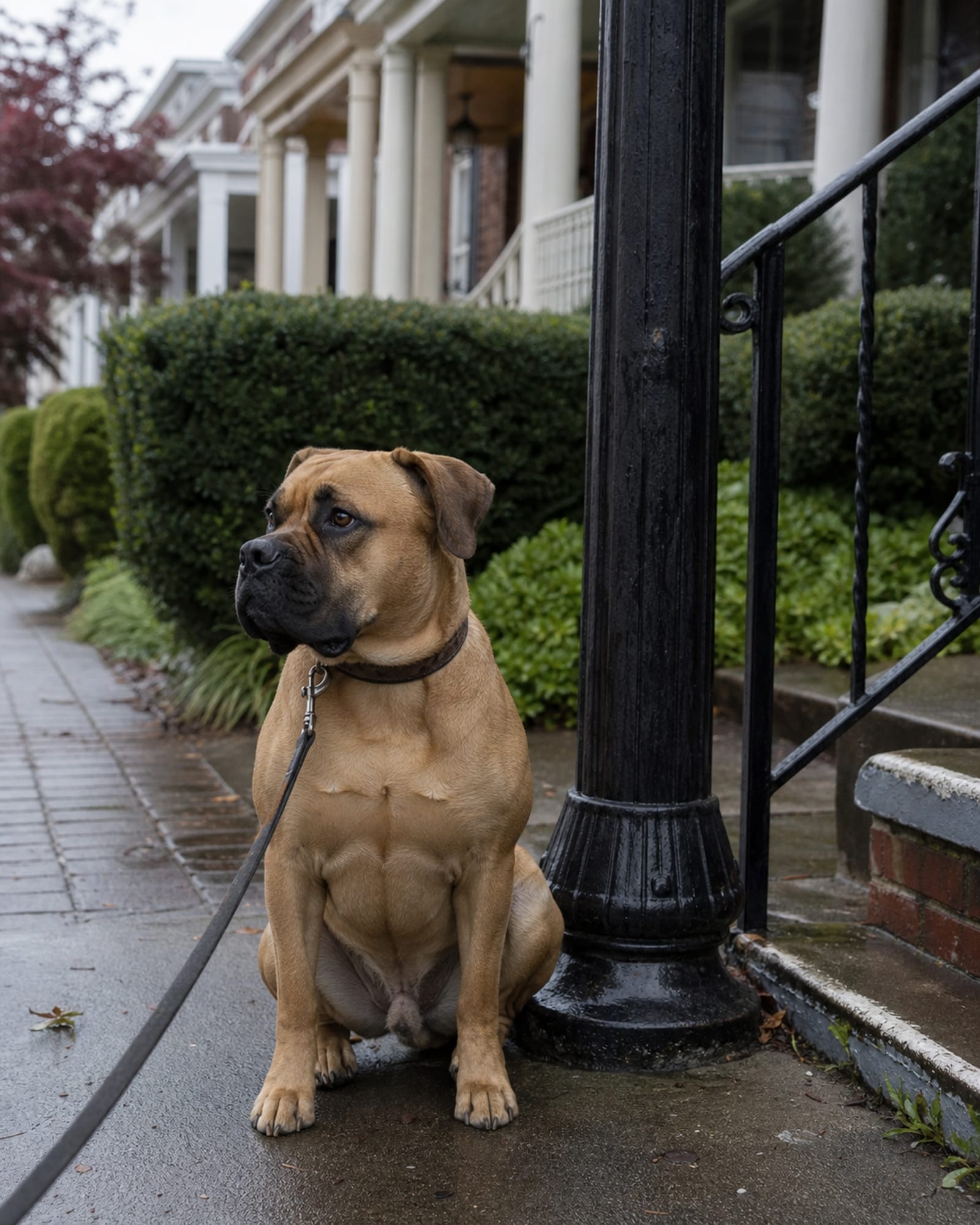
A dog sitting square beside a lamp post, in Columbia, MD
Here is the practical method for a dog that cannot yet cope with a path encounter, and why it is not simply avoidance.
For the first few weeks we usually leave the paths alone and work in an open space where you can see something coming from a hundred feet away. That is not giving in. It is the only place the dog can succeed often enough to actually learn the turn, and a dog that fails on a path every evening is rehearsing the reaction rather than the alternative.
Then we shorten the distance deliberately, in an open place, until the dog can turn with you from twenty feet, then ten. Only then do we go back to the paths, at a quiet hour, on a stretch with a decent sight line. The underpass and the blind bend come last, because they are the hardest version of the problem and the least forgiving.
There is one honest limit worth stating. I can build a dog that turns reliably and a handler who reads the path ahead. I cannot make any dog immune to a bicycle that appears at six feet with no warning, and neither can anyone else. What good training buys you is a dog that recovers instead of escalating, and an owner who is not braced for the whole walk.
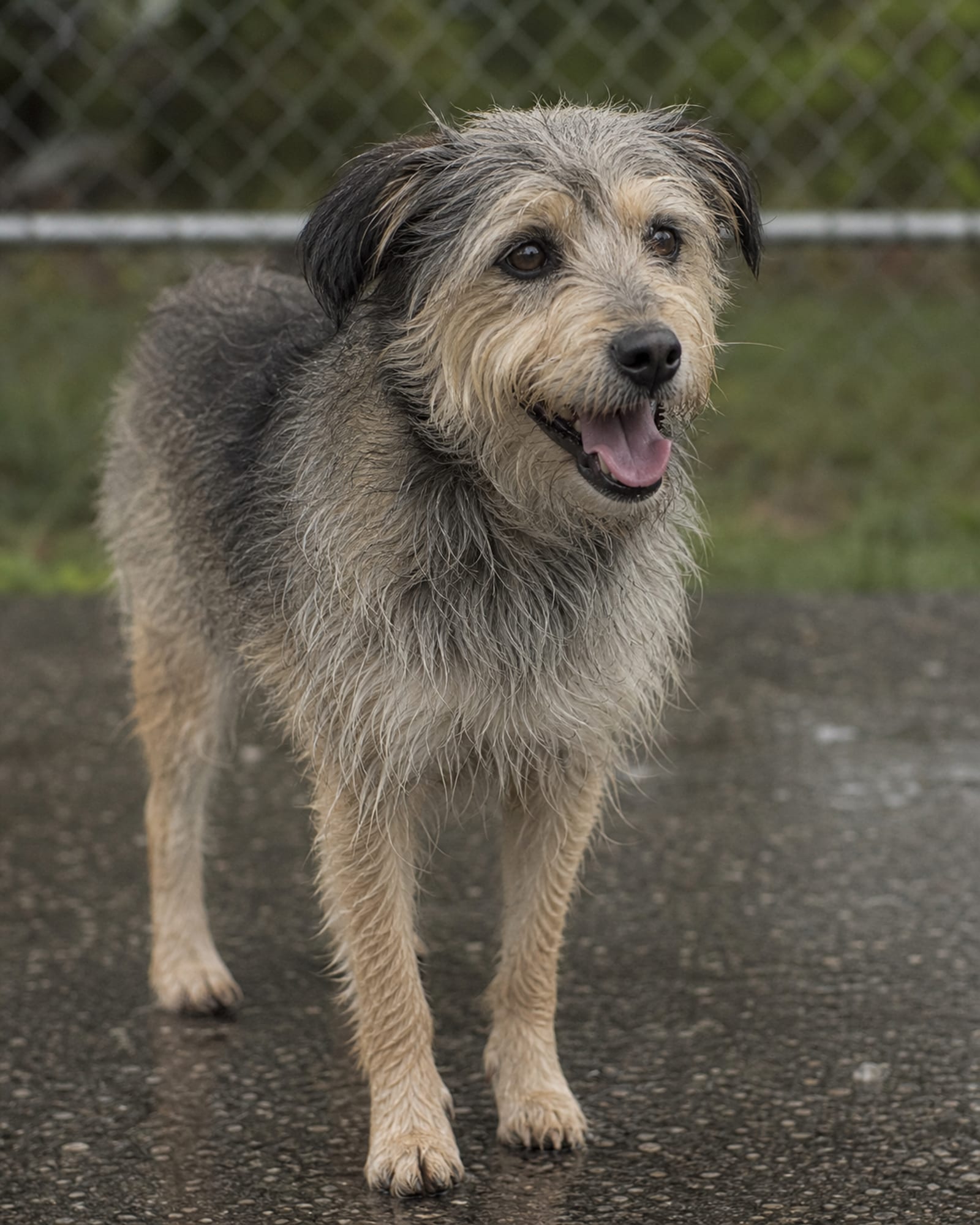
A dog panting lightly after work, mouth open, eyes bright, in Columbia, MD
Which paths, which underpass, and whether it is worse in the evening. Path problems have a geography and it is usually specific.
At your home, rolling into the training fee. I want to walk the actual stretch with you and see the dog meet the actual thing.
Somewhere the dog can see trouble coming and succeed repeatedly. This is where the turn gets built, and it is the stage people want to skip.
Twenty feet, then ten, still in the open. If it holds at ten feet in a field it has a chance on a path.
Quiet hours first, good sight lines first, the underpass last. Then the handover, and my number for the life of the dog.
Reach me on (443) 429-0445, 6 AM to 7 PM, any day. Tell me what appears, how close it gets, and whether your dog recovers afterwards.