01
Aircraft
Loud but predictable in pattern and direction, which makes it the best of the four to train against. You can plan a session around it rather than be surprised by it.


Aircraft from Martin State pass low over these neighborhoods. Most dogs stop noticing within a week. The ones that do not are the reason a good part of my work here is about sound.
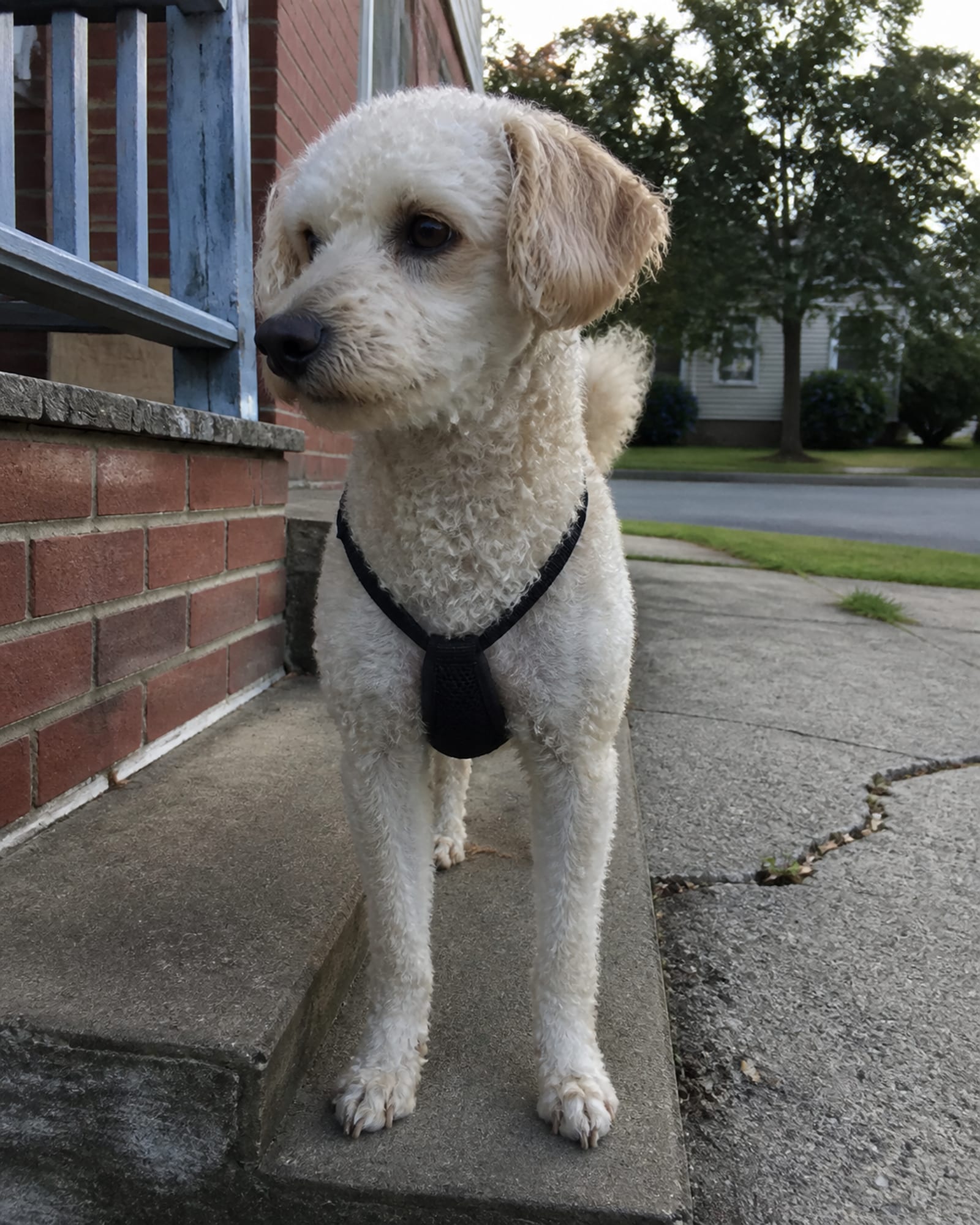
A dog standing on a low step so it fills the height of the frame, in Middle River, MD
Middle River grew up around aviation and still lives with it. Martin State Airport sits in the middle of the community, the Glenn L. Martin museum keeps the manufacturing history, and the old wartime housing at Aero Acres and Victory Villa was built for the people who made the aircraft. Add industrial noise, truck traffic on Eastern Boulevard, and the summer thunderstorms that come off the water.
For most dogs all of that becomes background within days, which is what habituation is supposed to do. For a sound-sensitive dog it does the opposite. Each pass confirms the world is unsafe, the dog gets a little worse rather than a little better, and by the time somebody calls me the dog is hiding under a bed at the first engine note and will not go outside at all in July. That dog is not being soft. Its sensitivity is genuine, and it is one of the more treatable serious problems I deal with.
This is the single most useful thing I can tell a Middle River owner, because the intuitive approach is the harmful one.
The instinct is to expose the dog to the noise until it gets over it. Take it out when the aircraft are running, sit through the storm, let it experience enough of them that it learns nothing bad happens. With a mildly worried dog that sometimes works. With a genuinely frightened one it usually does not, because the dog is not able to think at that intensity, and an animal that cannot think cannot learn anything except that the situation is unbearable and inescapable.
What works is the opposite in one specific way: you deliberately work at an intensity the dog can cope with. Far enough away, or quiet enough, that the dog notices the sound and can still eat, respond and move normally. That is the working level, and it is often much lower than owners expect. You pay well at that level, and you close the gap slowly over weeks, backing off whenever the dog stops coping.
Comforting the dog does not reinforce the fear, incidentally. That advice has been passed around for decades and it is wrong. You cannot make a frightened animal more frightened by being kind to it. What you can do is teach it that when the noise starts, you become predictable and something good happens, which is exactly the association you want.
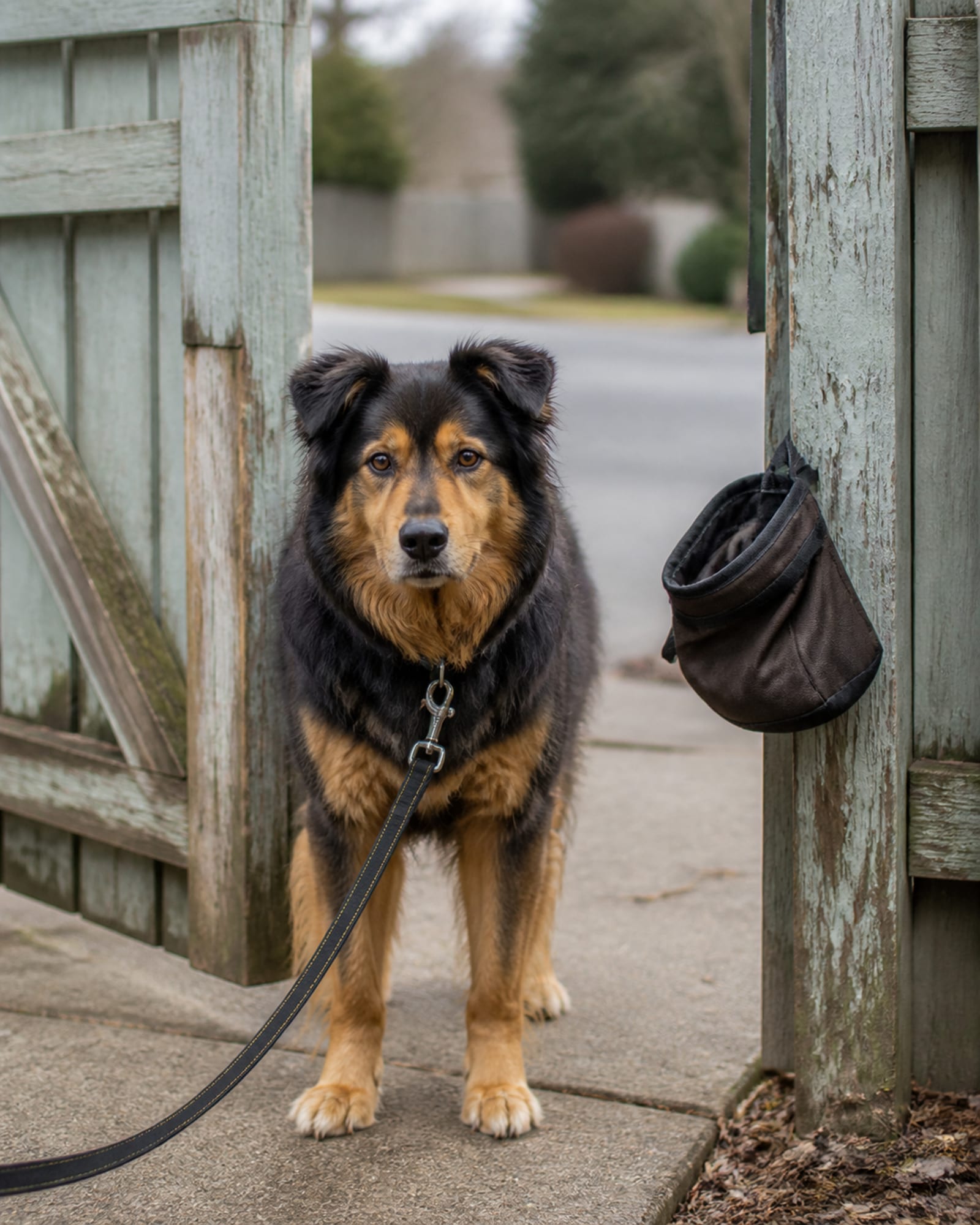
A dog standing on a sidewalk with the street receding behind it, in Middle River, MD
Four different kinds of noise, and they are not equally hard to work with.
01
Loud but predictable in pattern and direction, which makes it the best of the four to train against. You can plan a session around it rather than be surprised by it.
02
Air brakes and reversing alarms along the commercial roads. Sudden and sharp, which is harder, but it happens at known places so you can control the distance.
03
The hardest, because you cannot choose the volume, the timing or the duration, and there is a pressure and static component the dog reacts to before you hear anything. Worth involving your vet if it is severe.
04
Engines, halyards and gulls along Frog Mortar Creek and the Middle River shoreline. Usually mild, and useful as an early rung on the ladder.
The other half of Middle River life is shoreline, and a frightened dog near open water is a different order of problem.
A dog that panics at a bang will run, and it will run without looking. In an inland neighborhood that means a road. Here it can mean docks, marsh edge, a seawall or open water, and county planning notes this is low ground affected by tidal and coastal conditions, so the ground itself is not always where it appears to be. A sound-sensitive dog living near the shoreline needs a recall and a secure setup more urgently than most, and until it has one, a long line is not overcautious.
The docks are worth introducing on purpose rather than by accident. A floating dock moves underfoot, boat ramps are slick well below the waterline, and piers have gaps a dog can put a leg through. Doing that introduction calmly on a quiet day is a completely different experience from doing it on the first warm Saturday with the boat going in and somebody's music on.
Weather changes the plan here more than in most of the county. Heavy rain and tidal conditions bring standing water, mud, debris and blocked routes, and summer pavement plus exposed waterfront gets genuinely hot. A session moving indoors or onto higher ground is a normal part of the work, not a cancellation, and a training plan that only functions on a pleasant day is not a plan.
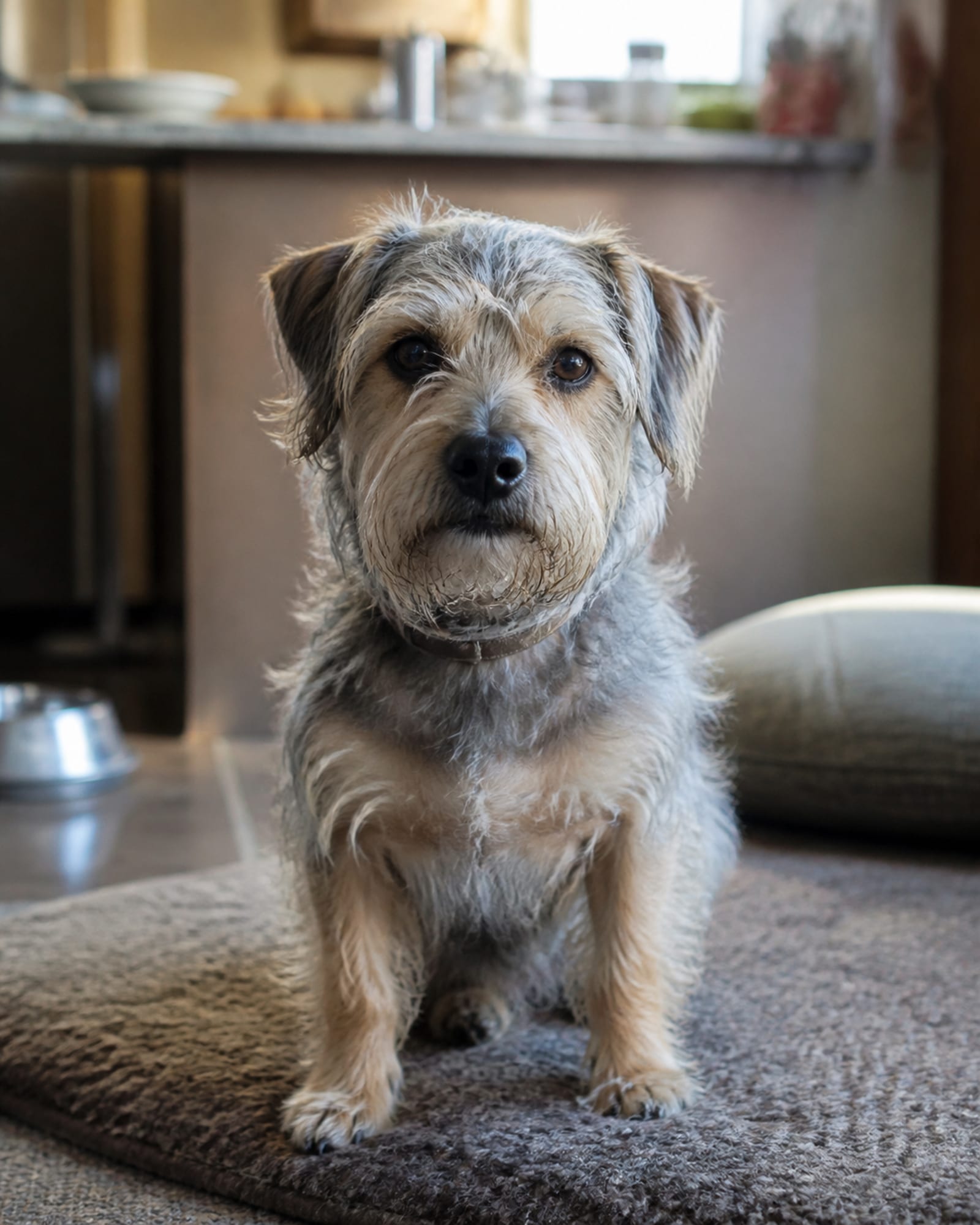
A dog looking straight down the lens, shoulders square and low, in Middle River, MD
Weighted toward noise and water, with the usual neighborhood work alongside.
01
Aircraft, storms, industrial bangs. Graded work at a level the dog can think through, never repetition at full volume.
02
A dog that bolts at a sound needs a recall that holds under pressure, and here the consequence of not having one is worse than a road.
03
Moving surfaces, slick ramps and gaps in decking, introduced deliberately rather than on the day you happen to go out.
04
30.9% of homes are attached, so a dog that vocalizes at every aircraft becomes a neighbor issue quickly.
05
Aero Acres, Victory Villa and Hawthorne have compact wartime housing, narrow entries and small yards that shape what is practical.
06
A newer mixed-use district with a lot of first dogs settling into a neighborhood that is still being built around them.
The level at which your dog notices the sound and can still take food and respond. Everything else depends on this number and most owners have never measured it.
In your home, rolling into the training fee. I want to see where the dog goes when it is frightened, because that place is part of the plan rather than something to prevent.
A den the dog chooses, made genuinely good, so it has somewhere to go that is not a decision made in panic. This alone changes a lot of households.
Over weeks, backing off whenever the dog stops coping. Some weeks go backwards because the weather or the flight pattern did, and that is expected rather than failure.
Once the dog can think under sound, the recall work means something. Before that it is a behavior that evaporates at the first bang.
Phone (443) 429-0445, 6 AM to 7 PM, seven days a week. Tell me which sound is worst and whether the dog has ever run.