Baltimore, MD area6 AM - 7 PM · 7 days a weekDog Training since 2001
Hand signal: fingers closed

Excessive Barking

Barking is not one behavior. A dog barking at the window, a dog barking at you for a biscuit, and a dog barking because it is alone all afternoon need three completely different answers, and using the wrong one is why most barking advice fails.

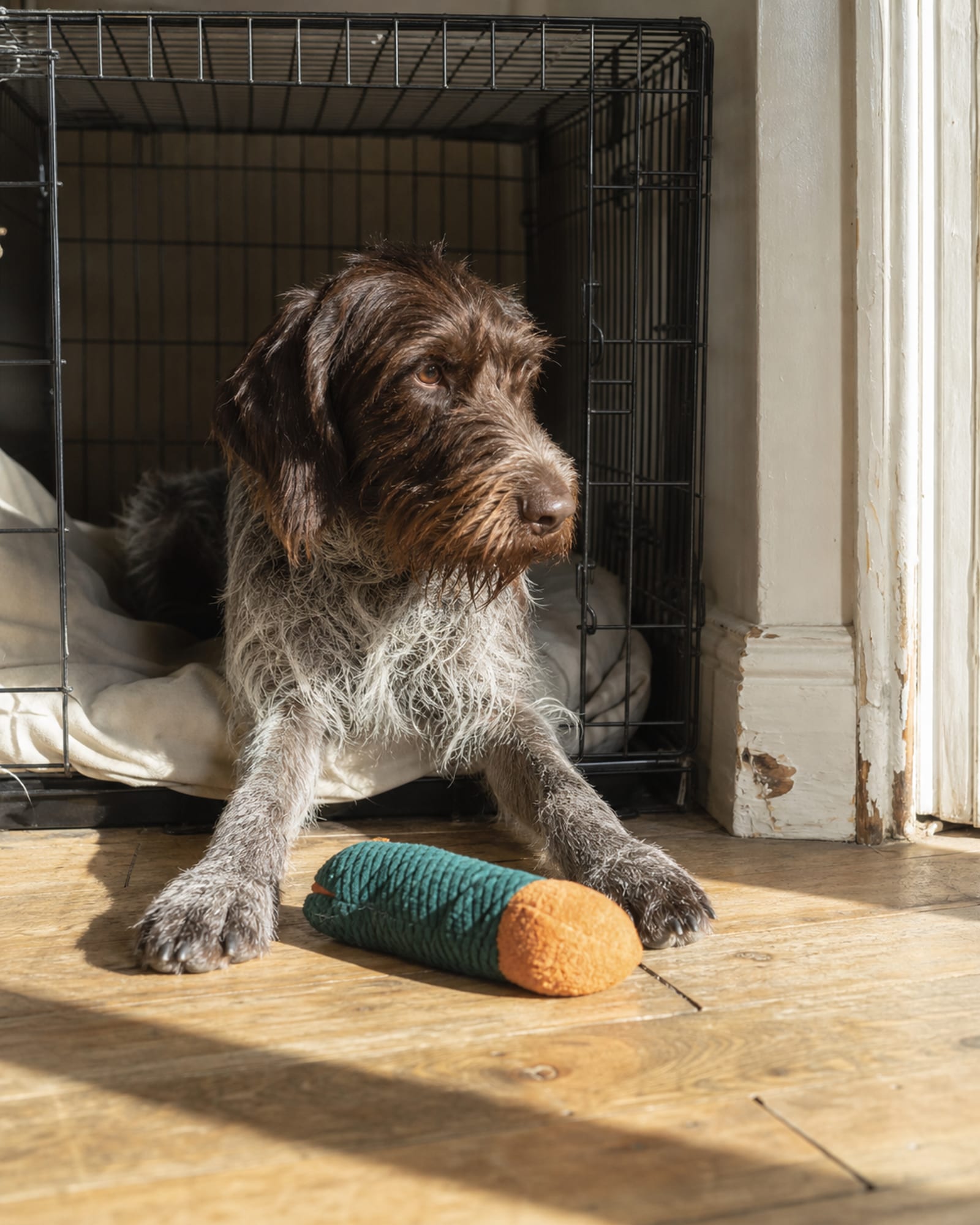
A dog settled in an open crate with bedding, half in and half out

A dog settled in an open crate with bedding, half in and half out

At a glance

First question
What is the barking for?
The function decides the fix. Nothing else does.
Never useful
Punishing a frightened dog
Most common own goal
Answering demand barking
Evaluation
$100, in your home
Rolls into the training fee.

Work out what the barking is for

Every plan for barking starts with one question: what is this barking doing for the dog? Barking is a behavior that gets a result, and until you know what result, you are guessing.

The common ones are alarm barking at things going past, demand barking aimed squarely at you, boredom barking from a dog with nothing to do, territorial barking at the boundary, and distress barking that happens only when the dog is left. Those are not degrees of the same problem. They have different causes and, more to the point, opposite fixes: the thing that helps a bored dog will make a frightened one worse.

This is also why generic advice performs so badly here. A bark collar, a squirt bottle, or shouting will suppress some barking some of the time, but none of them addresses why the dog started. Where the barking is fear or distress, suppression tends to leave you with a quieter dog that feels exactly the same, which is not the outcome anyone actually wanted.

Barking work is a specialty rather than a stand-alone service, so it comes through in-home private lessons, Kick Start, or board and train once we know what we are dealing with.

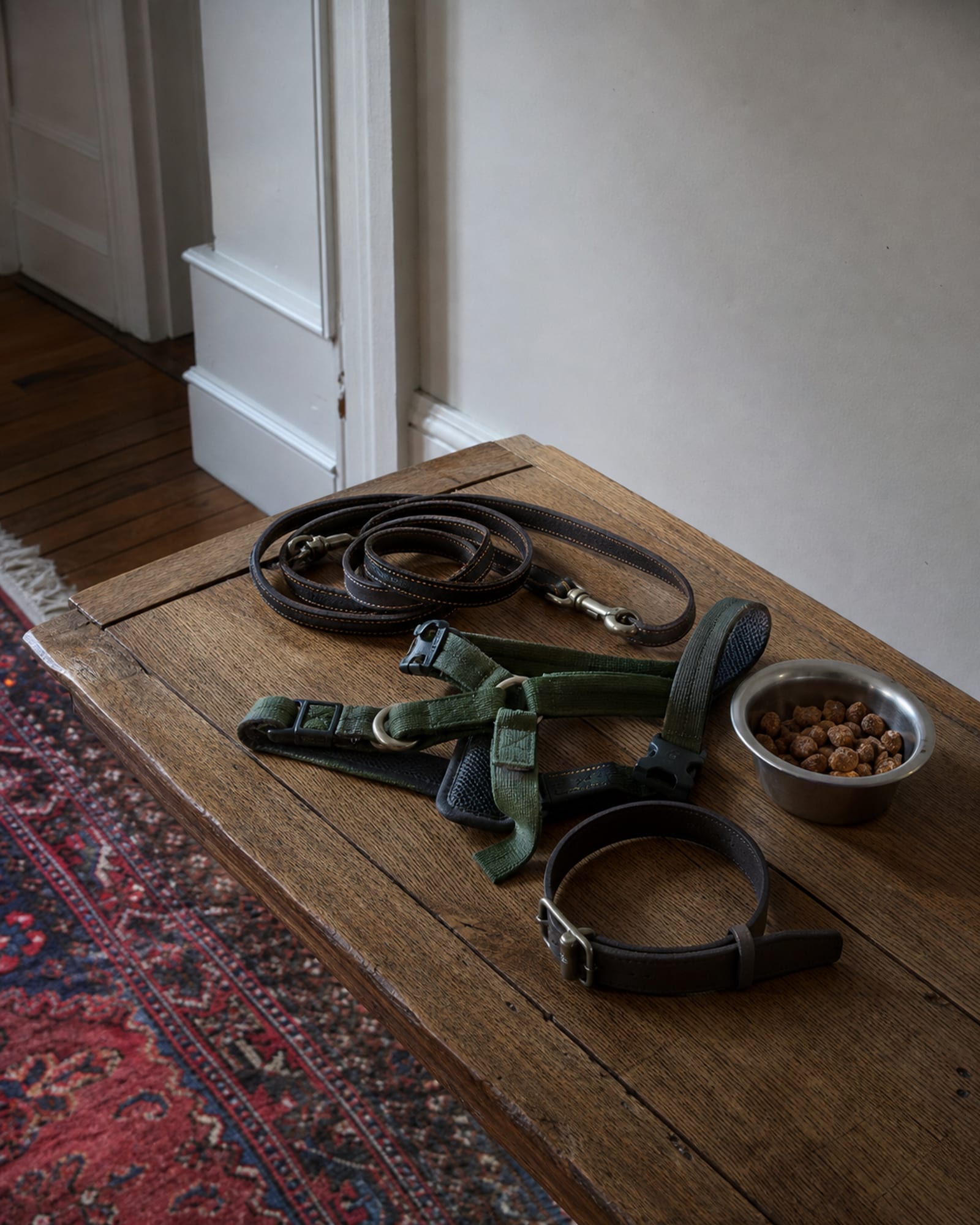
A still life of a flat collar, a harness and training treats on a wooden surface, no dog

A still life of a flat collar, a harness and training treats on a wooden surface, no dog

The kinds, and what each one needs

Most households have one main type and a second in the background.

01

At the window

The most common by a distance. The dog barks, the person walks past and leaves, and the barking worked. It is self-rewarding several times an hour, every day. Management comes first here: change what the dog can see, and the rehearsals stop immediately.

02

Demand barking at you

Barking for food, for the ball, to be let out, to be let back in. This one is built by us, without exception, because it only survives if it works. The fix is unglamorous: it stops working, and a different behavior starts working instead.

03

The doorbell

Alarm barking with an audience. Worth treating as its own project because it is predictable, which makes it trainable: you can set up a doorbell twenty times in an evening, which real visitors will never give you.

04

Boredom

A dog with an empty day filling it. Usually worse in the afternoon, often in adolescent dogs of working breeds. Training helps, but so does an honest look at what the dog is actually doing between nine and five.

05

Fear and reactivity

Barking to make something go away rather than to get to it. It looks aggressive and it usually is not. Punishing it reliably makes it worse, because you add a second unpleasant thing to whatever the dog was already worried about.

Leash reactivity training

06

Only when alone

Barking or howling that happens only in your absence is a different problem entirely and often separation distress. It needs the anxiety protocol rather than a barking one, and neighbors reporting continuous barking is usually the first anyone hears of it.

Anxiety and nervousness correction

The window is where most of it lives

If your dog barks at the window, start here, because it is the fastest win available in this whole subject.

A dog stationed at a front window has appointed itself to a job with a perfect success rate. Somebody approaches, the dog barks, the person continues past and disappears. From the dog's point of view that worked, every single time, dozens of times a day. No training schedule can compete with that rate of reinforcement while the window is still open for business.

So the first thing is not training, it is access. Film on the lower half of the glass, furniture moved away from the sill, the dog kept out of that room when nobody is supervising, or a closed curtain during the busy hours. Owners resist this because it feels like giving in. It is not. It is removing the practice sessions.

Then the training becomes possible: a place to go when something happens, and a quiet cue that means the dog has done its job and can stop. Both of those are teachable once the dog is not rehearsing forty times a day.

One caution on bark collars. They can suppress the sound while leaving the dog exactly as wound up, and where the barking is fear-based they add something unpleasant to a dog that is already worried. I would want to know what the barking is for before anyone puts one on.

A lead coiled on a hook by a door, no dog in frame

A lead coiled on a hook by a door, no dog in frame

Demand barking, and why it is so hard to stop

A dog that barks at you for things has been taught to, by you, and I say that without any judgement because it is almost impossible to avoid.

The mechanism is simple. The dog barks. You are busy, or embarrassed, or it is easier than arguing, so eventually you throw the ball or open the door. The dog has learned that barking works. Worse, if you hold out for a while and then give in, you have taught it that persistent barking works, which is far harder to shift than the original.

The fix has two halves and both are needed. The barking stops producing the result, consistently, by everyone in the house. And a different behavior starts producing it: sitting quietly, going to a mat, a nose touch, whatever you prefer. Removing the old route without offering a new one leaves a frustrated dog that tries louder.

Be ready for it to get worse first. When a behavior that always worked suddenly stops working, most dogs escalate before they give up, and that is the point at which people conclude it is not working and give in, which teaches the dog that a bigger tantrum is the answer. Knowing that spike is coming is most of getting through it.


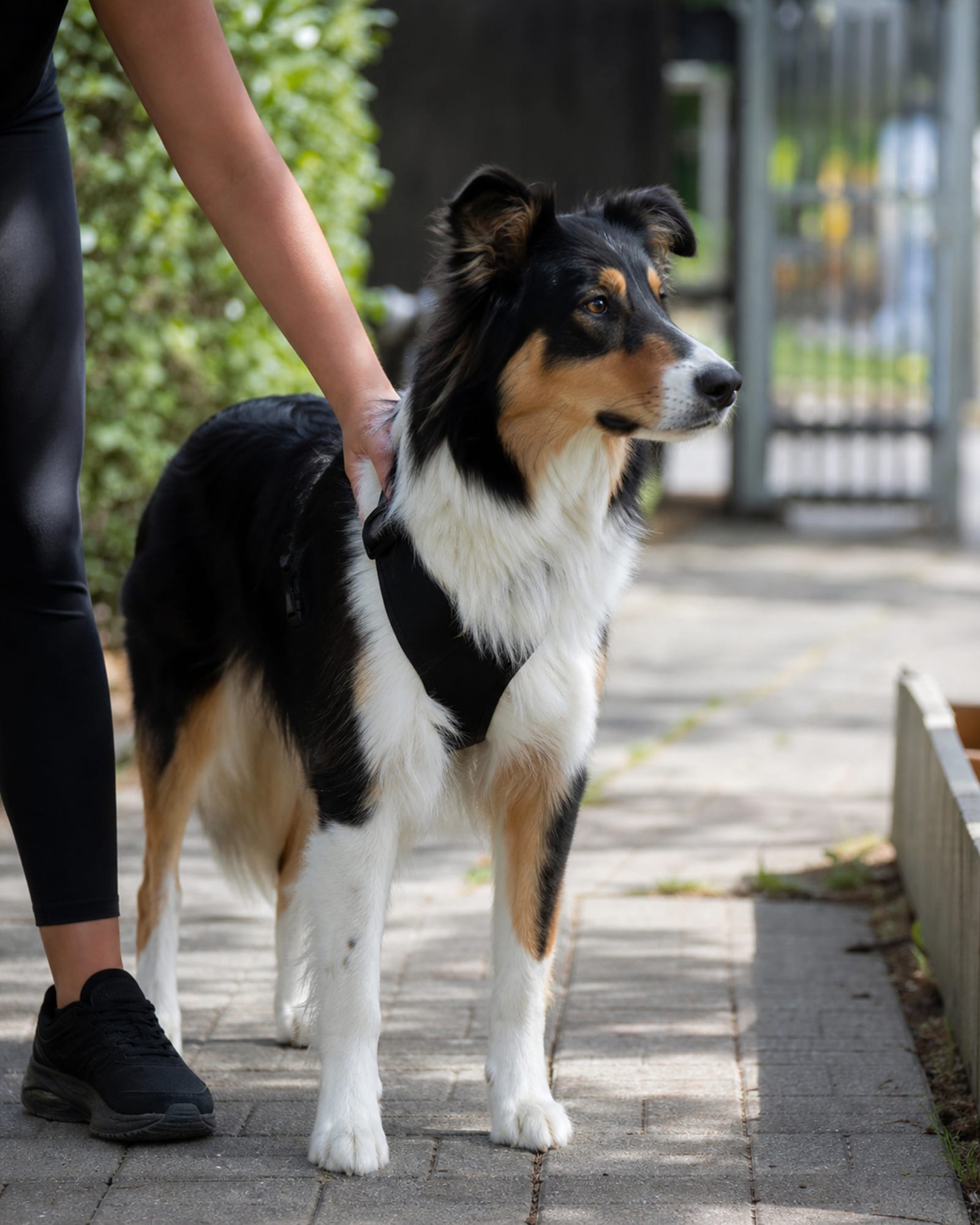
A dog standing with a handler's hand resting lightly on its shoulder, forearm only

A dog standing with a handler's hand resting lightly on its shoulder, forearm only

When the neighbors have complained

A complaint changes the timeline, and it is worth being straight about that.

Most barking work is a few weeks of steady change. A neighbor, a landlord, or a letter about a noise nuisance does not give you a few weeks, so the order changes: management first and hard, training alongside it. That means the dog is not left in the room it barks from, the window access goes immediately, and if the barking happens while you are out, the dog does not have unsupervised access to the front of the house until this is under control.

It is also worth finding out what is actually happening while you are gone, because almost nobody knows. A phone propped on a shelf for one afternoon tells you whether your dog barks for ten minutes and settles, or barks for three hours. Those are entirely different problems and the second one is not really a barking case at all.

On the neighbor: telling them you have brought someone in usually buys real patience. People tolerate a great deal when they can see something is being done, and very little when they think they are being ignored.

And if the barking is distress rather than nuisance, that is worth saying to them plainly too. A dog that howls because it cannot cope with being alone is not a badly behaved dog, and most people soften considerably once they understand the difference.

Questions people ask

Will a bark collar stop it?
It may stop the sound without changing why the dog is barking, and if the barking is fear-based it can make the underlying problem worse. I would want to know the function of the barking before considering one.
My dog barks at everyone passing the window all day.
Change what the dog can see before you train anything. That barking is being rewarded dozens of times a day by people walking away, and no training competes with that while the window is still open.
How do I stop him barking at me for food?
It has to stop working, by everyone, and something else has to start working. Expect it to get louder before it stops, because that is what any behavior does when it suddenly fails.
He only barks when we are out. The neighbors have complained.
That is usually separation distress rather than a barking problem, and it needs a different protocol entirely. A camera on the dog for one afternoon will tell us more than anything else.
Is barking at the doorbell just being protective?
It is usually alarm rather than protection, and it is very trainable because you can rehearse a doorbell twenty times in an evening. Real visitors never give you enough repetitions to fix it.
Should I shout at him to be quiet?
It rarely helps and often looks to the dog like you have joined in. For a fearful dog it adds something unpleasant to a situation it was already unhappy about.
He never used to bark like this.
A change in an adult dog is worth a veterinary check first, particularly in an older dog, since pain and hearing or sight loss both change how much a dog barks.

Tell me when the barking happens

If your dog barks at the window, at you, or all afternoon while you are out, call me at (443) 429-0445. I answer 6 AM to 7 PM, seven days a week. Tell me when it happens and what usually follows it, and I will tell you honestly what is driving it and what it would cost to change.

Call TodaySend a Message

6 AM - 7 PM, 7 days a week · Baltimore, MD area