01
Fence line barking
The signature Lutherville problem. Usually years of practice deep by the time I am called, and still very fixable once the rehearsal stops.


Lutherville was laid out in 1852, before anyone was thinking about setbacks. The houses sit close to the road with very little between them, and that geometry is behind most of the problems I am called about here.
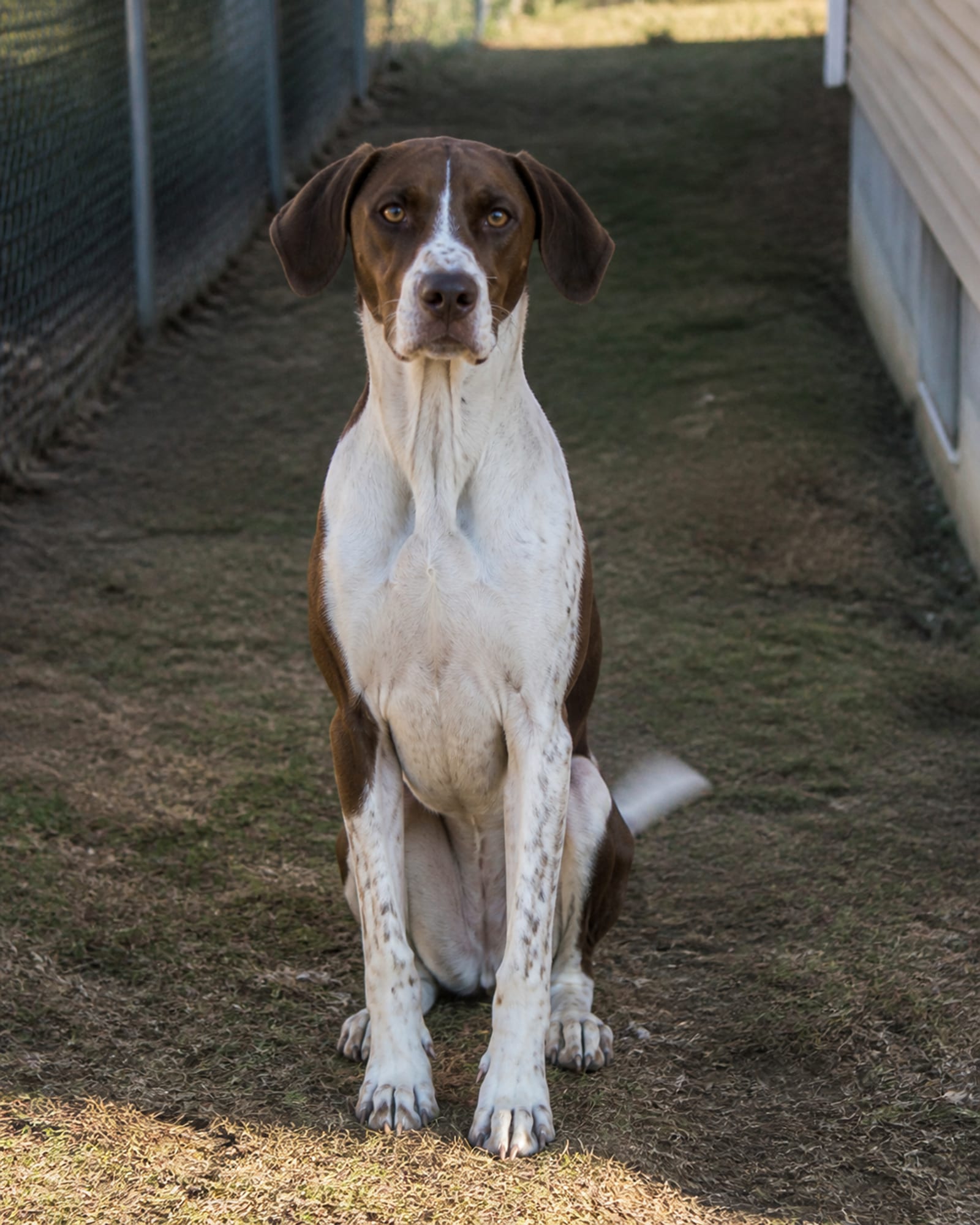
A dog sitting upright and attentive, shoulders square to camera, in Lutherville, MD
In a postwar subdivision a dog watches someone approach for fifteen or twenty seconds before they are level with the house. That gap is doing more work than anyone realizes. It gives the dog time to look, decide the person is ordinary, and go back to what it was doing.
In the older parts of Lutherville that gap does not exist. The village was planned in 1852 with houses close to the road, small side yards, and in the documented African American survey district near Seminary Avenue, 48 buildings with side yards that are small or absent entirely. A person appears at the fence already at conversational distance. The dog has no processing time, so it does the fastest thing available, which is to bark. Repeat that a few hundred times and you have a dog that meets the world at the fence line, at full volume, from a standing start.
Almost everything on this page comes back to one idea: a dog gets good at whatever it does most often, and nobody chose what that would be.
84.2% of Lutherville homes are detached, which sounds like it should make life easy, and 85.2% are owner-occupied, so people stay. Those two facts together mean long tenancies in houses with fixed, close boundaries. The same dog barks at the same fence at the same neighbor for years. That is not a dog with a temperament problem. That is a dog with an extremely well practiced habit.
The village's older housing adds its own details. Nineteenth century wood-frame houses, bungalows and Gothic Revival cottages tend to have enclosed porches, steep steps and low windows, and a low window is a television for a dog. A great deal of what looks like aggression at the glass is a dog that has been given a front row seat and nothing else to do.
So the first moves are usually not training moves at all. Change what the dog can see. Change where it waits when you are out. Put something between the dog and the fence for a few weeks. None of that teaches the dog anything, and all of it stops the daily rehearsal, which is what makes the actual training work rather than compete with an hour a day of practice in the opposite direction.
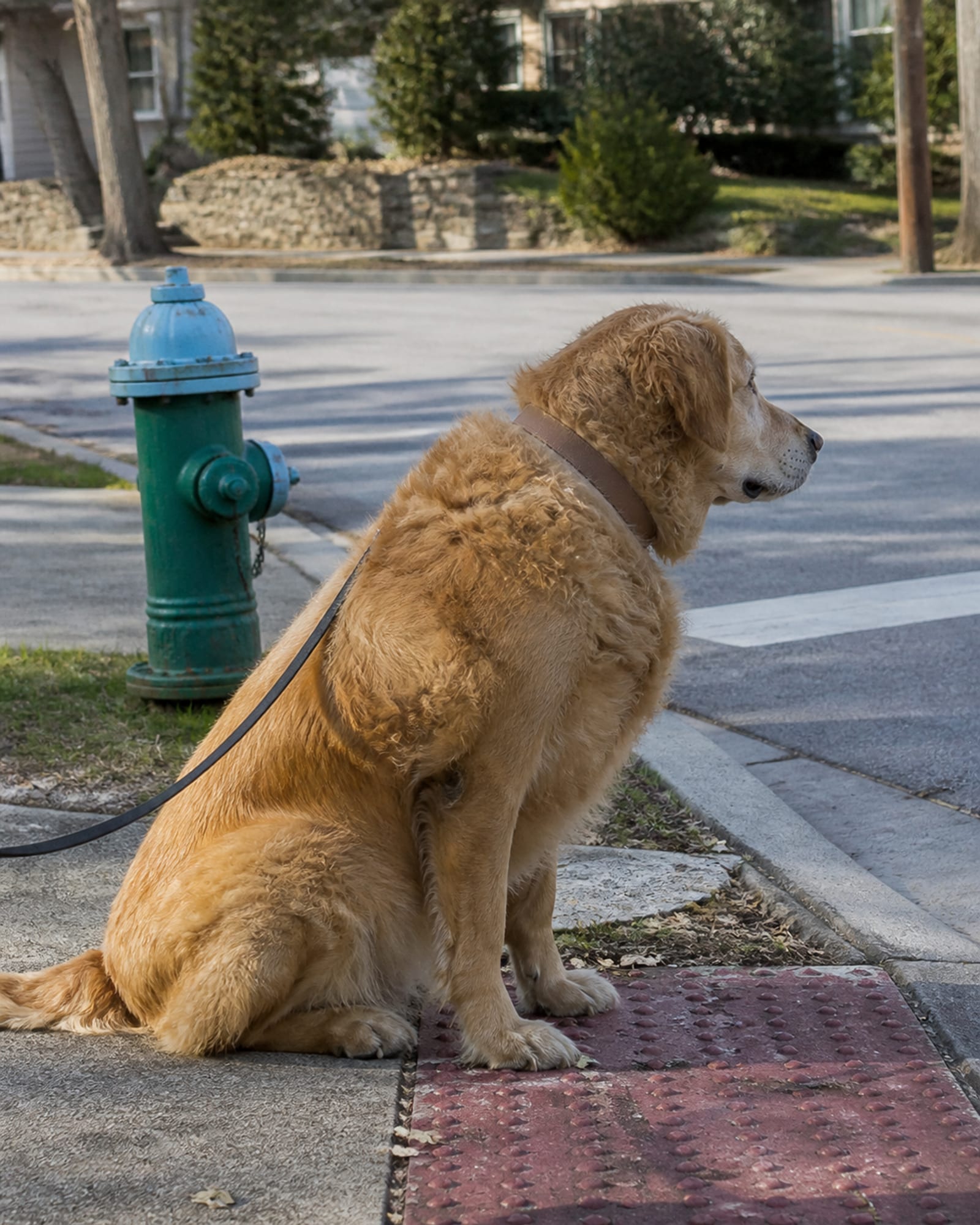
A dog sitting at a curb edge waiting to cross, in Lutherville, MD
Lutherville is only 2.11 square miles with under 7,000 residents, and it is not quiet.
York Road runs through it, the Light Rail station sits in it, and Seminary Avenue carries the crossings that the community association's own traffic and pedestrian committees keep raising. A train that passes on a schedule is actually useful for training, because predictable noise at a known distance is the ideal thing to work against. An unpredictable one, like the delivery truck that reverses outside your house at a different time every day, is much harder.
The community also runs on a real calendar. The Lutherville Community Association organizes a spring cleanup with Towson University, an Easter egg hunt, a yard sale, a fall bonfire and winter activities, and the Fire Museum of Maryland holds its annual steam show on York Road. Orchard Hills has its own association and events. All of that is superb practice ground and none of it is a first outing, because a bonfire with a crowd and food on the ground is about as hard as a suburban dog's life gets.
For quieter work there is West Lutherville Park, Seminary Park and Orchard Hills Park, plus the historic streets themselves, which are genuinely pleasant to train on at an off hour. I would rather build a behavior at 9 AM on a Tuesday in the historic district and test it at the steam show than the other way round.
One thing to watch is the mailing address, because Lutherville is small and the 21093 postal area is not. Stoneleigh, Riderwood, Mays Chapel and Timonium all sit close by and are often described as Lutherville, and while that makes no difference at all to whether I can help you, it does matter when you are reading anything about the area. If you are unsure which side of a line your street falls, tell me the street rather than the label. It is a quick answer and it changes nothing about the price.
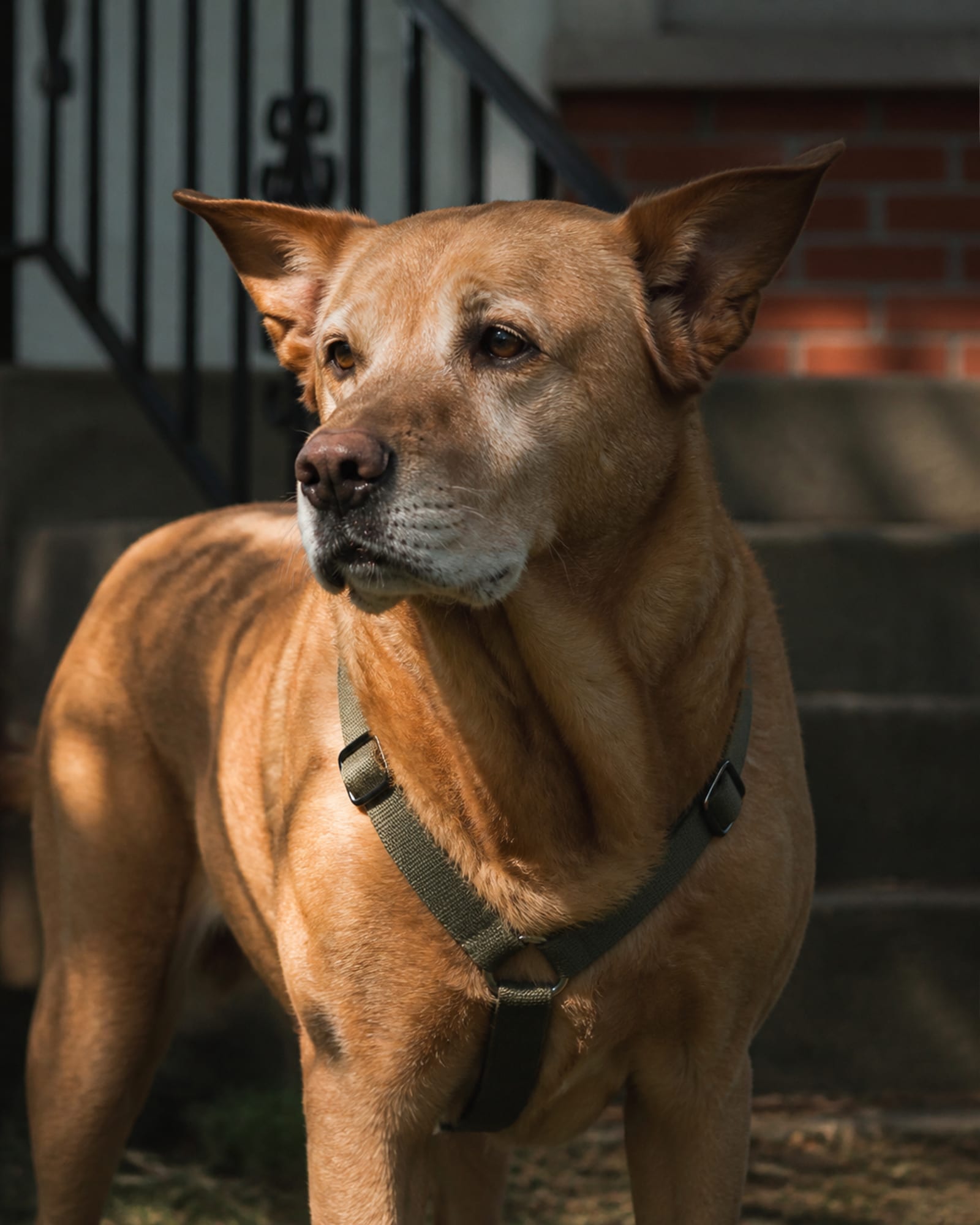
A dog's ears pricked mid alert, head and neck filling the frame, in Lutherville, MD
Shaped by close boundaries, long tenancies and an old street plan.
01
The signature Lutherville problem. Usually years of practice deep by the time I am called, and still very fixable once the rehearsal stops.
02
Low windows and enclosed porches put the dog at eye level with the sidewalk. What the dog can see is half the treatment.
03
Steep steps and a door close to the road mean a dog that pushes past you lands almost in traffic. A reliable wait at the door is a safety behavior here.
04
Two dogs either side of a shared line, both convinced they are winning. Neither can finish it, so it escalates instead of resolving.
05
A small side yard is not where recall gets built, so it has to be built somewhere else and brought back. Otherwise the first real test is the first time the gate is left open.
06
With a median age of 44.8 and 21.8% of residents over 65, many households here have had the same dog a long time and want it easier to live with, not retrained from scratch.
In your home, rolling into the training fee. For a fence or window problem I want to stand where the dog stands and see what it sees, which is usually more than the owner thinks.
Management first. Block the view, change the waiting place, walk at a different hour for a few weeks. Not a fix, but it stops the problem being practiced while we work.
The dog needs something to do when the trigger appears, and it has to pay better than barking does. Barking is currently paying very well, which is why it persists.
Gradually, at distance first, at the real fence last. Then the handover, so it works for you, and phone support afterward for the life of the dog.
Board and train means your dog lives in my home for the program, in the household, not in a kennel run and not in a crate between sessions. Lutherville is well inside the drive time. The two and three week programs are set out on the board and train page.
Phone (443) 429-0445, 6 AM to 7 PM, seven days a week. Tell me where the dog stands when it starts, and how close the person has to be.