Baltimore, MD area6 AM - 7 PM · 7 days a weekDog Training since 2001
Hand signal: eyes up, then release

Socialization

Socialization is not making your dog friendly. It is teaching your dog that the world is unremarkable, so it can walk past things instead of needing to meet them. That goal works for a nine-week-old puppy and for a six-year-old rescue, by different routes.

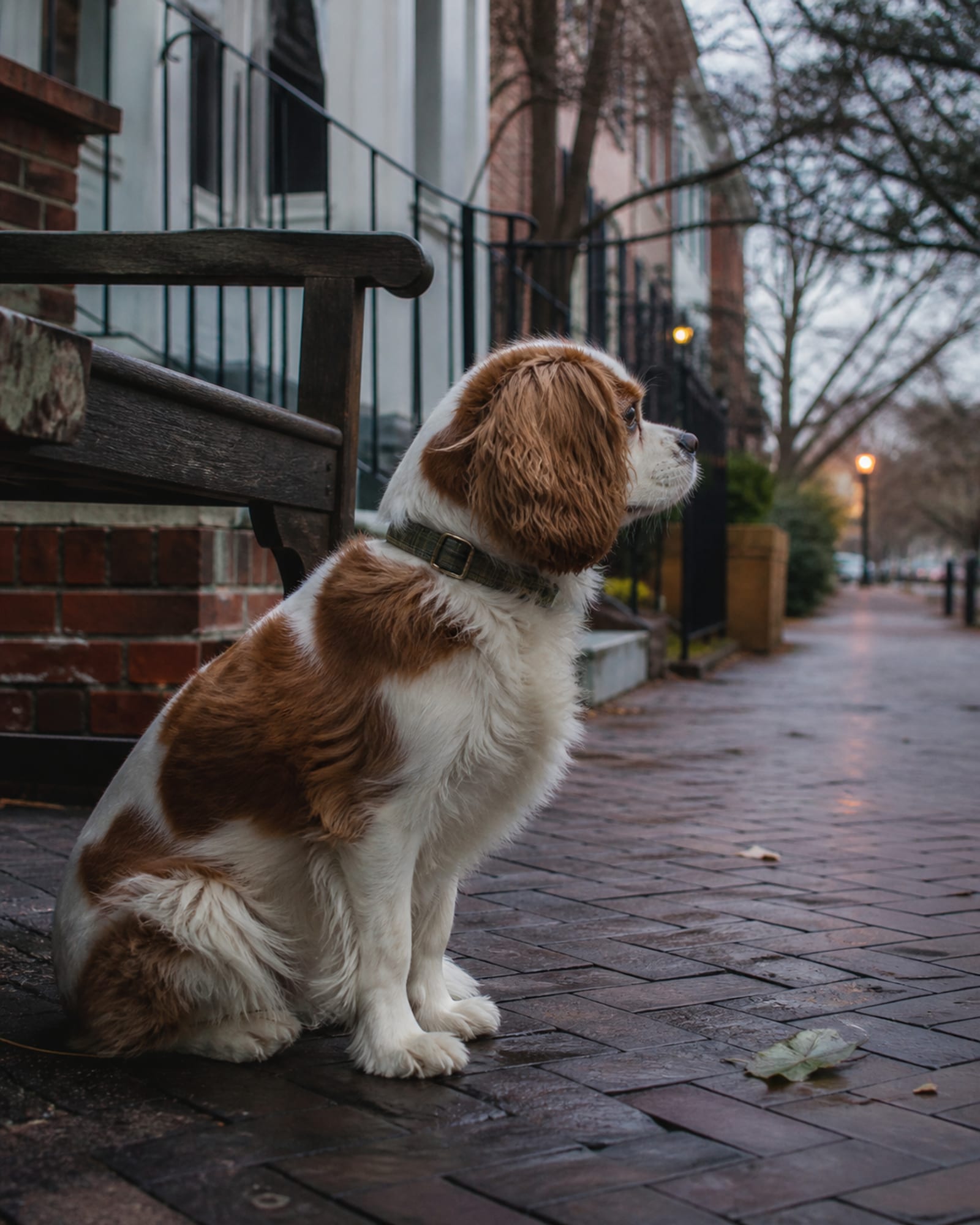
A dog sitting calmly beside a bench watching people pass at a distance.

A dog sitting calmly beside a bench watching people pass at a distance.

At a glance

The goal
Neutrality, not friendliness
Works for
Puppies and adult dogs
The route is different for each.
Not
Dog parks or free greetings
Delivered through
One of my programs
It is a specialty, not a stand-alone service.

What socialization actually means

Socialization is calm, positive exposure to people, dogs, handling, surfaces, sounds and places, at a level your dog can cope with. The goal is a dog that is relaxed around all of it. It is not a dog that wants to greet everybody, and those two things get confused constantly, usually with expensive consequences.

When owners say they want a social dog, they usually mean one of three different things: friendly with everyone, happy to play with other dogs, or safe to take anywhere. Only the third one is a training goal I can reliably deliver, and it is also the one that actually makes life easier. A dog that must say hello to every dog it sees is not well socialized. It is a dog that has learned every dog is an event, and it will scream on the leash when it cannot get to one.

What I am aiming at is boring. Your dog sees the jogger and carries on. Sees the other dog across the street and glances at you. Hears the garbage truck and does not care. That dog can go anywhere with you, which is the whole point.

Socialization is a specialty rather than a stand-alone service, so it is delivered through in-home private lessons, Kick Start, or board and train, depending on your dog and how much ground there is to make up.

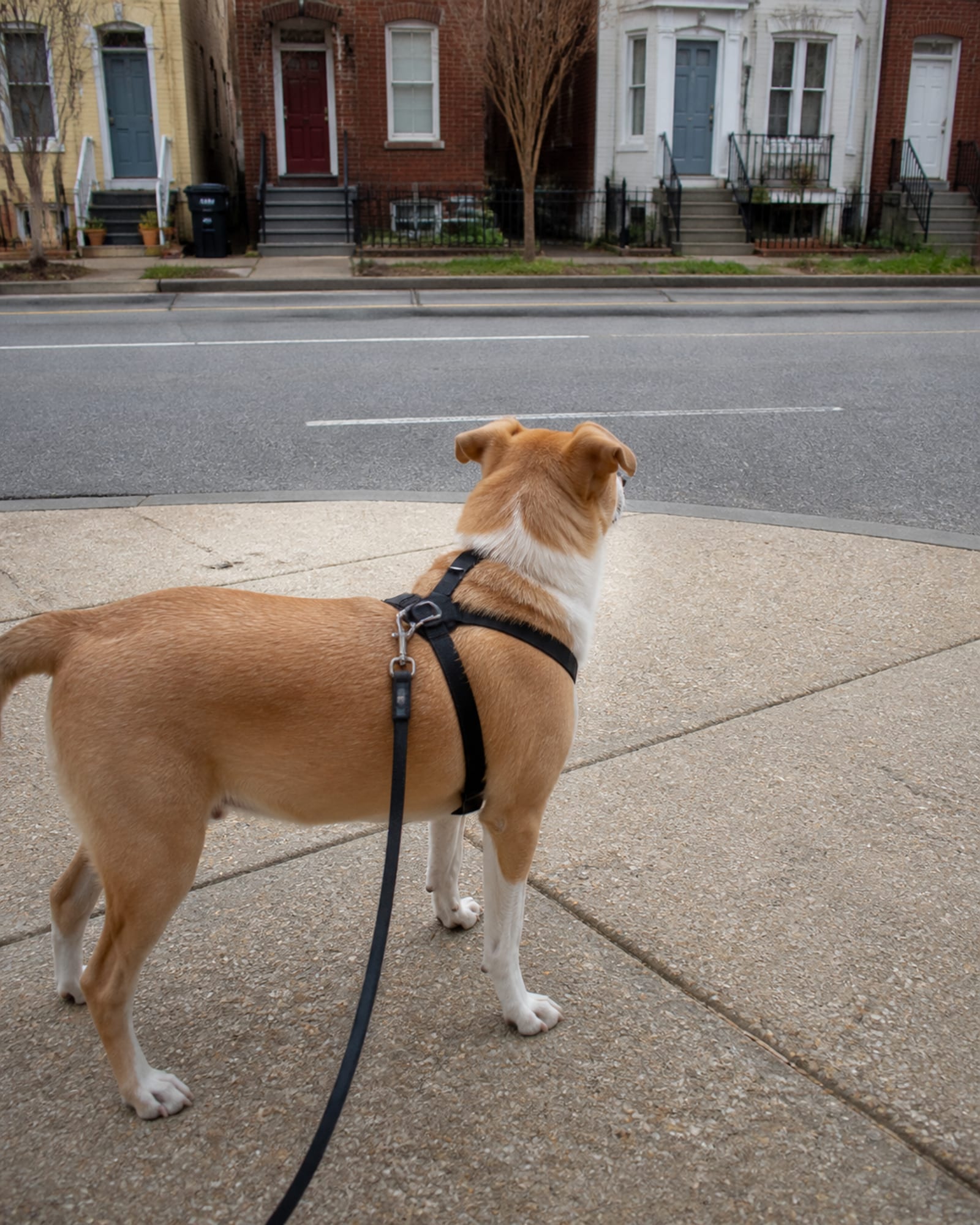
A dog observing a busy street from across the road, relaxed on a loose leash.

A dog observing a busy street from across the road, relaxed on a loose leash.

Why the dog park is not socialization

A dog park is a room full of strangers with no rules and no vetting, where the only supervision is a group of people looking at their phones. For a confident adult dog with good skills it can be fine. For a young or worried dog it is a place where things happen to it that it cannot escape, and I have spent a good part of the last twenty years undoing single afternoons.

The damage is rarely a dramatic fight. It is more often a large dog that will not stop pestering a small one, or a group that swarms a newcomer at the gate, while everybody says they are just playing. The dog learns that other dogs come at it fast and it has no say. Six months later that dog is reactive on the leash and nobody can think why.

Free greetings on the leash have a similar problem. Two dogs meeting nose to nose, tangled, with the owners chatting above them and neither dog able to move away, is a setup that goes wrong often enough that I do not use it. If your dog is going to meet another dog, I would rather it happened deliberately, with room to leave.

None of this means keeping your dog away from other dogs. It means choosing which dogs, and controlling the introduction.

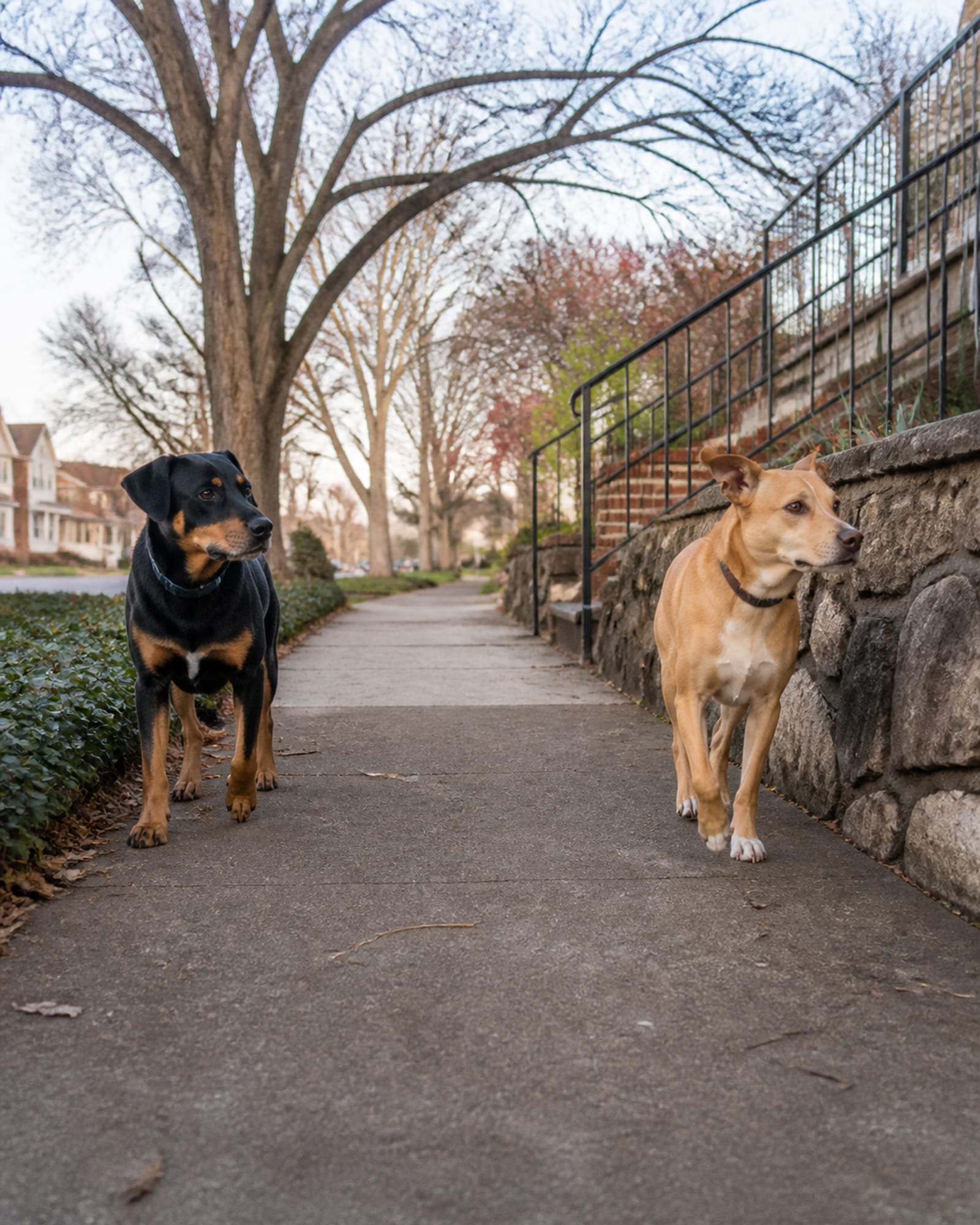
Two adult dogs walking parallel on opposite sides of a path, neither straining toward the other.

Two adult dogs walking parallel on opposite sides of a path, neither straining toward the other.

How I actually build it

Exposure works when the dog stays under threshold, which is a technical way of saying it is coping. These are the pieces.

01

Distance first

Everything starts further away than owners expect. Your dog watches the thing from a distance where it can still think, eat, and look back at you. That distance is the dial we adjust, and it is the single most useful tool in the whole subject.

02

Reading your own dog

I teach you what coping looks like and what it does not: loose body, taking food, looking away and back. Versus gone still, stopped eating, staring hard, or trying to leave. Most owners have never been shown the difference, so they push at the exact moment they should back off.

03

Observation, not participation

A great deal of socialization happens with your dog doing nothing at all: sitting with you watching a car park, a school run, a playing field. Nothing is required of the dog, which is what teaches it that nothing is required of it.

04

Chosen dogs, not any dogs

Where dog-to-dog work is needed, I use calm adult dogs with known temperaments, at a distance, moving in the same direction rather than head on. A handful of good experiences beats thirty uncontrolled ones.

05

Surfaces, sounds and handling

Grates, gravel, stairs, wet grass, traffic, hairdryers, being touched on the feet and ears. These are the ones people skip, and they are what makes a vet visit or a groom either routine or a fight.

06

Knowing when to stop

If a dog is withdrawing or frightened, more exposure is the wrong answer and can make it worse. We back off, lower the difficulty, and where fear is significant that is a conversation with your veterinarian rather than a training push.

Puppies: the window, and the vaccination question

Young puppies take on new experiences far more readily than they will later, and that period is short. It is genuinely worth using, and it is also the source of the most stressful question new owners get: is it safe to take my puppy out before the vaccinations are finished?

The honest answer is that this is not my call. Your veterinarian knows the disease risk where you actually live, and that risk is not the same in every neighborhood. So the split is simple. Your vet decides what is safe. I build the behavior plan around whatever that answer is.

And there is a lot available either way. Carrying your puppy, working from inside a car with the window down, using your own yard, inviting a known healthy vaccinated dog over, and sitting on a bench at a distance all count. Very little of what a puppy needs at that age requires its feet on a public floor.

If your puppy is under six months and this is your main concern, the puppy training program is where this work lives, and it covers house training and crate comfort alongside it.

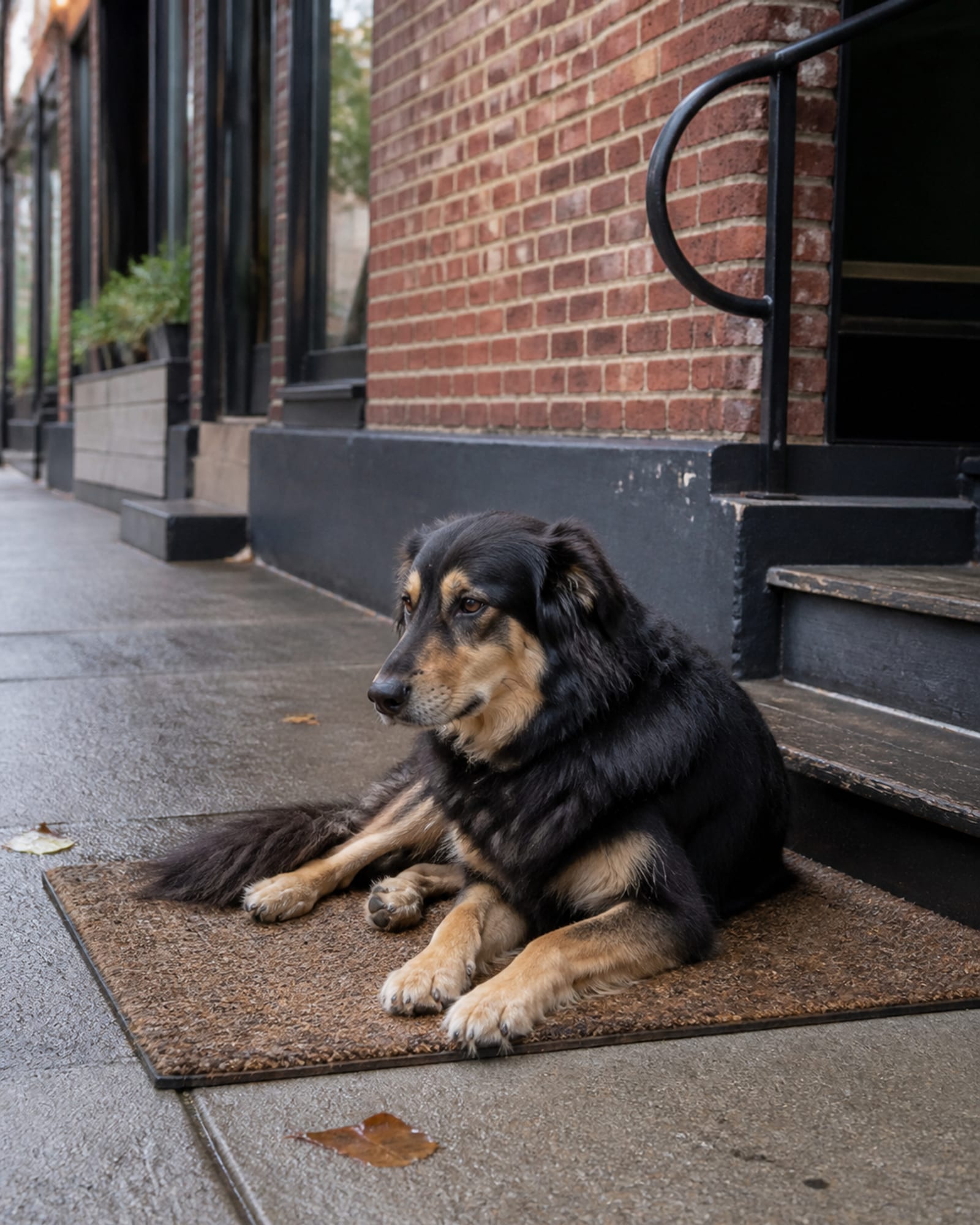
A dog resting on a mat outside a cafe while people walk past.

A dog resting on a mat outside a cafe while people walk past.

Adult dogs and rescues: a different route entirely

If your dog is grown, you have not missed your chance. But the method is different, and the phrase socialize your rescue does more harm than almost anything else I hear.

It usually gets taken to mean expose the dog to the things it is afraid of until it gets used to them. Take him to the park so he learns other dogs are fine. Have people come over so he gets used to strangers. Done that way, with the dog unable to leave and no attention to how it is coping, you are not socializing anything. You are flooding a frightened animal, and what it learns is that being frightened does not get it out of the situation.

With an adult dog the work is slower and the distances start bigger. We are not filling a window any more, we are changing an existing association, which takes more repetitions and more patience. The good news is that adult dogs are often easier to read than puppies, and the goal is the same: not friendliness, just the ability to be near things without needing to do anything about them.

Also worth saying plainly: an adult dog does not have to like other dogs. Plenty of perfectly happy dogs would rather not, and a dog that can walk past calmly and go home is a complete success. Forcing friendship is not a goal I will sell you.

Questions people ask

Is socialization just letting my dog play with other dogs?
No, and that is the most common misunderstanding. It is calm exposure to people, dogs, places, sounds and handling, with the goal of a dog that stays relaxed. Play with other dogs is optional and, for some dogs, not desirable at all.
Can I socialize my puppy before the vaccinations are done?
Partly, and your veterinarian decides what is safe where you live. A great deal is available meanwhile: carrying the puppy, your own yard, known healthy dogs, and watching the world from a distance.
My dog is two years old. Is it too late?
No. It is slower and it starts at bigger distances, because we are changing an existing association rather than forming a first one. The realistic goal is a dog that copes calmly, which is usually what the household actually needs.
Should I take my nervous dog to the dog park to get used to it?
No. A frightened dog that cannot leave learns that being frightened does not help, and it usually gets worse. Distance and choice are what change how a dog feels, not immersion.
My puppy is hiding and barking at visitors. Have I failed?
No, and it is worth acting on rather than waiting out. A puppy showing fear needs the difficulty lowered, not more of the same. Where the fear is significant, your veterinarian should be part of the conversation.
Does my dog have to like other dogs?
Not at all. Neutral is the target. A dog that walks past other dogs without reacting and goes home to its own household is a complete success, and pushing for friendship beyond that often undoes the calm you built.

Tell me what your dog is worried about

Whether you have a new puppy and want to get this right, or a grown dog that finds the world too much, call me at (443) 429-0445. I answer 6 AM to 7 PM, seven days a week. Tell me your dog's age and what it reacts to, and I will tell you honestly what I would do about it and what it would cost.

Call TodaySend a Message

6 AM - 7 PM, 7 days a week · Baltimore, MD area