

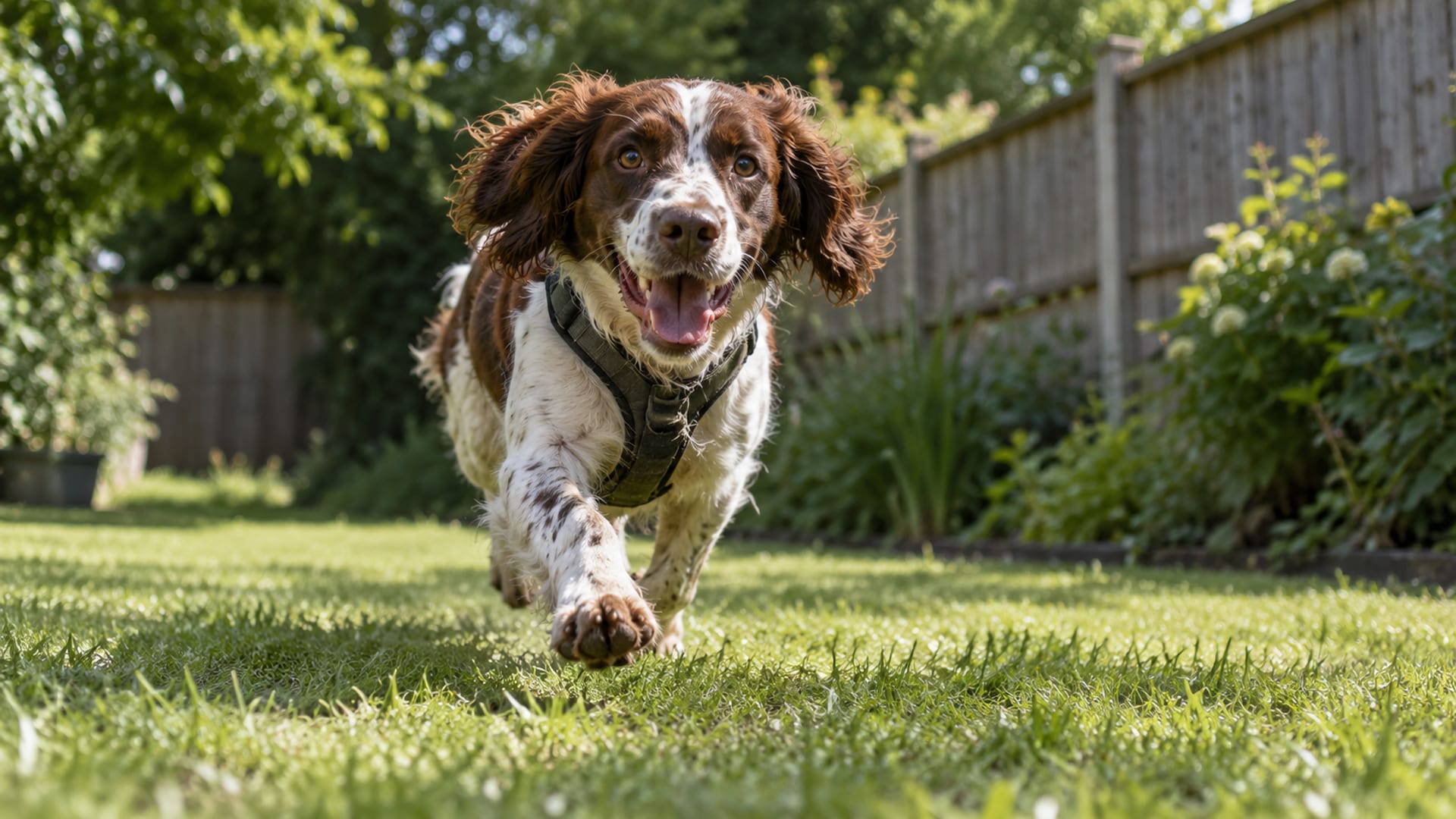
A reliable recall is built, not commanded. Pick one cue, pair it with something your dog really wants, and start where your dog cannot fail: a quiet room, close to you, on a leash. Then add distance, and after that distractions, only as your dog keeps succeeding. Outdoors, keep a long line on the dog until the recall holds up. The published programs from the AKC, UC Davis, Fenzi Dog Sports Academy, Karen Pryor Academy, Susan Garrett, the RSPCA and VCA agree on that shape, but they differ in method, so below I describe each one the way its source describes it.
Key takeaways
Hover or tap a card to bring it forward.
- Build recall in steps: one cue, a reward your dog loves, a quiet room first, then distance, then distractions.
- Give the cue once, cheerfully, and never punish a dog that comes to you, however slowly.
- Use a long line outdoors for safety and practice, and keep the dog on leash near roads and heavy traffic.
- If your dog gets loose and ignores you, call once or twice, then run away excitedly or drop low, and reward the arrival.
- When a once-reliable recall stops, especially in a senior dog, see your vet before changing the training.
Start in the kitchen, not the park
Recall is a skill your dog practices where it is easy, and then where it gets harder. If you have been calling a dog across a field and getting nothing, the fix is almost never more volume. It is a step back to a room with no squirrels in it.
Before the steps, settle three things: the cue, the reward, and the rule about what the cue never leads to.
One cue, used by everyone. Karen Pryor Academy says the whole family should use the same verbal cue, because different people using different phrases can confuse the dog. Fenzi adds that a cue has no meaning on day one. A word, a hand signal or a whistle only means something after it has been paired with the behavior and with reinforcement. The Chicago Veterinary Medical Center handout points out that when a common word like "come" has failed over and over, a new, distinct word can be a fresh start.
Give it once, cheerfully. UC Davis says to say the dog's name, then "Come" once, clearly, in a happy voice. The RSPCA says dogs learn more slowly when a cue is repeated endlessly, and the AKC says repeating can be a sign that the setting is too distracting or the dog does not yet understand the skill at that level.
Pay in something the dog values. The AKC lists favorite treats, chicken, tug, toys, praise and play. The RSPCA suggests saving the very best treats for recall alone, then mixing up the rewards once the dog understands the job. Fenzi suggests rewarding every recall request and giving several single treats rather than one handful.
Never call the dog to something unpleasant. Fenzi says not to call a dog for a bath, a nail trim, medication or a telling-off. Go and get the dog for those. The RSPCA adds that a recall that always ends the walk or the play teaches the dog that coming means losing fun, and it suggests that about 95 percent of recalls should end in a reward and a release back to play. The AKC, RSPCA, UC Davis and Susan Garrett all say never to punish a dog that arrives, however slowly it came.
Hover or tap a row to highlight it.
| Piece | What to do | What to avoid |
|---|---|---|
| The cue | One cue, used by everyone in the family. A new, distinct word can be a fresh start if "come" has failed over and over | Different people using different phrases |
| Giving the cue | Say the dog's name, then "Come" once, in a happy voice | Repeating it again and again |
| The reward | Something the dog values, such as favorite treats, chicken, tug, toys, praise or play | Calling the dog for a bath, a nail trim, medication or a telling-off |
Five published progressions, each in its own words
These programs share a spine but not the details. Pick one and follow it through rather than blending all five into one lesson.
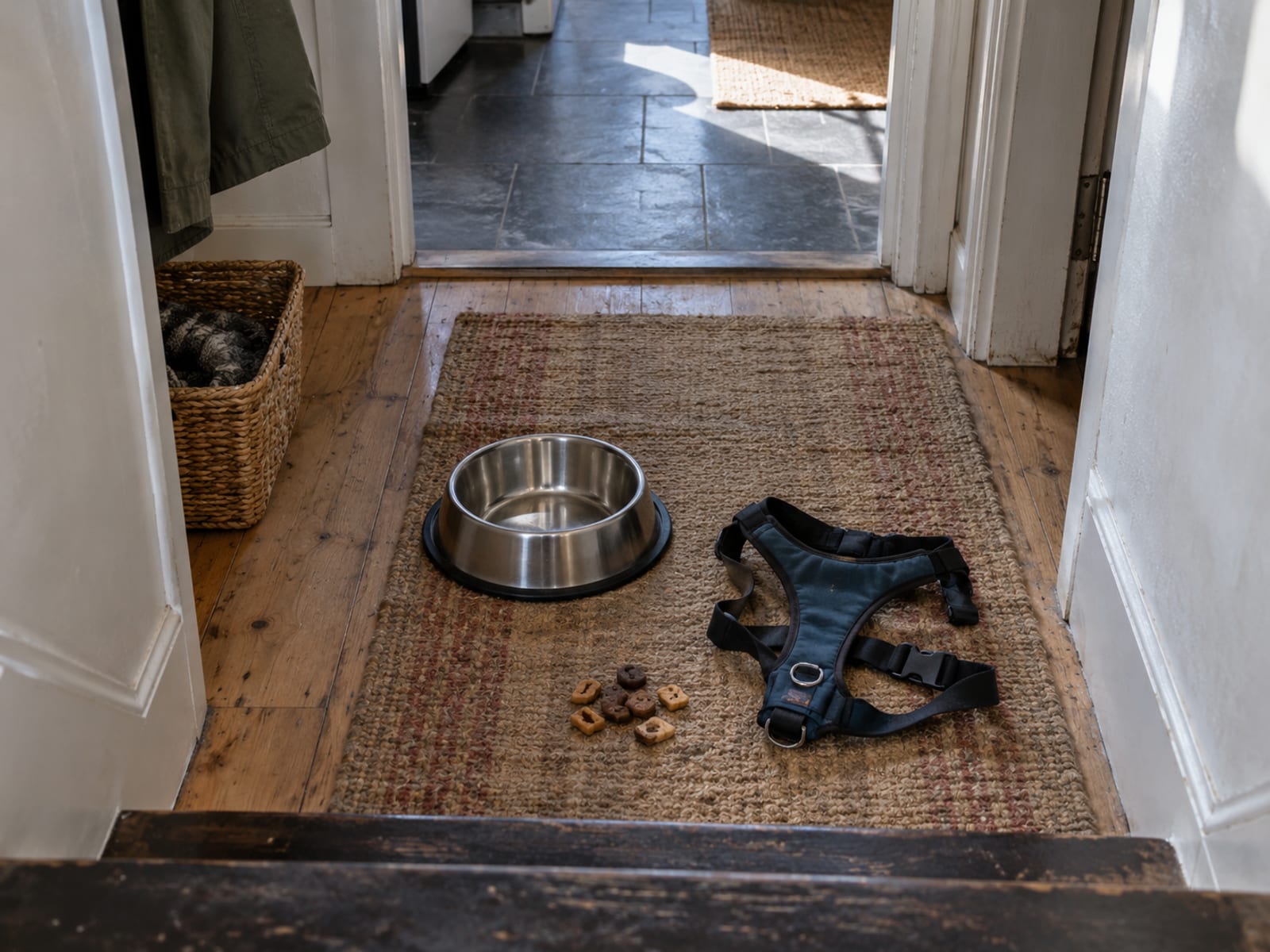
AKC. Start in a quiet room with the dog on a leash. Teach the dog to respond to its name. Next teach "gotcha," which means pairing a collar grab with food. Then say the name and "come," mark the approach and reward generously. Add distance, repeat off leash indoors, move to other rooms, add a sit and an occasional collar grab, and then add distractions. Outdoors, go from a 6-foot leash to a 20-foot or 30-foot long line.
UC Davis. Begin with name response and eye contact. A helper holds the dog while you walk about 10 feet away. Call "Come" once in a happy voice, reward the dog for committing to you, and build toward a full arrival, a sit and a touch of the collar. Distance and distractions go up gradually.
Fenzi. For a whistle recall, pair the whistle with food first, when the dog is doing nothing in particular. The published progression then adds the dog's orientation toward you and the return, marker timing, several treats, distance, new places and gradually harder distractions. Fenzi recommends a protected area and a training line of 20 feet or longer until the recall is reliable.
Karen Pryor Academy. The Round Robin game has family members stand apart and take turns calling the dog with the same cue, rewarding every arrival with tasty food.
Susan Garrett. Her Recallers protocol is a set of games rather than one straight lesson. You build the dog's interest in you through reinforcement games, pick a new recall word, then play the Call Once game in low-distraction rooms with a high-value reward. The Collar Grab game comes before you present food, then restraint recalls, then distractions added in layers. If the dog fails, you go back to the last layer where it succeeded. She says not to punish or get angry, and she says tools are not necessary in her protocol.
If you want a place to start before any of this, basic cues like name response and sit are covered in the 10 commands to teach first, and recall sits on top of them.
Hover or tap a row to highlight it.
| Source | How it starts | What comes next |
|---|---|---|
| AKC | Quiet room, dog on leash, name response, then "gotcha" collar grabs paired with food | Add distance, repeat off leash indoors, move to other rooms, add distractions, then a 6-foot leash and a 20-foot or 30-foot long line outdoors |
| UC Davis | Name response and eye contact, helper holds the dog, you stand about 10 feet away | Call once, reward the dog for committing, build toward arrival, a sit and a collar touch |
| Fenzi | Pair the whistle with food while the dog is doing nothing in particular | Add orientation, marker timing, several treats, distance, new places and harder distractions, on a 20-foot or longer line in a protected area |
| Karen Pryor Academy | Round Robin game with family members standing apart | Take turns calling with the same cue and reward every arrival with tasty food |
| Susan Garrett | Reinforcement games and a new recall word | Call Once game, Collar Grab game, restraint recalls, then layered distractions, going back a layer after a failure |
The long line is for practice, not for reeling
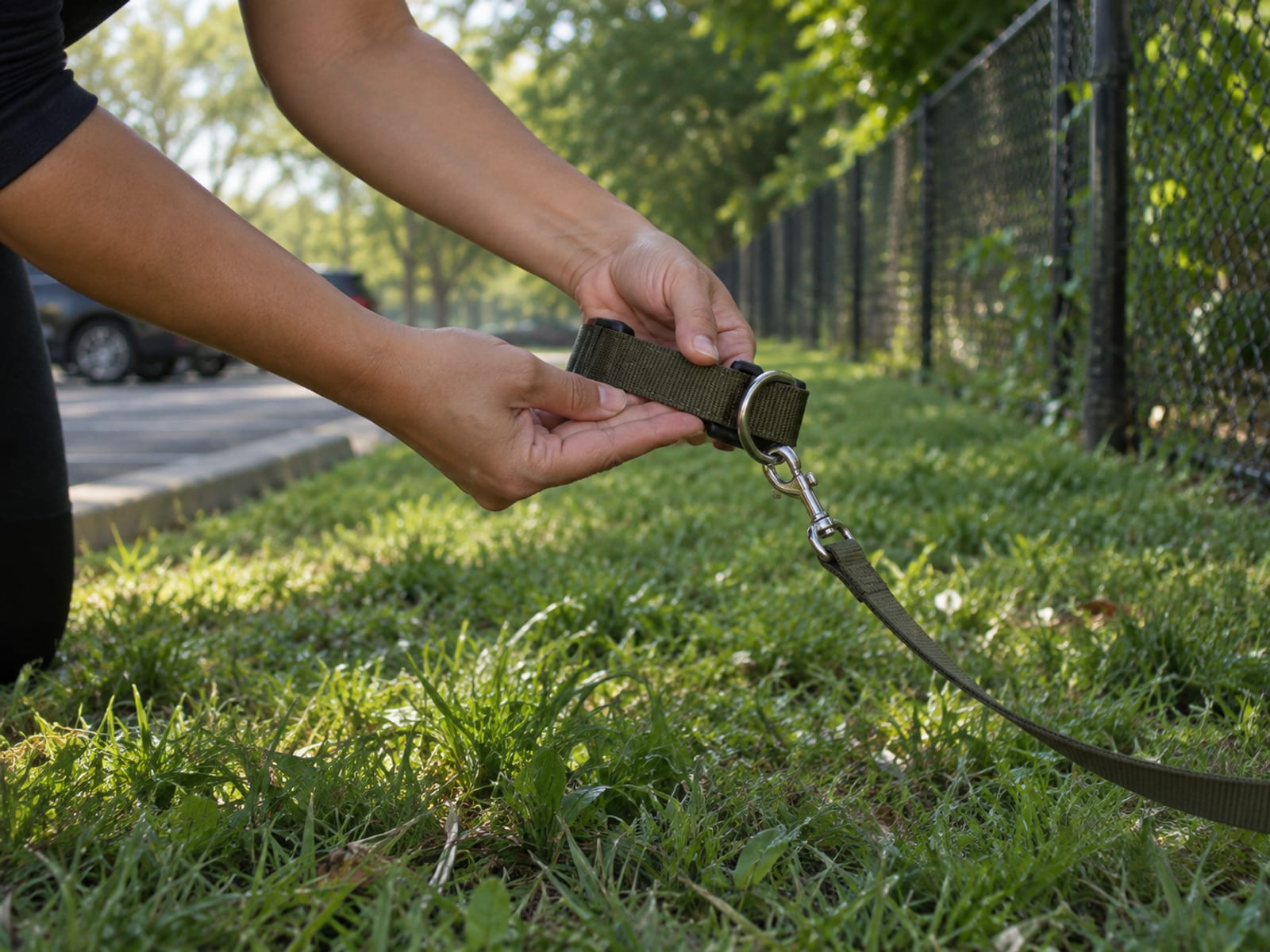
A long line gives your dog distance while you keep control. The AKC is plain about what it is for: safety and practice, not pulling the dog in like a fish. If the dog ignores the cue, the AKC says to gather the line as you walk closer and try again. VCA calls the harness and long line a safety belt in case a puppy fails to respond, and warns against hauling a dog toward you, because backward pressure on the leash can make the dog lean away from you.
The RSPCA recommends starting recall on a long line, describes lines up to 30 feet or more, says they are easier to control than retractable leads, and recommends a harness for any line longer than 6 feet. Fenzi's 20-foot line goes with a protected area. UC Davis suggests a long rope attached in an enclosed setup, or tied to something stationary, when you have no fenced yard or helper.
Fading the line follows the same ladder as everything else. You move from the short leash to the long line, then to more distance and more distraction, and only then to off-leash practice in a safe area. The RSPCA says the line comes off only after the dog has a reasonably reliable recall and understands the behavior. Even then, UC Davis says dogs should stay on leash near streets and heavy traffic, because training is never 100 percent effective. Treat any off-leash spot as a decision you make fresh each time, not a graduation.
Hover or tap a row to highlight it.
| Source | Line | Key point |
|---|---|---|
| AKC | A 6-foot leash, then a 20-foot or 30-foot long line outdoors | For safety and practice. If the dog ignores the cue, gather the line as you walk closer and try again |
| RSPCA | Up to 30 feet or more, with a harness for any line longer than 6 feet | Easier to control than a retractable lead. The line comes off only after the recall is reasonably reliable |
| Fenzi | 20 feet or longer | Used in a protected area until the recall is reliable |
| VCA | Harness and long line | A safety belt, never used to haul the dog toward you |
| UC Davis | A long rope in an enclosed setup, or tied to something stationary | For owners with no fenced yard or helper |
When your dog is loose and ignoring you
This is the hard moment, and what you do in it matters as much as what you practiced.
Call once, maybe twice. The RSPCA says to give the cue once or possibly twice and then switch tactics. Then change what your body is doing:
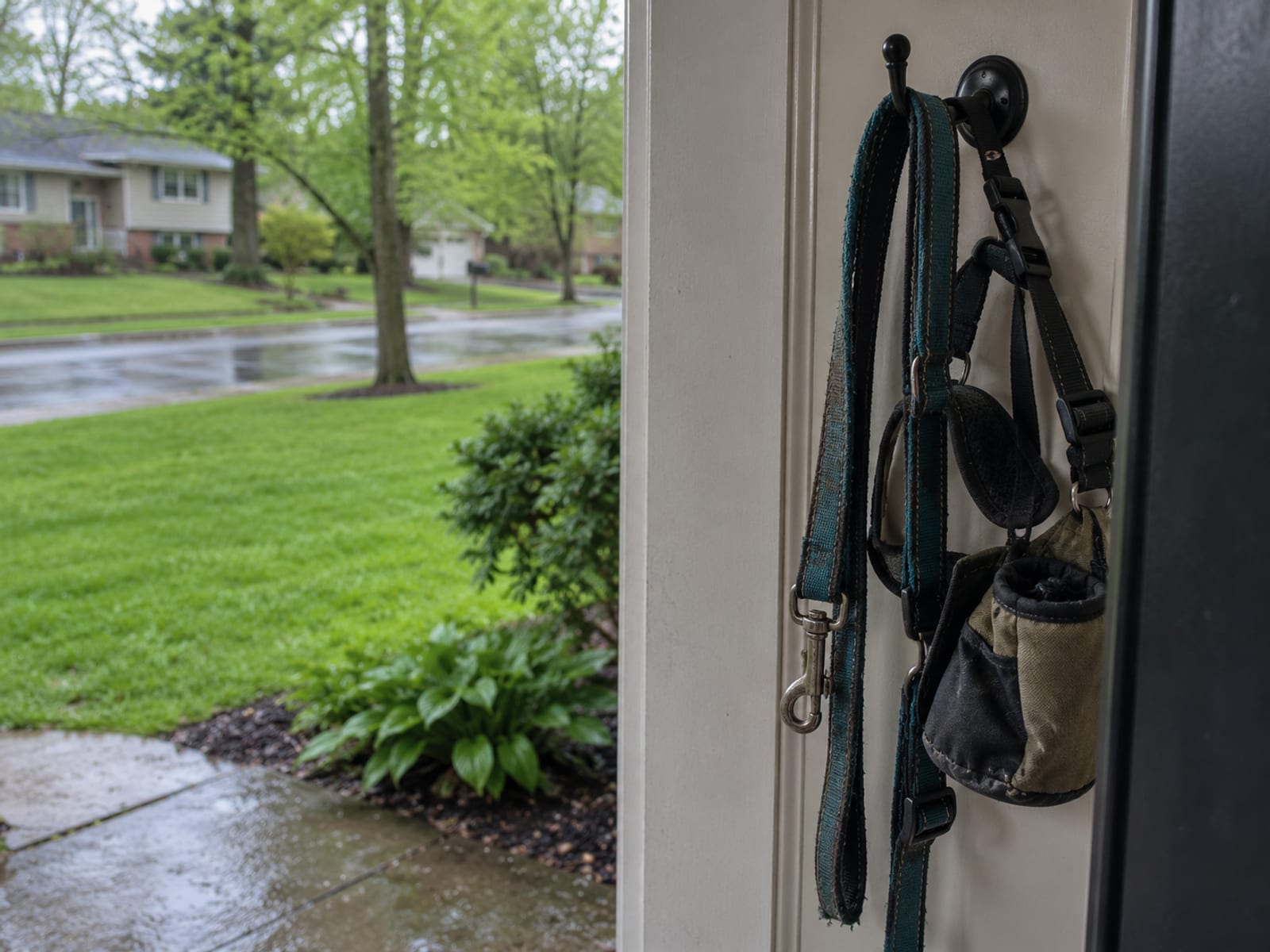
- Run away from the dog in an excited way instead of chasing. The RSPCA and AKC both describe moving away as a way to invite the dog to follow.
- Or move closer, drop low and be inviting, and show a high-value treat or toy. UC Davis says to go to the dog calmly if it does not respond, without punishment.
- When the dog reaches you, reward the arrival, touch the collar and clip on the leash. The AKC and Susan Garrett both teach conditioned collar grabs, so being caught predicts food and not the end of freedom.
Near a road, safety comes before everything. Never chase a dog toward traffic. Put distance between the dog and the road when you can, and get another person to block access if one is nearby. VCA describes an emergency recall: a rare word, followed at once by 10 to 20 high-value treats scattered at your feet. You practice it first with low distraction and build up, and it only works if it has been conditioned before the emergency.
Afterward, do not punish the dog. Rebuild the recall at an easier level on a long line or in a secure enclosure until it is consistent.
When Your Dog Is Loose and Ignoring You
- Call once, maybe twiceGive the cue once or possibly twice, then switch tactics.
- Change what your body is doingRun away from the dog in an excited way instead of chasing, or move closer, drop low and show a high-value treat or toy.
- Near a roadNever chase the dog toward traffic. Put distance between the dog and the road, get another person to block access, and use an emergency recall only if it has been conditioned.
- Reward the arrivalWhen the dog reaches you, reward it, touch the collar and clip on the leash.
- Never punishDo not punish or get angry, however long the dog took.
- Rebuild at an easier levelGo back to a long line or a secure enclosure until the recall is consistent.
Why recall fails
Failed recalls trace back to a short list of causes:
- A weak foundation or a cue with little value. Fenzi says the cue must be paired with the behavior and reinforcement. Susan Garrett names weak foundation as a major reason recall fails.
- Distractions beyond the dog's level. The AKC, RSPCA, Fenzi, VCA and Garrett all describe progressing from low distraction to high and stepping back when the dog fails.
- Too much freedom too soon. Fenzi says dogs learn that running, sniffing, chasing and playing away from you pay better than coming back.
- Repeating the cue. The dog learns the cue is background noise.
- A recall that predicts something unpleasant. Baths, nail trims, medication and the end of a walk all count.
- Adolescence. VCA says adolescent puppies become more aware of the world and more willing to wander farther, and it recommends keeping recall games going through adolescence and adulthood.
- Competing rewards. The AKC, Fenzi and Garrett describe smells, wildlife, other dogs and play as rivals to your treat.
- Fear of restraint. VCA says a puppy that shows fear of handling or restraint should see a professional positive-reinforcement trainer before the recall game continues.
- Medical or sensory causes. Covered next.
Dogs that go after other dogs at the park are a related problem with its own causes, and why dogs act aggressively at the dog park is worth a read if a failed recall is mixed up with that.
Hover or tap a row to highlight it.
| Cause | What is going on |
|---|---|
| Weak foundation | The cue was never paired with the behavior and with reinforcement |
| Distractions beyond the dog's level | The dog needs to step back to an easier level |
| Too much freedom too soon | Running, sniffing, chasing and playing away from you pay better than coming back |
| Repeating the cue | The dog learns the cue is background noise |
| A recall that predicts something unpleasant | Baths, nail trims, medication and the end of a walk all count |
| Adolescence | Adolescent puppies are more aware of the world and more willing to wander farther |
| Competing rewards | Smells, wildlife, other dogs and play rival your treat |
| Fear of restraint | A puppy that fears handling should see a professional positive-reinforcement trainer first |
| Medical or sensory causes | Hearing loss, vision loss, pain and cognitive change call for a vet exam |
Call the vet first when a good recall stops
If your dog had a solid recall and it fades or disappears, especially in a senior dog, book a veterinary exam before you change the training. UC Davis advises a health evaluation before behavioral training to find physical or medical obstacles. VCA's behavior counseling page lists decline in hearing or sight, hormonal disease, nervous-system disease, pain, mobility problems and organ dysfunction as contributors to behavior change.
The ASPCA says pain, arthritis, dental disease, hypothyroidism, cancer, impaired sight or hearing, urinary disease and Cushing's disease can be linked to a dog responding less to its owner's voice. Cornell says a veterinarian should do a physical exam and may recommend blood and urine tests to rule out pain, arthritis, seizure disorders, systemic illness and vision or hearing loss before loss of known behaviors is blamed on cognitive dysfunction. Tell your vet when the change began, whether it was sudden or gradual, and whether other learned behaviors have changed too.
Remote-collar recall, as the published sources describe it
I use e-collars among other tools, and I want to set out what the published material says about using one for recall without arguing for or against it. Two sources are manufacturer-side, and two are studies.
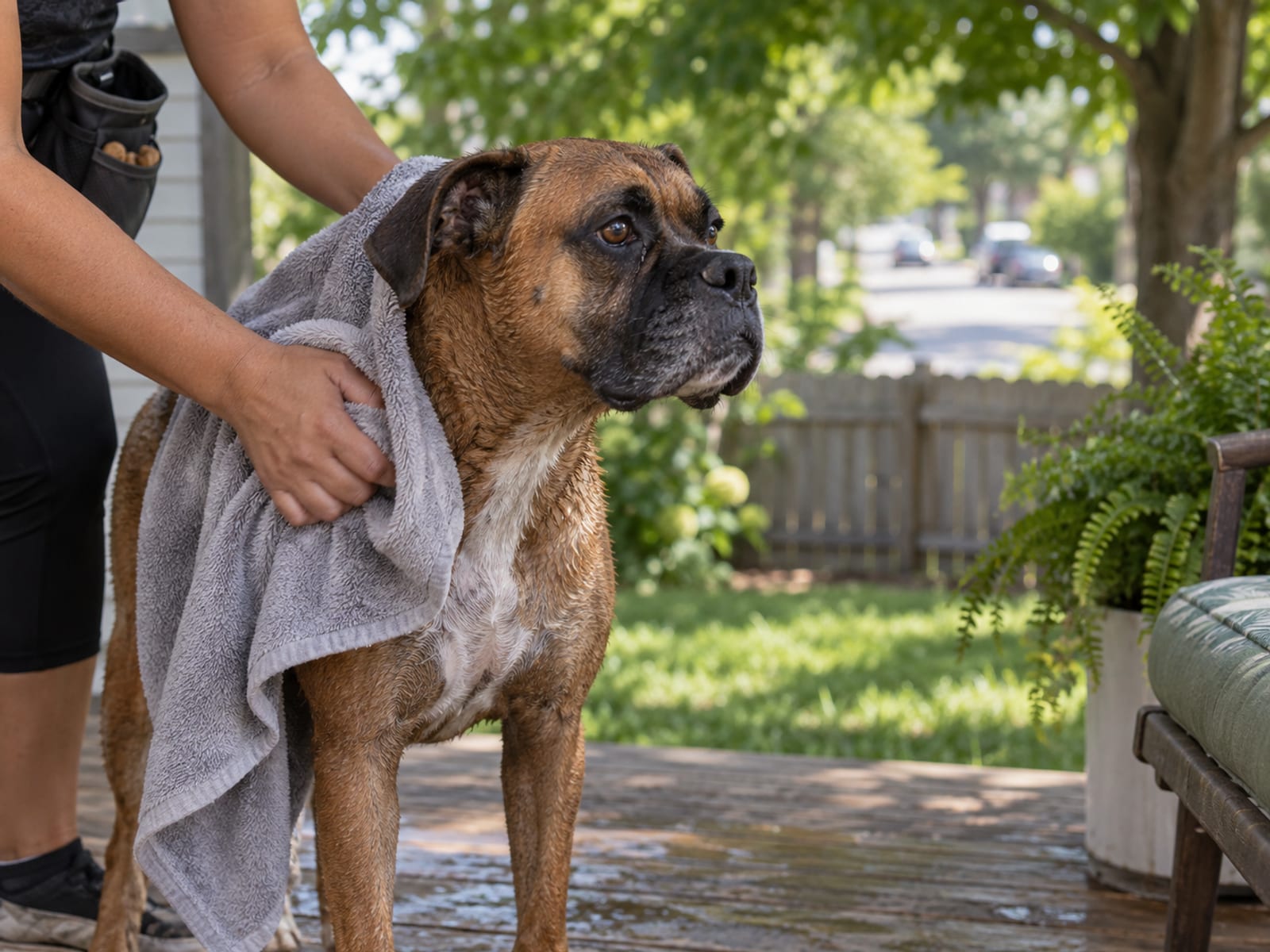
The Electronic Collar Manufacturers Association code of practice says the dog should first become used to wearing the collar. The trainer then finds the dog's minimum recognition level, starting at the lowest setting and going up one level at a time until the dog shows a mild response. The code says that level varies by dog, by day and by situation, so it is checked before each session. Early work happens in a safe, low-distraction place on a flat collar or harness with a line attached, using a 7-meter line for most training and up to 25 meters for recall. For "follow me" attention work, stimulation stops the moment the dog follows, and the dog is rewarded beside the handler. The code also cautions that a dog can become "remote-wise," meaning it responds only when the collar is on. Dogtra's manufacturer page gives the sequence as saying "come" and then pressing at the dog's working level to help the dog finish the behavior.
Two studies tested recall directly. Cooper and colleagues in 2014 followed 63 referred dogs, 21 in each of three groups, trained in two 15-minute sessions a day for 4 or 5 days. The short duration, the referred dogs, differences between the trainer groups and the mix of recall with other obedience work all limit how far the findings reach into ordinary households. China, Mills and Cooper in 2020 trained 63 dogs with known off-lead problems, 51 of them referred for chasing, for up to 150 minutes over 5 days. Their reward-focused group did as well or better on recall measures, and the authors concluded a collar was unnecessary for effective recall. They also state that poor timing or inescapable stimulation can create undesirable associations. That study also had a short duration, referred dogs, different trainer groups and no long-term off-leash follow-up.
Owner surveys are a different kind of evidence. Hiby and colleagues in 2004 questioned 364 owners, and Blackwell and colleagues in 2012 questioned 133 remote-collar users along with other groups. Those are owner reports and associations, not recall tests.
So, what does that mean for you? Timing, conditioning and a trainer's eye matter, and they matter more with a remote collar than with a treat pouch. If you are considering one and do not know how to condition it, get a trainer to show you before you put it on the dog.
How long recall takes
Nobody can give you an honest number of weeks that applies to every dog, and the published figures show why. VCA says it can take many weeks or months of practice before a dog responds through distractions. Fenzi's fix for a failed whistle recall is a couple of days back at the association step, plus an extra day or two at hard stages. The RSPCA's food-ration exercise runs a week or two, and that is the length of the exercise, not of recall. Susan Garrett's Recallers is a year-long coaching program, which describes the program and not what your dog needs. UC Davis says recall may not come quickly or easily and takes patience, persistence, practice and reinforcement.
What changes the timeline is your dog's foundation, its reinforcement history, its age, the level of distraction and how consistently you practice. Keep the dog on a long line or in a secure area until success is steady, and treat an off-leash result as something your dog earns by performing, not something a schedule promises.
When to bring in help
Get a professional involved when your dog keeps failing even after you return to easier levels, when you cannot contain the dog safely, when fear or discomfort with restraint shows up, when the dog chases traffic or wildlife, or when you are considering a remote collar and do not know how to condition it. Bring in your vet first if the recall stopped suddenly, if the dog is a senior, or if you see signs of pain, hearing or vision loss or cognitive change.
For credentials, the CCPDT lists CPDT-KA, CPDT-KSA and CBCC-KA, and says to ask about experience with your specific problem, methods, references and safety planning. IAABC lists the Accredited Dog Trainer (ADT) and the Certified Dog Behavior Consultant (CDBC). Ask any trainer how they handle failed recalls, traffic safety and collar conditioning. A credential is one screening step, and those answers tell you the rest.
If you are local and want help with the basics first, dog obedience training in Baltimore lays out what training around the city looks like.
FAQ
Should I call my dog every time I want it to come?
Call when you are ready to reward and when the dog can succeed. A recall that always predicts a bath, a nail trim, medication or leaving the park loses its value. For those events, go and get the dog.
What do I do if my dog ignores me and runs toward a road?
Do not chase. Create distance from the road if you can, and have someone block access to traffic. If you have trained an emergency recall, VCA's version is a rare word followed at once by 10 to 20 high-value treats scattered at your feet.
Is a long line enough, or do I need a fence?
A long line gives you control while the dog practices, and the RSPCA recommends a harness for any line over 6 feet. Fenzi pairs the long line with a protected area. Near streets and heavy traffic, UC Davis says to keep the dog on leash.
My dog's recall used to be good and now it is not. What changed?
Start with a vet visit. Hearing loss, vision loss, pain, arthritis, thyroid disease, Cushing's disease and cognitive change can all reduce responsiveness, and an older dog should be examined before any training changes.
Check What You Picked Up
How many times should you give the recall cue?
A dog finally comes to you after a long delay. What do you do?
What is the long line for?
Your dog is loose and heading toward a road. What do you do?
A dog with a solid recall suddenly stops responding. What comes first?
The RSPCA suggests that about how many recalls should end in a reward and a release back to play?
Answer a question to see your score.
Working with me
If your dog's recall is not holding up, or you want a plan that fits your dog and your neighborhood, I start with an evaluation visit. From there I offer in-home lessons, and board and train in my own home. When you are ready, contact DW Dog Training and tell me what your dog does when you call.