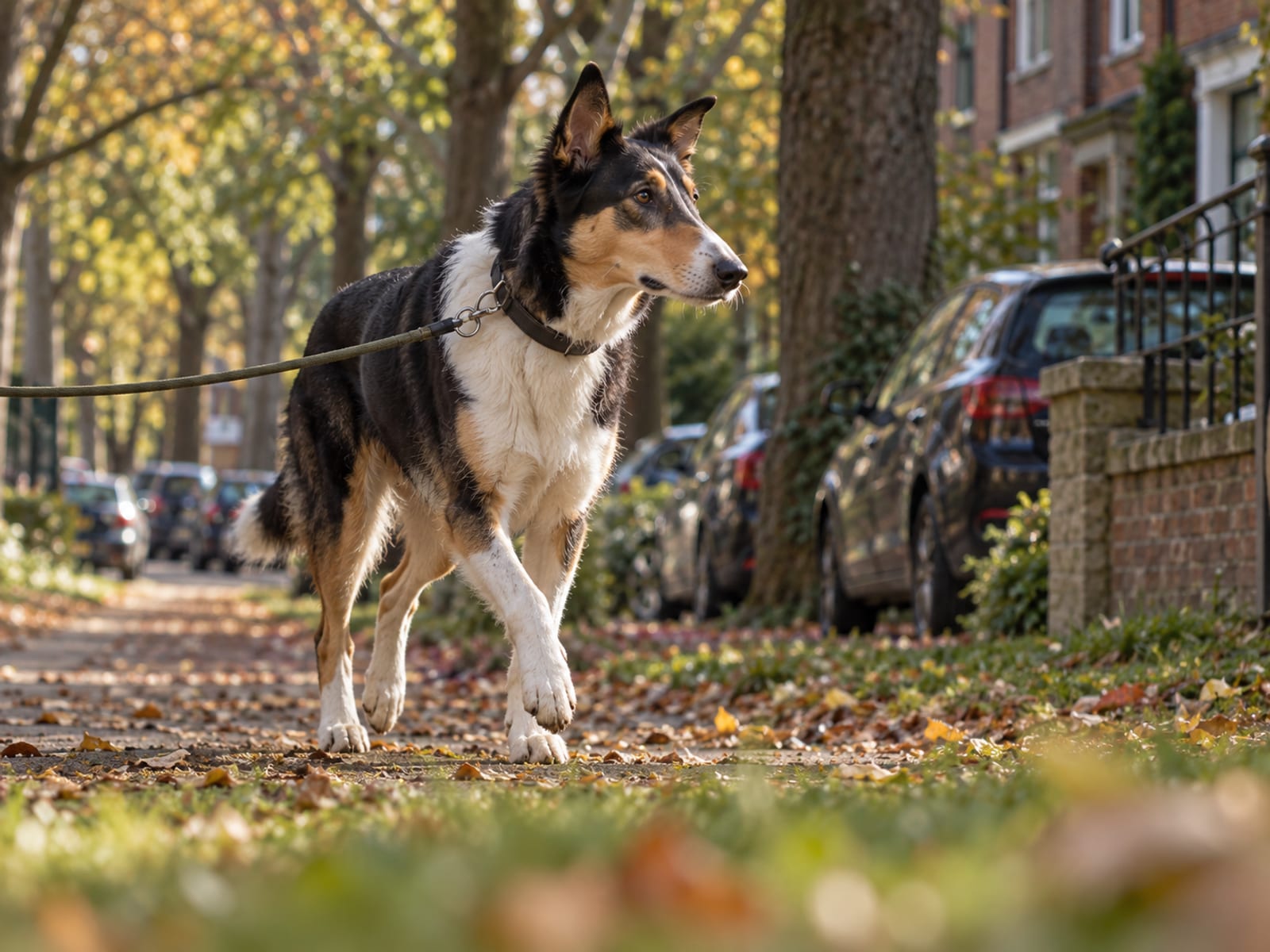

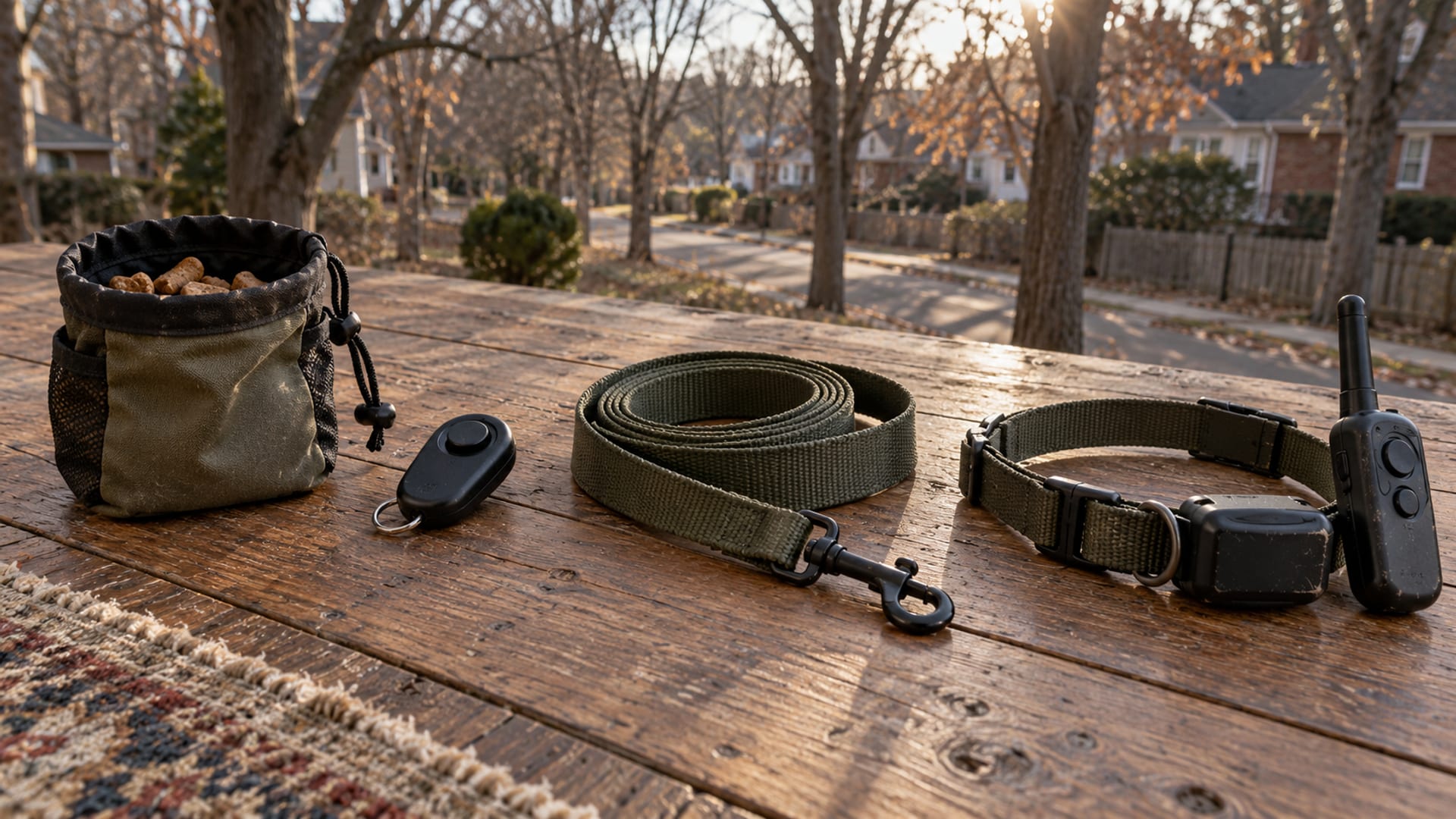
Positive-reinforcement and force-free training reward the behavior you want and avoid pain, fear and force. Balanced training uses rewards plus other consequences, such as leash pressure, corrections or tools chosen for the dog. Trainers and professional organizations disagree about whether that second group is necessary or acceptable, and the published studies do not settle it for every dog. I train balanced, and I'll say so once, plainly. The most useful way to choose is by what a trainer actually does with your dog, not by the label on the website.
Key takeaways
Hover or tap a card to bring it forward.
- Positive reinforcement adds a reward; force-free training excludes pain, fear and force; balanced training adds consequences like leash pressure or tools chosen for the dog.
- LIMA is a decision hierarchy that begins with a wellness check and includes negative reinforcement and positive punishment, so it is not the same as reward-only.
- Every study of training methods has limits, and none tests one uniform balanced or positive-only method.
- AVSAB, BSAVA, RSPCA and ACVB oppose aversive methods, while IACP and NADOI support the freedom to choose tools.
- Choose a trainer by what they do with your dog, and put a safety plan and a qualified professional first when a dog may bite.
What the four quadrants mean
Both camps use the same vocabulary for how dogs learn, so it helps to start there. OpenStax Psychology 2e states that all reinforcers, positive or negative, make a behavior more likely, and all punishers, positive or negative, make it less likely. "Positive" means something is added. "Negative" means something is removed. It has nothing to do with good or bad.
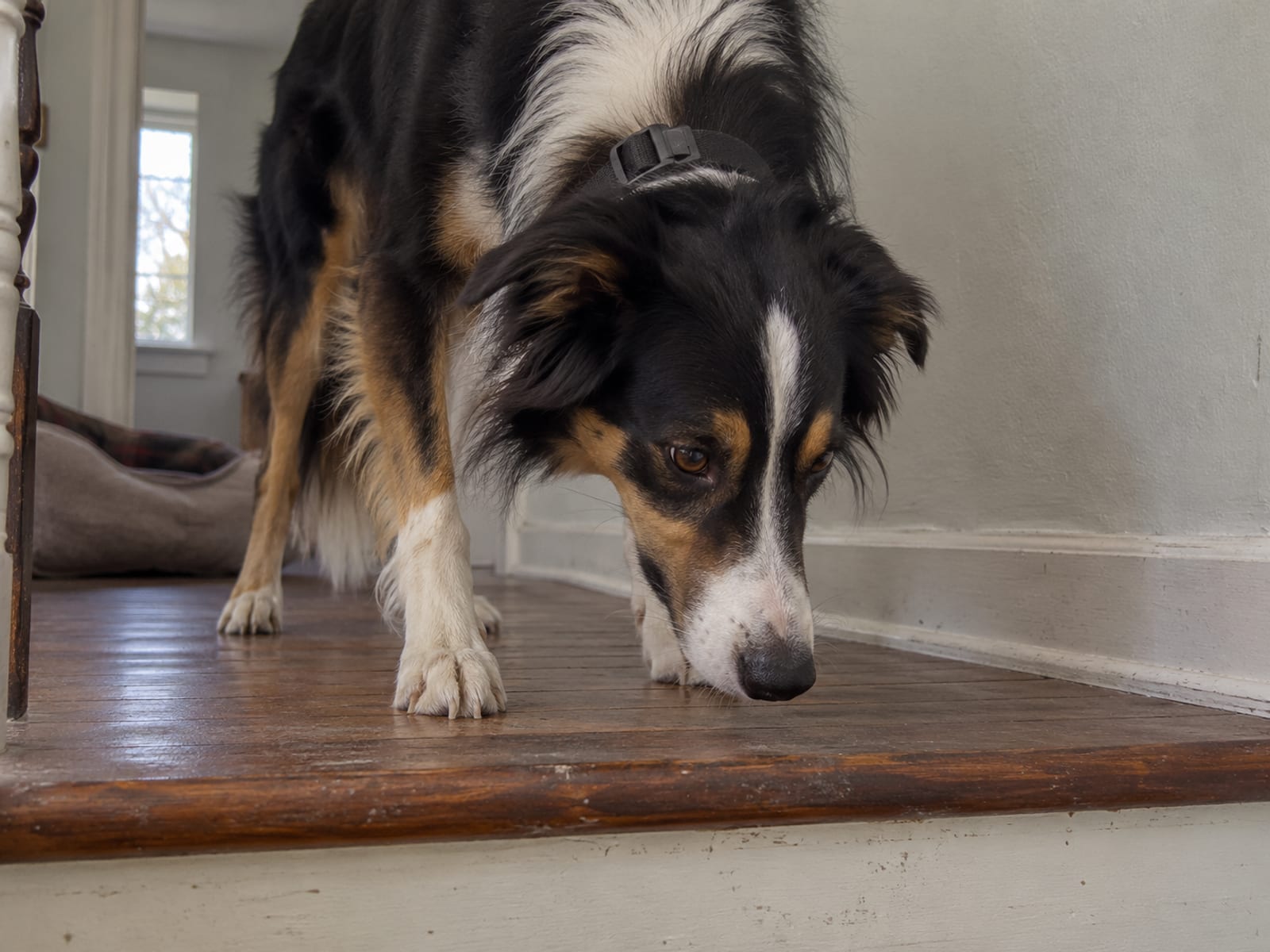
- Positive reinforcement adds something the dog values to raise a behavior. Food after a sit is the plain example.
- Negative reinforcement removes something unpleasant to raise a behavior. Leash pressure releases the moment the dog walks beside you.
- Positive punishment adds something unpleasant to lower a behavior, such as a leash correction after pulling.
- Negative punishment removes something the dog wants to lower a behavior. Play ends the second teeth touch skin.
Deldalle and Gaunet define the quadrants the same way in their 2014 paper. The two camps agree on those definitions. They disagree about which quadrants a trainer should use on a living dog.
Hover or tap a row to highlight it.
| Quadrant | What happens | Dog example |
|---|---|---|
| Positive reinforcement | Something the dog values is added to raise a behavior | Food after a sit |
| Negative reinforcement | Something unpleasant is removed to raise a behavior | Leash pressure releases when the dog walks beside you |
| Positive punishment | Something unpleasant is added to lower a behavior | A leash correction after pulling |
| Negative punishment | Something the dog wants is removed to lower a behavior | Play ends the second teeth touch skin |
What force-free, LIMA and balanced each mean
These three terms get mixed up, and they are not interchangeable.
The Pet Professional Guild defines force-free as no electrical stimulation, no prong, no choke, no pain, no fear and no force in the training, behavior modification, care or management of any pet. Reward-based programs commonly pair positive reinforcement with negative punishment, like removing attention or a toy.
LIMA stands for Least Intrusive, Minimally Aversive. The CCPDT LIMA policy aims for the least intrusive effective intervention, and it starts with a wellness check for pain or illness. Its written hierarchy then runs through reinforcement, management, extinction, negative punishment, negative reinforcement and, at the highest level, positive punishment. So, LIMA is not the same thing as reward-only training.
The IAABC Standards of Practice from 2025 go further. IAABC says it strongly opposes the intentional use of aversive stimuli, and it requires members to refrain from using electrical stimulation in training or behavior modification.
Balanced training sits on the other side of that line. The International Association of Canine Professionals does not bar any tool or quadrant. It says humane tools can include front-clipped harnesses, head halters, prong collars, e-collars, martingales and slip collars, and it says misuse of any tool can cause injury, emotional trauma or behavior problems. IACP also reads Steven Lindsay's LIMA as leaving all four quadrants available. Free Balanced Dog Training describes the approach as rewards, leash pressure, prong collars and e-collars, chosen for the individual dog and used correctly and humanely. Trainer Robert Cabral writes that limiting training to only one way, such as positive only, is as restrictive as limiting it to compulsion. There is no single standard balanced protocol, so two trainers who both say "balanced" can work very differently.
Hover or tap a row to highlight it.
| Term | What it means | What it allows |
|---|---|---|
| Force-free | No electrical stimulation, prong, choke, pain, fear or force | Positive reinforcement, often with negative punishment |
| LIMA | Least Intrusive, Minimally Aversive, starting with a wellness check | A hierarchy that runs from reinforcement up to positive punishment |
| Balanced | Rewards plus other consequences, with tools chosen for the dog | Leash pressure, corrections and tools such as e-collars, used correctly and humanely |
What the studies measured, and where each one stops
I'll give the same weight to the limits on both sides, because every one of these studies has them.
Owner questionnaires. Hiby, Rooney and Bradshaw surveyed 364 owners in 2004. Rewards were linked with reported obedience, and punishment was linked with more problem behavior, including separation problems and over-excitement. Those are owner reports and correlations. In 2008, Blackwell and colleagues found that 16 percent of owners reported reward-only training and 72 percent used some positive punishment. Method was associated with reported fear, attention-seeking and aggression scores, but owner-reported data cannot show cause.
Observation of dogs in training. Deldalle and Gaunet watched 50 dogs in two schools in 2014, 24 in a positive-reinforcement school and 26 in a negative-reinforcement school. The negative-reinforcement dogs showed more lowered postures and stress signals. With one school per method, though, differences between the schools themselves could account for some of that. Rooney and Cowan filmed 53 owner-dog pairs in 2011. Dogs whose owners reported more punishment were less likely to interact with a stranger and tended to play less. The authors say it could run the other way, with poor performance leading owners to punish more.
Stress and welfare measures. Vieira de Castro and colleagues followed 92 dogs from three reward-based schools and four aversive-based schools in 2020. The aversive group showed more stress behavior, higher cortisol after training and more negative results on a cognitive-bias task. The dogs came from existing schools and were not randomly assigned, so differences in dogs, owners and trainers could play a part.
Recall. In 2014, Cooper and colleagues split 63 dogs with recall problems into three groups of 21, covering e-collar trainers, the same trainers without e-collars, and reward-focused trainers. Owners reported improvement in 92 percent of dogs, with no significant difference in efficacy between groups. China, Mills and Cooper later analyzed the training records. The reward-focused group did better on one-command responses and had shorter response times. Both studies covered up to five days of training in referred dogs, so they speak to short-term recall, not every dog or every program.
A review. Ziv reviewed 17 studies in 2017 and concluded that aversive methods were linked with welfare risks and showed no better effectiveness than reward-based methods. Ziv also noted many small samples, survey and observational designs, and incomplete descriptions of the methods used.
Hover or tap a row to highlight it.
| Study | What it looked at | What it found | Where it stops |
|---|---|---|---|
| Hiby, Rooney and Bradshaw, 2004 | Survey of 364 owners | Rewards linked with reported obedience; punishment linked with more problem behavior | Owner reports and correlations |
| Blackwell and colleagues, 2008 | Owner survey | 16 percent reward-only, 72 percent used some positive punishment; method linked with fear, attention-seeking and aggression scores | Owner reports cannot show cause |
| Rooney and Cowan, 2011 | 53 owner-dog pairs filmed at home | More reported punishment linked with less stranger interaction and less play | Poor performance may lead owners to punish more |
| Deldalle and Gaunet, 2014 | 50 dogs in two schools | Negative-reinforcement dogs showed more lowered postures and stress signals | One school per method |
| Cooper and colleagues, 2014 | 63 dogs with recall problems, three groups of 21 | Owners reported improvement in 92 percent, no significant difference between groups | Up to five days of training in referred dogs |
| Ziv, 2017 | Review of 17 studies | Aversive methods linked with welfare risks and no better effectiveness | Small samples, survey designs, incomplete method descriptions |
| Vieira de Castro and colleagues, 2020 | 92 dogs from seven schools | Aversive group showed more stress behavior and higher cortisol after training | Dogs not randomly assigned |
| China, Mills and Cooper, 2020 | Training records from the recall study | Reward-focused group did better on one-command responses with shorter response times | Short-term recall only |
Aggression and reactivity: where the evidence is thinnest
If your dog snaps, lunges or guards things, you probably care most about this part. Herron, Shofer and Reisner surveyed 140 owners of dogs referred for behavior problems in 2009. Confrontational methods such as hitting, kicking, grabbing the jowls, staring a dog down, or rolling a dog onto its back and holding it down drew aggressive responses from many of the dogs they were tried on. Reward-based methods drew them from very few. The owners were behavior-referral clients, and the design was retrospective and questionnaire-based.
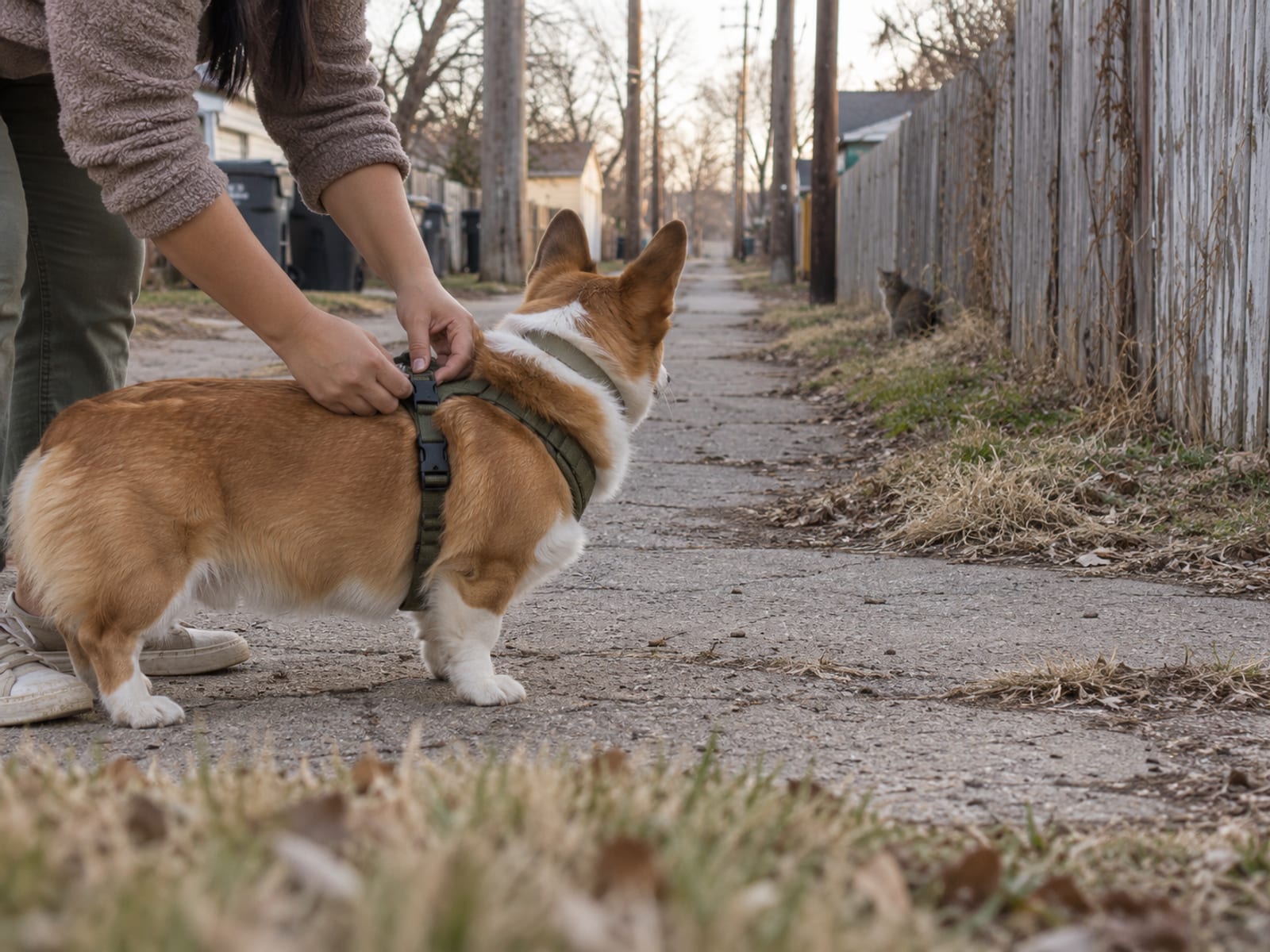
That is the most direct finding on aggression I can point you to, and it is about confrontation, not about every aversive tool. Head-to-head trials of reward-only against balanced training for diagnosed aggression or reactivity are limited. No published position claims reward-only training resolves every aggression, recall or reactivity case, and no balanced source publishes failure or injury rates for balanced training as a category. For a dog with a bite history, that leaves the choice of trainer doing most of the work.
Criticism from both sides
Critics on the aversive-training side point to selection bias, the lack of random assignment to schools, inconsistent definitions of "aversive" and "mixed," heavy reliance on owner surveys, and the gap between a skilled professional and an untrained owner with a tool. Critics on the reward-based side point to owner-reported outcomes, aversives that vary in intensity and timing, and the fact that a behavior stopping in the short term does not prove good welfare or lasting change.
Both sets of criticism are fair, and they point to the same design problem. "Balanced" and "positive only" each cover different tools, skill levels, goals, dogs and settings. A result from one school does not carry over to every trainer who uses the same label.
Where the organizations stand
These positions conflict, and I'll lay them out without ruling between them.
- AVSAB, in its 2021 statement, says evidence supports reward-based methods for all canine training and that aversive methods should not be used, including electronic collars, prong collars, choke chains and leash corrections. The American Veterinary Society of Animal Behavior position also advises consulting a veterinary behaviorist when a trainer is struggling with a case.
- BSAVA recommends reward-based training and opposes aversive methods, and it supports legislation banning devices that enable aversive training.
- RSPCA says in its policy book that it opposes any aversive training method.
- ACVB states in its position statements that it stands against methods that cause short or long lasting pain, discomfort or fear.
- IACP supports the freedom to choose tools and strongly opposes legislation that bans or limits the humane use of any training tool.
- NADOI says in its position statements that forbidding tools because a minority misuse them can make training harder and may delay or prevent success.
They disagree on one question: whether an aversive tool can ever be humane and justified. The veterinary and force-free bodies say the welfare risks are unacceptable or unnecessary. IACP and NADOI say skilled handlers can use tools humanely.

Where a source rejects e-collars or other tools, that is its position, and I'll leave it at that. In my own practice I use e-collars among other tools, and I explain exactly how before they go on a dog.
Hover or tap a row to highlight it.
| Organization | Position |
|---|---|
| AVSAB | Supports reward-based methods and says aversive methods, including e-collars, prong collars, choke chains and leash corrections, should not be used |
| BSAVA | Recommends reward-based training, opposes aversive methods and supports banning devices that enable aversive training |
| RSPCA | Opposes any aversive training method |
| ACVB | Stands against methods that cause short or long lasting pain, discomfort or fear |
| IAABC | Strongly opposes the intentional use of aversive stimuli and requires members not to use electrical stimulation |
| IACP | Supports the freedom to choose tools and strongly opposes laws that ban or limit humane tool use |
| NADOI | Says forbidding tools because a minority misuse them can make training harder and may delay or prevent success |
How to choose a trainer for your dog
Whatever label a trainer uses, the useful questions are the same. The CCPDT guide to choosing a trainer recommends independently certified trainers. CPDT-KA requires an exam and at least 300 hours of dog-training experience, and CBCC-KA covers behavior consulting. IACP certifies on references, client feedback and written and video submissions, and it does not exclude trainers by tool. CCPDT lists primarily punishment-based methods as a red flag. The RSPCA trainer guidance says dogs in a class should look relaxed and interested, not cowering or avoiding eye contact.
Ask these directly:
1. What happens when my dog gets it right? 2. What happens when my dog gets it wrong? 3. Which tools will you use, when, and why? 4. Who handles my dog? 5. How do you check for medical causes? 6. What is the safety plan if my dog may bite? 7. What credentials and continuing education do you hold? 8. Can I watch a session and call your references?
A good trainer explains the plan in terms you can observe, tells you about tools and consequences before using them, adapts to your dog, and refers medical or severe cases out. For a longer checklist, I wrote about how to pick a dog trainer in Maryland.
If your dog has bitten or might, a safety plan and a qualified professional come first, whichever camp that professional belongs to. My guide to stopping aggressive behavior in dogs covers the practical side.
Hover or tap a row to highlight it.
| Credential | Who issues it | What it takes |
|---|---|---|
| CPDT-KA | CCPDT | An exam and at least 300 hours of dog-training experience |
| CPDT-KSA | CCPDT | Adds a skills assessment |
| CBCC-KA | CCPDT | Covers behavior consulting, with at least 300 hours of behavior-consulting experience |
| IACP certification | IACP | References, client feedback, and written and video submissions; trainers are not excluded by tool |
Questions owners ask
These four come up often once the definitions are clear.
Is LIMA the same as positive-only training?
No. CCPDT's LIMA policy begins with a wellness check and works up a hierarchy that includes negative reinforcement and, at the top, positive punishment. Force-free is the stricter term, and the Pet Professional Guild uses it to rule out aversive tools and force entirely.
Does a rank-based theory of dog behavior belong in this debate?
Both camps are wary of confrontational handling, and the old rank-based theories of dog behavior are a big reason why. If that is what drew you here, read what the science says about the old rank-based theories of dog behavior for the full picture.
What is the downside of positive reinforcement?
CCPDT's LIMA policy acknowledges that a less intrusive intervention can fail. AVSAB advises a trainer who is struggling with a case to consult another reward-based trainer or refer to a veterinary behaviorist. Reward-only trainers may need more management, careful reinforcement planning, veterinary input or referral for difficult cases.
Who carries out the plan between lessons?
Whichever approach you pick, you will be the one running it between lessons. I wrote about what that takes in the power of consistency in reducing dog aggression.
Check What You Picked Up
In the four quadrants, what does "positive" mean?
Is LIMA the same as reward-only training?
What does the aggression study by Herron, Shofer and Reisner say about confrontational methods?
Which question helps you choose a trainer, whatever the label?
If your dog has bitten or might bite, what comes first?
Answer a question to see your score.
How I work with this
I start with an evaluation visit, then move to in-home lessons, or board and train in my own home when your dog needs more than weekly lessons. I explain each tool, and what happens when your dog is right or wrong, before I use it. If you want to talk it through, contact DW Dog Training.