

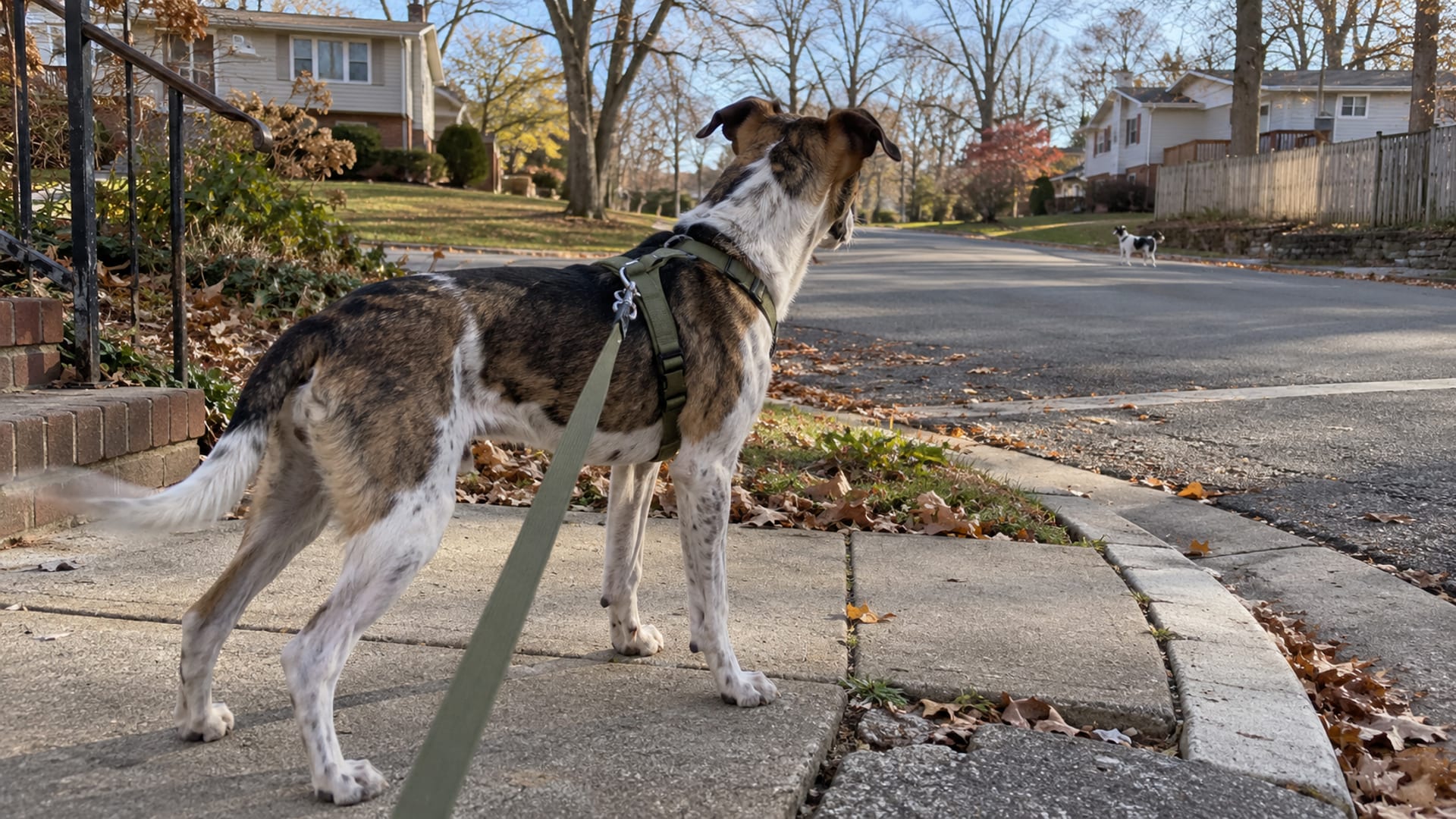
Keep every dog safe on the next walk first, and sort out the why afterward. Walk at quiet times on routes where you have room to cross the street or turn around. Move away at the first stiffening or staring, before your dog reaches a full reaction. Never let an unknown dog walk up to yours, and check that the harness, leash and clips are secure before you step outside. If a fight or bite has already happened, go to the after-a-fight steps below before anything else.
Our leash reactivity guide covers frustration and everyday leash handling. What follows is about lunging, attacks and what to do when contact is close.
Key takeaways
Hover or tap a card to bring it forward.
- Walk at quiet times, leave room to cross the street or turn, and move away at the first stiffening or staring.
- After a fight or bite, separate the dogs without putting hands between them, call a vet at once and get medical care for any person who was bitten.
- On-leash aggression describes where it happens; fear, frustration, guarding, learning and pain can all be behind it.
- A sudden change in behavior calls for a vet check before training starts.
- Progress is measured in distance, intensity, recovery and incidents, and a dog that makes contact needs a professional.
What to do on the next walk
Walks go better when you plan the route like you'd plan a trip past a hazard. The goal is that your dog never gets to rehearse the lunge, and that you can always get away.
AAHA and Cornell's Riney Canine Health Center point to the same basics, and I agree with them:
- Walk at quieter times and in less crowded places.
- Pick routes with space to cross the street, turn around, step behind a parked car or get behind a visual barrier.
- Skip forced greetings, and do not walk toward other dogs when yours is already worried.
- Watch for slowing, stiffening, staring, general tension and a sudden lack of interest in food. Those come before the lunge.
- Do not allow an unfamiliar off-leash dog to come up to you. VCA advises against approaching roaming or stray dogs, and that includes letting yours do it.
- Keep rabies vaccination current and follow your local leash laws.
Skip dog parks until you know how your dog behaves off leash with strangers. If that is the part that worries you, the reasons behind dog park aggression are worth a read before you go anywhere near one.
Hover or tap a row to highlight it.
| Step | Detail |
|---|---|
| Pick the time and place | Walk at quieter times and in less crowded places |
| Pick the route | Leave space to cross the street, turn around, step behind a parked car or get behind a visual barrier |
| Check the gear | Make sure the harness, leash and clips are secure before you step outside |
| Skip forced greetings | Do not walk toward other dogs when yours is already worried |
| Watch for early signs | Slowing, stiffening, staring, general tension and a sudden lack of interest in food come before the lunge |
| Move away early | Leave at the first stiffening or staring, before your dog reaches a full reaction |
| Keep strange dogs off | Do not allow an unfamiliar off-leash dog to come up to you, and do not let yours approach roaming or stray dogs |
| Skip dog parks | Wait until you know how your dog behaves off leash with strangers |
| Stay current | Keep rabies vaccination current and follow your local leash laws |
If a fight or bite already happened
Do these in order. The steps come from VCA, the AVMA and Miami-Dade Animal Services.
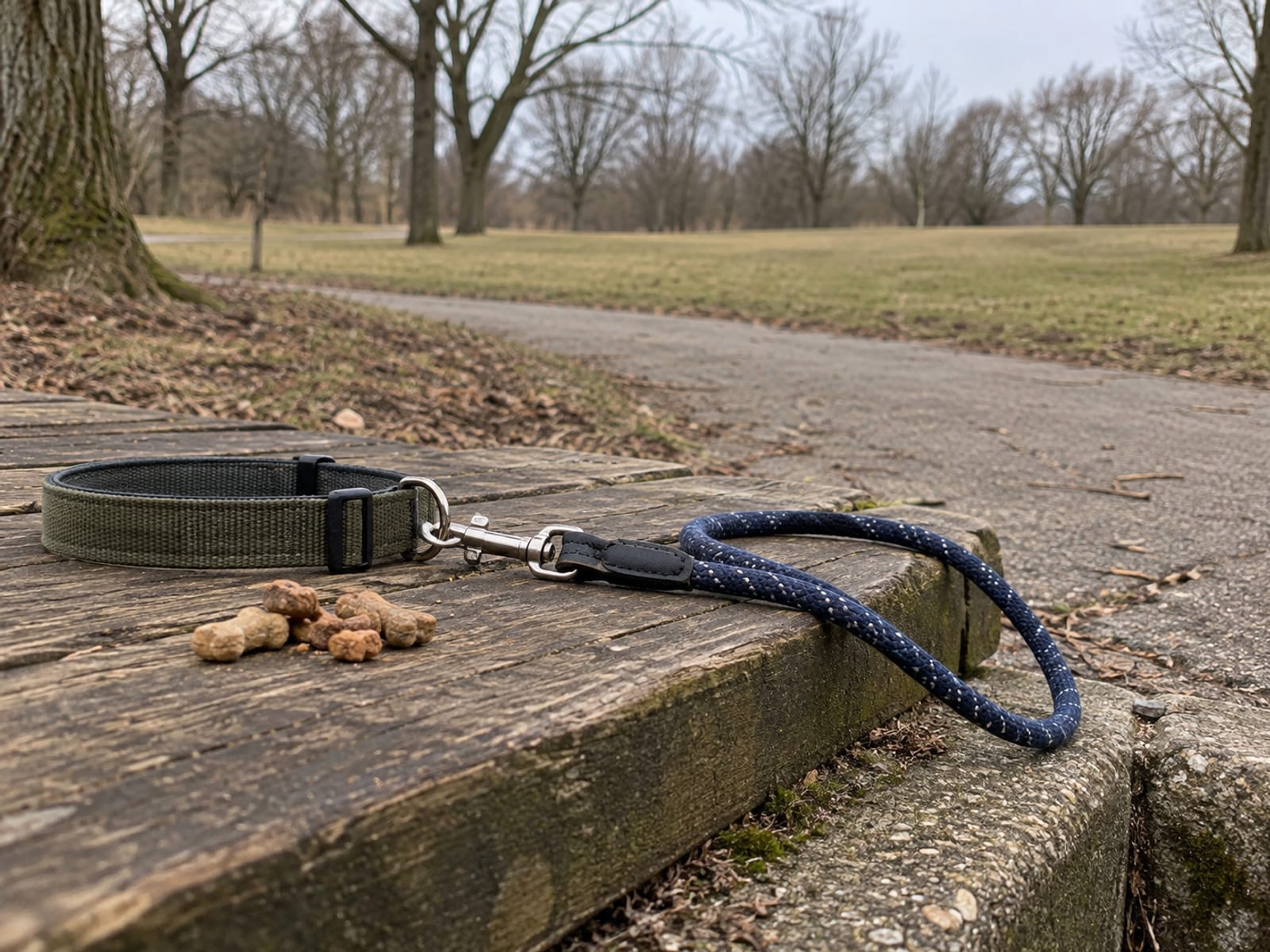
1. Separate and secure each dog. Never put your hands between dogs or grab collars while they are biting. Get distance, then get each dog under control on its own. 2. If a person was bitten, medical care comes first. Clean the wound, get it seen and follow local bite-reporting rules. Give the other party your contact information and your dog's rabies vaccination details. 3. Call a vet right away for any dog that was bitten. Punctures close fast and hide under fur. A bite can crush tissue under a small mark. VCA says all bite wounds are contaminated, and they can turn into abscesses or deeper infections. VCA's emergency list includes uncontrolled bleeding, trouble breathing, weakness, crying, limping, pale or blue gums and collapse. 4. Leave the hydrogen peroxide alone unless the vet tells you to use it. Pain can make a gentle dog bite during cleaning. 5. Swap names, phone numbers, addresses, dog descriptions and rabies vaccination details. Photograph every injury and keep the vet records and bills. 6. Report it as your local animal-control and public-health rules require. These rules vary. Miami-Dade Animal Services, for example, treats an attempted attack or an injury to another domestic animal as reportable, may investigate and may ask for a 10-day quarantine. Call your own local authority and ask what applies where you live.
After a Fight or Bite, in Order
- Separate and secure each dogNever put your hands between dogs or grab collars while they are biting. Get distance, then control each dog on its own.
- Care for any person bittenMedical care comes first. Clean the wound, get it seen and follow local bite-reporting rules. Give the other party your contact information and your dog's rabies vaccination details.
- Call a vet for any dog that was bittenPunctures close fast and hide under fur, a bite can crush tissue under a small mark, and all bite wounds are contaminated. Emergency signs include uncontrolled bleeding, trouble breathing, weakness, crying, limping, pale or blue gums and collapse.
- Leave the hydrogen peroxide aloneUse it only if the vet tells you to. Pain can make a gentle dog bite during cleaning.
- Swap information and documentExchange names, phone numbers, addresses, dog descriptions and rabies vaccination details. Photograph every injury and keep vet records and bills.
- Report itFollow your local animal-control and public-health rules, which vary. Miami-Dade Animal Services, for example, may investigate and may ask for a 10-day quarantine.
Why a dog does this: it is not one cause
On-leash aggression tells you where it happens. It does not tell you why. Different dogs reach the same lunge by different roads.
Gary Landsberg, DVM, writing in the Merck Veterinary Manual, lists fear, anxiety, uncertainty, inherited temperament, past learning, poor socialization, punishment and bad past experiences. A fearful dog on a leash cannot retreat, so it may go on the attack. Some dogs guard their owner. Others redirect onto whatever is close when they cannot reach the dog they were after.
Debra Horwitz, DVM, in Today's Veterinary Practice, adds learned responses, poor social communication, previous fights and leash corrections or punishment. The Nebraska Humane Society names frustration and fear. A dog that wants to greet and cannot gets frustrated. A fearful dog learns that barking and lunging makes the other dog leave, so it keeps doing it. Cornell's Katherine Houpt lists genetics, little socialization, bad experiences and lack of training, and notes that some dogs react only while leashed.
Is the leash itself the cause? Westgarth and colleagues, in a 2011 paper in Applied Animal Behaviour Science, walked 10 dogs over the same route on and off leash. The dogs were over a year old, comfortable with other dogs and not aggressive. The leash cut down their interactions. That tells you leashes change what a dog can do. It cannot tell you the leash creates aggression, because these dogs were not aggressive to begin with.
Other numbers come with limits too. Sherman, Reisner, Taliaferro and Houpt looked back at 99 Cornell clinic cases in 1996, 73 with household dog aggression and 26 with aggression toward dogs outside the home. Shabelansky and Dowling-Guyer collected owner questionnaires in 2016 from 175 owners of highly excitable dogs who chose to take part. Both rely on what owners reported, and neither points to a single cause.
If a lot of your dog's trouble is tied to the leash and the handling around it, the guide to leash-related aggression in dogs goes further into that side of it.
Hover or tap a row to highlight it.
| Cause | What it can look like |
|---|---|
| Fear | A fearful dog on a leash cannot retreat, so it may go on the attack |
| Frustration | A dog that wants to greet and cannot gets frustrated |
| Guarding | Some dogs guard their owner |
| Redirection | The dog turns on whatever is close when it cannot reach the dog it was after |
| Learning | A fearful dog learns that barking and lunging makes the other dog leave, so it keeps doing it |
| Past experience | Previous fights, bad experiences, little socialization, leash corrections or punishment |
| Pain or illness | A medical problem stacks on top of a behavior problem and pushes the dog past the point where it snaps |
When it is new, pain and illness come first
Get a vet check before you start any training plan if the behavior is sudden, unusually intense, shows up in a previously stable adult or senior dog, has no clear trigger or comes with physical or neurological changes.
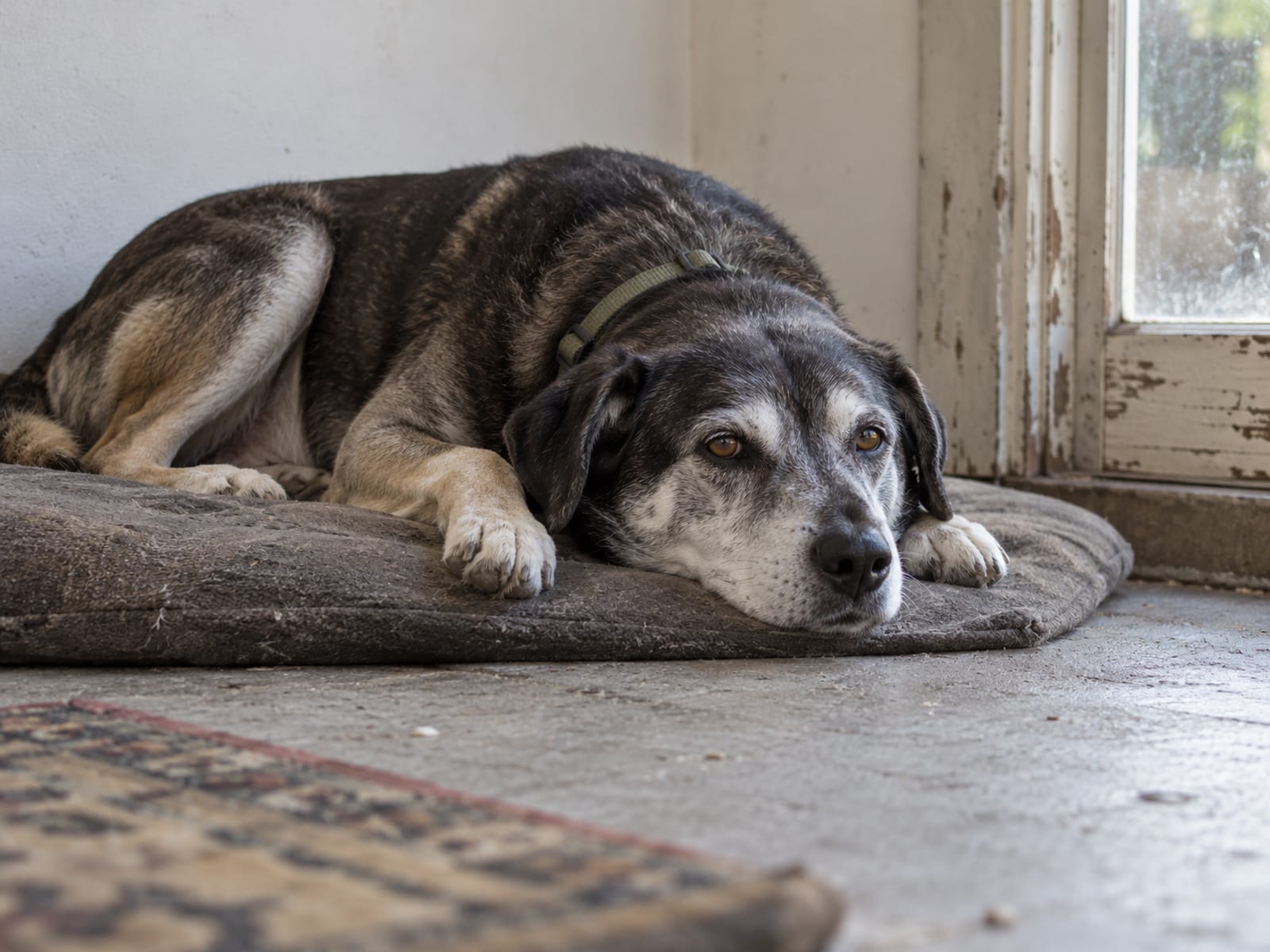
Merck and VCA list arthritis, dental disease, neurological disease, kidney or liver disease, thyroid and adrenal disorders and medication effects among the medical causes. VCA adds that medical aggression can start at any age, can come on suddenly and may not look like typical dog behavior. A medical problem can also stack on top of a behavior problem and push a dog past the point where it snaps.
Thyroid gets asked about a lot. A double-blind, placebo-controlled, six-week trial by Dodman and colleagues gave thyroid replacement to dogs with borderline-low thyroid values and owner-directed aggression, and it did not show a general aggression benefit. So, thyroid testing and treatment questions belong to your vet.
A walk plan for the lunge
The Nebraska Humane Society handout splits a dog's state into zones, and I find that useful because you know what to do in each one.
Yellow zone, before a full reaction. Use high-value treats to draw your dog's attention away from the approaching dog. Change direction or add space. Reward calm behavior and attention to you. Keep your dog at a distance where it can still notice the other dog without being overwhelmed.
Red zone, with barking, growling, snarling, lunging or refusing treats. Do a quick U-turn or change of direction to make distance. Reward your dog once it can respond to you again.
Horwitz says to cross the street, turn around or step behind parked cars, and never force an encounter. Cornell says to reward as soon as the trigger appears, at a distance where your dog can still learn. AAHA tells the handler to breathe and not to yank the leash. Grisha Stewart's BAT leash handout says to slow your stop, allow some slack in the leash once you have stopped and move away with the leash loose. She does not use leash pops.
If contact is about to happen, your job is separation and escape. Do not reach between dogs or for collars while they are biting.
Equipment as management
Equipment keeps everyone safe while the training happens. It does not change how your dog feels about other dogs.
AAHA, the Nebraska Humane Society and the San Francisco SPCA describe a well-fitted front-clip harness or a head halter as tools that give you control and help steer your dog. Condition the dog to a head halter gradually and follow the maker's directions. AAHA says a flat collar is not ideal for controlling a reactive dog. A correctly fitted basket muzzle lets a dog pant, drink and eat while preventing a bite. AAHA lists it as a safety measure when a scuffle is possible. Introduce it slowly, well before you need it, and never put it on a dog for the first time in the middle of an emergency. Stewart's handout describes a 15-foot leash for controlled BAT set-ups only, and only when you can keep control of your dog and keep other people safe.
Prong collars, choke chains and electronic collars used as punishment get a different report from the SF SPCA and the Nebraska Humane Society. They say aversive tools can create negative associations with the other dog or with you, and that a lunge can be held down for a while while the dog's feeling about the other dog stays or grows. I use e-collars among other tools. For a dog that may bite, a remote collar is a skilled professional's call, never a do-it-yourself fix.
The Walk Plan by Zone
- Yellow zoneBefore a full reaction, use high-value treats to draw attention away from the approaching dog. Change direction or add space, reward calm behavior, and keep your dog at a distance where it can notice the other dog without being overwhelmed.
- Red zoneWith barking, growling, snarling, lunging or refusing treats, do a quick U-turn or change of direction to make distance. Reward once your dog can respond to you again.
- Handle the leash calmlyBreathe and do not yank the leash. Slow your stop, allow some slack once you have stopped, and move away with the leash loose.
- Never force an encounterCross the street, turn around or step behind parked cars.
- If contact is about to happenYour job is separation and escape. Do not reach between dogs or for collars while they are biting.
Hover or tap a row to highlight it.
| Equipment | What it does | Keep in mind |
|---|---|---|
| Front-clip harness | Gives you control and helps steer your dog | Fit it well |
| Head halter | Gives you control and helps steer your dog | Condition the dog to it gradually and follow the maker's directions |
| Flat collar | Basic everyday collar | AAHA says it is not ideal for controlling a reactive dog |
| Basket muzzle | Lets a dog pant, drink and eat while preventing a bite | Introduce it slowly, well before you need it, never for the first time in an emergency |
| 15-foot leash | Used in controlled BAT set-ups | Only when you can keep control of your dog and keep other people safe |
Training approaches and what is realistic
Trainers use a handful of methods, and they work best delivered by a person who can read your dog in real time.
Horwitz describes classical counterconditioning, which pairs the sight of another dog with something your dog loves, such as food or play, so the feeling changes. She also describes operant counterconditioning, where you teach a replacement behavior such as focus or relaxation that you can cue. Systematic desensitization exposes the dog to gentle versions of the trigger while it stays calm enough to learn.
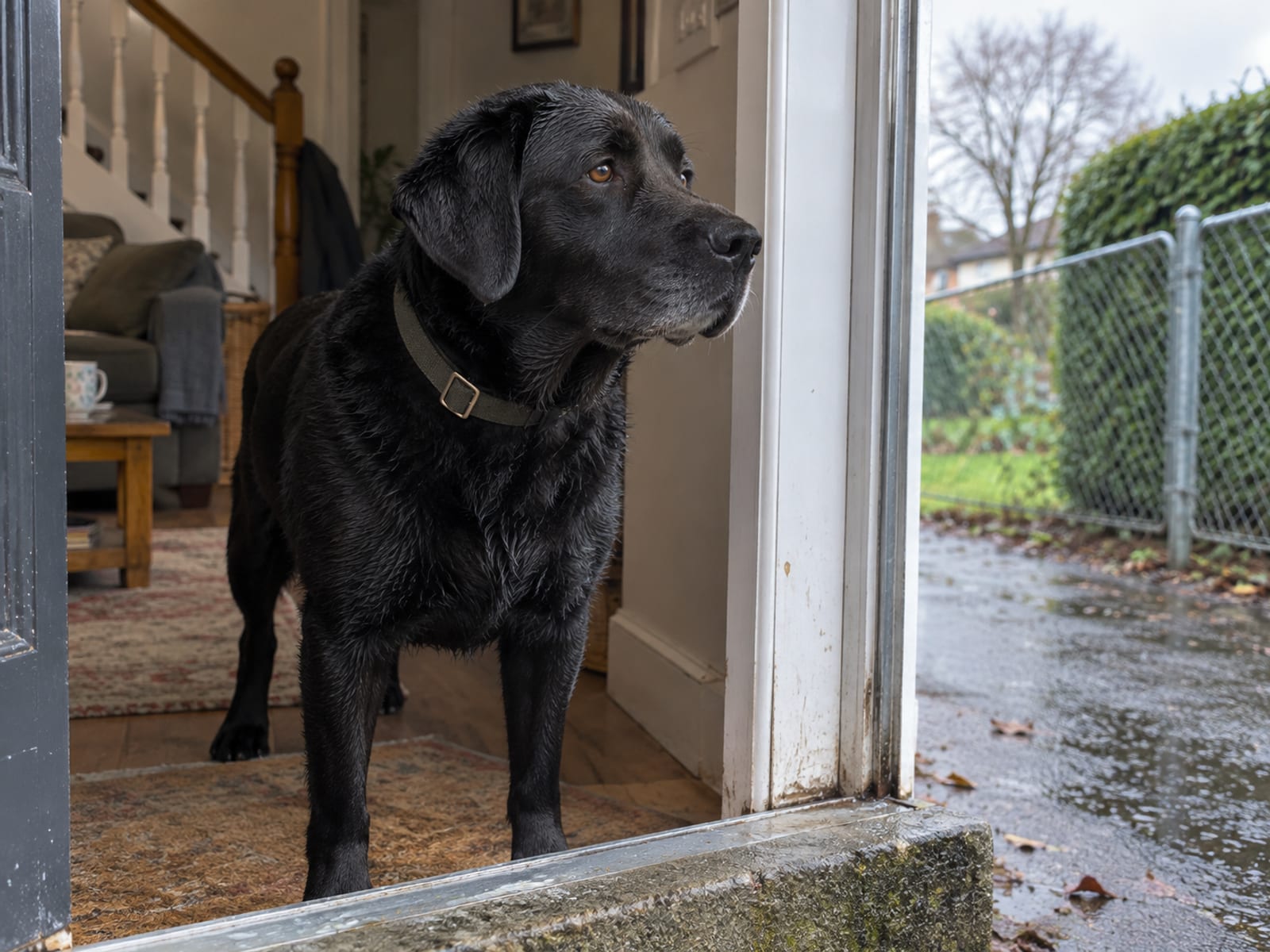
Threshold work starts at a distance where your dog can notice the trigger, eat and respond. Cornell and the Nebraska Humane Society say that if the dog tenses, stares or won't take food, the distance goes up. Every Dog Austin describes Leslie McDevitt's Look at That, where the dog looks at a trigger and turns back to you for a reward. It starts with a neutral object and builds toward harder triggers. Engage/Disengage rewards the dog for noticing a trigger and then looking away. BAT uses distance, choice and moving away as the reward. Structured walks use controlled exposure, handler position and carefully chosen routes. These are programs a trainer delivers. They are not one fixed package that fits every dog.
What can you expect? In the Sherman study, owners reported improvement in 59% of the household cases and 52% of the non-household cases. After treatment, 76% of the non-household dogs could be near outsider dogs under leash control. Those are owner reports, and treatment followed no standard protocol. Kakuma and Kinoshita worked with two dogs for 30-minute sessions over 10 days within a month. One dog changed little, and the authors said the program might have sensitized it. Two dogs cannot set a timeline for yours.
So, there is no reliable number of weeks for an individual dog. AAHA's guidelines say aggression can be treated and managed, but a permanent end to it can't be promised, and management may last a dog's whole life. Track distance, intensity, recovery time and incidents instead. If your dog can pass another dog at a closer distance than last month, recovers faster and has fewer incidents, that is progress you can see.
Hover or tap a row to highlight it.
| Approach | How it works |
|---|---|
| Classical counterconditioning | Pairs the sight of another dog with something your dog loves, such as food or play, so the feeling changes |
| Operant counterconditioning | Teaches a replacement behavior such as focus or relaxation that you can cue |
| Systematic desensitization | Exposes the dog to gentle versions of the trigger while it stays calm enough to learn |
| Threshold work | Starts at a distance where your dog can notice the trigger, eat and respond, and adds distance if the dog tenses, stares or won't take food |
| Look at That | The dog looks at a trigger and turns back to you for a reward, starting with a neutral object |
| Engage/Disengage | Rewards the dog for noticing a trigger and then looking away |
| BAT | Uses distance, choice and moving away as the reward |
| Structured walks | Controlled exposure, handler position and carefully chosen routes |
When to get help
Call a professional, meaning a veterinary behaviorist or a qualified behavior consultant, when any of these is true:
- Your dog has made contact, bitten, hurt another dog or a person or can't be physically controlled.
- Lunging is getting worse in how often it happens, how intense it is or how far away it starts.
- Your dog can't take food or can't recover after a trigger.
- It started suddenly or comes with pain, limping, sensory changes, tiredness or seizures.
- Your dog redirects onto you or another person.
- Children, other pets or passersby are at risk.
- You can't safely create distance or prevent encounters.
- Your dog needs a muzzle or a safety plan.
Cornell says reactivity can turn into aggression and should be taken seriously. Merck advises getting help as soon as aggression shows up, because of the injury risk and because it can get worse. AAHA says your family vet can refer you to a veterinary behaviorist who builds a plan covering management, behavior modification and, where it makes clinical sense, medication.
How I can help
I start with an evaluation visit so I can see your dog and your walking routine for myself. From there we can work through in-home lessons, or board and train in my own home. I don't do a hard sell; I'll tell you what I think your dog needs and what I think is realistic. If your dog has made contact with another dog, say so on the first call so the evaluation is booked as a priority, and contact DW Dog Training when you're ready.
FAQ
Is my dog aggressive only because it's on a leash? Not necessarily. On-leash aggression describes where it happens, and the cause can be fear, frustration, guarding or something else. A fearful dog can't retreat on a leash, and an excitable dog can't approach, so the leash changes what the dog does about the same feeling.
Should I grab my dog's collar to break up a fight? No. Don't put your hands between dogs or grab collars while they are biting, because you can be bitten badly. Aim for separation and escape, and secure each dog once the fight is over.
Can a muzzle help on walks? A correctly fitted basket muzzle lets a dog pant, drink and eat while preventing a bite, and AAHA describes it as an added safety measure. Introduce it gradually, long before you need it, and pair it with management and behavior work.
Can enough training end the problem for good? Aggression can be treated and managed, but AAHA says it shouldn't be promised as a guaranteed fix, and management may be lifelong. Progress shows up as more distance, lower intensity, faster recovery and fewer incidents.
Check What You Picked Up
What does "on-leash aggression" tell you?
What should you do if your dog is in a fight with another dog?
When should your dog see a vet before any training plan starts?
What do you do in the yellow zone?
When should a dog first wear a basket muzzle?
How should progress be measured?
Answer a question to see your score.