

Some links in this post are Amazon affiliate links. If you buy through one I may earn a small commission, at no extra cost to you. It never changes what I recommend. Full disclosure.
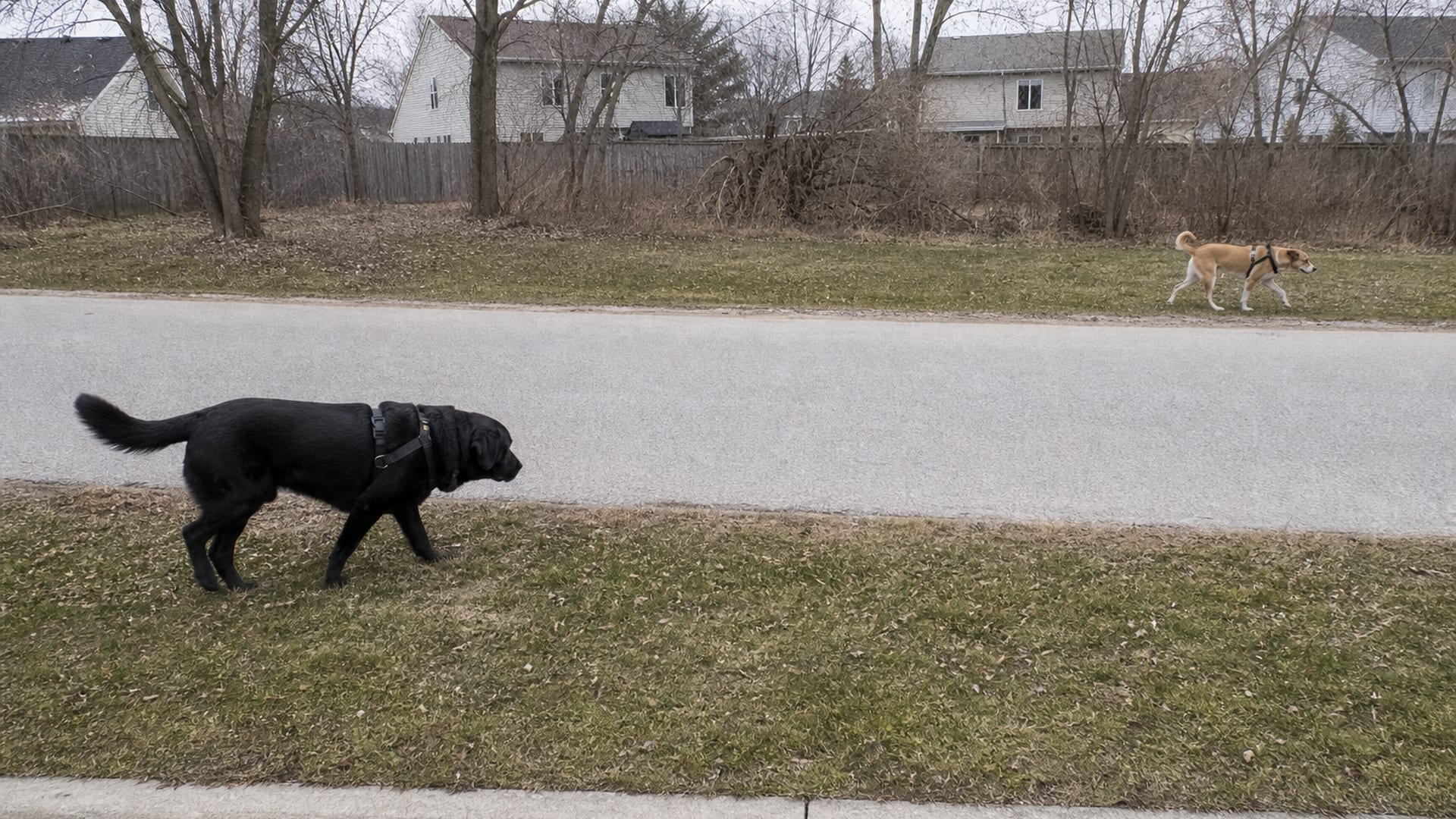
Dog-to-dog aggression almost always has a cause you can name: fear, guarding, frustration, pain, or poor early social skills. So, the first steps are the same for nearly every dog. Put distance between your dog and other dogs, get a vet check, and build a plan that does not depend on neutering. Management and training lower the risk of a fight; they do not promise the behavior will end for good.
Key takeaways
Hover or tap a card to bring it forward.
- Dog-to-dog aggression usually has a nameable cause, such as fear, guarding, frustration, pain, or poor early social skills, so start with distance and a vet check.
- Neutering is not a treatment for fear or guarding; talk it over with your vet, since the studies disagree and mostly rely on owner reports.
- The five strategies are distance and management, desensitization and counterconditioning, leash skills, a conditioned basket muzzle, and a vet check with a professional plan.
- Trainers disagree on tools; reward-based groups such as AVSAB advise against e-collars, and I use them among other tools, never in place of management.
- In a fight, do not grab the collar; use a barrier, water, or noise, then separate the dogs, check them, and see a vet for any bite.
What Your Dog's Body Is Telling You Before It Lunges
Kendal Shepherd's ladder of aggression, as PDSA describes it and as shown in the BSAVA ladder diagram, starts with quiet stress signals: yawning, blinking, nose licking, paw lifting, looking away, turning the body away, and creeping with the ears back. Further up come crouching with the tail tucked, and then stiffening, staring, growling, snapping, and biting. Dogs can skip steps, so a dog that goes from calm to a snap is not necessarily "unpredictable." Often the early signs were small or fast.
For dog-to-dog trouble, Sophia Yin describes a dog that rises up and forward, expands the neck and chest, stiffens, fixes a hard stare, and then may snap or bite. Turid Rugaas lists calming signals that can show up earlier, as Whole Dog Journal summarizes: turning the head away, lip licking, yawning, slowing down, walking in a curve, and freezing. What a signal means depends on the situation, so read the whole dog and the moment, not one yawn.
If you landed here looking for the signs of aggression toward people, they overlap. Yin names freezing, a low growl, sudden stiffness, a hard stare, and dilated or pinpoint pupils as warnings. The AVSAB page on canine facial expressions and body postures is a good companion for learning to see them. Watch for the same stiff, staring dog, whoever is standing in front of it.
Hover or tap a row to highlight it.
| Level | What you may see |
|---|---|
| Quiet stress signals | Yawning, blinking, nose licking, paw lifting, looking away, turning the body away, sitting, pawing, walking away |
| Moving lower | Creeping with the ears back, crouching with the tail tucked, lying down with the belly showing |
| Rising tension | Stiffening, staring |
| Loud warnings | Growling |
| Last steps | Snapping, biting |
What Is Usually Behind It
Gary Landsberg, DACVB, writing in the Merck Veterinary Manual, lists fear, resource guarding, frustration, territoriality, overarousal, poor communication with other dogs, lack of early socialization, and redirected fear or frustration. A few of those play out in ways owners recognize right away.
Fear shows up when a dog is restrained, cornered, or approached by an unfamiliar dog. The dog learns something fast: lunge and bark, and the other dog goes away. That works, so the dog does it again, and it gets better at it.
Guarding is its own pattern. At home it can involve food, bones, toys, a resting place, or your attention. Pain and illness also lower the threshold. Arthritis, endocrine disease, organ disease, and neurological disease can all make a dog less tolerant, which is one reason a vet visit comes early in this plan. A senior dog that has started snapping at the dog it has lived with for years is a common version of this, and I cover it in dog aggression in older dogs.
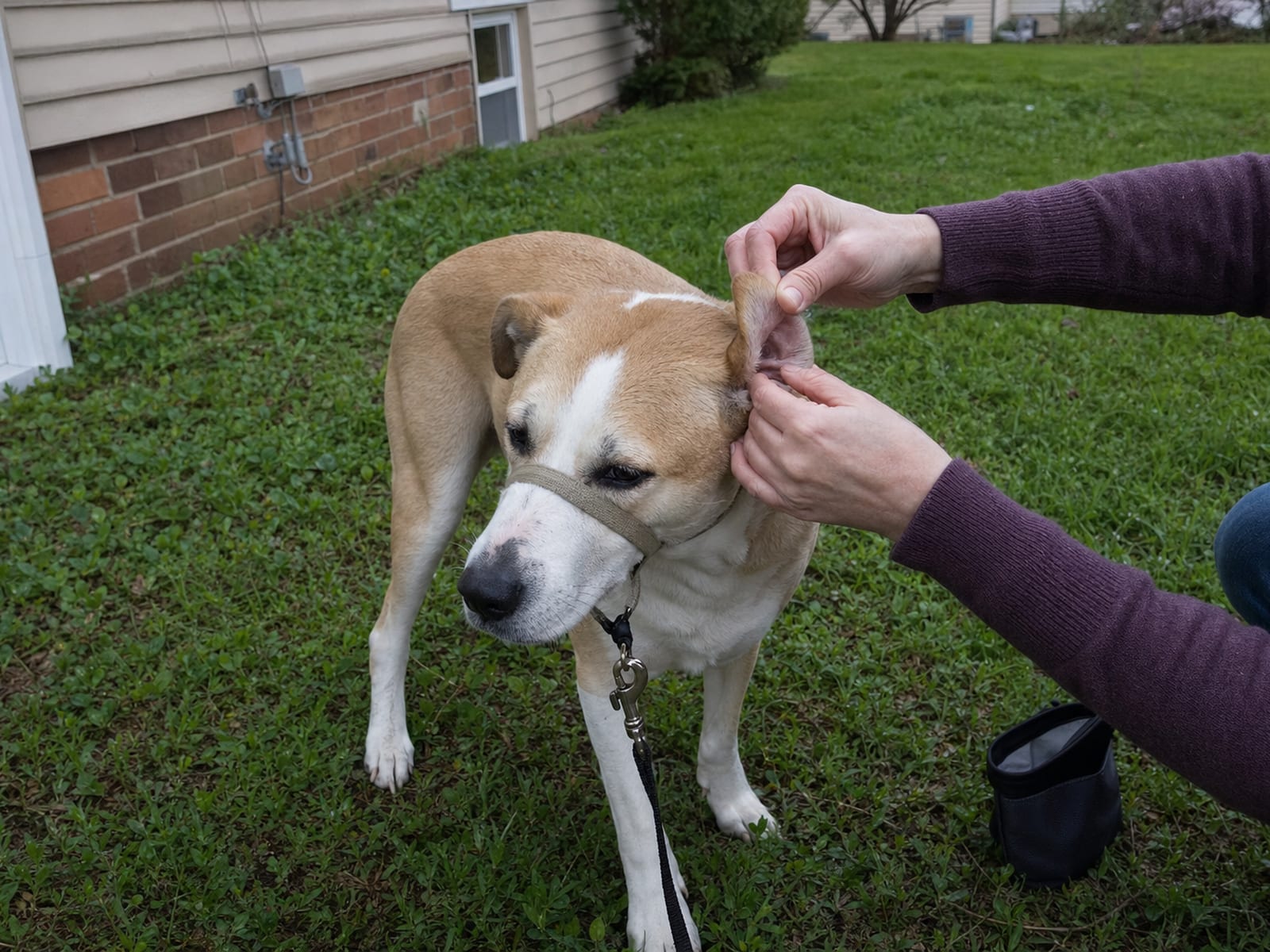
Merck also reports that female-female pairs carry the highest risk of household fights between dogs and male-female pairs the lowest. That is a risk pattern. It is not a diagnosis, and it does not mean hormones are the cause.
How Common Is It?
Keep the numbers in perspective, because each comes from a different group of dogs. In a UK owner survey by Casey and colleagues in 2013, 3,897 of 14,566 questionnaires came back complete, and more than a fifth of owners said their dog had shown aggression toward unfamiliar dogs at some time. Owners may count leash reactivity or frustrated play as aggression, which is why telling aggression from playfulness matters. Fatjo and colleagues reviewed 1,040 referral cases in Barcelona: 34.85 percent of the aggression complaints involved other dogs, 38.55 percent involved owners, and 21.95 percent involved unfamiliar people. Those are clinic dogs, not all dogs.
Inside one home, Wrubel and colleagues looked at 38 pairs of housemate dogs at a US veterinary teaching hospital. Of those, 79 percent were same-sex pairs and 68 percent included one or two females. The triggers were owner attention and food at 46 percent each, excitement at 31 percent, and found items or toys at 26 percent. It was a case series with no comparison group.
Hover or tap a row to highlight it.
| Target of the aggression | Share of complaints |
|---|---|
| Other dogs | 34.85 percent |
| Owners | 38.55 percent |
| Unfamiliar people | 21.95 percent |
Hover or tap a row to highlight it.
| Trigger | Share of the 38 pairs |
|---|---|
| Owner attention | 46 percent |
| Food | 46 percent |
| Excitement | 31 percent |
| Found items or toys | 26 percent |
Will Neutering Stop It?
Not reliably, and not for fear or guarding. Neutering is a conversation to have with your vet, not a treatment for dog aggression. Here is what the studies show.
In Farhoody and colleagues' 2018 study, owners of 15,370 dogs filled out the C-BARQ questionnaire, and 13,237 dogs were analyzed for aggression toward other dogs. Neutering, and the age at surgery, showed no association with aggression toward other dogs or familiar people. Dogs neutered at 7 to 12 months were 26 percent more likely to show aggression toward strangers. The same paper reports a small study by Kim of 14 German Shepherd littermates, 7 of them spayed at 5 to 10 months. The spayed dogs showed more reactive responses to an unfamiliar dog or person, but 14 dogs is too few to apply to yours.
McGreevy and colleagues studied 6,235 male dogs, and Starling and colleagues studied 8,981 spayed females. Both reported that less lifetime hormone exposure went with more fear and aggression in some situations. Those were owner reports collected at one point in time, so they cannot show that surgery caused the behavior.
The best case for neutering comes from Hart and Eckstein in 1997. Owners of 42 intact males reported that fighting with other males dropped sharply or stopped in about 50 to 60 percent after castration. The behavior did not change in the 8 dogs with territorial aggression or the 4 with fear aggression. These were small owner reports looking back, and they cover fighting between males only.
Veterinary groups take a careful line. The BSAVA position statement says the behavioral effect may vary from dog to dog and calls for an individual assessment of physical and behavioral risks and benefits. AAHA says neutering may reduce fighting with other males and sends owners to their veterinarian to talk it through. If your dog turned aggressive after a procedure rather than before one, read about aggression after surgery, because pain and recovery can change how a dog behaves.
Hover or tap a row to highlight it.
| Study | Dogs | What was found |
|---|---|---|
| Farhoody and colleagues, 2018 | 13,237 dogs analyzed for aggression toward other dogs | No link between neutering, or age at surgery, and aggression toward other dogs; neutering at 7 to 12 months went with 26 percent more aggression toward strangers |
| Kim, reported in the same paper | 14 German Shepherd littermates, 7 spayed at 5 to 10 months | Spayed dogs reacted more to an unfamiliar dog or person |
| McGreevy and colleagues | 6,235 male dogs | Less lifetime hormone exposure went with more fear and aggression in some situations |
| Starling and colleagues | 8,981 spayed females | Less lifetime hormone exposure went with more fear and aggression in some situations |
| Hart and Eckstein, 1997 | 42 intact males | Fighting with other males dropped sharply or stopped in about 50 to 60 percent; no change in 8 dogs with territorial aggression or 4 with fear aggression |
The Five Strategies
AAHA's behavior guidelines describe treating aggression as a combined plan: a medical check, management of the environment, behavior modification, and sometimes medication. These five pieces fit that plan, and I'd start them in this order.
1. Distance and management
The first job is to stop your dog from reaching the point where it lunges, snaps, or bites, because every rehearsal makes the habit stronger. Debra Horwitz, DACVB, writing in Today's Veterinary Practice, recommends crossing the street, turning around, walking behind parked cars, and never forcing a greeting. VCA's veterinary behaviorists add changing your route or walk time and staying away from dog parks and group settings while treatment is underway. On the next walk, that is your whole job: see the other dog first and make the space.
2. Desensitization and counterconditioning
Find the distance at which your dog can see another dog and still stay calm. Work there. Move closer only while your dog stays relaxed. Horwitz describes counterconditioning as pairing the sight of another dog with something good, usually food, so the dog's feeling about the trigger changes. Never work a dog that is already highly aroused. If your dog can't take the treat, you are too close.
3. Leash skills
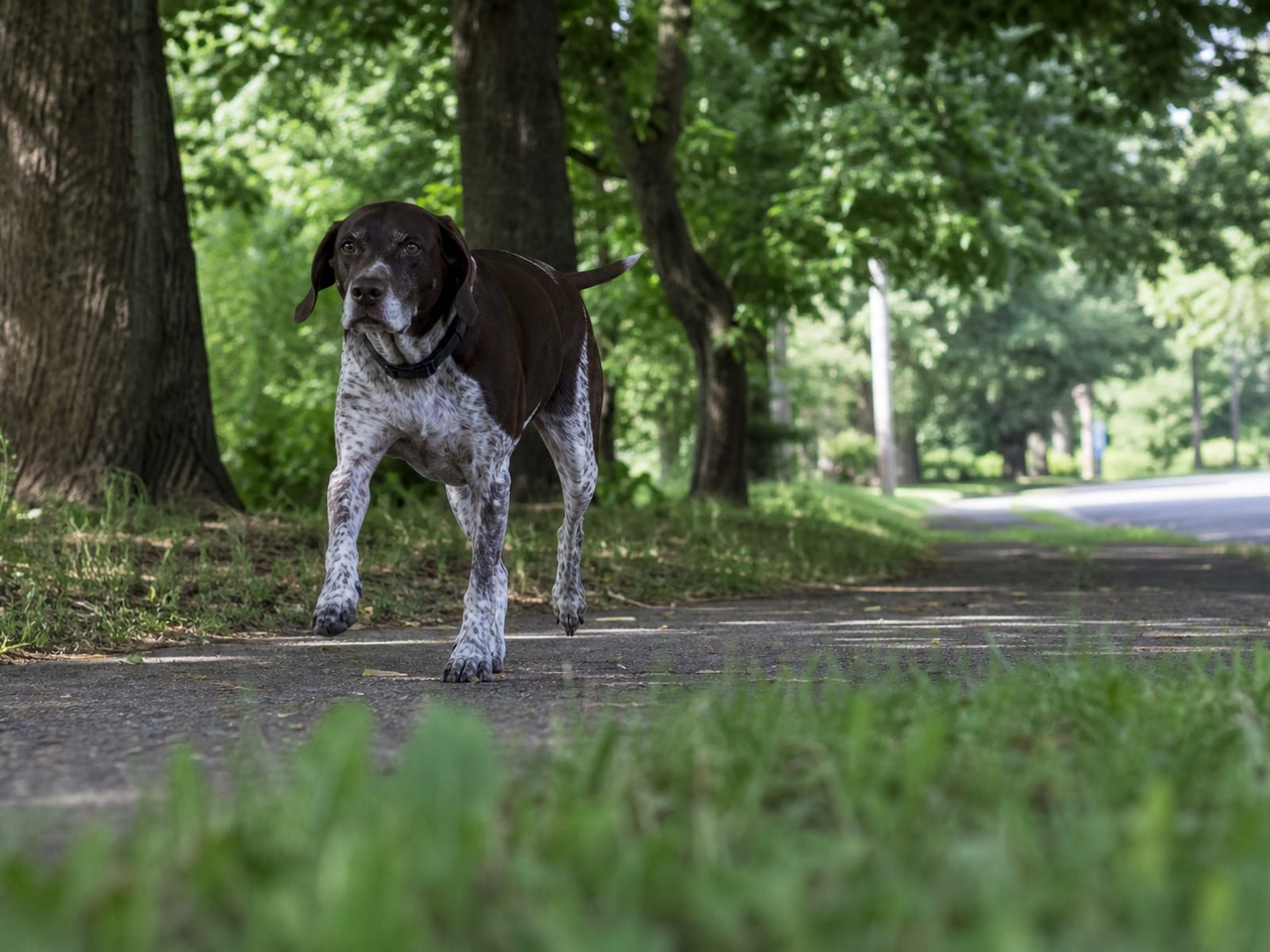
Teach your dog to look at you and to follow an exit cue such as "let's go" or "follow me." Practice in quiet places first, long before another dog is in sight. Horwitz recommends a non-retractable leash on a well-fitted harness or head collar. VCA says to hold the leash steady with just enough tension to stop an escape or a bite, because a tight, pulling leash can add to frustration. VCA also says not to let your dog greet other dogs on walks, and an adult should be the one holding the leash.
4. A conditioned basket muzzle
A basket muzzle is a safety tool, and Cornell says it can be used whenever there is concern that a dog could bite a person or animal. A correctly fitted one lets the dog pant, drink, and eat. Teach it slowly: the dog puts its nose in voluntarily, and each step is paired with rewards. Never put a muzzle on for the first time in the middle of a crisis. Cornell also has guidance on choosing a muzzle.
5. The vet check and a professional plan
Book the vet visit first if the aggression is new, sudden, or getting worse, or if you've noticed changes in movement, appetite, or sleep. Pain can sit under aggression even when you can't see it. Then bring in a professional to build the plan with you, because the other four steps go better with someone watching your timing and your dog's body.
The five strategies, in order
- Distance and managementStop your dog from reaching the point where it lunges, snaps or bites. Cross the street, turn around and never force a greeting.
- Desensitization and counterconditioningFind the distance where your dog can see another dog and stay calm, and pair the sight of the dog with food. Move closer only while your dog stays relaxed.
- Leash skillsTeach your dog to look at you and follow an exit cue such as "let's go." Practice in quiet places before another dog is in sight.
- A conditioned basket muzzleTeach it slowly, with the dog putting its nose in voluntarily and each step paired with rewards. Never put it on for the first time in a crisis.
- The vet check and a professional planBook the vet first if the aggression is new, sudden or getting worse, then bring in a professional to build the plan with you.
Where Methods Disagree
Trainers disagree on tools, and you will hear it all, so here is the plain version. Reward-based trainers, such as those at the Humane Society of Western Montana, work below the dog's threshold and warn that punishment can raise tension and lead to redirected aggression. Balanced trainers combine rewards with corrections or leash pressure. In the Casey survey, owners who used a mixed reward-and-aversive approach reported more aggression toward household dogs and unfamiliar dogs. That link is correlational, so it cannot say which came first: the methods or the aggression.
The field study analyzed by China, Mills and Cooper in 2020 followed 63 dogs over nine months in three groups of 21. It measured recall and sit, and only three of the dogs were referred for aggression toward other dogs. So, it does not show that remote collars treat dog-to-dog aggression, and it does not show that they don't. AVSAB recommends reward-based methods only and says aversive methods, including electronic collars, should not be used.
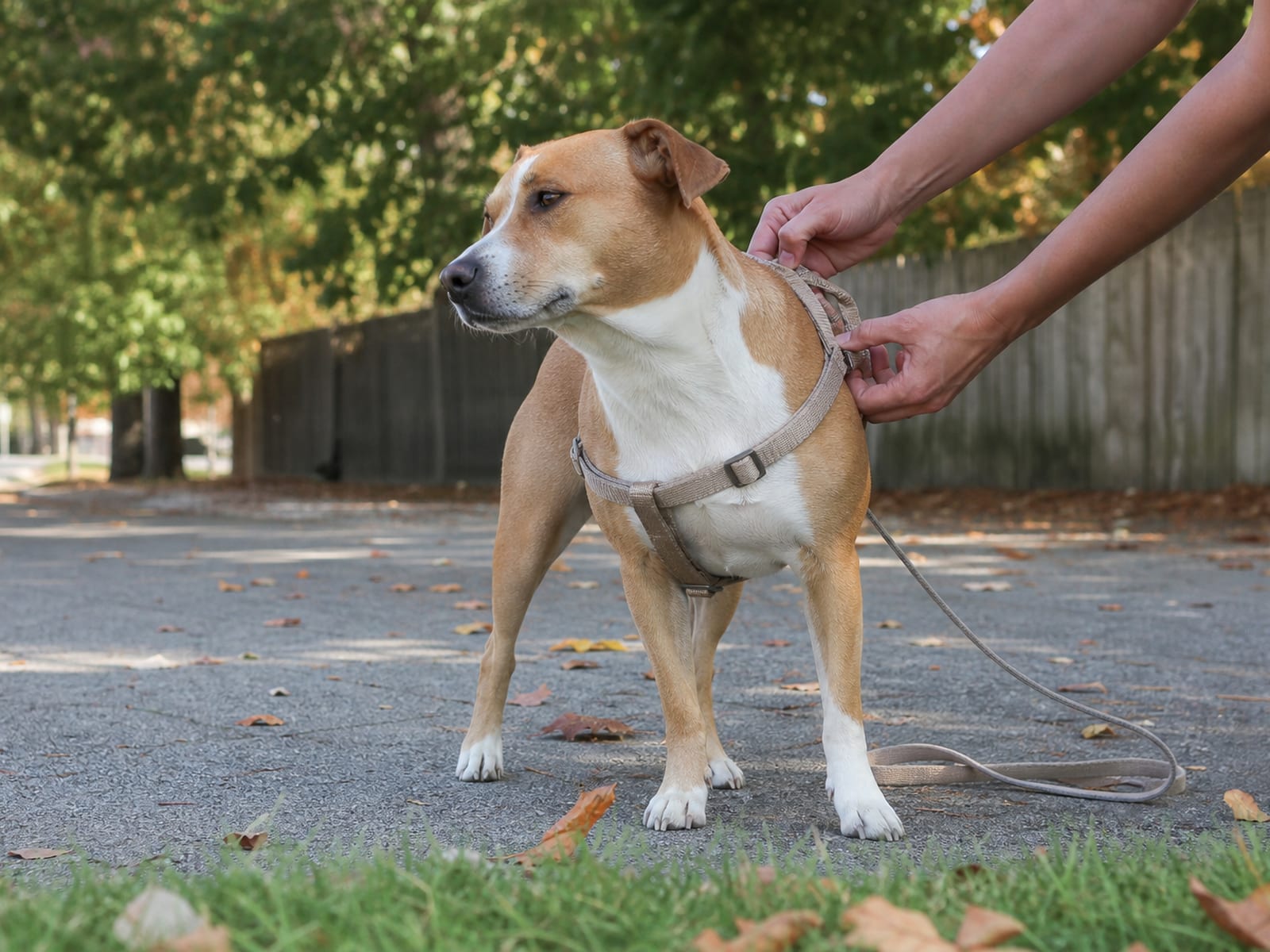
I use e-collars among other tools, and I want you to know that. Where one fits in my work, it sits alongside distance, leash skills, and a vet check, never in place of them.
Walking a Dog That Fights
AAHA's guidance on walking a reactive dog includes a basket muzzle where an off-leash dog might approach, a harness or head collar for control, no leash yanks, crossing the street, and using quiet areas. VCA adds one warning: a muzzled dog cannot defend itself, so walk where other dogs are leashed and can't reach yours.
If a Fight Starts
Prevention is safer than stepping in. Sophia Yin's guidance on breaking up a dogfight says not to run, scream, or grab a dog by the collar, because you are likely to be bitten. Try a jacket or blanket thrown over the dogs, a board or backpack used as a barrier, water, or a deep, loud noise. If you have to use your hands, the last resort is pulling the starter's back legs up in a wheelbarrow motion, ideally with a second person handling the other dog. It is risky.
Once the dogs are apart, put them out of sight of each other. Check each dog from head to tail and inside the mouth, and see a vet for any puncture, even one that looks minor. If a person was bitten, that person needs medical care.
What to do if a fight starts
- Do not grab the collarDo not run, scream or grab a dog by the collar, because you are likely to be bitten.
- Break it up from a distanceTry a jacket or blanket over the dogs, a board or backpack as a barrier, water, or a deep, loud noise.
- Last resortIf you have to use your hands, pull the starter's back legs up in a wheelbarrow motion, ideally with a second person handling the other dog. It is risky.
- Separate themPut the dogs out of sight of each other.
- Check each dogLook from head to tail and inside the mouth, and see a vet for any puncture, even one that looks minor. If a person was bitten, that person needs medical care.
When to Get Help
Call a professional after any bite or near-bite, repeated lunging, fighting between housemates, aggression toward children, a dog that bites whoever is closest when it is upset, or when you can't walk your dog safely. If children are involved, start with dog aggression toward children. For moderate or severe aggression, Merck recommends referral to a board-certified veterinary behaviorist, since aggression carries injury and public health risks. Start with the vet for anything new, sudden, or worsening.
Frequently Asked Questions
Can a dog that fights with other dogs ever walk safely in public?
Many can, with the right management. Distance, a well-fitted harness or head collar, a practiced exit cue, and a conditioned basket muzzle all lower the risk on walks. A quiet route and a calm adult at the other end of the leash matter more than any single piece of gear.
Should I let my dogs work it out when they scrap at home?
No. Wrubel's housemate-dog cases were frequently triggered by owner attention, food, excitement, or found items and toys, so those are the moments to control. Separate the dogs when those triggers are around and get professional help for repeated fights.
Does a dog park help a dog that lunges at other dogs?
VCA's veterinary behaviorists advise staying away from dog parks and group settings while treatment is underway. Close contact with other dogs is the thing that sets your dog off, so skip it for now.
Is an aggressive dog being "stubborn" or "bad"?
Usually not. The causes named by Landsberg are fear, guarding, frustration, overarousal, poor early socialization, and pain. A dog acting on one of those needs a plan that deals with it, not a label.
Check what you picked up
What is the first job when your dog lunges at other dogs?
How should a basket muzzle be introduced?
Does neutering reliably stop dog aggression?
What should you not do to break up a dogfight?
Which of these is usually behind dog aggression?
Answer a question to see your score.
Final Thoughts
If you are in the Baltimore area, I do an evaluation visit, in-home lessons, and board and train in my own home. You can contact me about an evaluation and we'll talk through your dog. I run DW Dog Training in Baltimore, MD.