

Some links in this post are Amazon affiliate links. If you buy through one I may earn a small commission, at no extra cost to you. It never changes what I recommend. Full disclosure.
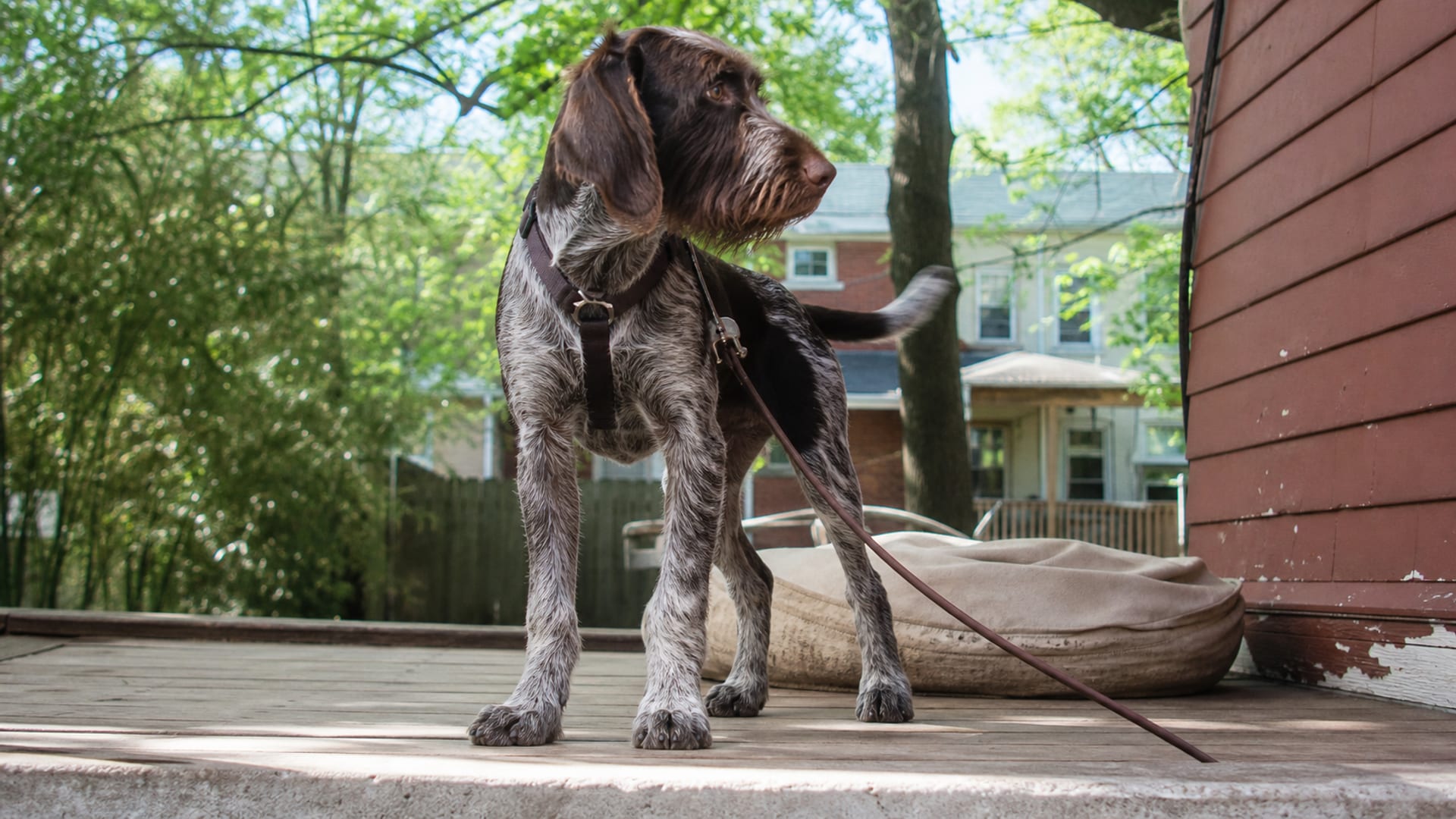
In the first days and weeks after surgery, pain, the cone, being kept confined and the after-effects of anesthesia are the most likely reasons a dog is short-tempered. That usually eases as the incision heals; veterinary teaching hospitals ask for 10 to 14 days of restricted activity. A change that is still there after healing is a behavior problem to work on, not a hormone clock to wait out. And if the incision looks wrong or your dog seems to be in pain, call the vet first, before anything else.
If the growling started right after the surgery, the post on dog aggression after surgery goes deeper on pain and post-operative behavior.
Key takeaways
Hover or tap a card to bring it forward.
- Early irritability after surgery usually comes from pain, the cone, confinement and anesthesia, and eases as the incision heals in about 10 to 14 days.
- Testosterone drops within hours, but behavior does not follow on the same schedule.
- Castration most reliably reduces roaming, mounting and urine marking; aggression improved much less often, and fear, territorial and guarding aggression do not respond predictably.
- Call the vet first for pain or a wrong-looking incision, manage the household during recovery, then work on a plan: management, gradual exposure with food, and structured obedience.
- Get professional help for any bite, anything aimed at a child, escalation, guarding, or aggression that continues after healing.
What happens to testosterone, and why behavior lags behind
Testosterone falls fast after castration. In a 1979 study by Vincent and colleagues, plasma testosterone in male dogs was undetectable by 8 hours after surgery and stayed that way through 12 days of follow-up. Behavior does not follow that schedule. A dog has years of learned responses, fears and habits that do not disappear when a hormone level drops.
What castration reliably changes, and what it does not
Castration most reliably reduces roaming, mounting and urine marking. Hopkins, Schubert and Hart followed 42 adult male dogs and reported less roaming in 90 percent of them, while mounting, urine marking and fighting with other males dropped in roughly one-half to two-thirds. Territorial and fear-driven aggression did not change in that group.
Neilson, Eckstein and Hart looked at male dogs castrated for problem behaviors. At least 60 percent improved by half or more in roaming, mounting and urine marking, while marked improvement in aggression showed up in fewer than a third.
Fear-based aggression, territorial aggression, resource guarding, anxiety and general reactivity do not respond to castration in a predictable way. Some dogs get better, some stay the same, some get worse. Neutering is not a treatment for any of them. If you want to understand what is more likely driving the behavior, the page on the causes of dog aggression lays out the common ones.
Hover or tap a row to highlight it.
| Behavior | What was reported | Reliable? |
|---|---|---|
| Roaming | Less roaming in 90 percent of 42 adult males. In a second study, at least 60 percent improved by half or more. | Most reliable change |
| Mounting and urine marking | Dropped in roughly one-half to two-thirds of dogs. At least 60 percent improved by half or more in the second study. | Often improves |
| Fighting with other males | Dropped in roughly one-half to two-thirds of dogs | Often improves |
| Aggression overall | Marked improvement in fewer than a third of castrated males | Much less often |
| Fear-based and territorial aggression | No change in the group of 42 males | Not predictable |
| Resource guarding, anxiety, reactivity | Some dogs get better, some stay the same, some get worse | Not predictable |
What the larger studies say about neutering and aggression
Most of this research comes from owner questionnaires, so it shows associations and does not prove cause.
- A 2018 study by Farhoody and colleagues used owner reports on about 15,370 dogs, with complete analyses on about 13,000. They found no evidence that gonadectomy at any age changed aggression toward familiar people or other dogs.
- A 2018 study by McGreevy and colleagues covered 6,235 male dogs castrated for reasons other than behavior. Longer exposure to hormones was linked to modestly fewer reports of fear and aggression behaviors, with differences mostly between 5 and 12 percent.
- A 2014 study by Zink and colleagues surveyed owners of 2,505 Vizslas. Dogs neutered at six months or younger had higher odds of a behavior disorder. That is one breed, and breed matters; the page on breed and aggression covers why one breed's result does not carry over to every dog.
- For females, O'Farrell and Peachey compared 150 spayed females with 150 matched unspayed ones. Owners reported more aggression toward family members in the spayed group, most of all in puppies under a year old that already showed some aggression. Kim and colleagues tested 14 German Shepherd females, seven spayed at 5 to 10 months and seven left intact, and saw more barking, lunging and snapping at an approaching stranger with a dog in the spayed group. That sample is small.
The pattern across these studies is that the age of the dog, the breed, the sex and what the dog was already doing before surgery all matter. A young female who was already reactive is the kind of case that deserves a longer talk with the vet before surgery.
Hover or tap a row to highlight it.
| Study | Dogs covered | What it reported |
|---|---|---|
| Farhoody and colleagues (2018) | About 15,370 dogs by owner reports | No evidence that gonadectomy at any age changed aggression toward familiar people or other dogs, with only a minimal rise in aggression toward strangers |
| McGreevy and colleagues (2018) | 6,235 male dogs castrated for reasons other than behavior | Longer hormone exposure linked to modestly fewer fear and aggression reports, mostly 5 to 12 percent differences |
| Zink and colleagues (2014) | 2,505 Vizslas | Dogs neutered at six months or younger had higher odds of a behavior disorder. One breed only. |
| Zink, Delgado and Stella (2023) | 6,018 owner surveys | Longer hormone exposure linked to lower odds of problem and nuisance behaviors |
| Reisner and colleagues | 1,053 adult English Springer Spaniels | Aggression toward owners reported more often in neutered and spayed dogs of both sexes. One breed only. |
| O'Farrell and Peachey (1990) | 150 spayed and 150 unspayed females | More aggression toward family members reported in the spayed group, most of all in puppies under a year old that already showed some aggression |
| Kim and colleagues (2006) | 14 German Shepherd females | More barking, lunging and snapping at an approaching stranger with a dog in the spayed group. Small sample. |
What to do now
This is the part I care most about, because it is the part you can act on this week.
Start with the vet
An aggressive change after surgery gets a veterinary check before it gets a training plan. Ask the vet to look at:
- the incision, for redness, swelling, heat, discharge, bruising, bleeding or the wound opening
- signs of infection
- whether pain control is enough
- fever, lethargy, vomiting, poor appetite or a dog that cannot settle
- medication or anesthesia effects
- other painful conditions, and neurologic, sensory, thyroid, adrenal or organ problems
The Merck Veterinary Manual says medical problems should be ruled out before a behavior problem is diagnosed, and it lists pain, neurological disease, sensory loss and hormone disorders among the possible contributors to irritability and aggression. Call the surgeon promptly for worsening pain, more swelling or redness, discharge, an incision that opens, marked lethargy, repeated vomiting, refusing food or behavior that is escalating fast. Go to an emergency clinic for breathing trouble, collapse, uncontrolled bleeding, seizures or a dog you cannot handle safely.
Set up the house for recovery
Recovery is mostly about preventing conflict while the dog heals. Tufts Cummings School asks for 10 to 14 days of quiet, Texas A&M says most incisions heal in that window, and Virginia Tech advises rest for the first 24 hours and no strenuous activity for about two weeks. Your vet's instructions come first.
Inside that window, this is what I would do:
- Use a crate, a small room or a gate so the dog can rest without being approached.
- Keep children away from the dog, supervise every contact, and never let a child reach through a barrier or tease.
- Feed and rest the dog apart from other pets if there is any chance of a fight.
- Use a leash for every bathroom trip.
- Stop running, jumping and wrestling. If you are not sure whether a rough game has tipped over, telling play from aggression is worth a read before the dogs share a room again.
- Keep the cone on as directed and leave the incision alone unless the vet says otherwise.
- Pick up high-value chews, bones and toys from shared areas if your dog guards them.
If the dog has growled, snapped or bitten a child, VCA's guidance is to end the interaction right away, stop further contact and arrange a veterinary and behavior assessment. A gate works only if the dog stays relaxed behind it and a child cannot reach over or through it. The page on dog aggression toward children covers that situation in more detail.
The training plan once the incision has healed
When the vet says the incision has healed and the aggression is still there, I treat it as an active behavior problem and I do not name a timeline for it, because every dog moves at a different pace. My approach has three layers.
Management comes first. Keep the dog away from the situations that set it off, with distance, barriers and limited access to visitors and other animals, so it stops rehearsing the behavior. Avoidance buys safety while the plan is built; it does not fix anything on its own.
Next comes gradual exposure at a distance the dog can handle, paired with food. Start far enough away that the dog notices the trigger and stays calm, and let the food do its work. If the dog reacts, you moved too close; add distance or end the session. Forcing a dog to stand near what scares it is not the same thing, and it makes the problem worse. The goal is to change how the dog feels about the trigger, not just to get through the moment.
Last is structured obedience that gives the dog a job. Settling on a mat, looking at you when asked, sitting, staying and moving away from a trigger on cue all give a worried dog something predictable to do. VCA describes basic cues as a way to create clearer communication and fewer surprises, and the AVSAB humane training position points to reward-based training and gradual desensitization for fear and aggression, and to veterinary evaluation for serious cases. For a fuller walk through the steps, the training guide on stopping aggressive behavior is where I would go next.
From surgery to a training plan
- First nightSleepiness from anesthesia is common, and most dogs are bright and alert by the next day.
- First 24 hoursRest. Keep the dog quiet and let it settle without being approached.
- About 10 to 14 daysRestricted activity while the incision heals: crate, small room or gate, leash for bathroom trips, cone on as directed, and no running, jumping or wrestling. Keep children and other pets apart when there is any chance of conflict.
- Vet checkAny aggressive change gets a veterinary check first. Call the surgeon promptly for worsening pain, swelling, discharge or an incision that opens, and go to an emergency clinic for breathing trouble, collapse, uncontrolled bleeding or seizures.
- Management firstOnce the incision has healed and the aggression is still there, keep the dog away from the situations that set it off, using distance, barriers and limited access to visitors and other animals, so it stops rehearsing the behavior.
- Gradual exposure with foodStart far enough from the trigger that the dog notices it and stays calm, and let food do its work. If the dog reacts, add distance or end the session.
- Structured obedienceGive the dog a job it can do: settling on a mat, looking at you when asked, sitting, staying and moving away from a trigger on cue.
If you are deciding whether to neuter a reactive dog
Two professional bodies say the same thing here. The BSAVA says the decision should consider species, sex, breed and age, plus the dog's current and future health, and should be made with a vet for each dog. AAHA says behavior should be assessed individually, and that vets should ask about aggression and changes in how a dog relates to the household. Neither presents neutering as a treatment for fear or guarding.
So, bring your vet the specifics: your dog's age and sex, the breed, exactly what the dog does and when, and any health problems. A dog that is older and changed suddenly is a different conversation, and the page on aggression in older dogs covers what else can be behind it.
When to get help
Get a qualified professional involved when any of these is true:
- The dog has bitten, tried to bite or made contact with a person.
- Anything is aimed at a child.
- The behavior is getting more frequent, more intense or less predictable.
- The dog guards food, toys, a resting spot or a person.
- The aggression is still there after the vet has dealt with pain and surgical problems.
- You cannot safely avoid the triggers, or you are afraid to handle the dog.
Do not test the dog to see what it will do while you wait for help. Separation, adult supervision and a vet visit come first. If you are still learning to read the warning signs, signs of aggression in dogs is a good place to build that eye.
Frequently asked questions
How long does aggression last after neutering?
There is no set number of weeks. Surgical healing takes about 10 to 14 days, and irritability tied to pain and the cone should fade as that window closes. If it continues past healing, have the vet recheck the dog and bring in a behavior professional.
Is it a hormone problem if my dog is worse a few months later?
Not necessarily. The surgery may have coincided with the dog growing up, and fear, guarding and learned habits can all persist or grow. Tell the vet exactly what triggers it and when it happens, and do not assume hormones are the only cause.
Will neutering stop my dog from guarding or snapping?
Probably not on its own. Castration most reliably changes roaming, mounting and marking, and marked improvement in aggression showed up in fewer than a third of dogs in one study of castrated males. Guarding and fear-driven snapping need a behavior plan.
Should a puppy who is already aggressive be spayed or neutered young?
That is a case-by-case question for your vet. In the female study by O'Farrell and Peachey, the rise in aggression was most likely in puppies under a year old that already showed some. Ask the vet about timing for your particular dog.
Check what you learned about neutering and aggression
What are the most likely reasons a dog is short-tempered in the first days after surgery?
How long do veterinary teaching hospitals ask for restricted activity after surgery?
What does castration most reliably reduce?
What should you do first if your dog turns aggressive after surgery?
The dog's incision has healed and the aggression is still there. How is it treated?
Which signs mean you should get a professional involved?
Answer a question to see your score.
Final Thoughts
I work with these dogs through an evaluation, in-home lessons, and board and train in my own home. My approach is balanced and built around the individual dog. If your dog's behavior has changed since surgery and you want a trainer to look at it with you, contact DW Dog Training and tell me what you are seeing.