

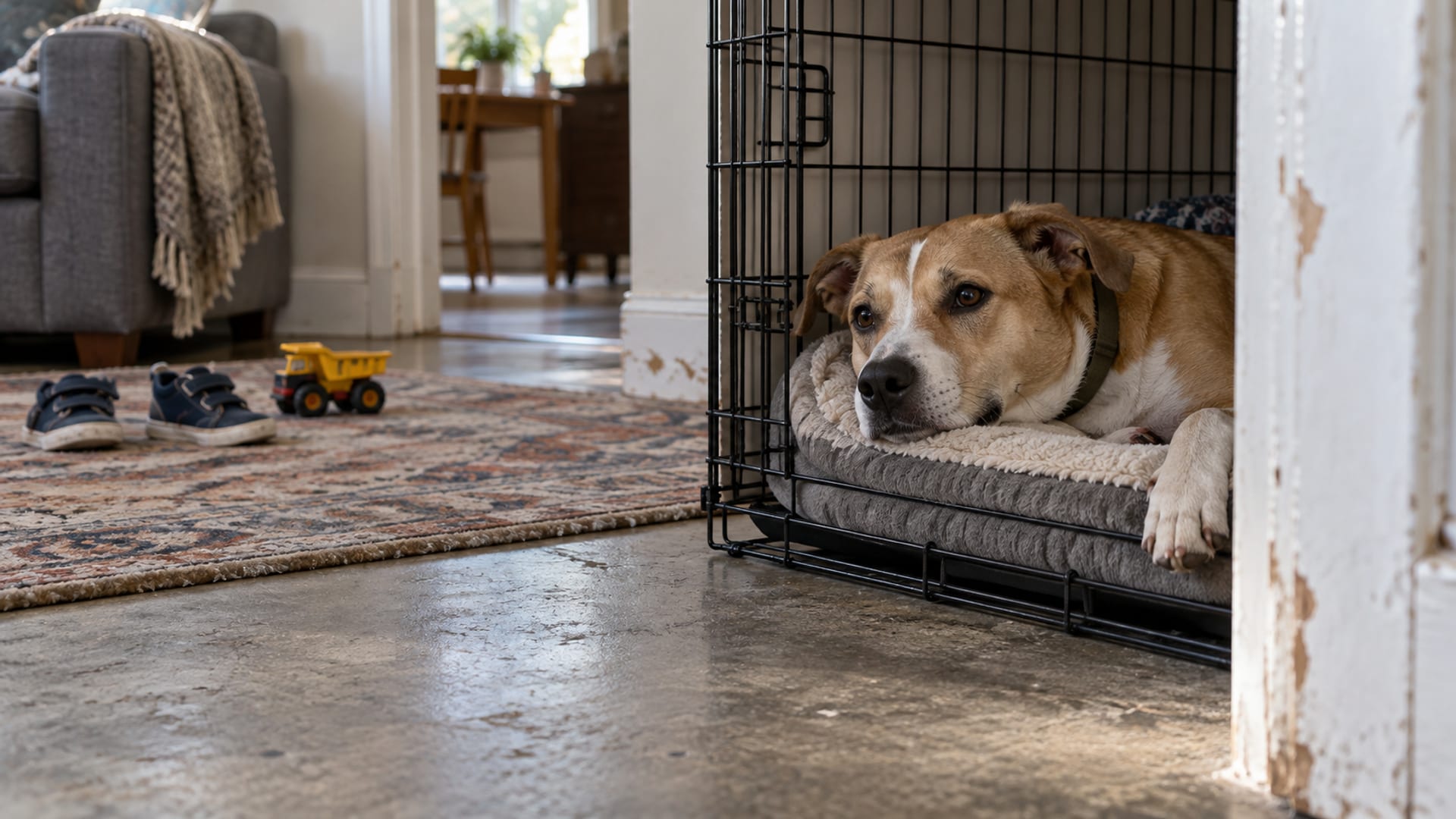
The most important rule is an adult one: never leave a baby or small child alone with a dog. The American Veterinary Medical Association says that applies even to a familiar, well-trained family dog, and the American Academy of Pediatrics and the Royal Kennel Club say the same. Everything you teach a child below is an added layer on top of that rule, never a replacement for it. If your dog has already growled, snapped or bitten a child, you need a different plan, and the steps for preventing aggression toward children in dogs are the place to start.
Key takeaways
Hover or tap a card to bring it forward.
- Never leave a baby or small child alone with any dog, including a familiar family dog.
- Serious bites to young children tend to happen at home with a known dog, so focus there.
- Teach the child to ask first, let the dog come over, keep hands low, skip hugs and kisses, and leave eating or sleeping dogs alone.
- Teach the signals: blinking, yawning, lip licking, turning away, freezing, stiffening, staring and growling.
- Use gates and a dog-only retreat, call the vet after a sudden change, and get professional help if the dog has growled, snapped or bitten.
Why the home is where to focus
Serious bites to young children tend to happen at home, with a dog the child knows. The numbers come from different samples, so each one is described with its limits.
The CDC's national emergency-department analysis of 2001 estimated 368,245 nonfatal dog-bite injuries. Rates were highest among children aged 5 to 9, and 64.9% of injuries to children under 4 were to the head or neck. That was a nationally representative hospital sample, so it counts bites bad enough to reach an emergency room, not every bite.
An Allegheny County, Pennsylvania review covered 14,956 reported bites from 2007 to 2015, including 4,195 to children. Among children aged 3 and under, 72.2% of bites hit the head and neck, and 87.8% of those bites (where the location was recorded) happened on the owner's property. These were reported bites only.
A 2024 review of 949 children with head and neck dog bites in the national injury database from 2013 to 2022 reported that 82.3% of attacks happened in the home and 61.7% involved a dog the child knew. The AVMA also says about half of dog-bite victims are children, which it gives as a general figure.
These numbers show where serious injuries tend to happen. They do not show that familiar dogs are dangerous, and they do not show that teaching rules alone removes the risk. They are the reason your living room, kitchen and yard deserve more of your attention than the park.
Hover or tap a row to highlight it.
| Study | Who it covered | What it found |
|---|---|---|
| CDC emergency-department analysis (2001) | An estimated 368,245 nonfatal dog-bite injuries seen in U.S. emergency rooms | Rates highest in children aged 5 to 9. 64.9% of injuries to children under 4 were to the head or neck. |
| Allegheny County, Pennsylvania review (2007 to 2015) | 14,956 reported bites, including 4,195 to children | 72.2% of bites to children aged 3 and under hit the head and neck, compared with 21.2% in teens aged 13 to 18. 87.8% of bites to children 3 and under with a recorded location happened on the owner's property. |
| 2024 review of head and neck bites | 949 children in the national injury database (2013 to 2022) | 82.3% of attacks happened in the home. 61.7% involved a dog the child knew. 77.7% had face or mouth injuries. |
The rules to teach
Child dog-safety programmes publish fairly similar rules. I am giving them as each programme's guidance. They are what the programmes teach, not proof that any one of them prevents bites.
For meeting a dog, the AVMA, PDSA and the Royal Kennel Club teach children to:
- Ask the owner first, and wait for the answer.
- Let the dog come to them, with hands low and calm.
- Give a brief pat on the back or chest, then stop and let the dog leave.
- Skip hugs, kisses and putting their face near the dog's face. PDSA points out that dogs do not hug and kiss each other and may find it stressful.
- Leave a dog alone that is eating, sleeping, with puppies or guarding something. The AVMA and the AAP both say so.
- Never reach through or over a fence.
For the moments that go wrong, two programmes give children something to do. Doggone Safe's Be a Tree is for when a dog approaches and the child is scared: stop, fold the arms, look down or away, stay quiet and wait for the dog to leave or an adult to arrive. The Royal Kennel Club's Become a Stone is for when a dog knocks a child down: curl up, protect the face and neck with the arms, tuck the elbows, stay still, and tell an adult afterward.
The programmes also share a habit of letting the dog set the pace. Blue Dog, which Meints and De Keuster assessed in a 2009 study, centers on everyday situations: a sleeping dog, a dog that is eating, touching, hugging and taking items. Family Paws teaches "Invites Decrease Bites," which means the dog invites the contact, nobody forces touch, and the dog's rest and food areas are protected. It puts the weight on management and adult supervision, not on a child handling the whole interaction.
A child who is scared of a dog should never be asked to touch or greet it. End the contact, make some distance and let the child watch from a safe spot.
Be a Tree: when a dog approaches and a child is scared
- StopThe child stops moving and does not run or scream.
- Fold the armsThe child folds the arms in close to the body.
- Look down or awayThe child looks at the ground or away from the dog and stays quiet.
- WaitThe child waits for the dog to leave or for an adult to arrive.
- Tell an adultOnce the dog moves away, the child walks slowly to a grown-up and says what happened.
Teaching children to read the dog
A rule only helps if the child notices when it applies. Meints, Brelsford and De Keuster tested this in a 2018 study of children aged 3 to 5 recruited in Lincolnshire, UK. Of 124 children recruited, 88 completed every session, and 40 parents took part as well. They watched short videos of dogs showing distress signals.
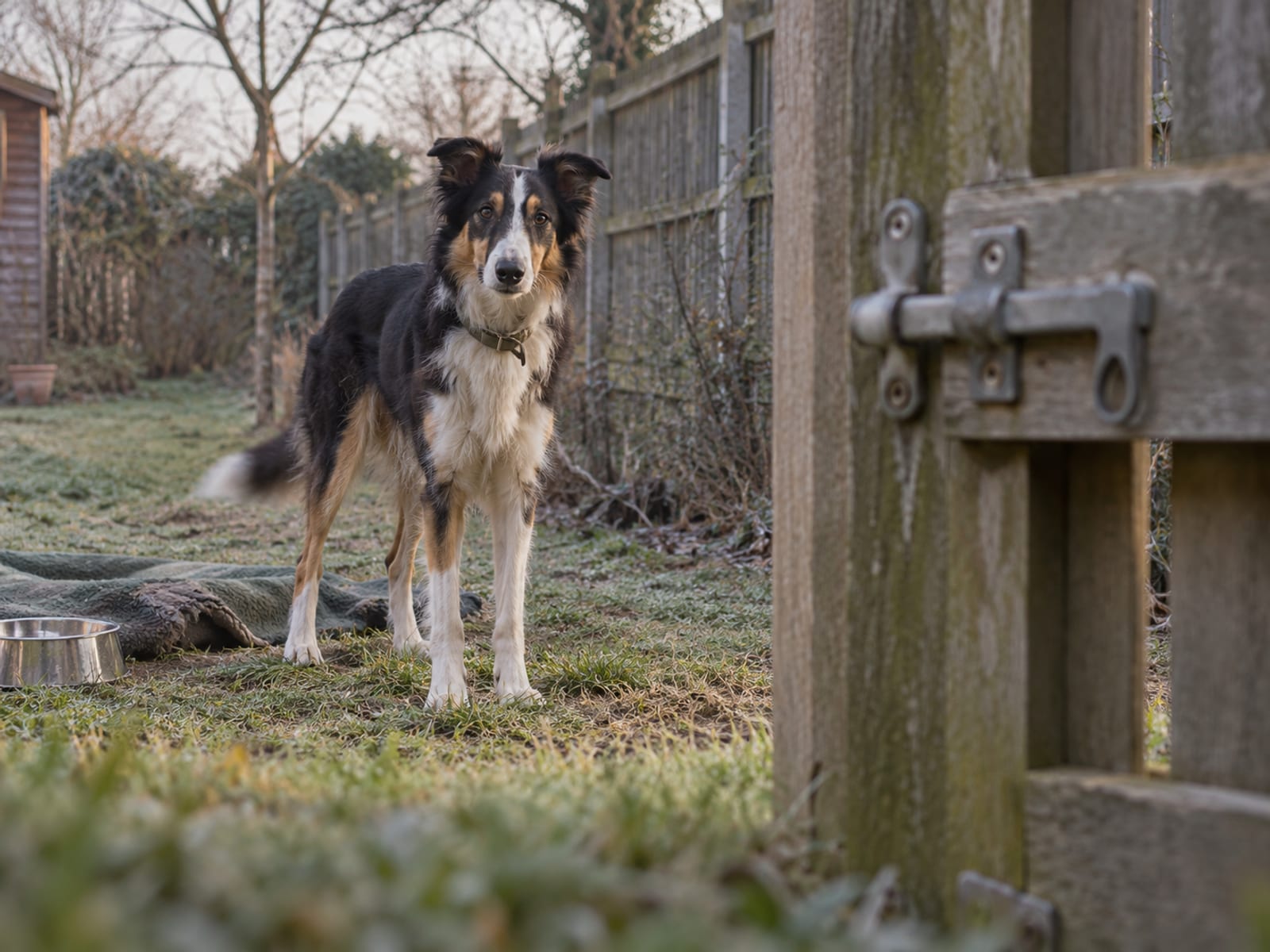
Before training, every age group misread the dogs, and the 3-year-olds did worst. After training, recognition improved, and the improvement held at 6 months and again at 12 months. The children's answers were about videos, not bites at home, so the result does not show that recognition training alone prevents a bite. The authors also point out that spotting a signal is no use unless the child or adult then changes what they are doing.
These are the signals to teach, and to watch for yourself:
- Blinking and yawning
- Lip licking
- Turning the head away
- Moving away or hiding
- Freezing and stiffening
- Staring
- Growling
A dog that freezes is not enjoying it. Adults often read stillness as a dog soaking up the attention, and the study authors warn about that mistake in particular. Their simple script for a child works well at home: "Look! The dog is blinking its eyes. The dog is worried. You should leave the dog alone." Children also tend to look only at a dog's face, so teach them to notice the whole body. For a longer set of signals to practice with your family, see decoding your dog's body language.
What each age can realistically do
Age changes what you can ask of a child, but it never moves the responsibility off the adult.
Infants cannot follow rules, read a dog or move away reliably. Use gates, pens and closed doors. The ASPCA suggests a closed door or a tall baby gate when access needs to be limited, with the dog and baby introduced under close supervision.
Toddlers can learn very short rules such as "stop," "hands off" and "find a grown-up." They still cannot control their impulses or keep a safe distance on their own, so an adult has to be actively supervising.
Preschool and early school children can practice asking first, keeping hands by their sides, leaving a sleeping or eating dog alone, being a tree and finding an adult. They need repeated practice and prompting, because a rule learned on Monday is easy to forget on Friday.
Older children can learn more about body language. They should still not be left as the only responsible person for a younger child and a dog. The Royal Kennel Club says a child may know the rules and forget them, so adults stay involved and never leave a child and dog alone together.
No age makes a child able to guarantee that a dog will not bite, and there is no age at which a child can supervise a dog. The AAP has suggested families consider waiting until a child is at least 4 before getting a dog. That is general pediatric advice, not a test of whether your child is ready. Readiness also depends on the child's impulse control and fear response, the dog's behavior, and whether an adult can supervise and separate.
Hover or tap a row to highlight it.
| Age group | What they can learn | What the adult still does |
|---|---|---|
| Infants | Nothing reliable. They cannot follow rules, read a dog or move away. | Use gates, pens and closed doors. |
| Toddlers | Very short rules: "stop," "hands off," "find a grown-up." | Actively supervise, because toddlers cannot control impulses or keep a safe distance. |
| Preschool and early school | Asking first, hands by their sides, leaving a sleeping or eating dog alone, being a tree, finding an adult. | Repeat the practice and prompt, because rules are easy to forget. |
| Older children | More detail on dog body language. | Never leave them as the only responsible person for a younger child and a dog. |
Gates, supervision and a place to retreat
Supervision means an adult is actively watching both the child and the dog, can spot early stress and is ready to step in. If you are cooking, on the phone or half asleep, that is not supervision. When you cannot give it, separate them with a door, a gate or a pen.
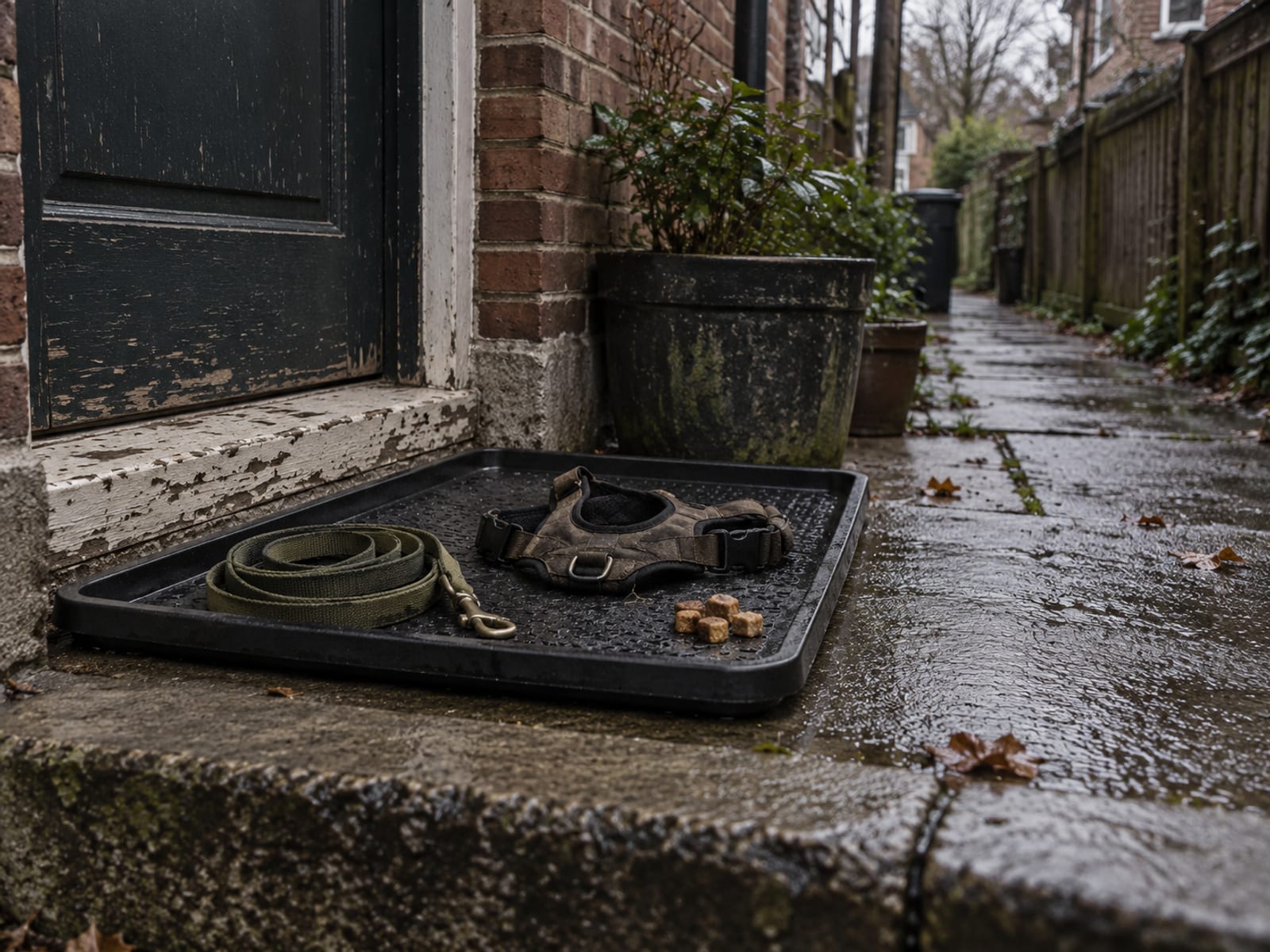
Give the dog a retreat that belongs only to the dog. It can be a crate, a pen, a mat or a gated room. The Royal Kennel Club, the ASPCA and VCA hospitals all describe a dog-only space that the child never enters, reaches into, calls the dog out of or follows the dog into. Let the dog leave or stay there without pressure.
VCA also describes teaching the dog to settle in another place while the family is home. The dog starts out comfortable in a separate spot, then practices with a baby gate in place while an adult stays nearby. The child's presence gets paired with food, affection, play or a reward for going to a mat, so the dog learns that children arriving means good things happen over there.
A gate is a management tool, not permission for contact. Children should not tease the dog or reach through it. A retreat cuts down the chances for conflict, but it does not make a dog safe with children, and it does not replace supervision.
When to call the vet, and when to get help first
Pain and illness change how a dog behaves. The AVMA says dogs in pain are more likely to bite, and the Royal Kennel Club says an unwell or injured dog may seem grumpy and want to be left alone. Call your vet for a sudden change, new irritability, reluctance to be touched, growling when approached, or guarding in a dog that was always easygoing. Ask the vet to check for pain, illness and sensory problems, and keep the children and dog apart until you have an answer. A clean vet visit does not settle whether the dog can safely share space with children again. That takes a behavior assessment and a plan.
Get professional help before children and dog share space if the dog has:
- growled, snapped, lunged, chased or bitten
- shown fear toward a child
- been unable to relax behind a gate
- guarded food or objects
- reacted to a child's movement or noises
VCA's veterinary behaviorist authors say to end the interaction, prevent further contact and arrange a vet exam and an assessment by a qualified professional. They add that you may need to separate the dog from children completely until that is done. When safety, pain or a sudden change is in play, VCA recommends starting with a veterinary behaviorist. The longer story of what a bite or a growl toward a child means is in my page on dog aggression toward children.
A basket muzzle can support safety, but VCA says it does not replace distance and careful supervision. Never test a dog that may bite by letting a child approach, pet, hug, feed it or take a toy.
Hover or tap a row to highlight it.
| What you see | What to do first |
|---|---|
| A sudden change, new irritability, reluctance to be touched, or growling when approached in a dog that was always easygoing | Keep the children and dog apart and call your vet to check for pain, illness and sensory problems. |
| The dog has growled, snapped, lunged, chased or bitten | End the interaction, prevent further contact, and get a vet exam and a behavior assessment before they share space. |
| The dog has shown fear toward a child or reacts to a child's movement or noises | Get professional help before children and dog share space. |
| The dog cannot relax behind a gate, or guards food or objects | Get professional help before children and dog share space. |
| Safety, pain or a sudden change is part of the picture | Start with a veterinary behaviorist. |
How I can help
If you want a second pair of eyes on your house, the evaluation visit is where I look at the family and the dog together. That includes the layout of the rooms, where the dog rests and eats, and how to teach the dog to settle away from the action. Once I know what the dog needs, I can work with you through in-home lessons, or through board and train in my own home. If you would like to set up a visit, contact DW Dog Training and we can talk through your situation.
Questions parents ask
Can a well-trained dog be left alone with a toddler for a minute? No. The AVMA says never leave a baby or small child alone with a dog, even a familiar, well-trained one. A minute is long enough for a toddler to grab an ear or follow the dog into its bed, so take the child with you or put the dog behind a gate first.
Should my child hug the dog if the dog seems to like it? Skip the hug. A dog that stands still may be freezing, not enjoying it, and a hug puts a child's face right next to the dog's mouth. Teach a short pat on the back or chest after the dog walks over, and stop when it moves away.
What do I do if my child is scared of our dog? Do not ask the child to touch the dog to get over it. End the interaction, create distance and let the child watch from where they feel comfortable. Give the dog its own space too, so neither one is cornered.
Does a baby gate keep my child safe? A gate keeps the two apart when you cannot supervise, and it gives the dog somewhere calm to be. It does not give permission for contact, and a child should never reach through it. Check that the dog can relax behind it, because a dog that cannot is a reason to get help.
Check what you learned about kids and dogs
Which rule comes before everything else you teach a child?
Where do serious bites to young children tend to happen?
A dog stands very still while a child hugs it. What is the safest way to read that?
What should a child do if a dog knocks them down?
What does a baby gate do?
A dog that was always easygoing suddenly growls when touched. What is the first step?
Answer a question to see your score.