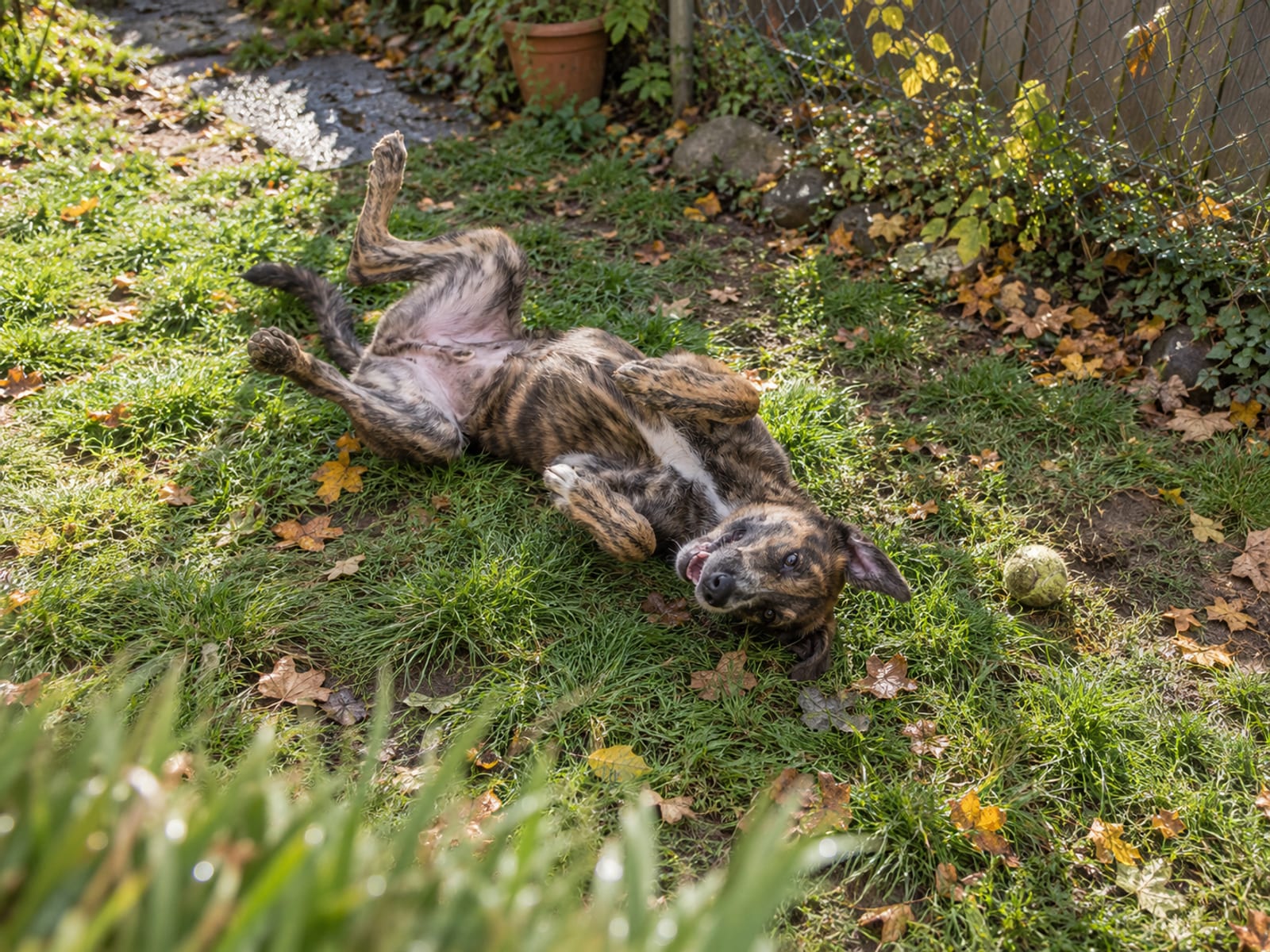
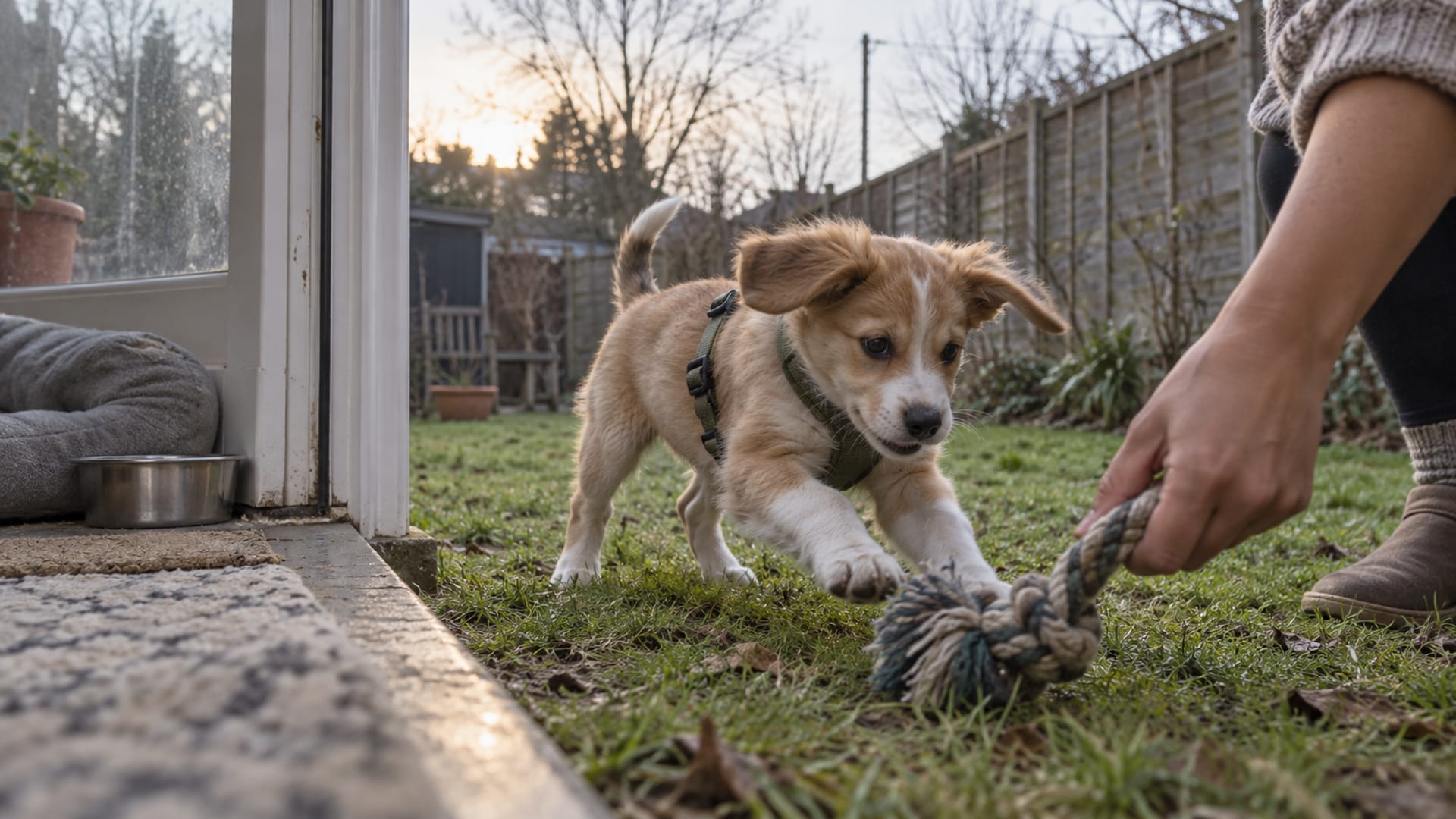
Growling and mouthing during play are usually normal puppy behavior, and the noise is the least useful thing to judge. Read the whole body and what happens when play stops. A puppy that is loose and bouncy, bows, pauses, swaps roles and comes back for more is playing. A puppy that goes stiff or still, stares hard, growls over food, a toy or a bed, growls when touched or lifted, or bites hard and does not ease off when you stop needs a closer look. My rule for tonight: the moment teeth touch skin, the game ends, and you judge the puppy by how it behaves in the pause.
Key takeaways
Hover or tap a card to bring it forward.
- Judge growling and mouthing by the whole body and by what happens when play stops, not by the sound.
- Play looks loose and bouncy with bows, pauses and role swaps; stiffness, a hard stare, guarding and grip-and-hold biting are warning signs.
- Teach bite control by pausing when teeth touch skin, redirecting to a toy, and using a brief time-out if the yelp winds the puppy up.
- Growling or biting when a puppy is picked up or touched calls for a vet exam before any training plan.
- No age or single test marks a puppy as aggressive; call for help after any bite that breaks skin, any bite toward a child, or any pattern that keeps escalating.
What healthy play looks like
Play between two dogs, or a dog and a person, is a two-way street. Patricia McConnell describes healthy play as reciprocal and self-handicapping: the bigger or stronger player holds back, they trade roles, and both choose to keep going. The signs she points to are play bows, pauses and role changes. She also says to interrupt when the movements get intense, jerky, or less responsive to the other animal.
Mouthing is part of it. Ian Dunbar treats puppy biting as a developmental behavior that you soften first and reduce second, so gentle mouthing is a skill your puppy has to learn before the biting goes away. Sophia Yin's puppy-biting advice, reproduced by Petco, treats mouthing during play, petting, walking and exploring as normal puppy behavior too.
Notice that none of this says the mouth on your hand proves anything by itself. A loose body, a bow, a pause and a puppy that voluntarily comes back all point toward play. Stiffness, avoiding you, guarding, fear, pain or a puppy that keeps escalating point the other way. For the grown-up version of this question, Dog Aggression Vs. Playfulness covers how that contrast looks in adult dogs.
Hover or tap a row to highlight it.
| What you notice | Points toward play | Points toward a problem |
|---|---|---|
| Body | Loose and bouncy | Stiff or frozen |
| Pauses and role swaps | Play bows, pauses, trading roles | A hard, fixed stare |
| Choice to continue | The puppy comes back for more on its own | Avoiding you, guarding, fear or pain |
| When play stops | The puppy can stop, shake off and settle | Biting that does not ease when play stops and your attention goes away |
Is that growl play or a warning?
You can't tell from the sound alone, and I would not try. Faragó, Pongrácz, Range, Virányi and Miklósi recorded growls from 20 adult dogs in three situations: play, guarding a bone from another dog, and facing a threatening stranger. Their 2010 paper in Animal Behaviour reports that the three kinds of growl differ acoustically, especially in pitch and in a measure called formant dispersion. Then they played the recordings to 36 dogs, 12 per growl type, near an unattended bone. The food-guarding growl kept dogs away from the bone more than the play growl or the stranger growl did.
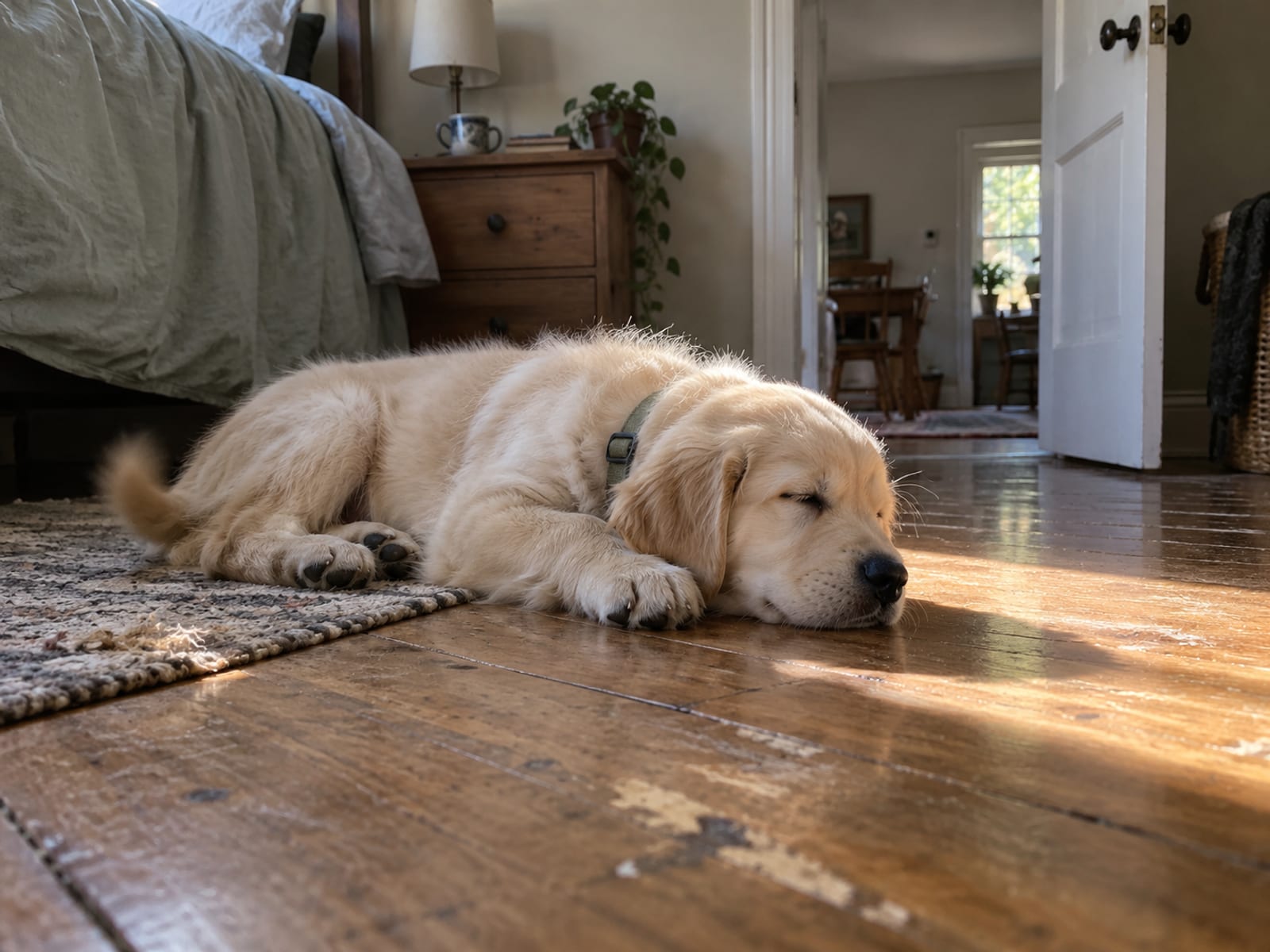
That is a result about dogs reading context-linked growls in a controlled bone test. It does not hand you an audio test for your own puppy, and it was adult dogs, not puppies playing with a person. So, what do you do with it? You read everything around the sound: the posture, the movement, how the other player reacts, what object is involved, and whether your puppy can stop, shake off and settle. A growl from a loose, wiggly puppy mid-tug and a growl from a puppy frozen over a chew are different events even if they sound alike to you.
Signs that worry me
A growl on its own does not make a puppy aggressive. The concern grows when it arrives with tension, avoidance, guarding, pain or biting that keeps getting worse. The Merck Veterinary Manual, reviewed by Gary Landsberg, DVM, DACVB, lists situations that deserve attention: a puppy that is cornered, held or restrained and cannot get away; aggression around food, toys, resting places or other possessions; reactions to being moved or touched that come from pain; and biting or growling that makes a person back off and then repeats.
Body language adds to that list, and these are the signs I look for:
- A stiff or frozen body.
- A hard, fixed stare.
- A closed, tense mouth just before a snap.
- Lifted lips or showing teeth.
- A tucked tail, ears back, trembling or trying to escape.
- Growling or biting over food, toys, beds or a resting spot.
- Biting that grips, holds pressure, shakes the head or punctures skin.
- Biting that does not ease when play stops and your attention goes away.
- Bites that keep happening during handling.
- Any climb in how hard it bites, how often, or how many situations set it off.
Some of those are about guarding. If your puppy tenses over a bowl or a bone, 10 Simple Steps to Prevent Resource Guarding in Puppies walks through what to do early.
One more point on safety. A puppy can be over-aroused rather than defensive and still hurt someone, because an excited puppy does not need a classic warning posture to leave a mark. So, a wild puppy that draws blood gets the same careful response as a worried one, even though the reason is different.
Hover or tap a row to highlight it.
| Sign | What it looks like |
|---|---|
| Stiff or frozen body | The puppy goes still and tense |
| Hard stare | A fixed look at the person or object |
| Closed, tense mouth | Mouth clamps shut just before a snap |
| Lifted lips | Teeth showing |
| Fear signals | Tucked tail, ears back, trembling or trying to escape |
| Guarding | Growling or biting over food, toys, beds or a resting spot |
| Hard biting | Gripping, holding pressure, head shaking or puncturing skin |
| Handling bites | Bites that keep happening during handling |
| Escalation | Biting harder, more often, or in more situations |
Teaching a puppy to soften its bite
Bite inhibition means control over how hard the mouth closes. It is not the same as never touching skin. Dunbar describes two stages, softening the bite first and then reducing how often the puppy mouths at all. His method starts with a sharp "ouch" when a bite hurts. If the puppy backs off, pause for a moment, then go back to calm play. If it keeps at you, leave the room for one or two minutes. He rejects physical punishment. The puppy learns that hard pressure ends the fun and gentle contact keeps it going.
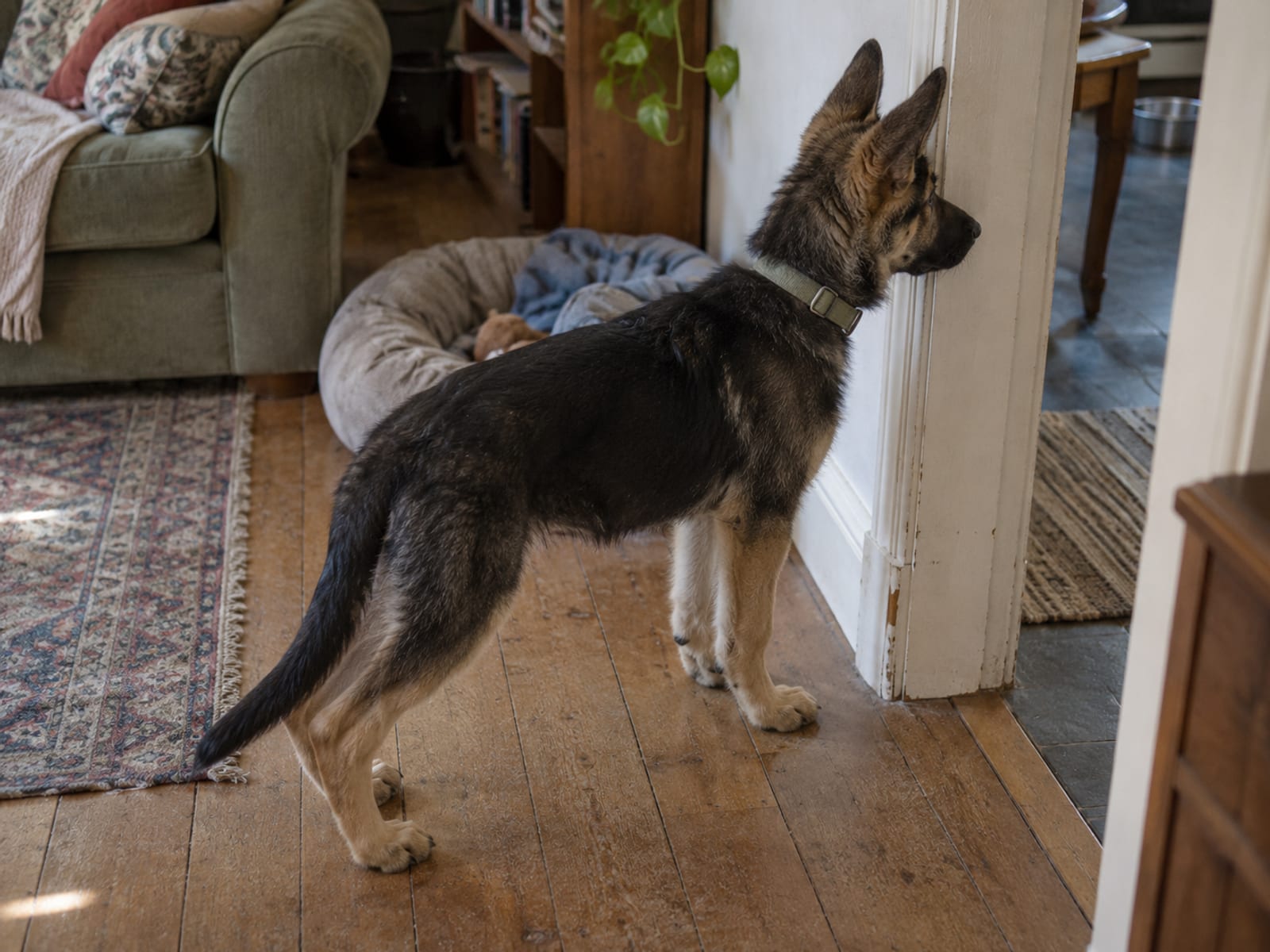
Puppies pick this up from littermates first. The ASPCA describes a puppy that bites too hard getting a yelp and losing its playmate for a moment before play starts again. Human skin is thinner than a littermate's coat, so you keep teaching after the puppy comes home.
Puppies don't all react the same way to your "ouch." Jean Donaldson says in an interview with Taking the Lead that some puppies stop or soften, and others get more worked up by the yelp. For those, she pairs the word with a short time-out of about 30 seconds, either by leaving or by putting the puppy in a safe spot. If your puppy lunges at you harder after you yelp, that is a sign to switch to the quiet exit and skip the noise.
Redirecting works alongside this. Petco's version of Sophia Yin's advice is to offer a long toy so your hands stay away from the mouth, withdraw your attention when teeth touch skin, and restart when the puppy settles. VCA recommends interactive toys, including controlled tug, as an outlet for biting and pulling. If teeth land on skin or clothing, the game stops and you step away until the puppy calms down. VCA adds one condition on tug: the toy stays the target, and the puppy should not start guarding it. McConnell says that "ow" and a freeze can stop the contact in the moment, but longer-term improvement comes from getting the puppy onto a toy or tossing treats while you move to something calmer.
A few habits I'd add to that:
- End the session when arousal keeps climbing instead of waiting for a harder bite.
- Reward the soft mouth and the calm alternatives you want more of.
- Use a gate, a pen or a leash line when the puppy cannot settle safely.
- Plan for ankle-nipping. Donaldson describes it as something to anticipate and redirect toward a toy before it starts.
For a step-by-step version, 10 Proven Techniques to Tame Your Aggressive Puppy goes through the daily work.
What to leave out
Sources agree on what not to do: hitting, slapping, pinching the lips, putting fingers down the throat, kicking, pinning the puppy, or rolling it onto its back and holding it there. Those can raise fear, defensive biting or arousal, and they teach a puppy that your hands are something to watch. Skip them.
Dunbar also recommends puppy play with other puppies before roughly four and a half months, and puppy classes as a place to practice. That is a trainer's recommendation, not a biological deadline, so do not panic if you are past it.
Teaching Bite Control, Step by Step
- Soften the biteWhen a bite hurts, say a sharp "ouch." If the puppy backs off, pause for a moment, then go back to calm play.
- If it keeps at youLeave the room for one or two minutes. Dunbar rejects physical punishment.
- If the yelp winds the puppy upDonaldson pairs the word with a short time-out of about 30 seconds, either by leaving or putting the puppy in a safe spot.
- Redirect to a toyOffer a long toy so your hands stay away from the mouth, withdraw attention when teeth touch skin, and restart when the puppy settles.
- Reduce the mouthingOnce the bites are soft, gradually reduce how often the puppy mouths at all.
When a puppy growls or bites if you pick it up or touch it
See your vet first and call it training second. A puppy that suddenly growls, snaps or bites when lifted or handled may be hurting, and pain can produce a defensive bite when the puppy expects to be moved. Merck says pain aggression can occur when a dog anticipates being moved or touched.
The medical list is long. Veterinary sources name injury, sprain or fracture, hip or elbow dysplasia and other developmental joint disease, spinal pain, ear disease, skin inflammation, infection, allergies or parasites, dental pain and teething problems, abdominal or urinary pain, neurological disease, liver or kidney problems, thyroid or adrenal disorders, infection, toxicity and medication side effects. VCA notes that young dogs can have arthritis tied to old injuries, infections or developmental conditions such as hip dysplasia, and lists more growling or biting attempts among the signs to look into.
Go to the vet before anything else when the behavior is new or sudden, tied to one body area, paired with limping or reluctance to move, accompanied by changes in appetite or sleep, or shows up around lifting, grooming, ear cleaning, nail trimming or restraint. Your vet decides whether an exam, lab work, imaging or a neurological check makes sense.
Until then, stop picking the puppy up over and over to see what it does. Keep children from handling a puppy that warns. VCA's handling guidance says a puppy that stops eating, snarls or growls during handling practice should not be pushed through the exercise; change the plan with a professional.
Hover or tap a row to highlight it.
| What you see | Why it matters |
|---|---|
| The behavior is new or sudden | Pain can produce a defensive bite |
| It is tied to one body area | The puppy may be hurting there |
| Limping or reluctance to move | Joint, spine or injury problems |
| Changes in appetite or sleep | Illness may be involved |
| It happens during lifting, grooming, ear cleaning, nail trimming or restraint | The puppy may expect to be hurt when moved or touched |
Does age tell you anything?
People ask me at what age puppies become aggressive. There isn't one. Scott and Fuller's 1965 book, Genetics and the Social Behavior of the Dog, described primary socialization at roughly 3 to 12 weeks, using laboratory-bred dogs. The AVSAB says the first three months are the primary period for socialization, and that puppy classes can generally start at 7 to 8 weeks. Its position is that a puppy should have at least one set of vaccines at least seven days before the first class and an initial deworming. Check the timing with your vet, because disease risk and vaccine schedules vary.
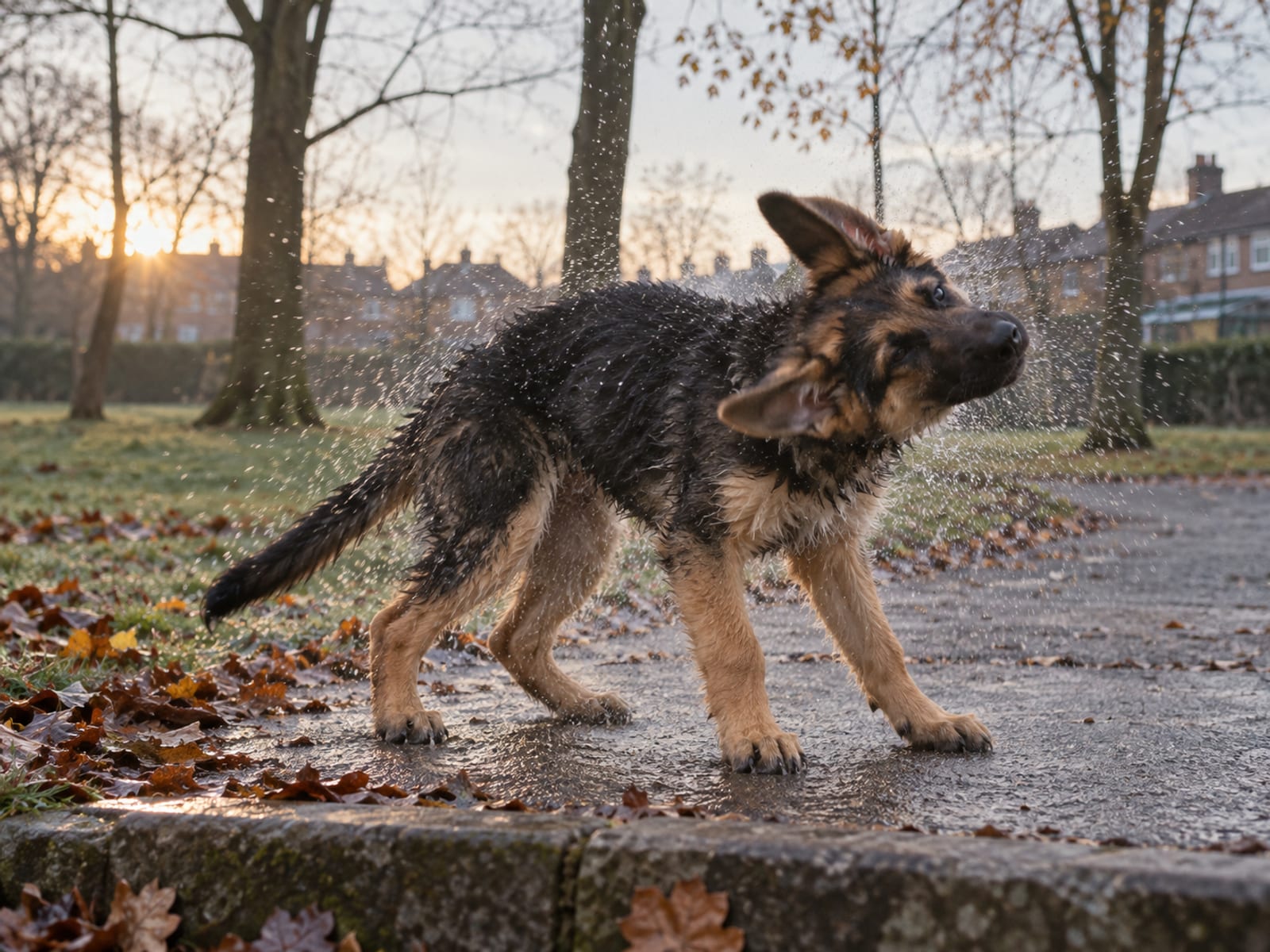
Behavior does change as puppies grow. Serpell and Duffy's 2016 study followed 978 prospective guide-dog puppies of four breed types, with raisers filling out the C-BARQ questionnaire at about 6 and 12 months. Reported fear and aggression shifted between those ages, and German Shepherds showed a rise in stranger-directed aggression. Those are raiser reports from a guide-dog population, not verified bites in ordinary pet puppies.
A single test also cannot call the outcome. Riemer and colleagues tested 134 Border Collie puppies at 40 to 50 days in a 2013 study, and across their longer work, early test results matched adult behavior only weakly. So, no one growl, no one age and no one puppy test tells you what kind of adult you have. Judge by context, whether it escalates, and whether anyone is safe. For the prevention side of this, Preventing Aggression in Puppies covers what to set up in the first months.
When to call for help
Get professional help when a puppy:
- Bites hard enough to puncture skin or draw blood.
- Keeps biting despite pauses, redirection and withdrawn attention.
- Grips, shakes or hangs on.
- Stiffens, freezes, stares hard, lifts its lips or clamps its mouth shut before biting.
- Growls, snaps or bites when picked up, touched, groomed or restrained.
- Guards food, toys, bones, beds or crates.
- Shows fear, avoidance, escape attempts or trembling around people.
- Escalates in force, frequency or the number of triggers.
- Changes suddenly, which can mean pain or illness.
- Has bitten or threatened a child.
Merck says to seek help as soon as aggression shows. The American College of Veterinary Behaviorists says not to wait after a first bite, to contact your veterinarian or a veterinary behaviorist, and to check a trainer's credentials, because dog training is not a regulated profession.
If a child is involved, the steps are firm. VCA's guidance on aggression toward children says to end the interaction right away, keep the dog and children apart, and not scold the dog. Separation continues until a vet and a behavior professional have assessed the dog. Keep close adult supervision whenever children are near, and never use a child to test how much a puppy will tolerate.
Quick answers
A growl is information, and a puppy that growls is telling you something before it has to bite.
Why does my puppy growl while we play tug?
Growling during tug is common and can be part of play, especially when the body stays loose and the puppy pauses and re-engages. Watch for stiffness or a hard stare, and stop the game if the puppy starts guarding the toy, since VCA says the toy should stay the target of the game. Let the puppy win sometimes and end on a calm note.
Is it okay to hold a puppy's mouth shut when it bites?
No. Sources warn against pinching the lips, putting fingers down the throat, pinning the puppy and similar physical corrections because they can raise fear, defensive biting or arousal. Stop the game, withdraw your attention, and redirect to a toy instead.
My puppy growls when I pick it up. Is that aggression?
It may be pain, fear or being handled before it was ready, so book a vet visit before you treat it as a training issue. Until the exam, pick the puppy up only when you have to, and keep children from lifting it.
Should I worry if my puppy's bites break skin?
Yes, take it seriously. A bite that punctures or draws blood is on the list of reasons to get professional help, whether the puppy was excited or upset. Wash the wound, and then book an evaluation with a vet or a qualified trainer.
Check What You Picked Up
What is the best way to judge a puppy's growl?
Teeth touch your skin during play. What do you do?
Your puppy suddenly growls when you pick it up. What comes first?
When does your puppy's bite call for professional help?
What does Donaldson suggest if your puppy gets more worked up by your "ouch"?
What should you do if a puppy has bitten or threatened a child?
Answer a question to see your score.
How I work with this
When a puppy's biting or growling worries someone, I start with an evaluation visit so I can see the puppy and the room it lives in. Then we move into in-home lessons, or into board and train in my home when a dog needs more than weekly lessons. I start puppies with a short evaluation and in-home lessons so the first month of biting and handling is set up correctly. If you would like me to look at yours, contact DW Dog Training.