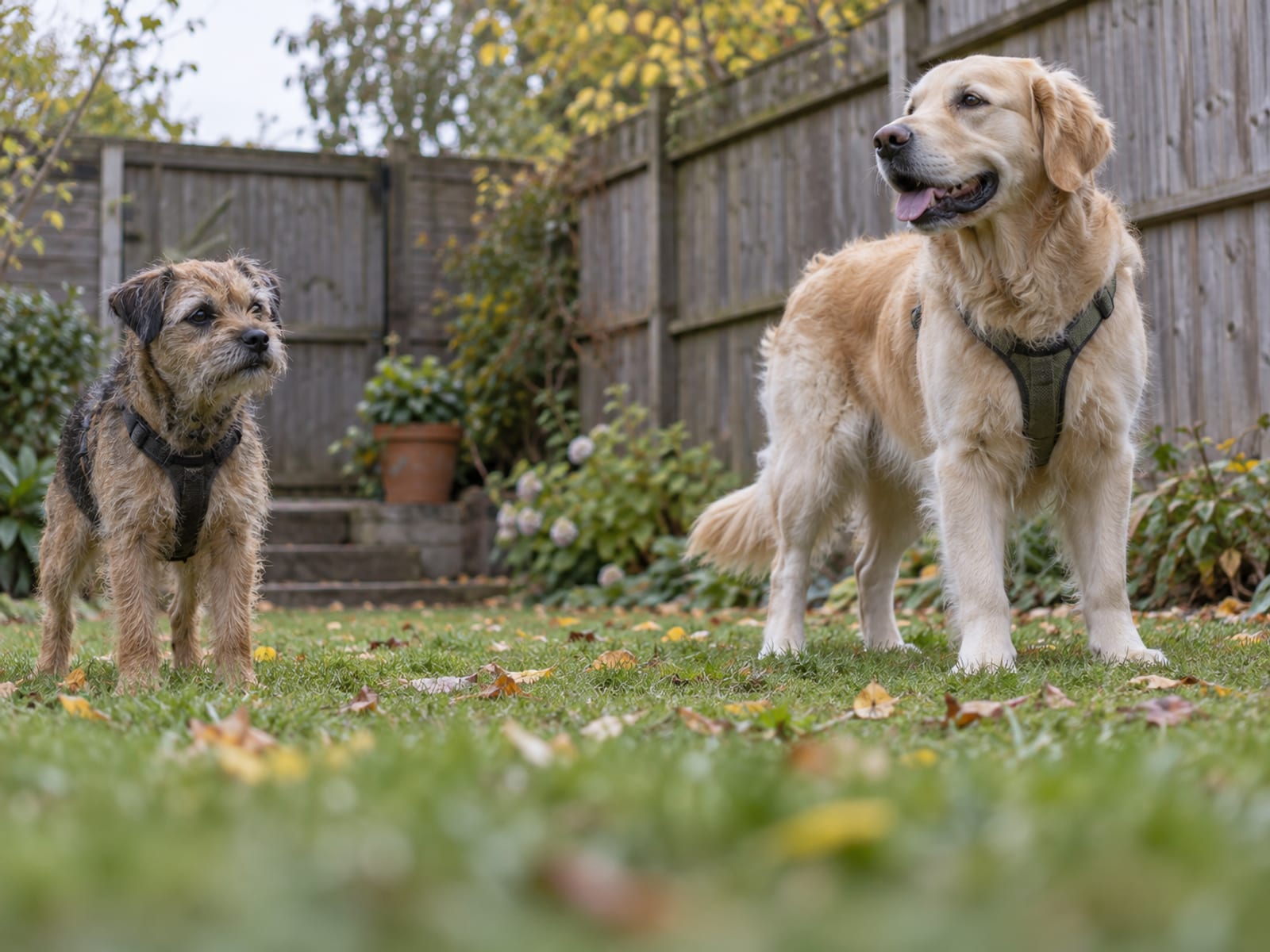

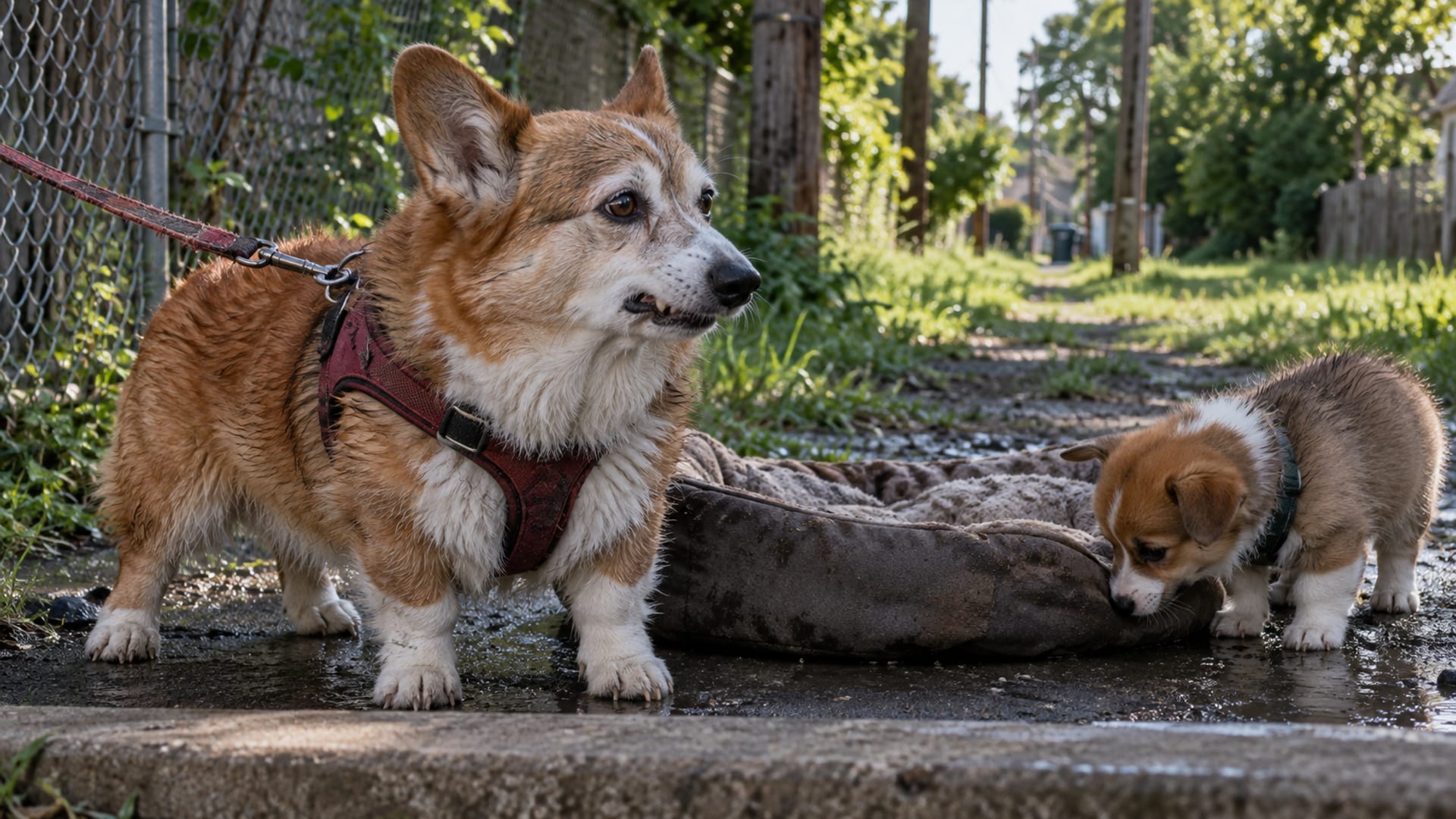
A short growl or an air snap that stops the moment the puppy backs off is usually your older dog saying "that is enough." It is not automatically a problem, and it is not something to scold. What matters is whether the growl ends when the puppy responds, and whether your older dog is getting a break from a puppy that does not know when to quit. Board-certified veterinary behaviorist Dr. Lisa Radosta describes a gradual correction that ends when the puppy rolls over as "a normal interaction where an obnoxious puppy got appropriately corrected".
If you feel worried and a little guilty, that makes sense. You brought the puppy home, and now your dog is growling at it.
Key takeaways
Hover or tap a card to bring it forward.
- A short growl or air snap that stops once the puppy backs off is often an older dog setting a limit, and it should not be scolded.
- Stop and separate when the older dog keeps going after the puppy defers, pins, chases nonstop, punctures skin, or the puppy stays fearful.
- A new or sudden change in growling is a reason for a vet exam, since pain and age can shorten an older dog's patience.
- This week, use gates and pens, feed apart, remove prized items, protect the older dog's routine, and teach the puppy the manners yourself.
- There is no standard time for acceptance; judge it by the older dog's quality of life and safety, and bring in a veterinary behaviorist or qualified consultant if things are not improving.
What a growl from an older dog usually means
A growl often means "give me space." Puppies climb on adult dogs, pester them and keep trying to start play long after the adult has lost interest. Dr. Jess Beer, a qualified veterinary behaviourist writing for SPCA New Zealand, calls a low growl "an appropriate reprimand," but says the interaction has to stop before it reaches a snap or an attempted bite.
Dr. Radosta gives an example of what a fair correction looks like. The older dog growls first, then shows teeth when the puppy keeps going, and backs off as soon as the puppy rolls onto his back and defers. The older dog escalated step by step and stopped when the puppy answered. That is the pattern to look for.
The East Bay SPCA points out that puppies may lack an adult dog's communication skills. It says not to punish an adult dog for correcting a puppy. It also says to prevent situations where the adult has to correct the puppy again and again, because repeated corrections can produce a fearful or reactive puppy, or one that becomes comfortable using inappropriate aggression.
Other ways an older dog asks for distance are quieter: standing between the puppy and a space, turning away, or walking off. Treat those as requests for room, not as an invitation for the puppy to follow. Read a block alongside the rest of the body language. Stiffness, staring, pursuit, snapping or biting change what it means.
When it is more than a correction
The behavior becomes more concerning when the older dog keeps going after the puppy retreats, ignores the puppy's deference, or keeps chasing it. VCA Animal Hospitals describes an abnormal response as one where the confident dog "continues to attack in the face of appropriate deference and subordinate behavior."
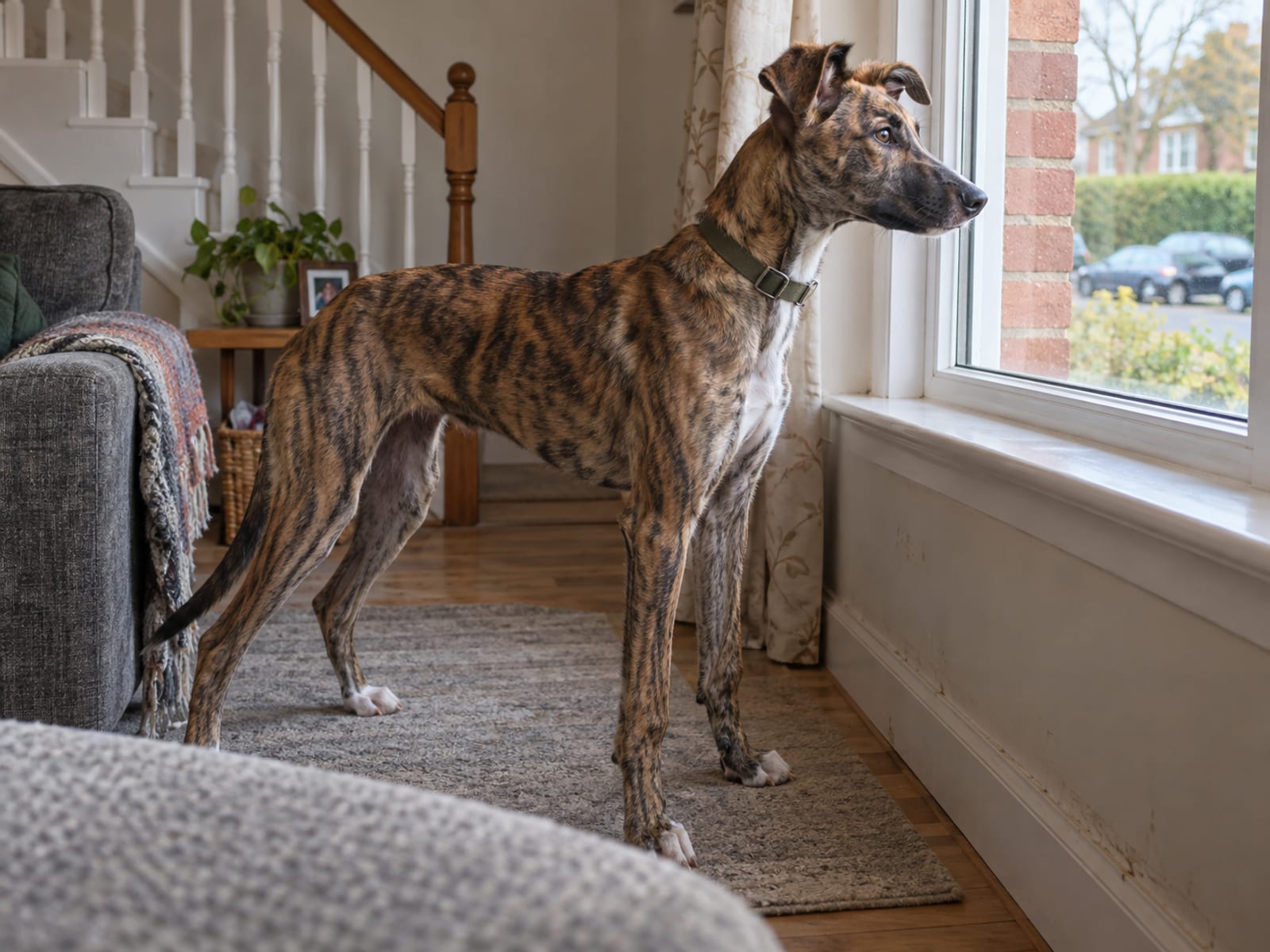
Watch for these:
- The older dog pins the puppy and keeps going after the puppy gives in.
- Repeated lunges or attacks, rather than one brief correction.
- Nonstop pursuit while the puppy is trying to get away.
- Bites that puncture or break skin.
- A silent, fast chase, especially when it is set off by the puppy's high-pitched squeals or quick movement.
- The puppy stays fearful, hides, freezes, or shows defensive aggression of its own.
- Any fight you cannot interrupt safely.
Dr. Beer lists the signs that an interaction should stop: stiffness, lip licking, visible whites of the eyes (often called whale eye), avoidance, growling and snapping. She is clear that interactions must never be allowed to continue to the point of snapping or attempting to bite.
The stakes are real. A 2011 JAVMA case series by Wrubel and colleagues covered 38 cases of interdog aggression in the same household. It reported that severe injuries can result when an older dog cannot fend off a younger dog's challenge, or when a dog does not recognize deference. The authors state that dogs may need to be kept separated for safety.
Hover or tap a row to highlight it.
| What you see | Fair correction | Time to stop it |
|---|---|---|
| After the puppy backs off or rolls over | The growl ends and the older dog lets go | The older dog pins the puppy or keeps going after it defers |
| How many times | One brief correction | Repeated lunges or attacks |
| Chasing | None, or it stops quickly | Nonstop pursuit, or a silent, fast chase set off by squeals or quick movement |
| Contact | A low growl or an air snap | Bites that puncture or break skin |
| Body language | Brief and easing off | Stiffness, staring or whale eye that keeps building |
| The puppy afterward | Recovers and moves on | Hides, freezes, stays fearful or turns defensive |
| Interrupting | The interaction ends, or you can call the puppy away | A fight you cannot interrupt safely |
Age, pain and a shorter fuse
Age is not a diagnosis. Still, older dogs often have less energy, less mobility and less patience for a puppy's physical demands, and VCA notes that a calm, quiet or shy resident dog can find an exuberant puppy overwhelming.
Pain can make a dog defensive when anything approaches it. VCA lists arthritis, dental disease, ear problems, sensory loss, neurological disease and endocrine disease among the medical conditions that can add to aggression or irritability. An aging dog that is losing its hearing may also be startled when a puppy appears beside it. In its guidance on pain in aging dogs, VCA says pain can make a dog less social, or aggressive toward pets it used to get along with.
Mention these to your vet:
- Difficulty rising or lying down
- Reluctance to use stairs or jump
- Limping
- Restlessness or less stamina
- Withdrawal
- Resistance to being handled
Book a vet exam when the growling is new, suddenly worse, out of proportion to what the puppy did, comes with changes in how the dog moves, or is aimed at a puppy the dog used to tolerate. If fighting has started, both dogs may need a medical and behavioral assessment.
What to do this week
This is the part you control. Set up the house from day one so both dogs can rest without being followed. Use gates, exercise pens, closed doors or separate rooms. Each dog needs water, a bed and a private retreat.
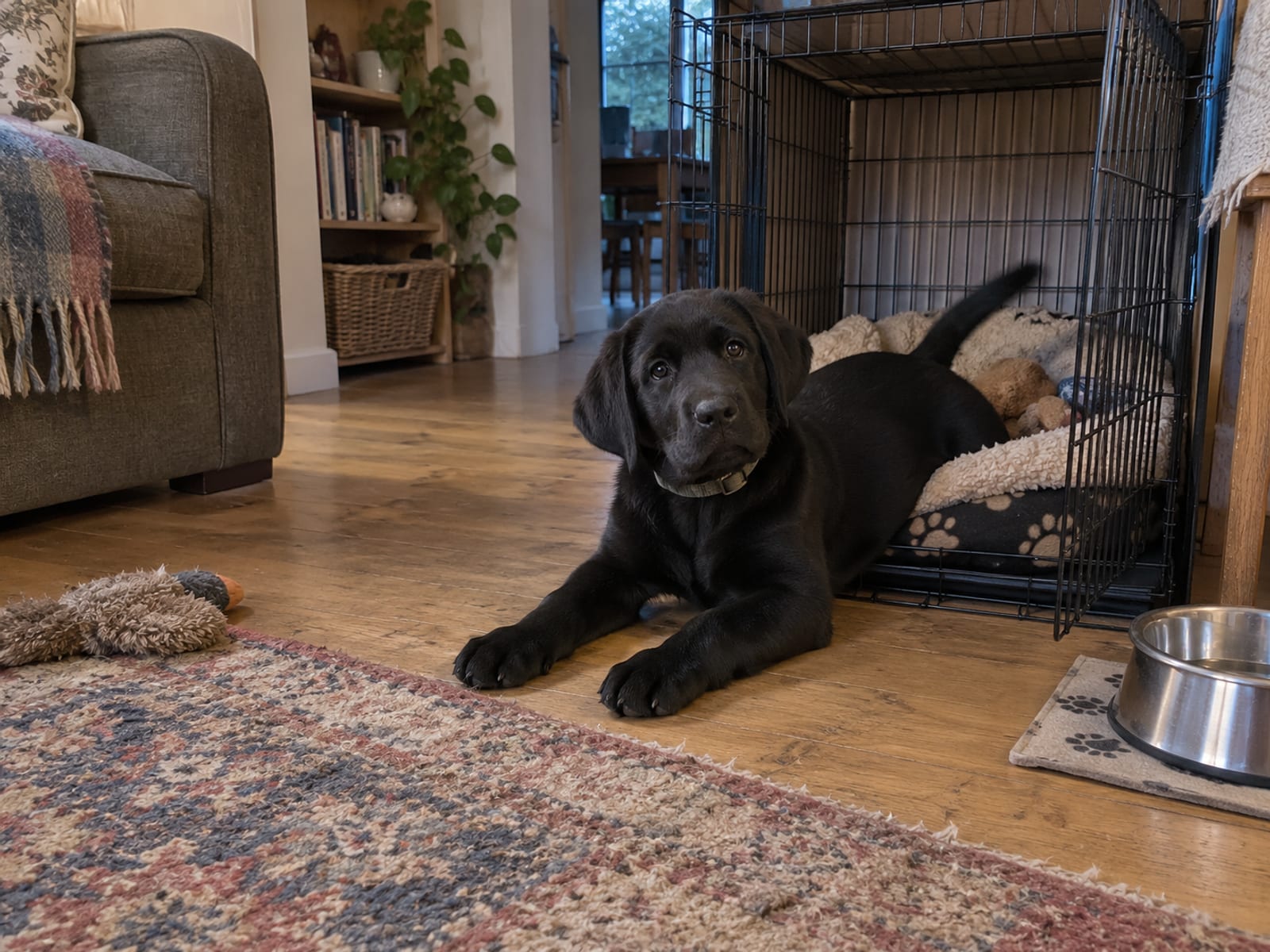
Valerie Balwanz, CBCC-KA, CPDT-KA, PMCT, recommends giving the older dog the familiar living room or favorite space and putting the puppy somewhere else, rather than pushing the resident dog out of its own territory. For shared time, she suggests supervised sessions with the puppy restrained or tethered, so it cannot keep harassing the older dog.
Pasadena Humane recommends a private decompression space for the new dog during the first three days, along with separate walks for the resident dog. It then suggests increasing shared time gradually. It calls for baby gates or exercise pens, and for keeping the dogs apart whenever you cannot supervise closely, especially during the first three weeks.
Trainer Pat Miller, CBCC-KA, CPDT-KA, writing for Whole Dog Journal, suggests several days of restraint around each other with "protected contact," where the dogs sniff through a wire pen or baby gate. She advises against a crate for this first contact because the crated dog may feel trapped. The Wisconsin Humane Society adds separate feeding, individual time with each dog and a private rest area for the older or less energetic one.
Then take away the things dogs argue over:
- Feed the dogs apart, behind a closed door or a secure gate, and pick up the bowls when they finish.
- Remove bones, chews, favorite toys and high-value treats while the dogs are adjusting. If one of them guards things, the post on managing resource guarding between dogs goes deeper.
- Give each dog its own bed. Keep the puppy out of the older dog's bed, crate and retreat, and redirect the puppy before the older dog has to defend the spot.
- Keep the older dog's walks, meals, sleep and one-on-one time with you. The AKC says holding to the senior dog's routine and individual attention helps reduce stress.
When the older dog growls, stay calm and call the puppy away. Add distance and give the older dog a break. Pasadena Humane calls growling "an important, clear communication," and VCA warns that scolding, punishing or holding a dog down can suppress the growl, the snarl, the snap and the lip lift without fixing the conflict underneath. Take away the warning and you may get a less predictable escalation later. Do not force the dogs to keep interacting.
If you are planning a first meeting or the dogs are already tense, introducing an aggressive dog to new dogs covers the do's and don'ts in more detail.
Setting Up the First Weeks
- Before contactSet up gates, exercise pens, closed doors or separate rooms. Each dog gets water, a bed and a private retreat, and the older dog keeps its familiar living space.
- First three daysGive the new puppy a private decompression space and keep separate walks for the older dog.
- First contactUse protected contact for several days, letting the dogs sniff through a wire pen or baby gate, not a crate.
- Shared timeIncrease supervised time together gradually, with the puppy restrained or tethered so it cannot keep pestering the older dog.
- First three weeksKeep the dogs apart whenever nobody can supervise closely.
- Every dayFeed apart, keep bones, chews and favorite toys put away, and protect the older dog's walks, meals, sleep and one-on-one time.
The puppy's training is yours, not the older dog's
Your older dog should not be the trainer. A puppy can pick up information from a steady adult dog, but you are the one who teaches manners. Dr. Beer says puppies are still learning how to behave and should be taught calm behavior such as sit and wait. She recommends rewarding calm, redirecting exuberance and preventing the puppy from pestering the older dog.
The puppy needs recall, settle, "go to your spot," leave it and polite greetings. It also needs to learn to disengage from the older dog. Teach those cues away from the older dog first, then use them before the older dog reaches the point of correcting. The East Bay SPCA recommends recall practice, exercise pens, crates, break areas and early intervention when the adult shows low-level discomfort.
A puppy should learn that moving away when another dog signals discomfort is safe and pays off. It also needs structured play, plenty of sleep, enrichment and safe contact with suitable dogs. The post on socializing your puppy and what not to do is a good place to build that out.
A growl tells you where your older dog's line is. It is not your training plan.
How long does it take a dog to accept a new puppy?
There is no standard time, and anyone who gives you a firm number is guessing. The figures you will hear are experience ranges and management advice.
- Jennifer Summerfield, DVM, CPDT-KA, said in a Petco Q and A that improvement should come over the "next 2-3 weeks" as the dogs get used to each other. That is one expert's experience range.
- The AKC quotes trainer Lauren Lane saying that a couple of months to get along is different from an older dog being miserable for years.
- Pasadena's three weeks is a period for careful separation when nobody can supervise. It is not a deadline for acceptance.
- Pat Miller suggests protected contact for at least several days when the older dog is concerned.
- The 2011 JAVMA series on 38 cases did not set a time for acceptance. It did report that clinicians had advised waiting up to six weeks before reversing a resource-priority approach that looked ineffective, which is a treatment decision and not an acceptance timeline.
So, the useful test is not the calendar. It is your older dog's quality of life and everyone's safety. A dog that is tense for a few weeks but getting more relaxed is in a different place from a dog that is miserable and stays that way.
Hover or tap a row to highlight it.
| Who said it | What they said | What it is |
|---|---|---|
| Jennifer Summerfield, DVM | Improvement over the next 2 to 3 weeks | One expert's experience range |
| Lauren Lane, quoted by the AKC | A couple of months to get along is different from an older dog miserable for years | A way to judge quality of life |
| Pasadena Humane | Keep dogs apart when you cannot supervise, especially the first three weeks | Management advice, not a deadline |
| Pat Miller | At least several days of protected contact when the older dog is concerned | Management advice |
| 2011 JAVMA series of 38 cases | Waiting up to six weeks before reversing a resource-priority approach that looked ineffective | A treatment decision, not an acceptance timeline |
When to separate and when to get help
Separate the dogs right away after a bite, a puncture or any injury. Do the same for a repeated attack, pinning, nonstop pursuit, escalating stiffness or staring, or a puppy that stays frightened. Keep them apart any time nobody can supervise.
Bring in a veterinary behaviorist or a qualified behavior consultant if:
- The dogs cannot be together without repeated growling, snapping, lunging or fighting.
- The older dog keeps attacking after the puppy retreats or gives in.
- The puppy is fearful, hiding, freezing or turning defensive.
- A bite has broken skin or either dog has been hurt.
- You cannot predict when a conflict will happen.
- Separating the dogs and reintroducing them gradually is hard to keep up.
- Careful management is not improving things.
AAHA's behavior guidelines say early intervention preserves quality of life, and that referral to a board-certified veterinary behaviorist may be needed for stubborn cases or problems beyond what a general practice can handle.
Living with long-term separation inside one house, using doors, gates and a rotation schedule, is a legitimate plan when the dogs cannot safely share space. The JAVMA authors say some dogs may need to stay separated for safety, and that extreme cases may call for separation followed by gradual reintroduction. It takes reliable management, and it has to protect both dogs' welfare.
Rehoming comes up only after medical causes, management, behavior work and a professional assessment have been considered. Dr. Emma Hughes, a veterinary behaviourist at Better Behaviour Veterinary Services, says rehoming can be a useful option for fighting inside a home. She also cautions that moving an anxious dog can make its emotional stability worse and may carry the problem to another household. The AKC adds that a puppy should not stay in a home where it hurts the older dog's quality of life. That is a hard sentence to read, and it is meant plainly and kindly. The goal is a safe, settled life for both dogs.
Questions owners ask
A few questions come up once the basics are in place.
Should I tell my older dog off for growling? No. Growling is a warning, and scolding can suppress it without fixing what caused it. Call the puppy away, add distance and let your older dog rest.
Is it all right to let the dogs "work it out"? Not when the older dog keeps going after the puppy gives in, or when the puppy is hiding or freezing. Dr. Radosta says an older dog is within her rights to growl at, lunge at or even snap at a puppy that is out of bounds, but that you need professional help if the older dog bites, injures the puppy or behaves inappropriately aggressively.
Can a crate be used for the first introduction? Pat Miller advises against it. A crated dog may feel trapped, so use a wire exercise pen or a baby gate for protected contact instead.
What should I take off the floor? Bones, chews, favorite toys and high-value treats. Leave them put away until you understand how each dog behaves around prized things.
Check What You Picked Up
Your older dog growls once, then stops as soon as the puppy rolls over. What does that usually mean?
Which of these is a reason to separate the dogs right away?
Why should you not scold an older dog for growling?
How should you judge whether the dogs are adjusting?
What does Pat Miller advise instead of a crate for first contact?
Answer a question to see your score.
If you want a second set of eyes
If you are in the Baltimore area and the dogs are not settling, I can come to your home for an evaluation visit and look at how the two dogs actually behave together. I also offer in-home lessons, and board and train in my own home when the puppy needs a head start away from the older dog. You can contact DW Dog Training to talk it through.