

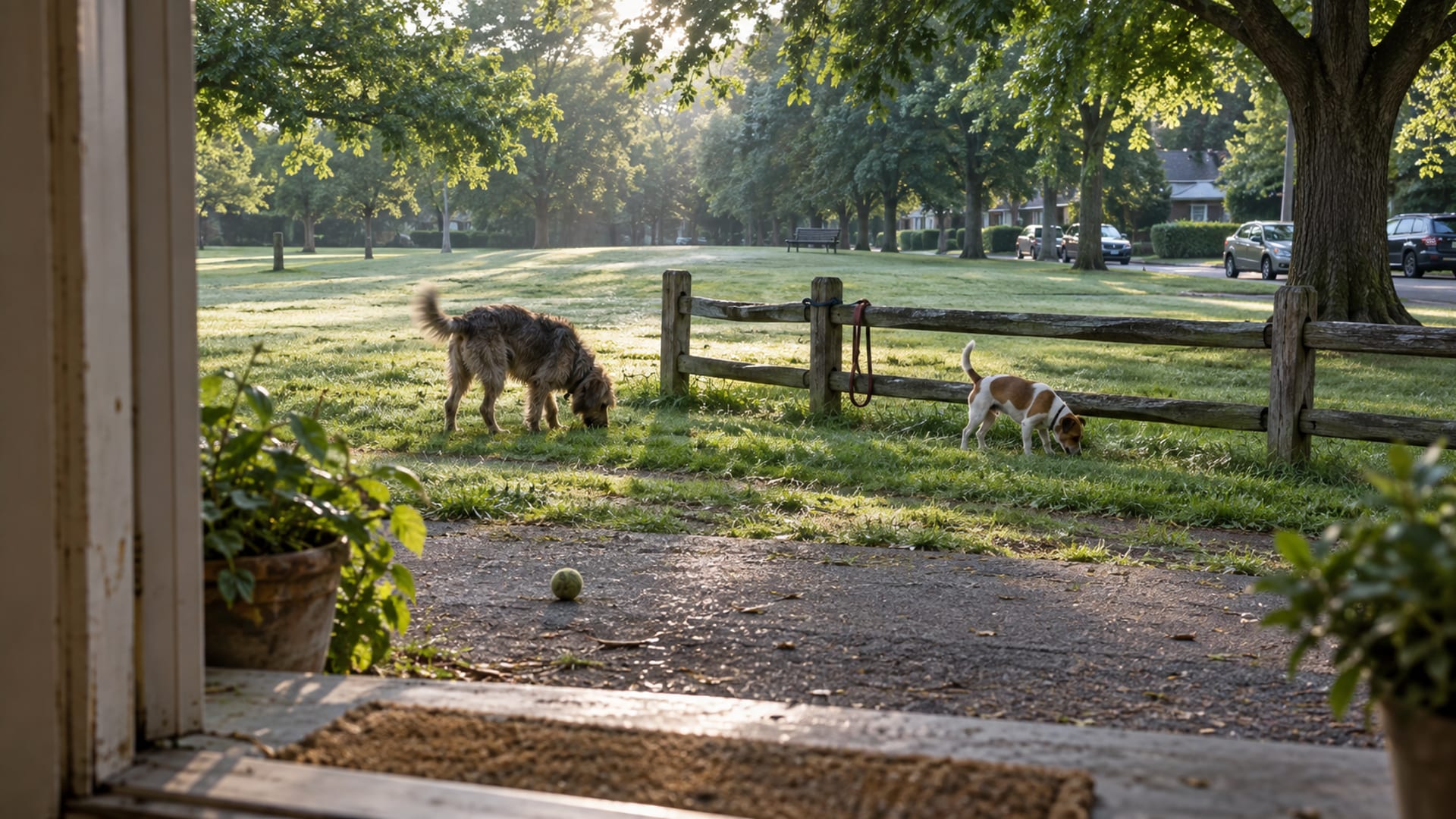
Start on neutral ground, outdoors, with one handler per dog and both dogs on loose, fixed-length leashes. Walk them side by side with a gap between them, let them close that gap only while both stay relaxed, keep greetings brief, and take the dogs home only after the outdoor meeting goes calmly. If either dog cannot settle, stop and try again another day. Nothing about a first meeting has to be rushed, and you can run the whole thing this week with a friend and two leashes.
The steps below are for two ordinary, sociable dogs. If either dog already lunges on leash, barks at a fence or has bitten, the line has been crossed, and the dogs need a different plan. I cover that in The Do's and Don'ts of Introducing an Aggressive Dog to New Dogs.
Key takeaways
Hover or tap a card to bring it forward.
- Meet on neutral outdoor ground with one handler per dog and loose, fixed-length leashes, and pick one published protocol and stay consistent with it.
- Watch the whole body: loose and wiggly is good, while freezing, hard stares, growls and a dog who keeps approaching after being told no mean stop and add distance.
- Never punish a growl, and keep food, chews, beds and toys separate at first with a gate or crate ready.
- The 3-3-3 pattern is a shelter guideline for a newly adopted dog, so judge progress by relaxed behavior rather than a deadline.
- A sudden snap from an easygoing housemate is a vet question first, and a bite, repeated fights or dogs who cannot be separated call for a veterinary behaviorist or qualified trainer.
Before the dogs meet
Get the practical items settled first. Work down this list in order:
- Health and vaccines. Both dogs should be vaccinated and in good health. AdoptaPet says the same for a puppy meeting a resident dog, and if the puppy is not fully vaccinated, it recommends a private yard over a public park. For a young puppy, the socializing tips for puppies cover how to build good early meetings without overwhelming the dog.
- Neutral ground. Pick an outdoor spot where neither dog feels ownership, ideally one that is unfamiliar to both.
- One handler per dog. The SPCA of Texas says, "You will need one person for each dog."
- Fixed-length leashes. Use ordinary leashes, not retractables, and keep them loose.
- Nothing to fight over. Take food, chews and high-value toys out of the area before the dogs enter the home.
- Separate spots. Set up different places to rest and eat, with a gate, crate or closed door ready.
- Supervision and separation. Watch every interaction at first. When no responsible adult is watching, the dogs are apart.
The first meeting, one source at a time
Published protocols differ on distance, leash use and when free interaction starts. So, I would not blend them into one universal sequence. Pick one protocol, follow it the same way each time, and let the dogs' bodies tell you when to slow down. Three respected sources lay it out like this.
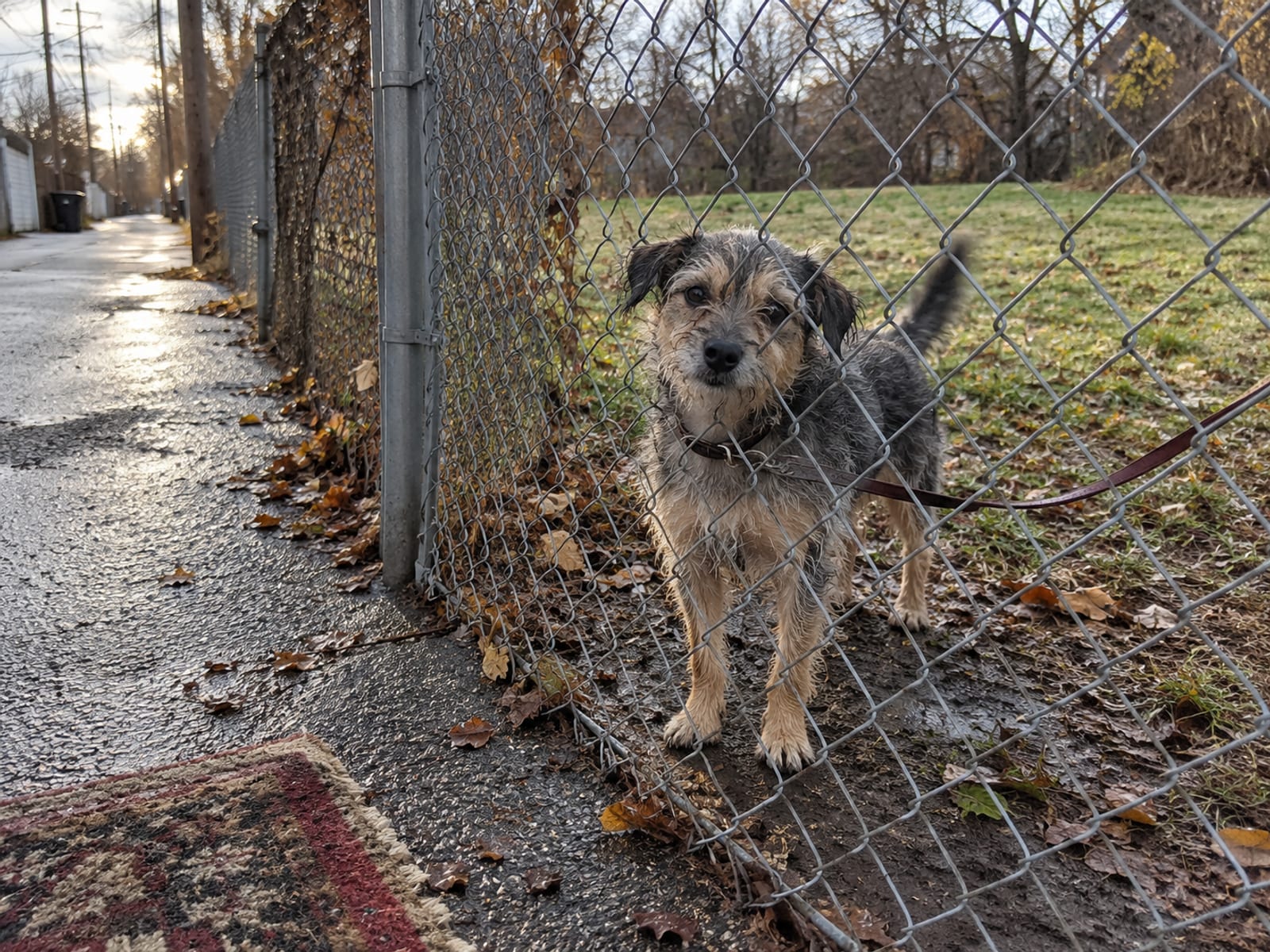
Seattle Humane starts on neutral ground with the dogs about 10 feet apart, walking parallel. Move closer only while both dogs stay relaxed. Allow brief greetings, then keep walking. After a calm introduction, the dogs can spend time together in a yard if you have one. Before going inside, remove food, high-value treats and chews. The new dog goes in first, on leash, to look around. Then the resident dog comes in, and you reward calm behavior. For several days, if needed, leave a leash or drag line on the more excited dog. Whenever you cannot supervise directly, separate them.
Best Friends Animal Society also has each person walk one dog, but starts the parallel walk about 20 feet apart. If either dog pulls toward the other, stares or gets overexcited, add distance. Watch each dog's whole body, and continue only while both stay comfortable. Best Friends says not to use this procedure for dogs with leash or barrier reactivity, and to seek professional help for those dogs.
The SPCA of Texas has you meet in an area that is neutral and unfamiliar to both dogs, with both on leash. Let each dog sniff and investigate if it is willing. If either dog cannot calm down, stop and try another day. Move the dogs in separate vehicles or confine them separately in one. Let the new dog tour the home alone before the resident dog is part of it. Then repeat the meeting outdoors, and use a separate room or baby gate when the dogs need breaks. If you have more than one resident dog, introduce them one at a time.
Notice what differs: 10 feet versus 20, a drag line versus a plain leash, and how soon the dogs share the house. Those are real differences between the sources, and the dogs in front of you matter more than the number of feet.
Hover or tap a row to highlight it.
| Source | Starting distance | What it says |
|---|---|---|
| Seattle Humane | About 10 feet, walking parallel | Move closer only while both dogs stay relaxed. New dog goes into the house first, on leash |
| Best Friends Animal Society | About 20 feet, walking parallel | Add distance if either dog pulls, stares or gets overexcited. Not for dogs with leash or barrier reactivity |
| SPCA of Texas | Neutral, unfamiliar area, both on leash | Let each dog sniff if willing. If either cannot calm down, stop and try another day. New dog tours the home alone first, and multiple resident dogs meet it one at a time |
Reading the dogs
Relaxed dogs tend to move in a loose, wiggly way, with a soft face and ordinary breathing. They approach in curves rather than straight lines, they can look away, and they sniff and then disengage. A loose body alone does not make the meeting safe, so keep watching the whole interaction. My guide to dog body language signals goes through each signal in more detail.
The American Veterinary Society of Animal Behavior describes a dog who stays "very stiff while another dog conveys loose and wiggly body language" as more likely to snap, growl or bite if the other dog keeps approaching, sniffing, circling or trying to play. AVSAB also lists nervous jumping, refusing rear-end sniffing, and snapping or showing teeth early in the greeting as warning signs.
Kendal Shepherd's ladder of communication, as reproduced by PDSA, shows how a dog escalates. The lower rungs are quiet: blinking, yawning, nose licking, turning the head or body away, sitting, pawing, crouching and moving away. Higher up come lying still, stiffening, staring, growling, snapping and biting. PDSA explains that "stiffening up, staring" can mean the dog's fight, flight or freeze response is active. A dog may stay very still until the perceived threat leaves, and if the pressure continues or there is no escape, it may fight.
Stop the meeting if either dog
Create distance and end the session when either dog:
- freezes or goes stiff
- fixes a hard stare on the other dog
- raises its hackles and closes its mouth tight
- turns away again and again, crouches, tucks the tail or tries to leave
- will not disengage from the other dog
- growls, snarls, lifts a lip or shows teeth
- snaps, lunges, air bites or makes contact
- barks harder, pulls frantically or cannot respond to its handler
- keeps approaching after the other dog asked for space
- is cornered or has no way to retreat
Do not punish a growl. PDSA says that suppressing the warning can leave a dog more likely to go straight to a snap or bite, and VCA says the same about growling, snarling, snapping and lip lifting. The growl is the dog asking for space, so give it space.
Hover or tap a row to highlight it.
| What you see | What it can mean |
|---|---|
| Loose, wiggly body and a soft face | Relaxed, but keep watching the whole interaction |
| Approaching in curves, looking away, sniffing then disengaging | Relaxed |
| Blinking, yawning, nose licking, turning the head away | Quiet early signals, the lower rungs of the ladder |
| Freezing or going stiff | Stop the meeting and create distance |
| Hard stare at the other dog | Stop the meeting and create distance |
| Raised hackles and a tight, closed mouth | Stop the meeting and create distance |
| Growling, lifting a lip or showing teeth | The dog is asking for space, so give it space and end the session |
| Snapping, lunging, air biting or making contact | Stop the meeting and create distance |
| Keeps approaching after the other dog asked for space | Stop the meeting and create distance |
Once they are home
Home is where most of the work happens, and it runs over weeks. The SPCA of Texas has a staged home protocol that goes like this: keep the dogs separated after arrival. For the first week, swap blankets or towels so each dog gets used to the other's scent. When neither dog shows stress, add a baby gate so they can see each other. Over the next few weeks, supervise shared time and watch for guarding of food, toys, treats, beds or people. During unsupervised stretches, keep high-value food and chews out of reach, and give each dog its own attention and its own things.
VCA's version for the family dog keeps the first sessions short, rewards appropriate behavior, lets the dogs separate to rest, feeds them in separate rooms and separates them at bedtime at first. It also tells owners to avoid punishment, including scolding and holding a dog down.
Food, beds, toys and attention
- Feed the dogs in separate rooms or behind a secure barrier. VCA says dogs may fight over food, and separation lets each dog eat without worrying about the other.
- If either dog seems concerned about food, pick the bowls up after meals.
- Keep rawhides, long-lasting chews and special treats out of shared areas unless an adult is supervising.
- Give each dog its own bed, crate or resting spot. Never force dogs to share beds, crates, toys or food.
- Watch for guarding of food, treats, toys, resting places or people. The SPCA of Texas lists lip licking, raised hackles, growling, snapping and swiping as warning signs.
- Give each dog its own walks, training and quiet time. Equal attention does not mean making the dogs spend it together.
- Reward calm behavior around the other dog.
A Staged Plan for the First Weeks at Home
- Keep them separatedAfter arrival, the dogs stay apart.
- Swap scentsFor the first week, swap blankets or towels so each dog gets used to the other's scent.
- Add a baby gateWhen neither dog shows stress, let them see each other through a gate.
- Supervise shared timeOver the next few weeks, watch for guarding of food, toys, treats, beds or people.
- Cover unsupervised stretchesKeep high-value food and chews out of reach, and give each dog its own attention and its own things.
How long does it take?
The honest answer is that there is no fixed timeline for two particular dogs to settle together. The number people quote is the 3-3-3 pattern, and it describes something different. AAHA presents it as about 3 days to decompress, 3 weeks to start settling into routines and 3 months to build routine and security. The RSPCA South East Somerset gives the same sequence, and the Washington Area Humane Society calls it a gauge for acclimation. The Association of Pet Behaviour Counsellors says adjustment may take days or weeks at first and may continue for about 3 months.
Those figures are shelter and professional-practice guidelines for a newly adopted dog settling into a home. They are not a measure of how long two dogs take to accept each other. The range can run longer when a dog is fearful, ill, elderly, newly transported, inexperienced with other dogs or repeatedly caught in stressful interactions.
So, this is what I would do. Judge progress by what the dogs do: relaxed bodies, easy disengaging, calm around food and beds. Do not set a date for unsupervised access. Move to the next step only when both dogs are comfortable at the current one, and go back a step if they are not.
Hover or tap a row to highlight it.
| Stage | What it describes |
|---|---|
| 3 days | Time to decompress |
| 3 weeks | Starting to settle into routines |
| 3 months | Building routine and security |
When a newborn or toddler joins the household
A baby is a different kind of introduction, and the dog needs time to prepare. The University of California, Davis School of Veterinary Medicine advises a veterinary exam before the baby arrives, with vaccines, parasite control and general health confirmed. Teach sit, stay and calm behavior before the birth, and introduce baby smells, sounds, furniture and routines gradually. For the first meeting, have two adults present, one controlling the dog and one holding the baby. Keep the dog on leash, let it approach only as far as it stays relaxed, and never force contact. Separate dog and baby whenever the responsible adult cannot watch both directly. If the dog already mouths, nips, snaps, growls or chases, call a veterinarian or veterinary behaviorist before the baby comes home.
The ASPCA suggests starting about four months ahead by pairing new sights, sounds and smells with rewards, and for the toddler stage it recommends preparing the dog for crawling, because a crawling child may feel intimidating when suddenly at the dog's eye level. VCA suggests bringing home a baby blanket or a piece of clothing before the infant arrives, then letting the dog see the baby but not approach at first. Preparation lowers the odds of trouble, and it does not guarantee safety, so keep the baby gate and the supervision rule in place.
Getting a Dog Ready for a Baby
- About four months aheadStart pairing new sights, sounds and smells with rewards.
- One to two months aheadGradually shift the dog's schedule to match the routine the baby will bring.
- Before the birthBook a vet exam to confirm vaccines, parasite control and general health, teach sit, stay and calm behavior, and introduce baby smells, sounds, furniture and routines a little at a time.
- Before the baby comes homeBring home a baby blanket or a piece of clothing. If the dog already mouths, nips, snaps, growls or chases, call a veterinarian or veterinary behaviorist first.
- The first meetingTwo adults are present, one controlling the leashed dog and one holding the baby. Let the dog see the baby, approach only as far as it stays relaxed, and never force contact.
- Every day afterSeparate dog and baby whenever the responsible adult cannot watch both directly, and prepare the dog for crawling before the toddler stage.
If the first meeting goes wrong, or a good dog suddenly snaps
If a bite happens, separate the dogs safely and never put your hands between fighting dogs. Get veterinary care for any puncture wounds. Then book a professional behavior evaluation.
If an easygoing housemate suddenly growls or snaps, that is a vet question first. VCA recommends having both dogs examined when household dogs begin growling, snapping or biting. The vet will consider pain from arthritis, dental disease, ear disease, skin disease, anal sac disease or spinal and joint problems, along with hearing or vision loss in an older dog. Thyroid and other hormonal or metabolic disease, kidney or liver disease, infection and medication effects are also on the list. VCA notes that an aging dog who loses hearing may startle more easily and react aggressively when approached. A 2018 Veterinary Record report on behavioral signs of joint and muscle pain in dogs displaying aggression is described by AVSAB as preliminary evidence, with more studies needed. It supports a physical exam and routine diagnostic tests when a mature dog changes behavior suddenly.
Call a veterinary behaviorist or a qualified trainer when:
- either dog has bitten or made contact
- there is repeated snapping, lunging or fighting
- a dog cannot calm down even at a large distance
- the dogs cannot be safely separated
- a child or infant lives in the home and a dog shows concerning behavior
- the vet exam is normal and the aggression continues
The ASPCA says resource guarding and aggression toward people or animals need an individual treatment plan rather than a group obedience class, and that serious aggression, fear or anxiety should go to a veterinary behaviorist. If one is unavailable, it recommends a qualified Certified Professional Dog Trainer with experience treating aggression.
Some pairs do not become a match. Best Friends Animal Society says some dogs are uncomfortable with new dogs and some "do best as the only dog in the household." A good match does not mean the dogs play or sleep together; neutral housemates can live safely. A match may be unsuitable when one dog repeatedly attacks or tries to injure the other, the aggression comes without useful warning, one dog cannot move, rest, eat or reach water safely, or the household cannot keep barriers, separate feeding and supervision going. Published guidance lists these options: permanent separation within the home using doors, crates, gates and rotation; a structured behavior plan with a veterinary behaviorist and your own vet; rehoming one dog to a carefully selected home, often as the only dog; and returning an adopted dog to the shelter or rescue under its procedures. In severe cases involving serious risk, poor quality of life or no safe way to manage, a veterinarian may also discuss behavioral euthanasia with you. That is a conversation for a veterinarian, and it is rare.
Working with me
If you want a second set of eyes before the dogs meet, or something is already off between them, I start with an evaluation visit, and from there I can work with you through in-home lessons or board and train in my own home. If you want to set one up, contact DW Dog Training and tell me about both dogs.
FAQ
Can I introduce a puppy to an adult dog before the puppy finishes its vaccines?
Use a private yard rather than a public park, and confirm the resident dog is vaccinated and healthy. AdoptaPet gives this guidance for a puppy that is not yet fully vaccinated. The same rules apply as for adult dogs: a handler for each dog, loose leashes and short, calm sessions.
Should the new dog or the resident dog go into the house first?
Seattle Humane has the new dog go in first, on leash, to look around, and then brings in the resident dog while you reward calm behavior. The SPCA of Texas lets the new dog tour the home without the resident dog present before any shared indoor time. Either way, the new dog gets a look at the space before the resident dog has to share it.
Do my dogs have to become friends?
No. A good match is not defined by play or sleeping together, and some dogs live safely as neutral housemates. What matters is that both dogs can move, rest, eat and drink without fear, and that the household can keep up the supervision and separation the dogs need.
What should I do if one dog growls at the other?
Calmly create distance and end the session, without scolding the growl. The growl is a warning, and punishing it can remove the warning that comes before a snap. If it keeps happening, talk to your veterinarian and a qualified trainer.
Check What You Picked Up
Where should the first meeting happen?
How many handlers do you need?
One dog growls at the other. What do you do?
What does the 3-3-3 pattern describe?
A calm, easygoing housemate suddenly snaps. Who do you call first?
Answer a question to see your score.