

Some links in this post are Amazon affiliate links. If you buy through one I may earn a small commission, at no extra cost to you. It never changes what I recommend. Full disclosure.
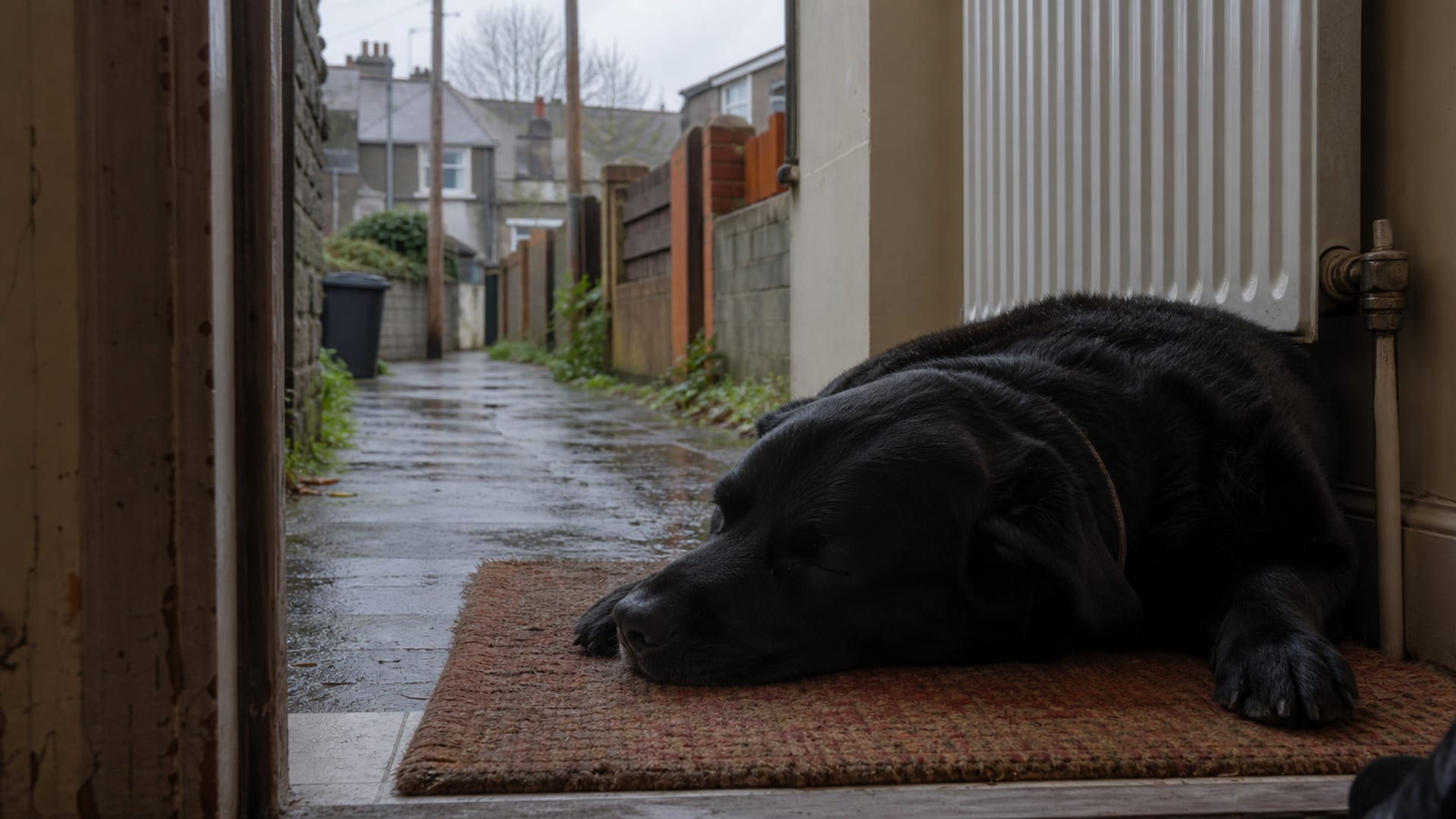
Hiding, barking, trembling, accidents on the floor, panic when you leave, even a snap: problems in the first weeks with a rescue dog are common, and they usually do not mean the dog is broken or that you chose wrong. Most of them come from fear, stress and a house full of new smells, and there is no fixed timetable for them to fade. Start with a quiet routine and a visit to the vet. If the dog has bitten, guards things severely, or is unsafe to handle, call the shelter or rescue promptly and get professional help rather than waiting it out.
Key takeaways
Hover or tap a card to bring it forward.
- Problems in the first weeks are common, and they usually reflect fear, stress and a new house, not a broken dog or a wrong choice.
- A kennel description is a starting point, so watch the dog at home and write down triggers, body language and recovery.
- The 3-3-3 idea is a loose guide, not a promise, and different behaviors change at different speeds.
- Book a vet exam first, keep the routine quiet, and go to the shelter and a professional promptly for a bite, severe guarding, or a dog that is unsafe to handle.
- Use gradual, reward-based steps the dog can handle, introduce children, dogs and cats slowly, and call for help early.
How common are problems after adoption?
Common enough that you are in large company. In a survey by Wells and Hepper, 556 owners in Northern Ireland reported on dogs within four weeks of adopting them from a rescue shelter, and owners reported at least one problem for 68.3% of the dogs. Fearfulness was the most common complaint. In Dale and colleagues' Auckland study, owners reported at least one problem for 70% of 57 adolescent and adult dogs adopted from one shelter, and aggression toward people for 19%. Only 6% of those adopters said they were very concerned.
The largest follow-up I can point you to is Bohland and colleagues' PLOS ONE study of 99 dogs from five Ohio shelters. Owners filled out the C-BARQ questionnaire at 7, 30, 90 and 180 days. The percentages in that paper can look alarming, such as 95.8% for non-social fear and 92.6% for separation-related behavior, but they are questionnaire thresholds. They are not bite rates and they are not diagnoses. Over the 180 days, owner-reported stranger-directed aggression, excitability, touch sensitivity and chasing rose, separation-related behavior fell, and fear did not change significantly. At six months, every responding owner rated the dog's adjustment as moderate or better, and 93.7% rated overall behavior good or excellent. Only 62.6% of the 99 owners completed all four surveys, and 7.1% of the dogs were returned during the study.
What these studies show is that owners meet problems early, that the problems move in different directions over time, and that most owners end up satisfied at six months. That is a fair description of what you are in the middle of.
Hover or tap a row to highlight it.
| Study | Dogs covered | What owners reported |
|---|---|---|
| Wells and Hepper (2000) | 556 owners in Northern Ireland, within four weeks of adoption | At least one problem for 68.3% of the dogs. Fearfulness was the most common complaint. |
| Dale and colleagues, Auckland (2018) | 57 adolescent and adult dogs from one shelter | At least one problem for 70%. Aggression toward people for 19%. Only 6% of adopters were very concerned. |
| Bohland and colleagues, Ohio (2023) | 99 dogs from five shelters, surveyed at 7, 30, 90 and 180 days | At six months, every responding owner rated adjustment moderate or better, and 93.7% rated overall behavior good or excellent. 7.1% of the dogs were returned during the study. |
Why the kennel did not tell you the whole story
A shelter description is a starting point. The ASPCA describes kennel life as a source of stress, boredom and frustration. Depending on noise, handling, neighboring dogs and the particular test, a dog may be quiet and inhibited or aroused and reactive. Either way, what staff saw describes the dog in that building. It does not tell anyone how the dog will behave in a quiet home, alone, or around your resident pets.
Assessments are useful, but not perfect. The Australian B.A.R.K. assessment covered 102 dogs in five shelters, and an RSPCA Queensland assessment correctly predicted 74.7% of potential problem behaviors. That leaves about a quarter that it did not. The Ohio shelter in the Bohland study screened out dogs that snarled, lunged, snapped or bit during testing, apart from resource guarding, and owners still reported aggression and fear afterward. Some behavior shows up only once a dog feels settled enough to show it, and some may have been missed in the kennel.
The ASPCA also notes that dogs can show lower cortisol after outings and foster stays, and that those stays give better information than a kennel impression. If you can still ask the shelter for foster notes, do.
What the first weeks usually look like
You have probably heard of the 3-3-3 idea. AAHA describes the first three days as a time of overwhelm and hiding, the first three weeks as learning the routine, and the first three months as growing security. AAHA offers it to set expectations, and it is not a peer-reviewed protocol or a promise. In the Ohio cohort, different behaviors moved in different directions at 7, 30, 90 and 180 days, so treat 3-3-3 as a loose guide, not a countdown. If your dog is on day twenty and still hiding, that does not mean something went wrong.
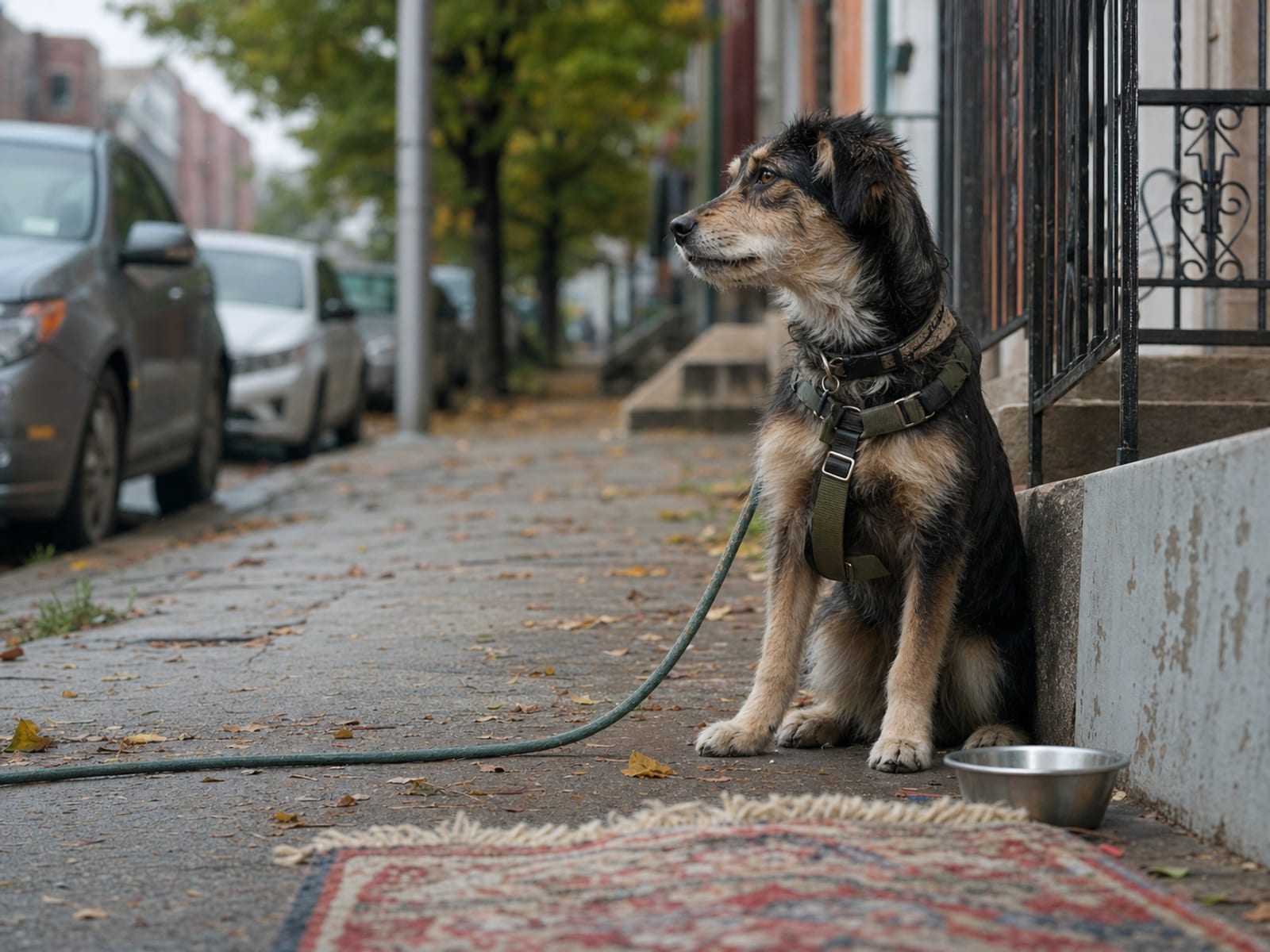
Trainer and behavior consultant Mary Angilly, quoted by the AKC, asks for quiet, a simple routine and a safe space during the first weeks, and says fearful dogs may need weeks or months. Her reasoning is that many of these dogs arrive after shelter stays, foster changes, transport, medical care and behavior evaluations, and every one of those adds stress.
In practice, this is what I would do at home:
- Give the dog a bed or crate of its own, and let the dog retreat to it without being pulled out. AAHA recommends this, and I agree.
- Feed, walk and take toilet breaks at the same times each day, and speak calmly.
- Keep introductions brief and positive. The Capital Area SPCA recommends gates, leashes during early interactions, and an adult present for every dog and child interaction.
- Choose sniffing walks and food puzzles over dog parks, crowds and visitors for now.
That is what people mean by decompression: less novelty and less pressure, with the dog's behavior deciding when its world gets bigger. When the dog starts eating well, sleeping, exploring and looking for you, widen things a little. When the dog shuts down, narrow them again.
The 3-3-3 idea, as a loose guide
- First 3 daysA time of overwhelm and hiding. Keep things quiet and give the dog a safe space.
- First 3 weeksLearning the routine and showing more personality. Feed, walk and take toilet breaks at the same times each day.
- First 3 monthsGrowing security. Widen the dog's world a little when it eats well, sleeps, explores and looks for you, and narrow it again if it shuts down.
Telling the common problems apart
Naming the problem correctly changes what you do about it. Before you label anything, write down what actually happens.
Fear looks like hiding, freezing, trembling, a lowered body, avoiding people or refusing to come closer. Barking or growling is often a way of asking for more distance, so it does not by itself mean a dog is aggressive by temperament.
Reactivity is a big response to a specific trigger, such as barking, lunging, whining or freezing at other dogs on leash. Some dogs react to visitors coming through the door and are relaxed outside. Instead of calling the dog reactive and leaving it there, note the trigger, the dog's body language, what happened next, and how long recovery took.
House-soiling may come from incomplete training, stress, marking, long confinement or a medical problem. Keep notes on timing, place, posture, amount, and whether the dog was alone.
Separation-related behavior happens only when the dog is left or separated from a particular person. If you can do it safely, film the dog while you are gone. Barking while you are home, or a chewed couch on a day you never left, is not automatically separation anxiety.
Resource guarding shows up around food, chews, toys, beds, furniture or people. Look for stiffening, freezing, hovering over a bowl, eating very fast, growling, snapping or biting. Never test it by taking things away. Shelter bowl tests do not always predict what happens at home. In Mohan-Gibbons and colleagues' study of 96 dogs that guarded food in a shelter assessment, 5% were returned, compared with 9% of dogs not identified as food guarders, though adopters followed the protocol only partly.
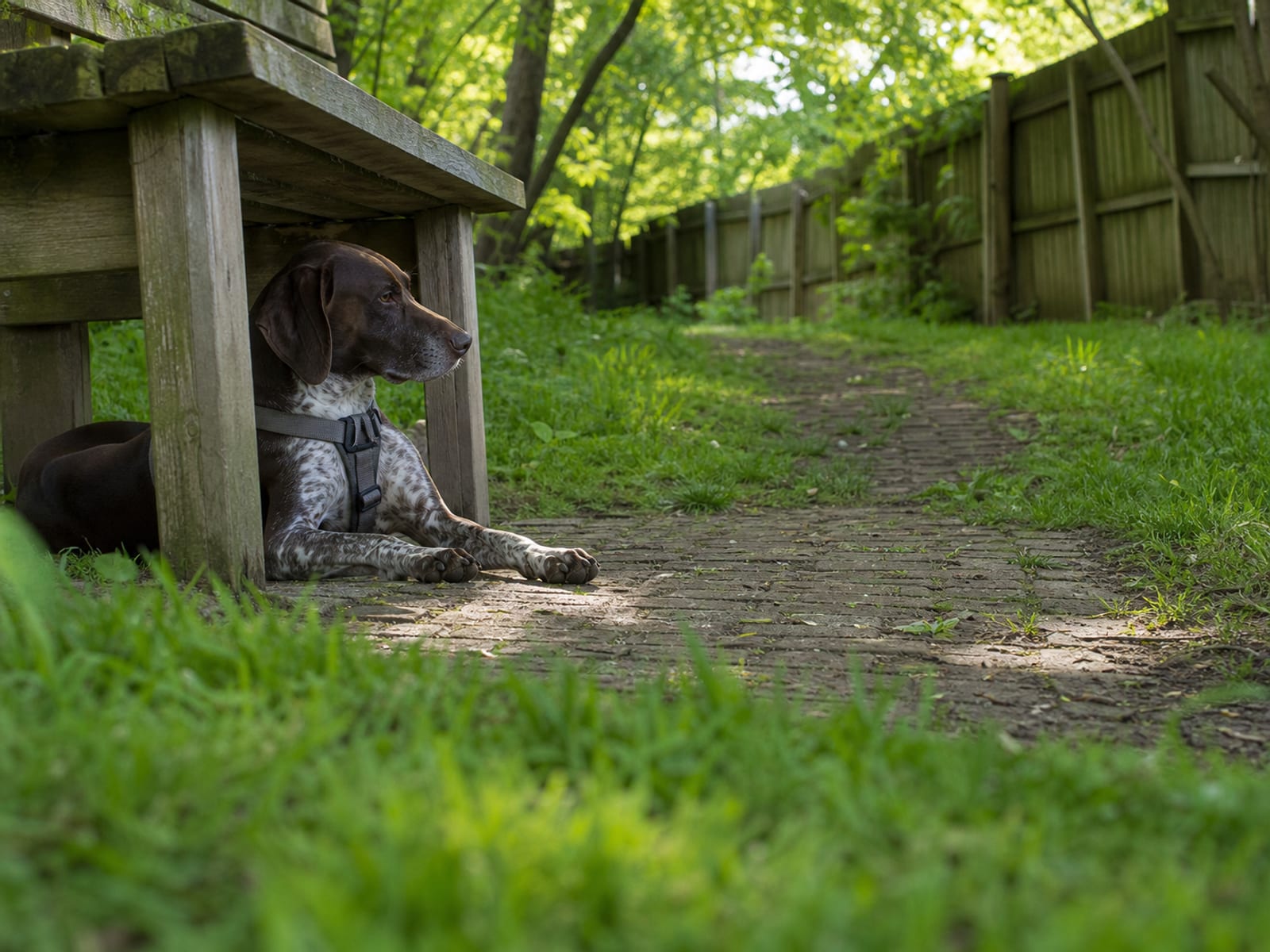
I'd rather you had a notebook and a short video clip than a label. A vet, a shelter or a trainer can work with those.
For a closer look at when a dog's warning signals become dangerous, our guide to signs of aggression in dogs and how to respond to them walks through them one at a time.
Hover or tap a row to highlight it.
| Problem | What it looks like | What to write down |
|---|---|---|
| Fear | Hiding, freezing, trembling, a lowered body, avoiding people, refusing to come closer. Barking or growling is often a way of asking for more distance. | What happened just before, and how the dog recovered |
| Reactivity | A big response to a specific trigger, such as barking, lunging, whining or freezing at other dogs on leash | The trigger, the body language, what happened next and how long recovery took |
| House-soiling | Accidents that may come from incomplete training, stress, marking, long confinement or a medical problem | Timing, place, posture, amount, access to the outdoors, water intake and whether the dog was alone |
| Separation-related behavior | Distress only when left or separated from a particular person, such as vocalizing, pacing, destruction, escape attempts, accidents or frantic greetings | Film the dog while you are gone, if you can do it safely. Barking while you are home is not automatically separation anxiety. |
| Resource guarding | Stiffening, freezing, hovering over a bowl, eating very fast, growling, lip lifting, snapping or biting around food, chews, toys, beds or people | What the dog was guarding and the first warning sign. Never test it by taking things away. |
See the vet first
Medical causes come first. The Merck Veterinary Manual, in a section reviewed by Katherine Pankratz, DVM, DACVB, says medical problems must be excluded when an animal shows unwanted behavior. Pain can show up as irritability, restlessness, waking at night and house-soiling. Illness can cause withdrawal and lethargy. Neurological and sensory problems can cause confusion, fear and soiling. Merck also lists endocrine and metabolic disease; hypothyroidism is one possibility that goes with irritability and aggression, but it is a question for the vet and not a diagnosis anyone should make from behavior. Urinary and gastrointestinal disease and parasites can also affect soiling, comfort and sleep.
So, take the new dog in for an exam, following the adoption contract and your vet's advice, and bring your notes. AAHA says a dog that does not eat or drink for more than a day or two should be discussed with a vet. Go to the vet promptly for a sudden change in behavior, signs of pain, repeated vomiting or diarrhea, severe lethargy, an injury, or any inability to urinate.
Training that fits a dog still settling in
AVSAB describes desensitization as very gradual exposure to something frightening while the dog stays comfortable, and counter-conditioning as pairing the trigger, at a level the dog can handle, with something the dog values. Flooding, meaning forced or overwhelming exposure, is a different thing and the one to avoid. Teach skills with positive reinforcement, and arrange the home so the dog does not get to rehearse the problem. For example, use a gate, close a curtain, or move the dog away from the window.
For reactivity, that means working from a distance where the dog can still eat and respond. If the dog cannot take a treat, the exercise is too hard. For separation distress, it means graduated absences that start short enough that the dog does not panic, because repeated panic makes things worse. A veterinary behaviorist may be needed when distress is severe or progress stalls.
On tools, AVSAB's 2021 position statement recommends reward-based training for all training and behavior modification, and advises against aversive methods, including electronic collars, prong collars, choke chains, leash corrections and physical or psychological punishment. It cites welfare, the human-animal bond and effectiveness, and it points out that pain or intimidation carries a particular risk when the problem is fear or reactivity. My own approach is balanced and includes e-collar work among other tools, which is a different position from AVSAB's. A frightened dog that arrived last week is still not where any training tool starts. Calm, routine and distance come first.
If your dog's trouble leans toward snapping or biting, read our complete guide to stopping aggressive behavior in dogs, and if you want to understand where it comes from, the article on the causes of dog aggression goes deeper than a post on adoption can.
Introducing children, dogs and cats
Children should not hug, climb on, grab, wake or follow the dog into its safe space. The Capital Area SPCA recommends introducing children one at a time, teaching gentle touch on the shoulders or chest, and keeping an adult present for every interaction. Nobody takes food, bones or toys away from the dog. Lip licking, yawning, trembling, whale eye, sudden stillness or an attempt to walk away all say the dog needs space. Use gates, doors, leashes and a crate or pen so there is never unsupervised access.
If the dog growls, end the interaction calmly and create distance. Do not punish the growl. It is a warning, and punishing it can remove the warning without touching the cause. If a child has been bitten or nipped, or the dog and a child are in conflict, call the shelter and a professional, and read about dog aggression toward children before the next interaction.
For a resident dog, AAHA recommends meeting outside the home, even if the dogs already met at the shelter. The SPCA suggests a neutral location, one handler per dog, leashes at first, parallel walking and short sniffing sessions. Loose, bouncy bodies and play bows are good signs. Stiff posture, raised hair, growling, teeth baring, refusing treats or climbing arousal mean it is time to interrupt and make it easier or try another day.
For a cat, begin with separate rooms or baby gates. Swap scents and allow controlled looks before any direct contact, and give the cat escape routes and high places. Do not allow chasing.
When to call the shelter, and who else to call
Call the adopting shelter or rescue promptly when the dog shows a behavior it did not disclose, when the dog is unsafe to handle, or when your adoption agreement asks you to notify them. Report a bite or near-bite, severe guarding, escape attempts, panic when alone, or conflict with children or other pets. Ask what they know about the dog's history, foster behavior, medical records, triggers, bite history, compatibility with animals, return policy and post-adoption support.
For outside help, VCA splits the field into three. A trainer suits basic life skills, leash walking, house training and manners. A behavior consultant suits milder fears, low-level destruction, trouble being home alone and excessive barking. VCA recommends starting with a DACVB or CAAB when behavior is intense, when safety is a concern, when the dog may be ill or in pain, or when the change was sudden. A DACVB is a veterinarian with a three-to-five-year residency in behavior who can assess medical causes and prescribe medication when it is appropriate. IAABC lists Certified Dog Behavior Consultants and Certified Shelter Dog Behavior Consultants for complex problems involving fear, anxiety and aggression.
Hover or tap a row to highlight it.
| Who | Best suited for |
|---|---|
| Trainer | Basic life skills, leash walking, house training and manners |
| Behavior consultant | Milder fears, low-level destruction, trouble being home alone and excessive barking |
| IAABC Certified Dog Behavior Consultant or Certified Shelter Dog Behavior Consultant | Complex problems involving fear, anxiety and aggression |
| DACVB or CAAB | Intense behavior, safety concerns, a dog that may be ill or in pain, or a sudden change |
Questions owners ask
Do guarders get returned? Jacobs and colleagues studied shelter dogs assessed as resource guarders, and the Jacobs study reported that severe guarders were returned more often than mild or moderate guarders. Still, 24 of 25 severe guarders were eventually placed, and reasons for return usually involved elimination, over-arousal, incompatibility with other pets or personal circumstances rather than aggression toward people.
How fast do dogs come back to the shelter, and why? In a South Carolina study by Powell and colleagues, 36% of dogs returned within three months were returned for behavior problems and another 18% for incompatibility with existing pets. Returns for reasons tied to the animal came sooner, at a median of 2.5 days of ownership, against 8 days for owner-related reasons.
Is aggression the main reason? In a multi-shelter study by D'Arpino and colleagues, aggression toward humans made up 23.5% of behavior-related reasons for return, and aggression toward other animals 14.7%. In a UK cohort of 5,750 dogs rehomed by Dogs Trust, reported in Diesel, Pfeiffer and Brodbelt, dogs that had shown aggression toward people and whose owners had not sought advice had 11.1 times the odds of being returned. That is an association, and it is one more reason to ask for help early.
What do adopters report besides fear? In the Auckland study of 57 dogs, owners reported poor manners for 46%, destruction of household items for 30%, high energy for 28%, aggression toward other animals for 19%, and house-training or toileting problems for 16%. Most of those are manners and routine problems, and they respond to patient training.
Check what you learned about a new rescue dog
What does a kennel description tell you about your new dog?
How should you treat the 3-3-3 idea?
What comes first when a new dog shows unwanted behavior?
What does decompression mean at home?
A dog growls at a child. What is the right response?
When should you call the shelter or rescue promptly?
Answer a question to see your score.
Final Thoughts
If your dog's problem needs more than advice from a page, I offer an evaluation visit, in-home lessons, and board and train in my own home. Any bite or near-bite should be mentioned on the first call, so I can plan around it before anyone is in a room with your dog. You can reach DW Dog Training through the contact page.