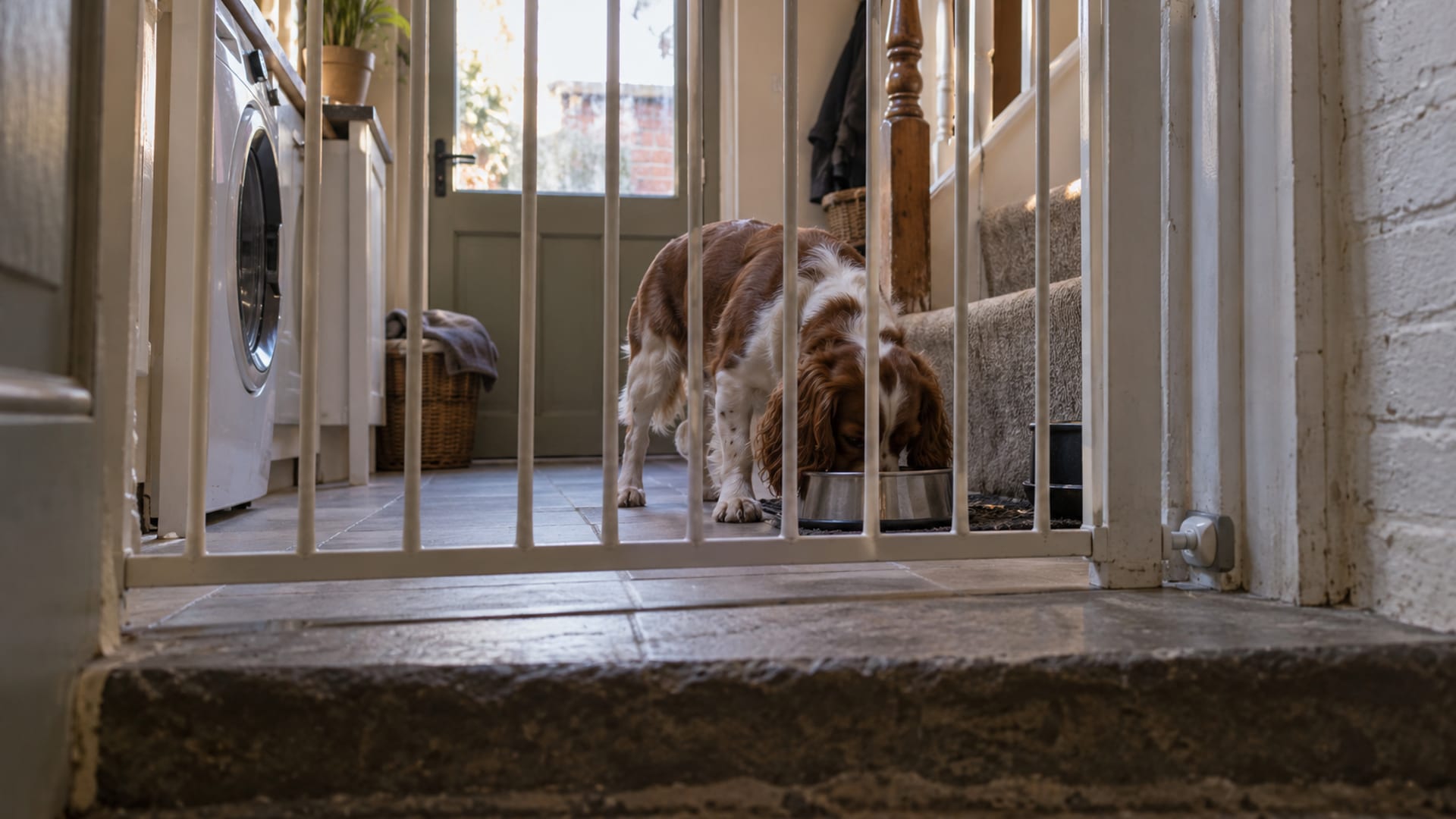
For tonight, feed your dog where no person or pet can reach it, leave it completely alone while it eats, and pick up the bowl only after the dog has walked away. Don't reach in, don't take the bowl, and don't "test" the dog to see how bad it is. If your dog has growled, stiffened, snapped or bitten, don't start any approach exercises without a professional beside you. Those steps keep everyone safe today. Changing the behavior comes later.
Key takeaways
Hover or tap a card to bring it forward.
- Feed the dog alone behind a closed door, crate or gate, and pick up the bowl only after the dog has left.
- Never reach into the bowl or take food from an eating dog; offer something better to trade instead.
- Get a vet check first when guarding is new, sudden or shows up in an older dog, since pain can lower the dog's tolerance.
- Improvement is possible with gradual, professional-guided work, but no one can promise a result or a timeline.
- Any growl, snap or bite, any child in the home, or any meal you can't keep separate is the signal to bring in a qualified professional.
What to do at every meal, starting tonight
Mealtime safety is management, and management works the same day. The ASPCA tells owners to leave dogs alone while they eat and to feed them in a separate room, in a crate or behind a barrier. VCA adds the details that make it work in a real house:
- Feed in a quiet, low-traffic spot behind a closed door, crate or baby gate.
- Feed at set times, and pick up the empty bowl after the meal.
- Never remove the bowl or the food while the dog is eating.
- Keep children away from a dog that is eating.
- Never reach toward the dog or its food to see what it will do.
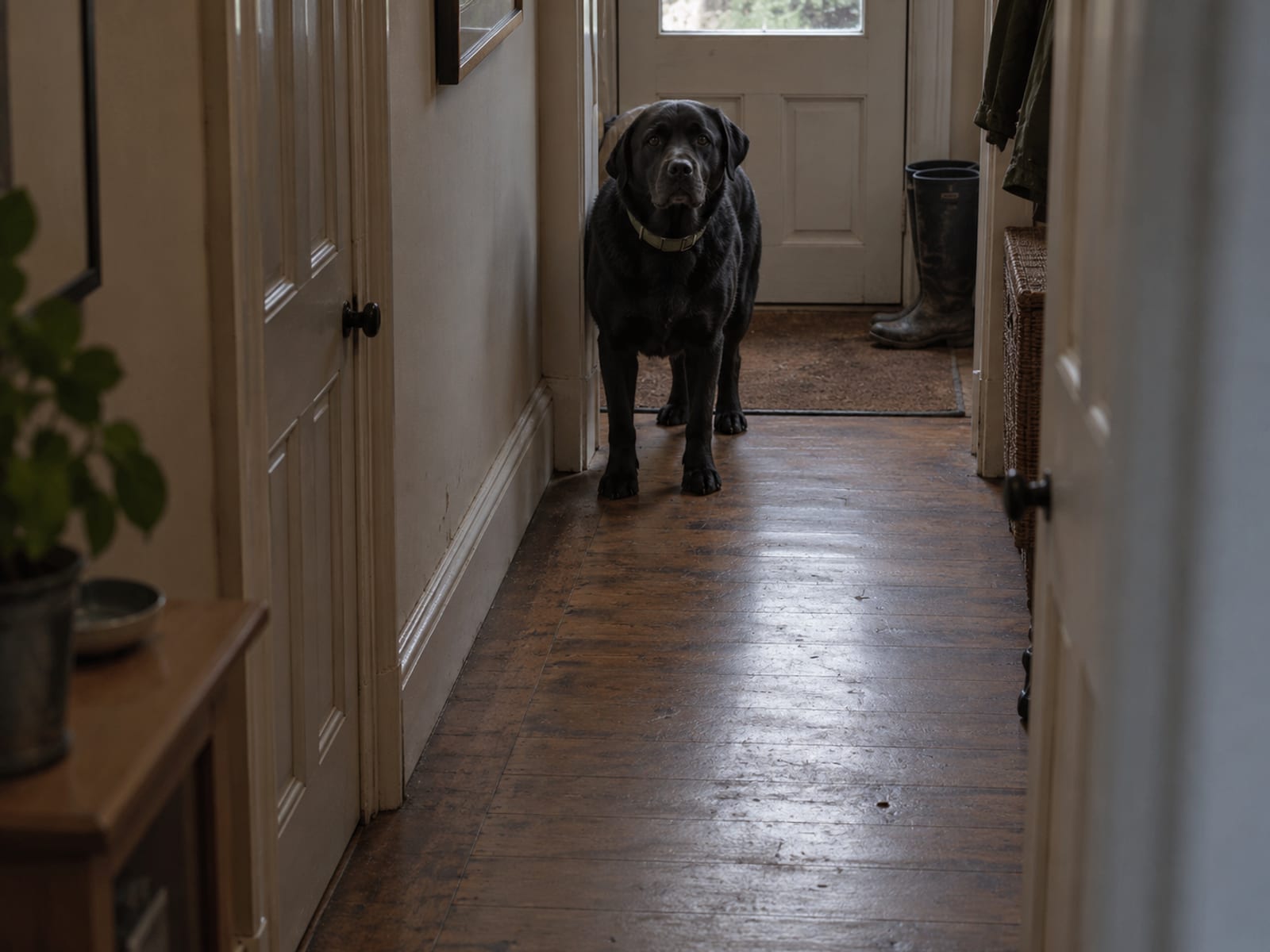
Think about the room itself. A dog eating in a hallway where the family walks past has to defend its bowl every few seconds. A dog eating behind a shut door has nothing to defend.
If you have other dogs, the same rule applies to them. Feed the guarder behind a barrier, away from the others. The Humane Society of Missouri says the other dog should be let out only after the guarding dog has finished eating, the bowl has been removed and the dog has left the feeding area. Cornell also recommends separating dogs when guarding shows up and bringing shared activities back only as the behavior allows. If the guarding is aimed at other dogs too, Stop the Squabbles: How to Manage Resource Guarding Between Dogs goes further into that side of it.
Hover or tap a row to highlight it.
| Do | Do not |
|---|---|
| Feed in a quiet, low-traffic spot behind a closed door, crate or baby gate | Feed in a hallway where the family walks past |
| Feed at set times and pick up the empty bowl after the meal | Remove the bowl or the food while the dog is eating |
| Keep children away from a dog that is eating | Let a child feed the dog or approach the bowl |
| Feed the guarder behind a barrier, away from other dogs | Let the other dog out until the guarder has finished, the bowl is removed and the dog has left the feeding area |
| Leave the dog alone while it eats | Reach toward the dog or its food to see what it will do |
Why a dog guards food from people
Guarding food is a normal, adaptive way for a dog to hold on to something it wants to keep. It becomes dangerous when the dog aims growls, snaps or bites at people. Cornell says resource guarding can be genetic or learned, usually from having to defend scarce resources from other dogs. The ASPCA describes competition among littermates at a shared pan: puppies that drive the others off can learn that guarding keeps the food.
Dogs Trust lists several things that go along with guarding:
- Fear of losing the food.
- Having food or objects taken away again and again.
- Scarce or unpredictable access to food.
- Past success at keeping people or animals away.
- Hunger, stress, frustration and over-arousal.
- The dog's own temperament.
The Merck Veterinary Manual says food-related aggression can occur in dogs that are not starved or abused. These are associations and likely ways dogs learn, not a cause that fits every dog. A dog from a perfectly good home can guard, and a dog with a rough start may never do it.
If you have a young dog and the guarding hasn't started yet, 10 Simple Steps to Prevent Resource Guarding in Puppies covers how to head it off.
What not to do, and why it backfires
It feels logical to prove you're in charge of the bowl. It goes badly. AVSAB, the veterinary behavior society, says that repeatedly jumping in to take food from an eating dog can teach defensive aggression by creating competition over the bowl. The ASPCA calls trying to prove you can take a dog's food dangerous and unnecessary. Best Friends Animal Society says a hand in the dish, or food taken away often, can create guarding.
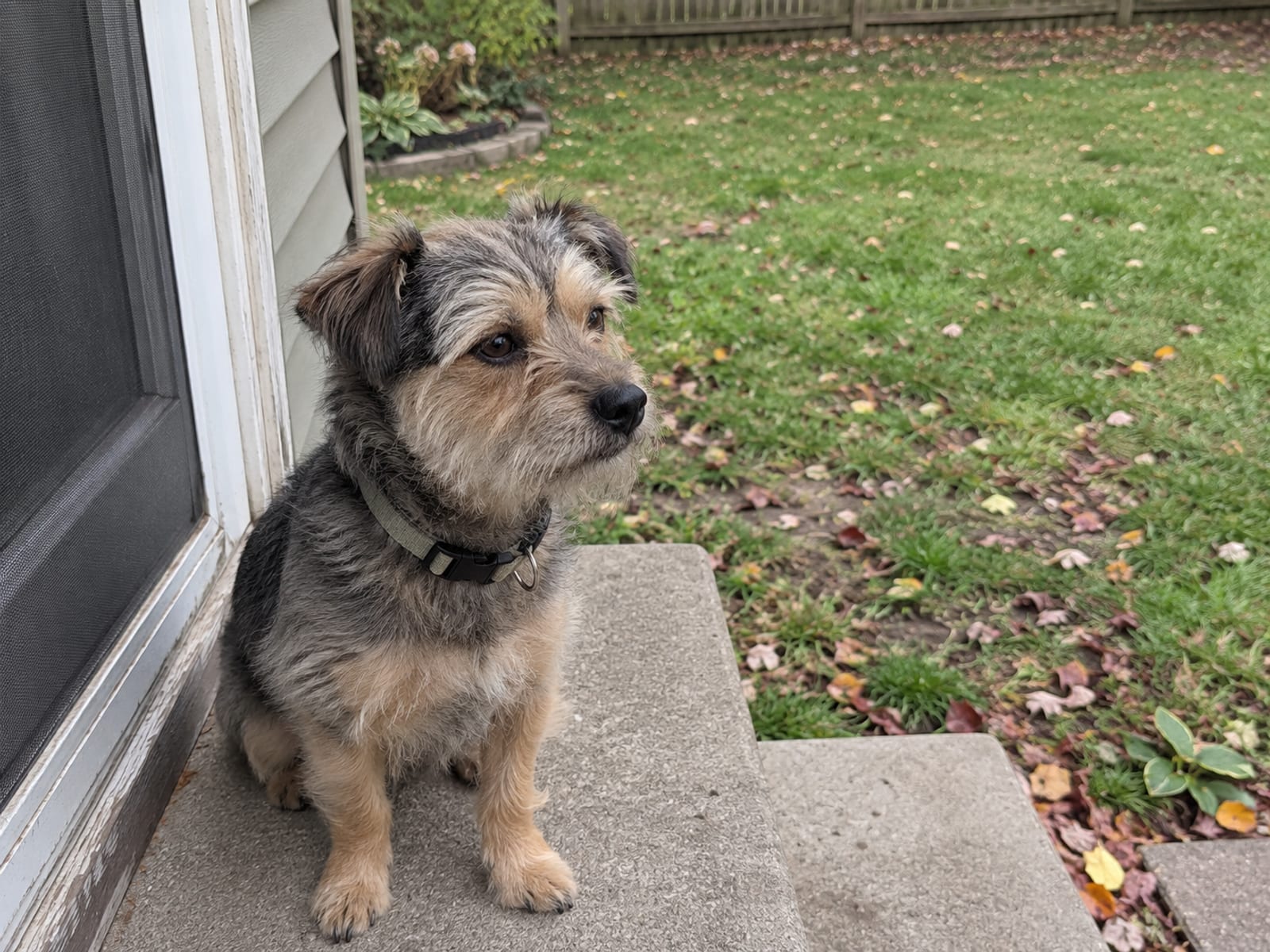
AVSAB's case report on food guarding shows how that plays out. The owners took the bowl away for longer stretches and reprimanded the dog. The dog then bit one of them. AVSAB's reading was that the guarding got stronger because the aggression made the owners back off while the dog kept its food.
So, reaching into the bowl is not a safe way to find out how serious the problem is. You find out by getting bitten.
The same goes for chews, toys and dropped food. Don't grab. Trade up: offer something better than what the dog is holding, and let the dog choose to give up the item. Best Friends describes this as teaching the dog that surrendering something produces something even better, and it is far safer than taking it by force. For a wider look at guarding that goes past the food bowl, see Mine, All Mine! How to Stop Possessive Aggression in Dogs.
Rule out a medical cause first
Get a vet check before anything else when the guarding is new, suddenly worse, shows up in an older dog, or comes with other changes in behavior or appetite. Pain lowers the point at which a dog reacts. Merck says pain can cause defensive aggression and can make possessive or fear-related aggression worse. VCA says painful conditions such as dental disease and arthritis, along with fever, fatigue and sensory loss, can make a dog more irritable.
The veterinary sources list a long set of possibilities:
- Dental disease.
- Arthritis and other painful joint conditions.
- Itchy or irritated skin.
- Fever, nausea or general illness.
- Kidney or liver disease.
- Neurological disease.
- Vision or hearing loss.
- Cognitive decline in older dogs.
- Thyroid and other hormone problems.
Tufts board-certified veterinary behaviorist Stephanie Borns-Weil advises avoiding triggers until a veterinarian or behavior specialist has seen the dog. Your vet decides what testing the dog needs. Don't guess, and don't assume it is only a training problem.
Hover or tap a row to highlight it.
| Problem | Why it is on the vet's list |
|---|---|
| Dental disease | Painful conditions can make a dog more irritable |
| Arthritis and other joint conditions | Painful conditions can make a dog more irritable |
| Itchy or irritated skin | Listed by veterinary sources as a possible contributor |
| Fever, nausea or general illness | Fever and fatigue can make a dog more irritable |
| Kidney or liver disease | Listed by veterinary sources as a possible contributor |
| Neurological disease | Listed by veterinary sources as a possible contributor |
| Vision or hearing loss | Sensory loss can make a dog more irritable |
| Cognitive decline | Seen in older dogs |
| Thyroid and other hormone problems | Listed by veterinary sources as possible contributors |
Can food aggression get better?
Yes, it can improve. I won't promise it goes away, and I can't give you a number of weeks.
The behavior professionals describe a slow, gradual method called desensitization and counter-conditioning. In plain terms, you start far enough from the bowl that the dog stays relaxed, and you toss in something better than the dog's meal. Over many relaxed meals, you shrink the distance. The ASPCA specifies ten relaxed meals at each of several stages before moving on, and you advance only while the dog stays loose. AVSAB's version teaches the dog to glance away from the bowl and then to step away and come back. Jean Donaldson's book *Mine!* lays out a full step-by-step ladder for this work, starting with a low-risk setup such as an empty bowl.
Here is the catch. AVSAB says its exercise is for a dog that is not showing aggression. It "may not be safe" for a dog that already is. If there has been any growling at a person, any snap or any bite, this work belongs with a professional.
Some published numbers show how mixed the outcomes are, and what they cover:
- Mohan-Gibbons and colleagues, 2012, surveyed 77 US shelters. Food guarding affected 7 to 30 percent of dogs, an average of 14 percent. They followed 96 adopted guarders placed with a management and modification program. By three months, the adopters reported no food guarding. There was no untreated comparison group, and adopters did not always follow the program fully.
- Marder and colleagues, 2013, followed 97 adopted shelter dogs. Of 20 dogs labeled food aggressive at the shelter, 11, or 55 percent, still showed it in the adoptive home.
- McGuire and colleagues, 2020, surveyed adopters of 139 dogs from a New York shelter. More than half of the dogs the shelter had labeled guarders did not guard at home.
- Mehrkam and colleagues, 2020, treated one pet dog in its home. Guarding fell to zero under a plan built around why the dog guarded, and it held at zero after two weeks.
Put together, a shelter food-bowl test does not tell you for certain what a dog will do at your house, and treatment has helped some dogs. One dog, one home and two weeks does not make a rule. Improvement is possible and your dog's result depends on the dog.
If you want a few smaller habits that support the work, 5 Simple Hacks to Stop Your Dog's Resource Guarding is a good next read.
The Slow Method, in Plain Terms
- Start far from the bowlBegin at a distance where the dog stays relaxed. Jean Donaldson's ladder starts with a low-risk setup such as an empty bowl.
- Toss in something betterSpeak calmly and toss something better than the dog's meal toward the bowl.
- Repeat across relaxed mealsThe ASPCA specifies ten relaxed meals at each of several stages before moving on.
- Shrink the distanceClose the distance over many relaxed meals, and advance only while the dog stays loose.
- Later stagesThe ASPCA's later stages move to dropping treats into the bowl, offering treats by hand near it, then touching and briefly lifting the bowl, always only while the dog stays relaxed.
- Know when to stopIf there has been any growl, snap or bite toward a person, this work belongs with a professional.
Hover or tap a row to highlight it.
| Study | Who was involved | What happened |
|---|---|---|
| Mohan-Gibbons and colleagues, 2012 | 77 US shelters, then 96 adopted food guarders placed with a management and modification program | Shelters reported guarding in 7 to 30 percent of dogs, an average of 14 percent. By three months, adopters reported no food guarding, and 5 percent of the guarders were returned, compared with 9 percent of other adult dogs |
| Marder and colleagues, 2013 | 97 adopted shelter dogs | 11 of 20 dogs labeled food aggressive, or 55 percent, still showed it at home, and 22 percent of dogs not labeled food aggressive showed it at home |
| McGuire and colleagues, 2020 | Adopters of 139 dogs from a New York shelter | 20 dogs, or 14.4 percent, were labeled guarders, and more than half of them did not guard at home |
| Mehrkam and colleagues, 2020 | One pet dog in its home | Guarding fell to zero under a plan built around why the dog guarded, and held at zero after two weeks |
Children in the house
The CDC says never to disturb a dog that is sleeping, eating or caring for puppies. The AVMA says children should never be left unsupervised with dogs. The American Academy of Pediatrics says young children should be kept away from pets while they eat or sleep and shouldn't grab a pet's toys or treats. The RSPCA says never to leave a child alone in a room with a dog, even your own, and to teach children not to approach a dog that is eating or has a treat.
The ASPCA is blunt about it. It calls a home with children and a resource-guarding dog unacceptably risky without separation, and it warns: "If your dog guards food from children in the family, DO NOT attempt these exercises with any child under 18 years of age." Children are more likely to be bitten because they may miss the warning signals.
For a dog that guards food from people, that means a physical barrier between the child and the dog at every meal. A child shouldn't have feeding duties, and a child should never be asked to approach, touch, fetch or trade for the bowl or the food.
When to call a professional
Get help now if any of these are true:
- The dog has bitten or made contact with a person.
- The dog has snapped, lunged or chased someone off.
- The dog leaves its food to go at a person.
- The dog guards from a child.
- The dog guards in places you can't control, like the counter, the table, the dishwasher or the floor.
- The warning signs are moving up from freezing or staring to growling, snarling, snapping or biting.
- The dog stops eating or gets stressed during an exercise.
- Progress stalls.
- Your household can't keep the dog separated at meals.
The ASPCA points owners to a Certified Applied Animal Behaviorist, a board-certified veterinary behaviorist, or a qualified Certified Professional Dog Trainer with experience treating aggression. Cornell says guarding and aggression toward people can be more complicated than basic obedience and may call for a veterinarian with advanced behavior training or a credentialed behavior consultant.
Here is how I work with this. I start with an evaluation visit, so I can watch the dog around its food and see your house. From there, we do in-home lessons. If your dog needs more than weekly lessons, board and train in my home is an option. If you'd like to talk through your situation, you can contact DW Dog Training.
Frequently asked questions
Should I take the bowl away if my dog growls?
No. Stop, stay still, and leave the dog alone until it finishes and walks away. Taking food from an eating dog can build the competition over the bowl that AVSAB warns about. Fix the setup afterward so no one has to be near the dog when it eats.
Is it safe to pet my dog while it eats?
Not if the dog guards. VCA says never to reach toward a dog or its food to test it. A dog that has never guarded may tolerate it, but a dog that has stiffened, growled or snapped should be fed alone and left alone.
Can a puppy be taught not to guard?
Prevention starts early, and habits matter. Feed the puppy calmly, avoid repeatedly grabbing its food, and trade up rather than take. If a puppy already freezes or growls at its bowl, treat it the way you would an older dog and bring in a professional.
Does a vet visit really matter if it is just food?
Yes. Dental pain, arthritis, nausea and other problems can lower the dog's tolerance. Your vet can rule these out and tell you which tests, if any, the dog needs.
Check What You Picked Up
Where should a dog that guards food eat?
The dog growls at the bowl. What do you do?
What is the safe way to get a chew from a dog that is holding it?
When does a vet check come first?
Which of these is a sign to bring in a professional?
If the dog guards food from children, who can help with food-guarding exercises?
Answer a question to see your score.