

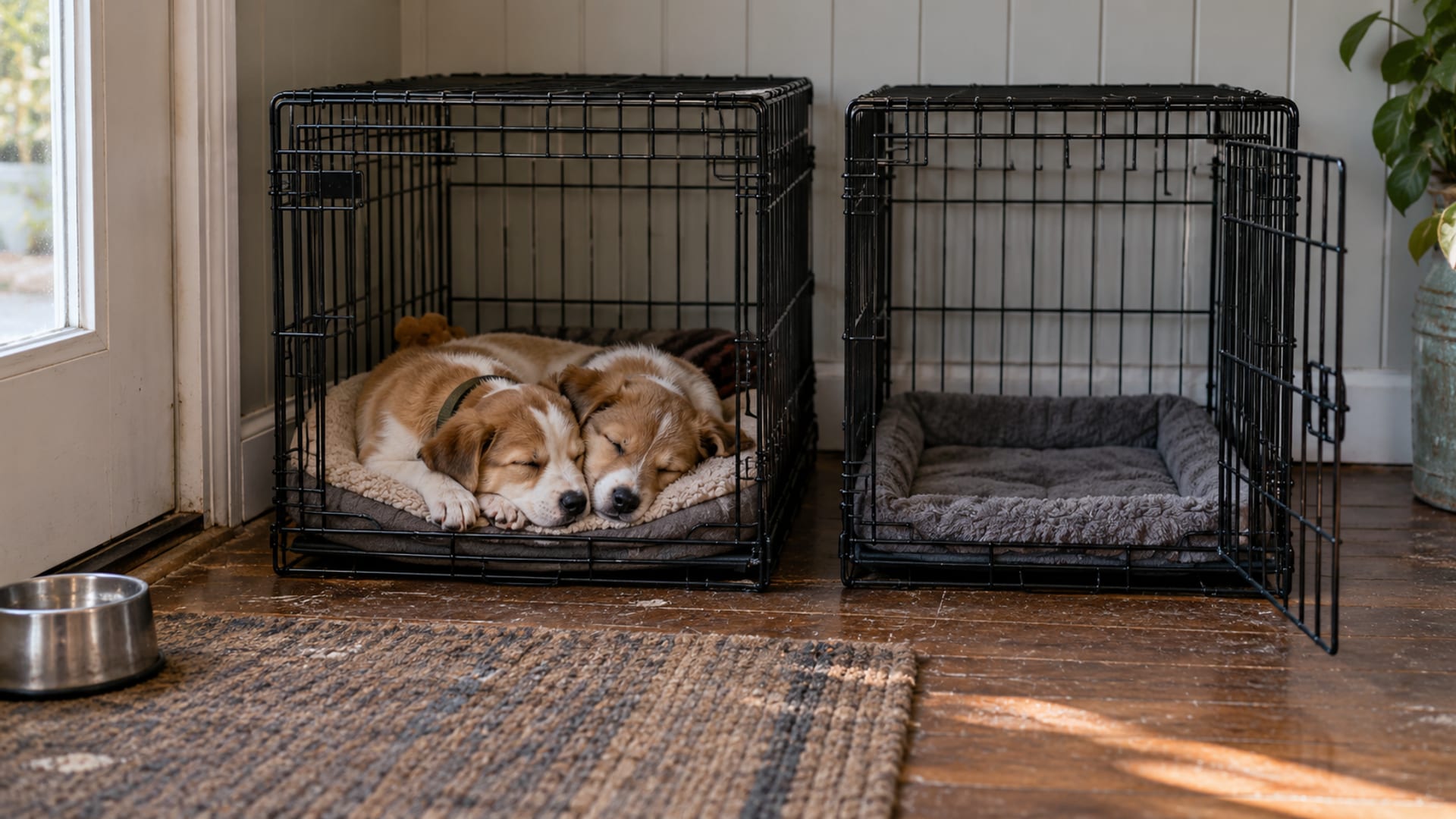
"Littermate syndrome" is a trainer and shelter term, not a veterinary diagnosis. The problems people put under it are real, though: puppies so attached to each other that they panic when apart, fear of new people and dogs, and fights as the pair grows up. You can prevent or reduce most of that by raising two puppies as two individuals. What matters is what each puppy is doing, not what the label says, so that is how I would look at your pair.
Key takeaways
Hover or tap a card to bring it forward.
- "Littermate syndrome" is a trainer and shelter label, not a veterinary diagnosis; judge each puppy by its own behavior.
- Fear, panic when apart, poor focus and fights have many causes, and any two puppies raised together can show them.
- Raise two puppies as two individuals: separate training, crates, feeding, walks, play with you, and short gradual separations.
- Fighting that starts suddenly, causes punctures, or injures a person needs a vet and a behavior professional now, and the dogs should never work it out.
- Rehoming one dog is a real option when the pair cannot be housed together safely, done with the full history and a behaviorist's input.
What the label means and who uses it
Christine Calder, DVM, DACVB, writing for Veterinary Partner, says veterinary behaviorists do not recognize "littermate syndrome." She uses "littermate dependency" for attachment to each other, difficulty bonding with people, aggression, separation anxiety and reduced independence in training. She also says the same patterns can show up in any two puppies raised together, related or not. So, the pairing matters more than the bloodline.

Trainers describe the practical side. Ian Dunbar, quoted by trainer Jeff Stallings, says two puppies can "wear blinders to all but each other" and that raising them is "more than twice the work." He adds that playing together does not teach them how to deal with unfamiliar dogs, adolescents, adults or people. Patricia McConnell, in her Bark article on single puppies, puts the wider risk as puppies who grow up without enough individual stimulation from people and the world around them.
Two institutions are blunt about the label's footing. Penn State Extension calls the scientific literature on littermate syndrome nonexistent and relies on observations from veterinarians, shelters and behavior specialists. Asheville Humane Society says there is no scientific evidence supporting or disputing the risks of adopting littermates. Kayla Fratt, writing in the IAABC Foundation Journal in 2019, separates two patterns that get lumped together: panic when the puppies are apart, and serious aggression around social maturity. They may have different causes, so they may need different handling.
That is the useful split. The label is contested. The behaviors under it (fear, separation distress, poor socialization, resource conflict, household fights) are ordinary behavior concerns that I can work with one at a time.
What owners actually see
Named sources list a handful of signs. Calder lists separation anxiety and reduced independence. Asheville Humane Society describes frantic, panicked or fearful behavior when the puppies are separated. Operation Kindness describes severe separation anxiety in some pairs and recommends building comfort with separate crates gradually.
A stronger bond with the sibling than with you is another sign. Dunbar says the puppies "squeeze the owner out of the relationship." Fear of new things is a third. Texas A&M's veterinary school lists fear of new people, animals, objects and experiences, and says closely bonded puppies may look to each other for how to react. Trouble focusing in training is a fourth, because each puppy is a powerful distraction for the other. Fighting around sexual maturity is the fifth, especially in same-sex pairs, according to Asheville Humane Society.
Texas A&M also describes unequal effects. One puppy may turn bold or pushy while the other grows timid and withdrawn.
Here is the limit on all of that. None of these signs belongs only to littermates. Fear, thin socialization, separation problems, guarding, frustration and pain all produce the same behavior. A puppy that shows one of them does not automatically "have littermate syndrome," and I would want to know which cause is behind it before choosing what to do.
Hover or tap a row to highlight it.
| Sign | Who describes it |
|---|---|
| Panic or distress when apart | Calder, Asheville Humane Society, Operation Kindness |
| Stronger bond with the sibling than with you | Calder, Dunbar |
| Fear of new people, animals, objects and experiences | Texas A&M |
| Trouble focusing in training, since each puppy distracts the other | Dunbar, Operation Kindness |
| Fighting around sexual maturity, especially same-sex pairs | Texas A&M, Asheville Humane Society |
| One puppy bold or pushy, the other timid and withdrawn | Texas A&M |
What to set up with two puppies in the first week
This is the longest section because it is where you have the most control. Operation Kindness says openly that these steps are prevention and management and do not guarantee that serious problems will never develop. They do give each puppy a fair chance to grow up as a person-oriented dog and not a half of a pair. Here is what I would set up in the first week.

Train them separately. Operation Kindness recommends bringing each puppy out alone with the handler so each can give you undivided attention. If both go to the same class, use separate handlers and keep the puppies far enough apart that each can focus on their person. Dunbar's "more than twice the work" shows up right here, because a puppy sitting beside its sibling is working in a room full of the most interesting distraction there is.
Give each puppy its own crate. Start the crates side by side, then move them farther apart as both settle. The AKC gives the same advice about separate crates, side by side at first.
Feed them apart. The American Veterinary Society of Animal Behavior (AVSAB) says that when several pets have food toys, each should be able to enjoy theirs without the other interfering or grabbing the food, and barriers or crates can do that job. Separate bowls in separate spots cut down the chances of a food fight before it begins.
Walk them apart and take each one out into the world alone. The AKC recommends separate walks and outings so each puppy learns to function independently. The AVSAB puppy socialization statement names the first three months as the primary socialization period and recommends safe exposure to people, animals, places and sounds, without pushing a puppy into excessive fear. Each puppy needs that exposure itself, and the sibling cannot stand in for it. If you want ideas for those outings, 10 essential tips for socializing your puppy (and what not to do) lays out how to do it well, and preventing aggression in puppies covers what early habits matter.
Play with each one alone. Operation Kindness points out that puppies who always play together may play only with each other and leave you out. Each puppy needs time to learn how to play with a person.
Practice short, gradual separations. Start at a level each puppy stays comfortable with, such as one puppy in the next room for a minute while the other has a chew. The goal is for each puppy to learn that you, the house, the crate and new places are safe without the sibling there. Forced isolation until a puppy panics teaches the wrong lesson.
Keep shared play supervised. Let them play together while both are comfortable and the play is back and forth. Step in and interrupt before the arousal climbs, and do not leave bones, chews or favorite resting spots where a fight could start over them.
Setting Up Two Puppies as Two Individuals
- Train separatelyBring each puppy out alone with the handler so each gives you undivided attention.
- Separate cratesStart the crates side by side, then move them farther apart as both settle.
- Feed apartUse separate bowls in separate spots to cut down the chances of a food fight.
- Walk apartTake each puppy out into the world alone so each learns to function independently.
- Play alone with eachEach puppy needs time to learn how to play with a person.
- Short separationsStart at a level each puppy stays comfortable with, such as one puppy in the next room for a minute with a chew.
- Supervise shared playLet them play while both are comfortable, and interrupt before the arousal climbs.
If the pair has already started fighting
If your puppies are small and getting along, this section may be for later. If they are not, read it now.
Wrubel and colleagues described 38 cases of fighting between household dogs referred to a veterinary behavior clinic, published in JAVMA in 2011. Thirty of the 38 pairs were same-sex, 26 of the 38 involved females, and the median age of onset was 36 months. Six of the 38 pairs were related. Of the 30 cases with injury information, 15 needed veterinary treatment for the dogs, and three owners needed medical care after stepping in. Those are referred cases, so they do not give the odds for an ordinary pair at home.
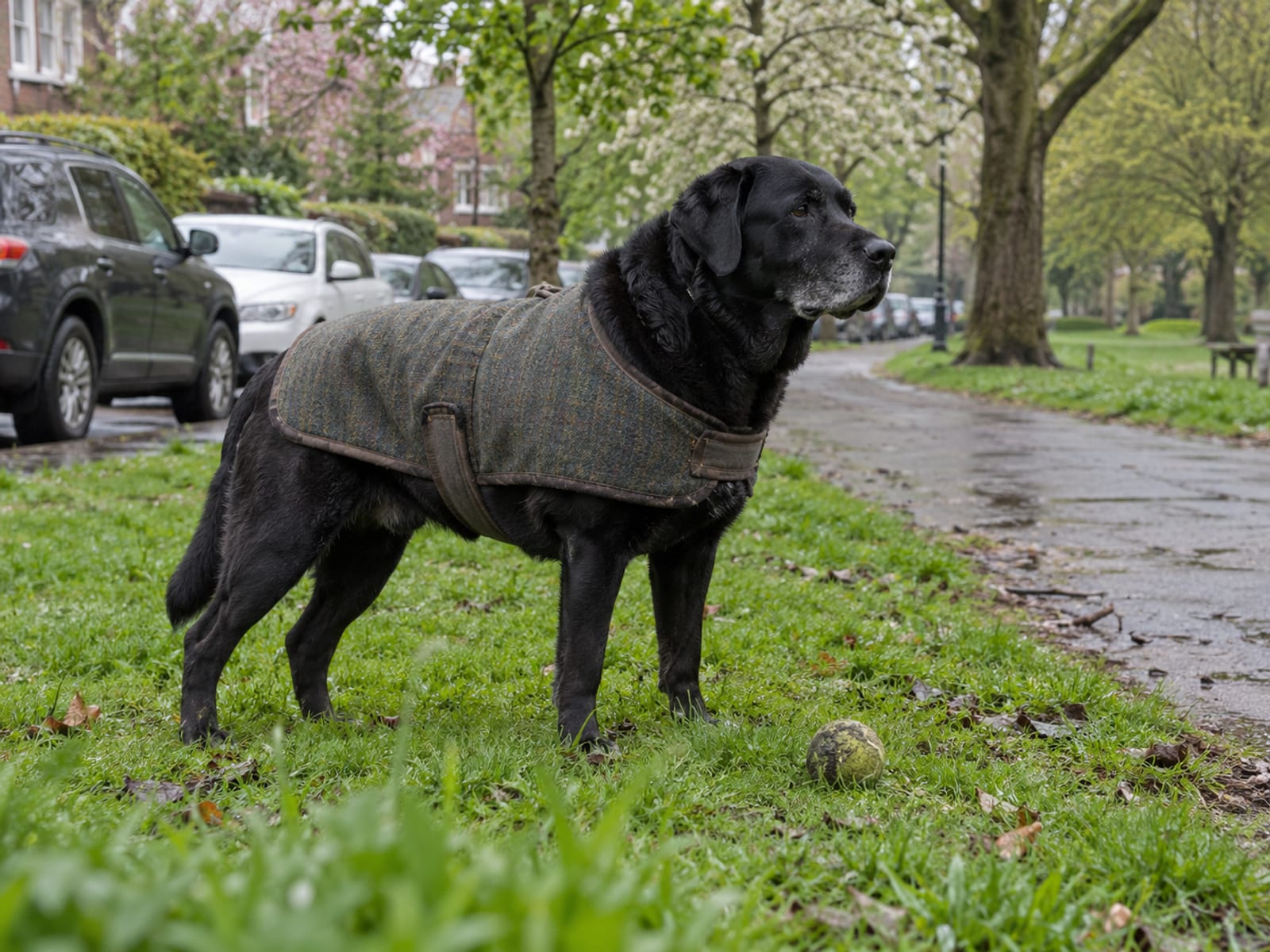
Sherman and colleagues reviewed 99 aggression cases and reported that fights between housemates caused more injury than fights with unfamiliar dogs. A 2025 study by Feltes and colleagues looked at dogs treated for bite wounds in Pretoria, and 68.5 percent of the fights were between household dogs. That is a sample of dogs who ended up at a vet with bites, not a measure of how often pairs fight.
VCA Animal Hospitals says fights between housemates usually come from resources, fear, frustration, redirected arousal, a change in the household or illness. It adds that household aggression often starts when the younger dog matures socially, somewhere between one and three years of age. Those are the usual triggers whether or not the two dogs share a litter, and they are the ones I look for first.
If fighting starts suddenly, get both dogs to the vet before anything else. VCA advises a thorough physical and behavioral assessment of both dogs when growling, snapping or biting begins out of nowhere. The Merck Veterinary Manual says pain aggression is defensive and can happen when a dog expects to be moved or touched, and it lists kidney or liver disease, neurological problems, hormonal disorders, infection, toxins and medication effects as possible contributors. AVSAB's page on sudden behavior change and pain reports that dogs with painful physical conditions were more likely than other dogs to react when approached while resting, to resist moving or exercising, and to have incidents that seemed to come from nowhere. A bite wound needs a vet too, because a puncture is often deeper than it looks.
Separate the dogs safely while you wait for the appointment, with a gate, a closed door or a crate, and not with your hands.
Hover or tap a row to highlight it.
| Measure | Finding |
|---|---|
| Pairs described | 38 referred cases |
| Same-sex pairs | 30 of 38 |
| Involving females | 26 of 38 |
| Related pairs | 6 of 38 |
| Median age of onset | 36 months |
| Needed veterinary treatment (30 cases with injury information) | 15 |
| Owners who needed medical care after stepping in | 3 |
When to get help, and the hard question
Call a professional now if any of these is true:
- Either dog has punctures, drew blood or needed veterinary care.
- A person was bitten while separating them.
- The fights are getting worse, longer, more frequent or harder to interrupt.
- A puppy panics, thrashes, screams or hurts itself when apart.
- One puppy lives in fear of the other, hiding, freezing or avoiding rooms.
- Either puppy shows aggression toward people or unfamiliar dogs.
- The behavior changed suddenly, which may mean pain.
Never let the dogs "work it out." The injury figures above are the reason. If a child or another vulnerable person lives in the house, keep the dogs behind solid barriers and do not leave anyone alone with them until you have professional safety guidance. Merck says aggression treatment is complex and ideally designed by a specialist, and VCA says a veterinary behaviorist or skilled behavior consultant should pick up the case once the vet has started the medical work-up.
Here is the hard question. Sometimes the right answer is to rehome one dog. Responsible guardianship, as the ASPCA defines it, includes arranging a suitable home, or as a last resort a reputable shelter or rescue, when the original match does not work. I would think about it when the dogs cannot be housed together safely, when fights keep repeating or escalating, when one dog lives in persistent fear, or when you cannot keep up the physical separation and supervision the situation needs. Include a behaviorist's input in that decision, and give the new home or rescue the full history, bites and medical issues included. It is a hard choice and a responsible one, and it protects both dogs.
If your pair is still living together peacefully and you are working through a general list of concerns, keeping the peace in a multi-dog home and same-sex aggression in dogs are the two pieces I would read next.
Questions owners ask
At what age does littermate syndrome show up?
No age is tied to the label. Dunbar places fearful reactions to unfamiliar dogs around five to six months for puppies raised mainly with each other. Texas A&M describes fighting as puppies reach sexual maturity, about six months. Household aggression across all dogs, per VCA, often starts between one and three years, and the Wrubel case series had a median onset of 36 months. Watch each puppy's behavior at every stage instead of waiting for a date.
Does it only happen with littermates?
No. Calder says similar patterns can happen in any two puppies raised together, related or not. Two unrelated puppies of the same age need the same individual training, separate crates and separate outings.
Should I get a second puppy?
Texas A&M advises prospective owners to avoid raising two puppies at the same time because of the practical and behavioral demands, and says the outcome is not guaranteed and not breed-specific. Shelter guidance commonly recommends adopting one puppy at a time. If you already have two, the steps above are how I would run the house.
Does a stronger bond with the sibling mean my puppy has it?
Not by itself. Some attachment between two puppies is normal; the concern is a puppy that panics when apart, ignores you, or fears everything new. Those are the signs I would track.
Check What You Picked Up
What is "littermate syndrome"?
Which is a good way to raise two puppies?
Fighting between your dogs starts suddenly. What comes first?
Which is a reason to call a professional now?
Does it only happen with littermates?
Answer a question to see your score.
How I work with this
Every dog, and every pair, starts with an evaluation visit so I can see how the dogs behave with each other and with you at home. From there I train in-home lessons, and if the dogs need more than weekly lessons, board and train in my home is available. If your two puppies are running your house or your pair has had a fight, contact DW Dog Training and we will start there.