

Some links in this post are Amazon affiliate links. If you buy through one I may earn a small commission, at no extra cost to you. It never changes what I recommend. Full disclosure.
If your dogs are fighting right now, do not reach in. Never grab a collar, a head or a tail. Make a loud noise, throw water, or slide a solid barrier such as a board, a chair or a blanket between them. Once they are apart, put each dog behind its own closed door, keep them apart, and get any wound looked at by a vet. The setup, the training and the question of whether your dogs can keep living together all come after that.
Key takeaways
Hover or tap a card to bring it forward.
- Never reach into a dog fight; use noise, water or a solid barrier, then put each dog behind a closed door.
- Get every wound checked, because bite wounds become infected when treatment is delayed, and see the vet first for any new or sudden guarding.
- Feed separately, give chews only when the dogs are apart, and block guarded beds, rooms and doorways.
- Training works on the dog's motivation with trades, stations and counter-conditioning, and a plan for two dogs belongs in the hands of a qualified professional.
- Bites, repeated fights and attacks through barriers mean the dogs stay apart, and some households cannot keep them together.
How to stop a fight without getting hurt
The American Kennel Club says never to reach in with your hands to separate fighting dogs, never to put your face close to the fight, and never to grab a dog by the tail and pull. A dog in the middle of a fight is not thinking about who is holding the collar.
Jennifer Coates, DVM, writing for PetMD, suggests trying a distraction from a safe distance first: water, a loud noise or an air horn. If that fails, put a solid object between the dogs, like a board, a chair or a blanket. She lists lifting the hind legs of one dog as a last resort that carries a real risk of a bite. VCA Animal Hospitals points out that reaching for a dog often brings redirected aggression, where the dog turns and bites the person who stepped in. If both dogs are wearing leashes on suitable equipment, you may be able to pull them apart without going near their mouths. Use the least dangerous option you have, and call for help if you cannot separate them safely.
After that, each dog goes behind a closed door or a barrier. Do not bring them back together to see how they behave. Check for injuries only when it is safe to touch them, because a hurting, wound-up dog can bite the hand that is checking.
Breaking Up a Dog Fight Safely
- Do not reach inNever use your hands on the dogs, never put your face close, and never grab a collar, head or tail.
- Distract from a distanceTry water, a loud noise or an air horn first, from a safe position.
- Use a barrierIf that fails, slide a solid object such as a board, a chair or a blanket between the dogs. If both dogs wear leashes on suitable equipment, you may be able to pull them apart without going near their mouths.
- Separate themPut each dog behind its own closed door or barrier. Do not bring them back together to see how they behave.
- Check for injuriesLook at wounds only when it is safe to touch the dogs, because a hurting, wound-up dog can bite the hand that checks.
- Call the vetBite wounds almost always become infected when treatment is delayed, so get any wound looked at promptly.
Wounds and when the vet comes first
Dog fights leave scratches, cuts, puncture wounds, broken teeth, eye injuries and damage hiding under the coat. In the Wrubel, Moon-Fanelli, Maranda and Dodman study, published in the Journal of the American Veterinary Medical Association in 2011, owners reported that one or both dogs needed veterinary treatment after a fight in 15 of 30 cases, or 50 percent. In 3 of those 30 cases, 10 percent, the owner needed medical treatment after stepping in.
Dr. Coates says bite wounds almost always become infected when treatment is delayed. So, an obvious wound goes to the vet promptly. Go to urgent or emergency care for severe bleeding, deep or multiple punctures, wounds near the eye, chest, abdomen, throat, joints or face, trouble breathing, collapse, severe pain, or a dog that cannot walk. A small hole in the skin can run deep underneath, so call the clinic and ask how fast the dog should be seen. A dog that looks fine still needs watching for several days, because some injuries do not show up right away.
A vet visit also comes first when the guarding itself is new or suddenly worse, or when it shows up in an older dog. ASPCA, VCA and the Merck Veterinary Manual list pain from arthritis, injury or dental disease, hormone problems such as hypothyroidism, neurological disease, hearing or vision loss, and cognitive decline in older dogs as possible contributors. Merck notes that age or illness can change how one dog signals and how another dog responds, which makes a clash more likely. Do not assume age alone explains the change. Ask the vet what testing makes sense.
Hover or tap a row to highlight it.
| What you see | What to do |
|---|---|
| Severe bleeding, deep or multiple punctures | Urgent or emergency care |
| Wounds near the eye, chest, abdomen, throat, joints or face | Urgent or emergency care |
| Trouble breathing, collapse, severe pain, or a dog that cannot walk | Urgent or emergency care |
| An obvious wound | Get it to the vet promptly |
| A small hole in the skin | Call the clinic and ask how fast the dog should be seen, because it can run deep underneath |
| A dog that looks fine | Watch for several days, because some injuries do not show up right away |
| Guarding that is new, suddenly worse, or showing up in an older dog | Vet visit before any training plan |
What resource guarding between dogs actually is
Merck describes resource guarding as defensive behavior when another animal approaches a dog that has, or is near, something it values. The list is long: food, treats, chews, bones, toys, stolen objects, beds, crates, furniture, rooms, doorways, and a preferred person. In a home with two dogs, the other dog often wants the same thing, which is why guarding against a dog looks different from guarding against a person.
It is not a dog trying to run the household. A dog guards because the item matters to it, because the approaching dog adds pressure, because guarding has worked before, or because the dog is afraid, anxious or wound up. Michael Shikashio, CDBC, separates guarding the owner, where the dog expects to lose access to its person when the other dog comes near, from true protective aggression, which he describes as a different and less common motivation.
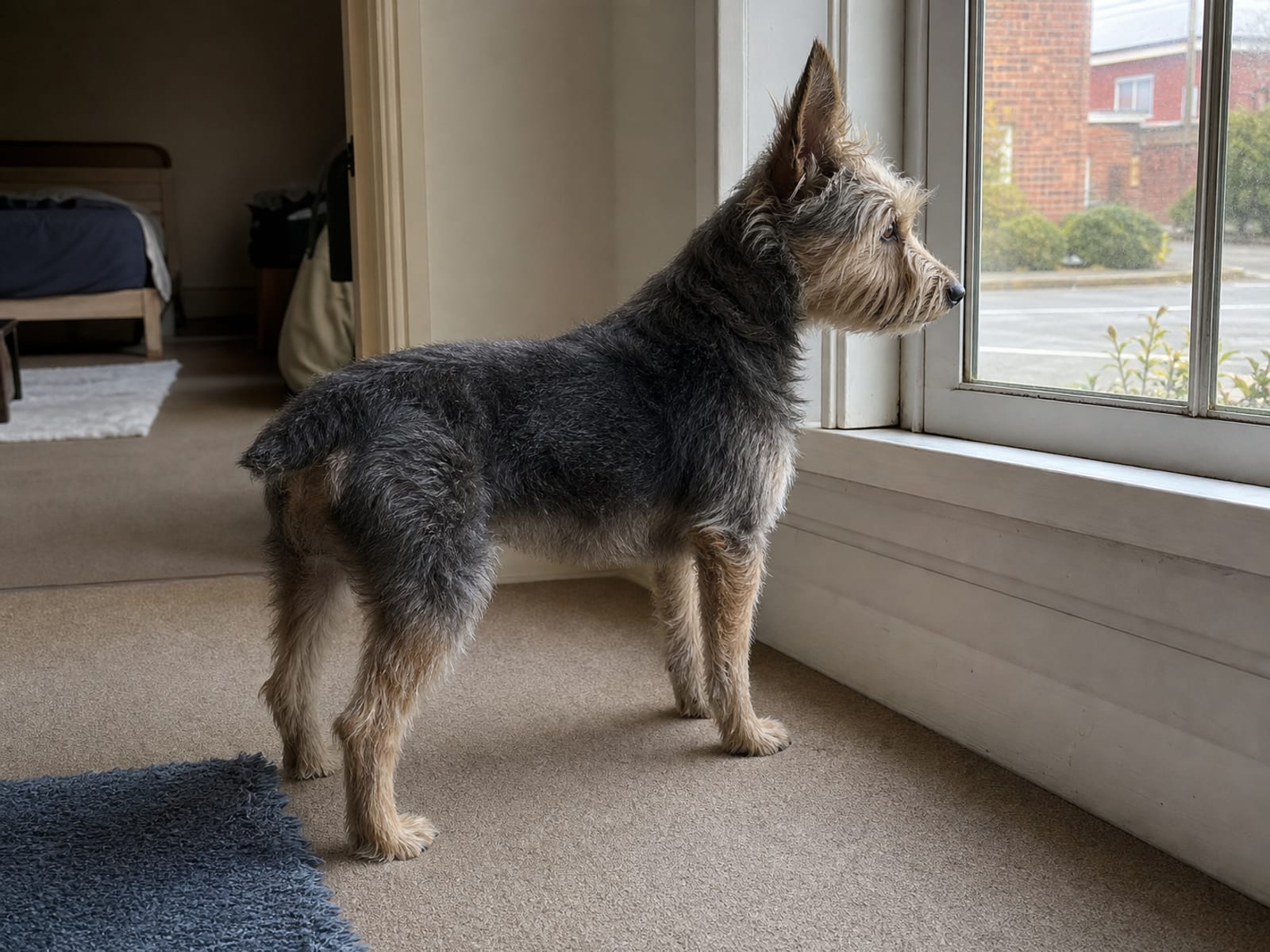
You can learn a lot by watching the dogs before anything blows up. Stiffening, freezing, staring and a hard mouth come before the growl, the snap and the chase. My post on 15 body language signals you need to know walks through what those early signals look like, and spotting them is the cheapest way to separate dogs before a bite.
What the clinic numbers say, and what they do not
The Wrubel study looked at 38 cases involving 76 dogs seen at the Tufts Behavior Clinic. These were referred patients, owner reports, with no comparison group of calm homes, so the numbers describe that group and predict nothing about your household. With that limit stated, here is what the clinic recorded.
- The median age was 51 months at consultation and 36 months when the aggression began.
- Same-sex pairs made up 30 of 38 cases (79 percent); female pairs were 18 (47 percent), and a female was involved in 26 (68 percent).
- Where an instigator could be identified, it was the newer dog in the household in 19 of 27 cases (70 percent) and the younger dog in 20 of 27 (74 percent).
- Owners named owner attention and food as triggers in 46 percent of cases each, excitement in 31 percent, and found items or toys in 26 percent.
- Owners described 54 percent of the pairs as generally incompatible, ignoring each other, or including a dog that seemed afraid of the other.
- Of owners with information, 72 percent said the fights had become more frequent, more intense, or both.
Fights are not only about a bone. Doorways, narrow hallways, visitors, beds and a weaker or injured dog showed up as triggers too. A new dog can change who gets the couch, the doorway and your lap, which is why a recently added dog so often sits in the middle of the story. That pattern is an association in a clinic sample, not proof that adding a dog causes fighting.
If you are bringing in a young dog and want to head this off, my post on 10 simple steps to prevent resource guarding in puppies covers the puppy side.
Hover or tap a row to highlight it.
| Trigger | Cases | Share of cases |
|---|---|---|
| Owner attention | 16 of 35 | 46 percent |
| Food | 16 of 35 | 46 percent |
| Excitement | 11 of 35 | 31 percent |
| Found items or toys | 9 of 35 | 26 percent |
Set up the house so the fights stop being possible
Management comes first because every fight is practice. While you work out what is going on, the goal is to stop the dogs from rehearsing it. This checklist draws on Merck, Preventive Vet, ASPCA and the AKC's advice on feeding multiple pets.
Meals
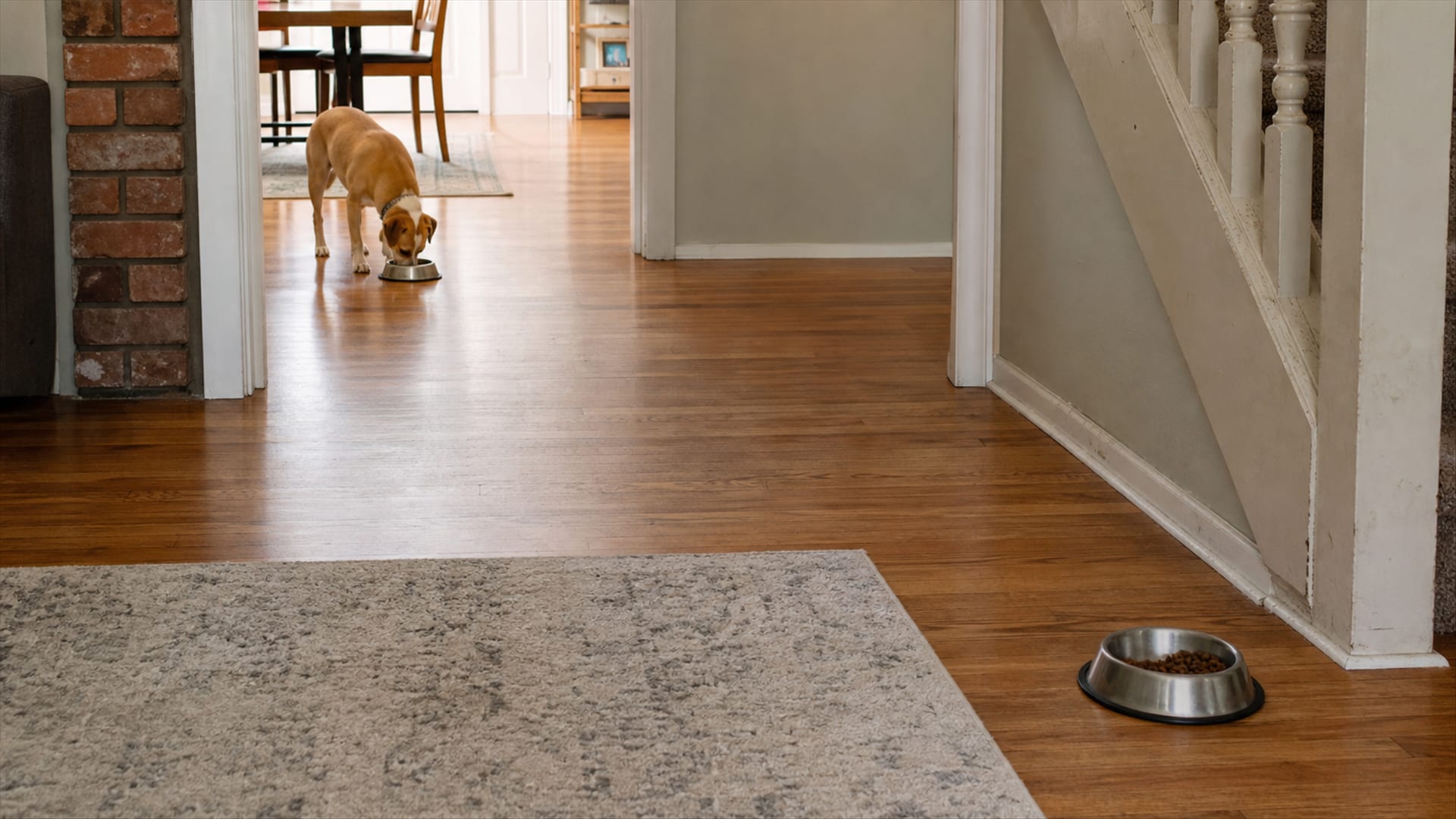
- Feed the dogs in separate rooms, crates or pens, with a closed door or sturdy gate where the dogs can see each other.
- Pick up bowls after meals. Do not let dogs with a history share a bowl.
- Skip free-feeding when food left out creates competition, unless your vet has told you to keep food available for a medical reason.
Chews, bones and stuffed toys
- Hand these out only when the dogs are apart, and take them away before you reunite the dogs.
- Put away any toy or item the dogs fight over. If one item keeps causing trouble, take it out of the shared space.
- Never reach into a guarding dog's mouth or pull an item away by force.
Beds, furniture, rooms and people
- Block the spaces a dog guards when the other dog is around, and give each dog a place to rest undisturbed.
- Separate the dogs during visitors, when you come home, during excited play and at narrow doorways.
- If one dog guards your attention, use gates, leashes, stations or separate rooms so they cannot compete at close range.
Supervision
- After a fight or a bite, do not leave the dogs together unsupervised.
- In severe cases, Merck says dogs may need leashes, a basket muzzle that has been properly conditioned, or complete separation.
People ask me how many bowls and beds they need. There is no magic number. Separate resources in separate spaces matter more than the count, and you adjust to your dogs, your floor plan and how closely you can supervise.
Hover or tap a row to highlight it.
| Situation | What to do |
|---|---|
| Meals | Feed in separate rooms, crates or pens behind a closed door or sturdy gate, and pick up bowls after meals |
| Chews, bones and stuffed toys | Hand them out only when the dogs are apart, and take them away before the dogs reunite |
| Toys the dogs fight over | Put them away, and take any item that keeps causing trouble out of the shared space |
| Beds, furniture and rooms | Block the spaces a dog guards when the other dog is around, and give each dog a place to rest undisturbed |
| Your attention | Use gates, leashes, stations or separate rooms so the dogs cannot compete at close range |
| Visitors, coming home and excited play | Separate the dogs |
| Narrow doorways | Separate the dogs, or plan each doorway ahead of time |
| After a fight or bite | Do not leave the dogs together unsupervised |
| Severe cases | Leashes, a properly conditioned basket muzzle, or complete separation |
Training, and where a do-it-yourself plan runs out
Merck, ASPCA and Preventive Vet all describe the same core tools. Desensitization and counter-conditioning change how a dog feels about an approach: you start far enough away that the dog stays relaxed, pair the approaching dog with something the dog loves, and close the distance in small steps. If the dog stiffens, freezes, stares, growls, snaps or chases, the setup was too hard, so stop and make it easier. For dog-to-dog guarding, Preventive Vet says the plan gets more complex because two dogs and several variables are in play, and a qualified professional should personalize it.
Trading is the other basic skill. You teach a cue like "trade" or "drop," the dog releases the item, and the reward follows. Practice with low-risk items long before you need it in a conflict, and never wrestle an item away. Leave-it teaches a dog to turn away from an item and look to you. A mat or station cue sends each dog to its own place, and Merck lists separate-place cues as a quick way to split dogs when early warning signs appear.
Shikashio's point matters here: the motivation decides the approach. Fear-based guarding calls for counter-conditioning and desensitization. Confident protective behavior calls for clear direction and alternative behaviors under cue. Guarding of the owner calls for pairing another person's approach with treats and teaching the dog to come away from you when called. Someone who can read your dogs in person can tell which one you have.
In the Wrubel cases, clinicians recommended obedience training in 71 percent, avoiding triggers in 61 percent, and head collars or trailing leashes in 79 percent. Owners in 51 percent of cases had already tried spray bottles, shouting, electronic collars, striking or forcing a dog onto its side or back. That is a report of what those owners did, not a sign that any of it worked.
AVSAB advises against aversive methods and lists electronic collars, choke collars and prong collars among them. I take a balanced approach that includes e-collar work among other tools. For guarding between two dogs in one home, though, I would want any professional, me included, to explain the purpose, the risks, the alternatives and the safety plan before a recall or interruption tool comes anywhere near it.
If you are working on the dog-to-dog side more broadly, my post on 5 proven strategies to stop your dog's aggression towards other dogs covers the wider problem. For the item side of the problem, 5 simple hacks to stop your dog's resource guarding gives you the everyday habits.
Can your dogs stay together?
Some pairs can, and some cannot. Separate the dogs, for good or for a while, when there are bites, puncture wounds or eye injuries, when fights repeat or are hard to interrupt, when one dog keeps attacking after the other has backed off, or when they fight through a barrier. Merck says severe cases may need complete separation, and ASPCA says guarding becomes unacceptably risky when children cannot reliably stay away from the guarding dog and its things.
Some dogs can share a home only with dependable separation: closed doors, gates, rotation schedules and a plan for every doorway and meal. Some households cannot keep that up day after day, and that is not a failure on your part. When one dog lives in fear or keeps getting hurt, when the dogs attack through barriers, or when the risk to people cannot be managed, another household may be the safest answer for everyone, including the dogs. Nobody can promise you which way your pair will go.
Who to see, and what to ask
Start with your vet for any sudden or worsening change. From there, a board-certified veterinary behaviorist (DACVB) is a veterinarian with specialty training who can assess medical and behavioral factors, prescribe medication when it is appropriate, and build a behavior plan. The American College of Veterinary Behaviorists keeps a directory of diplomates. The AVSAB directory can be searched by state, city or ZIP code, and it lists CAABs and behaviorists with PhDs who work alongside a veterinarian for medical care. IAABC has a consultant locator too.
A credential does not tell you whether someone has handled serious fights between housemates, so ask directly. AVSAB suggests asking these questions:
- What methods and tools will you use?
- What credentials and experience do you have?
- What continuing education have you completed?
- Who do you refer to when a case does not progress or goes beyond your skills?
- Do you guarantee a specific outcome?
AVSAB lists refusal to explain methods, rank-based claims, aversive tools and guaranteed outcomes as warning signs. A good assessment covers each dog's history, how the two get along, where and over what the fights happen, the early warning signals, how often and how hard they fight, injuries, medical history, changes at home and what you are doing now. Expect a safety plan, a management plan and goals. Never provoke a fight to show a professional what happens; describe it, and bring video if you have it.
Questions owners ask
Should I let them work it out themselves? No. Fights that repeat tend to get worse, and in the Wrubel study 72 percent of owners reported fights growing more frequent or more intense before they sought help. Interrupting safely and managing the house is your job while the cause is sorted out.
Is it my newer dog's fault? Fault is the wrong question. In the Wrubel clinic cases the newer dog was the instigator in 70 percent of the identifiable pairs, but that describes a referred group and says nothing definite about your dogs. Look at what each dog is guarding and why.
My older dog has started snapping at the younger one. What now? Call your vet first. Pain, weakness, hearing loss, vision loss and cognitive changes can lower an older dog's tolerance of an approach, and the dogs need to stay apart while you find out.
Check What You Picked Up
Two dogs are fighting right now. What should you do first?
Once the dogs are apart, where should each one go?
When should a vet visit come first, before training?
Where do chews and bones belong in a home with a guarding dog?
What is the safe way to get an item from a dog that has it?
Which of these means the dogs should be kept apart, for good or for a while?
Answer a question to see your score.
Final Thoughts
If you have two dogs and a problem that reading will not solve, I can help. I offer an evaluation visit, in-home lessons, and board and train in my own home for dogs whose problem needs more than advice from a page. Reach out through the contact page, and tell me about any bite or near-bite on the first call, including one that happened to you when you stepped in. It changes how I plan the first visit. I run DW Dog Training in Baltimore, MD.