
Some links in this post are Amazon affiliate links. If you buy through one I may earn a small commission, at no extra cost to you. It never changes what I recommend. Full disclosure.
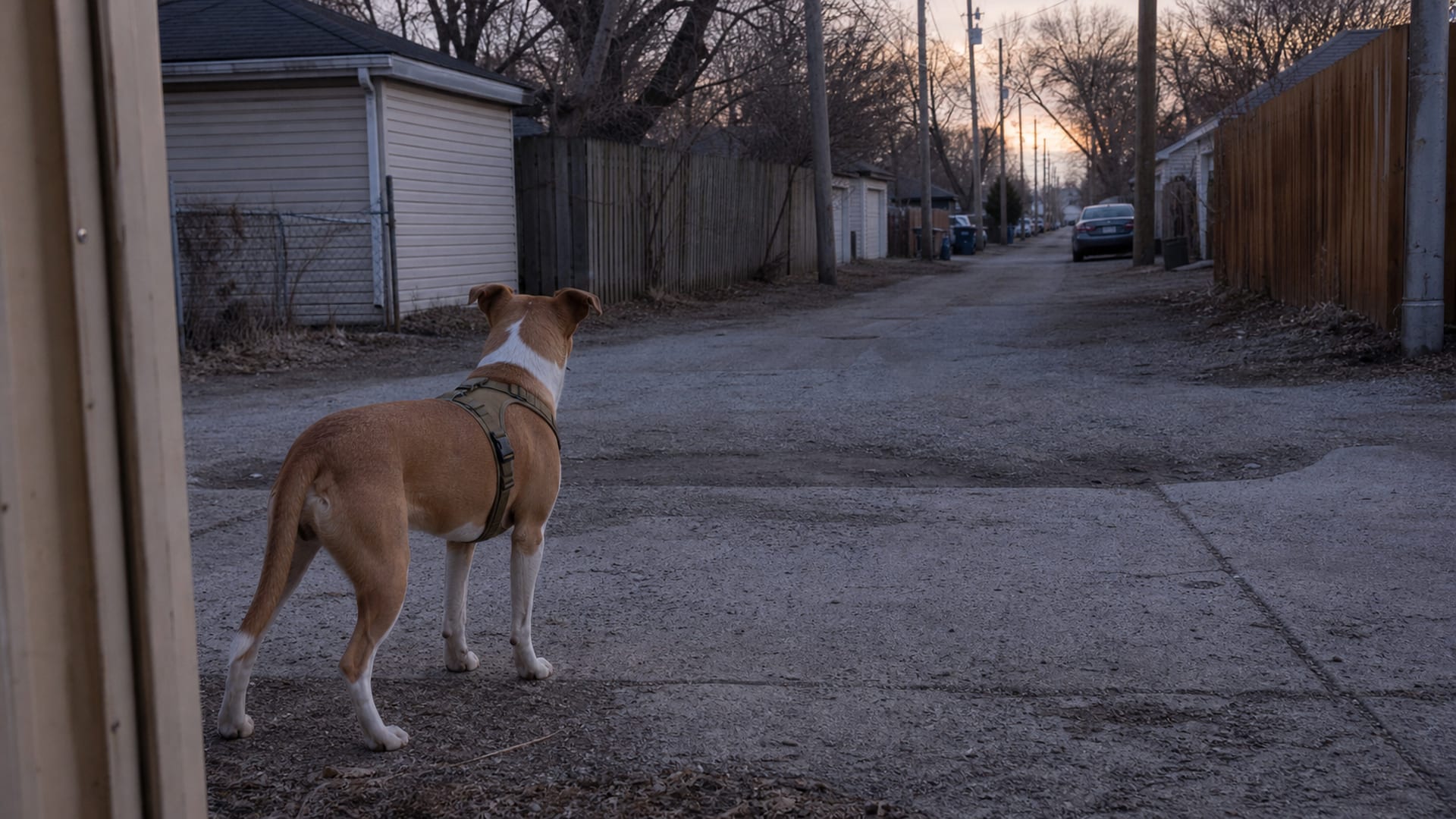
If you are watching a dog right now and your gut says something is off, stop what you are doing. Stand still, look at the floor or the wall instead of the dog's eyes, keep your hands to yourself and let the dog walk away if it wants to. Dogs usually show tension before they bite, but they can skip steps, and the early signs are easy to miss. A stiff, frozen dog worries me more than a noisy dog moving loosely. A wagging tail does not mean friendly; a high, stiff tail can sit right alongside tension.
Key takeaways
Hover or tap a card to bring it forward.
- Dogs usually show tension before biting, but they skip steps and people miss them; stop, stand still, avoid staring and give the dog room.
- The ladder runs from yawning and lip licking through turning away, stiffening, staring and growling to snaps and bites, and it is approximate, not a fixed order.
- Never punish a growl; it is information, and stopping, creating distance and finding the trigger is the safe response.
- A new or sudden change in warnings, especially in an older dog or after surgery, goes to the vet first.
- After a growl, snap or bite, manage the triggers, keep children separate, wash any wound for 15 minutes, see a healthcare professional and bring in a veterinary behaviorist or qualified professional.
The 10 signs, from quiet to loud
These are listed roughly in order of escalation. I say roughly because dogs skip rungs, show several signs at once, or go from a subtle sign to a bite faster than a person can react. The idea of a "ladder" of aggression is credited to veterinary behaviorist Kendal Shepherd, whose chapters in the BSAVA Manual of Canine and Feline Behavioural Medicine (2002 and 2009) describe it. Karen Overall, Aloff, Sophia Yin and the American Veterinary Society of Animal Behavior describe overlapping signs, and all of them stress that meaning depends on the whole dog and the situation.
1. Yawning, blinking, lip licking and nose licking. Small stress signals, easy to miss, especially when no one has touched the dog yet. 2. Turning the head or body away, avoiding eye contact. The dog is asking for less pressure. 3. Paw lifting, creeping or crouching. The dog is uneasy and getting low. 4. Walking away or hiding. The dog is leaving. Let it. Do not follow it to its bed or under the table. 5. Low posture, tucked tail, rolling over or showing the belly. Fear, not friendliness, is often behind this, especially if the body looks tight rather than loose. 6. Stiffening and freezing. The movement stops. This is the sign people mistake for "calm." 7. Staring, weight shifting forward, raised hackles. A hard stare, a body leaning into you, and hair standing up along the neck or back. 8. Growling, snarling, barking and showing teeth. The dog is now telling you out loud. 9. Air snaps, lunging and nipping. The dog is close to the end of what it can tolerate. 10. Biting. The last rung, and sometimes the only one anyone notices.
If you want a longer walk through what a dog's body is saying across the day, 15 body language signals you need to know goes further than this list does.
The same behavior can mean different things. A growl in a tug game is not a growl over a bone. Lip licking might be nerves or it might be dinner. Read the posture, the face, the movement and the setting together, not one sign alone.
Hover or tap a row to highlight it.
| Sign | What it means |
|---|---|
| Yawning, blinking, lip licking, nose licking | Small stress signals that are easy to miss |
| Turning the head or body away, avoiding eye contact | The dog is asking for less pressure |
| Paw lifting, creeping, crouching | The dog is uneasy and getting low |
| Walking away or hiding | The dog is leaving, so let it |
| Low posture, tucked tail, belly showing | Often fear, especially if the body looks tight |
| Stiffening and freezing | Movement stops, and people often mistake it for calm |
| Staring, weight shifting forward, raised hackles | A hard stare and a body leaning into you |
| Growling, snarling, barking, showing teeth | The dog is telling you out loud |
| Air snaps, lunging, nipping | The dog is close to the end of what it can tolerate |
| Biting | The last rung, and sometimes the only one anyone notices |
What the studies say about warnings before bites
Two studies are worth knowing, and both come with limits.
Reisner, Shofer and Nance (2007, Injury Prevention, summarized by AVSAB) looked at 111 cases of dogs that had bitten a child under 18 and were seen at the University of Pennsylvania behavior clinic. Among familiar children, 26% of bites happened during food or resource guarding, and 18% during apparently benign moments such as a child bending over or hugging the dog. For children under six, 44% of bites involved guarding. Bites to unfamiliar children were often territorial, with the child entering or standing inside the dog's space. Eighty-one percent of these dogs had bitten a person more than once, and medical conditions were found or suspected in 50%. This was a referred clinic sample, not a count of all bites, so it tells you what happens in dogs that end up in a behavior clinic, not how often any one situation causes a bite.
Owczarczak-Garstecka, Watkins, Christley and Westgarth (2018, Scientific Reports, on PubMed) studied 143 online bite videos and coded the behavior before the bite in 56 of them. Non-neutral posture, displacement behavior and appeasement behavior rose about 20 seconds before bites, and a person touching the dog rose about 21 seconds before. The sample is online videos, so treat it as a pattern, not a count: the dog shows tension or turns away, and then someone reaches in.
Not every bite follows an obvious growl, and not every warning is noticed by the person standing there. That is the reason to watch the body, not just listen.
Hover or tap a row to highlight it.
| Situation | Share of cases |
|---|---|
| Familiar children, bite during food or resource guarding | 26% |
| Familiar children, bite during a benign moment such as bending over or hugging | 18% |
| Children under six, bite tied to guarding | 44% |
| Unfamiliar children | Often territorial, the child entering or inside the dog's space |
| Dog had bitten a person more than once | 81% |
| Medical condition found or suspected | 50% |
Why you should never punish a growl
A growl is information. It tells you the dog is afraid, hurting, guarding something, frustrated or, sometimes, playing. VCA says dogs punished for low-level aggressive displays may be at risk of behaving aggressively in later social situations. The RSPCA warns that telling a dog off, smacking, scruffing or pinning it can make the dog feel more threatened and bring a stronger aggressive response.
The risk they describe is that a dog learns its early signals do not work. It may then communicate less visibly, escalate faster, or bite in a way that looks like it came from nowhere. That is a described risk, not a rule that every silenced growl ends in a bite. Still, I would not test it with your dog or your child.
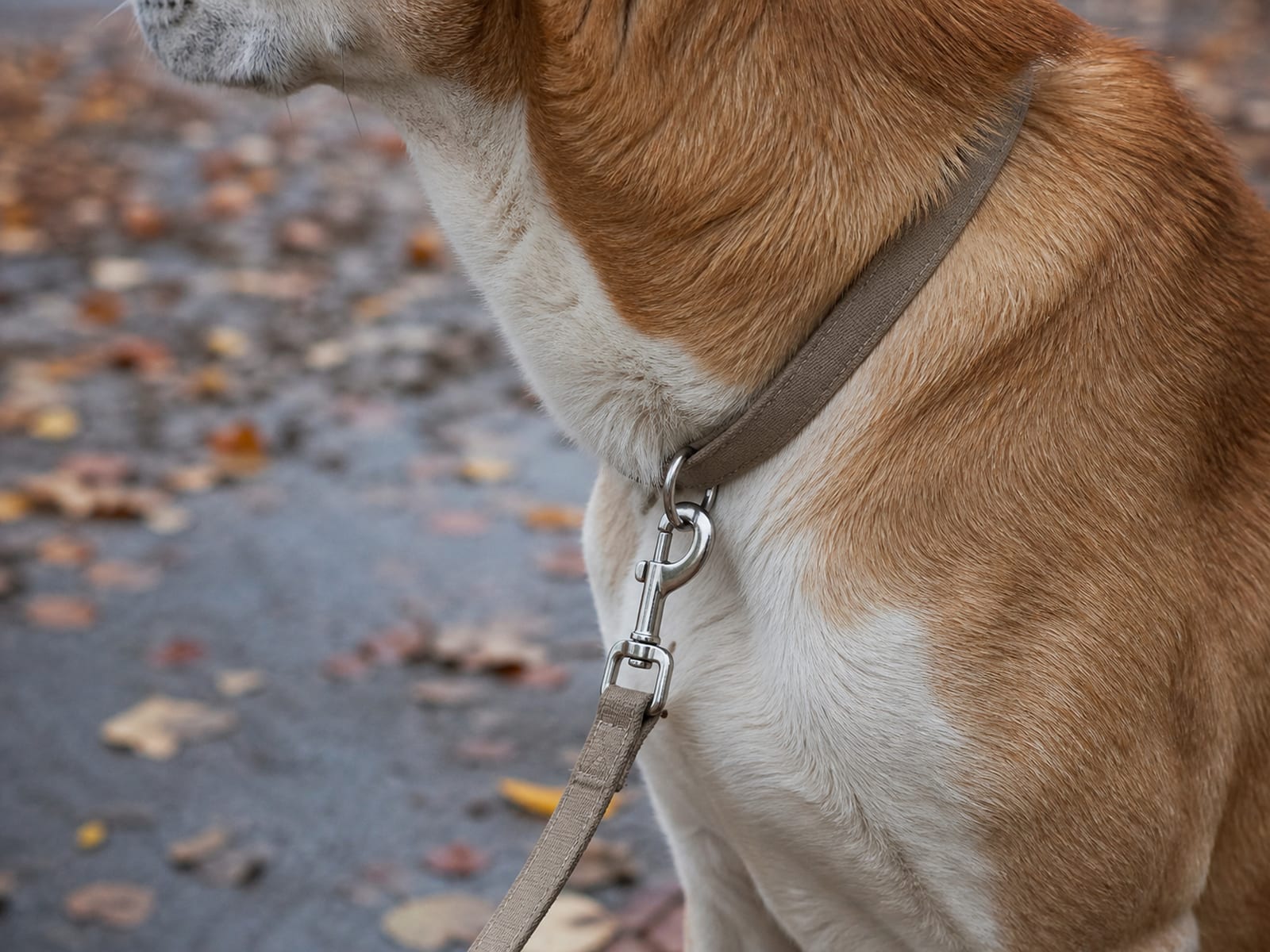
So, when a dog growls, stop, create distance and work out the trigger. Do not see whether it will growl again. Do not take a resource by force.
What usually sits underneath
These are contexts, not breeds. Dogs warn most often when someone touches or approaches a resting dog, takes food or toys, reaches for the bowl, handles or grooms the dog, corners it, brings visitors in, moves suddenly near it (children do this a lot), or when another dog, a barrier, a narrow space, rough play or frustration is involved.
Behind those contexts, a few motives show up again and again:
- Fear aims at getting away. The dog crouches, turns away, tucks the tail, trembles, licks its lips or freezes. If escape is blocked, it may react. A dog can also learn that barking or lunging makes a scary person leave, so it starts to look like offense.
- Guarding protects something the dog values: food, a bone, a toy, a bed, a place or a person. The warning shows up predictably when someone approaches or tries to take it, as VCA's overview of aggression describes.
- Frustration or redirected aggression happens when the dog cannot reach what it is upset about, like a dog behind a fence or a person outside a window, and turns on whoever is nearby.
They overlap, and one dog can show more than one in different situations. Judge the whole pattern, not a single growl.
Two of these deserve their own reading. If your dog's trouble is mostly at the door or the fence line, managing territorial aggression at home covers that situation. If the trigger is another dog on a walk, 5 proven strategies for aggression toward other dogs is the better next stop. And if the dog doing the snapping is a puppy, read 10 proven techniques to tame an aggressive puppy.
When it is a vet question first
A sudden jump in warnings, a new trigger, less tolerance for being handled, or a change in an older dog goes to the vet before anything else. VCA's guidance on medical versus behavioral causes lists things that can make a dog touchy:
- Pain from arthritis, dental disease, ear or skin disease, anal-sac disease, back or joint problems, or injury.
- Reduced vision or hearing, which makes a dog startle when you walk up.
- Neurological disease, seizures, infection or tumors.
- Thyroid, pituitary, adrenal, pancreas or reproductive-organ disorders.
- Kidney or liver disease, fever, illness or fatigue.
- Medication side effects.
- Age-related cognitive change, with disorientation, sleep changes, new anxiety or irritability.
VCA recommends a history and physical exam first, and for senior dogs any behavior change is worth raising with the vet because it can be the first sign of pain or illness.
If you landed here after a neuter or spay, the first thing to check with your vet is pain and healing. I would not blame hormones for it.
Hover or tap a row to highlight it.
| Type | Examples |
|---|---|
| Pain | Arthritis, dental disease, ear or skin disease, anal-sac disease, back or joint problems, injury |
| Senses | Reduced vision or hearing, which makes a dog startle when you walk up |
| Nervous system | Neurological disease, seizures, infection, tumors |
| Hormones and organs | Thyroid, pituitary, adrenal, pancreas or reproductive-organ disorders |
| General illness | Kidney or liver disease, fever, illness, fatigue |
| Medication | Side effects |
| Aging | Cognitive change, with disorientation, sleep changes, new anxiety or irritability |
What to do when a dog warns you
Stop the thing that set the dog off. Stand still for a moment, do not stare, do not reach, and give the dog space. If it can leave, back away slowly and put something solid between the dog and the people if you can. Never corner, grab, yell at or physically confront it.
The RSPCA puts it plainly: first, discontinue whatever you are doing; second, stand still. Its reasoning is that moving toward an upset dog can look like a threat, and moving away fast can sometimes make the dog bold enough to bite.
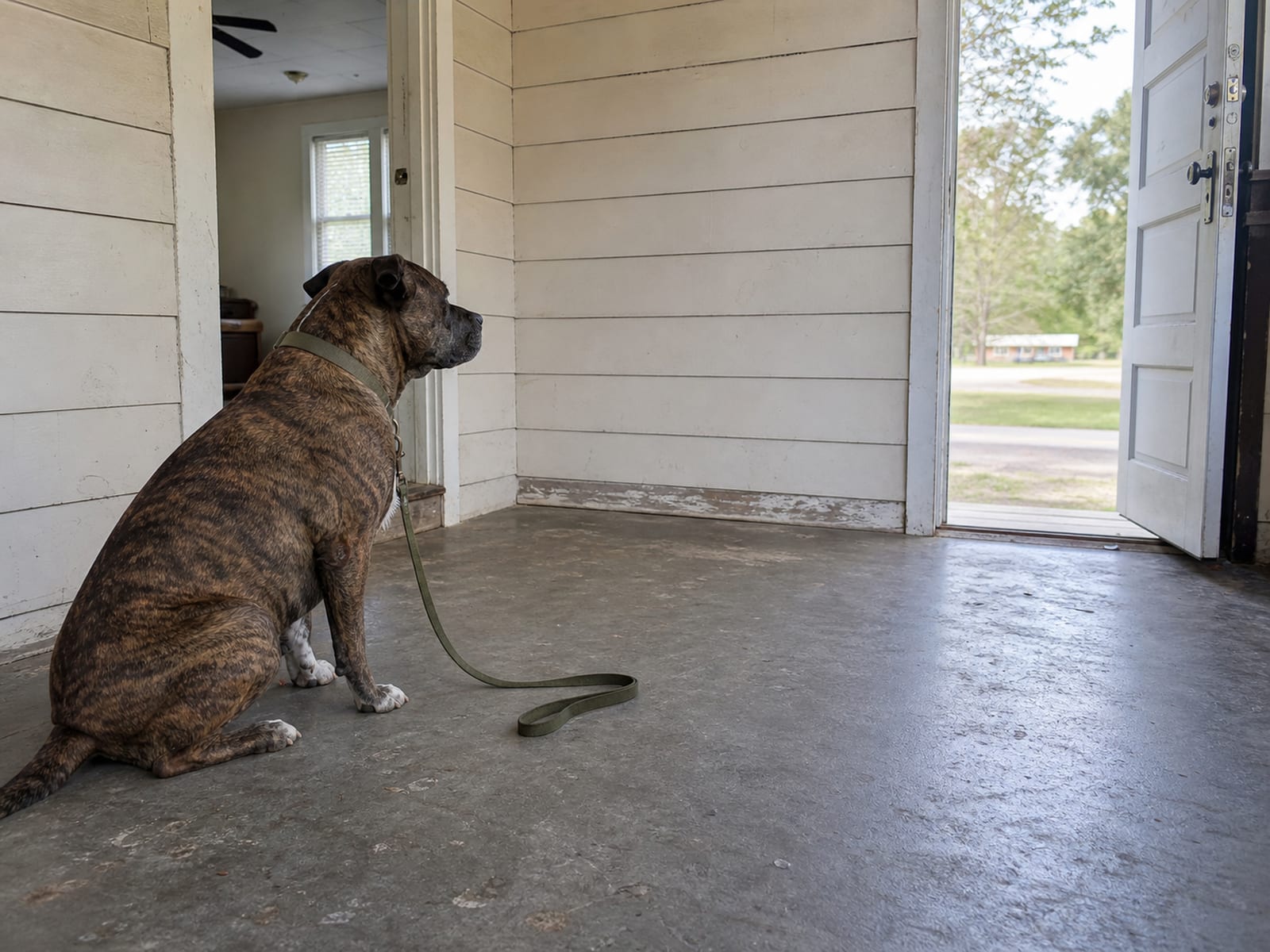
With your own dog, do not pick the interaction back up to see if it will tolerate it this time. If the dog is eating, sleeping, chewing or resting, let it finish or leave. When withdrawing is not possible, a door, gate or crate gives you a barrier while you get help. Overall's protocol for handling and surviving aggressive events is written for exactly those moments.
What to do when a dog warns you
- Stop what set it offDiscontinue whatever you are doing. Do not reach, grab, yell or corner the dog.
- Stand stillPause for a moment and do not stare.
- Give spaceIf the dog can leave, back away slowly and put something solid between the dog and the people if you can.
- Use a barrierWhen withdrawing is not possible, a door, gate or crate gives you a barrier while you get help.
- Do not test it againWith your own dog, do not pick the interaction back up to see if it will tolerate it this time.
Children and the family dog
The CDC says young children should never play with a dog unsupervised, and that includes the family dog they already know. Children are more likely than adults to be bitten, their injuries tend to be more severe, and many bites to young kids happen during ordinary activities with a familiar dog. Kids should not disturb a dog that is eating, sleeping or with puppies, and they should not hug, climb on or play rough with a dog. A dog that has shown warning behavior gets no contact with children at all.
When a child meets someone else's dog, the child asks permission first, lets the dog come over, stays still and lets the dog sniff before anyone touches. Do not approach an unfamiliar dog, even if it looks friendly. If your own household has a child and a dog that has warned, dog aggression toward children and its root causes gives you the longer picture.
After a growl, a snap or a bite
The goal in the first days is to stop the dog from rehearsing the behavior. VCA says not to test your dog's tolerance, because even one aggressive incident can set back your progress. Here is what I would do at home:
- Write down every situation that produced staring, stiffening, growling, snapping or biting.
- Avoid those situations until a professional has assessed the dog.
- Give space around food, bones, toys and sleeping spots.
- Use doors, baby gates, exercise pens, crates or separate rooms.
- Keep the dog away from children and visitors unless a capable adult can hold the plan.
- Use a leash or tether only with active supervision and at a distance where the dog stays calm.
- Consider conditioning a basket muzzle if bite risk cannot be fully avoided. It adds a layer of protection and never makes it safe to approach the dog.
Next comes supervised behavior modification with a veterinary behaviorist or a qualified behavior professional. AAHA recommends referral to a veterinary behaviorist for aggression, deep bites, or bites to people with weakened immune systems, and says aggression should not be handed to a trainer for primary treatment. That is the standard I work to: your vet comes first, and the training plan is built around the vet's findings.
Veterinary sources link confrontational and punishment-based methods, including remote collars used to suppress behavior, to more aggression. My own approach is balanced and includes e-collar work among other tools, but I do not offer a collar as the answer to a bite.
If anyone has been bitten, wash the wound right away with soap and running water. The CDC's rabies guidance says to wash for 15 minutes. See a healthcare professional even if the wound looks small, because bites can damage tendons or nerves and can get infected. Go sooner for deep or multiple wounds, bleeding that will not stop, bites to the face, hands, feet or joints, a child, an older adult, pregnancy, or a weakened immune system. Tell the clinician about the dog, its vaccination history and where it happened, and do not try to catch an unknown animal yourself.
If someone has been bitten
- Wash the woundWash right away with soap and running water, for 15 minutes.
- See a healthcare professionalGo even if the wound looks small, because bites can damage tendons or nerves and can get infected.
- Go sooner for higher riskDeep or multiple wounds, bleeding that will not stop, bites to the face, hands, feet or joints, a child, an older adult, pregnancy or a weakened immune system.
- Tell the clinician about the dogShare what you know about the dog, its vaccination history and where it happened. Do not try to catch an unknown animal yourself.
- Check the reporting ruleRules vary by state, county and city, so call your local health department or animal control.
Quick answers
What do I do if a strange dog stares at me? The CDC advises staying still and calm, avoiding direct eye contact, standing with your side toward the dog, and backing away slowly once it has passed or the moment allows. Do not run, scream or try to pet it.
Is my dog's aggression after surgery a training problem? Pain and recovery come first after a neuter or spay, so call your vet and describe exactly what the dog is doing. A behavioral cause should not be assumed until medical causes have been looked at.
Do I have to report a dog bite? Rules vary by state, county and city. Ohio's rule 3701-3-28, for example, requires a bite to be reported to the district health commissioner within 24 hours by a healthcare provider, a veterinarian or the person bitten. Call your local health department or animal control to learn what applies where you live.
What should a basket muzzle allow? A properly fitted basket muzzle lets the dog pant, drink, take treats and show body language. VCA's muzzle training page explains how to condition one.
Check what you picked up
Why is stiffening and freezing easy to misread?
What should you do when your dog growls?
A sudden jump in warnings in an older dog should go where first?
How long should you wash a bite wound?
What does a properly fitted basket muzzle do?
Answer a question to see your score.
Final Thoughts
If your dog's problem needs more than advice from a page, I offer an evaluation visit, in-home lessons, and board and train in my own home. Tell me about any bite or near-bite on the first call, even a small one, so I know what we are dealing with from the start. You can reach DW Dog Training through the contact page.