

Some links in this post are Amazon affiliate links. If you buy through one I may earn a small commission, at no extra cost to you. It never changes what I recommend. Full disclosure.
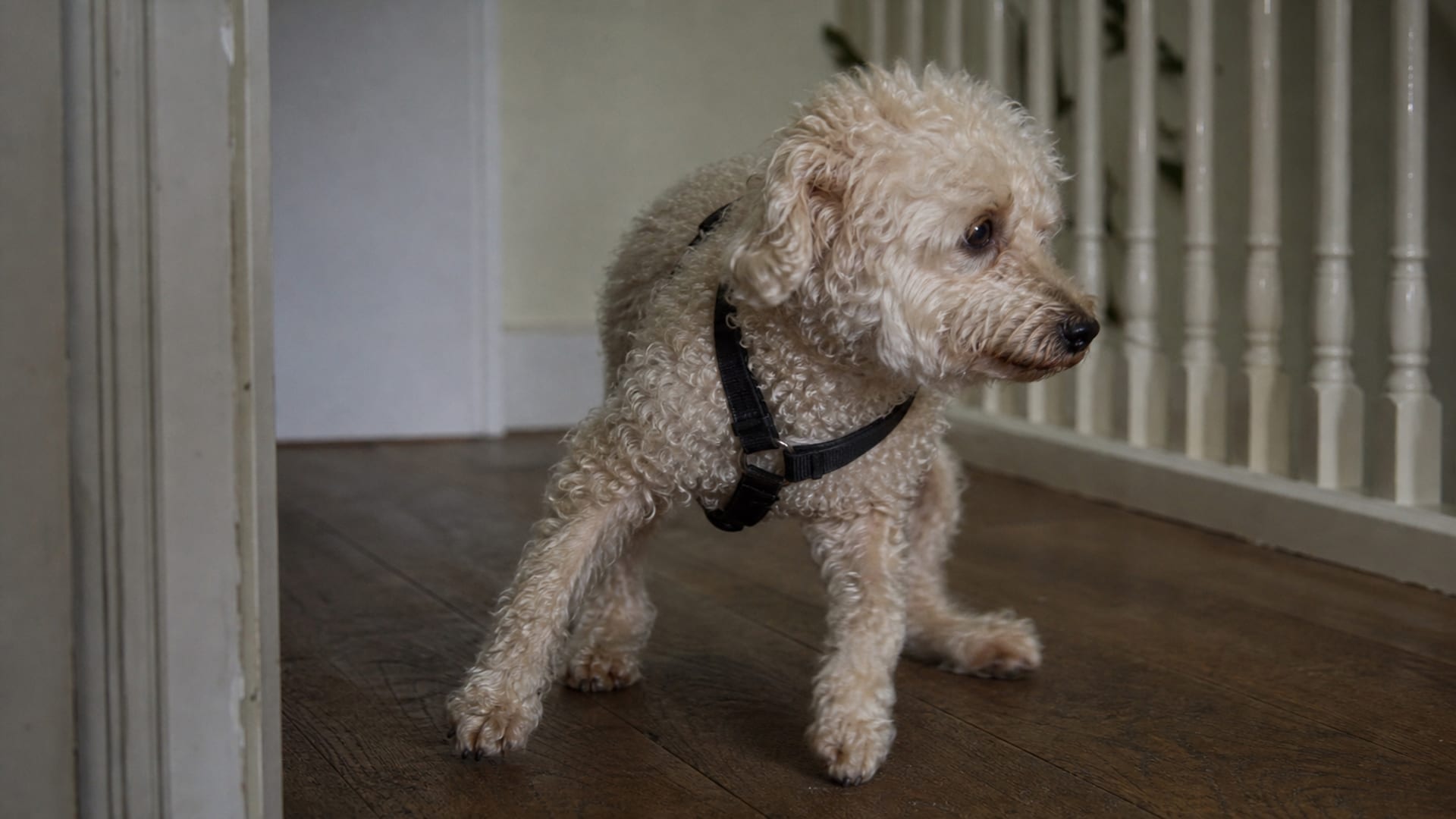
A sudden change in an older dog is a medical question until a vet says otherwise, so the first call is to your veterinarian, not a trainer and not a training plan. Age alone does not explain it. VCA lists arthritis, neurological disease, sensory loss, endocrine disease and cognitive dysfunction among the things that change how a senior dog behaves. Tonight, give the dog space. Don't touch, wake, test or correct it, and keep anyone who could get bitten out of its way until the vet has had a look.
Key takeaways
Hover or tap a card to bring it forward.
- A sudden change in a senior dog is a reason to call the vet first, and age alone is not the explanation.
- Pain, hearing and vision loss, illness, medication effects, cognitive dysfunction and trouble retreating are all on the vet's list, and aggression is not diagnosed from behavior alone.
- Until the dog is checked, don't touch, wake or correct it, feed it behind a door, separate it when you cannot supervise, and keep children away from its bed and bowl.
- Don't punish growling, because it can hide the warning. A basket muzzle is one layer for unavoidable handling, never a substitute for separation or the vet.
- Get urgent care for pain signs, collapse, seizures, sudden blindness or disorientation, or a bite, and bring in a veterinary behaviorist if the aggression persists after the medical work.
Why a gentle old dog might growl or snap
The dog has been easy for ten years, and now it growls when someone reaches for it, freezes over its bowl, or snaps when it is woken. It feels like a personality change. Often it is a body change that the dog cannot explain any other way.
Veterinary sources list these medical causes, and they are worth reading in order, because the first one is the most common to hide in plain sight:
- Pain, from osteoarthritis, spinal disease, sore teeth, ear infections or skin problems.
- Loss of hearing or vision, which makes a dog easier to startle.
- Neurological disease, including seizure disorders.
- Endocrine disease, such as thyroid and pituitary disorders.
- Kidney disease, diabetes and other illness that affects the whole body.
- Cognitive dysfunction, the canine version of dementia.
- Medication effects or interactions, which only your vet can sort out.
- Reduced mobility, which makes it hard for a dog to back away from something it does not like, so it uses its teeth instead.
The AAHA senior care guidelines call for a check of the musculoskeletal, neurological, endocrine, sensory and whole-body health of a senior pet. One more limit belongs here. Aggression is not diagnosed from behavior alone, and a dog's birthday count is not a diagnosis either. I can describe what I see in a dog, but I cannot tell you that a hip hurts or a thyroid is off. A vet can.
Hover or tap a row to highlight it.
| Cause | Examples or how it shows up |
|---|---|
| Pain | Osteoarthritis, spinal disease, sore teeth, ear infections, skin problems |
| Hearing or vision loss | Makes the dog easier to startle |
| Neurological disease | Includes seizure disorders |
| Endocrine disease | Thyroid and pituitary disorders |
| Whole-body illness | Kidney disease, diabetes and other illness |
| Cognitive dysfunction | The canine version of dementia |
| Medication effects | Only your vet can sort out interactions |
| Reduced mobility | The dog cannot back away, so it uses its teeth instead |
What the pain studies show, and what they do not
Pain is the cause I would look at first, so here is what the published work says, in proportion.
Camps and colleagues, writing in the Journal of Veterinary Behavior in 2012, described 12 dogs referred for aggression and diagnosed with pain-related aggression after physical and neurological exams. Eight had hip dysplasia, two had chronic ear infections, one had a skin injury and one had elbow osteoarthritis. The dogs improved after their pain was treated, some with pain treatment alone and some with behavior work added. That is a small group, looked at after the fact, with no comparison group, so it shows that pain belongs on the list rather than how often it is the answer.
Barcelos, Mills and Zulch, in the Veterinary Record in 2015, looked at behavioral signs that point to hidden musculoskeletal pain in aggressive dogs. I use it as one more reason to ask the vet for a pain assessment, and I leave numbers out of it.
A 2024 study using an animal welfare assessment grid found that dogs presumed to have chronic pain were more often described as showing protective aggression toward sore areas, and aggression toward strangers, than dogs without signs of chronic pain. That is an association built partly on what owners reported, not proof that pain caused each incident.
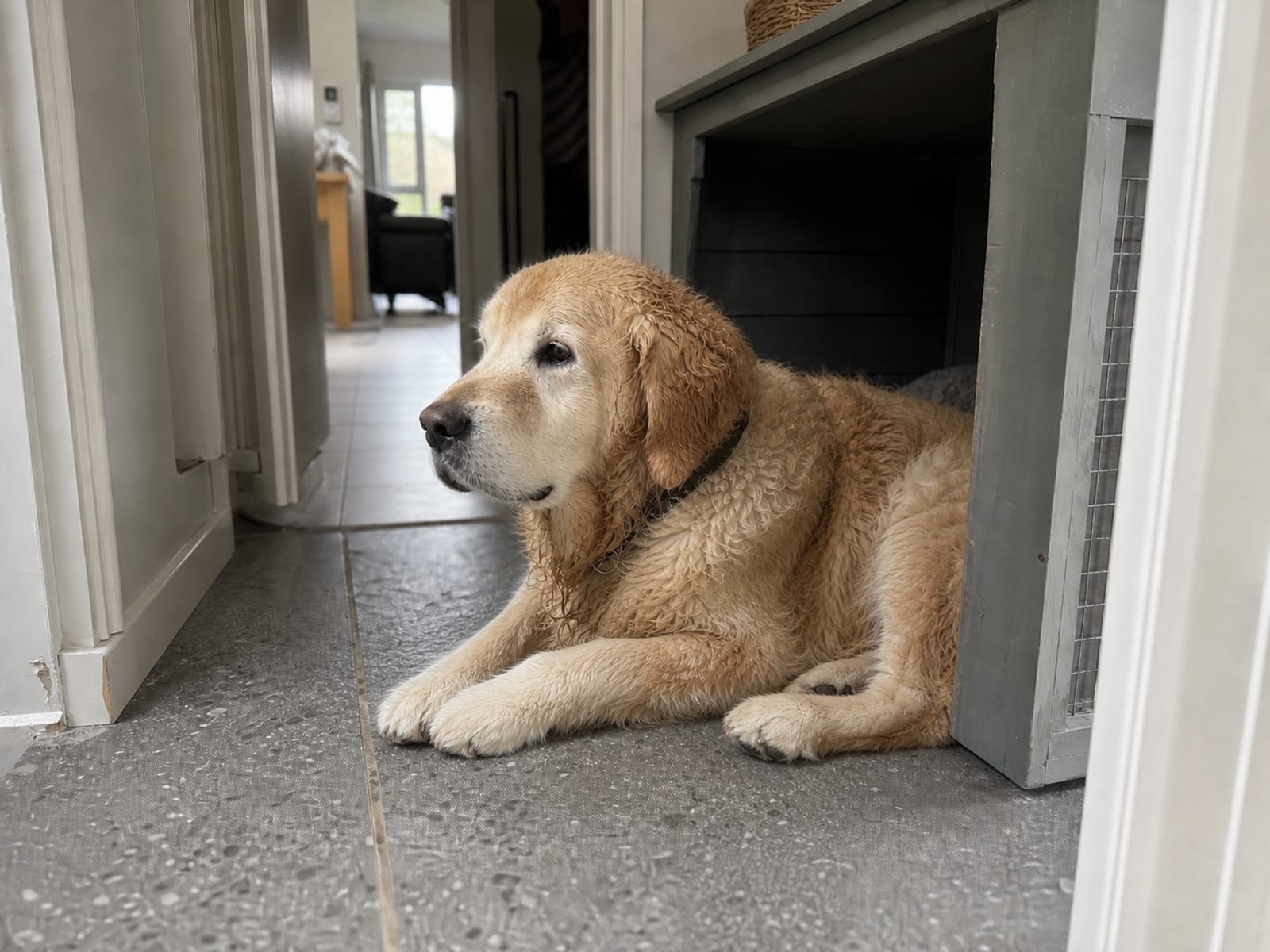
One thing to keep in mind. Treating pain may reduce the response, but a dog that has learned that growling or snapping works can keep the habit after the pain is handled. So, follow-up behavior help may still be needed once the vet has done their part.
When your dog cannot see or hear you coming
VCA explains that an older dog with weaker eyes or ears may not notice a person or another animal approaching, so it startles easily and scans the room to avoid being surprised. A deaf dog asleep on the couch that gets a hand on its back is not being aggressive in its own mind. It woke up to something it never saw or heard.
Older dogs commonly react in these situations:
- Touched while resting, especially with sore joints, spine or teeth.
- Woken, or approached from behind.
- Lifted, restrained, groomed or moved when movement hurts.
- Approached while eating or holding a treat, or when a food item, chew or toy is taken away.
- Moved off a bed or favorite resting spot.
- Hugged, climbed on, or grabbed by the ear, tail or fur by a child.
- Stuck on slippery floors, stairs or narrow spaces where they cannot get away.
The changes are practical and cheap. Approach where the dog can see you, and use the same signal every time that fits the senses it has left. Give it a quiet resting place that nobody enters. Lay down rugs or runners for traction, and cut down on stairs and lifting. Put food and water where the dog can eat without anyone walking past, and use a gate or closed door to keep children and visitors out.
Cognitive dysfunction, and why a number is not a diagnosis
Cognitive dysfunction is a real possibility in a senior dog, and it is also the one that people jump to too fast. It is diagnosed clinically from a pattern of progressive changes, after other medical causes have been ruled out. It cannot be diagnosed from irritability or aggression alone.
Neilson, Hart, Cliff and Ruehl surveyed owners of 180 dogs aged 11 to 16 by telephone in a 2001 JAVMA study. They found impairment in at least one category in 28 percent of the 11 to 12 year olds (22 of 80) and 68 percent of the 15 to 16 year olds (23 of 34). That study measured cognitive signs like disorientation and sleep changes, not aggression. The figures describe groups of dogs and do not apply to yours.
Two screening scales are in use. The CCDR, built by Salvin and colleagues from a survey of 957 dogs, has 13 items. The CADES, developed by Madari and colleagues from 215 dogs, has 17 items across orientation, social interaction, sleep-wake cycle and house-soiling. Vets also use DISHAA, which sorts signs into disorientation, social change, sleep-wake changes, house-soiling, activity changes and anxiety. These are useful when a vet reads them with an exam in hand. Owner questionnaires lean on memory and opinion, and a dog that is blind, deaf or hurting can score as impaired. Please don't diagnose your own dog from an online checklist.
Hover or tap a row to highlight it.
| Name | Built from | What it covers |
|---|---|---|
| Neilson and colleagues, JAVMA, 2001 | Owners of 180 dogs aged 11 to 16 | Impairment in at least one category: 28 percent at 11 to 12 years, 68 percent at 15 to 16 years |
| CCDR | Survey of 957 dogs | 13 items |
| CADES | 215 dogs | 17 items across orientation, social interaction, sleep-wake cycle and house-soiling |
| DISHAA | Clinical framework vets use | Disorientation, social change, sleep-wake changes, house-soiling, activity changes and anxiety |
What the vet visit involves, and what to bring
Call and say the aggression is new. Ask for a visit soon, and tell the front desk it involves biting or snapping so the staff can plan the handling.
Per VCA, a behavior change in a senior pet calls for a physical exam whatever the age, with lab work and referral where it makes sense. The AAHA guidance and AAHA's pain management guidelines describe what that usually covers:
- A history: when it began, what sets it off, the warning signals the dog gives, and changes in appetite, sleep, mobility, drinking, weight and medication, plus any bites.
- A pain and orthopedic exam, with a hands-on check of the spine, limbs and joints.
- A look at the mouth, ears, skin, eyes and hearing.
- A neurological exam.
- A senior blood profile and urinalysis, with thyroid and other hormone tests where they are indicated.
- A diagnostic round of pain control, to see whether the behavior changes when the pain does.
- Referral for imaging or a neurologist for seizures or other neurological signs.
Here is the one job that belongs to you. Write down what happened before each episode: where the dog was, who was near, what time it was, what the dog's body did first. Do it by watching, not by recreating the trigger to see what happens. A short log, or a phone note, gives your vet more than any description from memory.
What Happens at the Vet Visit
- Call aheadSay the aggression is new, ask for a visit soon, and tell the front desk it involves biting or snapping.
- HistoryShare when it began, what sets it off, the warning signals, and changes in appetite, sleep, mobility, drinking, weight and medication.
- Pain and orthopedic examA hands-on check of the spine, limbs and joints.
- Mouth, ears, skin, eyes and hearingThe vet looks over each of these.
- Neurological examA check of the nervous system.
- Blood workA senior blood profile and urinalysis, with thyroid and other hormone tests where indicated.
- Pain control trialA diagnostic round of pain control, to see whether the behavior changes when the pain does.
- Referral if neededImaging or a neurologist for seizures or other neurological signs.
What to do at home until you know the cause
This is the part I care about most, because it is what keeps people and the dog out of trouble this week.
Don't touch, wake or correct a resting dog. If you need it to move, call it from a distance, or leave it where it is.
Keep children away from the dog's bed, crate, bowl, treats and favorite objects, and never leave a child alone in a room with any dog, including the family one. The RSPCA advises that children should not approach a dog that is eating, sleeping, unwell, injured, tired, blind or deaf. If a child is the one being growled at, read my guide to dog aggression toward children for how to set up the house.
Feed the dog behind a closed door or gate, and never take the bowl away mid-meal. Don't lift, hug, restrain or groom the dog unless safety demands it, and ask the vet team how to handle and transport it.
When you cannot supervise every minute, separate with a room, a gate or a pen. A raised voice is not a safety plan.
Don't punish a growl. VCA and UC Davis both warn that confrontation and punishment can raise aggression or suppress the warning without changing the reason behind it. A dog that no longer growls is not a safer dog. It is a dog that skips a step.
A basket muzzle can be one layer of safety when handling or transport cannot be avoided. UC Davis describes basket muzzles and head collars as safety tools, introduced slowly and calmly. The dog has to be able to breathe, drink and pant, and you stay with it. The muzzle is never a stand-in for separation, supervision or the vet.
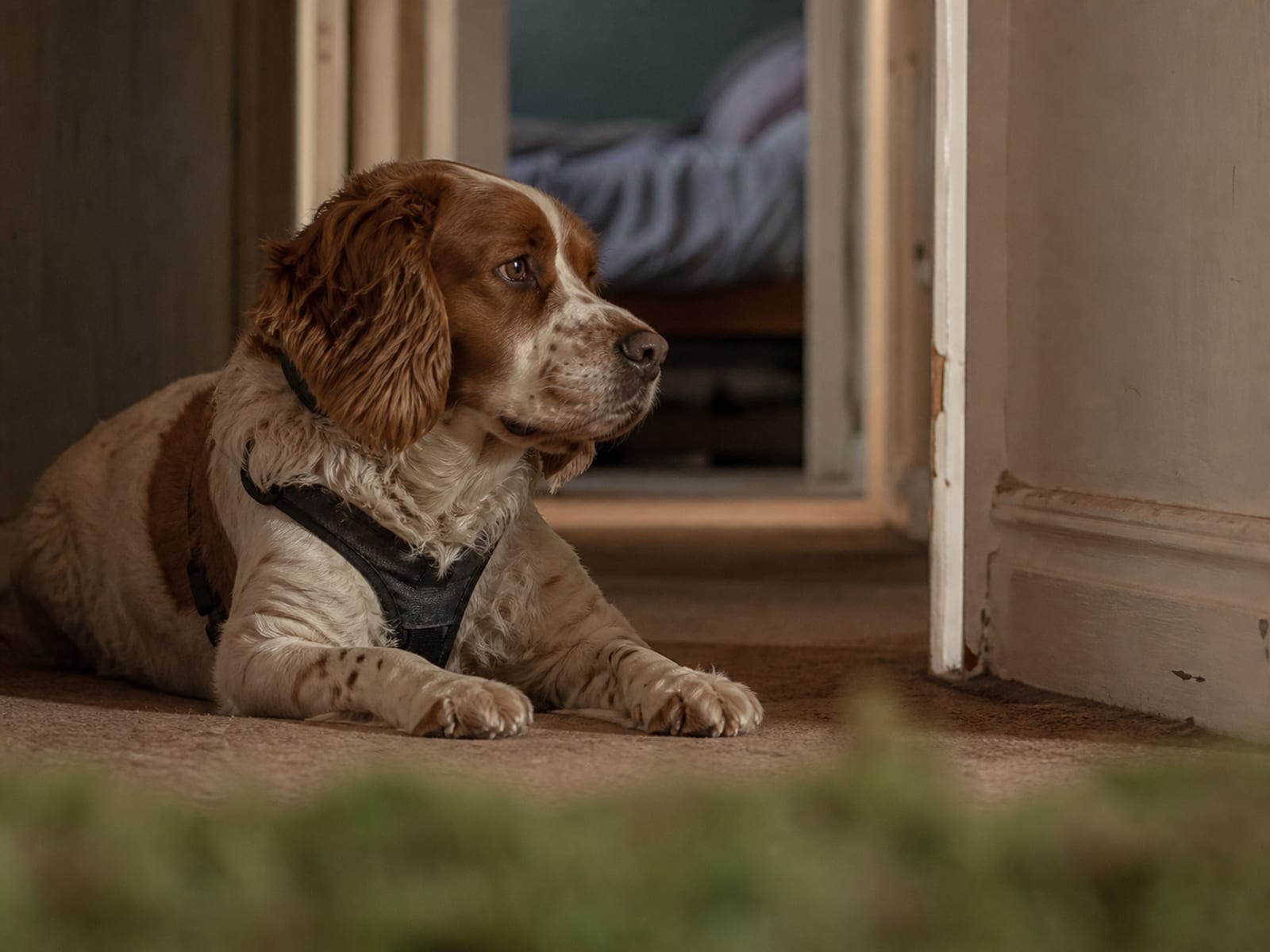
Once medical causes are handled, behavior work can start, and it should be reward-based and kept below the point where the dog reacts. The AVSAB 2021 position statement recommends reward-based methods and says that methods involving force, pain or physical or emotional discomfort should not be used for behavior disorders. UC Davis points the same way, toward spotting triggers, avoiding unsafe situations and changing the feeling behind the aggression. With a senior dog the plan has to allow for pain, stiffness, slower learning and tiredness, so sessions are short, distances are generous, and nobody forces contact with a person, a bowl, a bed or a grooming brush. My longer take on that plan is in aggression in older dogs.
Hover or tap a row to highlight it.
| Situation | What to do |
|---|---|
| Dog is resting | Don't touch, wake or correct it; call it from a distance |
| Children in the home | Keep them away from the bed, crate, bowl and treats, and never leave a child alone in a room with the dog |
| Mealtime | Feed behind a closed door or gate, and never take the bowl mid-meal |
| You cannot supervise | Separate with a room, a gate or a pen |
| Dog growls | Don't punish it, because it can hide the warning |
| Handling cannot be avoided | A basket muzzle can be one layer of safety, never a stand-in for separation or the vet |
When to get help, and how fast
Help comes in two tiers.
Call your vet promptly for any unexplained sudden aggression in an older dog. Don't wait to see whether it passes.
Go to urgent or emergency care if the aggression comes with apparent pain such as limping, trouble rising, crying, panting or trembling, with sudden blindness or disorientation, with collapse, seizures or loss of balance, or when a bite has happened or the dog cannot be handled for care.
If your dog bites someone, separate the dog without grabbing it or punishing it. The person who was bitten should wash the wound well with soap and water. Deep wounds, heavy bleeding, infection, an unknown rabies vaccine status or an overdue tetanus shot call for medical care. The CDC advises reporting dog bites to local animal control or police, especially when the dog is ill, acting strangely or has unknown vaccinations.
A veterinary behaviorist is the right next step if the aggression continues after medical causes are handled, if there has been a bite, or if children or vulnerable adults live in the home.
Hover or tap a row to highlight it.
| What you see | Who to call |
|---|---|
| Any unexplained sudden aggression in an older dog | Your vet, promptly |
| Limping, trouble rising, crying, panting or trembling | Urgent or emergency care |
| Sudden blindness or disorientation | Urgent or emergency care |
| Collapse, seizures or loss of balance | Urgent or emergency care |
| A bite, or a dog that cannot be handled for care | Urgent or emergency care |
| Aggression continues after medical causes are handled | A veterinary behaviorist |
Frequently asked questions
Can a senior dog become aggressive for no reason? Almost always there is a reason, and it is often a medical one that has not been found yet. Pain, sensory loss and illness all lower the dog's tolerance, so a touch that was fine last year can get a snap this year. The vet exam is how you find the reason.
Is it safe to keep my senior dog around my grandchildren? Only with close supervision or physical separation. Children should stay away from the dog's bed, bowl and treats, and a child should never be alone in a room with the dog. A gate or a closed door is more reliable than a warning to the child.
Will treating the pain stop the aggression? It may reduce it, especially where pain was driving the response. A dog that learned to growl or snap to protect itself can keep the habit, so follow-up behavior help may be needed after the pain is under control.
Should I put a muzzle on my dog right away? A basket muzzle can protect people during handling you cannot avoid, such as a vet visit, but the dog needs to be introduced to it gradually. Forcing one on a frightened dog tends to make things worse. Ask your vet how to handle the first trip in.
Check What You Picked Up
A senior dog suddenly growls and snaps. Who do you call first?
What should you do if your senior dog is resting and needs to move?
Why shouldn't you punish a growl?
Which of these is a reason to go to urgent or emergency care?
Can you diagnose cognitive dysfunction from aggression alone?
The vet treats your dog's pain. What might still be needed?
Answer a question to see your score.
Final Thoughts
Once your vet has cleared the dog, I can evaluate it. I offer in-home lessons and board and train in my own home, and you can reach me through the contact page. I run DW Dog Training in Baltimore, MD.